
Shower door ideas for 2026 focus on making the enclosure feel intentional within the whole bathroom. Clear frameless glass can keep sightlines open, textured glass can add privacy, dark or warm hardware can create contrast, and curved or partial-panel designs can turn the shower into a visual feature rather than a separate box.
Use this guide as an inspiration source for glass, hardware, shape, framing, and overall design direction. If you need to decide which opening mechanism actually fits a compact bathroom, use our dedicated small-bathroom shower door guide rather than relying on appearance alone.
Shower Door Ideas to Explore in 2026
Start with the visual effect you want the shower to create. These design directions can help you build a more consistent bathroom before you compare exact products and installation requirements.
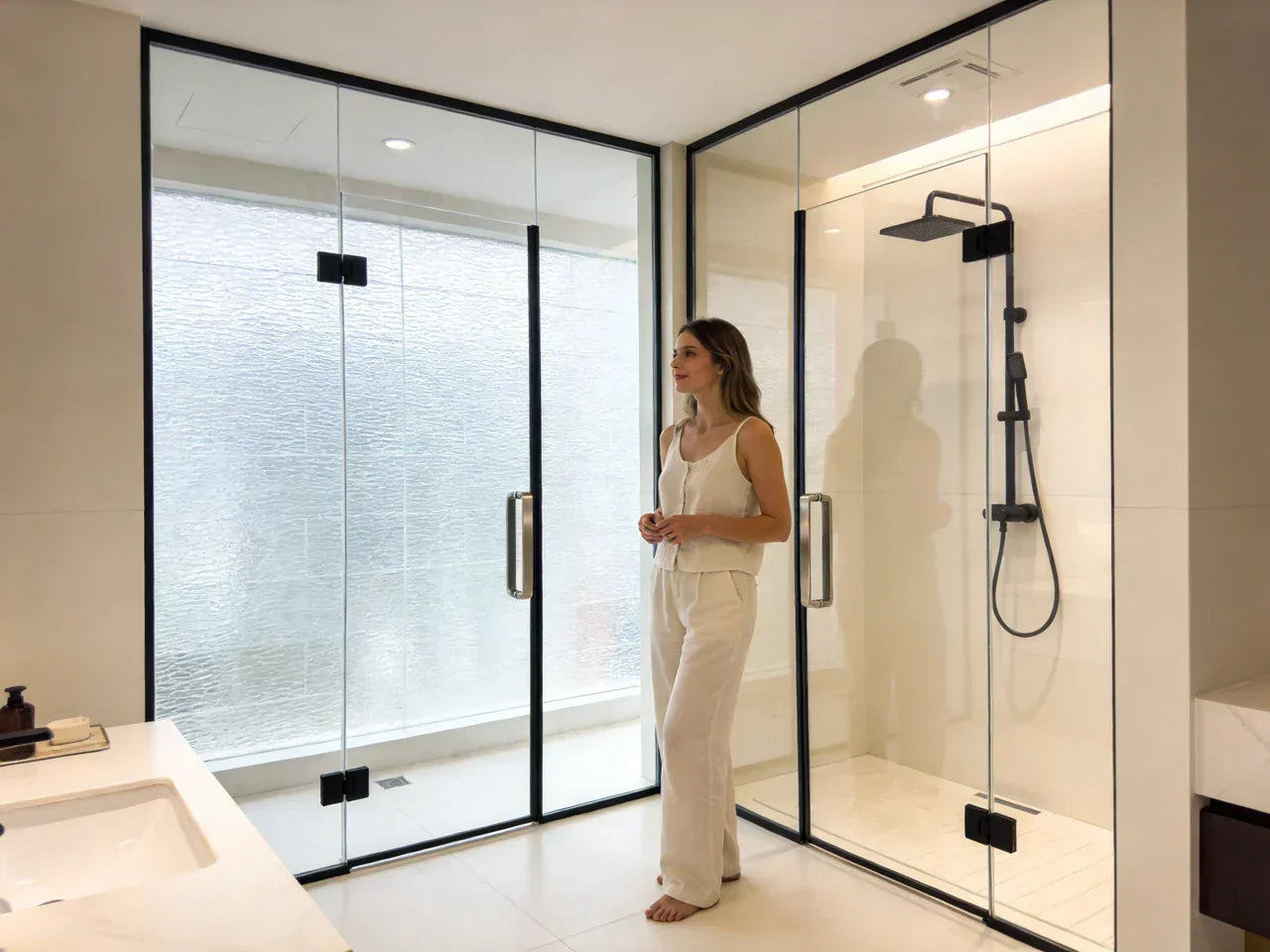
1. Frameless Clear Glass with Matte Black Hardware
Clear glass with dark hinges and handles creates sharp contrast while leaving tile, stone, and shower fixtures visible. It works especially well in bathrooms built around simple lines and a restrained color palette.
2. Textured Glass for Softer Privacy
Rain, frosted, etched, or other textured glass can soften the view into the shower while still allowing light to move through the room. This can be useful in shared bathrooms or spaces where a fully transparent enclosure feels too exposed.
3. Semi-Frameless Glass with Brushed Nickel
Semi-frameless glass paired with brushed nickel gives the enclosure visible structure without making the frame the main design feature. The finish coordinates easily with many faucets, towel bars, and bathroom accessories.
4. Minimal Sliding Glass
A sliding glass enclosure can support a clean modern look when the rail, handles, and framing are kept visually simple. It is a useful design direction when you want the glass to feel light rather than bulky.
For layout decisions in tight rooms, see our guide to shower doors for small bathrooms.
5. Pivot Door with a Minimal Pull Handle
A pivot-style glass door with simple hardware creates a strong architectural entrance. It pairs naturally with large-format tile, floating vanities, and uncluttered primary-bath designs.
6. Curved or Arched Glass
Curves can soften a bathroom dominated by straight tile lines, rectangular mirrors, and square cabinetry. A curved or arched enclosure can become the focal point of the room without relying on decorative patterns.
7. Brass Hardware with Textured Glass
Warm metal hardware paired with textured glass can make an otherwise cool-toned bathroom feel less clinical. This combination works well with warm whites, beige stone, muted greens, and deeper tile colors.
8. Corner or Neo-Angle Enclosure as a Design Feature
A corner enclosure does not have to look purely functional. Coordinated hardware, clear glass, and a clean base can make the angled geometry feel deliberate and visually lighter.
9. Doorless Look with a Single Glass Panel
A single fixed glass panel creates an open, walk-in appearance with very little visual hardware. The design works best when the shower layout, panel position, waterproofing, drainage, and shower spray are planned together.
10. Hybrid Walk-In with a Partial Door
A partial panel combined with a smaller moving door can create a more open appearance while retaining more enclosure than a completely doorless shower. It is a useful visual compromise when you like the walk-in look but do not want the shower to feel fully open.
2026 Design Directions: Glass, Privacy and Softer Shapes
Many current bathroom designs favor cleaner sightlines and fewer visually heavy enclosure elements. Frameless and semi-frameless glass support that approach because they allow tile, lighting, and fixtures to remain visible through the shower area.
Privacy does not have to mean blocking light. Rain, frosted, etched, and other textured glass can create separation while still keeping the room bright.
Hardware can also change the mood of the room. Matte black creates contrast, brushed nickel stays visually quiet, and brass or other warm finishes can add warmth to neutral tile.
Curves and arches offer another way to soften a bathroom. They can balance rectangular vanities, mirrors, tile, and cabinetry while giving the shower a more custom appearance.
Doorless and partial-panel layouts can make the shower feel more connected to the room, but their success depends on the physical shower design. Treat them as an architectural idea first, then verify splash control and installation requirements before committing to the layout.

Glass Shower Door Ideas for Privacy and Light
The glass itself can change the entire character of the bathroom. Think about visibility, light, color, and how much attention you want the shower interior to receive.
Clear Glass
Clear glass keeps sightlines open and allows decorative tile, niches, benches, and fixtures to become part of the overall room design. It is a natural fit for bathrooms where the shower interior is intended to be visible.
Frosted and Textured Glass
Frosted, rain, etched, and patterned glass create more visual privacy while allowing light to pass through. Some textures also make water spotting less visually prominent between cleanings.
Tinted Glass
Gray, bronze, and other tinted glass can create a moodier, boutique-hotel appearance. Because tinted glass changes how light moves through the shower, consider how much natural and artificial light the bathroom already receives.
Protective Coatings and Surface Treatments
Some glass products are available with surface treatments intended to make routine cleaning easier. Availability and care requirements vary, so check the instructions for the exact glass product rather than assuming every coating should be cleaned the same way.
If you are considering textured glass, look at a physical sample when possible. Fine textures can appear very different from deeper patterns once installed across a full shower panel.
Hardware and Finish Ideas
Shower door hardware is a small part of the enclosure, but it can connect the shower to the rest of the bathroom. Handles, hinges, rails, brackets, and framing can either blend into the room or become deliberate accent pieces.
Matte Black
Matte black creates clear contrast against white tile, pale stone, and light walls. It works well when black is repeated elsewhere in the room through faucets, lighting, mirror frames, or cabinet hardware.
Brushed Nickel
Brushed nickel has a softer appearance than polished chrome and can blend into both warm and cool bathroom palettes. It is useful when you want the hardware to support the room rather than dominate it.
Brass and Warm Metal Finishes
Brass and other warm finishes can add contrast to gray, white, or stone-heavy bathrooms. The overall effect depends heavily on the shape of the handle and the finishes used on nearby fixtures.
Hardware shape matters too. Straight bar pulls and square hinges create a sharper architectural look, while rounded handles and softer hardware shapes pair naturally with curved mirrors, arched openings, and rounded fixtures.
Curved, Arched and Statement Shower Door Ideas
Curved and arched glass can turn the shower into a focal point. These shapes work especially well when the rest of the bathroom contains softer details such as rounded mirrors, vessel sinks, curved lighting, or warm neutral finishes.
A statement enclosure can be particularly effective when the shower is visible immediately from the bathroom entrance. Instead of hiding the enclosure, the design treats the glass and opening shape as part of the room's architecture.
Curved and arched glass can involve more specialized measuring and fabrication than a basic straight enclosure. Confirm the exact dimensional and installation requirements before turning a visual reference into a final specification.
For a warmer statement, pair an arched form with brass-toned hardware and deeper tile colors. For a quieter contemporary look, combine curved glass with restrained hardware and warm neutral surfaces.
Doorless and Wet-Room Shower Ideas
If you want the shower to feel visually open, a fixed glass panel, partial glass wall, hybrid opening, or fully open wet-room layout can reduce the appearance of a conventional enclosure.
A single fixed glass panel is one of the simplest visual approaches. It keeps the main sightline open while still providing a physical splash barrier between part of the shower and the rest of the bathroom.
A fully open wet-room look places more responsibility on the shower construction. Drainage, waterproofing, panel position, showerhead direction, and ventilation need to be planned as part of the complete bathroom rather than treated as styling details.
If you like the open appearance but want more splash control, a partial panel or hybrid door-and-panel layout can preserve much of the visual effect without making the shower completely open.

Shower Door Ideas for Small, Narrow or Awkward Bathrooms
In a compact bathroom, visual choices can help the room feel lighter. Clear glass can preserve sightlines, restrained framing can reduce visual bulk, and a finish that matches nearby fixtures can keep the enclosure from feeling disconnected from the rest of the room.
The actual door mechanism should be chosen from the physical layout rather than appearance alone. Sliding, hinged, folding, and partial-panel configurations use space differently.
For the complete layout comparison, see our small-bathroom shower door decision guide.
12 Shower Door Design Directions for 2026
Use these combinations as starting points when collecting inspiration. Keeping the glass, hardware, tile, and overall room style within one direction usually creates a more coherent result than combining unrelated ideas.

1. Modern Minimalist Frameless
Use clear glass, simple hardware, and large-format tile to create a quiet enclosure with very little visual interruption.
2. Warm Spa with Textured Glass
Combine softly textured glass with brushed metal hardware, warm neutrals, and indirect lighting for a more private spa-inspired atmosphere.
3. Black Hardware Contrast
Use matte black handles, hinges, or framing to create strong lines against light tile and pale stone.
4. Brass Art Deco Influence
Warm brass-toned hardware paired with patterned or vertically arranged tile can give the enclosure a more decorative architectural character.
5. Curved Statement Entry
A curved glass edge or enclosure can soften hard bathroom lines and create a more custom focal point.
6. Warm Modern Sliding Glass
Pair a visually simple sliding enclosure with earthy tile, soft lighting, and restrained hardware for a warmer take on modern design.
7. Hotel-Inspired Pivot Entrance
A large glass panel, simple pull handle, large-format tile, and an uncluttered niche can create a hotel-inspired shower aesthetic.
8. Small-Bath Visual Lightness
Use clear or lightly textured glass and restrained hardware to reduce visual bulk. Keep the layout decision separate from the design decision and verify the available space before choosing the mechanism.
9. European Walk-In Look
A fixed glass panel and open entry can create a seamless appearance when the shower construction is designed to manage water without a conventional full door.
10. Privacy-Forward Family Bathroom
Frosted, rain, or other textured glass can make a shared bathroom feel more private without turning the shower into an opaque enclosure.
11. Bright Windowed Shower
Clear or lightly textured glass can help preserve available daylight. Consider privacy and the surrounding view when choosing how transparent the enclosure should be.
12. Open-Entry Contemporary Suite
A fixed or partial glass panel can create an open-entry look without adding a visually heavy moving door. Verify the complete layout and any specific user requirements before selecting the final configuration.
Bathtub Glass Shower Door Ideas
A glass enclosure can give a tub/shower combination a more finished appearance than a curtain while still allowing the bathtub to remain the central fixture.
Clear Sliding Tub Glass
A clear sliding enclosure keeps the tub visible and can work well in bathrooms where the tile surround is part of the design.
Textured Tub Glass
Frosted, rain, or patterned glass can give a tub/shower combination more privacy while still creating a cleaner visual boundary than a fabric curtain.
Minimal-Hardware Tub Enclosure
If you prefer a lighter appearance, look for a system with restrained framing and hardware that coordinates with the tub filler, showerhead, and other bathroom fixtures.
Before selecting any tub door, confirm that the exact enclosure is designed for the finished tub and wall conditions.
Framed, Semi-Frameless or Frameless as a Design Choice
Frame style changes the visual weight of the enclosure. Framed doors make the metal structure more visible, semi-frameless designs reduce some of that visual framing, and frameless designs emphasize the glass and surrounding tile.
Choose the look based on the room as a whole. A visible frame can coordinate with faucets and other metal details, while a frameless enclosure can help decorative tile remain the focal point.
For a full explanation of opening mechanisms and enclosure categories, see our guide to different types of shower doors.
Turn Your Shower Door Inspiration Into a Plan
- Choose the visual direction first. Decide whether you want the enclosure to disappear, add contrast, create privacy, or become a focal point.
- Choose the glass character. Compare clear, textured, frosted, tinted, or patterned looks based on light and privacy.
- Coordinate the hardware. Match or intentionally contrast the shower hardware with faucets, lighting, mirrors, and cabinet hardware.
- Verify the layout separately. Once you know the look you want, confirm that the opening mechanism and exact product fit the bathroom.
Conclusion: Build the Look Before You Choose the Product
The strongest shower door ideas usually come from treating the enclosure as part of the complete bathroom. Clear glass can emphasize tile and light, textured glass can create privacy, black hardware can add contrast, warm finishes can soften the room, and curves or partial panels can give the shower a more architectural presence.
Once you have a design direction, verify the layout, opening mechanism, dimensions, and installation requirements for the exact shower door you are considering.

FAQs About Shower Door Ideas
1. What shower door ideas can make a bathroom feel more open?
Clear glass, minimal framing, simple hardware, and visually continuous tile can reduce interruptions in the room. A fixed panel or restrained frameless enclosure can also create a more open appearance when the bathroom layout supports it.
2. What shower door ideas offer more privacy?
Consider frosted, rain, etched, patterned, or tinted glass. These options can reduce direct visibility while still allowing light through the enclosure. The amount of privacy varies by glass pattern and lighting conditions.
3. What hardware finish should I use on a glass shower door?
Choose a finish that relates to the rest of the bathroom. Matte black creates contrast, brushed nickel is visually understated, and brass or other warm metals can add warmth. Repeating the finish on faucets, lighting, mirrors, or cabinet hardware can help the room feel coordinated.
4. Are curved or arched shower doors a good design idea?
Curved and arched glass can create a distinctive focal point and soften a bathroom filled with straight lines. Because these shapes may require specialized measuring or fabrication, confirm the exact installation requirements before finalizing the design.
5. Can I use glass shower doors on a bathtub?
Many tub/shower combinations can use glass enclosures designed specifically for tubs. Sliding, framed, semi-frameless, and other tub-compatible designs are available, but the exact system must match the finished tub and wall conditions.
6. What shower door idea works for a small bathroom?
For visual inspiration, consider clear or lightly textured glass and hardware that does not visually overwhelm the room. The correct opening mechanism depends on swing space, usable entry, nearby fixtures, cleaning preferences, and the exact layout.
For that decision, use our guide to shower doors for small bathrooms.
7. Should the shower door hardware match the bathroom faucet?
It does not have to match exactly, but the finishes should look intentional together. Matching finishes creates a more uniform look, while coordinated mixed metals can add contrast when repeated elsewhere in the bathroom.
8. Where can I compare shower door types after choosing a design style?
Use our different types of shower doors guide to compare sliding, hinged, pivot, folding, fixed-panel, corner, curved, framed, semi-frameless, and frameless configurations.


Leave a comment
This site is protected by hCaptcha and the hCaptcha Privacy Policy and Terms of Service apply.