
Shower doors differ by how they open, how they are framed, and the type of enclosure they create. This guide explains the main types of shower doors—including sliding, hinged and pivot, folding, fixed-panel, framed, frameless, corner, curved, and steam enclosures—so you can understand how each system works and where it is commonly used.
If your main concern is choosing a door for a tight bathroom, use our dedicated small-bathroom guide to compare sliding, hinged, folding, and partial glass layouts by swing space, usable entry, cleaning, access, and budget.
Quick Comparison of Types of Shower Doors
The main shower door categories can be grouped by opening mechanism and enclosure style. Understanding those differences first makes it easier to compare glass, framing, hardware, and installation later.
| Shower Door Type | How It Works | Layout Consideration | Maintenance Note |
|---|---|---|---|
| Sliding / Bypass | Glass panels move horizontally along a rail or track. | Does not require a door-swing area outside the shower, but overlapping panels affect the usable entry. | Tracks, guides, rollers, and panel overlaps need routine cleaning. |
| Hinged | A moving glass panel swings from side-mounted hinges. | Requires a clear swing path around the shower entrance. | Hinges, seals, handles, and glass need routine care. |
| Pivot | The door rotates around pivot hardware rather than conventional side hinges. | Swing direction and surrounding clearance need to be checked for the exact system. | Pivot hardware and seals should remain accessible for inspection and cleaning. |
| Folding / Bi-Fold | Connected panels fold together as the opening is cleared. | Reduces the floor area needed compared with a full-width swinging panel, although movement varies by design. | Multiple hinges, joints, and seals add cleaning points. |
| Fixed Panel | A stationary glass screen creates an open-entry shower. | There is no moving door, so splash control depends heavily on the shower layout. | Fewer moving parts simplify hardware maintenance. |
| Corner / Neo-Angle | Multiple panels form an enclosure around a corner installation. | The enclosure geometry must match the shower base or finished opening. | More joints and seals may require additional cleaning. |
| Curved | Curved glass follows the shape of a matching shower base or curb. | The glass and base geometry need to match closely. | Care depends on the framing, hardware, and glass finish used. |
| Steam Enclosure | A more tightly enclosed glass system is designed around steam containment. | Sealing, ventilation, surrounding construction, and equipment requirements need coordinated planning. | Seals, hardware, and ventilation components need ongoing inspection. |
Opening Mechanism vs. Frame Style
A shower door can belong to more than one category. For example, a sliding door may be framed or semi-frameless, while a hinged door may be frameless. Terms such as sliding, hinged, pivot, folding, and fixed describe how the opening works. Framed, semi-frameless, and frameless describe how much structural framing surrounds the glass.
What to Check Before Choosing a Shower Door Type
A shower door needs to fit the finished opening, operate without interfering with nearby fixtures, and manage water appropriately for the enclosure. Start with the bathroom and shower layout before comparing appearance.
Measure the Finished Opening
Measure the opening at multiple points and note whether the surrounding walls are plumb and the threshold is level. Record nearby toilets, vanities, towel bars, shelves, handles, and other obstacles that may interfere with a door or track.
- Alcove: Measure the finished opening at the top, middle, and bottom and compare those measurements with the requirements for the exact product.
- Corner enclosure: Record each finished side of the enclosure and confirm that the selected system matches the shower base or finished geometry.
- Curved enclosure: Use the dimensional requirements supplied for the exact curved glass and base combination rather than estimating from a straight opening.
- Hinged or pivot door: Map the complete swing path and check nearby bathroom fixtures.
- Sliding or folding door: Confirm how the panels move and how much usable entry remains when the door is open.
For step-by-step measuring guidance, see our shower door size and measurement guide before ordering.

Other Decision Factors
- Traffic flow: Check how the door affects the normal route through the bathroom and whether nearby fixtures limit movement.
- Usable entry: Compare the actual clear opening for the specific configuration rather than relying only on the total enclosure width.
- Water control: Door sweeps, seals, panel overlaps, showerhead direction, drainage, and enclosure geometry all affect splash management.
- Privacy: Clear, frosted, patterned, and tinted glass create different levels of visibility while changing the appearance of the enclosure.
- Maintenance: Tracks, hinges, rollers, seals, frames, and panel overlaps create different cleaning requirements.
- Installation conditions: Wall construction, finished surfaces, waterproofing, hardware attachment points, and the exact product instructions should all be checked before installation.
DIY vs. Professional Installation
Some stock framed or sliding systems may be suitable for experienced DIY installation when the opening and wall conditions match the product instructions. Custom frameless glass, curved systems, steam enclosures, unusual openings, and larger glass panels can involve more demanding measuring, handling, alignment, anchoring, and sealing.
Always follow the installation requirements for the exact shower door. If the glass is difficult to handle safely, the walls are significantly out of square, or the enclosure requires custom fabrication, professional measurement and installation may be appropriate.
Sliding and Folding Shower Doors
Sliding and folding systems both avoid the full swing arc of a conventional hinged door, but they move in different ways and create different usable openings.
Sliding / Bypass Doors
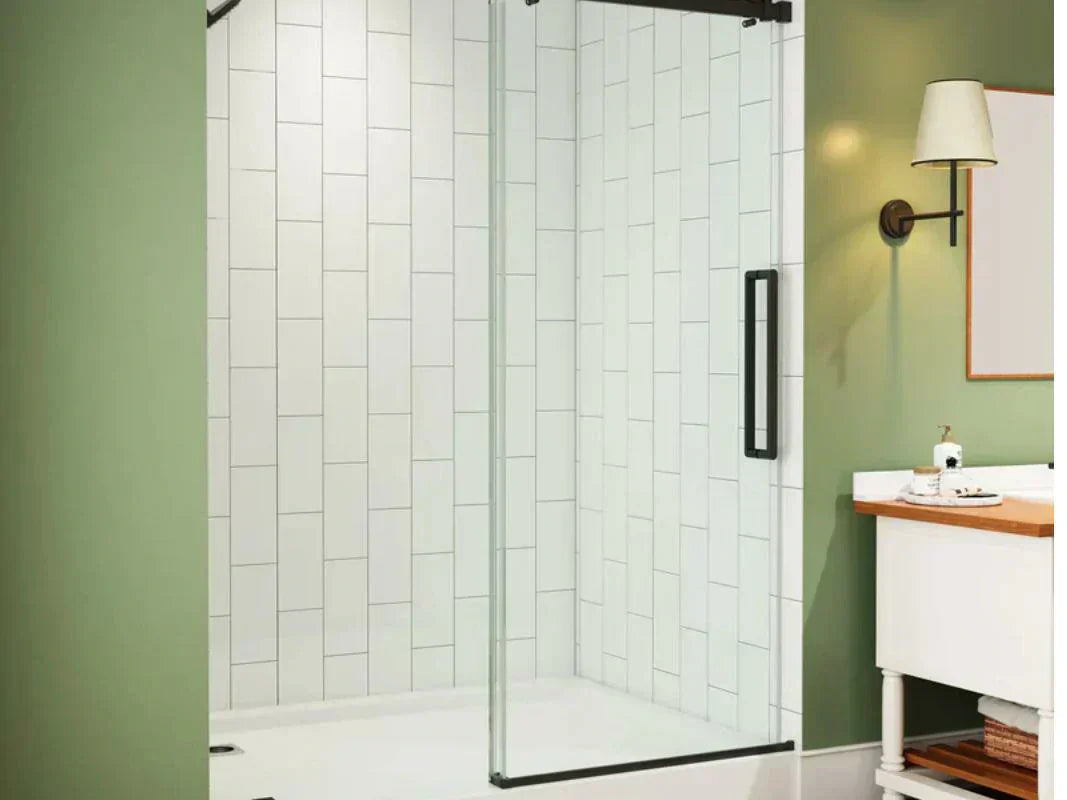
Sliding shower doors move horizontally along the shower opening instead of swinging into the bathroom. They are commonly used in alcove showers and tub/shower configurations where a swinging door could interfere with nearby space.
The main tradeoff is that overlapping panels can reduce the usable walk-through opening. The amount of clear entry depends on the specific panel configuration, overlap, guides, and hardware, so verify the actual product specifications before ordering.
Tracks, guides, rollers, and overlapping glass surfaces should remain accessible for routine cleaning and inspection.
Bi-Fold and Folding Doors
Folding shower doors use connected panels that fold together as the opening is cleared. This can reduce the floor area needed compared with a full-width swinging door. The exact folding direction, number of panels, and clear opening depend on the product design.

Folding systems also have additional hinges, joints, and seals compared with a single fixed panel. Those components should be considered when comparing cleaning and maintenance.
For a deeper look at this mechanism, read our folding shower door guide.
If you are deciding specifically between door mechanisms for a compact bathroom, use our small-bathroom shower door guide rather than relying on door type alone.
Pivot and Hinged Shower Doors
Pivot and hinged shower doors both use a swinging glass panel, but their hardware and rotation points differ.
How Hinged Shower Doors Work
A hinged shower door attaches at the side using hinge hardware mounted to a wall or adjacent glass panel. The panel swings through a defined arc, so surrounding clearance needs to be checked before installation.
How Pivot Shower Doors Work
A pivot shower door rotates around pivot hardware positioned at the top and bottom of the moving panel. The operating direction and mounting arrangement depend on the exact system.
Clearance and Water Management
For either mechanism, check the complete door movement before choosing the product. Toilets, vanities, walls, towel bars, handles, and normal bathroom traffic can all affect whether a swinging door is practical.
Water control depends on the complete enclosure rather than the hinge or pivot mechanism alone. Seals, sweeps, alignment, threshold conditions, showerhead direction, and drainage should work together to guide water back into the shower area.
Do Pivot Shower Doors Leak More Than Sliding Doors?
Neither mechanism automatically determines whether an enclosure will leak. Water control depends on the complete installation, including alignment, seals, panel overlap where applicable, threshold conditions, drainage, and shower spray direction.
For a focused comparison of the two opening systems, see our hinged vs. sliding shower door guide.
Framed vs. Frameless and Semi-Frameless Shower Doors
After choosing the basic opening mechanism, another decision is how much structural framing you want around the glass.
Framed Shower Doors
Framed shower doors use metal framing around more of the glass edges. The frame provides structural support and creates additional joints and channels that should be included in routine cleaning.
Semi-Frameless Shower Doors
Semi-frameless systems use framing in selected areas while leaving other glass edges more exposed. The exact balance between framing and exposed glass varies by product.
Frameless Shower Doors
Frameless systems minimize visible perimeter framing and rely on the glass, brackets, hinges, and other mounting hardware to form the enclosure. They create a more open visual appearance and have fewer frame channels, although the glass and hardware still require routine care.

Is Semi-Frameless a Good Middle Ground?
A semi-frameless design may be worth comparing when you want less visible framing than a fully framed enclosure without moving to a completely frameless system. Compare the exact glass, hardware, adjustment range, cleaning requirements, and installation conditions of the products you are considering.
Corner and Curved Shower Enclosures
Corner and curved enclosures use the geometry of the shower base or finished walls to create an enclosure outside a conventional straight alcove.
Neo-Angle Shower Enclosures
A neo-angle enclosure uses multiple glass panels to form an angled front across a corner installation. The door is positioned within that multi-panel layout. Because the enclosure depends on several connected dimensions, the glass system needs to match the shower base or finished opening.
Curved Shower Doors
A curved shower enclosure uses curved glass that follows the geometry of a compatible base or curb. Matching the enclosure to the correct radius and dimensions is important because curved systems are not interchangeable with straight glass panels.
Stock vs. Custom Sizing
Stock systems are designed around defined dimensional ranges, while custom glass can be fabricated for an opening with different geometry or site conditions. For corner, curved, or significantly out-of-square installations, careful measurement is especially important.
Specialty Shower Enclosures
Some shower layouts use fixed screens, steam enclosures, or decorative framing rather than a conventional single moving door.
Fixed Glass Panel or Walk-In Screen
A fixed glass panel is a stationary screen that leaves part of the shower entrance open. With no moving door hardware, the layout is mechanically simple, but water control becomes especially important. Panel position, showerhead direction, drainage, waterproofing, and the overall shower depth should all be considered.
Steam Enclosures
Steam enclosures require closer coordination between glass, seals, ventilation, surrounding construction, and the steam system itself. Because the complete room conditions matter, follow the requirements for the specific enclosure and steam equipment rather than treating a steam door as a standard shower-door replacement.

Grid and Industrial-Style Shower Doors
Grid-style shower doors use dark framing, applied patterns, or other visual divisions to create a more architectural appearance. Because grid construction varies, compare how the pattern is made and whether it creates additional edges or surfaces that affect cleaning.
Entry and Long-Term Usability
If entry space or long-term usability is important, compare the actual clear opening, threshold, door movement, handles, and surrounding floor area for the exact enclosure. A door type alone does not determine whether the complete shower layout will meet a particular user's needs.
For projects with formal accessibility requirements, confirm the applicable requirements for the bathroom and verify the complete installation with a qualified professional.
Care and Troubleshooting by Shower Door Type
Maintenance varies with the glass, hardware, framing, tracks, seals, and finishes used in the enclosure. Follow the care instructions supplied with the exact product.
Routine Cleaning
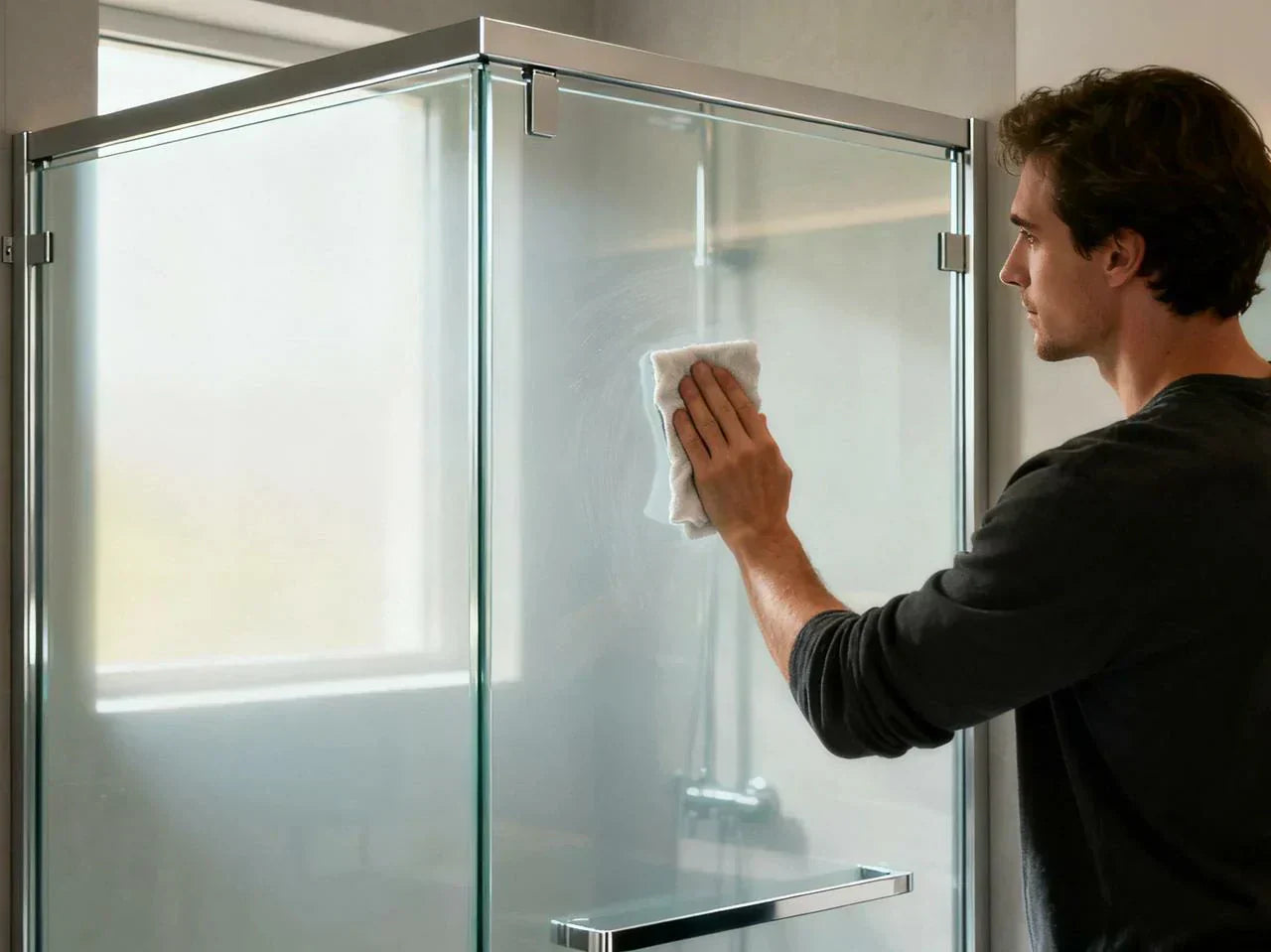
- Remove water from the glass regularly with a suitable squeegee or soft cloth.
- Use cleaning products that are compatible with the glass, coating, hardware, and finish.
- Avoid abrasive pads or harsh products that may scratch glass or damage metal finishes.
- Pay extra attention to tracks, seals, frame channels, hinges, and panel overlaps where residue can collect.
Hardware and Seal Checks
Inspect handles, hinges, rollers, tracks, sweeps, and seals periodically for looseness, wear, or misalignment. Follow the manufacturer's instructions before lubricating, adjusting, or replacing hardware.
Common Problems
- Door sag or difficult movement: Check hinges, pivots, rollers, fasteners, and alignment according to the product instructions.
- Misaligned tracks: Inspect the track, guides, rollers, and surrounding installation before making adjustments.
- Water escaping near the opening: Check seals, sweeps, panel alignment, shower spray direction, threshold conditions, and drainage.
- Residue around frames and seals: Clean accessible channels and joints with products suitable for the enclosure materials.

What Affects Shower Door Cost?
Shower door cost varies with the opening mechanism, glass configuration, framing, hardware, finish, product size, and installation conditions. A stock framed or sliding system can involve a different cost structure from a custom frameless, curved, corner, or steam enclosure.
- Glass: Size, configuration, finish, coating, and custom fabrication can affect cost.
- Hardware: Hinges, rollers, framing, handles, finishes, and specialty components vary by system.
- Installation: Wall conditions, unusual openings, custom templating, waterproofing details, and difficult glass handling can change labor requirements.
- Customization: Curved glass, specialty patterns, unusual dimensions, and custom finishes may increase project complexity.
Compare the complete product and installation requirements rather than relying on a generic price range for the door category.
Explore Shower Doors
After you understand which type of enclosure fits your project, browse HOROW shower doors and compare the available configurations for your bathroom. Confirm the exact product dimensions, adjustment range, opening mechanism, glass configuration, and installation requirements before ordering.
Related Shower Door Guides
FAQs About Types of Shower Doors
1. What are the main types of shower doors?
The main types include sliding or bypass doors, hinged and pivot doors, folding or bi-fold doors, fixed glass panels, corner and curved enclosures, and steam enclosures. Shower doors can also be described as framed, semi-frameless, or frameless depending on how much structural framing surrounds the glass.
2. What is the difference between sliding and hinged shower doors?
Sliding doors move horizontally along the shower opening and do not require a door-swing area outside the shower. Hinged doors swing from side-mounted hardware and therefore need a clear path around the opening. The two mechanisms also differ in usable entry space, hardware, and cleaning requirements.
For a more detailed comparison, see our sliding and hinged shower door guide.
3. What is a folding shower door?
A folding shower door uses two or more connected panels that fold together as the opening is cleared. This changes the amount of space required for the door to operate compared with a single swinging panel. The exact folding direction and clear opening depend on the specific design.
4. What is the difference between pivot and hinged shower doors?
A hinged shower door swings from hardware mounted along the side of the moving panel. A pivot door rotates around pivot points positioned at the top and bottom. The exact swing direction, mounting requirements, and usable entry depend on the specific system, so compare the product drawings before choosing.
5. What is the difference between framed and frameless shower doors?
Framed shower doors use structural framing around more of the glass edges, while frameless systems use less visible perimeter framing and rely more on the glass and mounting hardware. Semi-frameless systems fall between the two. These differences affect appearance, hardware, cleaning, installation, and cost.
6. What is a fixed glass shower panel?
A fixed glass panel is a stationary screen rather than a moving door. It is commonly used for open-entry shower layouts. Because there is no moving door, panel position, showerhead direction, drainage, waterproofing, and the complete shower layout become especially important for water control.
7. Which shower door type works best for a small bathroom?
The answer depends on available swing space, usable entry, nearby fixtures, cleaning preferences, and budget. Sliding, hinged, folding, and partial glass-panel layouts solve different space problems.
For the full decision framework, see our guide to choosing shower doors for small bathrooms.



Leave a comment
This site is protected by hCaptcha and the hCaptcha Privacy Policy and Terms of Service apply.