
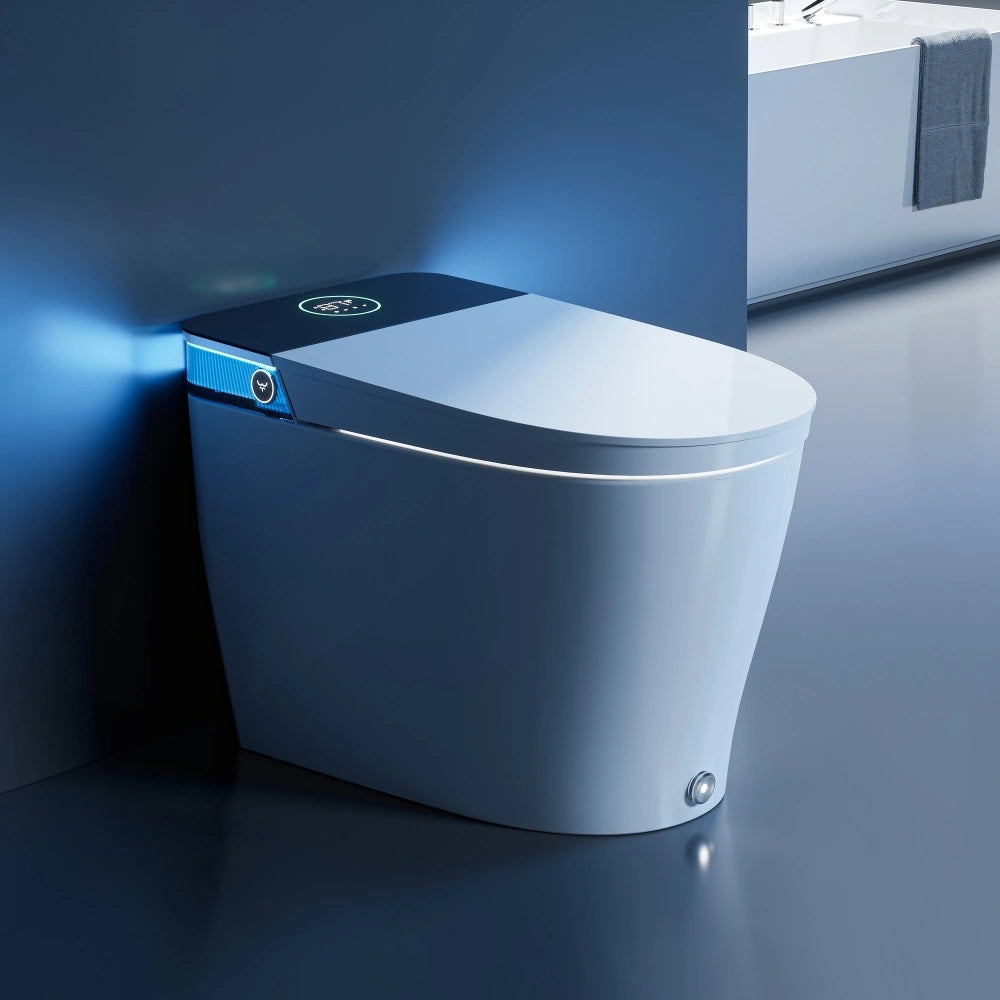
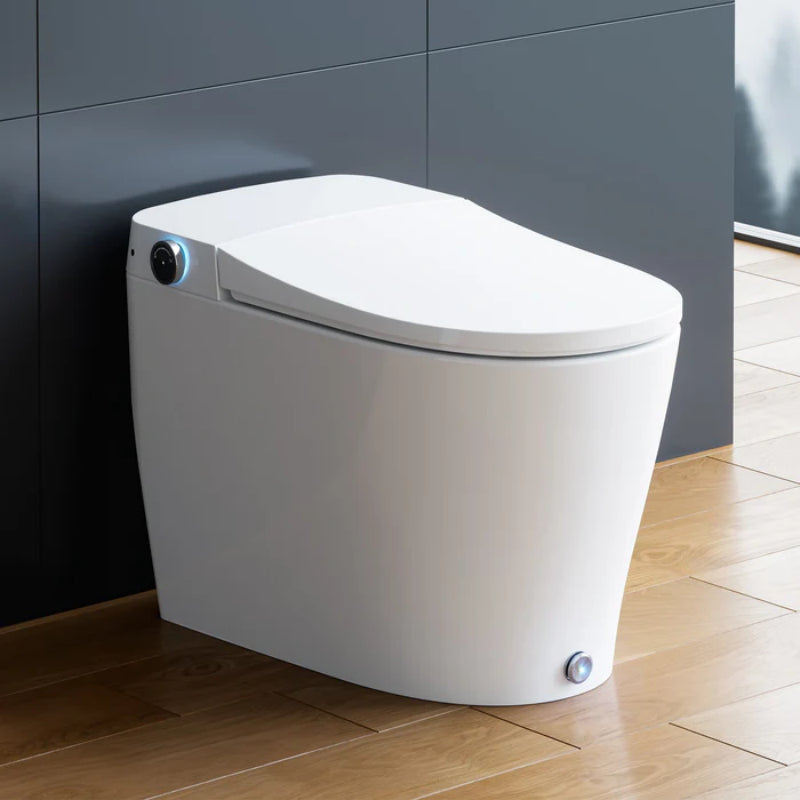
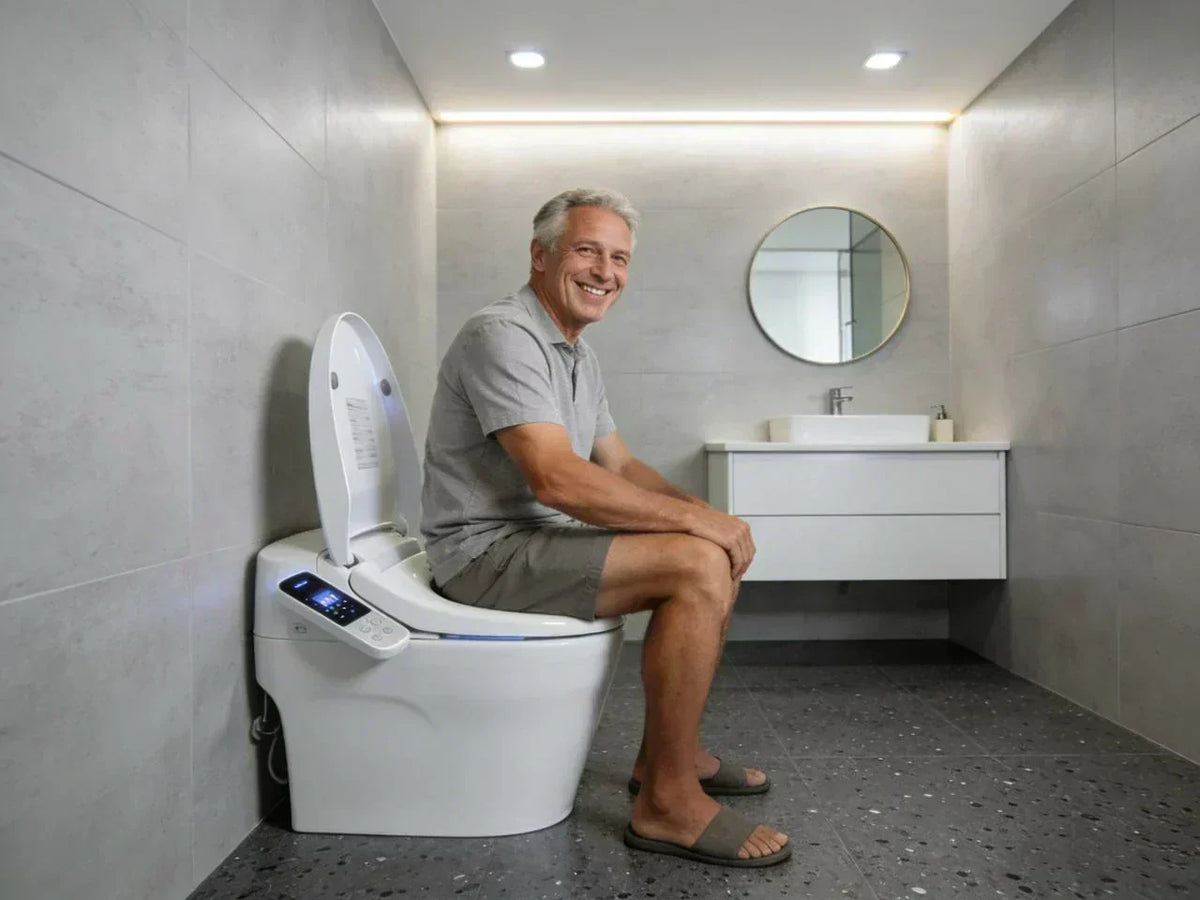
The best smart toilet with a bidet is not the model with the longest feature list. It is the integrated toilet that fits your rough-in and bathroom layout, supports your household’s comfort or accessibility needs, and has installation requirements you can meet before delivery.
HOROW offers integrated bidet toilets that replace the complete toilet rather than treating an add-on bidet seat as the primary product. These all-in-one units may combine washing, drying, seat heating, flushing and sensor-based controls in one fixture.
If you are searching for the best bidet toilet, the best smart toilet with a bidet or the best toilet with a built-in bidet, use this guide to compare:
-
Bathroom fit and rough-in compatibility
-
Electrical and plumbing requirements
-
Wash, drying and comfort functions
-
Ease of use for seniors or shared households
-
Maintenance, parts and power-outage limitations
-
Total ownership cost rather than product price alone
Start with the current HOROW collection, then confirm every model-specific specification on its product page and installation manual before ordering.
Browse HOROW Toilets with Built-In BidetsWhich Bidet Toilet Brands Are Worth Comparing?
There is no single best bidet toilet brand for every bathroom. First separate complete integrated toilets from add-on bidet seats. TOTO appears in both integrated-toilet and electronic-seat comparisons, while Bio Bidet and Brondell are frequently evaluated for bidet seats. HOROW is one brand to compare when the goal is to replace the complete fixture with an integrated bidet toilet.
Compare the exact model—not only the brand—using verified bathroom fit, installation requirements, daily controls, warranty terms, replacement-part support and independent reviews.
What to compare across brands
- Product category: Confirm whether the product is a complete integrated toilet, an electronic bidet seat or a non-electric attachment.
- Fit and installation evidence: Look for a product drawing, dimensions, rough-in, seat height, clearances, electrical requirements and water requirements.
- Daily-use functions: Compare documented wash controls, heating, drying, flushing, sensors and manual operation.
- Ownership support: Review the written warranty, manuals, replacement-part availability and service process.
- Independent evidence: Check installation videos, third-party reviews and whether model names and specifications remain consistent across retailers.
- Total project cost: Include the fixture, installation, possible electrical work, maintenance and model-specific replacement parts.
Browse HOROW toilets with built-in bidets to compare current integrated models. For a broader category comparison, see the HOROW smart toilet buying guide.
How We Evaluate a Smart Toilet with a Built-in Bidet
A useful recommendation should begin with installation compatibility and daily usability. We use the following criteria when evaluating an integrated bidet toilet:
-
Fit and installation compatibility
The rough-in, total depth, width, seat height, water connection, outlet location and required clearances must work in the intended bathroom. -
Core bidet functions
The product page and manual should clearly document the available wash modes, adjustable water settings, nozzle operation, seat heating and drying functions. -
Household usability
Controls should be reachable and understandable for the intended users. Seniors and people with limited mobility may need a suitable seat height, simple controls and reduced reaching, but accessibility claims must be confirmed for the individual model. -
Flush and outage planning
Buyers should confirm the flush system, stated water use and whether manual or battery-assisted flushing is available during a power outage. -
Maintenance and support
Nozzle access, inlet-screen cleaning, hard-water maintenance, warranty coverage and replacement-part availability affect long-term ownership. -
Brand and model evidence
A brand-level recommendation should not rely only on a manufacturer’s feature list. Use the current product page and manual to verify model-specific facts, then check independent reviews, installation demonstrations, retailer listings, written warranty terms and replacement-part information. Confirm that the model name and core specifications are consistent across those sources. Do not assume that a feature available on one model applies across the entire brand.
Is a smart toilet bidet combo right for you?
Buy a smart toilet bidet combo if…
-
A heated seat that’s warm every morning
-
Warm water washing without waiting for sink water to heat up
-
Touchless/auto features (auto open/close, auto flush, night light)
-
A clean, modern look with fewer exposed parts
Skip it (or delay it) if…
-
You can’t add a nearby grounded outlet (often GFCI-protected) without opening walls or hiring an electrician
-
You want the simplest long-term repairs with off-the-shelf toilet parts
-
You’re doing this in a rental where you can’t control electrical work, plumbing changes or warranty/returns
Best-fit households
-
Homes with frequent users (busy families, shared bathrooms)
-
People doing a bathroom remodel or planned upgrade
-
Households in which users prefer reduced reaching, simpler controls, a warmer seat or hands-free functions. Individual needs vary, so compare the seat height, control position, operating steps and manual functions of the exact model before purchasing.
-
Cold-climate homes where a warm seat is not “luxury,” it’s comfort
-
Households trying to use less toilet paper for comfort or convenience
Worst-fit households
-
Rentals and temporary living situations
-
Ultra-tight budgets where one surprise service call breaks the plan
-
Hard-water homes if you do not want additional maintenance. Hard water contains dissolved calcium and magnesium and may contribute to scale buildup in plumbing fixtures and water passages. Follow the maintenance instructions for the exact model, especially when cleaning accessible inlet screens or nozzle components. See the United States Geological Survey overview of water hardness.
-
DIY-averse buyers without a trusted plumber or electrician

Integrated Bidet Toilet vs Bidet Seat
An integrated bidet toilet and a bidet seat can provide similar washing benefits, but they are different purchase decisions.
|
Decision factor |
Integrated bidet toilet |
Bidet seat |
|
What you replace |
The complete toilet |
The seat on a compatible existing toilet |
|
Appearance |
Unified, built-in design |
Retains the existing bowl and tank |
|
Installation |
Requires full toilet replacement and nearby power |
Usually simpler if the existing toilet and outlet are compatible |
|
Repair approach |
Some electronic and plumbing parts may be model-specific |
The toilet and bidet seat can often be serviced separately |
|
Best fit |
Remodels, planned toilet replacement and buyers wanting one integrated fixture |
Rentals, lower budgets and toilets that already fit and flush well |
|
Main limitation |
Higher installation cost and more compatibility checks |
Seat-to-bowl fit, visible hoses and a less integrated appearance |
Choose an integrated HOROW bidet toilet when you want to replace the complete fixture and have already confirmed the bathroom’s rough-in, dimensions, water supply and electrical access. Choose a bidet seat instead when the existing toilet works well and full replacement would add unnecessary cost or installation risk.
What are the deal-breaker trade-offs vs a bidet seat or standard toilet?
Full-unit “intelligent toilet” convenience vs harder repairs
-
Electronics are built into the unit, often in the lid and seat area
-
Some parts are model-specific
-
A small issue such as a sensor, lid or control-board problem may require model-specific service
Luxury features vs more things that can fail
-
More settings to learn
-
More sensors that may require adjustment or troubleshooting
-
More powered components that may require model-specific service
Water washing and daily comfort vs a learning curve
-
Seat sensors may require you to be seated for wash or drying functions to start
-
Controls may be remote-based, which can be unfamiliar to guests
-
Dryers may reduce toilet paper use without fully replacing it
Is a smart toilet bidet combo worth it if you already have a great existing toilet?
-
You want a sleeker one-piece look and fewer add-ons
-
Your current toilet needs replacement because of fit, flushing, comfort or wear
-
You expect to use seat heating, warm washing and drying regularly
What should you budget for (price, install, and ownership costs)?
Price tiers and the “value” line
-
Affordable or entry smart toilets: Core bidet functions, seat heating, basic drying and simpler controls may be available, but support and feature coverage vary by model.
-
Mid-range smart toilets: Buyers may find a broader balance of washing, drying, controls, finish and service support.
-
Premium smart toilets: These may add more automation, finish options, control settings or comfort functions, along with higher purchase and replacement-part costs.
-
Documented water-temperature and pressure controls
-
Functions the household expects to use regularly
-
Verified bathroom and utility compatibility
-
Written warranty terms and model-specific parts support
Installation budget reality
-
Plumber time for removal, installation and leak checks
-
Electrician time if the existing outlet or circuit is not suitable
-
Possible work on the shut-off valve, supply line, flange or finished floor
Ongoing costs (electricity + filters + parts)
-
Electricity for powered washing, seat heating and drying functions
-
Filter replacements when required by the exact model
-
Inlet-screen or nozzle-area maintenance following the product manual
-
Replacement of model-specific wear parts over time
Total-cost snapshot (unit + install + yearly ops)
| Cost item | Budget expectation | Notes that change the number |
| Smart toilet bidet combo unit | $800–$3,500+ | Big jumps for premium finishes and automation |
| Plumber installation | $200–$600 | More if flange or valve work is required |
| Electrician / new outlet | $200–$900+ | Can be higher if wiring or a new circuit is required |
| Yearly electricity | $15–$60 | Depends on model, settings, usage and utility rates |
| Filters / maintenance parts | $0–$120/year | Varies by model and water quality |
| “Surprise fixes” reserve | $100–$400 | May include an old shut-off valve, damaged flange, supply-line work or floor repairs |
Will it fit your bathroom, body, and household routines?
Fit checklist: rough-in, footprint depth, seat height, clearance
-
Rough-in distance: Measure from the finished wall to the closet-bolt centerline and compare the result with the exact model requirements. Do not assume every bathroom or model uses the same rough-in.
-
Footprint depth or front projection: Compare the verified product depth with the door, vanity and available knee room.
-
Seat height: Compare the documented seat height with the needs of the intended users rather than assuming taller is always more comfortable.
-
Side clearance: Leave enough room for sitting, controls, cleaning and future service.
-
Door and vanity clearance: Measure with doors and drawers fully open and closed.
Will this work in a small bathroom or tight toilet alcove?
-
Knee room: A longer bowl or greater front projection can reduce usable clearance.
-
Cleaning access: Leave enough space to clean around the base and reach service areas identified in the manual.
-
Remote placement: Confirm that any wall-mounted control can be placed where it remains reachable and dry.
Household usability: multi-user settings, guests, and night light
-
Easy adjustment of water pressure and temperature when those functions are documented for the model
-
Simple wash controls with clear labels or icons
-
A night light that suits the room and household preferences
-
Manual controls that guests can understand without reviewing the full manual
Ease of use and comfort
-
A seat shape and verified seat height that suit the intended users
-
Large, readable controls located within comfortable reach
-
Documented manual operation and a clearly explained seat sensor
-
Gentle wash options and gradual pressure adjustment when available
Can your home support it? (Electrical + plumbing prerequisites)
Do smart toilets need a special electrical outlet?
-
Using an extension cord instead of following the product instructions
-
Assuming the existing circuit is suitable without checking the model’s electrical rating
-
Forgetting to confirm which side of the toilet the power cord exits

What if the required outlet is not available?
-
Comparing a compatible bidet seat when an approved outlet is already available within its permitted cord reach
-
Choosing a non-electric bidet attachment when powered heating and drying are not required
-
Delaying the upgrade until a planned remodel makes electrical work more practical
Water supply realities: shut-off valve, pressure, and leak checks
-
Shut-off valve condition: Confirm that the existing valve operates correctly and is suitable for the planned connection.
-
Supply line length and routing: Use the required components and avoid routing that creates kinks or pressure against the toilet body.
-
Water pressure: Compare the home’s conditions with any documented model-specific requirement.
-
Leak prevention: Follow the installation instructions for gaskets, screens, fittings and tightening procedures.
DIY vs pro install: when “simple setup” becomes a service call
-
The flange and finished floor are in suitable condition
-
The shut-off valve operates correctly
-
The required outlet and circuit are already available
-
The unit can be lifted and positioned safely
-
You are unsure about the flange, rough-in, floor level or required mounting method
-
The shut-off valve does not fully stop the water
-
The bathroom has a history of leaks or plumbing repairs
-
The installation requires electrical, plumbing or structural work outside your experience

Pre-buy compatibility checklist
| Check | What to look for | Why it matters |
| Outlet | Model-required outlet type and location within permitted cord reach | The powered functions require a suitable electrical connection |
| Circuit capacity | Compare the model rating with the existing circuit | The circuit must support the documented electrical load |
| Rough-in | Measure from the finished wall to the closet-bolt centerline | The bathroom rough-in must match the exact model |
| Depth | Toilet-to-door and toilet-to-vanity clearance | Avoid door, knee-room or cleaning-access conflicts |
| Shut-off valve | Operates fully and is in suitable condition | Helps prevent installation delays and leaks |
| Water line routing | Correct components and no kinks | Supports the intended water connection |
| Flange height | Solid, level and compatible with the instructions | Supports a stable installation and proper seal |
| Floor level | Flat enough for the required mounting method | Helps prevent rocking and stress on connections |
What’s it like day-to-day (cleanse, dry, flush, noise, convenience)?
Washing performance: what to compare
-
Multiple pressure settings
-
Adjustable water-temperature settings
-
Documented nozzle-position or spray-pattern controls
-
A documented nozzle-rinse or nozzle-cleaning function
-
Available spray-position and pattern controls
-
The number and range of pressure settings
-
The documented water-heating system and available temperature controls
Drying reality: warm air limits and when you still use paper
-
The airflow is gentle or requires more time
-
The available heat settings do not match the user’s preference
-
The seat sensor pauses the function when the user changes position
-
The controls for fan speed and temperature are not immediately clear

Auto flush and sensors: convenience vs noise and false triggers
-
Sensors may respond differently to movement or user position
-
Flush noise may matter in bathrooms near bedrooms
-
Some households may prefer manual control over automatic operation
Can it work during a power outage?
-
Washing, heating and drying functions may not operate
-
Automatic lid and flush functions may not operate
-
Manual, battery-assisted or backup flushing must be confirmed for the exact model

Does it require a hot water line?
-
Whether the model has an internal water-heating system
-
Whether the documented system provides continuous or reservoir-based heating
What if the dryer stops heating or blowing?
-
Whether the seat sensor is engaged
-
Whether the dryer is enabled and the settings are correct
-
Whether an energy-saving or child setting changes dryer operation
-
Whether the outlet, circuit or protective device has interrupted power
What are the long-term risks (maintenance, hard water, reliability, and support)?
Hard-water ownership: deposits, screens, and water passages
-
Inlet screens or filters
-
Valves and seals
-
Nozzle openings or spray passages
-
Other water-contact components identified by the manufacturer
-
A change in spray pressure
-
A maintenance reminder or a need to inspect accessible screens
-
Dripping or repeated refill activity that should be checked according to the manual
Long-term ownership issues to consider
-
Unexpected refill noise or a water connection that requires inspection
-
Sensor or control behavior that requires troubleshooting
-
Remote-control batteries or replacement controls
-
Availability of the exact replacement part for the model
Self-cleaning nozzles and manual cleaning
-
Wipe the exterior and under-seat areas
-
Clean the bowl using methods permitted by the manufacturer
-
Inspect and clean the accessible nozzle area as directed by the manual
-
Inspect accessible inlet screens when the instructions call for it
-
Use the model’s documented nozzle-cleaning or maintenance mode
-
Use only the cloth, brush or cleaning method permitted by the instructions
-
Avoid harsh abrasives or chemicals that may damage plastics, seals or coatings
-
Adjust the maintenance schedule to the water conditions and manufacturer guidance
Do smart toilets still make sense in hard-water areas?
-
Whether accessible screens or filters are identified in the manual
-
The documented cleaning procedure for the nozzle and water passages
-
The availability of model-specific support and replacement parts
-
Whether the manufacturer recommends additional water treatment or maintenance steps
Choose a HOROW Bidet Toilet by Buyer Need
The right brand cannot be chosen separately from the exact model and bathroom. For a complete integrated toilet, use the following buyer-need comparison before reviewing individual HOROW product pages. If the goal is to keep the existing toilet, compare compatible bidet seats as a separate product category.
|
Buyer need |
HOROW model to compare first |
Verified reasons to compare it |
Main limitation or check |
|
Smaller bathroom or value-focused smart upgrade |
At 25-9/16 inches long, the T16 has the shortest front-to-back dimension among the models in this comparison. It provides instant warm-water front, rear and movement washing, an adjustable heated seat, dual flushing, a 12-inch rough-in and 10-amp, 120-volt operation. |
Confirm that the home can meet the documented 20.3–108 psi water-pressure range. Its tankless design makes the water-supply check especially important. |
|
|
Higher seat and straightforward shared-household controls |
The T33 combines a 17-1/2-inch seat height with a built-in water tank and pump, child wash, adjustable washing, warm-air drying, a side control knob and a remote. It measures 27-1/16 inches long and operates on a 10-amp, 120-volt electrical supply. |
It requires a 12-inch rough-in and a documented water-pressure range of 13–108 psi. Confirm the outlet position and the 33-7/16-inch power-cord reach. |
|
|
Hands-free controls and ambient bathroom features |
The T38 adds automatic lid opening and closing, foot-kick controls, automatic flushing, adjustable washing, a heated seat, warm-air drying and ambient lighting. It measures 27-7/16 inches long and uses a built-in tank and pump. |
It requires a 16-amp, 120-volt electrical supply. If power-outage flushing matters, confirm the separately sold battery box before ordering. |
|
|
Higher seat, dual flush and additional automation |
The T38P has a documented 17-9/16-inch seat height, 1.0/1.28 GPF dual flushing, a built-in tank and pump, automatic lid controls, adjustable washing, warm-air drying and a foam-shield function. |
Its 16-amp electrical requirement should be checked before purchase. The higher seat may not suit every user, especially shorter household members. |
|
|
Family wash modes and mechanical outage flushing |
The X70 combines child, feminine, rear and movement wash modes with a 17-inch seat height, widened seat, automatic lid controls, dual flushing and mechanical power-outage flushing that does not require electricity or batteries. |
At 28-3/16 inches long, it needs more front-to-back space than the other models in this comparison. Foam agent for the foam-shield function is sold separately. |
All five models in this comparison are designed for a 12-inch rough-in, but they do not share the same dimensions, electrical requirements, water-pressure range, seat height or outage-flush system. Confirm the exact product drawing and installation manual rather than applying one model’s specifications to another.
Model availability and specifications can change. Use the current HOROW toilet with built-in bidet collection to browse available models, then open the product page and installation manual for the exact model you are considering. Use the Before You Buy checklist below to confirm fit, electrical access, water requirements, outage operation, included parts and warranty terms.
HOROW Bidet Toilets to Compare by Bathroom and Household Need
The models below are not presented as a universal ranking. Each one addresses a different combination of bathroom space, seat height, household controls, electrical requirements, water pressure and power-outage planning. Start with the buyer need closest to your situation, then confirm the complete product drawing and installation manual before ordering.

HOROW T16 — Compare for a Shorter Front-to-Back Footprint
Start with the T16 when bathroom depth and core smart functions are the main priorities. Its 25-9/16-inch overall length is the shortest among the models in this comparison. It combines instant warm-water washing, an adjustable heated seat and dual flushing with a 12-inch rough-in and 10-amp, 120-volt operation. Before ordering, confirm that the home can support the documented 20.3–108 psi water-pressure range.
View T16 Details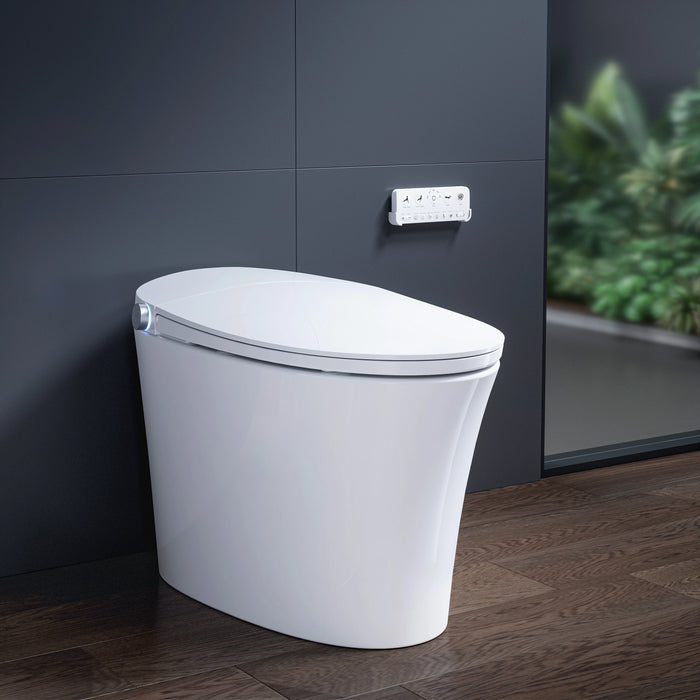
HOROW T33 — Compare for a Higher Seat and Straightforward Controls
Compare the T33 when seat height and shared-household usability are important. It has a documented 17-1/2-inch seat height, built-in water tank and pump, child wash, adjustable washing, warm-air drying, a side control knob and a remote. Its 10-amp, 120-volt electrical requirement is lower than the 16-amp requirement documented for several other models in this comparison. Confirm the 12-inch rough-in and 13–108 psi water-pressure range.
View T33 Details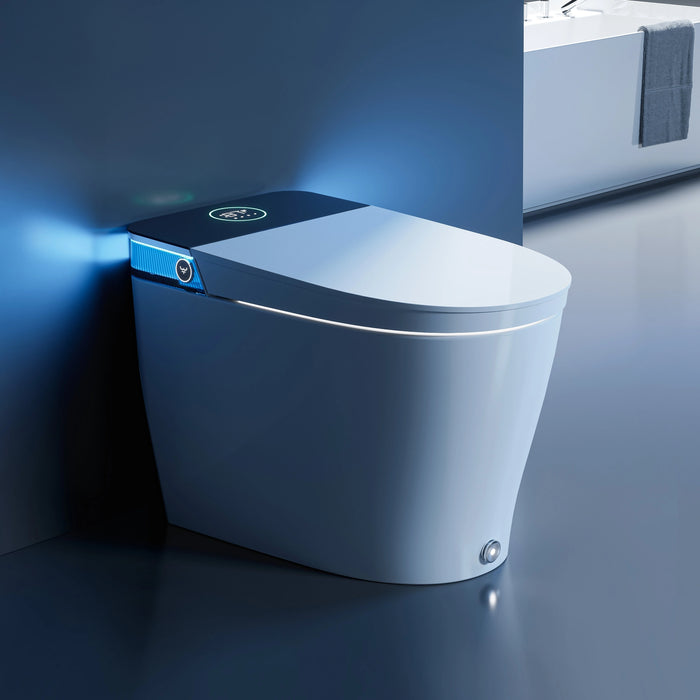
HOROW T38 — Compare for Automatic Controls and Ambient Lighting
Consider the T38 when automatic lid operation, foot-kick controls and bathroom lighting are part of the purchase decision. The model also includes adjustable washing, a heated seat, warm-air drying, automatic flushing and a built-in tank and pump. It measures 27-7/16 inches long and uses a 16-amp, 120-volt electrical supply. Confirm the separately sold battery box if power-outage flushing is required.
View T38 Details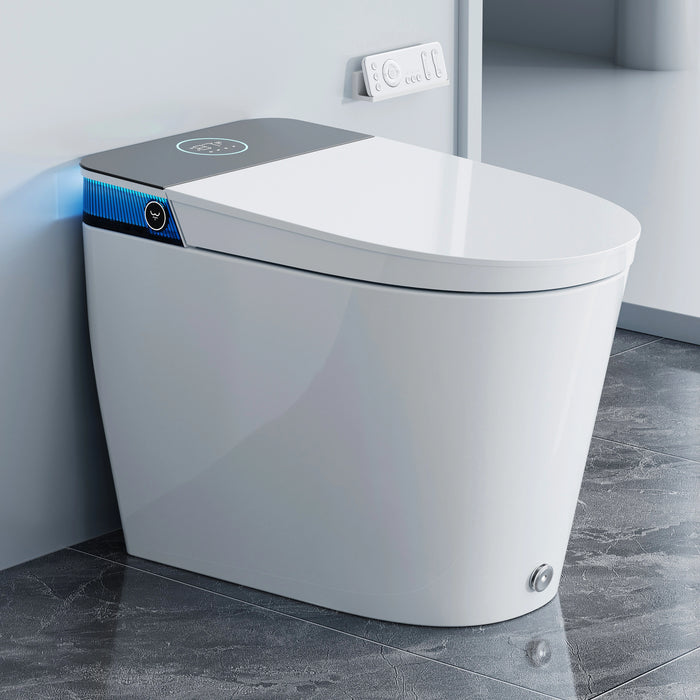
HOROW T38P — Compare for a Higher Seat and Dual-Flush Control
Compare the T38P when a 17-9/16-inch seat height, 1.0/1.28 GPF dual flushing and automatic controls match the household’s priorities. It also includes a built-in tank and pump, adjustable washing, warm-air drying, automatic lid operation and a foam-shield function. Confirm the 16-amp, 120-volt electrical requirement, and make sure the higher seat is comfortable for every regular user.
View T38P Details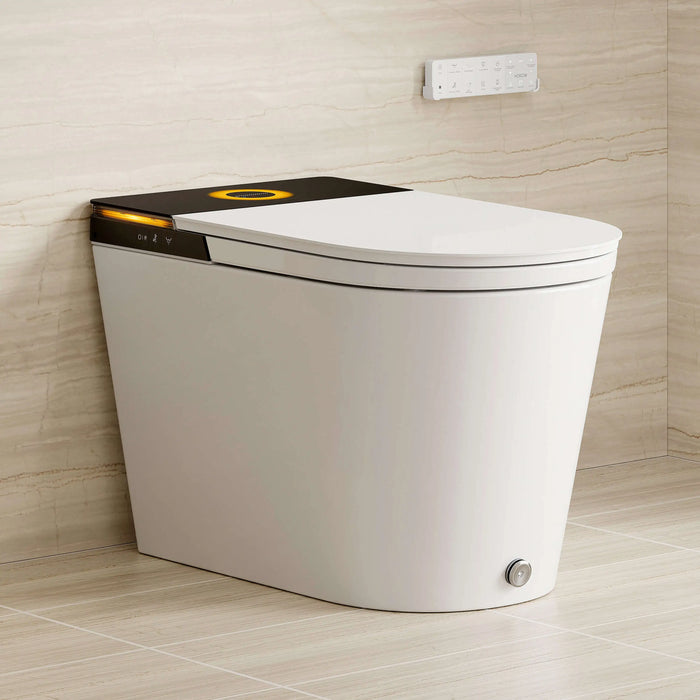
HOROW X70 — Compare for Family Controls and Mechanical Outage Flushing
Compare the X70 for a shared household that values child wash, multiple adjustable wash modes, a widened seat, automatic lid controls and mechanical power-outage flushing without batteries. It has a documented 17-inch seat height and works within an 8.7–116 psi water-pressure range. Its 28-3/16-inch overall length requires more front clearance, and foam agent for the foam-shield function is sold separately.
View X70 DetailsNot sure which model fits your bathroom? Compare the current HOROW toilets with built-in bidets, then open the exact product page to confirm dimensions, rough-in, seat height, electrical requirements, water-pressure range, included parts and power-outage operation.
Putting it together: choosing the right type of intelligent toilet
Type 1: “I want the full experience, and I’ll use it daily”
-
Documented seat and water-heating functions
-
Controls that are easy to use every day
-
Adjustable wash settings that suit the household
-
Clear warranty and support information
-
Additional automation that cannot be adjusted or disabled when the household does not need it
Type 2: “I want smart features, but I want simpler maintenance”
-
A simpler smart toilet with the core functions you expect to use
-
A compatible bidet seat installed on an existing standard toilet
-
Whether the model’s maintenance instructions and accessible service points suit your water conditions and ownership preferences
Type 3: “I’m budget-focused, but I want an all-in-one”
-
Verified fit and utility compatibility
-
The core washing and comfort functions you will use
-
A written warranty and a clear support process
Before You Buy a Smart Toilet with a Built-in Bidet
Complete this checklist for the exact HOROW model you plan to order:
-
Confirm the model name on the product page, installation manual and order page is identical.
-
Measure the rough-in from the finished wall, not from the baseboard, to the closet-bolt centerline.
-
Compare the toilet’s verified width, depth and seat height with the available bathroom space.
-
Check the door swing, vanity clearance, knee room and access needed for cleaning or service.
-
Confirm that a grounded, bathroom-appropriate outlet is within the product cord’s permitted reach.
-
Review the model’s electrical rating before asking an electrician whether the existing circuit is suitable.
-
Verify any minimum water-pressure requirement and inspect the shut-off valve before installation day.
-
Check whether the required supply line, mounting hardware, remote, battery box or other accessories are included or sold separately.
-
Read the official instructions for flushing during a power outage.
-
Confirm whether the installation requires a specific rough-in, concealed tank, wall structure or professional trade.
-
Review the written warranty, exclusions and process for obtaining model-specific replacement parts.
-
Save the product page, manual, order confirmation and model number for future service.
Do not rely on a collection image or a feature shown for another model. The individual product page and installation manual should control the final purchase decision.
Once you have confirmed the installation requirements and the features you actually need, shop HOROW smart toilets and compare current models on their individual product pages.
FAQs
What is the best smart toilet with a bidet?
The best smart toilet with a bidet is one that fits the bathroom, supports the intended user and has installation requirements that can be confirmed before purchase. Start with rough-in, dimensions, seat height, outlet access and water requirements. Compare comfort features only after those conditions are met.
HOROW offers complete integrated bidet toilets for shoppers who want to replace the full fixture. Check the current HOROW toilet with built-in bidet collection, then verify the exact model against its official product page and manual.
What should I look for in a bidet toilet brand and model?
Choose a brand that provides current manuals, model-specific specifications, written warranty terms, replacement-part information and a clear support process. Then verify the exact model’s dimensions, rough-in, electrical and water requirements, wash controls, outage operation and maintenance access. A longer feature list does not offset unclear installation or service information.
Which HOROW bidet toilet should I compare first?
Start with the T16 when front-to-back space and core smart functions are the main priorities. Compare the T33 for a 17.5-inch seat height, built-in tank and pump, child wash and 10-amp electrical requirement. Consider the T38 for automatic lid controls and ambient lighting, the T38P for a higher seat and dual flush, and the X70 for family wash modes and mechanical power-outage flushing. Every model requires a 12-inch rough-in, but their dimensions, electrical loads, water-pressure ranges and outage systems differ.
Is a toilet with a built-in bidet better than a bidet seat?
A built-in bidet toilet is usually the better fit when you are already replacing the toilet and want one integrated fixture. A bidet seat may be the more practical choice when the existing toilet works well, the budget is limited or future repairs need to remain simple. Neither type is automatically better for every bathroom.
Are smart toilet bidet combos worth it?
Does a smart toilet need a hot water line?
How do you clean self-cleaning nozzles?
References


Leave a comment
This site is protected by hCaptcha and the hCaptcha Privacy Policy and Terms of Service apply.