
Which Toilet Should You Choose?
Choose a smart toilet for a frequently used primary bathroom when bidet washing, a heated seat, drying, or automated controls will improve your routine. It is good for daily comfort and personal care, but less suitable if you want the simplest repairs or dependable access to every feature during a power outage.
Choose a regular toilet when affordability, familiar operation, easy servicing, and minimal dependence on electronics matter most. It is a strong fit for guest bathrooms, rentals, low-use rooms, and homes where straightforward maintenance is the priority.
Choose a regular toilet with a separate bidet seat if you want water washing and selected comfort features without committing to an integrated electronic fixture. This modular option is easier to reverse or replace, although it may look less streamlined.
Choose Smart for Daily Hygiene and Comfort
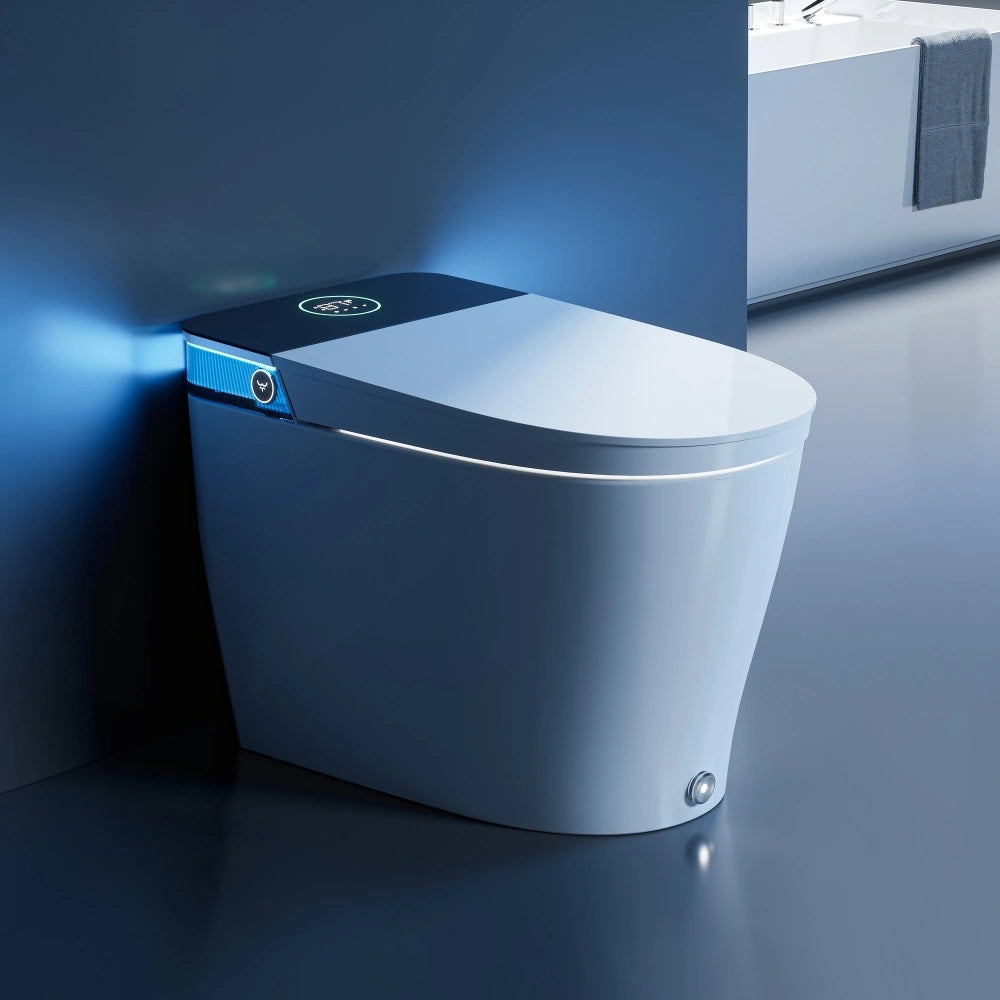
A smart toilet combines the bowl and flushing system with electronic features that vary by model. These can include water washing, seat heating, warm-air drying, automatic flushing, a night-light, sensors, and remote controls.
The added cost and complexity are easiest to justify when the household will use the main features every day. If nobody wants bidet washing and the heated seat is only mildly appealing, a regular toilet will usually provide better value.
Choose Regular for Simplicity and Resilience
A conventional toilet focuses on dependable waste removal with fewer systems to maintain. Common mechanical problems are generally more familiar to plumbers and homeowners, and basic operation normally does not require electricity.
That simplicity is valuable in a home with one bathroom, a rental property, a guest room, or any location where a failed sensor or unavailable electronic component would create unnecessary inconvenience.
Choose a Bidet Seat for Flexibility
A separate bidet seat adds washing and, on powered models, may add heat or drying while preserving the underlying toilet. If the seat fails or preferences change, it can be serviced or replaced without necessarily replacing the complete fixture.
Compatibility is not automatic. Check the bowl shape, mounting arrangement, available space, water connection, and any power requirements for the exact seat and toilet combination.
Decision Snapshot: Who Should Choose Each?
Primary Bathrooms and Accessibility Favor Smart
A smart toilet is most compelling when several of these conditions apply:
- The bathroom is used repeatedly every day.
- Household members actively want water washing.
- A heated seat or dryer would provide meaningful comfort.
- Reduced reaching or wiping could make personal care easier.
- The intended users can understand and reach the controls.
- The bathroom can accommodate the model’s plumbing, power, and clearance needs.
- The budget allows for installation and possible electronic servicing.
Washing, drying, remote operation, and automatic flushing may help some older adults or people with limited mobility. However, automation is not inherently accessible. Small buttons, unclear symbols, touch-sensitive controls, or a poorly placed remote can create barriers. The intended user should evaluate the seat height, control layout, stop function, and outage behavior before purchase.
Rentals and Guest Baths Favor Regular
A regular toilet is usually the lower-risk choice for:
- Guest or powder rooms
- Rental properties
- Vacation homes
- Basements and other low-use bathrooms
- Budget-controlled renovations
- Homes where local specialist service may be limited
Occasional users already know how a conventional toilet works. Owners also avoid paying for comfort features that may be rarely used, misunderstood, or unwanted by future occupants.
Bidet-Curious Buyers Should Start Modular
A bidet seat is a practical first step when the household is interested in water washing but uncertain about the experience. It provides a way to test new habits without making every future repair dependent on an integrated system.
This option is also useful for people who expect to move, want to upgrade in stages, or prefer to keep the toilet’s basic flushing system separate from its comfort features.
Shared Households Need Simple, Agreed Controls
One user may appreciate an automatic lid while another finds it distracting. Spray pressure, water temperature, seat heat, and automatic flushing can also produce conflicting preferences.
For a shared bathroom, prioritize a clear stop button, an obvious manual flush, readable labels, and controls that do not require every guest to study instructions. User presets may help, but only when household members can operate them confidently. If the goal is zero learning curve, a regular toilet is the safer choice.
Direct Comparison: Smart, Regular, or Bidet Seat?
Comparison Table: Which Option Wins Where?
| Decision factor | Smart toilet | Regular toilet | Regular toilet with bidet seat |
|---|---|---|---|
| Upfront expense | Usually the highest | Usually the lowest | Between the two, depending on the seat |
| Installation | Plumbing, power, clearance, and model-specific checks | Usually a straightforward plumbing replacement when compatible | Toilet installation plus seat, water, and possible power checks |
| Personal hygiene | Integrated water washing | Paper-based unless an attachment is added | Water washing through the seat |
| Comfort | Strongest integrated range of heating, drying, and automation | Basic, familiar operation | Many comfort features without an integrated base |
| Repair path | May involve proprietary electronic parts | Familiar mechanical servicing | Toilet and seat can usually be addressed separately |
| Outage behavior | Powered features stop; flushing depends on the design | Standard nonpowered operation remains available | Basic toilet remains usable; powered seat features stop |
| Guest usability | May require brief instructions | Immediately familiar | Familiar flushing with optional extra controls |
| Appearance | Streamlined, unified design | Broad selection of conventional forms | More visible seams and added seat bulk |
| Best fit | High-use primary bathroom | Rental, guest bath, or simplicity-first home | First bidet upgrade or modular household |
No option wins every category. Smart toilets lead when integrated comfort and washing are priorities. Regular toilets lead on simplicity and repair familiarity. Bidet seats provide the most reversible route to improved personal washing.
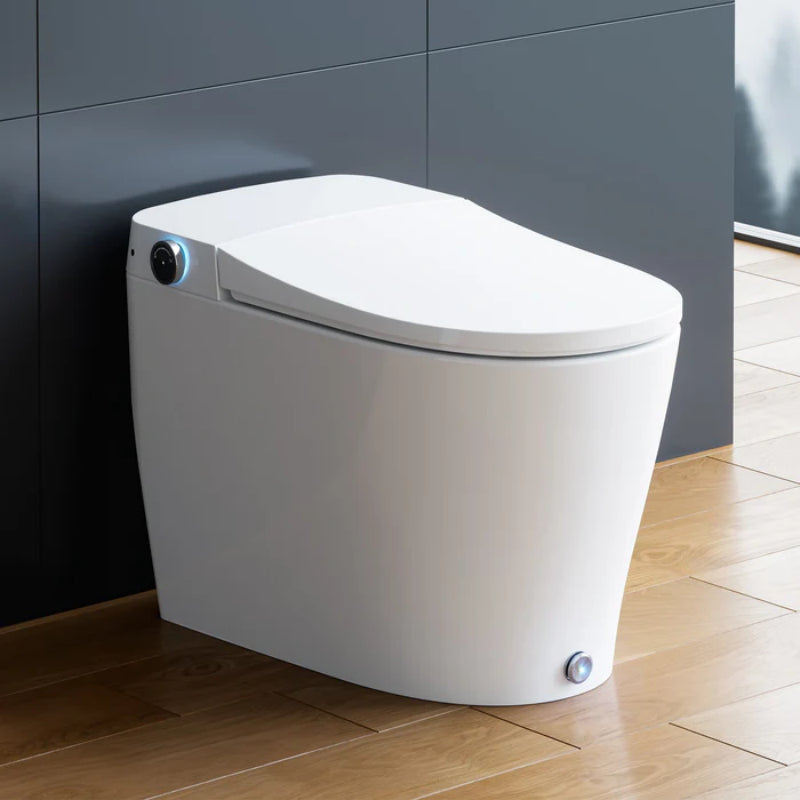
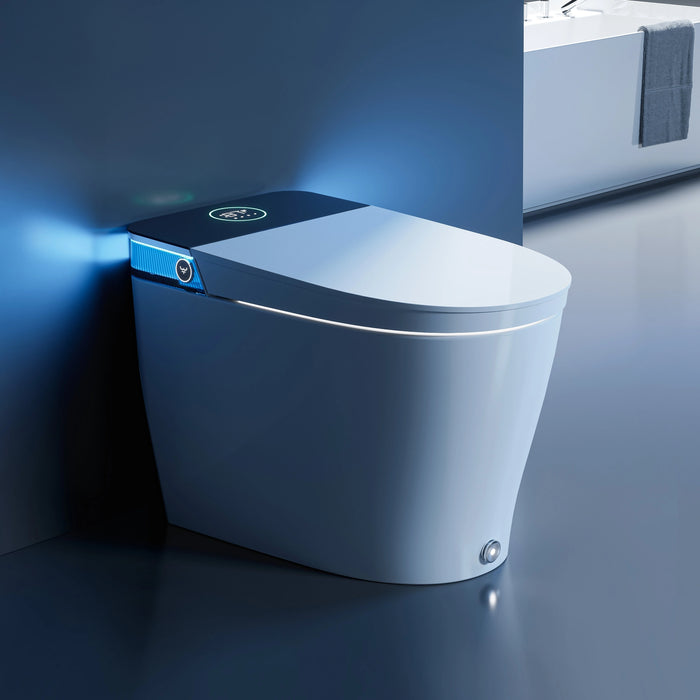
HOROW Models to Compare

Smart vs Regular: Ownership Costs Compared
The product price is only one part of the decision. A smart toilet project may also involve:
- Providing suitable power near the fixture
- Adjusting the water connection or shutoff location
- Professional installation
- Model-specific filters or care items
- Electronic diagnosis and proprietary replacement parts
- Removing or repositioning the fixture for certain repairs
A regular toilet can also generate added work if the drain position, supply connection, floor, or room layout is unsuitable. Its future repair path is generally easier to predict, however, because fewer electronic systems are involved.
A bidet seat separates much of the risk. If its heating or washing functions fail, the conventional toilet may remain usable. The key budget question is therefore not only whether you can buy the fixture now, but whether you are comfortable maintaining it several years later.
Integrated vs Add-On: Repair Risk Compared
An integrated smart toilet may combine flushing controls, water heating, a washing wand, sensors, seat heating, drying, and a remote. More components create more possible failure points, although a fault does not always disable the entire toilet.
The outcome is model-specific. A failed heater might affect only seat comfort, while a control or power problem could interrupt several features. Before buying, determine:
- Whether the toilet can flush without power
- Which functions remain available after an electronic fault
- Whether service parts can be ordered
- Whether the bidet components can be serviced separately
- Whether repair requires removing the fixture
- What technical support is available in your area
A bidet seat contains failures more effectively because it can be replaced separately. A regular toilet offers the least complicated repair route, which may be decisive when the fixture is the home’s only toilet.
Fit Diagram: Will It Work Without Remodeling?
Use this decision path before ordering:
Does the drain position match the selected toilet?
                    |
                   Yes
                    |
Does the fixture fit without blocking doors or cabinets?
                    |
                   Yes
                    |
Can the lid and seat open fully?
                    |
                   Yes
                    |
Are the water connection and shutoff accessible?
                    |
                   Yes
                    |
Is suitable power available if the model requires it?
                    |
                   Yes
                    |
Can connections and service areas be reached later?
                    |
                   Yes
                    |
          The installation may be practical

Matching the drain does not guarantee a comfortable fit. Check bowl projection, seat height, lid movement, walking space, nearby shower glass, door swings, and cleaning access. Also plan a reachable location for the remote.
Treat an integrated smart toilet as both a plumbing fixture and an electrical appliance. Review the exact product documentation before purchase and use qualified local professionals when plumbing or electrical changes are necessary.
When comparing options, HOROW’s smart toilet collection can help you identify different integrated forms. Verify the documentation for the exact model rather than assuming that models share installation requirements or outage behavior.
Key Differences: Which Trade-Offs Actually Matter?
Does Daily Use Justify the Premium?
Frequency of use is the clearest value test. Washing, heating, and drying can provide repeated value in a primary bathroom used throughout the day. The same features are harder to justify in a guest room used only occasionally.
Ask each regular user which functions they expect to use:
- Bidet washing
- Seat heating
- Warm-air drying
- Automatic flushing
- Automatic lid operation
- Night lighting
- Deodorizing
- Personal settings
Water washing is usually the central reason to consider a smart toilet. If no one wants it, the remaining conveniences may not justify the installation and repair complexity. Buyers who remain uncertain can test the routine with a separate bidet seat first.
Are Comfort Gains Worth Electrical Dependence?
Electricity enables heating, drying, lighting, sensors, and automated controls. Those powered functions will not operate normally during an outage.
Flushing requires a separate model-specific check. Some smart toilets offer a manual method or retain limited flushing capability, while other designs rely more heavily on powered controls. Do not assume that every smart toilet behaves the same way.
A standard nonpowered toilet provides clearer outage resilience. A conventional toilet with a powered bidet seat also preserves basic toilet operation even when washing, heating, and drying are unavailable.
What Happens When the Electronics Fail?
Electronic problems can range from a nonresponsive remote to a fault affecting multiple connected functions. The practical concern is not simply whether a smart toilet can fail; every fixture can develop problems. The difference is the availability of parts, documentation, and technicians able to diagnose the system.
Before purchase, look for accessible installation and care instructions, a defined support route, and information about replacement components. A product with attractive features may still be a poor long-term choice if service access is unclear.
Mechanical toilet components often follow familiar repair patterns. Control boards, sensors, remotes, and molded electronic housings are more likely to be specific to a particular product.
Does Self-Cleaning Really Reduce Maintenance?
Self-cleaning does not mean maintenance-free. Depending on the model, the term may refer to rinsing the spray wand or helping clean a particular surface. It does not eliminate the need to clean the bowl, seat, lid, exterior, sensors, surrounding floor, and accessible gaps.

Smart toilets may also require nozzle care, filter attention, or scale management according to their instructions and local water conditions. Smooth exteriors and concealed connections can make some surfaces easier to wipe, but the additional components introduce their own care tasks.
Follow the manufacturer’s cleaning instructions. Products or tools suitable for a basic toilet may not be appropriate around electronic parts, sensors, or washing components.
Smart Toilet vs Regular Toilet: When Smart Wins
Daily Bidet Use Makes the Premium Worthwhile
A smart toilet is a strong choice when water washing is already part of the user’s preferred routine. An integrated system avoids the added seams and stacked appearance of some bidet seats, while placing the bowl, controls, and washing system in one design.
Washing and drying may reduce reliance on toilet paper, but preferences vary, and some users will continue to use paper. If you have never tried a bidet and are uncertain about the sensation or controls, an integrated fixture is a relatively large first commitment.
Accessibility Benefits Can Outweigh Control Complexity
A washing wand, dryer, remote, night-light, and automatic flush may reduce reaching and support more independent personal care for some users. Those benefits can justify the added complexity when they solve a recurring difficulty.
The controls must still suit the individual. Consider readability, reach, hand strength, transfer space, seat position, and the ability to stop an active function quickly. Someone with cognitive, visual, or sensory needs may find unexpected lid movement or complex controls counterproductive.
Evaluate the complete bathroom rather than relying on a feature label. Grab-bar planning, circulation space, control placement, and caregiver access may matter more than the toilet’s automation.
Full Remodels Reduce Installation Friction
A full renovation is the easiest time to consider a smart toilet because the room can be planned around the selected fixture. Power access, water placement, floor finishes, lid movement, remote storage, and service clearance can be considered before installation.
A simple replacement in a finished bathroom may be less practical if it requires electrical work, supply changes, or compromises around cabinets and doors. Compare the complete project—not just the fixture prices—before deciding.
Can Every User Handle the Controls?
A good control layout should work without repeated reference to a manual. Look for clear labels, an obvious stop function, a separate flush control, and settings that do not change unexpectedly.
Keep simple instructions available when guests will use the toilet. If a visitor cannot locate the flush without risking an unwanted spray, the model is better suited to a private primary bathroom than a busy guest bath.
When Is the Alternative the Better Choice?
Regular Wins for Low-Use Bathrooms
A regular toilet is usually the more sensible option for rooms where use is infrequent or occupants change often. It costs less to equip, requires no instruction for most users, and limits the number of specialized systems that may need attention later.
This is particularly relevant in rentals and vacation properties. Future users may not value bidet functions, may misplace a remote, or may prefer familiar operation. A conventional toilet is not a lesser choice in these settings; it is the option better matched to the room’s purpose.
Regular Wins Where Outages Matter
Choose a standard nonpowered toilet when reliable basic operation during power loss is a leading priority. Smart comfort features depend on electricity, and flushing behavior varies across integrated designs.
One practical household strategy is to install a smart toilet in the primary bathroom while retaining a conventional toilet elsewhere. That arrangement offers daily comfort without making every bathroom dependent on powered controls.
Bidet Seats Balance Hygiene and Repairability
A bidet seat is a good compromise when you want water washing but value staged upgrades and separate replacement. It is especially suitable if you may move, household preferences could change, or you do not want a seat-related fault tied to the whole fixture.
The trade-offs are visual and practical. Add-on seats can look bulkier, create additional seams to clean, and fit poorly on unusually shaped or compact bowls. Confirm compatibility rather than relying on broad “fits most toilets” language.
Will Guests or Children Find Controls Confusing?
Guests should be able to identify the flush without changing saved settings or activating the washing function. Children may press remote buttons, interfere with sensors, or use features unexpectedly.
For a family or guest bathroom, favor clear physical controls and straightforward manual operation. Review the product instructions for sensor behavior and any control-locking features rather than assuming that all smart toilets respond to children in the same way.
Final Verdict: Which Toilet Is the Safer Buy?
Choose Smart for High-Use, Feature-Driven Bathrooms
Choose a smart toilet when bidet washing and comfort features will be used daily, the users can operate the controls, the bathroom supports the installation, and the household accepts more specialized maintenance.
It is good for primary bathrooms and personal-care needs, but less suitable for buyers who mainly want novelty or appearance.
Choose Regular for Low-Risk Ownership
Choose a regular toilet when your priorities are lower upfront expense, familiar operation, widely understood repairs, and minimal power dependence.
It is generally the safer all-purpose purchase for guest rooms, rentals, low-use spaces, and homes where simple servicing is more valuable than automation.
Choose Bidet Seats for Reversible Upgrades
Choose a separate bidet seat when you want to test water washing, keep the basic toilet independent, or preserve the option to replace only the electronic component.
This is the most flexible path, although it gives up some of the streamlined appearance and integrated design of a complete smart toilet.
Decision Checklist: Which Trade-Off Can You Accept?
Before buying, confirm that:
- The drain position and fixture footprint suit the room.
- The bowl projection, seat height, and lid movement work for each user.
- Doors, cabinets, walls, and shower glass have adequate clearance.
- The water connection and shutoff remain accessible.
- Any required power can be provided appropriately.
- The manual explains what happens during a power outage.
- Parts, documentation, and technical support are available.
- Regular users can reach and understand the controls.
- Installation and future service fit the household budget.
- The main features will be used often enough to justify the complexity.
- A separate bidet seat has been considered if flexibility matters.
Common Questions
What is the difference between a smart toilet and a regular toilet?
A smart toilet combines basic toilet functions with powered washing, comfort, or automation features that vary by model. A regular toilet provides familiar flushing with fewer components and normally does not need electricity for basic use.
Is a smart toilet worth it?
It can be worth it in a high-use bathroom when the household wants bidet washing, heating, drying, or easier personal care. It is less likely to justify its cost in a guest bathroom or when users prefer simple controls and repairs.
Can a smart toilet work without electricity?
Powered washing, heating, drying, lighting, and automatic functions will stop during an outage. Whether the toilet can still flush depends on its design, so verify the manual flushing instructions for the exact model.
Is a smart toilet more hygienic?
A smart toilet provides water washing, which many users prefer to paper-only cleaning. It does not clean the entire fixture automatically, and the bowl, seat, wand, sensors, exterior, and surrounding area still require routine care.
Is a bidet seat better than an integrated smart toilet?
A bidet seat is better when flexibility, separate replacement, or testing bidet use matters most. An integrated toilet is better when the household wants a unified appearance and expects to use its washing and comfort functions regularly.
What should I know before buying a smart toilet?
Check physical fit, power and water needs, outage behavior, cleaning instructions, control usability, service access, replacement-part availability, and the complete installation cost. Do not choose solely from the feature list.


Leave a comment
This site is protected by hCaptcha and the hCaptcha Privacy Policy and Terms of Service apply.