

Which Should You Choose?
For most bathrooms with a reliable existing toilet, choose an electric bidet seat. It adds water cleansing and, depending on the model, features such as warm water, a heated seat, and drying without requiring full toilet replacement.
Choose an integrated smart toilet when you are remodeling, the current toilet needs replacement, or seamless design and automation justify the greater installation and service commitment. Choose a non-electric bidet attachment or seat when suitable power is unavailable or you want basic washing with minimal complexity.
The practical rule is: keep a good toilet and add a seat; replace the complete fixture when the toilet, bathroom design, or desired automation makes replacement worthwhile.
“Bidet toilet” is an ambiguous term. It may describe a complete toilet with an integrated bidet or a conventional toilet fitted with a bidet seat. In this guide:
- An integrated smart toilet combines the toilet and electronic bidet functions in one fixture.
- An electric bidet seat replaces the existing seat but keeps the toilet bowl.
- A non-electric attachment or seat uses water pressure without powered heating, drying, or automation.
Choose Smart Toilets for Remodels and Seamless Design
An integrated smart toilet is good for a planned remodel, a toilet already due for replacement, or a design-led primary bathroom. It is less suitable when the current toilet works well and the main goal is simply water cleansing.
Choose Bidet Seats for Lower-Risk Upgrades
An electric bidet seat is good for preserving a dependable toilet, testing bidet use, and retaining the option to replace the seat separately. It is less suitable when the existing toilet is uncomfortable, unreliable, damaged, or incompatible with the seat.
Choose Non-Electric Attachments When Power Is Unavailable
A non-electric option is good for basic washing, lower commitment, and bathrooms without suitable power. It is less suitable for buyers who expect heated seating, electrically warmed water, air drying, or automated controls.
Decision Snapshot: Who Fits Each Option?
Remodelers and Primary-Bath Users: Choose Integrated
Consider an integrated smart toilet when:
- The toilet is already being replaced.
- Plumbing, flooring, or electrical work is part of a larger project.
- A unified appearance matters more than component independence.
- Regular users want automatic lids, flushing, presets, or similar functions where offered.
- You accept that repairs may involve model-specific parts or service.
A private primary bathroom usually makes better use of advanced controls than a guest bathroom because regular users have time to learn and adjust the system.
Existing-Toilet Owners and Renters: Choose a Seat
Choose a bidet seat when the existing toilet flushes reliably, fits the room, and feels comfortable. This route preserves a known fixture while adding the hygiene and comfort functions you actually want.
A separate seat is also easier to remove or replace if needs change. Renters should confirm lease terms and restore the original installation correctly before moving.
Shared Households: Favor Simpler, Replaceable Controls
In a shared bathroom, more automation is not automatically better. Children, guests, older relatives, or anyone unfamiliar with the controls may prefer a recognizable flush method and clearly labeled wash controls.
Choose an integrated fixture only if its everyday operation will work for the least confident regular user. Otherwise, a straightforward bidet seat—or a non-electric attachment—may create less household friction.
Unverified Spaces: Measure Before Choosing Either
Do not order either option until you have checked the room and existing fixture.
An integrated toilet must suit the floor connection, water-supply position, room clearances, door swing, and service access. A bidet seat must match the bowl shape, mounting area, rear clearance, bolt access, and water connection. Electric options also need power that meets the product instructions and applicable local requirements.
A good product can still be the wrong choice for a particular bathroom.
Smart Toilet vs Bidet Toilet: Direct Comparison
Comparison Table: Cost, Fit, Repairs, and Flexibility
| Decision factor | Integrated smart toilet | Electric bidet seat | Non-electric attachment or seat |
|---|---|---|---|
| Relative purchase commitment | Highest because the complete fixture is replaced | Moderate because the toilet remains | Usually the lowest |
| Installation scope | Complete toilet installation, with electrical planning for powered functions | Seat mounting plus water and power connections | Mounting and water connection without powered functions |
| Fit checks | Room layout, floor connection, supply location, clearances, and service access | Bowl shape, mounting area, tank clearance, bolt access, water, and power | Similar seat or mounting checks; side controls may need room |
| Appearance | Most cohesive and concealed | Visible retrofit, though fit varies by toilet | Usually the most obvious add-on |
| Common comfort features | May combine washing, heating, drying, sensors, and automation | May provide many of the same washing and comfort functions | Basic washing without powered heat or drying |
| Repair path | May depend on integrated or model-specific components | Seat can generally be serviced or replaced separately | Simple and removable, though connections still require care |
| Failure impact | Depends on how the wash, controls, and flushing systems are integrated | Bidet component remains separate from the underlying toilet | Underlying toilet generally remains independent |
| Long-term flexibility | Lowest | High | High |
| Best fit | Remodels and design-focused primary bathrooms | Most bathrooms with a sound existing toilet | Basic upgrades or rooms without suitable power |
Actual features and fallback behavior vary by product. Confirm them in the current product documentation rather than assuming every smart toilet or bidet seat works the same way.
Integrated Bidet Toilet vs Electric Bidet Seat
An integrated toilet and a capable electric seat may both offer adjustable washing, warm water, heated seating, and drying. An integrated model may also coordinate those functions with the lid, flush, sensors, lighting, or user settings.
The higher commitment does not necessarily buy a fundamentally different cleansing experience. It often pays for a complete new toilet, a more unified appearance, concealed components, and additional automation.
That trade-off can make sense during a remodel. It is harder to justify when the existing toilet already performs well and the household mainly wants bidet washing.
Electric Seat vs Non-Electric Attachment
An electric seat is the middle option: it retains the toilet while adding powered comfort features. The trade-offs are power dependence, a bulkier rear profile on some designs, and more components to clean or maintain.

A non-electric attachment concentrates on washing. It can suit a bathroom without suitable power, but water temperature depends on the installation and incoming supply. Buyers expecting heated seating or powered drying should not treat it as equivalent to an electric seat.
Is Integration Worth the Higher Price?
Integration is most defensible when all of the following are true:
- The toilet is already due for replacement.
- The room, water connection, and electrical setup have been checked.
- A unified appearance or coordinated automation matters to the household.
- The service and outage procedures are acceptable.
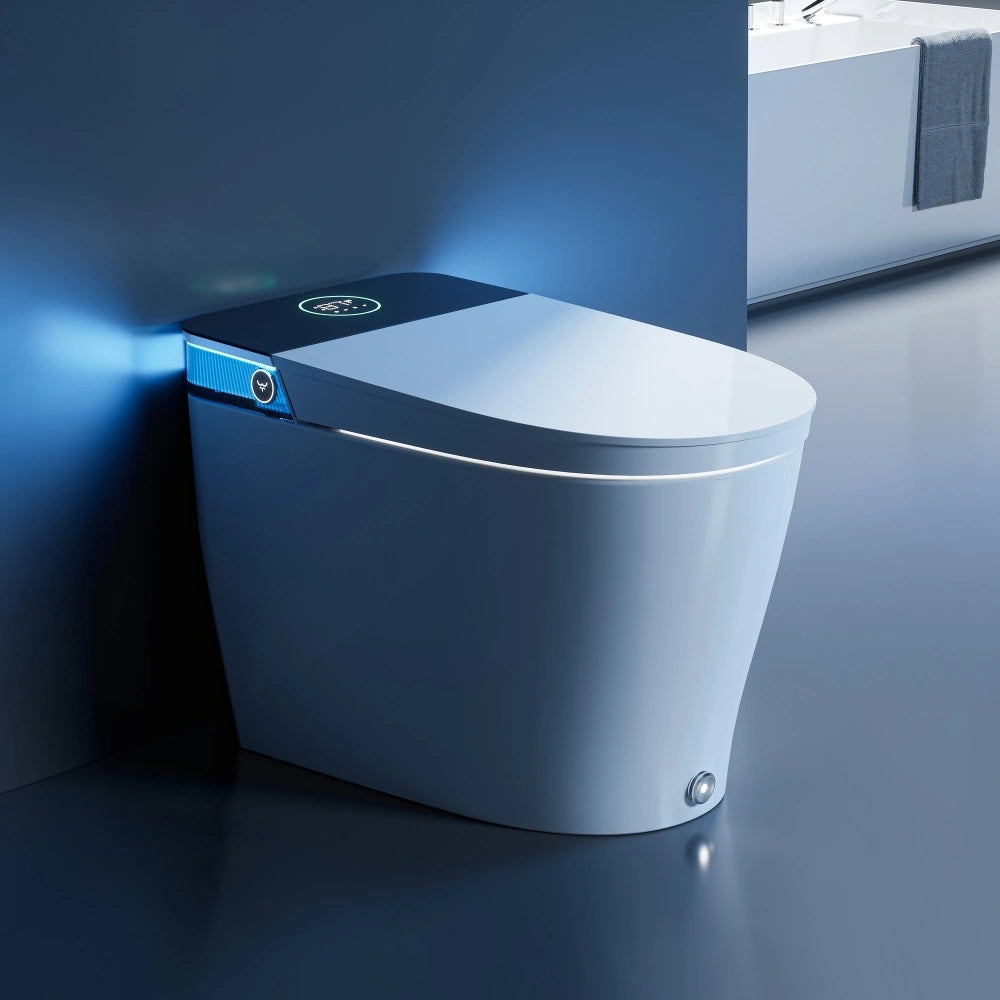
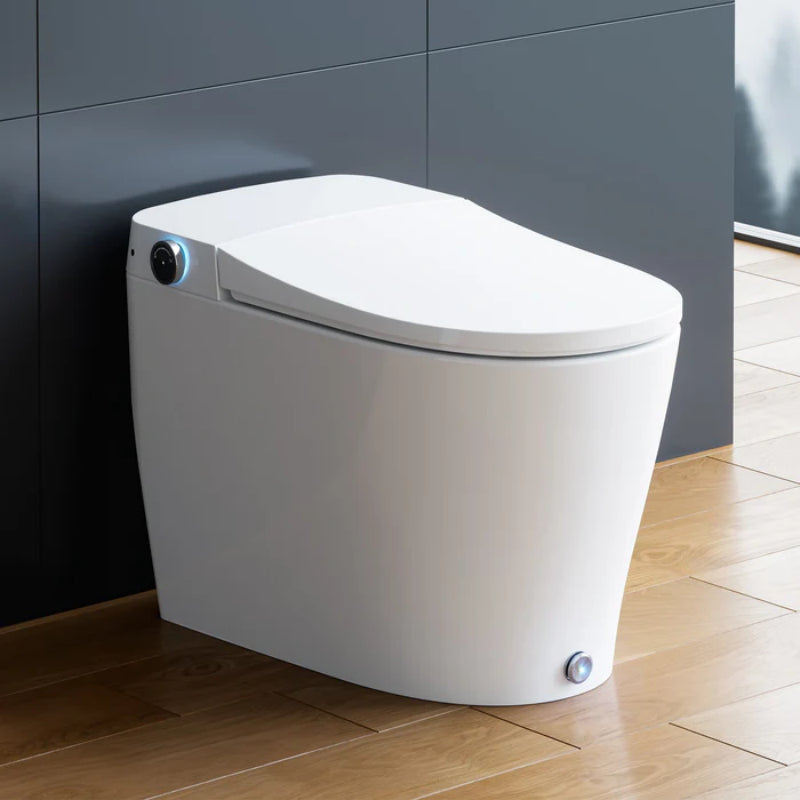
If only appearance points toward an integrated fixture, compare that benefit against the flexibility of replacing a bidet seat separately. The HOROW smart toilet collection can help illustrate the form of an all-in-one fixture, but use the relevant product documentation—not product photos alone—to assess fit and installation.
Key Differences That Actually Matter: What Changes Your Decision?
Total Installed Cost vs Purchase Price
The purchase price does not capture the full commitment. An integrated toilet may involve removal of the old fixture, delivery, assessment of the floor connection, plumbing work, electrical access, and professional labor where needed.
A bidet seat avoids complete fixture replacement, but it is not automatically compatible or effortless to install. It still requires suitable mounting space, an accessible water supply, and—if electric—appropriate power.
Separate the purchase into two decisions:
- Does the existing toilet need replacement?
- Does the household want bidet cleansing?
If the first answer is no and the second is yes, a compatible bidet seat is usually the lower-risk route.
Seamless Design vs Replaceable Components
An integrated toilet provides the cleanest visual result because the bowl, bidet hardware, controls, and connections are designed as one system. That can be valuable in a remodeled bathroom where fixture shape and concealed hardware are priorities.
A retrofit seat may look thicker or less cohesive. Its rear housing can also reduce usable sitting space or create another area to clean, depending on the design.
The visible separation has an ownership advantage, however: the toilet and bidet remain distinct components. If the seat becomes outdated, uncomfortable, or faulty, it can generally be changed without replacing the bowl. Choose based on which matters more—visual integration now or component flexibility later.
Will Your Bathroom Fit Either Option?
For an integrated smart toilet, check:
- Floor-connection compatibility
- Water-supply and shutoff location
- Front and side clearance
- Door and cabinet movement
- Cleaning and service access
- Electrical provisions for powered functions
For a bidet seat, check:
- Round or elongated bowl shape
- Shape and size of the mounting area
- Clearance between the mounting area and tank
- Access to the seat bolts
- Water-supply arrangement
- Space for side controls, if present
- Power location for an electric model
Skirted or unusually shaped toilets may complicate mounting or water connections. Compare your measurements with the product’s current installation drawing. General statements such as “fits most toilets” are not a substitute for a compatibility check.
What Happens When Electronics Fail?
Electronics add comfort but also change the repair plan. With a separate bidet seat, a fault in the washing, heating, or controls is normally confined to the seat rather than the ceramic toilet. The exact fallback still depends on the installation and product design.

An integrated fixture may connect the wash system, sensors, lid controls, and flushing functions more closely. Before purchasing, find out:
- Whether the toilet can still be used if bidet functions stop
- How flushing works without electricity
- Whether manual controls are available without the remote
- Which components can be replaced separately
- How parts and service are obtained
Do not assume that every integrated toilet has the same outage or manual-flush behavior. These are product-specific questions.
When Is an Integrated Smart Toilet Better?
Remodels Make Installation Easier to Justify
A planned remodel is the strongest setting for an integrated bidet toilet. If the old fixture is already coming out, the new toilet can be evaluated alongside the flooring, water connection, electrical work, clearances, and overall bathroom layout.
Full replacement also makes sense when the old toilet is uncomfortable, unstable, damaged, or unreliable. Adding a bidet seat would preserve those underlying problems.
Evaluate flushing separately from smart features. Heated water, sensors, and automatic lids do not establish how well the toilet clears waste. Where independent flush-performance information is available for a model, consider it alongside the bidet functions.
Private Bathrooms Reward Automation and Presets
Automation works best when the same people use the toilet regularly. Household members can learn the controls, adjust preferred settings where supported, and decide which sensor-based functions should remain enabled.
A primary bathroom may therefore make good use of automatic opening, washing, drying, lighting, or flushing. In a guest bathroom, those same features may be unnecessary or confusing. Integration is a better choice when users want the complete routine rather than one headline feature.
Mobility Needs May Favor Hands-Free Functions
Washing, drying, automatic lids, and automatic flushing may reduce reaching or the number of physical steps for some users. Suitability is individual, however. Control position, seat stability, usable sitting area, transfer space, remote visibility, and caregiver access can matter more than the number of automated features.
For a bathroom that must satisfy accessibility requirements, product descriptions such as “comfortable height” do not establish that the fixture or room is compliant. Review the applicable official standards and work with a qualified professional when necessary.
Will Everyone Use the Added Automation?
Ask regular users which functions they are likely to use after the novelty wears off. If the household wants only washing and a heated seat, a separate electric seat may meet the need with less commitment.
Automatic lids, presets, dryers, and sensors are valuable only when they improve the actual routine. Unused features still add controls and components.
When Is a Bidet Seat the Better Alternative?
Keep a Toilet That Already Works
If the current toilet flushes reliably, fits the room, and feels comfortable, replacing it creates disruption without correcting a problem. A compatible bidet seat adds cleansing while preserving a fixture whose performance is already known.
A seat will not correct an uncomfortable bowl, poor height, instability, damage, or unreliable flushing. Address those problems before selecting the bidet component.
Reduce Repair Risk and Preserve Flexibility
A separate seat lets the household upgrade or replace the bidet component while retaining the toilet. This is useful when technology, preferences, or user needs change.
It also limits the consequences of choosing the wrong control style. If a feature-heavy remote proves frustrating, the seat can be replaced without disturbing the complete fixture.
Test Bidet Habits Before Replacing Everything
First-time users may not know which features will matter. Spray position, pressure, water temperature, control layout, and drying can feel different in daily use than they appear in a feature chart.
A separate seat allows the household to learn its preferences before committing to an integrated fixture. That experience can inform a later remodel.
Will a Seat Fit Your Existing Bowl?
Do not buy from bowl shape alone. A seat may be labeled for a round or elongated toilet yet still conflict with the tank, mounting surface, bolts, shutoff, or nearby wall.
Also consider sitting comfort. The rear housing on some electric seats changes the seat contour or available space. Fit should therefore cover both mechanical compatibility and the comfort of intended users.
Final Verdict: Which Option Wins for You?
Most Existing Bathrooms: Choose a Bidet Seat
For a bathroom with a dependable, compatible toilet, an electric bidet seat is usually the more flexible choice. It provides the main cleansing and comfort functions without tying the electronic system to the entire fixture.
Planned Remodels: Choose Integrated for Cohesion
Choose an integrated smart toilet when the existing fixture needs replacement and a coordinated appearance, concealed design, or automation is worth the higher installation and service commitment.
No Outlet: Choose Non-Electric or Wait
Without suitable power, choose a compatible non-electric option for basic washing. If heated water, heated seating, or drying is essential, resolve the electrical planning before purchasing rather than choosing an electric product that cannot be installed as directed.
If your decision points toward replacing the complete fixture, these HOROW models provide examples of integrated smart toilets and a non-electric bidet-toilet option. Confirm compatibility and current installation requirements on the individual product page before ordering.
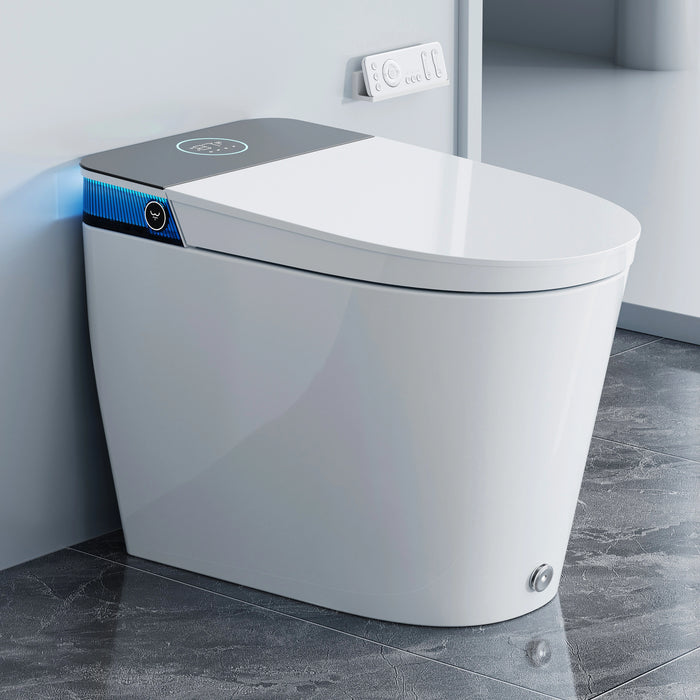
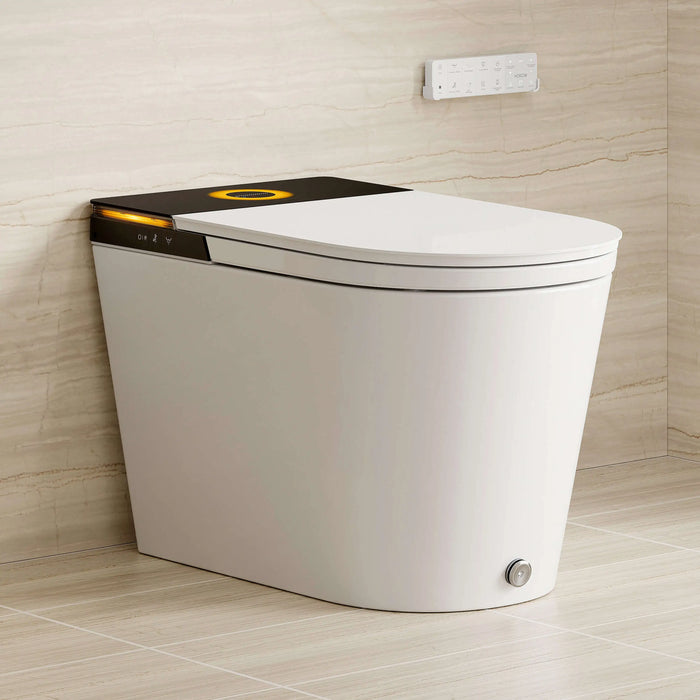

Looking at complete-fixture options? Compare HOROW smart toilets.
Final Checklist: Fit, Power, Users, and Service
Before ordering:
- Decide whether the toilet needs replacing. Do not discard a reliable fixture solely to add water cleansing.
- Measure the complete area. Include the bowl, mounting surface, rear space, doors, cabinets, side clearance, and service access.
- Confirm water access. Check the shutoff, supply arrangement, and product installation instructions.
- Confirm power needs. Follow the product instructions and applicable local requirements for electric models.
- Check outage behavior. Know how the toilet flushes and which functions remain available without power.
- Consider every regular user. Review seat comfort, control reach, visibility, transfer needs, and ease of manual operation.
- Plan for cleaning. Confirm access around hinges, nozzles, connections, panels, and the surrounding floor.
- Plan for service. Find out which components are replaceable and how parts or support are obtained.
Common Questions
What is smart toilet vs bidet toilet?
A smart toilet is generally a complete fixture with integrated bidet and electronic functions. A bidet toilet may also mean a conventional toilet fitted with a bidet seat, so confirm whether the product is a complete fixture or a retrofit component.
Is a smart toilet vs bidet toilet worth it?
An integrated smart toilet can be worth the commitment during a remodel or when the toilet already needs replacement. If the current toilet works well and cleansing is the main goal, an electric bidet seat is generally the more flexible investment.
What are the benefits of smart toilets and bidet seats?
Both may offer adjustable water cleansing, warm water, heated seating, and drying, depending on the product. Integrated smart toilets may add coordinated flushing, lids, sensors, lighting, or presets, while separate seats offer easier replacement and greater reversibility.
Can a bidet seat fit any toilet?
No. Compatibility depends on the bowl shape, mounting surface, rear clearance, bolt access, water connection, and the seat manufacturer’s requirements. Electric seats also require suitable power.
Which option is easier to repair?
A separate bidet seat usually provides a simpler replacement path because the toilet and electronic seat are independent. Integrated fixtures may require model-specific parts or service, although the exact repair path varies by design.
What should I choose without a power outlet?
Choose a compatible non-electric attachment or seat if basic washing is sufficient. If powered heating, drying, or automation matters, confirm an appropriate electrical solution before selecting the product.
References
https://www.access-board.gov/ada/
https://www.ada.gov/law-and-regs/design-standards/2010-stds/


Leave a comment
This site is protected by hCaptcha and the hCaptcha Privacy Policy and Terms of Service apply.