
Can you install a smart toilet in a basement? Yes—if the toilet is compatible with the basement’s drainage, water supply, electrical setup, and available space. The most important question is not which features you want. It is how waste will leave the room.
A basement toilet may use gravity drainage, connect to a sewage ejector system, or work with a packaged upflush system. These arrangements are not interchangeable. A smart toilet designed for a standard floor flange should not be assumed to work with every ejector pump or upflush unit.
Use this buying rule: choose and verify the drainage path before buying the toilet. Then check the rough-in, water pressure, electrical requirements, room dimensions, outage behavior, and long-term service access.
Who Should Buy a Smart Toilet for a Basement Bathroom?
A smart toilet is most suitable when the basement bathroom has verified plumbing and will be used often enough to justify the additional cost and complexity. It can make sense in an in-law suite, guest suite, home office, finished recreation area, or another regularly occupied space.
A standard toilet—or a standard toilet with an electronic bidet seat—may be a better first purchase when drainage is uncertain, power outages are common, or the room is used only occasionally.
Decision Snapshot: Best-Fit Basements
A basement is a strong candidate when:
- A plumber has identified an approved gravity drain or planned ejector connection.
- The toilet manufacturer permits the proposed waste connection.
- The measured rough-in and flange position match the toilet.
- Water delivery meets the model’s installation requirements.
- A suitable bathroom outlet can be installed within cord reach.
- The room is heated, ventilated, and protected from persistent moisture.
- The toilet, shutoff, plug, pump, and related equipment will remain accessible.
- Regular users will benefit from washing, drying, seat heating, or simplified controls.
The project needs more investigation when:
- The only evidence of plumbing is an unidentified or capped pipe.
- No one knows where the drain goes or whether it is vented.
- The bathroom depends on an aging or undocumented waste pump.
- The plan assumes that any smart toilet can connect to an upflush system.
- An extension cord or power strip is part of the installation plan.
- The room can freeze, remains damp, or has a history of sewage backups.
- There is no local service option for the toilet or pump.
Avoid These High-Risk Scenarios
Do not order a toilet based on the presence of a pipe in the floor. A pipe may be the wrong type, in the wrong position, or unsuitable for gravity drainage. Have its purpose, route, condition, and venting reviewed first.
Verbal statements that a toilet “should work” with a sewage ejector or macerator are also inadequate. Compatibility depends on several factors, including the toilet outlet, flushing design, approved fixtures, and the way the waste system is installed.
Other warning signs include a damaged flange, weak water delivery, inaccessible valves, hidden pump equipment, unresolved odor problems, and a cord that cannot reach the proposed outlet safely.
Is It Worth It for Occasional Use?
A complete integrated smart toilet can be difficult to justify in a basement powder room used only a few times each month. Electronic controls, valves, wash components, and other model-specific parts still add ownership complexity.
For occasional use, consider:
- A standard toilet for the simplest operation and service
- A standard toilet with a compatible bidet seat for selected comfort features
- A full smart toilet only when its specific functions solve a clear user need
The value is easier to justify in a basement apartment or in-law suite where people use the bathroom every day. In that setting, a heated seat, washing functions, easy-to-reach controls, and reduced reliance on paper may provide regular benefits.
Choose the Drainage Path First

The three principal basement drainage arrangements solve different installation problems:
|
Drainage path |
How waste moves |
Smart toilet decision |
|
Gravity drainage |
Waste flows downhill to the building drain |
Usually the simplest fit when the rough-in, flange, and venting are suitable |
|
Sewage ejector system |
Waste enters a basin and is pumped to a higher drain |
May work, but the toilet and complete pump system require review |
|
Upflush system |
A packaged pump or macerator moves waste through its approved discharge arrangement |
Use only a toilet or bowl explicitly permitted by the system |
Gravity Drainage: Usually the Simplest Fit
Gravity drainage most closely resembles an ordinary above-grade installation. The toilet mounts over a floor flange, and waste travels downhill to the building drain without relying on a waste pump.
This is generally the lowest-complexity path for a smart toilet, but the floor pipe alone does not establish compatibility. A plumber should still confirm:
- The pipe is an actual toilet drain.
- The rough-in position matches the selected toilet.
- The flange is secure and at a usable height relative to the finished floor.
- The drain has an appropriate route and plumbing vent.
- The floor is stable enough for the fixture.
- The water supply meets the toilet instructions.
If no usable gravity rough-in exists, adding one may require opening the slab and connecting to the building drainage system. Compare that work with a professionally designed pumped solution before choosing the toilet.
Will It Work With an Ejector Pump?
A sewage ejector is used when basement fixtures cannot reach the building drain by gravity. Waste enters a basin, and a pump lifts it to a higher discharge point.
A basement smart toilet may work with an ejector system, but the pump is not a universal adapter. The plumber should review the system as a whole, including:
- Which fixtures feed the basin
- The basin and pump condition
- The pump’s intended application
- Venting and discharge routing
- The check valve and shutoff arrangement
- Access for inspection and replacement
- The toilet manufacturer’s waste-connection instructions
Do not focus only on the extra water used by bidet functions. The primary buying question is whether the toilet’s complete flushing and discharge arrangement is accepted for the proposed system.
Power failure also creates two separate concerns. The smart toilet may lose some or all functions, and the ejector may be unable to move collected waste. Emergency flushing built into a toilet does not keep an unpowered ejector operating.
Can It Connect to an Upflush System?
An upflush toilet system uses a packaged pump or macerator to move waste to an elevated drain. It is often considered when the homeowner wants to avoid or reduce slab work.
An upflush system is different from a conventional toilet draining into a sewage ejector basin. Many upflush packages are built around a particular bowl, outlet position, inlet arrangement, or flushing method. A standard floor-outlet integrated smart toilet may have no approved connection.
Install an integrated smart toilet with upflush plumbing only when the instructions for both products permit the exact arrangement. Do not rely on a homemade outlet adapter or modify the toilet to make the connection fit.
A practical alternative is the bowl approved for the upflush system paired with a compatible electronic bidet seat. The upflush equipment handles drainage, while the seat adds washing and comfort features. You must still verify bowl shape, mounting points, lid clearance, water connection, outlet location, and the seat manufacturer’s installation requirements.

Confirm Compatibility Before Buying
Ask questions specific enough to produce a written answer:
- Does the toilet require a conventional floor flange?
- Is the toilet approved for the proposed gravity, ejector, or upflush connection?
- Does the pump manufacturer accept this type of toilet and discharge?
- Are any special inlets, adapters, vents, or controls required?
- What toilet functions remain available without power?
- What happens to waste when the ejector or upflush pump loses power?
- Who will service the toilet and pump if they come from different suppliers?
Keep the installation manuals and written responses. If the toilet instructions and pump instructions conflict, treat the installation as a failed check until the manufacturers or qualified installer resolve it.
Choose the Right Toilet Setup
“Smart toilet” may describe a complete integrated fixture or a standard toilet fitted with an electronic bidet seat. A conventional toilet is also worth considering because reliability and serviceability often matter more in a below-grade bathroom.
Integrated Toilet: More Features, More Complexity
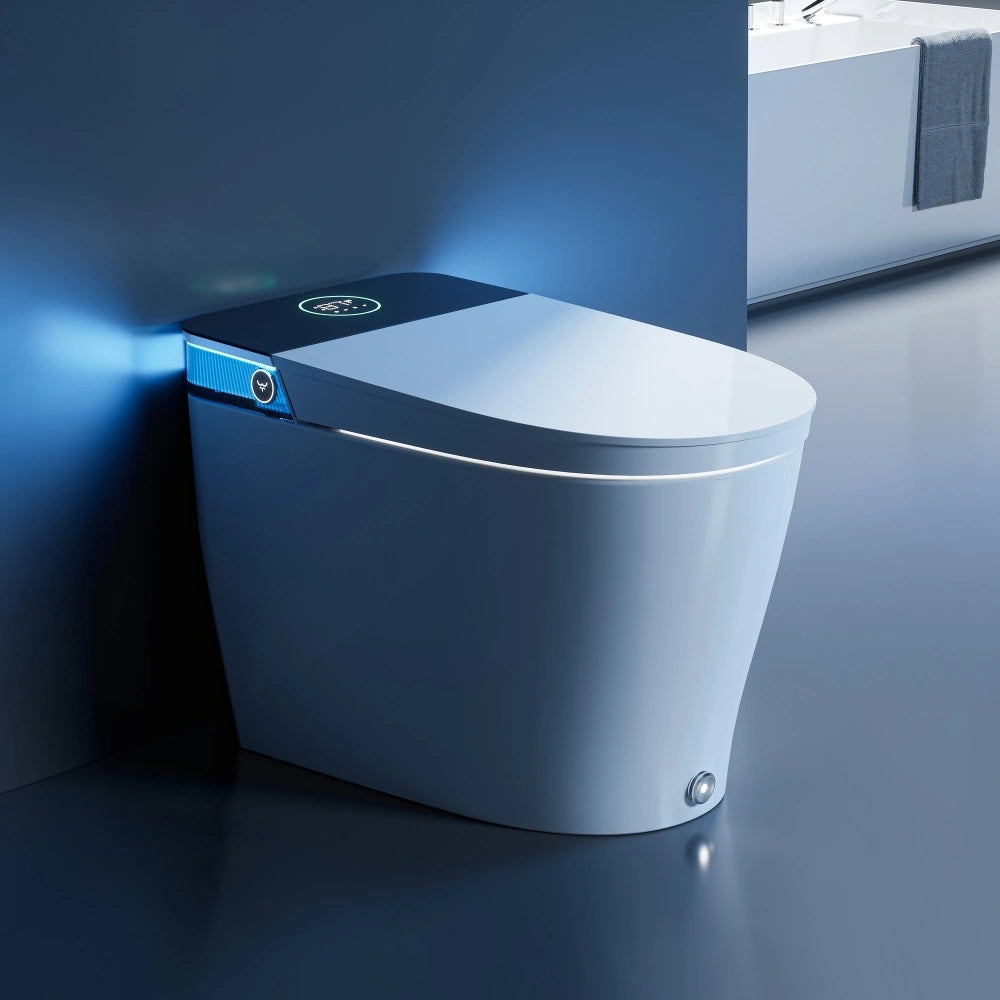
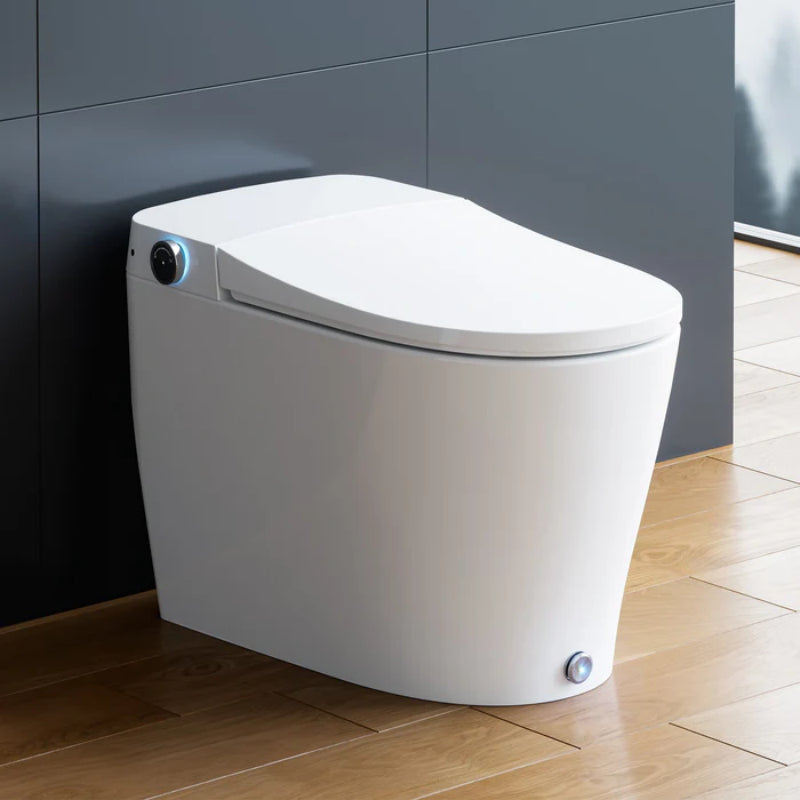
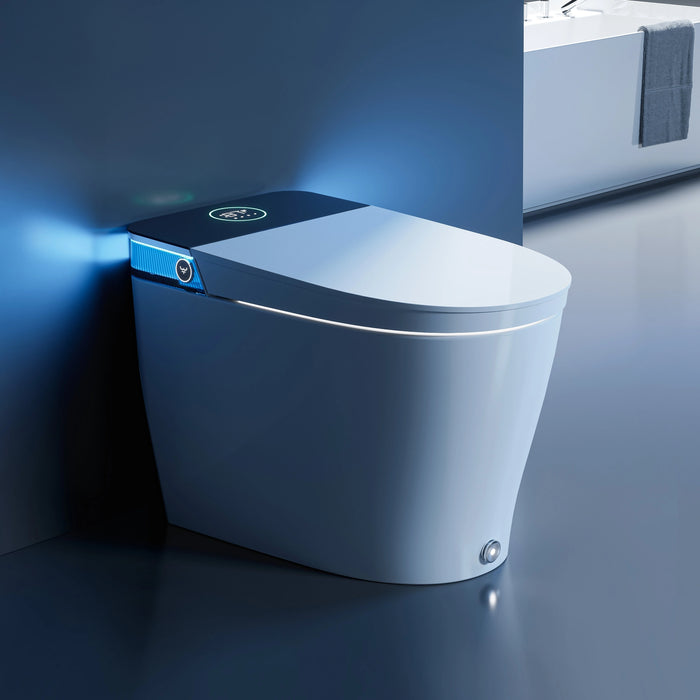
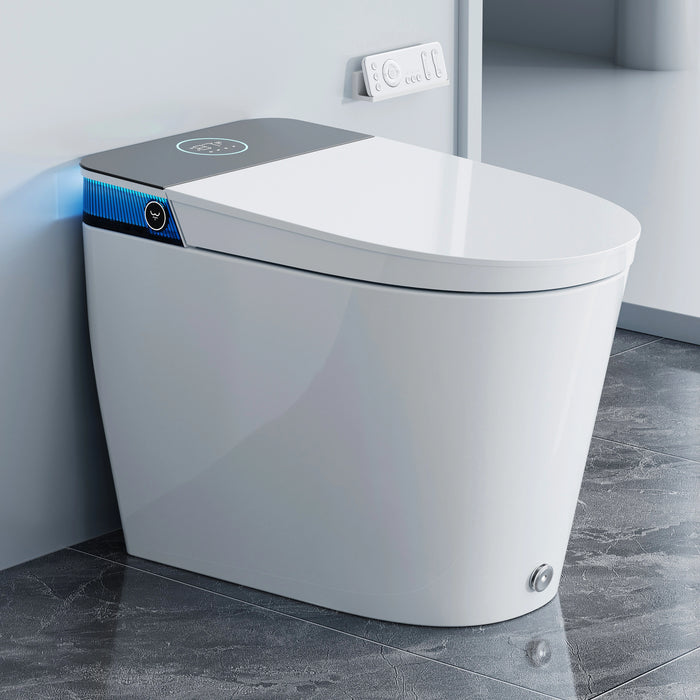
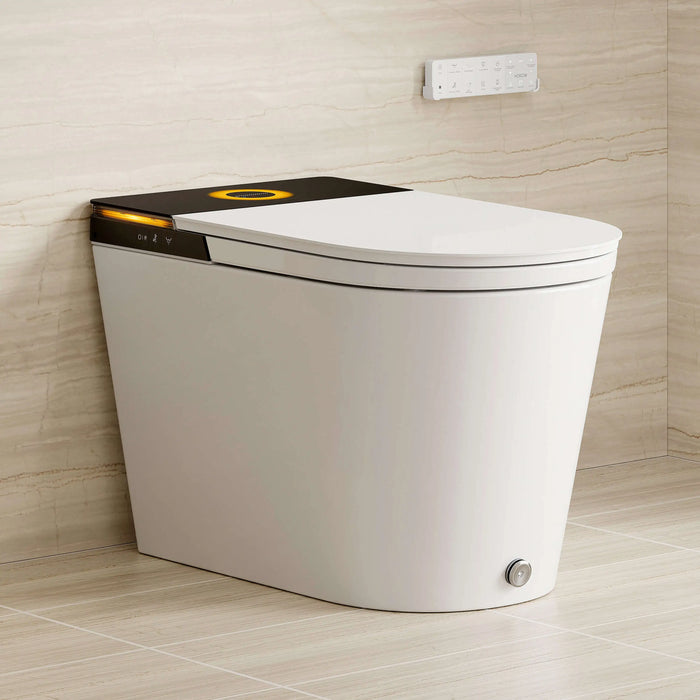
An integrated smart toilet combines the bowl, flushing equipment, wash system, controls, and potentially features such as drying, seat heating, automatic operation, or deodorizing.
The unified design can create a clean appearance, but more functions depend on one fixture. If a control, valve, sensor, or wash component fails, repair may require model-specific parts or specialist service. Removal can also be more difficult in a tight basement.
Before comparing HOROW smart toilets, identify the drainage path and read the installation information for the individual product. Do not select an integrated unit by features or appearance before confirming the waste connection.
Bidet Seat: Easier Service and Replacement
A bidet seat separates the smart functions from the main drainage fixture. If the seat needs repair, the underlying toilet may remain usable.
This arrangement can be a better fit when:
- You mainly want washing and seat heating.
- The approved drainage system requires a particular toilet bowl.
- Repair access is limited.
- Guests need familiar manual flushing.
- You want the option to replace the electronic portion separately.
Compatibility is not automatic. Confirm the bowl shape, mounting-hole arrangement, available space behind the seat, water connection, plug location, and lid clearance.
Standard Toilet: Simpler Operation and Service
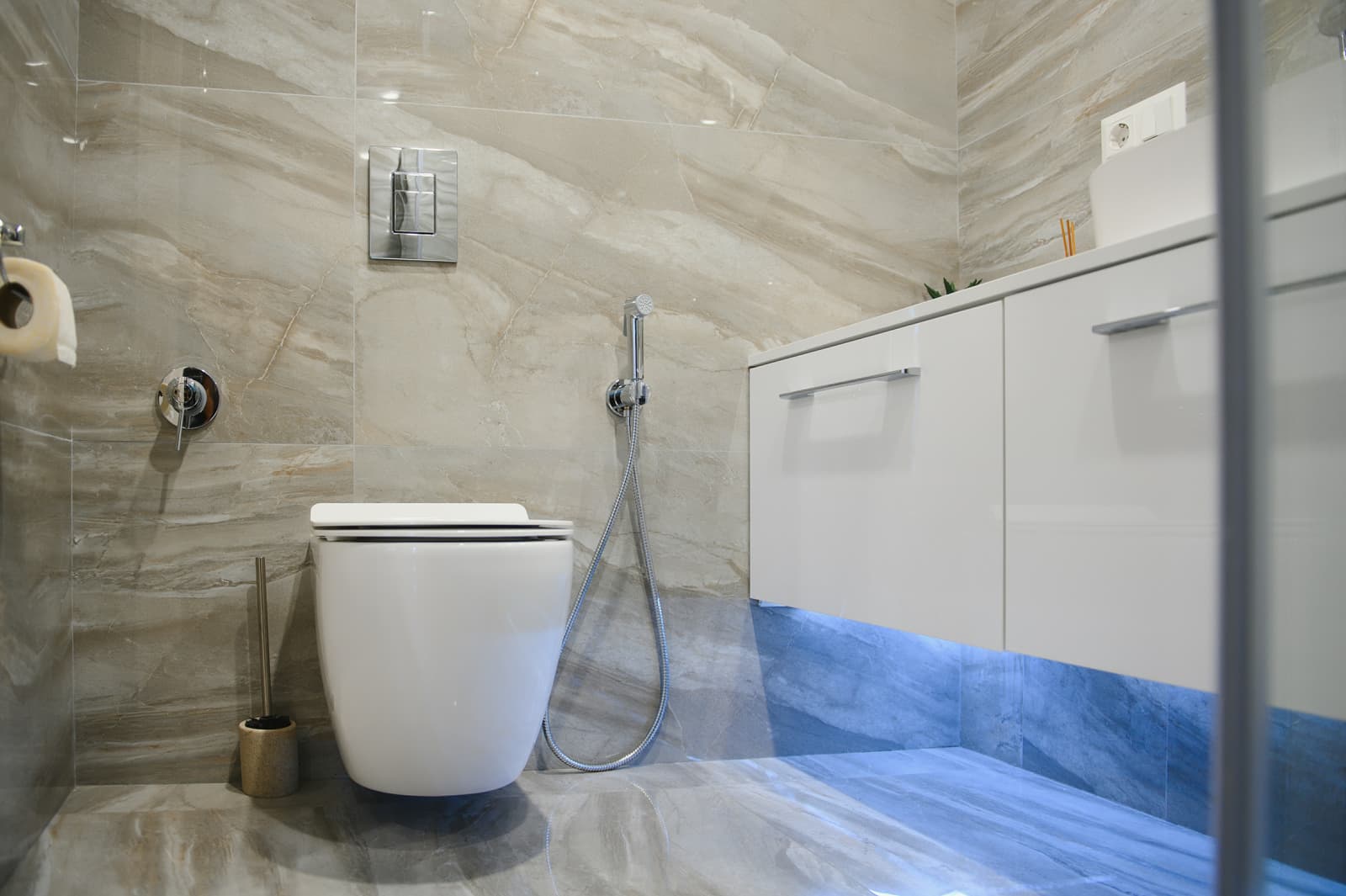
A conventional toilet may be a practical choice for an occasional-use bathroom, utility area, children’s space, or property where straightforward operation and repairs are a priority.
With gravity drainage, a standard toilet may also offer more predictable operation during an electrical outage. If it drains into an ejector or upflush system, however, the waste system may still be unusable without power.
Upflush and Smart Solve Different Problems
An upflush system solves a drainage problem. Smart features address comfort, hygiene, and convenience. Buying one does not guarantee the functions of the other.
The most suitable pairing depends on the drainage path:
- Gravity flange: An integrated smart toilet or bidet-seat setup may be practical.
- Sewage ejector: Either may be possible after the complete system is reviewed.
- Upflush package: Use the approved toilet; add a bidet seat only if both products permit it.
- Unverified drainage: Do not buy the toilet yet.
Calculate the Complete Project Cost
The toilet’s purchase price is only one part of basement toilet installation. Build the budget around the room’s existing conditions rather than around a desired fixture.
Existing Rough-In Budget
A verified gravity rough-in usually creates the most favorable cost scenario. The project may still require flange correction, water-supply work, floor repair, or a suitable electrical outlet.
“Pre-plumbed” does not mean ready for every toilet. Confirm the finished-wall measurement and flange condition before ordering a large or model-specific fixture.
Pump or Slab-Work Budget
Without a usable gravity drain, compare two complete approaches:
- Opening and repairing the slab to create an approved gravity connection
- Installing an ejector or upflush solution designed for the room
Slab work can affect plumbing, concrete, flooring, and finishes. A pumped system may reduce demolition but introduces mechanical equipment, noise, electrical dependence, and future pump service. The less expensive initial path is not always the less complicated ownership path.
Electrical, Venting, and Permit Costs
Include electrical work, plumbing venting, pump controls, backflow measures where required, inspections, and permits in the project plan. The applicable requirements depend on the product instructions and local rules.
If the bathroom also uses an electric ejector or upflush pump, have the electrical plan evaluated as a complete system rather than connecting both devices to whatever outlet is nearby. The HOROW smart toilet electrical requirements guide provides planning questions, but the product manual, electrician, and local authority determine the final installation.
Is the Upgrade Worth the Total Cost?
Prioritize infrastructure before convenience features. Correct drainage, moisture control, ventilation, safe power, and service access provide more value than automation in a bathroom that is not yet installation-ready.
A bidet seat on a serviceable toilet is often the middle option: it provides selected smart functions while keeping the bowl and electronic components easier to replace separately.
Run These Pass-or-Fail Checks
Consider any unresolved item a warning sign until it has been inspected or documented.
Pass/Fail: Approved Waste Connection
Pass: A qualified plumber has identified the drainage path, and the toilet and pump instructions permit the planned connection.
Fail: The plan depends on an unidentified pipe, improvised adapter, or assumption that every smart toilet works with every ejector or upflush system.
For an ejector, include the basin, pump, discharge, vent, check valve, and access in the review. For an upflush system, confirm the precise toilet or bowl arrangement allowed by its instructions.
Pass/Fail: Rough-In, Flange, and Pressure
Pass: The measured rough-in matches the toilet, the flange and finished floor can support a secure installation, and the tested water supply meets the product requirements.
Fail: No one has measured from finished surfaces, the flange is loose or damaged, or water performance has not been evaluated.
Low water pressure can affect some smart toilets, particularly designs that depend directly on incoming flow for flushing or washing. A nearby faucet is not a reliable substitute for checking the toilet’s requirements under realistic household demand. Use the model’s installation sheet and ask the plumber to assess the supply.
The HOROW smart toilet plumber guide can help organize pre-installation questions.

Pass/Fail: GFCI Outlet and Circuit
Pass:
An electrician confirms an appropriately protected and positioned bathroom outlet and a circuit suitable for the toilet instructions and local requirements. The factory cord reaches without an extension.
Fail:
The plan uses a power strip, permanent extension cord, loose adapter, or cord routed across the floor.
A basement smart toilet needs electricity for its electronic functions. Bathroom electrical outlets are typically subject to additional safety requirements because they are located in areas where water may be present. The National Electrical Code (NEC), published by the National Fire Protection Association (NFPA), includes requirements for ground-fault circuit-interrupter (GFCI) protection in locations such as bathrooms. Homeowners should confirm the final electrical setup with a qualified electrician and local requirements. Whether it can perform any type of flush during an outage depends on the individual model. Confirm that behavior in the manual instead of assuming all smart toilets work alike.
Pass/Fail: Venting, Backflow, and Permits
Pass: The plumbing plan addresses drainage venting, applicable backflow measures, pump requirements, and the local permit process.
Fail: New plumbing will be concealed without the required review, or a bathroom exhaust fan is being treated as a plumbing vent.
Plumbing venting serves the waste system; the room exhaust fan manages air and moisture. A basement bathroom may require both, but the installation details should be determined by the local rules and qualified trades.
Check Fit and Daily Usability
A toilet can match the floor connection and still be difficult to deliver, use, clean, or service.

Will It Fit in a Small Basement?
Measure from finished walls and flooring. Check:
- Bowl projection and walking clearance
- Door swing and vanity drawers
- Side-wall clearance
- Supply valve and outlet locations
- Low beams or soffits
- Automatic-lid movement and sensor behavior
In a compact room, a lid may strike a wall or cabinet, and a motion sensor may activate when someone passes the doorway. Evaluate those details before selecting automatic features.
Leave Delivery and Service Access
Measure exterior doors, stair turns, hallways, and the bathroom entrance—not just the final floor space. Integrated one-piece units may be heavy and awkward to move downstairs.
Keep the plug and water shutoff reachable after installation. An ejector basin, upflush unit, alarm, check valve, and related service points must also remain accessible. Do not conceal equipment behind permanent cabinetry merely to improve appearance.
Match Features to Actual Users
Choose features according to the room’s purpose:
- In-law suite: intuitive controls, comfort, and easy cleaning
- Guest suite: visible manual controls and simple instructions
- Home gym: washing functions and moisture-resistant finishes
- Children’s area: straightforward operation and serviceability
- Occasional powder room: reliable flushing with minimal complexity
A remote needs a clear storage location. A toilet night light can help inside the room, but it does not replace suitable lighting on basement stairs or access routes.
Manage Humidity, Noise, and Condensation
Moisture control is especially important in basement bathrooms because below-grade spaces can be more vulnerable to damp conditions. The U.S. Environmental Protection Agency (EPA) recommends controlling moisture sources and maintaining proper ventilation to help reduce conditions that contribute to mold growth. If the bathroom includes a shower, room ventilation and moisture management become especially important.
Consider combined operating noise. The toilet may run washing, drying, ventilation, or cleaning functions, followed by an ejector or upflush pump. That can affect nearby bedrooms, offices, or living areas.
Plan for Long-Term Ownership Risks
The toilet bowl, electronics, valves, controls, and waste pump may have different service needs. Plan for failures before making the bathroom dependent on all of them.
What Happens During a Power Outage?
Answer two separate questions:
- Can the selected toilet flush without electricity?
- Can the basement drainage system move or store that waste safely?
A manual or battery-assisted toilet flush does not power an ejector or upflush pump. If the waste pump is offline, stop using connected fixtures according to the system installer’s instructions. For homes with frequent outages, discuss an appropriate backup-power strategy with qualified professionals.
Plan for Pump and Check-Valve Failure
Know where the pump, alarm, shutoff, and check valve are located and which fixtures feed the system. Keep the installer’s contact information and operating instructions where household members can find them.
Do not flush wipes, hygiene products, or other unsuitable materials because the system includes a pump or macerator. A bidet may change paper use, but it does not make the drainage equipment immune to clogs or damage.
Expect Specialist Repairs and Parts Risk
Before buying, determine who can service the toilet locally and whether common electronic components can be replaced without removing the entire fixture. Also consider what you would do if a model-specific control or part became unavailable.
A standard toilet with a replaceable bidet seat separates these risks. An integrated toilet offers a unified design but may make more of the bathroom dependent on specialized components.
Prevent Freezing, Scale, and Moisture Damage
Do not install a water-filled electronic toilet in a room that may freeze unless the product instructions and a qualified winterization plan permit it. Internal valves and wash passages may retain water even when the bowl appears empty.
Mineral buildup can also affect wash nozzles and internal water passages. Follow the manufacturer’s approved maintenance methods and avoid cleaners that could damage seals, sensors, coatings, or plastic components.
Before You Buy
- Identify the drainage as gravity, sewage ejector, or upflush.
- Obtain written compatibility for the toilet and any pump system.
- Measure the rough-in, flange position, finished room, and delivery route.
- Compare the tested water supply with the toilet instructions.
- Review the outlet, circuit, cord reach, and outage behavior.
- Review plumbing venting, backflow needs, permits, and inspections.
- Keep the toilet, shutoff, plug, pump, and valves accessible.
- Identify who will service both the toilet and drainage equipment.
- Choose smart features based on regular users, not novelty alone.
Questions Homeowners Ask
Can you install a smart toilet in a basement?
Yes, you can install a smart toilet in a basement if the plumbing setup, water supply, power source, and room layout all support it. The key is making sure the waste system is suitable before choosing the toilet model. A basement with existing gravity drainage is usually easier, while systems that rely on pumps need extra checking. It is worth confirming the installation details with a plumber before making a purchase.
Does a basement smart toilet need a sewage ejector?
No, it does not always need a sewage ejector. An ejector is mainly used when the bathroom sits below the level of the main sewer line and waste cannot move out naturally. Some basements are already built with proper drainage, so an ejector may not be necessary. The right option depends on how the bathroom plumbing was designed.
Can a smart toilet connect to an upflush system?
Yes, but only when the smart toilet and upflush system are designed to work together. Many upflush setups are made for specific toilet bowls, so a regular smart toilet may not fit the connection. In some cases, using an approved toilet with a compatible bidet seat can provide smart features without changing the drainage setup. Always check both product instructions before combining systems.
Does a basement smart toilet need electricity?
Yes, a smart toilet needs electricity for features such as washing, heating, sensors, and electronic controls. Some models may have limited operation during a power outage, but the available functions depend on the design. If the bathroom uses a powered pump system, that equipment may stop working during an outage as well. A backup plan may be useful in areas with frequent power interruptions.
Will low water pressure affect it?
Yes, low water pressure can affect how well some smart toilets perform. Depending on the model, it may reduce flushing strength, washing performance, or the speed of certain functions. A home’s general water pressure may not reflect what the toilet receives during normal use. Checking the manufacturer’s requirements can help avoid performance issues after installation.
Which is better: an upflush toilet or a smart toilet?
Neither one is better because they solve different bathroom problems. An upflush toilet helps create a usable bathroom where traditional drainage is difficult, while a smart toilet focuses on comfort and convenience. If your basement needs special drainage, handle that requirement first before adding smart features. The best setup depends on the room conditions and how often the bathroom will be used.
References
https://www.nfpa.org/codes-and-standards/nfpa-70-standard-development/70


Leave a comment
This site is protected by hCaptcha and the hCaptcha Privacy Policy and Terms of Service apply.