-
Primary adult bathroom: Compare chair-height toilets first when the regular users prefer a higher seat and less lowering.
-
Children’s bathroom: Compare standard-height toilets first when secure foot support and independent use are priorities.
-
Shared bathroom: Consider the shortest frequent user as well as anyone who finds a lower seat difficult to use.
-
Temporary or changing needs: A compatible raised seat or toilet support frame may be more practical than immediately replacing the toilet.
This is a starting point rather than a universal rule. Test the height when possible and compare the finished floor-to-top-of-seat measurement before ordering.
Use ADA toilet height to continue the decision with the page's detailed guidance before acting on the “Decision Snapshot: Standard vs. Chair Height Toilet” section.
Standard Height vs. Chair Height Toilet: The Real Trade-Off
The specification difference is relatively simple, but the daily-use difference can be significant:
-
Standard-height toilet: Commonly about 14 to 16 inches from the finished floor to the top of the installed seat.
-
Chair-height toilet: Commonly about 17 to 19 inches from the finished floor to the top of the installed seat.
A chair-height toilet requires less lowering when a user sits down. A standard-height toilet places the user closer to the floor and may provide better foot support for children and shorter adults.
| Priority |
Height to Compare First |
What to Confirm |
| Less lowering when sitting |
Chair height |
The shortest regular user can still place their feet securely |
| Stable foot contact |
Standard height |
The main users can sit down and stand up comfortably |
| Mixed household |
Test both |
Whether an accessory would create clutter or a tripping hazard |
The product label is not enough. Compare the finished seat height rather than the porcelain bowl or rim height. See our
toilet height measurement guide for the correct measurement points.
When Can Each Toilet Height Be a Poor Fit?
When Standard Height May Be Too Low
A standard-height toilet may be a poor fit when the primary user regularly needs to brace against nearby surfaces or push heavily with their legs to stand. Before replacing it with a taller model, test the proposed seat height and confirm that it works for every regular user.
When Chair Height May Be Too High
A taller seat changes knee and hip position and may feel easier for some users, while others may prefer a lower seat for stable foot contact. Personal fit and professional accessibility advice should guide special needs.
When the Household Has Mixed Needs
For bathrooms shared by adults and children, test whether one fixed height can serve everyone. A stable foot support, compatible raised seat, or a different toilet height in a second bathroom may be more practical than forcing one solution into every bathroom.
Do not use a person’s height alone as the deciding rule. Leg length, foot support, mobility, seat thickness, and personal preference can all affect how a toilet feels.
Ownership and Adjustment Costs
Toilet height alone does not determine the price. Standard-height and chair-height models may also differ in bowl shape, construction, flush system, styling, seat design, and included features. Compare the complete configuration rather than assuming that the height label explains the price difference.
Also consider what the bathroom may require after installation:
-
A standard-height toilet may later need a compatible raised seat or support frame.
-
A chair-height toilet used by children or shorter adults may require a stable foot support.
-
Risers, frames, and stools require additional floor space and cleaning.
-
A poor height choice may eventually lead to another toilet replacement.
The lowest-priced toilet is not necessarily the lowest-cost setup if it immediately requires accessories or does not fit the regular users. Consider present needs, likely future users, available space, and whether any accessory will be temporary or permanent.
Fit, Space, and Daily Use
Check More Than Seat Height
Seat height does not determine whether a toilet matches the existing drain location. Before ordering, separately confirm the rough-in size, overall depth, bowl shape, width, water-supply position, and required clearance.
Finish the “5. Is comfort height automatically ADA compliant?” review, then browse ADA-compliant toilet options for current product options.
For products that meet the “Check More Than Seat Height” requirements, compare the current choices in ADA-compliant toilet options.
The “How ADA Compliance Is Verified by Model” guidance comes first; comfort-height toilets is the commercial page for comparing current models.
After the “How ADA Compliance Is Verified by Model” check, browse HOROW toilets to compare current options using verified product details.
Small Bathroom Considerations
In a small bathroom, the toilet’s overall depth and bowl projection usually affect the layout more than the seat height. Many taller toilets use elongated bowls, but chair height and elongated shape are separate specifications.
Measure the distance to the door, vanity, shower, and opposite wall. A compact or round-front model may preserve more usable space, regardless of whether the toilet is standard height or chair height.
Daily Household Use
Consider whether children will need a stool, whether an accessory will remain in the walkway, and whether every frequent user can sit with stable foot support. These practical details often matter more over time than the category name printed on the product page.
Alternatives for Mixed or Changing Needs
A fixed toilet height is not always the only solution. The following options may be worth comparing when users have different or changing requirements.
Raised Toilet Seat or Toilet Riser
A compatible raised seat can add sitting height without replacing the complete toilet. Check bowl compatibility, attachment method, weight capacity, stability, cleaning requirements, and the manufacturer’s installation instructions. This option may be useful when the need is temporary or still changing.
For the issue described under “Raised Toilet Seat or Toilet Riser,” continue with toilet height decision guide to compare the options with the page's full decision criteria.
Wall-Hung Toilet
Some wall-hung systems can be installed at a selected finished height. They require compatible framing, an in-wall carrier and tank, suitable plumbing, and more extensive installation work than a conventional floor-mounted replacement.
Stable Foot Support
A stable foot support may help a shorter user maintain foot contact on a taller toilet. It should not slide, obstruct the walkway, or create a tripping hazard. Consider whether household members will use and store it consistently.
Which Height Should You Compare First?
-
Adult-focused primary bathroom: Compare chair height first.
-
Children’s bathroom: Compare standard height first.
-
Shared family bathroom: Test both heights with the shortest regular user.
-
Temporary need: Compare a compatible raised seat before replacing the toilet.
-
Full remodel requiring a selected height: Evaluate a wall-hung system and its installation requirements.
What About Smart Toilets?
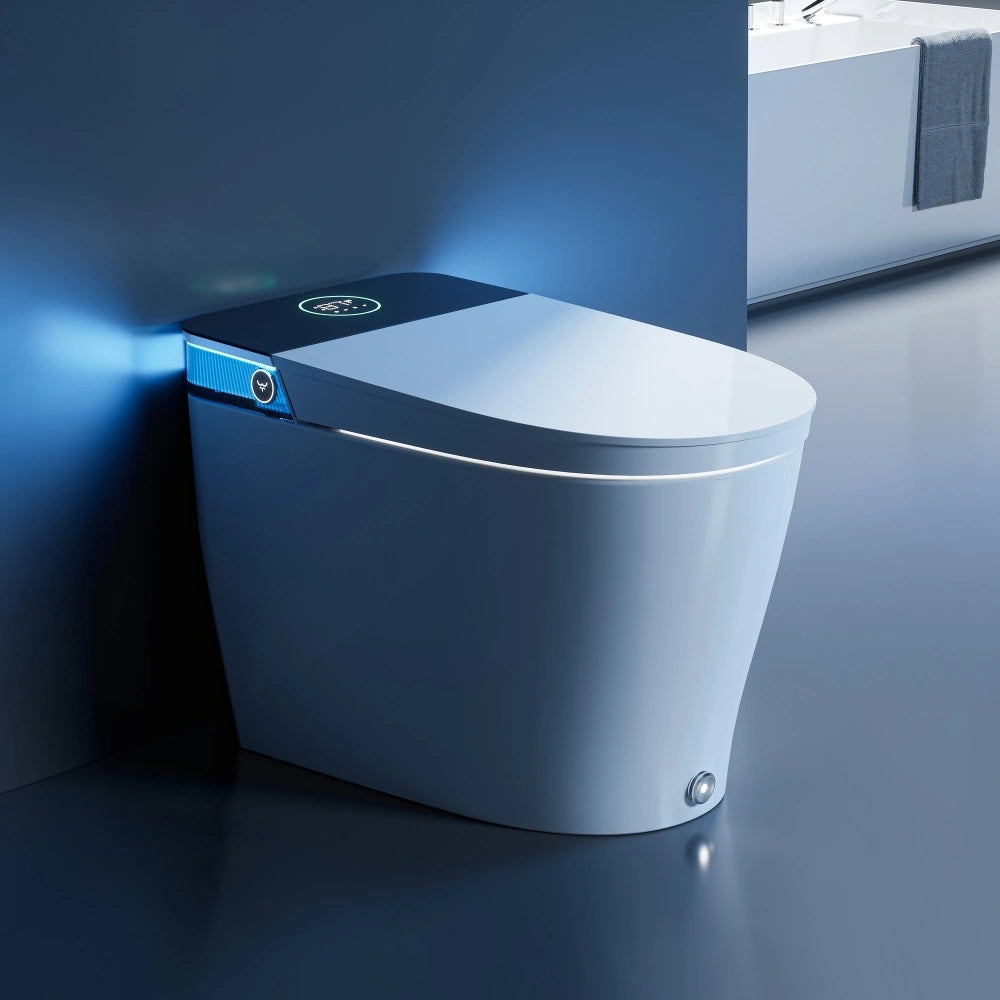
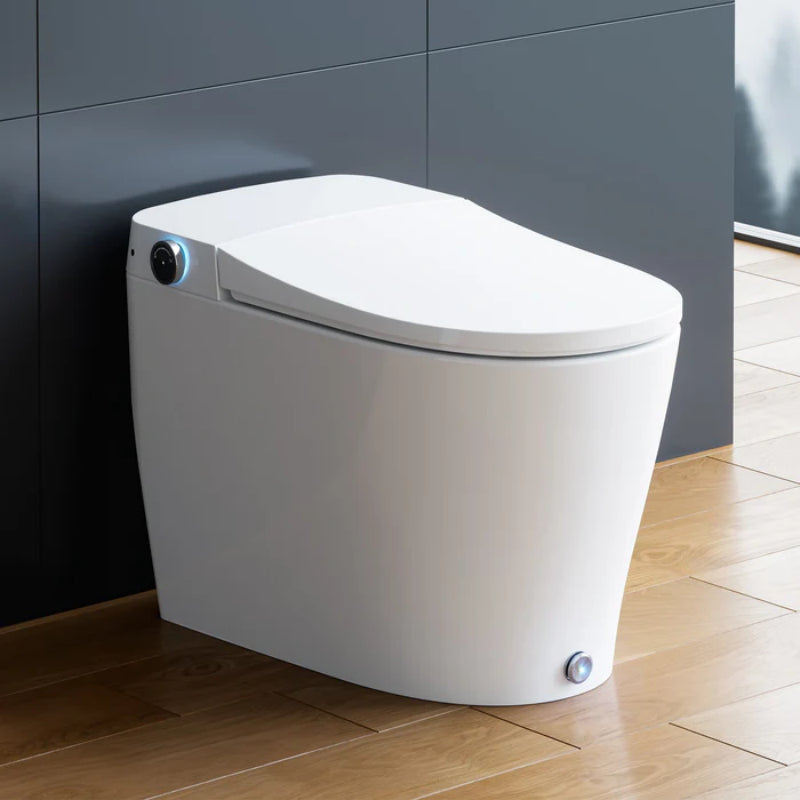
Smart toilets are available with different finished seat heights. Integrated seats and electronic components may affect the final sitting height, so compare the floor-to-top-of-seat measurement rather than relying only on the listed bowl height or product category.
Before You Buy
Chair height and comfort height are common market terms. They do not by themselves confirm that a specific toilet complies with ADA requirements.
Use this quick checklist before you order:
-
Measure from the finished floor to the top of your current toilet seat.
-
Confirm whether the product lists bowl height or finished seat height.
-
Identify who uses the bathroom most often.
-
Check whether the shortest regular user can place their feet securely.
-
Confirm the rough-in size, overall depth, bowl shape, width, and front clearance.
-
Decide whether a stool, riser, raised seat, or support frame is practical for long-term use.
-
Review the product drawing and installation instructions before ordering.
FAQs
1. Is a chair-height toilet better for seniors?
Not for every user. A chair-height toilet requires less lowering than a standard-height model and may suit adults who prefer a higher seat. However, the user should still be able to sit with stable foot support. Where additional support is needed, toilet height should be considered together with properly installed grab bars or a compatible support frame.
2. Is 17 inches too high for a toilet?
It depends on the user and how the measurement was taken. A 17-inch finished seat height may feel comfortable for many adults, but it may be too high for children or shorter users whose feet do not rest securely. Confirm that the specification measures from the finished floor to the top of the installed seat.
3. Which height is better for a guest bathroom?
Choose based on the people who use the bathroom most often. Chair height may suit an adult-focused guest bathroom, while standard height may be more versatile when children and shorter adults use the space regularly. Also confirm the rough-in and overall dimensions before ordering.
4. What is the difference between standard and chair-height toilets?
The main difference is the finished seat height.
Standard-height toilets commonly measure about 14 to 16 inches from the floor to the top of the seat, while chair-height toilets commonly measure about 17 to 19 inches. Standard height may provide better foot support for shorter users, while chair height requires less lowering for many adults.
5. Do smart toilets come in both heights?
Yes. Smart toilets are available with different finished seat heights. Because an integrated seat may add thickness, compare the complete floor-to-top-of-seat measurement rather than relying only on the porcelain bowl height.
References





Leave a comment
This site is protected by hCaptcha and the hCaptcha Privacy Policy and Terms of Service apply.