



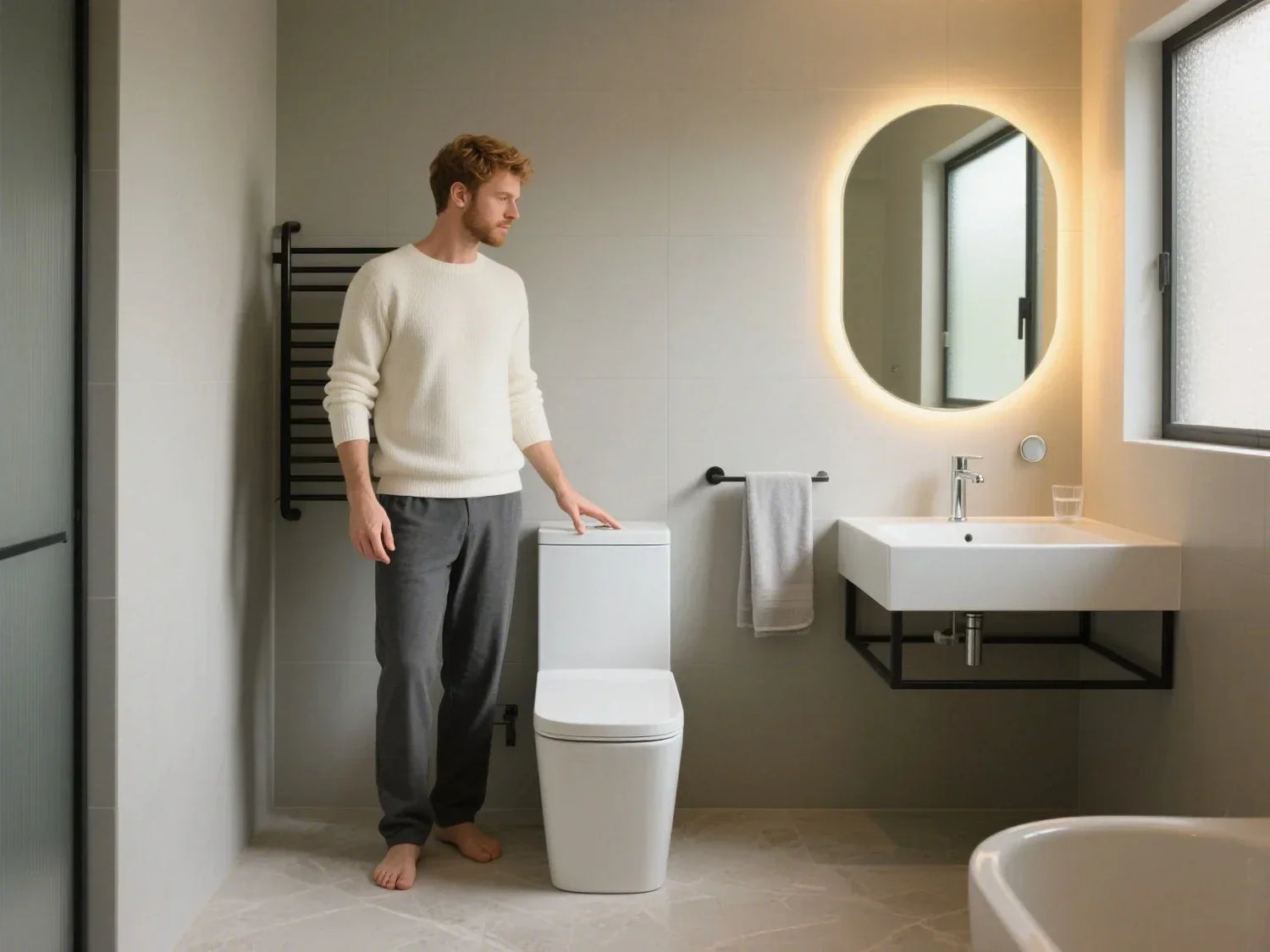
A chair-height toilet is a taller toilet with an installed seat that commonly measures about 17 to 19 inches above the finished floor. It may make sitting down and standing up easier for some adults, but the right height depends on the people who regularly use the bathroom. This guide explains how chair height compares with standard and comfort height, how to measure toilet height correctly, and what to check before choosing a model.
What Is a Chair-Height Toilet?
A chair-height toilet is designed with a higher seating position than a standard-height model. Its height should be measured vertically from the finished floor to the top of the installed toilet seat.
Chair-height toilets commonly have an installed seat height of about 17 to 19 inches. Product listings may use “chair height” and “comfort height” in similar ways, but the exact measurement can vary by manufacturer. Check the specification drawing instead of relying on the product label alone.
The higher seating position requires less lowering than a standard-height toilet and may feel more comfortable for taller adults or users who prefer a higher seat. However, chair height is not the right choice for every user, especially when children or shorter adults regularly use the bathroom.
Toilet Height Terms Explained
The terms used in toilet listings are not always standardized. Use the actual floor-to-seat measurement when comparing models.
| Term | What It Usually Means | What to Check |
|---|---|---|
| Chair height | A taller toilet category, commonly with an installed seat around 17 to 19 inches above the finished floor | Confirm the finished seat height on the specification drawing |
| Comfort height | A manufacturer or product-category term often used similarly to chair height | The exact measurement may vary by brand and model |
| Universal height | A manufacturer term for a toilet intended to suit a broad range of adult users | Do not assume it matches another brand’s chair-height measurement |
| Standard height | A lower residential toilet category, often with an installed seat around 14 to 16 inches above the finished floor | Confirm the actual seat height rather than relying only on the category name |
| Bowl or rim height | The height from the finished floor to the top of the porcelain bowl without the seat | Do not compare it directly with a finished seat-height measurement |
| Finished seat height | The distance from the finished floor to the top of the installed toilet seat | Use this measurement when comparing toilet heights |
Standard Height vs. Chair Height Toilets
The main difference between standard-height and chair-height toilets is the installed seat height. That difference can affect foot support, the amount of lowering required, and how comfortable the toilet feels for different members of the household.
Standard-Height Toilets
Standard-height toilets typically have an installed seat height of about 14 to 16 inches. Exact measurements vary, so check whether a product specification lists bowl height or finished seat height.
Who may prefer them: Standard-height toilets may suit shorter adults, children, and households where a lower seat provides better foot support.
Common installations: They are often used in family bathrooms, children’s bathrooms, and guest bathrooms that serve people of different heights.
Advantages: The lower position may feel more stable for users whose feet do not reach the floor on a taller toilet.
Drawbacks: Some taller adults and users with limited mobility may find that a lower toilet requires more effort to sit down or stand up from.
Chair-Height Toilets and Comfort-Height Toilets
Chair-height toilets usually place the top of the installed seat about 17 to 19 inches above the finished floor. The name refers to a seating position similar to many household chairs, although chair dimensions and toilet measurements are not universally standardized.
Who may prefer them: Taller adults and users who prefer less lowering may find a chair-height toilet more comfortable. Individual fit still depends on body height, foot support, and mobility needs.
Where they are used: Taller toilets are commonly considered for primary bathrooms, multigenerational homes, accessible bathroom plans, and public or commercial restrooms designed to meet applicable accessibility requirements.
Advantages: A higher seat reduces the distance a user must lower when sitting down and may make standing up more manageable for some adults.
Drawbacks: Shorter adults and children may find that their feet do not rest securely on the floor. Test different heights in person when possible and consider the shortest frequent user in a shared bathroom.

Quick Comparison: Chair Height vs. Standard Height Toilets
Choosing between these toilet heights depends on the regular users, preferred seating position, and bathroom layout. Compare the actual finished seat height rather than relying only on the product-category name.
| Feature | Chair-Height Toilet | Standard-Height Toilet |
|---|---|---|
| Typical Seat Height | About 17–19 inches | About 14–16 inches |
| May Suit | Taller adults and users who prefer less lowering | Shorter adults, children, and users who prefer a lower seat |
| Common Uses | Primary bathrooms, accessible bathroom plans, public restrooms | Family bathrooms, children’s bathrooms, guest bathrooms |
| Potential Advantage | Requires less lowering for some users | May provide better foot support for shorter users |
| What to Check | Whether shorter users can place their feet securely | Whether taller or mobility-limited users can sit and stand comfortably |
How to Measure Toilet Seat Height Correctly
Place the end of a tape measure on the finished floor beside the toilet. Measure vertically to the top surface of the installed toilet seat. Do not stop at the porcelain rim or measure to the top of the tank.
If a product drawing lists both bowl height and seat height, record the two measurements separately. Bowl or rim height excludes the seat, while finished seat height includes it. Compare toilets only when both specifications use the same floor-to-top-of-seat measurement.
For an ADA seat-height check, use the measurement from the finished floor to the top of the seat. Seat height is only one part of an accessible restroom design.
ADA Seat-Height Requirements
Under Section 604.4 of the 2010 ADA Standards for Accessible Design, the seat of an adult accessible water closet must be 17 to 19 inches above the finished floor, measured to the top of the seat. This is a seat-height requirement and should not be treated as a product certification based on height alone.
A complete accessible restroom may also need to meet requirements for toilet position, surrounding clearance, grab bars, flush controls, and other installation details. A toilet whose seat falls within the 17- to 19-inch range does not by itself make the complete restroom ADA compliant.
Chair height and comfort height are product-category terms, and their measurements can vary by manufacturer. Check the dimension drawing for the specific model and confirm that the listed measurement runs from the finished floor to the top of the installed seat.
Where the ADA Standards apply to residential dwelling units, an exception permits a water-closet seat height of 15 to 19 inches above the finished floor. Homeowners planning an accessible bathroom should review applicable requirements and local codes rather than relying only on a product label. You can also browse current HOROW ADA-compliant toilets and review each product’s specifications and installation documents.

Who May Prefer a Chair-Height Toilet?
A chair-height toilet may suit users who prefer a higher seating position or find a lower toilet difficult to use. The right choice depends on body height, foot support, mobility needs, and who regularly uses the bathroom.
Users Who May Want to Compare Chair Height
- Taller adults: A higher seat may feel more proportionate and may require less lowering than a standard-height model.
- Older adults or users with limited mobility: Some users may find a higher seat easier to approach and rise from. Seat height is only one consideration. If a person needs support while standing, correctly positioned grab bars or a suitable toilet support frame may be more important than height alone.
- Adults planning for changing household needs: A chair-height model may be worth comparing during a remodel when the bathroom is intended to support long-term use. Rough-in size, clear floor space, surrounding fixtures, and future support features should be planned at the same time.
- People recovering from surgery or injury: Toilet height and support needs should follow the recommendations provided by the user’s healthcare or rehabilitation professional. A permanent replacement is not always necessary; a compatible raised seat or support frame may be more appropriate for temporary use.
When a Chair-Height Toilet May Not Be the Best Fit
- Children: A taller seat may make it difficult for a child to place both feet securely on the floor. A lower toilet or an appropriate foot support may provide a more stable setup.
- Shorter adults: A chair-height model may feel too high if the user’s feet do not rest comfortably. Test different seat heights in person when possible.
- Shared bathrooms: When adults and children use the same bathroom, consider the shortest regular user as well as taller users. A standard-height toilet may be more versatile in some households.
Foot Support and Sitting Position
A toilet should allow its regular users to sit in a stable position. If a user’s feet do not reach the floor comfortably, compare a lower seat or an appropriate stable foot support. Make sure any added accessory does not interfere with entry, create a tripping hazard, or block access around the toilet.
If a person needs support when standing, the CDC home fall-prevention checklist recommends considering securely installed grab bars beside the toilet. A taller seat does not replace support features when they are needed.

Options for a Taller Toilet: Pros & Cons
A complete toilet replacement is not the only way to increase sitting height. Compare the stability, installation requirements, cleaning needs, and intended length of use for each option.
| Option | Pros | Cons |
|---|---|---|
| Chair-Height Toilet | Permanent fixture with an integrated higher seating position | Requires full toilet replacement and may not suit every user |
| Raised Toilet Seat | Can increase sitting height without replacing the toilet and may suit temporary needs | Compatibility, attachment, stability, weight capacity, and cleaning requirements vary |
| Toilet Frame or Rails | Can provide arm support when sitting down or standing up | Requires floor space and must be positioned and secured correctly |
Compare HOROW Toilet Seat Heights
The models below show why the finished seat-height measurement matters more than the category label alone. Measurements are based on verified HOROW product specifications. Review the current product page and installation documents before ordering.

HOROW ST076W
- Finished seat height: 16¾ inches
- Bowl or rim height: 15¾ inches
- Rough-in: 12 inches
- Flush type: Single flush
The ST076W has a finished seat height of 16¾ inches, placing it just below the common 17- to 19-inch chair-height range used in this guide. It may be worth comparing for buyers who want a slightly lower seating position.
View the HOROW ST076W

HOROW T0350W
- Finished seat height: 17½ inches
- Bowl or rim height: 16½ inches
- Configuration: One-piece elongated toilet
- Flush type: Dual flush
The T0350W has a 17½-inch finished seat height, placing it within the common 17- to 19-inch chair-height range. Compare its overall dimensions and installation requirements with the available bathroom space.
View the HOROW T0350W

HOROW HR-T0357W
- Finished seat height: 19 inches
- Bowl or rim height: 18 5/16 inches
- Rough-in: 12 inches
- Flush type: Dual flush
The HR-T0357W has a 19-inch finished seat height, placing it at the upper end of the common chair-height range. Shorter users should confirm that their feet can rest securely before choosing this height.
View the HOROW HR-T0357W
Not sure which height fits your household? Compare current models in the HOROW comfort height toilet collection , and check each product drawing for the finished seat-height measurement before ordering.
How to Choose the Right Chair-Height Toilet for Your Home
Choosing the right toilet height involves more than comparing category names. Consider the regular users, finished seat height, bowl shape, rough-in size, overall dimensions, and available bathroom clearance.
Checklist for Selecting Your Toilet Height
Consider the regular users:
- Compare a chair-height toilet when most regular users are adults who prefer a higher seat or less lowering.
- Compare a standard-height toilet when children or shorter adults are frequent users and secure foot support is a priority.
Test the height: If possible, sit on both standard-height and chair-height models before ordering. The user should be able to sit in a stable position with comfortable foot support. There is no single perfect height for every person.
Consider the bowl shape:
Toilets are commonly available with elongated or round bowls:
- Elongated bowl: Provides a longer seating surface but requires more front-to-back space.
- Round bowl: Has a shorter projection and may fit bathrooms where front clearance is limited.
Compare flushing specifications: Flush volume, flush type, bowl design, and applicable efficiency labels vary by model. Review the individual product page rather than assuming all chair-height toilets use the same flushing system.
Plan for future needs: If the bathroom is being remodeled for long-term use, plan the toilet height together with clearances, grab-bar locations, doorway access, and other support features. A higher toilet alone does not create a complete accessible bathroom.
The goal is to choose a verified seat height and toilet configuration that match the regular users and the available bathroom space.
Installation and Maintenance of Chair-Height Toilets
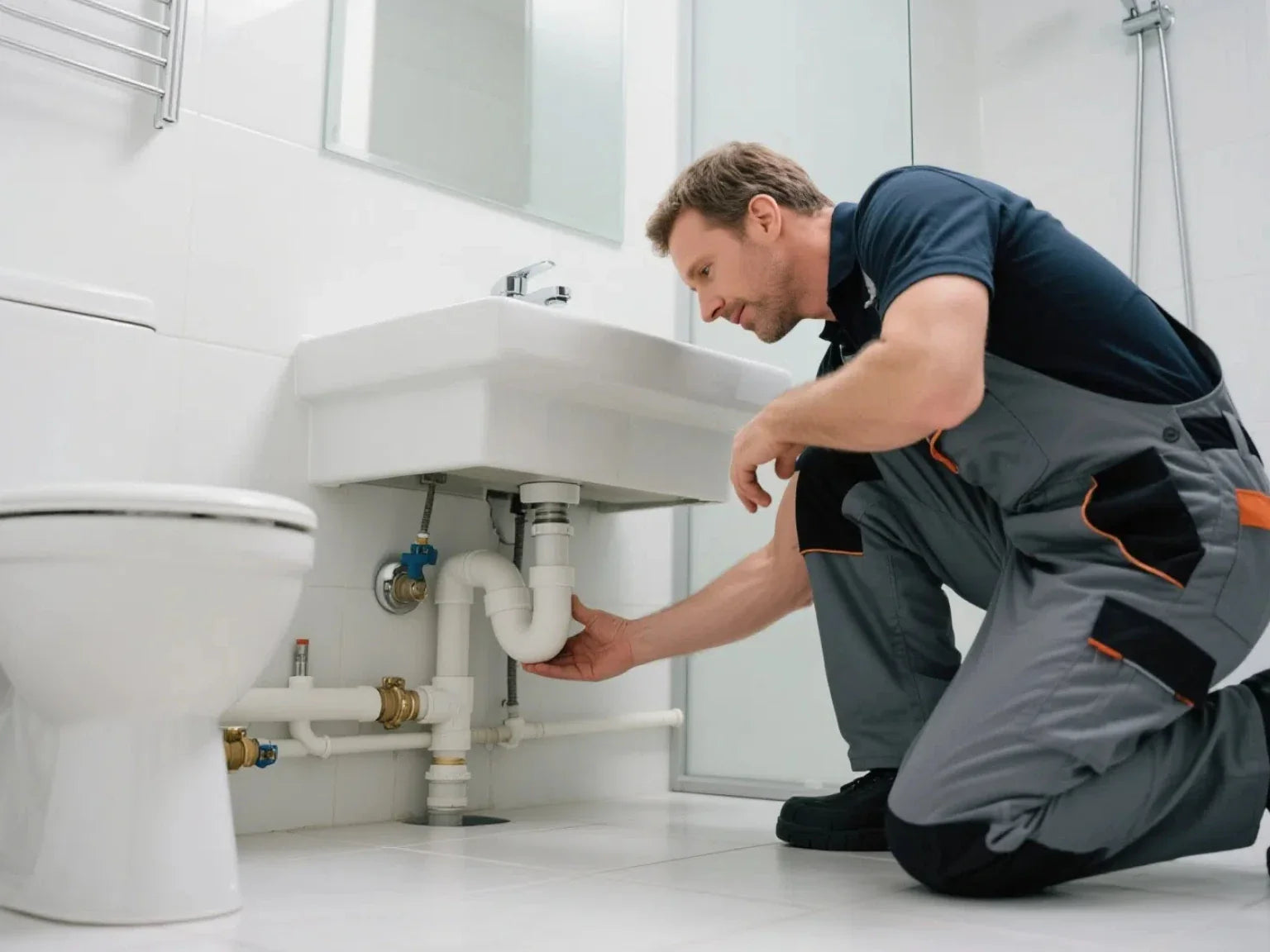
Once you have selected a toilet, confirm the rough-in size, flange condition, water-supply position, overall dimensions, and installation instructions before removing the existing fixture. Toilet replacement may be manageable for an experienced DIYer, but damaged plumbing or an incompatible rough-in may require a professional installer.
Installation Overview
A typical floor-mounted toilet replacement includes the following steps:
- Turn off the water: Shut off the water-supply valve behind the toilet.
- Drain the toilet: Flush the toilet to empty the tank and bowl, then remove remaining water.
- Disconnect the fixture: Disconnect the water-supply line and remove the fasteners securing the toilet.
- Remove the old toilet: Lift the fixture carefully and set it on a protected surface.
- Inspect the flange: Remove the old seal and check the flange and surrounding floor for damage.
- Set the new toilet: Follow the product instructions for the seal, mounting hardware, and toilet placement.
- Secure and reconnect: Tighten the hardware evenly without overtightening, then reconnect the water-supply line.
- Test for leaks: Restore the water supply and flush several times while checking all connections and the toilet base.
Retrofitting with a Raised Toilet Seat
A compatible raised toilet seat can increase the sitting height without replacing the porcelain fixture. Raised seats vary in added height, bowl compatibility, attachment method, weight capacity, cleaning requirements, and intended use. Install the accessory according to its instructions and confirm that it remains secure before use.

Maintenance Tips
A chair-height toilet is maintained in the same general way as another toilet of the same construction.
- Regular cleaning: Clean the bowl, seat, and exterior using products permitted by the manufacturer.
- Check for leaks: Periodically inspect the base, water-supply connection, tank connections, and flush components.
- Protect internal components: Avoid placing cleaning products in the tank unless the toilet manufacturer specifically permits them.
Features Available in Chair-Height Toilets
Chair-height toilets are available in a range of conventional, high-efficiency, bidet, and smart-toilet configurations. The exact feature set depends on the model.
Common options to compare include:
- Water efficiency: Flush volume and efficiency certifications vary. Confirm the GPF and applicable labels on the individual product page.
- Bidet integration: Some taller toilets can be paired with a bidet seat, while others include integrated washing functions. Check bowl compatibility, electrical requirements, and product dimensions.
- Flush design: Single-flush, dual-flush, gravity-assisted, and other configurations are available. Compare the verified specifications for each model.
- One-piece and two-piece construction: Both configurations are available in taller seat heights, with different installation, cleaning, and replacement considerations.
- Modern styling: Chair-height toilets are available in traditional and contemporary profiles, including skirted and exposed-trapway designs.
Do not assume that a taller toilet includes a particular flush volume, certification, bowl shape, or accessibility feature. Review each model separately.

Practical Selection Checks
Product labels and general reviews cannot determine whether a toilet will fit every user or bathroom. Before ordering a chair-height toilet, check the following details.
- Finished seat height: Compare the distance from the finished floor to the top of the installed seat. Do not substitute bowl or rim height for this measurement.
- User fit: Consider whether the regular users can sit with stable foot support and stand without excessive effort. Test different heights in person when possible.
- Rough-in size: Measure from the finished wall to the center of the floor drain and compare the result with the model’s installation drawing.
- Bathroom clearance: Confirm that the toilet’s depth and width work with the door, vanity, shower, and available space in front of the bowl.
- Support features: Plan grab bars, toilet rails, transfer space, or other support separately. A taller seat does not replace these features when they are needed.
- Product documentation: Review the official specification drawing and installation instructions instead of relying only on category labels or customer comments.
Customer reviews may reveal recurring comfort, cleaning, or installation concerns, but verified product specifications should remain the primary source for dimensions and fit.
Quick Decision Guide: Is Chair Height Right for Your Bathroom?
Compare a chair-height toilet when:
- Most regular users are adults who prefer a higher seat.
- The users can place their feet securely in the seated position.
- Less lowering is an important comfort consideration.
- The model’s rough-in and overall dimensions match the bathroom.
Compare a standard-height toilet when:
- Young children or shorter adults are the primary users.
- A lower seating position feels more stable.
- The bathroom serves users with widely different heights.
Consider a raised seat or toilet support frame when:
- The need is temporary.
- Replacing the complete toilet is not practical.
- The accessory is compatible with the existing bowl and can be secured according to its instructions.
Before buying, confirm the finished seat height, bowl or rim height, rough-in size, overall dimensions, bowl shape, and any required support features.
Summary: Is a Chair-Height Toilet Right for You?
A chair-height toilet usually refers to a taller model with an installed seat commonly measuring about 17 to 19 inches above the finished floor. Comfort height, universal height, and similar labels may be used for taller toilets, but their exact measurements can vary by manufacturer.
A higher seat may suit taller adults and users who prefer less lowering when sitting down. It may be less comfortable for children or shorter adults whose feet do not rest securely. There is no single toilet height that works for every household.
Measure from the finished floor to the top of the installed seat, and keep that measurement separate from the porcelain bowl or rim height. Also confirm the rough-in, overall dimensions, bowl shape, and surrounding bathroom clearance before ordering.
For an accessible restroom, remember that seat height is only one requirement. Toilet position, clearance, grab bars, controls, and the complete installation may also need to meet applicable standards.
Ready to compare current models? Browse HOROW comfort height toilets for taller-seat options, or explore HOROW ADA-compliant toilets. Review the individual product page and specification drawing before making a final selection.
FAQs
1. What is the difference between a standard-height toilet and a chair-height toilet?
The main difference is the installed seat height. A chair-height toilet commonly measures about 17 to 19 inches from the finished floor to the top of the seat, while a standard-height toilet is typically lower, often around 14 to 16 inches. Chair height may suit taller adults or users who prefer less lowering, while standard height may fit shorter adults and children more comfortably. Exact measurements vary, so compare the product drawings before choosing.
2. Why are chair-height toilets so popular?
Chair-height toilets are popular because a higher seat may require less lowering and rising for some adults. They are often considered for primary bathrooms, taller users, and homes being planned for changing mobility needs. However, they are not automatically more comfortable for every user. Check the actual finished seat height and make sure the regular users can place their feet securely.
3. What is the best seat height for a toilet?
There is no single best toilet seat height for every user. A practical height should allow the regular user to sit with supported feet and stand without excessive effort. Compare the finished seat-height measurement and test different heights in person when possible. In a shared bathroom, consider the shortest frequent user as well as taller adults.
4. Is universal height the same as chair height?
Not always. Universal height, chair height, and comfort height are manufacturer or product-category terms, and their exact measurements can vary. They often describe a taller toilet, but the labels should not be assumed to mean the same measurement or establish ADA compliance. Compare the finished floor-to-top-of-seat dimension for the specific model.
5. Can I make my standard toilet into a chair-height toilet?
You cannot change the height of the porcelain toilet bowl, but a compatible raised toilet seat can increase the sitting height. Raised seats vary in attachment method, stability, cleaning requirements, and weight capacity, so follow the accessory manufacturer’s instructions. A toilet support frame or correctly installed grab bars may be more appropriate for some users. For post-surgery or medical needs, follow guidance from a qualified healthcare or rehabilitation professional.



Leave a comment
This site is protected by hCaptcha and the hCaptcha Privacy Policy and Terms of Service apply.