
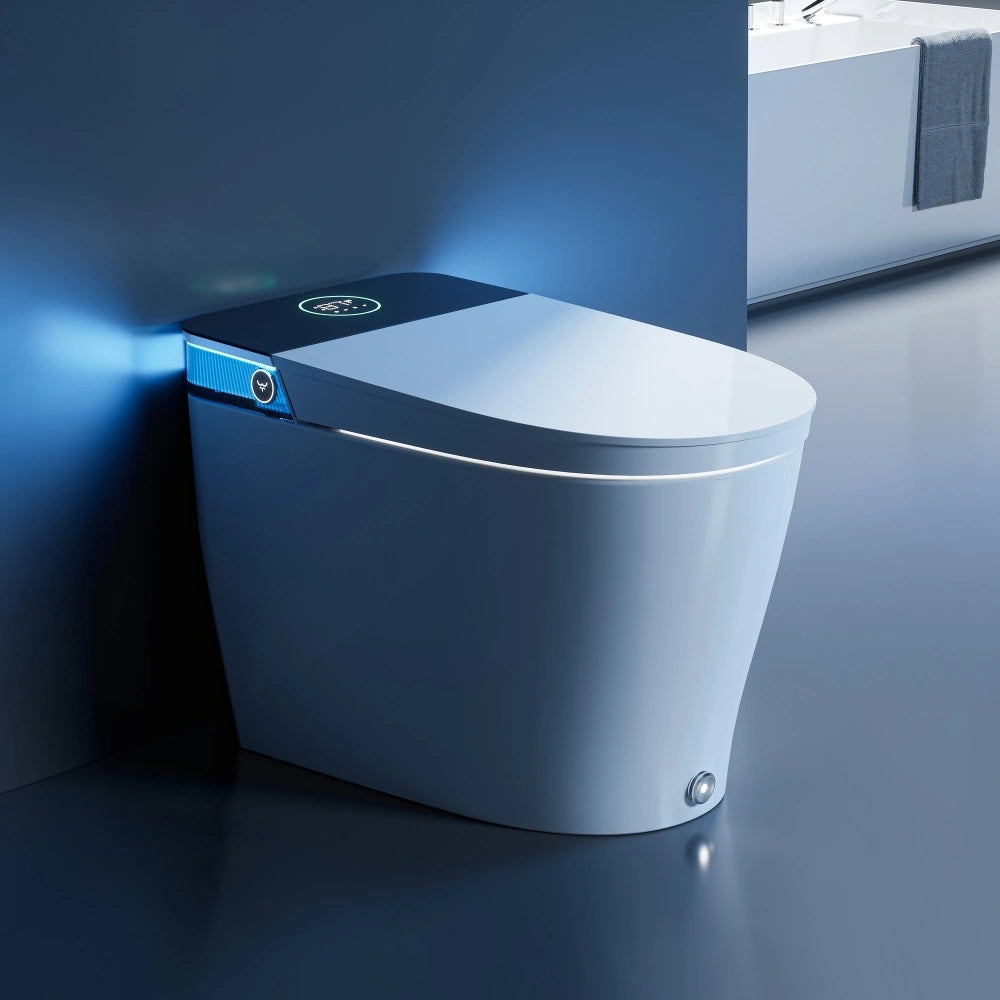
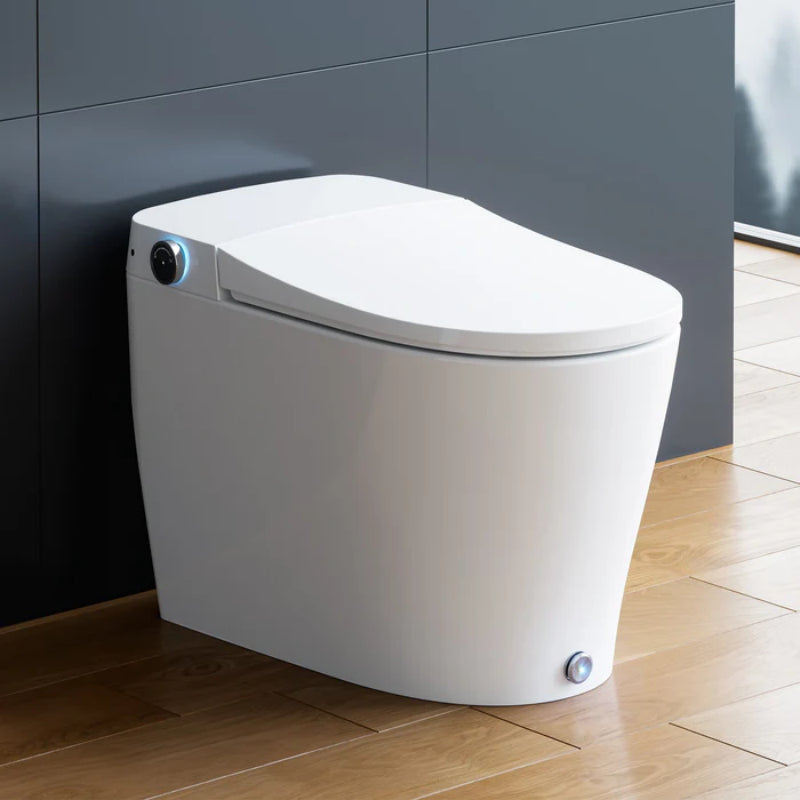
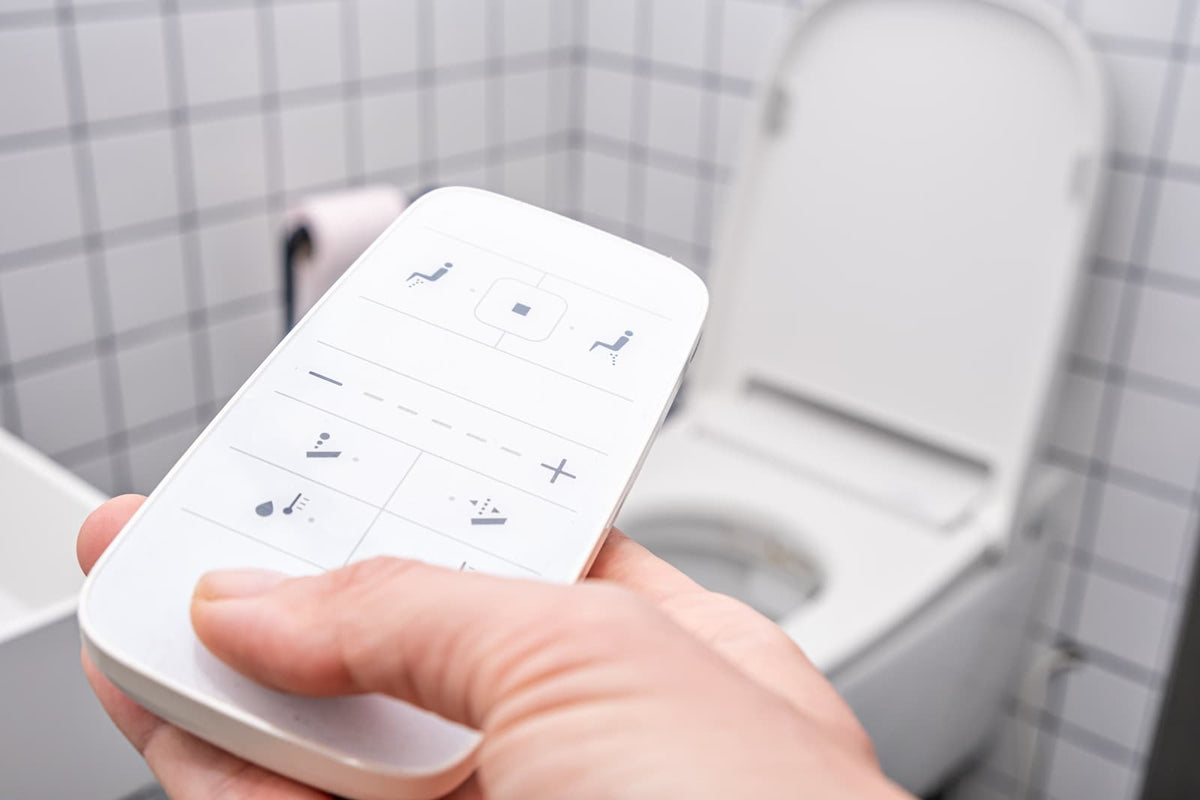
A smart toilet with heated seat is an electronic toilet that warms the seating surface, usually with adjustable temperature settings. The toilet may also include bidet washing, automatic flushing, a dryer, sensors, or a powered lid.
The heated seat can provide meaningful daily comfort in a cold bathroom. However, it also comes as part of a fixture that needs electricity, compatible plumbing, more maintenance, and potentially model-specific repairs.
Decision snapshot:
- Choose one if your bathroom stays cold and you expect to use the heat regularly.
- It may also suit households that want the toilet’s other powered features.
- Skip it if the room is already comfortable or you prioritize simple, low-maintenance fixtures.
- Think carefully if the bathroom has limited space, frequent outages, hard water, or poor access to replacement parts and service.
Who Benefits and Who Should Skip It?
Best for Cold Bathrooms and Comfort Seekers
A heated seat is most useful in an unheated, poorly insulated, or consistently cool bathroom. The difference is especially noticeable during winter and on early-morning or nighttime visits.
It can also help people who are particularly sensitive to cold surfaces. Although warmth may improve comfort for older adults or people who spend longer on the toilet, it should not be treated as a complete accessibility solution. Seat height, controls, transfers, surrounding space, and the individual user’s needs may matter more.
Frequency is the clearest test of value. If you would keep the heat enabled and appreciate it several times a day, the upgrade is easier to justify.
Skip It in Warm, Low-Tech Bathrooms
In a consistently warm bathroom, a heated seat may be used briefly and then switched off. Some people also find higher temperature settings uncomfortable.
It may be a poor fit if your main priority is simplicity. A conventional toilet has fewer electronic parts, while a smart toilet may add sensors, controls, powered flushing, bidet functions, drying, or automatic lid movement. These features can be convenient, but they also increase the number of components that may eventually require attention.
If warmth is the only feature you want, consider whether upgrading the entire toilet is proportionate to that benefit.
Does the Comfort Justify Added Complexity?
Is It Worth the Extra Cost?
A smart toilet with heated seat can be worth it when the warmth provides daily comfort and the household also values other integrated functions. It is harder to justify when the seat heater is the only appealing feature.
Consider the full ownership burden rather than the purchase alone:
| Decision factor | When the upgrade makes sense |
|---|---|
| Higher purchase cost | The heated seat will be used regularly |
| Installation preparation | Power and water access are already suitable or can be prepared |
| Electricity use | Adjustable warmth has meaningful daily value |
| Additional maintenance | The household will use the toilet’s other powered functions |
| More specialized repairs | Parts and service options are clearly available |
The right comparison is not simply warm versus cold. It is daily comfort versus installation needs, energy use, maintenance, and repair complexity.
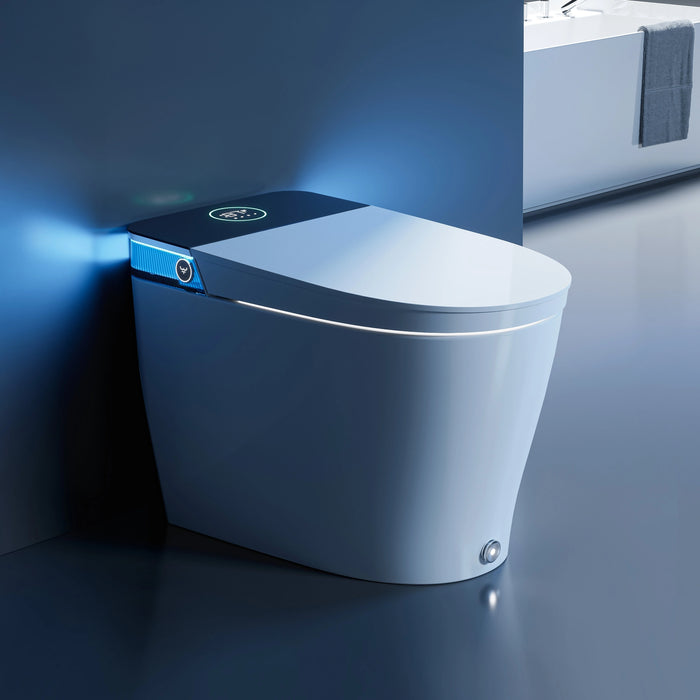
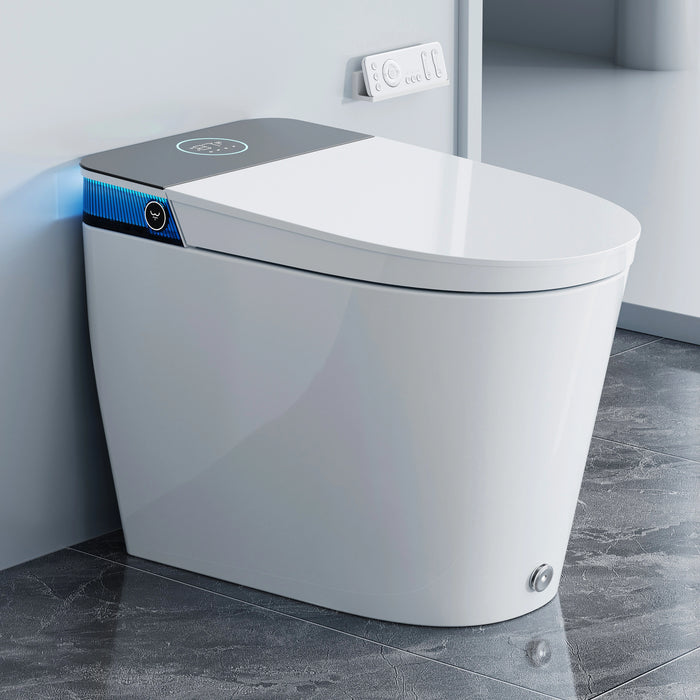
You can review the range of HOROW smart toilets to see how heated seating is packaged with other functions, but check the instructions and specifications for the exact model under consideration.
HOROW Smart Toilets to Compare These HOROW smart toilets include heated-seat functionality along with other integrated comfort features. Compare the exact model specifications and installation requirements before choosing one for your bathroom.

Other Features Can Undermine Seat Comfort
A warm seat cannot compensate for a toilet that is noisy, difficult to control, awkward to clean, or frustrating to flush. Dryer performance, sensor behavior, control layout, and mechanical sounds may have a greater effect on long-term satisfaction than seat temperature.
Before choosing a model, find out:
- Which automatic functions can be adjusted or disabled
- Whether controls are easy to understand in low light
- How the toilet flushes with and without power
- Which surfaces and components require routine cleaning
- Whether fans, pumps, lid motors, or alerts may be disruptive
Evaluate the complete toilet experience, not the heated seat in isolation.
Multiple Users May Prefer Different Temperatures
One person’s comfortable setting may feel too warm to another. In a shared bathroom, temperature controls should be easy to reach and adjust.
Check whether the toilet remembers settings, uses one shared temperature, or returns to a default after an energy-saving period. If settings cannot be saved separately, household members may need to make frequent adjustments.
What Must Be Checked Before Installation?
Confirm Power and Water Access
Do not assume an existing bathroom outlet or water connection will suit every smart toilet. Review the exact installation instructions for cord position, outlet placement, water connections, and shutoff-valve access. If the required electrical or plumbing work is unclear, consult a qualified professional.
The shutoff valve should remain accessible after installation. Cramped pipework, an aging valve, or a poorly placed outlet can make installation and future service more difficult.
Use the model’s installation drawing rather than estimating from product photos. Exterior shape alone does not show connection points or required working space.
Will It Work in Small Bathrooms?
Measure the fixture and the space needed to use and maintain it. A toilet may fit on the floor while leaving too little room to stand, reach the controls, clean around the bowl, or access a service panel.
Also consider nearby walls, cabinets, and doors. They may interfere with a remote holder, side controls, power cord, water connection, or maintenance access. A tight fit can become a larger problem when a line must be disconnected or a manual control reached.
Allow Clearance for Lids and Sensors
A powered lid needs an unobstructed path. Shelves, window ledges, toilet-paper holders, and wall-mounted storage may interfere with its movement.
Sensor range also matters. In a compact room, someone walking past may activate the lid. Children, pets, and different movement patterns can make automatic operation less predictable.
Confirm where the sensors are located and whether sensitivity, automatic opening, or automatic flushing can be adjusted or turned off.
Could Daily Use Become Less Convenient?
What Happens During a Power Outage?
The seat will not heat without electricity. Depending on the toilet’s design, washing, drying, automatic lid movement, controls, and powered flushing may also stop.
Check the instructions to learn exactly how the model flushes during an outage. If a manual option is provided, identify its location and operating steps before installation. A control hidden near the floor or behind a cover may be inconvenient when it is needed.
The important question is whether an outage disables only comfort features or makes basic toilet use more difficult.
Automatic Sensors May Behave Unexpectedly
Automatic opening and flushing can reduce the need to touch the fixture, but sensor behavior may not always match household habits. A lid may open when someone walks past, or flushing may occur earlier or later than expected.
Prioritize clear, accessible controls. Automatic functions are more practical when users can adjust or disable them without navigating a confusing sequence of settings.
Energy-Saving Modes May Reduce Warmth
Energy-saving modes may lower the seat temperature during quiet periods. The seat could therefore feel cooler during an unexpected late-night or early-morning visit.
Check whether the model maintains heat continuously, follows a schedule, or reduces heat until use is detected. Temperature levels alone do not explain how warm the seat will feel after a period of inactivity.
What Does Long-Term Ownership Involve?
Does It Require More Maintenance?
The seat surface may be easy to wipe, but the complete toilet can include nozzles, sensors, filters, hinges, seams, and access covers. Follow the model’s care instructions because products suitable for ceramic may not be appropriate for every plastic or electronic component.
Keep the operating instructions available for cleaning modes, nozzle care, manual functions, setting changes, and error messages. A short learning period is normal when several controls and automatic features are combined.
Hard Water Can Increase Upkeep
Hard water can leave mineral deposits on components that handle or spray water, including nozzles and valves. This concern relates to the toilet’s water systems rather than the heated seat itself, but it affects the overall ownership experience.
Before buying, review the manufacturer’s cleaning and descaling guidance. Check whether the toilet uses filters or other consumable parts and whether replacements are readily available.
Confirm Parts, Warranty, and Repair Options
A failed heated seat may not be as simple to replace as a conventional toilet seat. The heating element, hinges, sensors, and controls may be integrated or model-specific.
Before purchase, ask:
- Can the seat or heating assembly be replaced separately?
- Are remotes, hinges, sensors, and electronic parts available?
- Who handles warranty service?
- Can repairs be completed in place?
- What service options remain after the warranty ends?
Short-term satisfaction does not establish long-term durability. Parts availability and a clear repair process become more important as the toilet ages.
Before You Choose
- Confirm how the exact model flushes without power.
- Verify power, water, shutoff-valve, and service access.
- Measure for lid movement, sensor range, controls, and cleaning space.
- Check how energy-saving mode affects seat warmth.
- Review hard-water care and recurring supplies.
- Confirm how the seat and electronic parts can be repaired or replaced.
Common Questions
Does a heated toilet seat stay warm all day?
It depends on the control design. Some toilets maintain the selected temperature, while others reduce heat during energy-saving periods or respond to detected use. Check the operating instructions for the exact model.
Can a smart toilet work without electricity?
The heated seat cannot. Other electronic functions may also stop. Some models offer a manual flushing method, but its operation and convenience vary.
Is a heated seat useful in summer?
It can be useful in an air-conditioned or naturally cool bathroom. In a warm room, many users may prefer a lower setting or switch the heater off.
Can different users save their preferred temperature?
That depends on the control system. Some toilets may remember settings, while others use one shared temperature. Confirm how preferences are stored and changed before buying.


Leave a comment
This site is protected by hCaptcha and the hCaptcha Privacy Policy and Terms of Service apply.