
Who Should Keep a Sliding Door?
A sliding shower door is worth fixing when simple cleaning or a matching roller replacement restores smooth movement. Repair makes sense only if the track, frame, and mounting points remain secure. It is good for tight bathrooms where swing clearance is limited, but less suitable for homeowners who prefer lower-maintenance options or want to avoid recurring hardware checks.
Because shower doors contain large glass panels, stability and proper installation are important safety considerations. The U.S. Consumer Product Safety Commission (CPSC) notes that glass used in shower and bathtub enclosures is covered by a mandatory federal safety standard designed to reduce cutting and piercing injuries if the glass breaks. If the door feels unstable or the glass is visibly damaged, stop regular use until the problem can be inspected.
Works Well in Tight Bathrooms With Routine Upkeep
A sliding panel moves within the shower enclosure’s footprint. That makes it practical where a swinging door could interfere with a toilet, vanity, towel rail, or walkway.
The trade-off is that smooth movement depends on several parts working together, including tracks, rollers, guides, fasteners, and seals. Hair, soap residue, and mineral deposits can collect around these parts and eventually cause resistance.
Keep the sliding design if its space-saving operation remains useful and regular cleaning is an acceptable part of bathroom maintenance.
Reliable Only With Clean, Level, Secure Tracks
A functional sliding door should move without grinding, tilting, lifting, or requiring a hard pull. That depends on a clean track, correctly seated rollers, secure mounting points, and hardware suited to the panel.
How the problem appeared can help narrow the cause:
- Gradually increasing resistance may indicate accumulating debris or mineral deposits.
- Sudden tilting or rattling may indicate a loose fastener, damaged guide, or roller problem.
- Scraping at the same location may indicate an obstruction or damaged track section.
Cleaning is a reasonable first step, but it cannot correct cracked rollers, shifted mounts, or bent rails.
Skip Sliding Doors If Recurring Maintenance Is Unwelcome
Sliding doors become frustrating when the track repeatedly fills with hair, soap, or limescale, especially in a frequently used shower. A panel that must be pushed, lifted, or forced during normal use is no longer delivering convenient movement.
If the door has already been cleaned and reseated several times without staying aligned, further temporary fixes may not be worthwhile. Replacement becomes more practical when the frame is damaged, matching parts are unavailable, or ongoing adjustments are unwelcome. Homeowners considering a new enclosure can review current sliding shower door options after confirming the required fit.
Is the Problem More Than a Dirty Track?

Will Cleaning Put It Back on Track?
Cleaning may solve dragging or hesitation when the door still appears level and the rollers remain seated. Remove loose hair and debris, then clean soap and mineral residue using a method compatible with the enclosure’s materials and care instructions.
After cleaning, move the door gently and watch its alignment. If it travels smoothly and remains seated, buildup was likely contributing to the problem. If it stays tilted, catches at one point, or begins leaving the guide again, cleaning has not corrected the underlying fault.
Do not force a stuck panel. Additional force can obscure the original problem or place more strain on already worn hardware.
Do Squeaks or Rattles Signal Roller Trouble?
Shower door squeaks can come from dirty contact points, rollers that do not turn freely, or friction between misaligned components. The noise alone does not identify the faulty part.
When a shower door rattles, check whether the panel has unusual side-to-side movement. Loose fasteners, worn rollers, or a guide that no longer controls the panel may allow it to wobble. Lubricant should not be used to conceal movement that suggests loose or damaged hardware.
Squeaking with otherwise stable movement usually calls for cleaning and inspection first. Rattling, visible tilting, or repeated derailment warrants a closer hardware check.
Why Does the Door Drag Along the Bottom?

A shower door that drags on the bottom may have dropped because a roller is worn, loose, or incorrectly adjusted. The panel may also be contacting a raised guide, damaged seal, obstruction, or buildup in the lower track.
Examine the gap beneath the panel while moving it gently. An uneven or changing gap suggests an alignment issue. Scraping at one consistent location is more likely to indicate localized buildup, an obstruction, or track damage.
Avoid repeatedly pulling the door through the tight spot. Dragging will not be resolved until the obstruction, alignment, or roller issue is corrected.
When Is a DIY Repair Still Practical?
Check Track Level Before Reseating
A basic DIY inspection is practical when the glass remains securely supported and the track, guides, stops, and screws can be checked without removing the panel. Look for loose mounts, obvious track damage, displaced guides, and rollers that appear uneven.
Follow the instructions for the specific enclosure before changing adjustment screws or stops. Hardware layouts and removal methods vary. This overview of glass shower door installation can provide general context, but it does not replace the instructions supplied with the door.
Reseating a panel on a loose, bent, or shifted track is only a temporary response. The supporting problem must be corrected first.
Replace Worn Rollers With Matching Hardware
A shower door roller problem can involve a worn wheel, damaged bearing, loose axle, or incorrect adjustment. Roller replacement remains practical when the original hardware can be identified and an appropriate match is available.
A visually similar roller is not necessarily compatible. Its dimensions, mounting pattern, and suitability for the panel all matter. The National Glass Association advises against assuming equivalent performance from similar-looking hardware made by different manufacturers and recommends following the selected hardware manufacturer’s specifications. Confirm the required part before dismantling the door, particularly with an older or specialty enclosure.
If matching hardware cannot be found, improvised substitutions may leave the panel poorly aligned. At that point, professional assessment or enclosure replacement may be more sensible.
Heavy Glass Can Make DIY Removal Unsafe

Some roller repairs require the entire glass panel to be lifted, angled, and removed from the frame. Limited floor space can make the panel difficult to control or place down securely.
Professional removal is the better choice when the panel is too heavy to control, the frame shifts during handling, or the removal steps are unclear. Do not attempt removal alone if you cannot keep the panel supported throughout the process.
How Much Maintenance Will Smooth Sliding Require?
Clean Away Soap, Hair, and Limescale Regularly
Track cleaning is routine care for a sliding shower door, not just a response to derailment. Remove loose debris before it packs around the rollers or guides, and address visible soap or mineral deposits before the door starts dragging.
Changes in movement are useful warning signs. If the panel suddenly requires more effort, inspect and clean the track rather than making a habit of pulling harder.
What Lubricant Is Safe for Shower Door Rollers?
The best lubricant for shower door rollers is one specifically approved by the door or roller manufacturer for the materials involved. Check the enclosure’s care instructions or ask the hardware supplier before applying a product, especially when rollers include plastic or rubber components.
Clean and inspect the track first. Lubricant cannot repair a cracked, loose, flattened, or badly worn roller, nor can it correct a tilted panel or damaged rail.
Avoid Lubricants That Attract Dirt
Thick, oily, or petroleum-based products can hold hair, dust, and soap residue around the track. General-purpose household oils and cooking oils should not be treated as universal shower-door lubricants.
Applying more product is also unlikely to help a door that rattles or repeatedly comes off track. Those symptoms require an alignment and hardware check rather than lubrication alone.
When Temporary Fixes Stop Making Sense

Repeated Derailment Points to Deeper Wear
A single off-track event may result from severe buildup or an obstruction. A door that repeatedly derails after cleaning and reseating is more likely to have worn rollers, damaged guides, loose fixings, or ongoing positioning problems.
Continually lifting the panel back into place does not address those causes. Stop using the door if it will not stay properly positioned.
Bent Tracks or Loose Mounts Need Correction
A bent section can create a catch point that pushes the panel out of alignment. Loose mounting points can allow the track or frame to shift whenever the door moves.
These faults should be corrected before roller adjustments are attempted. Otherwise, the door may improve briefly but continue to drag or derail.
Discontinued Rollers Can Limit Repair Options
Parts availability often determines whether repair remains practical. Older or specialty rollers, guides, and stops may be difficult to match.
Identify the necessary hardware before removing the glass or spending time on repeated adjustments. If compatible parts are unavailable and the door cannot be stabilized with its existing hardware, replacement may be the more dependable decision.
Sliding Shower Doors to Compare When Replacement Makes More Sense
If worn rollers, track problems, or unavailable replacement parts make the existing enclosure impractical to repair, a new sliding shower door may be worth comparing. These HOROW models use sliding designs and provide different finish options for a replacement project.
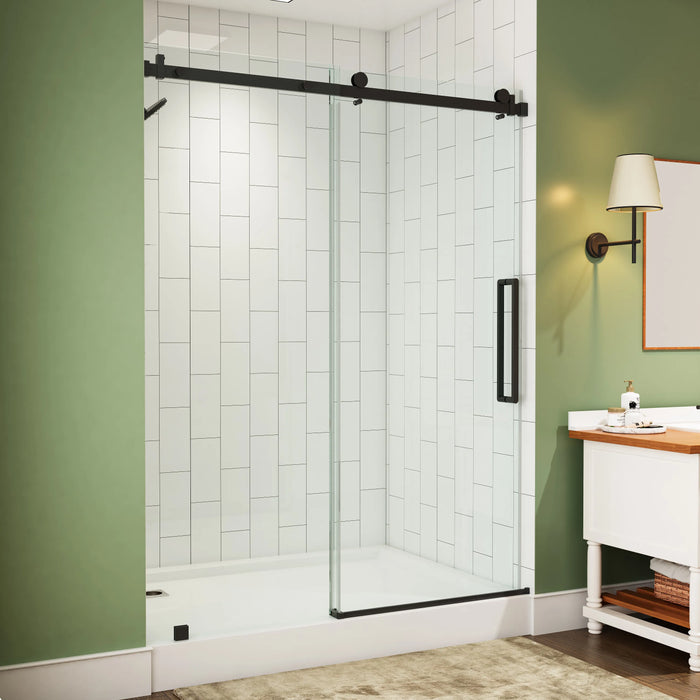
HOROW TE6076-MB
A black frameless sliding shower door with an adjustable 56–60 inch width range, stainless steel rollers, and an anti-jumping mechanism. It is an option to compare when replacing an older sliding enclosure and retaining a sliding-door layout.
View TE6076-MB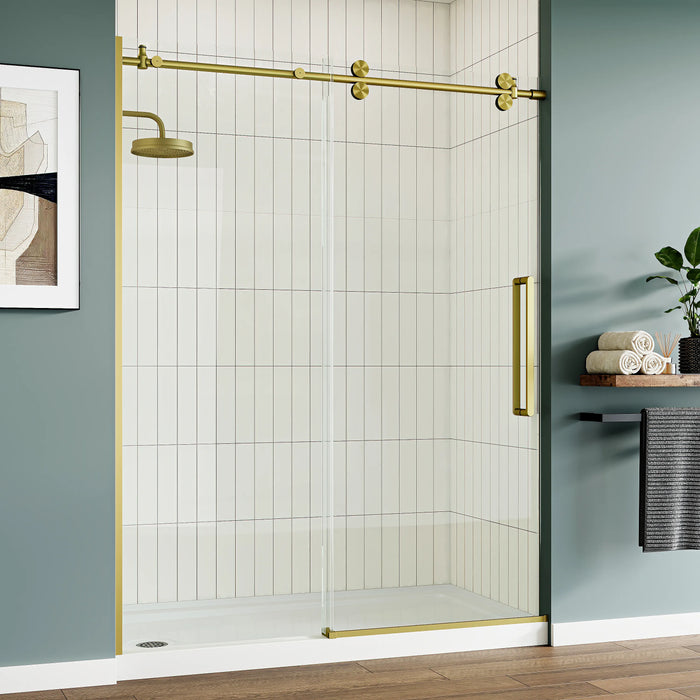
HOROW MI6076-SG
A brushed gold frameless sliding shower door with 8 mm tempered glass and an adjustable 56–60 inch width range. Its sliding configuration makes it relevant for homeowners replacing an existing sliding enclosure while considering a different finish.
View MI6076-SGBefore replacing an existing shower door, confirm the finished opening and review the specifications and installation requirements for the selected model.
Before You Choose
- Clean the track and check whether dragging returns.
- Confirm that the track, frame, guides, and mounts are secure.
- Look for uneven gaps, damaged rollers, and localized catch points.
- Identify matching replacement hardware before removing the panel.
- Follow the door’s instructions for adjustments and lubricant compatibility.
- Use professional help when the glass cannot be controlled confidently.
- Reconsider repair after repeated derailment or failed temporary fixes.
Common Questions
Why does a sliding shower door come off track?
A sliding shower door usually comes off track because of debris buildup, worn rollers, loose hardware, or alignment problems. The exact cause depends on whether the issue develops gradually or happens suddenly. If basic cleaning does not solve the problem, the rollers, guides, and mounting points may need a closer inspection.
Can shower door rollers be adjusted safely?
Yes, shower door rollers can sometimes be adjusted safely when the door design provides clear adjustment points and the panel stays properly supported. Avoid making changes if you are unsure which screws control the rollers or if the adjustment requires handling unstable glass. For older or unfamiliar doors, checking the manufacturer’s instructions first can help prevent further alignment issues.
When should a sliding glass door be removed by a professional?
A sliding glass door should be removed by a professional when the panel is difficult to control, the hardware is unclear, or the frame does not stay stable during inspection. Large glass panels can be awkward to lift and may require specific removal steps. Professional help is also a better option when previous repairs have not kept the door secure.
Can the shower door be used while it drags?
Avoid using a shower door that drags or feels unstable. Continued use can place extra stress on the rollers, guides, or track components. If the door catches, tilts, or needs force to move, check the cause before regular use continues.
References
https://www.cpsc.gov/s3fs-public/1801-Tempered-Glass-Safety-Alert.pdf
https://www.glass.org/sites/default/files/2023-07/Frameless_Shower_Enclosure_Manual_2023_pw.pdf


Leave a comment
This site is protected by hCaptcha and the hCaptcha Privacy Policy and Terms of Service apply.