
Shower door hardware is worth choosing carefully when you need a custom fit, coordinated finish, or specific operating features. However, rollers, hinges, catches, guides, and seals can add cleaning and adjustment work. The more complex the door system is, the more important compatibility and future access for adjustments become.
This shower door hardware guide explains which features are useful, what must match before installation, and when simple hardware may be the better long-term choice.
Decision snapshot
- Choose hardware carefully for custom glass, heavy panels, unusual layouts, or coordinated finishes.
- Prefer a complete, compatible door system if you want fewer separate installation decisions.
- Avoid unnecessary moving parts if cleaning tracks and arranging adjustments would be a burden.
- Treat soft-close mechanisms, magnetic catches, and anti-jump parts as system-specific features—not universal upgrades.
Is Custom Shower Door Hardware Right for You?

Ideal for Custom Fits and Coordinated Finishes
Custom enclosures may require separate decisions about hinges, rollers, brackets, guides, handles, and seals. These parts must work together while also fitting the room.
The main advantage is control. You can coordinate visible finishes and select a handle that works with the door’s movement and nearby fixtures. You can also account for unusual glass sizes or layouts that a standard enclosure may not accommodate.
The trade-off is greater responsibility for choosing the right combination of parts. A handle may fit the mounting holes but hit a wall. A compact hinge may look unobtrusive but be difficult to adjust. A decorative finish may coordinate with the bathroom while making water spots more noticeable.
If you do not need a custom configuration, browsing complete shower door systems can help reduce the number of separate hardware decisions.
Skip Complex Setups if Maintenance Is a Dealbreaker
Sliding doors usually have rollers, guides, tracks, and retaining components. Hinged doors concentrate the panel’s load on hinges, fasteners, and mounting gaskets. Both layouts need care, but extra moving parts create more places for residue, wear, and misalignment.
Choose the simplest setup that meets your needs if you rarely clean shower edges, inspect fixtures, or arrange repairs promptly. Premium-looking hardware still requires regular care, and adding features primarily for appearance can create service complications without improving daily operation.
What Must Match Before Installation?

Glass Thickness and Weight Set Hardware Limits
Hinges, rollers, clamps, and brackets must be suitable for the actual glass panel. Hardware that merely looks similar may have different load limits, mounting patterns, or gasket requirements.
Glass selection and installation should also follow applicable building safety requirements. The International Building Code (IBC) includes provisions for safety glazing in areas where human impact is a concern. This means shower glass systems should be specified and installed according to safety standards, not only based on hardware appearance. Do not assume holes or edge clearances can be changed later. The hardware instructions and the enclosure installer should determine whether the complete combination is appropriate.
This planning also applies to replacement parts. Even when a hinge or roller can be removed separately, the replacement must match the original mounting method and door geometry.
Door Layout Determines Roller and Anti-Jump Compatibility
Bypass doors, single sliding panels, and hinged doors use different supporting and guiding components. Even two sliding systems may position their rollers, guides, and stops differently.
An anti-jump shower door component helps keep a compatible sliding panel engaged with its intended rail or track. It is not a universal add-on and should not be used to mask worn rollers, a damaged guide, or poor alignment.
Check panel overlap, handle travel, closing direction, and clearance around walls and fixtures. Looking at different sliding shower door layouts can clarify how the systems vary, but the specific door instructions should govern hardware selection.
Can Steam Cause Hinge Slippage?
Heat and moisture may expose movement in some glass-to-glass hinge installations, particularly when mounting gaskets or clamping surfaces are already settling or losing grip. A door might appear aligned when the bathroom is cool but shift after repeated hot, humid use.
That does not mean steam is the cause of every sagging door. Persistent movement may also indicate incompatible hardware, uneven clamping, worn gaskets, or an installation problem. Avoid repeatedly tightening the hinge without identifying the cause, especially when the adjustment requires supporting the glass.
Bathroom humidity can contribute to moisture-related maintenance concerns over time, which is why proper ventilation is important in moisture-heavy areas. The U.S. Environmental Protection Agency recommends controlling indoor moisture and using bathroom exhaust fans to help remove moisture to the outside.
Which Shower Door Hardware Features Are Worth Adding?

Handle Styles Shape the Enclosure’s Visible Design
Common shower door handle styles include knobs, single pulls, paired back-to-back handles, and longer bar handles. Some bar designs may also provide space for a towel, depending on the enclosure configuration.
Appearance should not be the only criterion. Check:
- Grip comfort with wet hands
- Access from both sides of the door
- Clearance from walls, controls, and adjacent panels
- Whether the handle crosses the path of another moving panel
- How easily its finish and mounting points can be cleaned
A long bar can be convenient but crowded in a compact layout. A small knob is visually discreet but may be less comfortable to grip. Select the handle only after confirming the door’s full movement.
Is Soft-Close Hardware Worth It?
Soft-close shower hardware can reduce abrupt closing on a compatible sliding system. It is most useful when users commonly push the door firmly and the panel already moves smoothly through its full path.
The mechanism adds components that must remain aligned. Dirty tracks, worn rollers, or a dragging guide may stop the panel from reaching the soft-close device correctly. Soft-close hardware cannot compensate for binding or poor installation.
Before choosing it, ask how the mechanism is accessed for cleaning, adjustment, and replacement. It should be treated as a controlled closing feature rather than a substitute for routine maintenance.
Do Magnetic Catches Match Your Door Layout?
A magnetic shower door catch provides a defined closing point when its two parts meet evenly. It works best when the door naturally reaches the catch without being pulled sideways or forced against a seal.
A stronger magnet will not correct a sagging panel, out-of-line closing edge, or worn roller. It may instead make the door more frustrating to open. Confirm that the catch is designed for the specific hinged or sliding layout and that its holding force feels practical for daily use.
HOROW Shower Door Hardware Examples
If you prefer to choose the door and its hardware as a complete system, these HOROW sliding shower doors provide examples of different finishes and enclosure designs. Compare the door style, visible hardware, and full product specifications before deciding which option fits your bathroom.
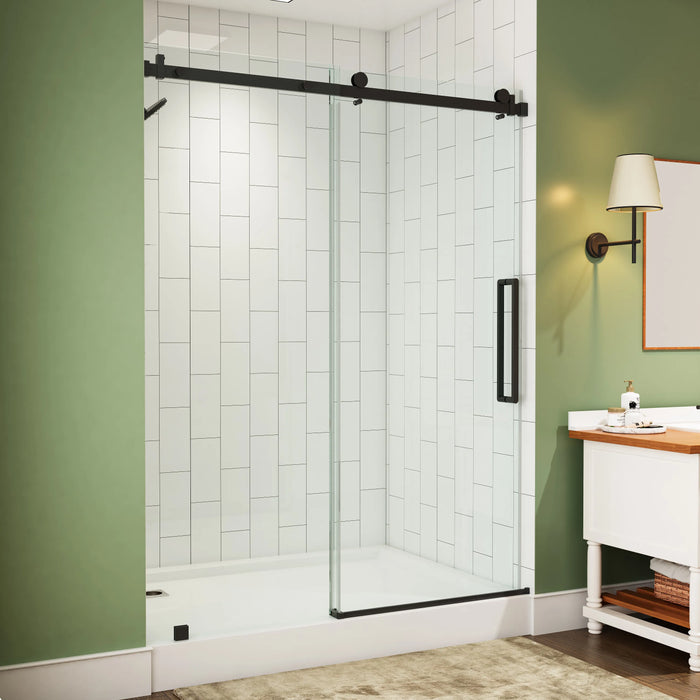
HOROW TE6076-MB
A black frameless sliding shower door option for buyers comparing dark hardware finishes with a sliding enclosure design.
View TE6076-MB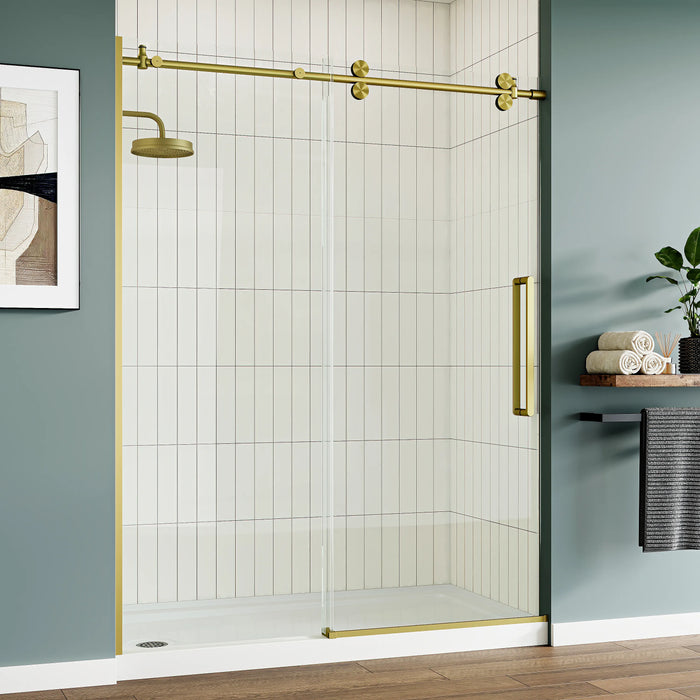
HOROW MI6076-SG
A brushed gold frameless sliding shower door with 8 mm glass for buyers who want to coordinate a warmer hardware finish with the rest of the bathroom.
View MI6076-SG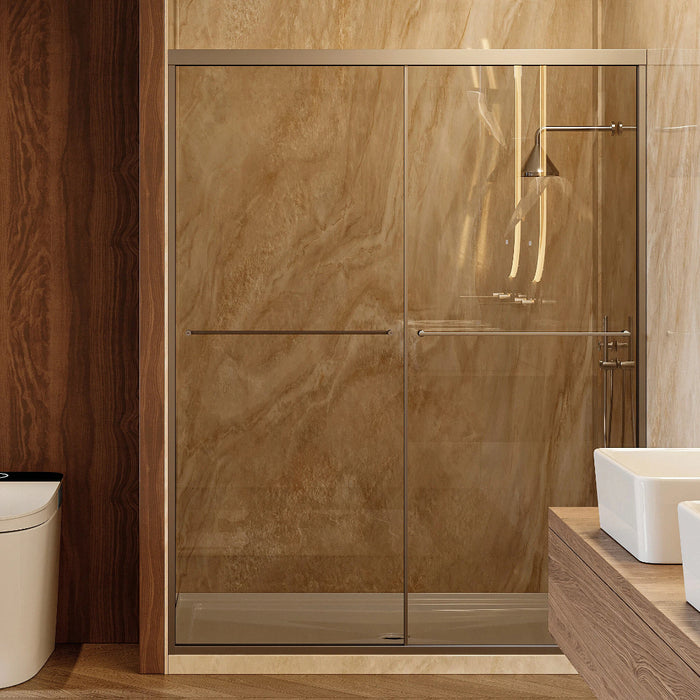
HOROW K2-BN
A brushed nickel shower door with an ultra-narrow design for buyers comparing a lighter neutral hardware finish with a streamlined enclosure appearance.
View K2-BNConfirm the complete product specifications, finished opening requirements, hardware layout, and installation instructions for the specific shower door before ordering.
What Common Shower Door Hardware Problems Should You Expect?
A Loose Handle May Need Retightening
If a shower door handle is loose, the cause may be a backed-out fastener, compressed gasket, or unevenly seated mounting piece. Clicking, rotation, or visible movement should be addressed before it worsens.
Do not twist the handle or overtighten fasteners in an attempt to stop movement. Follow the hardware instructions. If the proper tightening method is unclear or the handle loosens repeatedly, have the mounting parts inspected.
Worn Rollers Make Doors Harder to Push
A sliding door may become rough, heavy, or noisy as residue collects around its track, guide, and rollers. Roller wear or corrosion can also increase friction.
Clean accessible buildup using methods suitable for the hardware finish. If the door still drags, do not rely on extra force. The rollers, guides, or panel alignment may require adjustment or replacement.
Will It Stay Aligned After Installation?
Some doors remain stable with basic cleaning and inspection; others need occasional adjustment as gaskets settle and moving parts wear.
Watch for changing gaps, rubbing seals, new clicking sounds, a door that no longer meets its catch, or a sliding panel that feels different on the track. Repeated sagging should not be dismissed as routine upkeep.
The glass shower door installation overview explains the broader installation sequence and why alignment should be addressed during setup.
How Much Ongoing Maintenance Should You Expect?

Tracks, Rollers, and Seals Need Routine Cleaning
Soap residue and mineral deposits tend to collect where water sits or drains slowly. Tracks, lower guides, roller edges, seals, and magnetic closing surfaces therefore need regular attention.
Use cleaning methods compatible with the enclosure’s finish and care instructions. Abrasive tools or unsuitable chemicals may affect coatings and gaskets. If easy cleaning is a priority, avoid unnecessary grooves and moving components that are difficult to reach.
Loose Screws and Gaskets Need Periodic Inspection
Inspect the door for rotating handles, shifting hinges, folded seals, loose fasteners, and changes in roller sound or movement. Catching a small change early may prevent the panel from becoming difficult to open or close.
Can shower door hardware be replaced separately? Often, individual handles, seals, rollers, or catches can be replaced, but interchangeability should never be assumed. The replacement must match the mounting pattern, glass configuration, dimensions, and operating system.
Awkward Adjustments May Require Two People
Large glass panels can be difficult to support while hinges or rollers are adjusted. Service may also require careful access to fasteners, guides, or mounting gaskets.
Professional repair is appropriate when an adjustment requires supporting the glass panel or removing load-bearing hardware. It is also recommended when repeated sagging or alignment issues cannot be identified.
Before You Choose
- Confirm that load-bearing hardware matches the glass and door layout.
- Check how rollers, hinges, catches, and seals can be cleaned or replaced.
- Test handle clearance across the door’s complete path.
- Consider whether steam, frequent use, or mineral buildup could increase upkeep.
- Ask who will handle later alignment and hardware adjustments.
- Add soft-close, magnetic, or anti-jump components only when the door system supports them.
Common Questions
What are the main shower door handle styles?
The main shower door handle styles include knobs, single pulls, back-to-back handles, and longer bar handles. The right option depends on how the door opens, how much space is available, and how comfortable the grip feels during daily use. A larger handle may be easier to use but can require more clearance, while smaller options may work better in compact bathrooms.
Can shower door hardware be replaced separately?
Yes, some shower door hardware parts can be replaced individually, but the new part must match the existing system. Handles, rollers, seals, and catches may have different mounting methods depending on the door design. Always check compatibility with the glass panel, installation type, and original hardware specifications before replacing any component.
Which hardware problems require professional repair?
Professional repair is recommended when the door becomes unstable, repeatedly shifts, or requires support while adjusting heavy glass panels. Problems involving hinges, load-bearing parts, or incorrect alignment can become worse if handled without the right tools. If the door no longer moves normally or feels unsafe, it is better to have the system inspected.
Can a magnetic catch fix a sagging door?
No, a magnetic catch cannot repair a sagging shower door. It only helps keep a properly aligned door closed when both sides meet correctly. If the door has moved out of position, the cause may involve hinges, rollers, seals, or installation issues that need to be addressed first.
References
https://codes.iccsafe.org/content/IBC2024P1/chapter-24-glass-and-glazing
https://www.epa.gov/mold/what-are-main-ways-control-moisture-your-home


Leave a comment
This site is protected by hCaptcha and the hCaptcha Privacy Policy and Terms of Service apply.