
Two-Piece or Alternative?
For most homes, the practical default is a two-piece gravity toilet with verified flush performance, effective bowl wash, suitable dimensions, and readily available repair parts. Two-piece toilets are generally a good choice for value, easier handling, rentals, and straightforward repairs; they are less suitable for buyers who want the fewest exterior crevices or a seamless design.
If frequent clogs are the main concern, do not choose by body style alone. A one-piece toilet does not inherently flush better than a two-piece toilet. Compare the complete flushing system: water delivery, bowl geometry, siphon or washdown action, trapway design, bowl rinse, and independent waste-removal results.
Choose an alternative when another constraint dominates:
- Skirted one-piece: good for easier exterior cleaning and a streamlined look; less suitable for budget-led projects or solo handling.
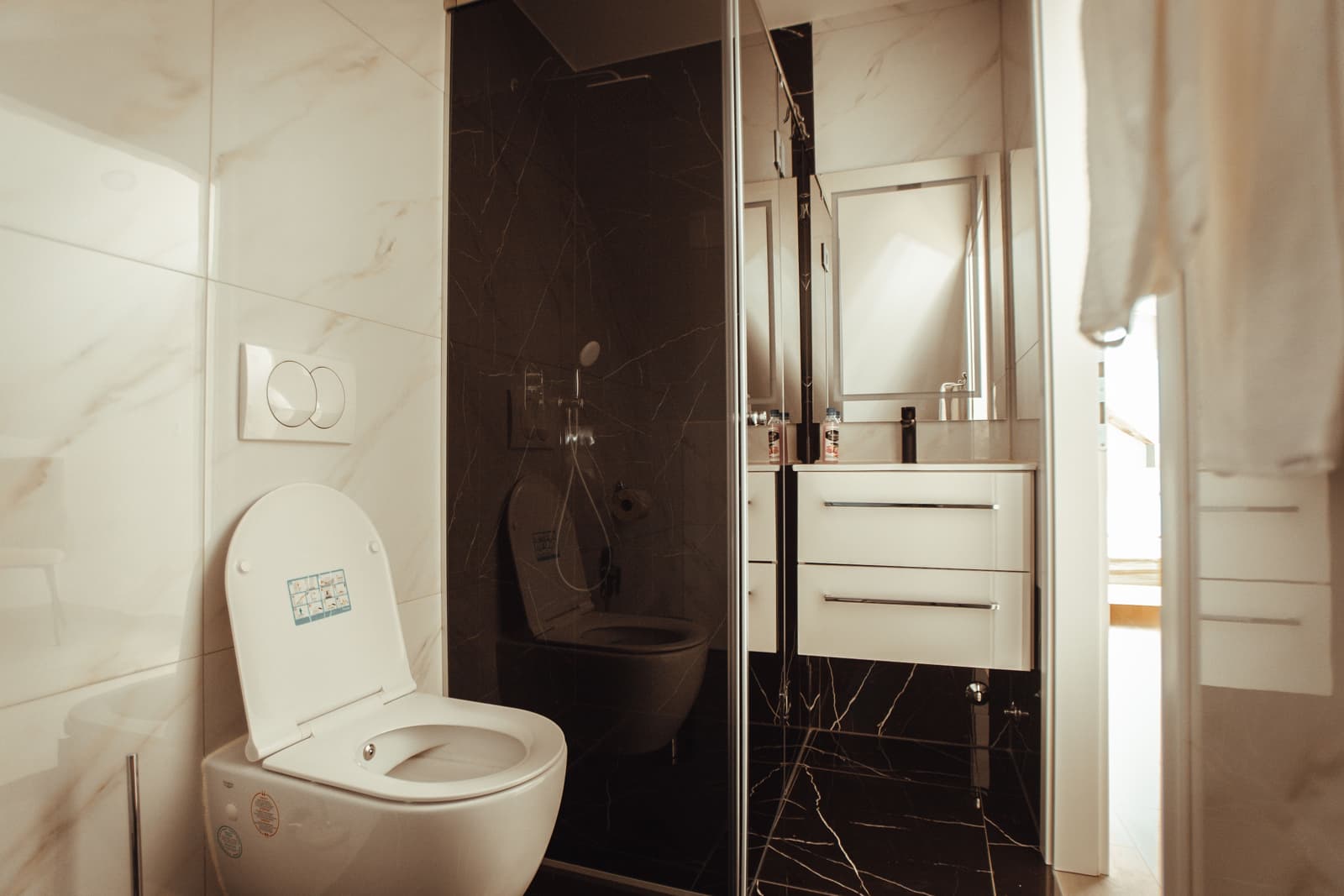
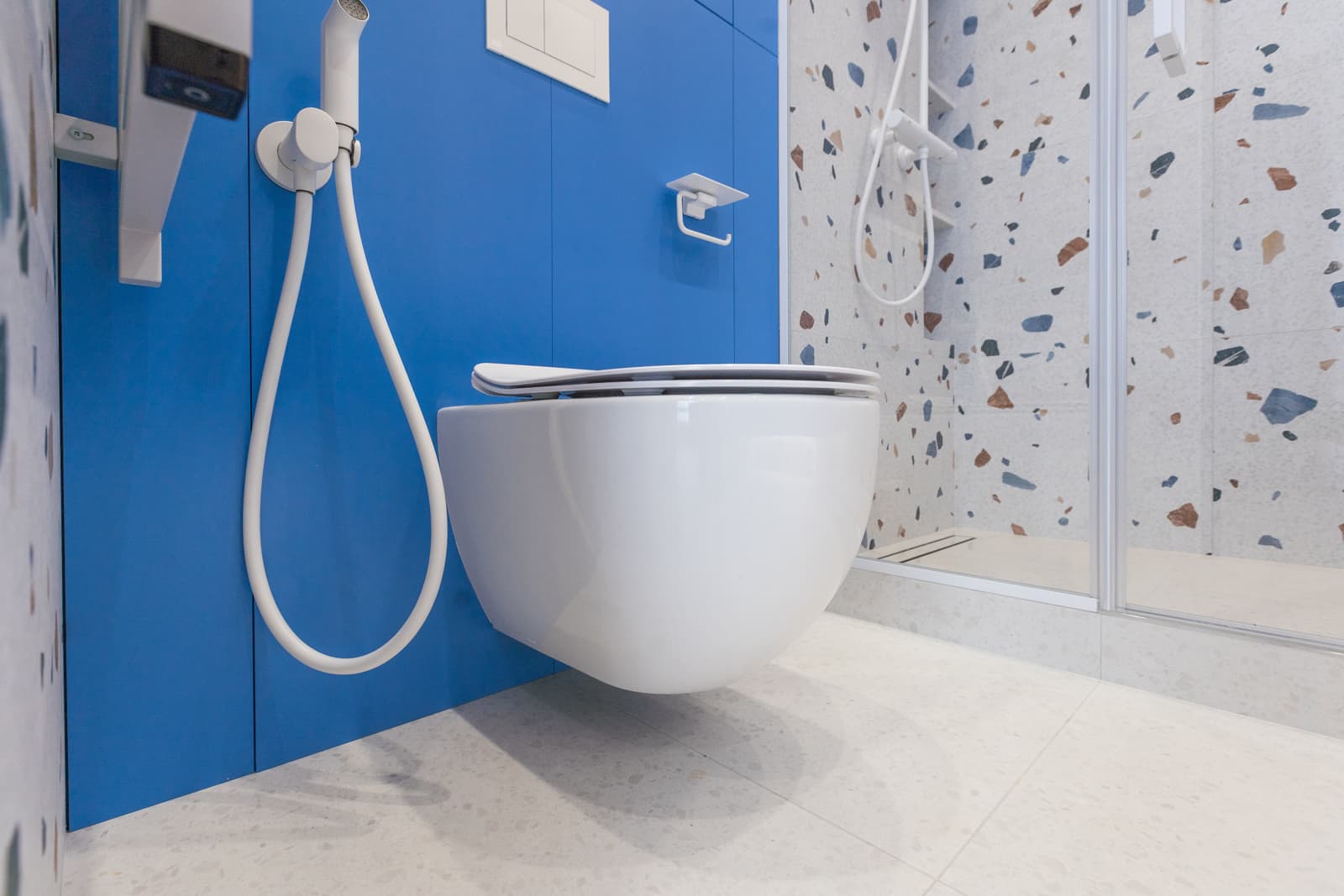
- Wall-hung: good for open floor space and floor cleaning; less suitable for simple replacements because it requires an in-wall installation and planned service access.
- Pressure-assisted: good for demanding use where a forceful flush is worth additional noise and specialized parts.
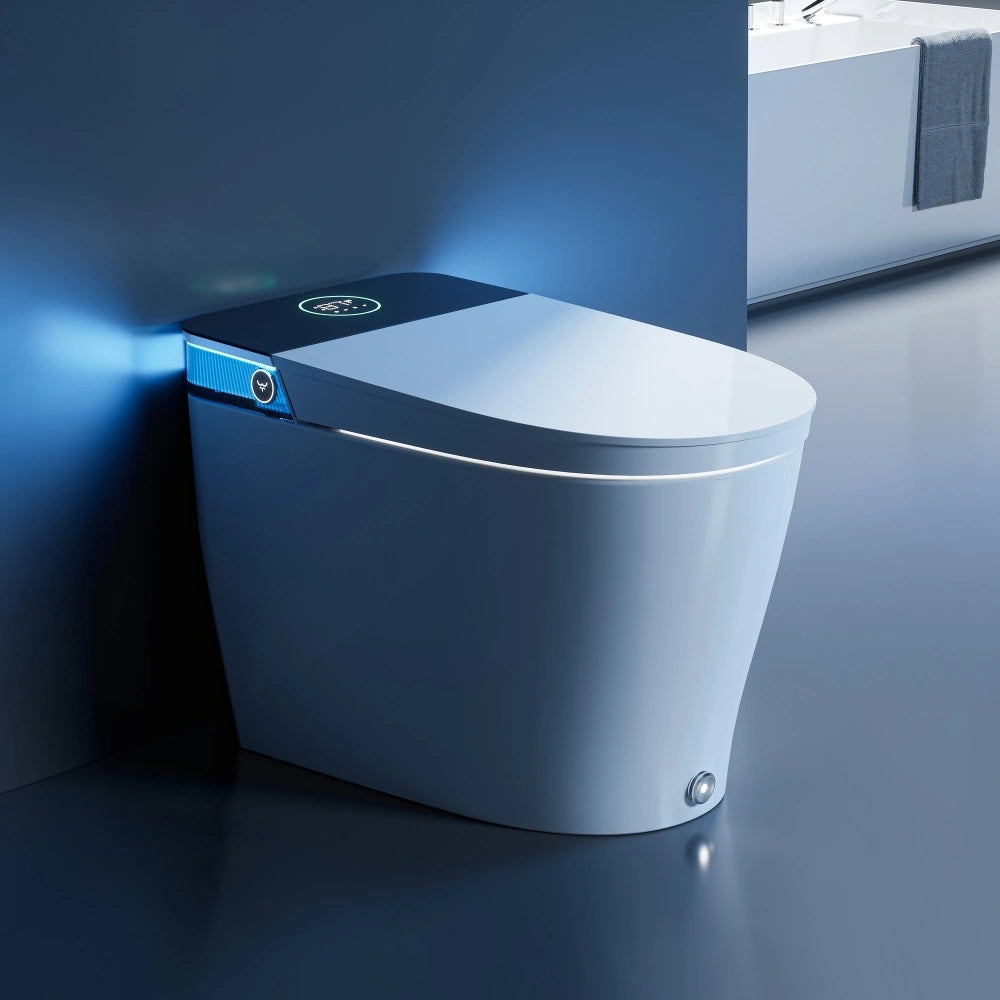
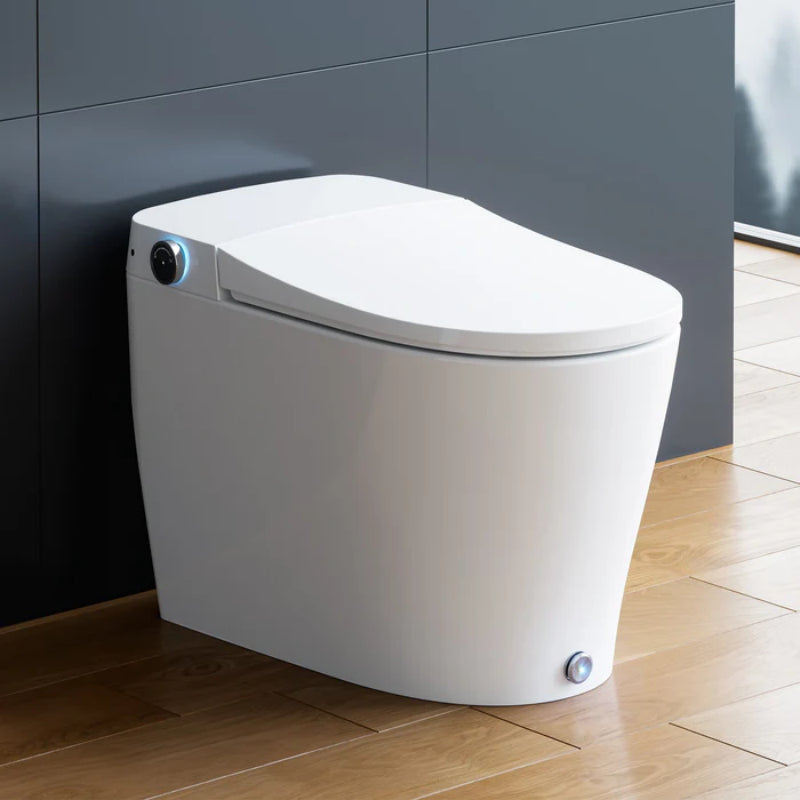
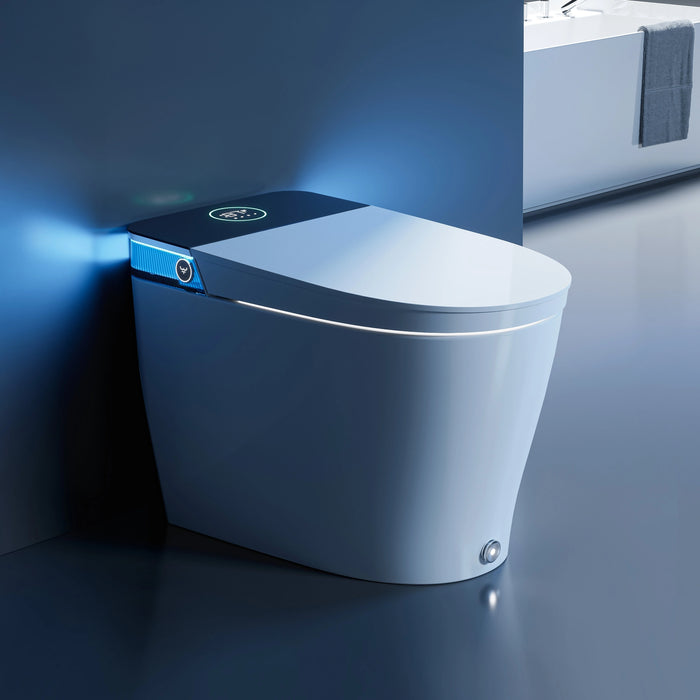
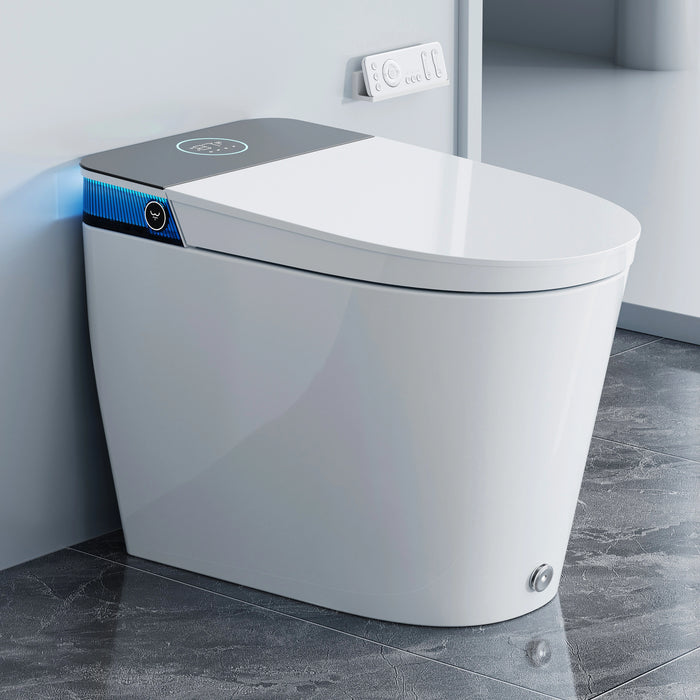
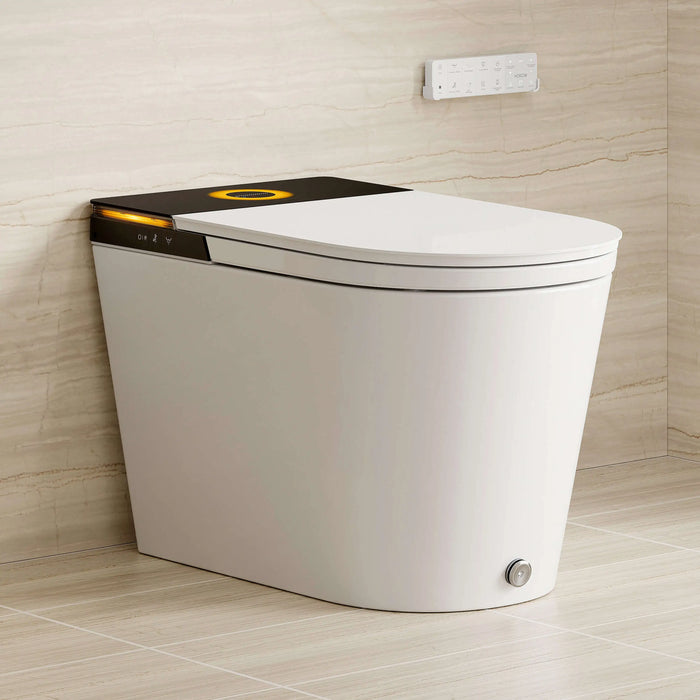
- Smart toilet: good for integrated bidet and automation features; less suitable when repair simplicity is essential.
- Pumped or upflush system: suitable for special drainage layouts, but not a solution for a standard toilet with poor flushing.
Choose Two-Piece for Value, Handling, and Repairs
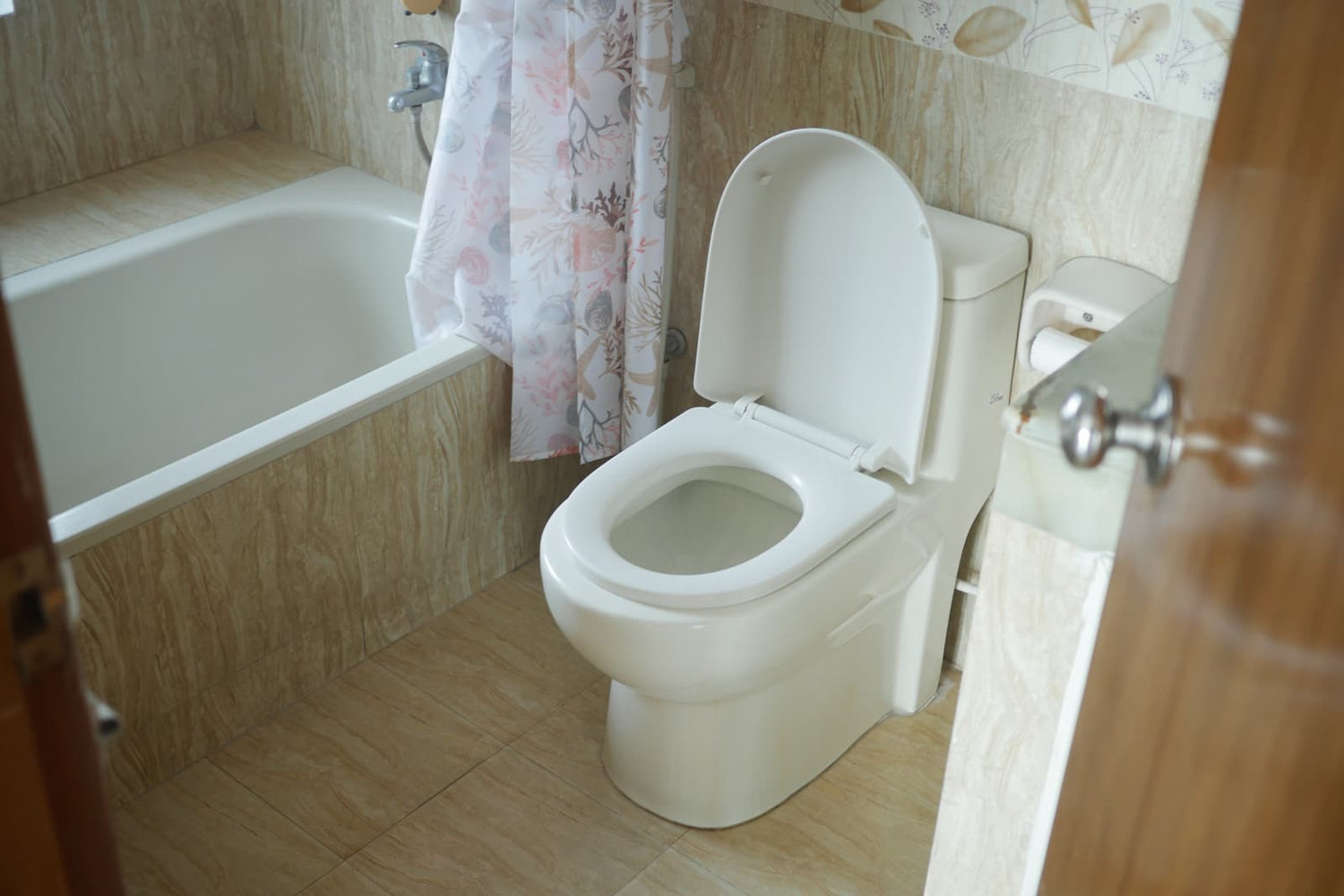
A two-piece toilet separates the tank and bowl, allowing each section to be moved and positioned independently. That can make installation more manageable in narrow hallways, on stairs, or where moving one large fixture would be difficult.
Two-piece designs also offer broad choices in bowl shape, height, rough-in configuration, flushing system, and price level. Their accessible tanks often make routine repairs simpler, although parts availability still depends on the exact model.
The trade-off is cleaning. The tank-to-bowl connection, bolts, caps, and exposed trapway create more edges where dust and bathroom residue can collect. The tank also has to be installed correctly to avoid movement or gasket leaks.
Choose Alternatives for Cleaning, Space, or Automation
A one-piece toilet reduces the number of exterior joints and is usually easier to wipe around the tank and bowl. A skirted body can further simplify exterior cleaning by covering the trapway, although it may also make mounting hardware harder to reach.
Wall-hung toilets provide the clearest floor-cleaning advantage because the bowl does not meet the floor. Their concealed carriers make them better suited to planned renovations than quick fixture replacements.
Smart toilets add functions such as washing, seat heating, drying, or automatic controls. Those features may improve daily comfort, but they do not indicate flushing performance. Buyers should evaluate waste-removal performance separately from electronics.
Decision Snapshot: Who Should Choose Which?
|
Main situation |
Best starting choice |
Less suitable choice |
|
Frequent waste-related clogs |
High-performance gravity or pressure-assisted toilet with verified test data |
Choosing by styling, trapway size, or valve size alone |
|
Large or shared household |
Durable gravity two-piece with clear controls and obtainable parts |
Complex electronics that do not solve a specific need |
|
Rental property |
Basic two-piece with accessible mounting and familiar service parts |
Proprietary controls or difficult service access |
|
Small powder room |
Short-projection toilet verified by full dimensions |
Assuming every round bowl is shorter |
|
Cleaning is the priority |
Skirted one-piece or wall-hung toilet |
Exposed trapway with multiple exterior joints |
|
Bathroom near a bedroom |
Quiet gravity-flush toilet |
Pressure assistance unless its extra force is necessary |
|
Low supply pressure |
Diagnose the supply and refill problem first |
Adding a pump without confirming the actual cause |
|
Mixed-height household |
Height and bowl shape tested for the main users |
Assuming a taller bowl suits everyone |
|
Integrated bidet features wanted |
Smart toilet with local service support |
Integrated electronics when simple repairs matter most |
Frequent Clogs: Prioritize Flush Design Over Styling
The toilet least likely to clog is one whose water delivery, bowl design, siphon action, and trapway work together effectively. Independent waste-removal testing can help narrow the options, but no test can guarantee protection from excessive paper, non-flushable items, foreign objects, blocked vents, or damaged drains.
If several fixtures drain poorly or multiple toilets clog, investigate the drainage system before replacing the toilet. A new fixture cannot correct a downstream obstruction or pipe defect.
Shared Homes: Balance Height, Noise, and Durability
A shared toilet must accommodate different users and repeated daily use. A taller elongated bowl may help some adults sit and stand, but it can be uncomfortable for children or shorter users whose feet do not rest securely.
Flush noise also matters. Pressure-assisted models can provide a sharp, forceful flush, while gravity toilets are generally the more comfortable starting point near sleeping areas. In a family bathroom, clear controls, effective bowl rinse, and repairable parts may matter more than maximum theoretical power.
Small Bathrooms: Prioritize Projection Over Bowl Labels
Do not rely solely on “round” or “elongated.” Measure the complete projection from the finished wall to the front of the toilet, then check door swing, front clearance, nearby storage, and access to the shutoff valve.
Some compact elongated toilets may fit better than bulky round models. The toilet’s actual dimensions—not the bowl label—determine whether the bathroom will fit comfortably.

Can Low Water Pressure Weaken the Flush?
A gravity toilet stores water in its tank before flushing. Low supply pressure may cause slow refilling, but it does not necessarily weaken the flush after the tank has reached its intended water level.
Begin by checking whether the shutoff valve is open, the tank fills properly, and other fixtures have the same pressure problem. Pressure-assisted, pumped, and specialized systems may have different supply requirements, so the exact installation documentation must guide selection.
Comparing Toilet Types by Cost, Cleaning, and Performance
The best choice depends on which trade-off affects the household most: clog resistance, cleaning, bathroom fit, noise, repair access, water use, or automated features.
Comparison Table: Which Trade-Off Wins?
|
Toilet type |
Relative cost and installation |
Cleaning and space |
Maintenance |
Best suited to |
|
Two-piece gravity |
Usually lower cost; sections are easier to handle |
More joints and exposed surfaces; broad range of sizes |
Accessible tank, but parts vary by model |
Most homes, rentals, DIY-friendly replacements |
|
One-piece gravity |
Usually costs more and is heavier to move |
Fewer tank-to-bowl crevices; some models are compact |
Simple exterior, but the full fixture is one unit |
Cleaning-focused or design-led bathrooms |
|
Pressure-assisted |
More specialized than basic gravity designs |
Similar footprint to floor-mounted toilets |
May require system-specific parts |
Heavy use where force matters more than quiet |
|
Dual-flush |
Cost and complexity vary |
Body design determines cleaning and space |
Controls may be less familiar or less universal |
Households that will use both modes correctly |
|
Wall-hung |
Higher project complexity |
Opens floor space and simplifies floor cleaning |
Concealed components require planned access |
Major remodels and space-conscious designs |
|
Smart toilet |
Highest functional complexity |
Often streamlined, but not necessarily compact |
Electronics and proprietary parts increase service needs |
Buyers prioritizing bidet and automation features |
Two-Piece vs One-Piece: Value or Cleanability?
Choose a two-piece toilet when cost, easier handling, and repair access matter most. Choose a one-piece toilet when a smoother exterior and fewer visible joints are worth the higher weight and price.
For flushing, construction style is not the deciding factor. Either format can use a powerful or weak flush system. Compare bowl geometry, water delivery, trapway design, bowl wash, and performance testing instead.
One-piece also does not mean maintenance-free. Internal valves and seals still require service, and a skirted exterior may conceal mounting hardware. Review the installation instructions before assuming the sleeker toilet will also be easier to remove.
Floor-Mounted vs Wall-Hung: Access or Open Space?
A floor-mounted two-piece toilet is well suited to direct replacement because the tank, supply connection, and primary service components remain visible. It is the lower-risk choice when the existing bathroom layout will stay largely unchanged.
A wall-hung toilet is better when open floor space and easy floor cleaning justify construction inside the wall. The carrier and concealed tank require installation planning, structural coordination, and a usable service opening.
Choose wall-hung for a planned, design-led renovation. Choose floor-mounted when familiar installation and long-term access take priority.

Standard vs Smart: Repairability or Convenience?
A smart toilet can add washing, drying, seat heating, and automated controls. It suits a primary bathroom where those functions will be used regularly and appropriate service is available.
However, electronic features do not indicate flush strength. When comparing smart toilets, review the flush method, available waste-removal evidence, bowl rinse, and performance of every flush mode.
A standard two-piece toilet with a separate bidet seat keeps electronic features separate from the toilet’s core flushing function. If the seat needs service, the toilet may remain usable. An integrated smart toilet offers a cleaner all-in-one design but creates greater dependence on model-specific components.
Key Differences: Which Factors Actually Matter?
A large valve, wide trapway, or high MaP result can be useful evidence, but none should be treated as a complete performance guarantee.
Does 1000g MaP Guarantee Fewer Clogs?
MaP testing compares how much standardized test material a toilet removes under controlled conditions. A toilet listed with a 1000g MaP result has demonstrated high waste-removal capacity in that test. That can be helpful when shopping for heavy use or recurring waste-related clogs.
A higher MaP score is not always the best deciding factor. Check the exact model specifications before buying. Flushing systems, bowl designs, and performance features can vary between toilets. Once a toilet adequately handles normal household loads, daily experience may depend more on:
- Bowl rinse and streaking
- Flush and refill noise
- Seat height and shape
- Bathroom fit
- Replacement-part availability
- Correct tank setup
- Condition of the drain and vent system
MaP testing does not reproduce every real-world clog source. It cannot account for wipes, foreign objects, root intrusion, pipe damage, or an obstructed vent.
If considering a HOROW toilet, check the current documentation for the exact model rather than assuming all HOROW toilets share the same MaP result or flushing architecture. No brand-wide MaP conclusion should be drawn from a single model.
Trapway, Valve, or Flush Type: What Matters Most?
A larger trapway may provide more room for waste, but its bends, transitions, and surface finish also influence movement. A glazed trapway may help reduce friction, but the label alone does not prove better flushing performance.
A larger flush valve can release tank water quickly. That may help start a strong flush, but only if the bowl channels and jets direct the flow effectively. Valve size is therefore one part of the system, not a reliable standalone ranking.
Flush types also involve conditional trade-offs:
- Siphon jet: uses water movement to create siphon action that draws waste through the trapway. Good for a contained residential flush; performance depends on the complete bowl design.
- Washdown: pushes waste through with a direct water surge. Good for a relatively direct waste path; bowl wash and water-spot characteristics vary.
- Swirling or “tornado” wash: directs water around the bowl to improve coverage. Good for bowl rinsing when well executed; the marketing name is not a performance standard.
- Rimless: removes the enclosed traditional rim channel. Good for cleaning access; rinse quality still depends on water direction.
- Pressure-assisted: releases stored energy for a fast, forceful flush. Good for demanding use; less suitable for noise-sensitive rooms.
Siphon jet and swirling wash are not always opposing choices. Some toilets combine extraction-focused jets with circular bowl rinsing.
Will 1.28 GPF Still Clear Heavy Waste?
Yes, if the toilet is well designed. EPA WaterSense-labeled tank-type toilets use no more than 1.28 gallons per flush and must meet the program’s efficiency and performance criteria. Low water use does not inherently mean weak flushing. Learn more about the program requirements in the EPA WaterSense Toilets guidelines.
Dual-flush toilets are also not automatically prone to clogs. They become frustrating when users choose the reduced mode for solid waste, controls are unclear, or the mechanism does not release the intended water volume.
For a rental or children’s bathroom, one simple flush control may reduce misuse. For users comfortable selecting the correct mode, dual flush can provide more control over water consumption.
Will Height and Bowl Shape Cause Regret?
Height and bowl shape affect every use, while a maximum flush rating matters only during demanding loads. Give comfort equal weight in the decision.
A taller seat may help some adults sit and stand but can leave shorter users or children without stable foot support. An elongated bowl generally offers more sitting room, while a round or compact bowl may help where projection is limited.
Do not treat a “comfort height” label as proof of accessibility. Accessible bathroom design also involves fixture position, clear floor space, and support placement. Consult the applicable accessibility requirements when designing for a specific user or regulated setting.
Can a New Toilet Fix Frequent Clogs?
A new toilet may help when the existing fixture has poor water delivery, mineral buildup, an obstructed internal trapway, or ineffective bowl geometry. It will not repair a downstream drainage problem.
If a new toilet keeps clogging, check four areas:
- Use: excessive paper or non-flushable material.
- Setup: low tank level or a flush mechanism that does not operate fully.
- Fixture: an object or buildup within the toilet.
- Drainage: a partial blockage, vent problem, or pipe defect.
A problem isolated to one toilet points first to that fixture or branch. Slow drainage across several fixtures warrants broader plumbing diagnosis.

When Are Two-Piece Toilets the Better Choice?
Heavy Use: Favor Proven Flush Architecture
For frequent use, prioritize independent waste-removal evidence, effective bowl wash, durable controls, and obtainable repair parts. A high-performance gravity two-piece toilet is a strong residential starting point because it balances flush performance with moderate noise and familiar maintenance.
Pressure assistance may suit unusually demanding use, but it should be selected for a defined reason rather than simply because it sounds more powerful.
DIY and Rentals: Favor Replaceable Parts
Two-piece construction allows the bowl and tank to be moved separately, which may make handling easier. Accessible tank components also support routine maintenance without removing the full toilet.
For rentals, favor clear controls, visible mounting access, and parts that local suppliers or plumbers can obtain. Skirted bodies and integrated electronics may improve appearance, but they can complicate access when service is needed.
A smooth one-piece exterior may still be worthwhile for short-term rentals where cleaning speed is the main operational concern. The right choice depends on whether repair access or turnover cleaning creates more work.
Odd Rough-Ins: Choose Broader Fit Options
Two-piece product lines commonly provide broader configuration choices than more specialized alternatives, making them a useful starting point in older or unusual bathrooms.
Measure the rough-in from the finished wall—not decorative trim—to the drain centerline, then compare that measurement with the exact product documentation. Also check the supply valve, tank clearance, shelves, doors, and total bowl projection.
Plumbing layouts can also be affected by local installation requirements, so homeowners should review local plumbing code requirements before changing fixture locations or planning major bathroom modifications.
Do not assume the existing toilet is the correct size. A large wall gap or awkward position may indicate that an earlier replacement was itself a compromise.

Large Families: Balance Power, Noise, and Height
The best toilet for a large family is usually balanced rather than extreme. Look for effective extraction, full bowl rinse, clear controls, a durable seat, moderate noise, and a height that works for the primary users.
A very tall bowl or confusing dual-flush control can frustrate children. A loud pressure-assisted flush may disturb nearby bedrooms. Slow tank recovery can also be inconvenient, although that may reflect the fill valve or water supply rather than the flush design.
When Is an Alternative the Better Choice?
Is Easier Cleaning Worth the Extra Cost?
Choose a skirted one-piece toilet when reducing seams and exposed trapway curves will make routine cleaning meaningfully easier. This can be valuable in children’s bathrooms, guest bathrooms, or any room where residue commonly reaches the toilet’s exterior.
Before buying, review how the mounting hardware and water connection are accessed. A body that is easy to wipe may be harder to install or remove.
Choose wall-hung when cleaning beneath the bowl is the top priority and the renovation can accommodate concealed hardware.
Tight Luxury Baths: Choose One-Piece or Wall-Hung
A compact one-piece can reduce visual clutter in a highly finished bathroom. A wall-hung toilet can reveal more floor and make a narrow room feel less crowded.
Neither format is automatically shorter. Confirm total projection, width, tank or carrier depth, door swing, and usable clearance. In some rooms, a short-projection two-piece toilet will fit better than a sleek-looking alternative.
Want Smart Features? Accept Higher Repair Risk
Choose an integrated smart toilet when bidet and automation functions justify added complexity and model-specific service is practical. Confirm installation, power, water, clearance, and maintenance requirements from the exact documentation.
Choose a conventional toilet with a replaceable bidet seat when maintaining a simpler core fixture is more important than an integrated appearance.
Can a Booster Pump Solve Low Pressure?
Do not add a booster pump solely because one toilet flushes poorly. First determine whether the tank fills to its intended level and whether other fixtures show the same supply problem.
Pumped and upflush toilets are specialized solutions for particular plumbing layouts. Pressure-assisted toilets may also have model-specific supply requirements. Any pump or pressure-related equipment should be selected according to its official instructions and the building’s actual plumbing conditions.
Final Verdict: Which Should You Choose?
Choose Two-Piece as the Practical Default
Choose a two-piece gravity toilet for value, manageable handling, configuration choice, accessible maintenance, and broad household suitability. It is especially appropriate for rentals, DIY-friendly replacements, large families, and bathrooms where long-term maintenance matters.
Do not assume two-piece automatically means powerful flushing. Verify the exact toilet’s flush performance, bowl wash, dimensions, height, and parts support.
Choose Alternatives When Cleanability or Design Dominates
Choose a one-piece or wall-hung toilet when easier exterior cleaning, open floor space, or seamless design matters more than initial cost and service access. Choose pressure assistance when demanding use justifies more noise and specialized components. Choose smart features when their daily benefit outweighs greater repair complexity.
There is no unconditional winner: two-piece wins on practicality, one-piece on exterior simplicity, wall-hung on floor access, pressure-assisted on force, and smart toilets on integrated convenience.
Decision Checklist: Which Constraint Wins?
Before buying:
- Measure the rough-in, total projection, width, and door clearance.
- Confirm the seat height and bowl shape suit the main users.
- Compare verified flush testing without relying on one specification.
- Check bowl-wash design as well as waste-removal performance.
- Decide whether quiet operation or maximum force matters more.
- Confirm that replacement parts and local service are available.
- Read the installation instructions for concealed bolts or special requirements.
- Diagnose recurring drainage problems before replacing the fixture.
- Verify water, supply, power, and installation requirements before purchase.
Common Questions
Which toilet is least likely to clog?
A well-designed toilet with strong water flow and good waste removal performance is usually less likely to clog. The toilet style itself, such as one-piece or two-piece, does not automatically decide the result. For most homes, focus on how the flush system works with the bowl and trapway instead of choosing only by appearance. Keep in mind that misuse, blocked drains, or plumbing problems can still cause clogs.
Is a 1000g MaP score necessary?
No, a 1000g MaP score is not required for every household. It shows that a toilet performed well in a controlled waste-removal test, but it does not predict every real bathroom situation. A lower score may still be enough for normal residential use if the toilet has good flushing design and proper installation. Consider it as one helpful reference rather than the only buying factor.
Are low-flow toilets more likely to clog?
No. Modern low-flow toilets can provide effective flushing when the design, installation, and plumbing conditions are appropriate. Problems usually come from poor installation, incorrect use, or plumbing conditions rather than water-saving features alone. If a bathroom has frequent clogs, check the whole system before blaming the toilet’s water usage.
Does a larger trapway or flush valve prevent clogs?
No, a larger trapway or flush valve alone cannot guarantee fewer clogs. These parts can support better performance, but the entire flushing system needs to work together. Bowl shape, water direction, and waste movement also affect how reliably a toilet clears waste. A single specification should not be used to judge overall flush quality.
Is pressure-assisted flushing better than gravity flushing?
Pressure-assisted flushing is better when maximum flushing force is the main priority. It can work well in high-use bathrooms, but the stronger flush may come with more noise and less familiar maintenance needs. Gravity toilets are often a better fit for homes that value quieter operation and simpler repairs. The right choice depends on the bathroom environment and daily usage.


Leave a comment
This site is protected by hCaptcha and the hCaptcha Privacy Policy and Terms of Service apply.