
The question “when were sinks invented” sounds simple, yet it depends on what you call a sink. If you mean any bowl used for washing, the story starts with early basins. If you mean a “dry sink,” you’re talking about 19th‑century wooden troughs lined with metal but no pipes. If you mean a fixed, plumbed fixture with supply lines and a trapped drain—the modern sink—you’re looking at the 19th century, when indoor plumbing moved into homes and cities built sewers.
This guide gives you both the quick answer and the full picture. You’ll get a clear definition of terms, a scannable timeline, and a plain‑English walk through of how basins became dry sinks and then plumbed fixtures. We’ll connect sink evolution to indoor plumbing, materials (from wood and stone to enamel and stainless steel), and public health. You’ll see how kitchens changed, why double‑bowl sinks took hold in North America, and what the parts of a sink are called. We’ll also include a North America case study, answer common questions, and point you to trustworthy sources for deeper research.
When were sinks invented? The short answer
Short answer: People used basins and washstands at home by the early 1700s. The dry sink (a wooden trough, often zinc- or lead-lined, with no pipes) spread in the early 1800s. The modern, plumbed sink—fixed in place with supply lines and a trapped drain—arrived in the 19th century as indoor plumbing became practical in cities and towns.
Definitions that shape the answer (basin vs. dry sink vs. plumbed, fixed sink)
-
Basin: A bowl used for washing. In the home, this often sat on a washstand with a pitcher of water. No plumbing.
-
Dry sink: A wooden cabinet or trough, often lined with zinc or lead. It helped with water splashes and holding a basin but still had no supply pipes or drain lines.
-
Plumbed, fixed sink: A fixture connected to pressurized water (or a hand pump) and a trapped drainage line, often made of porcelain, fireclay, or enameled cast iron in the 19th century, and later stainless steel.
Key dates at a glance
-
Early 1700s: Basins and washstands common in homes (wood, stone, metal bowls)
-
c. 1820–1900: Dry sinks in North America (wooden troughs, zinc/lead lined)
-
Mid-19th century: Indoor plumbing arrives; fixed, plumbed sinks appear
-
Late 19th–early 20th: Enamel on iron, standard sizes, mass production
-
1930s–1940s: Stainless steel sinks and metal cabinetry go mainstream
-
Mid-20th century: Dual-basin sinks and ergonomic counter design in many homes
Why historians place the “modern sink” in the 19th century
Three forces changed “a bowl for washing” into a true sink:
-
Indoor plumbing: Supply pipes, hand pumps, and then pressurized systems made running water normal. Trapped drains and early venting stopped sewer gases from entering homes.
-
Sanitation movement: As cities built sewers (notably from the 1830s onward in many places), the idea of washing with clean water and draining waste safely took root. This made a plumbed, easy‑to‑clean sink a health feature.
-
Materials science: Porcelain, fireclay, and enamel-coated cast iron gave hard, smooth, white surfaces that looked clean and were easier to sanitize. Later, stainless steel added strength, hygiene, and ease of fabrication.
Visual: 60-second interactive timeline + milestone table (materials, dates, notes)
Milestones and materials at a glance:
| Date/Period | What changed | Common materials | Notes |
| Early 1700s | Basins on washstands | Wood, stone, copper, tin | Pitcher + bowl; no pipes |
| c. 1820–1900 | Dry sinks spread | Wood cabinets, zinc/lead linings | “Dry” = no plumbing |
| Mid-1800s | Early “wet sinks” with pumps | Stone, fireclay, iron | Hand pumps; simple drains |
| Late 1800s | Standard plumbed sinks | Porcelain, enameled cast iron | Traps, smoother surfaces |
| 1930s–1940s | Stainless-steel sinks mainstream | Stainless steel | Metal cabinetry, mass-built homes |
| Mid-1900s | Dual-basin + counters | Enameled iron, stainless | Task zoning, ergonomics |
From basins to dry sinks (1700s–early 1800s)
This period marks the first step in evolving household washing practices—from simple portable basins to more structured furniture-like dry sinks that prepared the way for plumbed fixtures.
Washstands and pitchers in early 1700s homes (daily hygiene routines)
Before today’s kitchen sink or bathroom sink, people washed with a pitcher and basin. A washstand held the bowl at a comfortable height. Morning and night, you poured water from the pitcher, washed hands and face, and dumped the wastewater outside or into a slop bucket. The basin could be wood, stone, or metal (like copper or tin). This setup shows how “sink” started as a “place for washing,” not a plumbed device.

The dry sink era (c. 1820–1900): construction, lining (zinc/lead), and use
By the early 19th century, many North American homes had a dry sink: a wooden cabinet with a top shaped like a shallow trough. Carpenters often lined it with zinc or lead to resist water damage. You set a basin in it, and the raised edges caught splashes. Some had a hole cut to seat a bowl; others just had a flat top with a rim. Water still came from a pitcher or bucket. Waste was still poured away by hand. A primitive dry sink antique you find today is a snapshot of this middle step—more than a bowl, not yet a plumbed fixture.
Why “dry”? Because it had no plumb connections. No supply line. No drain.
Butler’s sinks and deep work sinks in 19th-century households (fireclay/stone)
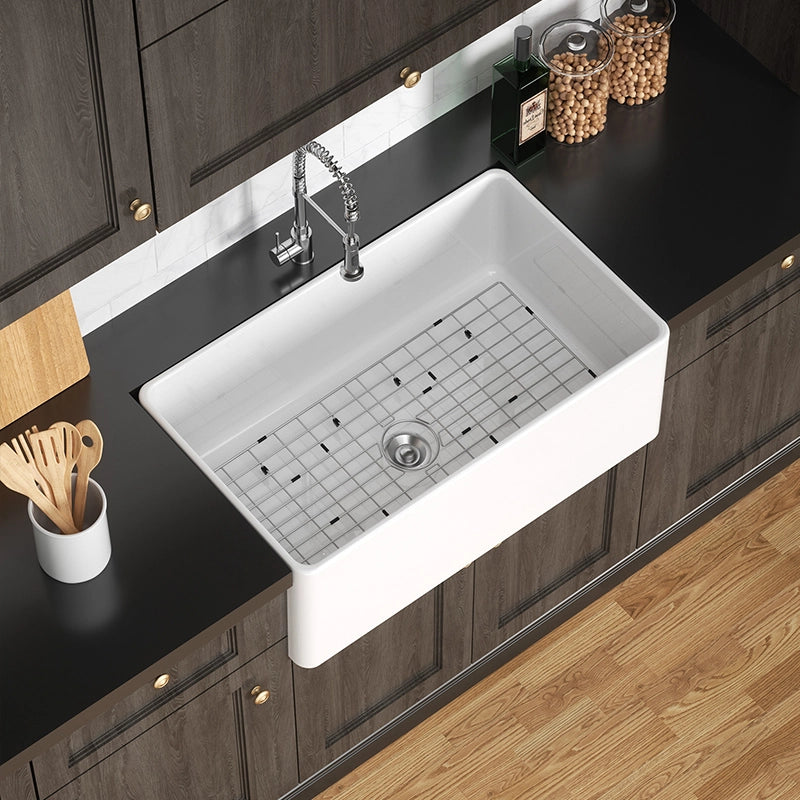
In larger homes, especially in Britain and parts of the U.S., the butler’s pantry needed a deeper, stronger sink for heavy work. These butler’s sinks or apron-front sinks were often fireclay or stone. The deep bowl helped with washing pots, produce, and glassware. Some were set into sturdy cabinetry with tile or stone counters. When early plumbing reached these service rooms, these deep farmhouse-style basins were natural choices to plumb.
Hygiene without drains: cleaning, water hauling, and waste management
Living without a plumbed drain meant more labor. You hauled clean water in and carried dirty water out. You scrubbed wooden cabinets to prevent rot and mold. In cold weather, ice made outdoor dumping hard, so slop pails and yard drains were part of daily life. This shaped early kitchen design: work tasks clustered near doors, yards, or cisterns, not around fixed fixtures.
Visual: Side-by-side diagram—washstand vs. dry sink vs. butler’s sink
-
Left: Washstand with pitcher and bowl.
-
Center: Dry sink cabinet with zinc-lined trough, loose basin.
-
Right: Deep fireclay butler’s sink, optionally tied to a hand pump and simple drain.
Victorian indoor plumbing: the birth of fixed sinks (19th century)
With the advent of indoor plumbing and urban sewer systems, kitchens and service areas began to feature fixed sinks, transforming daily hygiene and household labor.
Early “wet sinks”: hand pumps, supply lines, and simple drainage
As indoor water systems improved, homes added hand pumps or simple pressurized pipes that fed a “wet sink.” A short length of iron or lead pipe supplied water to a faucet. A drain led to a house pipe, sometimes to a cesspit, sometimes to an early sewer. The key change: the sink became a fixed place with steady water and a path for wastewater. This is where the anatomy of a sink starts to look familiar.
Materials shift: porcelain and enamel-coated iron for sanitation and cleaning
Victorian health reform placed a high value on cleanliness. Hard, glossy surfaces that looked white and clean became the ideal. Porcelain and enamel-coated cast iron answered that need. They were easy to scrub and resisted stains better than wood. White surfaces also showed dirt, which encouraged better cleaning. In kitchens, enameled sinks and iron supports became common, while bathrooms leaned toward porcelain bowls.
Early in the century, there were wood, stone, and metal basins, plus zinc/lead-lined dry sinks. Later in the century, fireclay, porcelain, and enameled cast iron for plumbed sinks. It depended on the year, budget, and region.
Public infrastructure (e.g., 1830s–1840s sewers) enabling adoption
Homes needed more than a faucet to use a plumbed sink every day. Cities had to build sewer systems, improve water supply, and set basic standards for house connections. As municipalities laid mains and drains, homeowners could install fixed sinks without the smell and overflow risks that came with poor drainage. In many cities, major steps toward public sewers began in the 1830s and 1840s and kept ramping up through the late 19th century. That public investment made the “modern sink” practical and safe.
How does a sink work?
In short: clean water enters from the supply, passes through the faucet, fills the basin, and exits through the drain. The trap holds a small water seal to block odors. From there, waste flows to the house drain and out to the sewer or septic system.

Industrial age to modern kitchens (late 19th–20th century)
Mass production, new materials, and standardized designs made sinks more affordable and practical, setting the stage for the modern kitchen layout we recognize today.
Mass production and enamel technology: affordability and standard sizes
Late 19th‑century factories learned to cast iron sinks at scale and spray hard enamel finishes that cured in kilns. Standard sizes appeared. Hardware stores began to stock fittings that matched common layouts. This brought costs down and made replacement easier. It also tied sinks into a growing market of countertop materials, tiles, and cabinets. In short, the kitchen started working as a system.
1930s–1940s: Stainless-steel sinks and metal cabinetry become mainstream
By the 1930s and 1940s, stainless steel sinks paired well with metal cabinetry. Stainless was tough, easy to clean, and light enough for faster installation. It shrugged off heat and resisted rust. Builders of mass housing liked how quickly they could set up a standardized kitchen with a stainless sink and pressed metal cabinets. This is when “the sink” became the daily workstation we know.
Postwar ergonomics: dual-basin sinks, counter integration, task zoning
After World War II, a booming housing market and new appliances reshaped the kitchen. Counters wrapped around the sink. Work “zones” appeared: prep, cook, clean. The double bowl or dual-basin sink took off because it made chores faster: wash on one side, rinse on the other. In homes without a dishwasher, the second bowl was a clear time-saver. Even with dishwashers, many Americans kept two bowls for prep vs. cleanup or to separate raw food from ready-to-eat tasks.
Social impact: sanitation gains and labor-saving in urban homes
The sink is a small part of a big public health story. As safe clean water and reliable drainage spread, washing hands, food, and dishes got easier and more common. Along with toilets and bathtubs, sinks played a role in reducing infection spread in the home. They also cut heavy labor: fewer trips carrying pots of water, fewer spills, less scrubbing of warped wood. In city apartments and suburban houses alike, the sink became the center of daily routines.
Visual: Timeline chart (materials, mounting types, adoption milestones)
-
Late 1800s: Enamel iron, wall-hung or stand-mounted.
-
Early 1900s: Fireclay and enamel in standardized sizes.
-
1930s–40s: Stainless steel, top‑mount in metal counters.
-
1950s–60s: Counter integration, apron-front and undermount options.
-
Late 1900s–today: Composite materials, larger bowls, accessories.
Keywords to note: stainless steel sink, modern kitchen, mass production, standardization.
Case study: North America’s path to the modern sink
Examining North America illustrates how local infrastructure, climate, and domestic labor shaped the adoption and evolution of sinks in everyday homes.
Ontario, 19th century: from washbasins to cisterns and basic drainage
In 19th‑century Ontario and nearby regions, many homes began with the washbasin and dry sink pattern: carry water in, pour it into a basin, then carry waste out. As towns invested in pumps, cisterns, and early house pipes, some kitchens added a small hand pump at a counter, turning a dry sink into a basic “wet sink.” Early drains might run to a yard pit or rudimentary sewer line. Adoption followed local conditions: cold winters, distance to wells, and community rules.
Civic infrastructure (sewer systems) and home design co-evolution
From the 1830s onward, North American cities started building sewers and public water systems. As mains and drains reached more streets, builders could plan homes with a fixed kitchen sink. That changed home design: the kitchen became a service hub, not just a place to store food. Plumbing chases, vent stacks, and standardized traps made sinks safer and cleaner. Municipal codes gradually set rules for house traps and venting.

Domestic labor and hygiene: measurable changes in daily routines
Adding a plumbed sink cut the time spent hauling water, which freed hours each week. It also made washing hands and produce a quick habit. These changes sound simple, but they improved hygiene at home. Over time, that helps support better public health when coupled with safe water and waste systems. As a result, the kitchen sink is not just a convenience—it’s part of a larger health story that includes sanitation and modern plumbing systems.
Materials and design: hygiene, ergonomics, and types
As sinks became integral to kitchens and bathrooms, material innovations and ergonomic design choices enhanced hygiene, functionality, and user comfort.
Then vs. now: wood/stone/metal → enamel/cast iron → fireclay → stainless
Early sinks and basins: wood, stone, copper, and tin were common because they were at hand. As sanitation ideals rose, builders preferred fireclay and porcelain for their smooth surfaces. Enameled cast iron delivered a hard, white finish on a strong base. Stainless steel added toughness and easy fabrication, which supported larger bowls and thin edges that work well with countertop materials.
Pros and cons by era (durability, cost, sanitation, maintenance)
Here’s a compact comparison to show how materials shaped everyday use.
| Material/era | Typical use | Pros | Cons |
| Wood (1700s–1800s) | Washstands, dry sinks | Cheap, easy to make | Swells, rots, hard to sanitize |
| Stone (1700s–1900s) | Basins, early work sinks | Durable, heat‑resistant | Heavy, can chip, costly |
| Copper/tin (1700s–1800s) | Bowls and basins | Light, conducts heat | Dents, can react with foods |
| Fireclay (1800s–today) | Deep work and farmhouse sinks | Hard, glossy, classic look | Heavy, may crack if shocked |
| Enameled cast iron (late 1800s–today) | Kitchen/bath fixtures | Smooth, sanitary, stable | Heavy; enamel can chip |
| Stainless steel (1930s–today) | Kitchen sinks | Tough, light, easy to clean | Can scratch; quality varies |
Sink types and mounting methods: top-mount, undermount, apron-front
-
Top‑mount (drop‑in): The rim sits on the counter. Simple to install, forgiving of cutouts. Common with laminate or tile.
-
Undermount: The sink mounts below the counter with clips or rails. Clean wipe-in edge. Works best with stone or solid-surface countertops.
-
Apron‑front (farm sink): The front face is exposed. Often fireclay or apron-front stainless. Deep, comfortable working height, classic style.
Each type matches different kitchen renovation goals. For heavy washing dishes and big pots, a deep farm sink helps. For sleek lines in a contemporary kitchen, an undermount stainless sink with a single large bowl is popular. For a tight budget or a rental, a top‑mount stainless sink is simple and durable.
Future trends: antimicrobial surfaces, water-saving fixtures, smart homes
Next‑generation sinks focus on cleaner surfaces, quieter bowls, and smarter water control. Expect:
-
Antimicrobial finishes on drain parts and accessories.
-
Faucets with touchless control and precise temperature mixing.
-
Water‑saving aerators that keep flow comfortable while cutting use.
-
Better ergonomics: accessories like grids and cutting boards to keep the work area efficient.
The anatomy of a sink: names and purpose
If you’ve ever wondered “what are the parts of a sink called?” here’s a quick guide. This doubles as a simple “how does a sink work” overview.
-
Faucet and handles (or a single lever): Controls water flow and temperature.
-
Aerator: A small tip at the spout that mixes air into water to reduce splashing and save water.
-
Basin or bowl: The sink cavity that holds water.
-
Overflow (some bathroom sinks): A passage that prevents overfilling; kitchen sinks often skip this.
-
Drain and strainer: The opening where water exits; the strainer catches debris.
-
Tailpiece: Short pipe from the drain to the trap.
-
P‑trap: U‑shaped pipe section that holds a water seal to block sewer gases.
-
Trap arm: Pipe section from the trap to the wall drain.
-
Supply lines: Flexible tubes or rigid pipes from shutoff valves to the faucet.
-
Mounting: Clips, rails, or an apron-front support built into the cabinet.
Knowing this anatomy helps with basic fixes and makes it easier to choose a new sink that fits your cabinet and counter.
Popular culture and everyday life: how the sink became a household anchor
Sinks sit at the center of daily routines. Morning handwashing, cooking prep, washing produce, rinsing bottles, quick cleanups—so many tasks pass through this one station. That’s why the sink and countertop around it often set the tone for a kitchen. Movies and shows often frame family scenes at the sink. It’s a quiet testament to human ingenuity: a simple bowl upgraded by plumbing and materials to make daily life safer and easier.

FAQs
1. When were sinks first invented?
To answer “when were sinks invented,” we first clarify what is a sink: a fixed basin with a faucet and a drain. Long before true plumbing, people washed with bowls and pitchers. Early basins appeared in ancient civilizations, but the first plumbed sinks emerged in the 19th century, when indoor plumbing and sewer systems became practical. So when were sinks invented in the modern sense? Most historians point to the mid-1800s, when clay, stone, and enamel fixtures became common. Because improvements came gradually, who invented the sink has no single answer—engineers, plumbers, and material makers all contributed. In short, when were sinks invented depends on definition: basins are ancient, but the plumbed kitchen sink familiar today began in the Victorian era.
2. What were sinks made of in the 1800s?
To understand 19th-century materials, it helps to ask again: what is a sink during that era? Early-1800s homes used dry sinks—wooden cabinets holding a basin—while true plumbed sinks became common only later. Materials included stone, wood, copper, clay, and especially fireclay, which was valued for durability. By the late 1800s, porcelain and enamel-coated cast iron began replacing rustic designs. Since when were sinks invented as fully plumbed fixtures? Only as cities built sewers did clay and enamel sinks with metal drains appear. Because designs evolved gradually and regionally, it’s impossible to name who invented the sink, but the shift from wooden troughs to fired-clay and iron fixtures shaped modern kitchens. These materials set the stage for the smooth, sanitary surfaces used today.
3. What did they use before sinks?
Before modern plumbing—and long before when were sinks invented in the modern sense—people washed with a basin and pitcher. A washstand held a bowl at comfortable height. Rural homes sometimes used large clay or metal basins near doors for cleaning after work. These portable setups illustrate what is a sink at its earliest stage: simply a place for washing, not a plumbed system. There was no faucet, no drain, no cabinetry. Wastewater was carried outside. Because the true plumbed sink came much later, who invented the sink cannot be tied to one person; instead, small innovations in clay pottery, stonework, drainage, and water supply gradually shaped the fixture. All of this leads to the 19th-century moment when were sinks invented as fixed household features.
4. Why do Americans have two sinks?
The double-bowl kitchen sink grew popular in mid-20th-century American kitchens. After when were sinks invented as plumbed fixtures in the 19th century, kitchen work habits evolved. Homes without dishwashers needed separate spaces: one bowl for washing, one for rinsing. Even today, many cooks prefer two sections for food prep vs. cleanup, improving workflow and hygiene. Understanding what is a sink—a work hub—helps explain why Americans kept this layout. It wasn’t invented by a single person, so who invented the sink doesn’t point to the double-bowl form. As materials like stainless steel replaced clay and cast iron, dual configurations became affordable. Thus, long after the 1800s when were sinks invented as plumbed fixtures, the double sink became a cultural and ergonomic preference.
5. What are the parts of a sink called?
To describe sink anatomy, start with what is a sink: a basin with a faucet, water supply, and drainage system. Key parts include the faucet, aerator, handles, basin, drain opening, strainer, tailpiece, and the P-trap, which blocks sewer gases. Supporting elements include supply lines, shutoff valves, and any cabinetry around the fixture. Modern designs look simple, but they evolved over decades after the point when were sinks invented as plumbed fixtures in the 19th century. Earlier clay and metal basins lacked these components. Because no single innovator created all these features, who invented the sink is really a story of plumbers, engineers, and material makers refining drainage, trapping, and water delivery. Understanding these parts shows how far we’ve come since the era when were sinks invented.
References
https://www.erudit.org/en/journals/cuizine/2012-v3-n2-cuizine0288/1012452ar/ https://www.britannica.com/technology/plumbing




Leave a comment
This site is protected by hCaptcha and the hCaptcha Privacy Policy and Terms of Service apply.