

Toilet installation cost may sound simple at first. You buy a new toilet, pay for installation, and move on. But in real homes, toilet installation cost is rarely that predictable. A basic toilet swap can uncover hidden cost factors, such as a rusted flange, damaged subfloor, or a shutoff valve that fails when touched.
So how much does toilet installation cost in 2026? The answer depends on labor, toilet type, and new toilet cost. This guide explains toilet cost, installation pricing, and the most common toilet installation cost factors—so you can budget accurately without surprises.
Toilet Installation Cost 2026: Average Cost to Install a New Toilet
For most homes, the average cost for toilet installation depends on whether you’re replacing an existing toilet in the same spot (most common) or doing new plumbing work.
Average Toilet Installation Cost: Replace Your Toilet vs. New Installation
A typical like-for-like replacement—meaning the new toilet connects to the same drain location and water line—usually lands here:
-
Standard replacement (toilet + labor): $350–$800 total
-
Broad all-in range across toilet types and complexity: $300–$1,500+
-
A very common midpoint for a straightforward replacement is around $600
Here’s an “at-a-glance” range bar you can use for quick budgeting:
Budget |----$300----$450----| Midrange |----$600----$800----| Premium |----$1,000----$1,500+----|
So, much does toilet installation cost in plain terms? If your bathroom is in decent shape and you’re not changing plumbing, most people end up in the $350–$800 zone. When the job includes wall work, flooring repairs, specialty toilets, or relocating drains, costs climb fast.
Fast scenario snapshot (most searched situations)
| Scenario | Typical total | What changes the price | Time estimate |
| Like-for-like replacement (existing rough-in) | $350–$800 | Toilet price, labor minimums, disposal | 1–3 hours |
| Replacement + minor repairs (flange/shutoff) | $550–$1,200 | Flange height/rot, valve replacement, extra labor | 2–5 hours |
| Wall-hung / in-wall tank | $1,200–$2,400+ | Wall opening, carrier framing, finish repair | 1–3 days |
| Basement install (existing rough-in) | $400–$900 | Access, venting, distance to stack | 2–4 hours |
| Basement install (no plumbing) | $1,500–$5,000+ | Concrete work, new drain/vent, permits | Several days |
That table also explains why you’ll see wildly different numbers online. Two people can say “I installed a toilet,” but one did a same-spot swap and the other broke concrete and ran new drain lines.
How Much Does Toilet Installation Cost in 2026? Price Ranges Explained
Most homeowners asking cost to install toilet are really asking one of these:
-
Basic swap (standard toilet, same location): $350–$800
-
Premium/smart upgrade (more parts, sometimes electrical): $750–$2,500+
-
Relocation or new drains/venting: often $1,500–$5,000+, depending on structure and access
How Toilet Installation Cost Gets Its Cost Data (Benchmarks Explained)
Different national pricing sources publish different midpoints, but they cluster tightly for a standard replacement.
| Source type (no brand names) | Typical replacement range | Typical midpoint |
| ZIP-based cost calculator | $635–$1,150 | ~$900 |
| Contractor marketplace survey | $350–$800 | ~$600 |
| Home improvement editorial guide | $375–$800 | ~$600 |
Use this as a reality check when you get quotes. If you’re replacing a standard toilet in the same spot and your bids are far outside the common band, you’ll want to ask why.
Toilet Installation Cost Breakdown: Labor, Toilet Cost, and Parts
The total cost of installing or replacing a toilet is usually a combination of three core elements: the cost of the toilet itself, labor, and the smaller toilet parts required during the installation process. While the toilet bowl and fixture get most of the attention, these supporting costs often determine how much it costs overall.
In real projects, toilet installation costs depend on several factors, including the toilet style, toilet brand, installation location, and whether you’re working with a simple toilet swap or uncovering issues from an old toilet.
Installed price components (typical line items)
| Line item | Typical range | Notes |
| Toilet unit | $150–$500 (common), $600–$3,000+ (premium) | Price of a new toilet varies widely by toilet style and brand |
| Labor (install) | $224–$533 | Common for a straightforward install |
| Labor (remove + replace) | $275–$480 | Includes removing the old toilet and setting the new one |
| Supplies & small parts | $20–$80 | Seal/wax ring, bolts, shims, caulk, supply line |
| Removal/haul-away | $0–$200 | Sometimes included, sometimes separate |
| Repairs (flange, shutoff, subfloor) | $150–$1,500+ | The biggest reason totals jump |
| Permits/inspection (when required) | Varies widely | Often tied to new plumbing work |
The cost of a new toilet typically falls within well-established toilet ranges, but the total cost, including the cost of installing a new unit, can vary dramatically depending on condition and access. A less expensive toilet does not always mean a cheaper project if repairs are needed underneath.
Those “small parts” look minor on an invoice, but they’re often where leaks start if someone cuts corners. A fresh seal between the toilet and the drain, a new supply line, and solid bolts are cheap compared to repairing a water-stained ceiling below your bathroom.
What’s the labor cost for installing a toilet?
If you’re trying to separate the toilet unit from the work, the labor cost is usually the clearest number to ask for. In 2026 pricing, labor commonly falls into these ranges:
-
Install labor only: about $224–$533
-
Remove and replace labor: about $275–$480
That answers two common questions: how much would a plumber charge to install a toilet and “How much do plumbers charge to fit a toilet?” The short version is that many plumbers price this as a small fixed job with a minimum, not as an all-day project billed purely by the hour.
Labor may increase when:
-
The toilet is on an upper floor (toilet on an upper level requires more handling)
-
Access is tight behind the toilet bowl or vanity
-
The shutoff valve fails
-
The floor is uneven and needs leveling
For example, ground floor installations cost less on average because access is easier and carrying is minimal, while second-floor installs tend to run slightly higher.
Why labor varies: rates, minimums, and “small job math”
Even if the work takes 90 minutes, many contractors must cover drive time, stocking parts, insurance, and scheduling gaps. That’s why you’ll often see a service call minimum. If you book after-hours or a weekend visit because you only have one bathroom and the toilet isn’t working, you may pay a premium that has nothing to do with the toilet itself.
A helpful way to think about toilet installation cost factors is this: the labor cost is less about “installing a toilet” and more about how predictable the job is. Predictable jobs are cheaper. Surprise jobs cost more.
How long does it take a professional plumber to install a toilet?
For a standard replacement, a professional can usually install your toilet in 1 to 3 hours. This assumes a straightforward setup with no surprises.
However:
-
Corroded bolts
-
A damaged flange
-
A stuck shutoff valve can stretch the job to half a day.
Specialty projects involving a different type of toilet, such as wall-mounted systems or in-wall tanks, often take one to three days because wall access, framing, and finish repairs are required.
If your quote includes a full day for what seems like a simple toilet replacement, ask what they expect to repair. Often, experienced plumbers spot early signs of leaks, soft flooring, or outdated connections that affect the costs to develop the pricing accurately.
Toilet Installation Cost by Type: New Toilet Cost Comparison
The type of toilet you choose can affect your total cost just as much as labor. While a basic two-piece model is usually the easiest and most predictable option, other toilet styles introduce different installation demands that directly influence the cost of installing a new toilet.
In general, toilet installation costs depend on the toilet style, internal components, and how many hidden systems are involved. A simple toilet that sits on the floor with a visible tank is far less expensive to install than a system that relies on in-wall tanks, pumps, or electrical connections.
Cost by Type: Installed Toilet Cost Comparison (2026)
| Toilet type | Typical installed range | Complexity | Best for | Common add-ons |
| Two-piece toilet | $350–$800 | Low | Most replacements | New supply line, new seal |
| One-piece toilet | $500–$1,400 | Medium | Easier cleaning, modern look | Extra labor for handling/fit |
| Dual-flush | $450–$1,500 | Medium | Water savings | Button adjustments |
| Wall-mounted toilet (in-wall tank) | $1,200–$2,400+ | High | Modern design, easy floor cleaning | Carrier framing, wall repair |
| Upflush/macerating | $1,000–$2,000+ | High | Basement without gravity drain | Pump, venting plan |
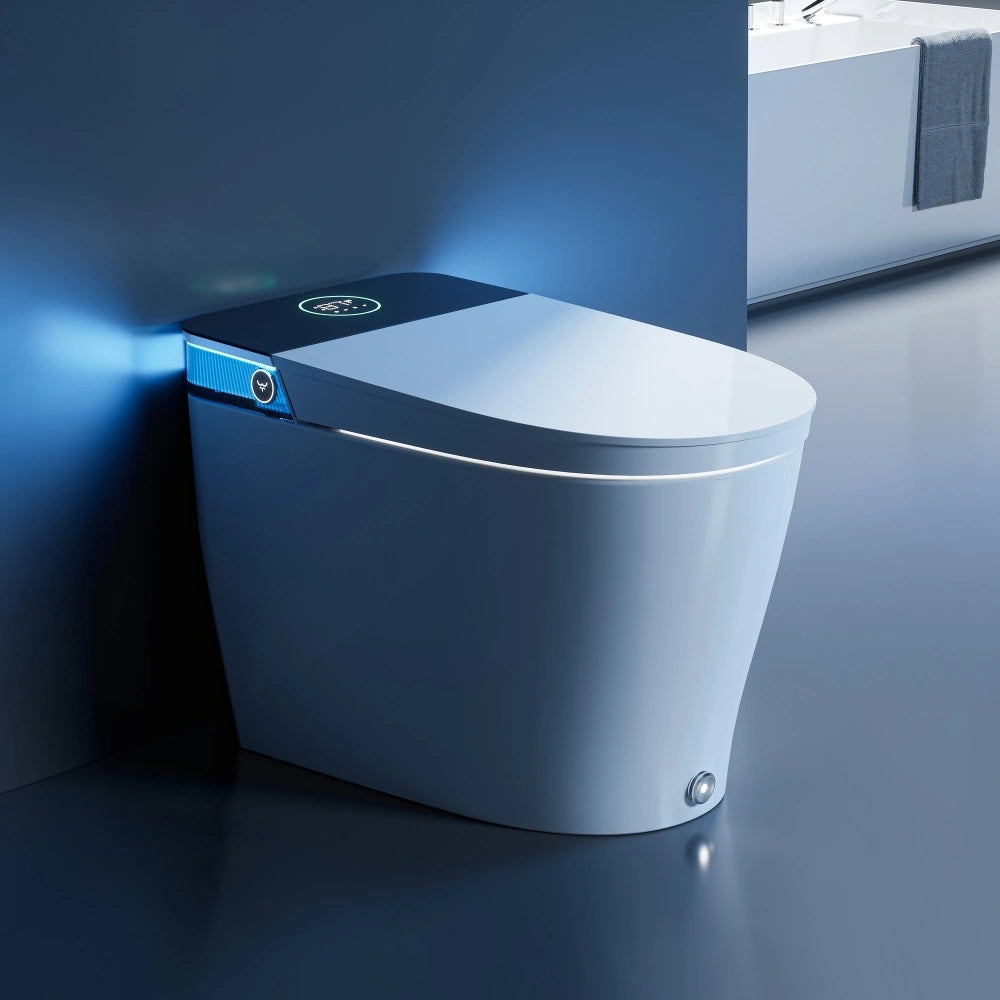
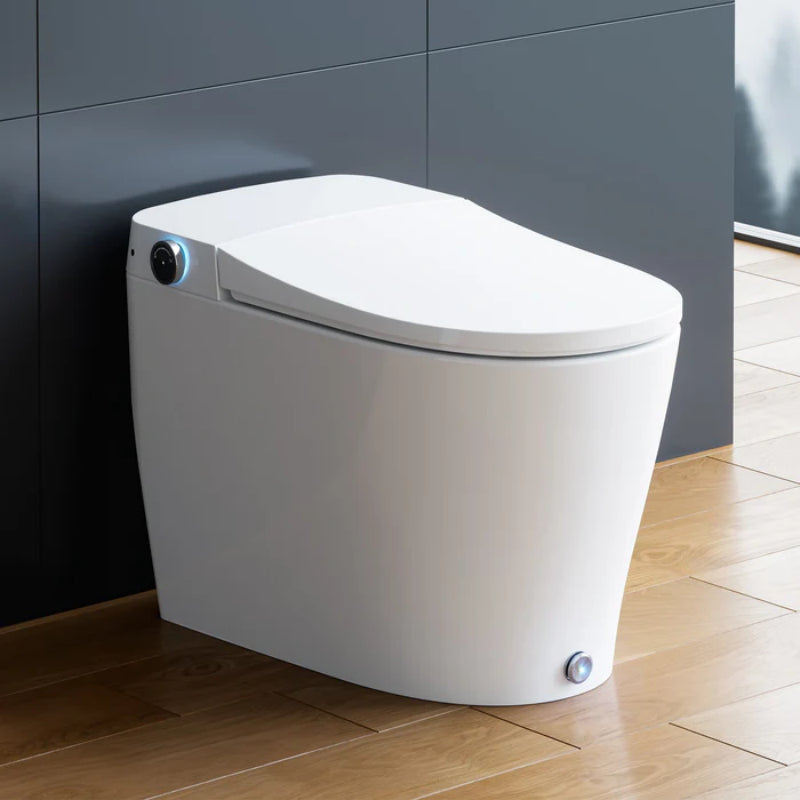
| Smart toilet | $750–$2,500+ | Medium–High | Comfort features | GFCI outlet, electrical work |
If you’re choosing purely on budget, remember this rule of thumb:
the more a toilet depends on hidden parts—such as in-wall tanks, pumps, or electronics—the higher both the installation cost and long-term repair risk.

Features that increase cost (and sometimes repair risk)
Common upgrades that raise the total cost include integrated bidet functions, heated seats, automatic flushing, deodorizing fans, and remote controls. Many of these features are great—until something fails and the replacement part isn’t sitting on a shelf locally.
Smart models also raise a practical question: is there a safe power source nearby? Many bathrooms need a GFCI-protected outlet added or moved. If electrical work is required, that’s often a separate trade and a separate line on the bill.
A simple “wiring/plug” concept to keep in mind looks like this:
Outlet (GFCI) → plug → cord routed away from water → toilet power module
If that outlet doesn’t exist within reach, plan for extra cost.
Are one piece toilets difficult to install?
A one piece toilet installation is not “hard” in a technical sense, but it is harder physically and less flexible. One-piece units are heavier and bulkier, so getting them lined up over the bolts and centered on the drain can take more effort. In tight bathrooms, it can be awkward to angle the toilet into place without scraping walls or your vanity.
If you’re installing a toilet alone, a one-piece design can be a strain. If you hire a pro, they may charge a bit more because it can take two people to move it safely.
What are the disadvantages of one piece toilets?
People usually buy a one-piece toilet because it looks clean and is easier to wipe down. The tradeoffs are worth knowing before you commit:
A one-piece toilet can cost more up front, it’s heavier to carry up stairs, and if a ceramic section cracks during moving, you’re often replacing the whole unit. Some repairs can also be less modular compared to a two-piece design, where the tank and bowl are separate.
None of this means you shouldn’t buy one. It just explains why one design can cost less to install than another.
Why are wall-mounted toilets more expensive to install?
A wall-hung unit costs more because it’s not just a toilet swap. The installer often needs to open the wall, add a steel carrier frame, connect an in-wall tank, confirm structural support, and then repair tile or drywall. You’re paying for plumbing plus finish work, not just setting a toilet to the floor.
Cost by Project Scope: Replace vs Relocate vs New Bathroom
Before you shop for a toilet, it helps to name your project honestly. Are you doing a straight toilet replacement, or are you changing the bathroom layout?
Like-for-like replacement (existing rough-in)
Most “standard” pricing assumes your existing drain location (rough-in) stays the same, the shutoff valve works, and the floor is solid. When those conditions are met, replacing a toilet is usually one of the simpler plumbing jobs in a home and falls within common install-a-toilet ranges.
If you’re planning to replace your toilet in the same spot, confirm whether the quoted price includes:
-
Labor to remove the toilet and dispose of the old unit
-
A new seal between the toilet and the drain
-
Leak testing at the base and water supply connection
-
Leveling work so the toilet doesn’t rock
An old toilet adds risk here. Corroded bolts, worn seals, or a weakened flange can quietly increase the final bill. These details are where a “cheap install” often turns into also cost later through callbacks or repairs.
Relocating a Toilet (Moving Drain and Vent)
Moving a toilet to a new location is a different project. It can involve cutting floors, changing drain slope, adding or rerouting venting, and patching everything back. This is where costs jump from “fixture work” to “construction work.”
If you’re considering moving the toilet because your bathroom feels cramped, pause and ask yourself: is it the toilet location—or is it the vanity, door swing, or shower layout? Relocating the toilet is often the most expensive way to gain space.
A simple way to picture the change is:
Before: toilet → short drain run → main stack
After: toilet → longer drain run + new vent path → main stack
That longer run is where labor hours and material costs accumulate, regardless of the cost of new toilet itself.
Basement installs: existing rough-in vs no plumbing
Basements split into two worlds.
If you have an existing rough-in, your cost to install a toilet may look like a normal replacement with a few basement quirks—access, venting route, and sometimes a longer distance to the main stack.
If you do not have plumbing set up, the cost depends on whether you can use gravity drainage or need an upflush system. Gravity usually means breaking concrete and running drains. Upflush means adding a pump system and planning venting. Either way, you’re no longer shopping for “a toilet install.” You’re building a plumbing system.
Do I need a permit to replace a toilet?
Often, a like-for-like replacement does not require a permit, but rules vary by city and county. Permits are more likely when you add new plumbing lines, relocate the toilet, open structural framing, or add a bathroom. When in doubt, call your local building department and ask about “fixture replacement” versus “new plumbing work.”

Regional Pricing & Local Factors (Why Costs Vary)
Two homeowners can buy the same toilet and get very different quotes. That’s normal, and it’s not always a rip-off. Labor markets, local rules, travel time, and demand all shape pricing.
Regional bands (relative cost multipliers)
Instead of assuming the cost of a new toilet is the same everywhere, it’s more realistic to think in relative pricing bands:
| Region | Relative cost index | What it means |
| Midwest | 0.9 | Often below national average |
| South | 0.95 | Often slightly below average |
| West | 1.1 | Often above average in major metros |
| Northeast | 1.15 | Often above average, higher labor costs |
These figures reflect patterns, not guarantees. A rural home in a high-cost region may still have a lower install a toilet ranges estimate than a dense urban apartment in a lower-cost region.
Urban vs suburban vs rural patterns
Location affects more than labor rates—it affects logistics.
-
Urban areas: Parking restrictions, stairs, elevators, and building access can slow down even simple jobs, increasing the also cost tied to time.
-
Rural areas: Labor may be cheaper, but travel fees can raise the total.
-
Suburbs: Often land in the middle, though same-day or emergency service can still increase the cost of installation.
To get realistic pricing, your quote should reflect your actual conditions—not a generic average pulled from the internet.
How to Get Location-Accurate Toilet Installation Quotes
When you request a quote, you’ll get better numbers if you share a few specifics: your rough-in size (if known), whether the toilet is on an upper floor, whether the shutoff valve works, the floor type (tile, vinyl, wood), and whether there are any signs of leaking around the base.
A surprisingly helpful tip is to take two photos: one of the toilet and floor around it, and one of the shutoff valve and supply line. That alone can reduce “unknowns” and lead to a more stable quote.
Hidden Costs & Common Repairs That Raise the Total
This is the part homeowners remember: the moment the toilet comes off and you see damage you didn’t know was there.
The most common surprises (typical price ranges)
| Surprise issue | Typical added cost | Why it matters |
| Toilet flange repair/replacement | $250–$500 | Bad flange = leaks and rocking |
| Shutoff valve replacement | $150–$350 | Old valves can fail when touched |
| New supply line | $10–$30 (part) + labor | Prevents sudden leaks |
| Subfloor rot/water damage repair | $200–$1,500+ | Needs solid structure under toilet |
| Leveling work (shims, floor issues) | $50–$200 | Prevents movement and seal failure |
| Corroded bolts / stuck toilet | $50–$250 | Adds time and risk |
If you’ve ever smelled a “musty bathroom” that won’t go away, that can be a hint that slow leaks have been soaking the floor for a long time. It’s also why a cheap install can backfire if the installer ignores the base condition.
When “cheap install” becomes expensive
I’ve seen a “fast” install where the old supply line was reused to save a few dollars. It held—until it didn’t. The homeowner came home to water that had run long enough to stain the ceiling below. That repair cost more than replacing every wear item during the install.
This is why many pros prefer replacing small parts automatically. The extra cost is small compared to toilet repair costs tied to water damage.
Permits, inspections, and code compliance (when they apply)
Permits are most common when you change plumbing lines, add a new toilet where there wasn’t one, or open walls and floors for drain and vent work. A permit can add time too, because an inspection might require scheduling.
A quick decision tree helps:
If you’re swapping a toilet in the same spot → permit is often not required (check locally)
If you’re moving the toilet or adding new drain/vent lines → permit is often required
If you’re adding a new bathroom → permit is very likely
What additional costs should I expect during installation?
The most common “extras” are disposal, flange work, shutoff valve replacement, supply line replacement, floor repair, permits (for new plumbing), and after-hours service charges.
DIY Toilet Installation vs Hiring a Pro: Cost, Risk, and Value
If you like home projects, you might be thinking: “Can I do this myself and save money?” Sometimes yes. Sometimes no. The risk is not that the toilet won’t flush—it’s that a slow leak can quietly damage your floor.
DIY cost breakdown (what you’ll likely pay)
With DIY, you typically pay the cost of the new toilet plus basic installation parts, while your labor is “free.” Many homeowners spend about $20–$80 on parts beyond the toilet itself, assuming they already own basic tools.
A realistic DIY shopping list usually includes:
-
A new seal or wax ring (or wax-free alternative)
-
New closet bolts
-
A new supply line
-
Shims for leveling
-
Caulk
If you need to buy tools or specialty parts, the cost of your toilet project can climb quickly. Still, for simple installs, DIY can fall on the lower end of typical install a toilet ranges.
Can I install a toilet myself to save money?
Yes—you can, and many homeowners do. The main savings comes from avoiding labor, which can be a few hundred dollars on a straightforward replacement. DIY works best when:
-
The bathroom is easy to access
-
The shutoff valve works smoothly
-
The flange looks solid
-
The floor is firm
-
You can safely lift and position the toilet
However, if the toilet rocks, the floor feels soft, the shutoff valve looks corroded, or the old toilet adds signs of water damage, DIY becomes riskier. One misstep can erase any savings and increase the long-term cost of installation through repairs.
Hiring a Pro: What You’re Really Paying For
Professional installation is not just speed. You’re also paying for someone who knows what “wrong” looks like before it becomes a leak. A good installer checks flange height, confirms the toilet is level, verifies tank and base connections, and tests multiple flush cycles while watching for seepage.
A “good invoice” should clearly say what’s included: removing an old toilet, installing the new toilet, disposal, parts used, and what happens if hidden damage is found.
Decision Framework: DIY vs Pro (Simple and Honest)
If you’re comfortable shutting off water, lifting a toilet, cleaning the old seal, and setting the new unit without rushing, DIY may be fine.
If you only have one bathroom, you’re working late at night, or you’re unsure about the flange and flooring, hiring a professional can cost more today but may cost less after you avoid a leak.
One-Piece Toilets: Setting Steps (So It Doesn’t Leak)
People often ask how to set a 1 piece toilet because it feels less forgiving than a two-piece model. The main goal is the same: a stable toilet with a watertight seal.
Here is a simple step-by-step that matches how many pros approach it.
How to set a 1 piece toilet (step-by-step)
-
Shut off the water and flush the existing toilet to empty the tank and bowl as much as possible.
-
Disconnect the supply line and remove the old toilet. Keep a bucket and towels nearby.
-
Scrape off the old wax or seal material and inspect the flange. If the flange is cracked, too low, or loose, fix it before you continue.
-
Dry-fit the new toilet (without the seal) to confirm bolt alignment and that the base sits flat.
-
Install new closet bolts and place the new seal according to its directions.
-
Lower the one-piece toilet straight down, aiming to avoid sliding it around once it contacts the seal. Because it’s heavy, having a second person helps.
-
Tighten bolts evenly, a little at a time, until stable. Do not overtighten; porcelain can crack.
-
Level the toilet with shims if needed so it does not rock.
-
Connect a new supply line, turn the water back on, and test multiple flushes while checking for leaks at the base and connection points.
-
Caulk around the base (many people leave a small gap at the back so a hidden leak can show itself).
If any step feels uncertain—especially flange condition—hiring a toilet professional can save time, money, and stress.

Total Cost of a Toilet Over Time: Is a New Toilet Worth It?
Many focus on the cost of installation alone and forget that toilets run for years. Replacing an old toilet with a modern, high-efficiency model can reduce water use significantly. Savings depend on household size and water rates.
Water use and payback overview:
| Toilet type (example GPF) | Relative water use | Savings potential |
| Older toilet (~3.5 GPF) | High | Highest savings when replaced |
| Standard modern (~1.6 GPF) | Medium | Good improvement |
| High-efficiency (~1.28 GPF) | Lower | Best long-term reduction |
If you’re paying to install a new toilet anyway, choosing a more efficient model can be a “small upgrade” that pays back slowly over time. Still, don’t buy a complicated toilet only for savings. Reliability matters too, because repair visits erase savings fast.
Maintenance costs by design
Simpler designs with widely available parts usually cost less to maintain. Designs with pumps, in-wall tanks, or electronics can be perfectly fine, but they often require more specialized service if something fails. That doesn’t mean “don’t buy it.” It means budget like an owner, not just a shopper.
Hiring & Pricing: Quotes, Red Flags, and Final Takeaways
The best way to avoid overpaying is not to haggle. It’s to compare quotes that describe the same scope.
How to compare quotes apples-to-apples
Ask each contractor to confirm whether their price includes removal/disposal, new seal and bolts, a new supply line, and a flange check. If they expect possible flange or subfloor issues, ask what their hourly or flat pricing is for those repairs.
If one quote is much lower, it may be missing disposal or parts, or it may assume the existing valve and flange are fine without checking.
Timing tips that can lower cost
If you can schedule during normal weekday hours, you often avoid after-hours premiums. If you’re replacing multiple toilets, many contractors can reduce the per-toilet labor cost because travel time and setup are shared.
Also decide whether you’re supplying the toilet or having the contractor supply it. Supplying it yourself can reduce markup, but if you choose the wrong rough-in size or a tricky model, you may pay extra labor—or restocking fees.
Real-world price examples
-
Standard replacement: midrange toilet + new seal and supply line → $500–$750. Labor and minimum charges dominate cost.
-
Replacement + repair: corroded flange, faulty shutoff valve → $800–$1,200.
-
Premium upgrade: smart or wall-hung toilet, electrical work, wall repairs → $1,500–$2,500+.
Budget ranges to remember
-
$350–$800 for most standard replacements
-
~$600 as a common midpoint for a straightforward job
-
$1,500+ when the project involves specialty toilets, wall work, repairs, or relocating plumbing
When you’re ready to move forward, pick your scenario, plan for at least a small repair cushion, then get three quotes with clear line items. That’s how you turn an uncertain home project into a predictable one.

FAQs
1. How much does it cost to install a toilet in 2026?
In 2026, the cost to install a toilet varies widely depending on the type of toilet, the scope of work, and any repairs needed along the way. For a standard replacement—swapping an old toilet for a similar one in the same spot—most homeowners can expect to pay between $350 and $800 in total. This includes the toilet itself, basic labor, and small parts like a wax seal, supply line, and bolts. More complex projects, such as installing a wall-hung unit, a smart toilet, or relocating the drain, can push the total cost beyond $1,500. Factors like your bathroom layout, floor type, or whether the old toilet has caused flange or subfloor damage can all influence the final price. Planning for a small repair cushion is a smart move to avoid unexpected expenses.
2. What is the labor cost to install a toilet?
Labor costs for installing a toilet in 2026 generally range from $224 to $533 if you’re just doing a straightforward installation. If the project involves removing an old toilet and setting a new one, labor typically falls between $275 and $480. These numbers reflect common local minimum charges, travel time, and small-job overhead that plumbers must cover. Costs can rise if the bathroom is difficult to access, the floor needs leveling, or the shutoff valve and flange require extra attention. Even if the work itself takes under two hours, many contractors include a service minimum. Understanding labor pricing separately from the toilet unit helps homeowners see where their money goes and decide whether a DIY approach makes sense.
3. Are one-piece toilets harder to install than two-piece toilets?
Yes and no. Plumbing-wise, a one-piece toilet connects to the drain and water line the same way as a two-piece model, but it’s physically more challenging. One-piece toilets are heavier and bulkier, which makes lining up the bolt holes and centering the unit over the flange trickier, especially in tight bathrooms or small spaces. Handling requires care, often needing two people to avoid scratching walls or cracking the porcelain. Additionally, adjustments like leveling or shimming take more time because the base can’t be separated from the tank. While a professional plumber can usually install either type without issue, DIYers should consider their own strength, bathroom access, and comfort level before attempting a one-piece toilet installation.
4. How long does it take a plumber to replace a toilet?
For a standard toilet replacement in a typical bathroom, most professional plumbers finish the job in 1 to 3 hours. This includes removing the old toilet, inspecting and possibly repairing the flange, installing the new unit, connecting the supply line, and testing for leaks. However, the timeline can extend if the old toilet is stubborn—corroded bolts, a soft subfloor, or a malfunctioning shutoff valve can add hours. Specialty installations like wall-hung units, smart toilets, or basements with upflush pumps may take a full day or more because additional framing, electrical work, or drain modifications are involved. Knowing the expected timeframe helps homeowners schedule wisely and understand labor charges.
5. Do I need a permit to replace a toilet?
In many areas, a like-for-like toilet replacement—swapping a toilet in the same location without changing plumbing lines—doesn’t require a permit. However, permits become more likely when you relocate a toilet, add new drain or vent lines, or install a completely new bathroom. Permits ensure the work complies with local plumbing codes, protects your home from future issues, and may be required for insurance purposes. Rules vary by city and county, so it’s always wise to call your local building department before starting work. Even if a permit isn’t required, hiring a licensed plumber ensures the installation meets standards and reduces the risk of leaks or damage that could be costly to fix later.
References



Leave a comment
This site is protected by hCaptcha and the hCaptcha Privacy Policy and Terms of Service apply.