Standard Toilet Size & Dimensions: Measure a Toilet Accurately

toilet size
Choosing a new toilet might seem simple, but toilet size and dimensions can make all the difference. Even a standard toilet can cause surprises if the bowl is too long, the tank hits the wall, or the door won’t open. Understanding toilet rough-in dimensions, seat height, and overall toilet dimensions is key to selecting the right fit. This 2025 toilet buying guide shows you how to measure a toilet and your bathroom accurately, compare standard toilet sizes, and check clearances. Learn about toilet seat heights, bowl types, and practical tips to ensure your new toilet fits perfectly without unexpected issues.

Standard Toilet Size & Dimensions: Typical Toilet Measurements

When people ask, “What is the standard size of a toilet?” they usually mean: How much space does it take up, and will it match most bathrooms? In the U.S., most residential floor-mounted toilets are clustered in a tight range for toilet depth, toilet width, and toilet height, and most are built for a 12 inches rough-in.

Typical residential toilet dimensions (U.S., 2024–2025)

Here’s an “at-a-glance” table you can screenshot. It covers the average toilet dimensions you’ll see most often, plus common ranges.
Dimension (what you’re measuring) Typical Range (in) Typical Range (cm) Notes
Toilet depth / projection (wall to front of the toilet) 28–30 71–76 Many models fall in this “standard” zone
Depth (overall range you’ll see) 25–32 64–81 Bigger tanks and elongated bowls push higher
Compact depth (small bathrooms) 22–25 56–64 Helpful when a door or vanity is tight
Toilet width (widest point) ~20 ~51 Some slim tanks run ~17–18 in (43–46 cm)
Height (floor to the top of the tank) 27–32 69–81 Varies by tank style and design
Rough-in size (finished wall to center of waste) 12 (standard) 30.5 10 and 14 in also exist
Toilet seat height (floor to top of seat) 16–17 41–43 Often called standard height in stores
Comfort/ADA seat height 17–19 43–48 Often easier for adults and many seniors
If you remember just two numbers, make them these: rough-in is 12 inches in most homes, and many “standard” toilets land around 28–30 inches in toilet length (front-to-back depth).

Toilet Bowl Size: Round vs Elongated Dimensions

Bowl shape changes comfort, but it also changes fit. If you’re working with small bathrooms where space is tight, this is where inches matter.
From the seat-bolt holes to the front rim:
  • A round bowl is about 16.5 inches long.
  • An elongated toilet bowl is about 18.5 inches long.
That difference is about 2 inches. In real bathrooms, those 2 inches are often the difference between “the toilet fits” and “the door hits the bowl.”
So what are the lengths of toilets in plain terms? Many round-bowl toilets end up around 28 inches deep, while many elongated versions of similar models land closer to 30 inches deep. Always confirm the spec sheet’s “projection” (more on that below).

How to Measure Toilet Dimensions & Rough-In Accurately

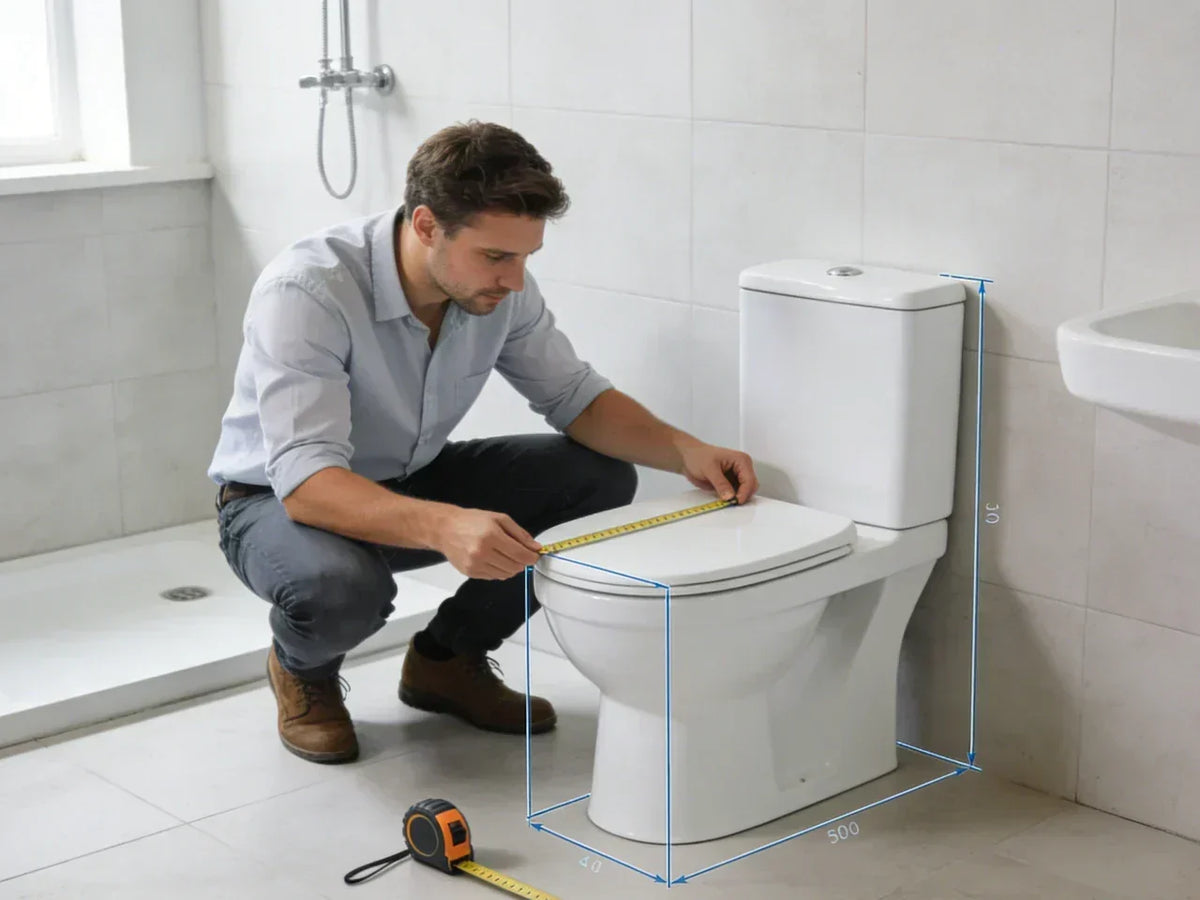
You don’t need special tools to measure important toilet dimensions. A basic tape measure and a notepad are enough. The goal is to measure your existing toilet and also measure the space around it so you can be sure your new toilet will fit your room, not just the plumbing.

Toilet Rough-In Measurement: How to Measure Correctly

Your toilet rough-in is the distance from the finished wall behind the toilet to the centerline of the drain (usually marked by the closet bolts). It matters because a toilet is built to match that distance. If your rough-in is wrong, the tank may sit too far from the wall—or not fit at all.
Use these steps to get an accurate rough-in measurement:
  1. Find the two bolts at the base (the bolts that hold the toilet to the floor). These bolts line up with the center of the waste outlet.
  2. Measure from the finished wall (not the baseboard face) straight out to the center of the toilet bolts.
  3. Write down the number to the nearest 1/4 inch.
A quick warning that saves a lot of stress: if you measure to the baseboard instead of the finished wall plane, you can “lose” 1/2 inch or more. That’s how people end up with a tank that touches the wall or a toilet that sits oddly forward.
Also, not every “12-inch” toilet lands in the same spot. Even when rough-in is 12 inches, the tank-to-wall gap can vary by model. That’s normal. The spec sheet usually lists something like “rough-in 12 inches” and then shows the true projection.

Toilet Dimensions: Depth, Width & Height Explained

Once rough-in is confirmed, measure the toilet itself. This helps if you’re trying to match the footprint of an old toilet, or if you’re trying to avoid surprises with a different bowl shape.
Depth (overall projection):
Stand to the side and measure from the wall (or the back of the tank, if the tank is not against the wall) to the front of the toilet at the rim. Many spec sheets call this “projection.” If you want to be safe, measure from the finished wall to the farthest point at the front.
Width:
Measure the widest point. Sometimes it’s the bowl, but often it’s the tank shoulders. This is your true toilet width.
Height:
Measure from the floor to the top of the tank for overall height. Then separately measure seat height (below). Height matters under shelves, windowsills, and in tight toilet closets.
Bowl height vs seat height:
People mix these up all the time. Bowl rim height is the porcelain height. Toilet seat height is the height you actually sit on, measured to the top of the seat.

Step-by-Step Toilet Measurement Guide: Seat, Tank & Rough-In

If you want one clean process you can repeat, use this:
  1. With a tape measure from the floor, measure to the top of the seat to get toilet seat height.
  2. Measure floor to the top of the tank.
  3. Measure from the finished wall to the front rim to get toilet depth.
  4. Measure the widest point for toilet width.
  5. Measure rough-in: measure from the wall to the center of the bolts (wall to the center / wall to the middle of the bolt).
  6. Identify bowl shape by measuring from the seat-bolt holes to the front rim.
When you do this once, choosing the right toilet becomes much simpler because you’re no longer guessing based on “standard” claims.

How do I know if I need a 10-inch or 12-inch toilet?

This question comes up in older homes and tight remodels, and the answer is almost always in the bolt measurement.
If your measurement from the finished wall to the bolt center is:
  • Around 12 inches, you need a 12-inch rough-in toilet (the most common).
  • Around 10 inches, you need a 10-inch rough-in toilet.
  • Around 14 inches, you need a 14-inch rough-in toilet.
If you measure something like 11 1/4 inches, don’t panic. Baseboards, plaster, tile buildup, and wall repairs can shift the “finished wall” line. In that case, treat your measurement as a clue to double-check the toilet’s spec sheet for the exact tank clearance.

Are all toilets 12 inches from the wall?

No. Many are designed for 12-inch rough-ins, but the toilet is not always exactly 12 inches from the wall once installed. Some leave a small gap; some sit closer. And some homes use 10-inch or 14-inch rough-ins, especially in older construction or unusual layouts.
The best way to think about it is this: rough-in describes where the drain is, not an exact promise of how close the tank will sit to the wall.

Visual: annotated measuring diagrams (plan + side elevation)

These simple diagrams show what you’re aiming for.
Plan View (Top-Down / From Above):
  1. Finished Wall: Start measuring from the finished wall, not including any baseboards.
  2. Rough-In Measurement: Measure from the wall to the center of the toilet bolts (the bolts that secure the toilet to the floor). This distance is called the “rough-in” and is crucial for proper installation.
  3. Toilet Depth / Projection: Measure from the wall to the front edge of the toilet. This is the total depth the toilet projects into the room, which helps ensure doors and furniture won’t interfere.
  4. Side Clearance: From the toilet centerline, maintain at least 15 inches to each side wall or fixture for comfort and code compliance.
Side View (Profile / From the Side):
  1. Top of Tank: Measure from the floor to the top of the toilet tank to make sure there’s no interference with shelves or windowsills.
  2. Bowl Rim Height: Measure from the floor to the top of the porcelain bowl rim.
  3. Seat Height: Measure from the floor to the top of the toilet seat—the height you actually sit on.
  4. Floor: All vertical measurements start from the finished floor.

Toilet Clearance & Proper Dimensions for Standard Installation

Even perfect toilet dimensions won’t help if the clearance is wrong. Clearance is what keeps knees from hitting a vanity and keeps doors from smacking the bowl.

Minimum clearances vs “comfortable” clearances (layout planning)

A common minimum rule used in many plumbing layouts is 15 inches from the toilet centerline to each side obstruction. That means a minimum width you need for a toilet area is about 30 inches total.
Front clearance is where real life shows up. Many bathrooms technically work with a tighter front space, but they don’t feel good. A practical approach is to plan for at least 24 inches clear in front if you can, and aim for 30+ inches for comfort, especially if anyone is tall, has knee pain, or uses a walker.
So, how much room is needed for a toilet? A simple planning answer is: about 30 inches wide by 24–30 inches clear in front, plus the toilet’s own projection.
If you’re making choices during a remodel, it helps to think in two layers:
  • The size of a toilet (the object).
  • The “bubble” of space you need around the toilet (the usable area).

Door swing, vanity, and tub/shower conflicts (real bathroom geometry)

Have you ever stood in a powder room and felt like you had to slide in sideways? That’s usually not because the toilet is huge—it’s because something else steals the clearance.
Before you buy, stand in the bathroom and look for these common conflicts:
  • The door swing arc that overlaps the front of the toilet
  • A vanity corner that narrows the knee space
  • Shower glass that limits the approach
  • Towel bars or radiators that reduce side room
Even a change from round to elongated—just 2 inches—can turn a “fine” door swing into a daily annoyance.

How much space do you need in front of a toilet?

If you want a clear, usable rule: try to keep 24 inches as a workable minimum in front of the bowl, and aim for 30 inches or more when you can. If your bathroom is tight, choosing a shorter toilet depth often fixes the problem faster than moving walls.

Visual/interactive: a “Will it fit?” clearance calculator (simple method)

You can do a quick fit check with three measurements:
  1. Max depth to obstruction: measure from the finished wall behind the toilet to the nearest front obstruction (door, vanity, tub edge).
  2. Decide your target front clearance (use 24 inches minimum, 30 inches comfort).
  3. Subtract to find your max toilet projection.
Formula:
Max toilet projection = (wall-to-obstruction distance) − (target front clearance)
Here’s a small worksheet you can copy into notes:
Measurement Your number (in)
Wall behind toilet to nearest front obstacle
Target front clearance (24 min / 30 comfort)
Max toilet projection that should fit
If your max projection lands around 28 inches, you’re likely shopping in “standard” territory. If it lands closer to 25 inches or less, you’ll want to focus on compact models, round bowls, compact elongated bowls, or a wall-hung option.

Toilet Models & Sizes: Two-Piece, One-Piece, Compact & Wall-Hung

When people compare toilet sizes, they often focus only on bowl shape. But type changes fit too—especially in tight rooms.

Floor-mounted two-piece vs one-piece (footprint realities)

In most bathrooms, a floor-mounted two-piece and one-piece toilet take up very similar floor space once the toilet installed is in place. The real differences usually come down to tank shape, total height, and how much room you have to work during installation.
If you’re planning to purchase a new toilet as a replacement, the easiest path is to measure your toilet first. Specifically, you want to check:
  • The rough-in distance: measure from the wall and the center of the toilet flange
  • The toilet length (projection): measure from the front of the bowl to the wall
  • The seat height, especially if you’re switching between standard height toilets and comfort height models
Matching these numbers helps ensure that your new toilet fits your existing layout. When the distance between the wall and the toilet to the center of the flange stays the same, you reduce surprises like door clearance problems or awkward spacing.

Compact toilets & compact elongated (small bathroom options)

If your bathroom is short front-to-back, compact designs can be the smartest solution. Many compact models are designed to be about 22–25 inches long, which makes them ideal when you need a toilet that fits your toilet space without crowding the room.
Standard elongated bowls are usually a couple of inches longer, which can feel tight in narrow layouts. That’s why compact elongated models exist. These toilet bowls come with a slightly shortened projection while still offering more comfort than a round bowl.
If you’re right on the edge of clearance, even saving 1–2 inches can help make the toilet feel usable rather than cramped. Always consider the size carefully and choose the size for your bathroom, not just what looks good online.

Wall-hung toilets & in-wall tanks (space + adjustable seat height)

Wall-hung toilets can reduce the visible bulk because the tank is hidden in the wall. The bowl can also be set at the seat height you want during install, which is helpful if you’re planning for aging-in-place.
But wall-hung systems are not a “swap the toilet and go” project. They can require in-wall framing support and enough wall depth for the tank carrier. If you’re choosing this route mainly for space, measure carefully and confirm what’s behind the wall.

Smart toilets & bidet-integrated models (extra room + utilities)

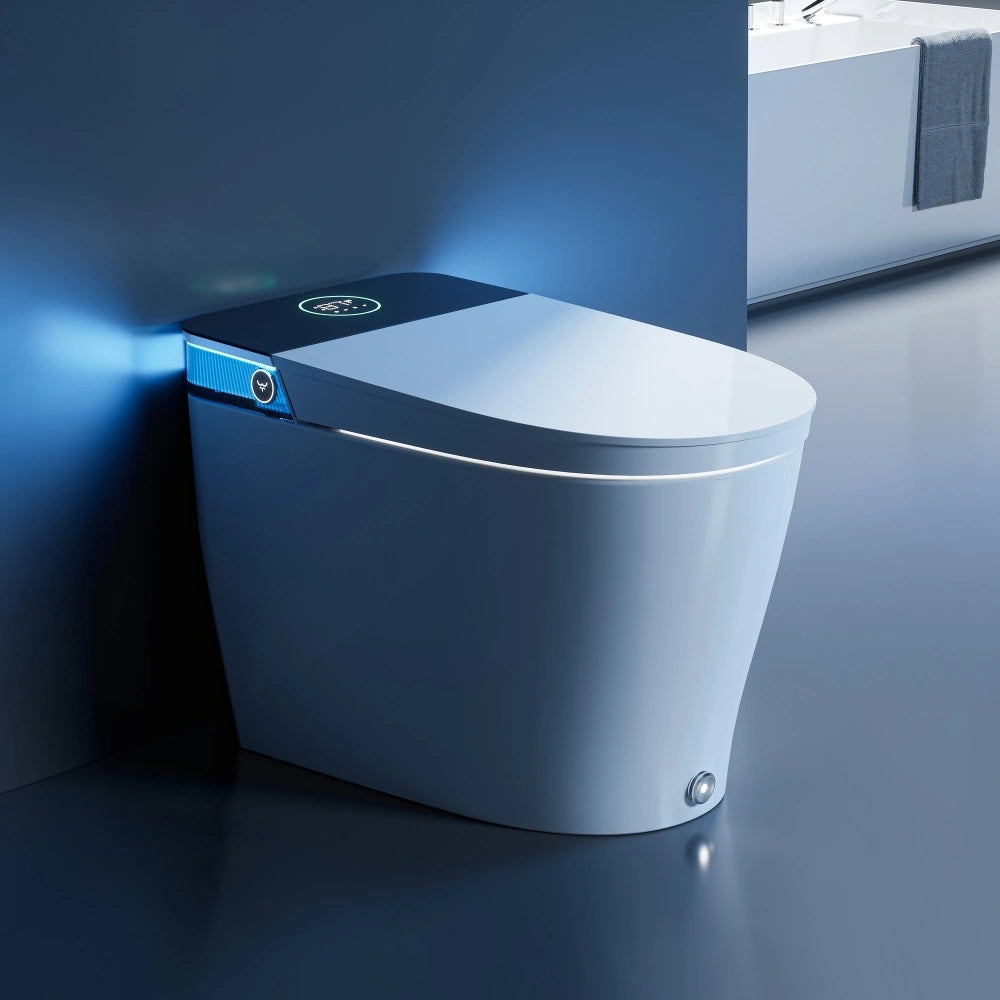
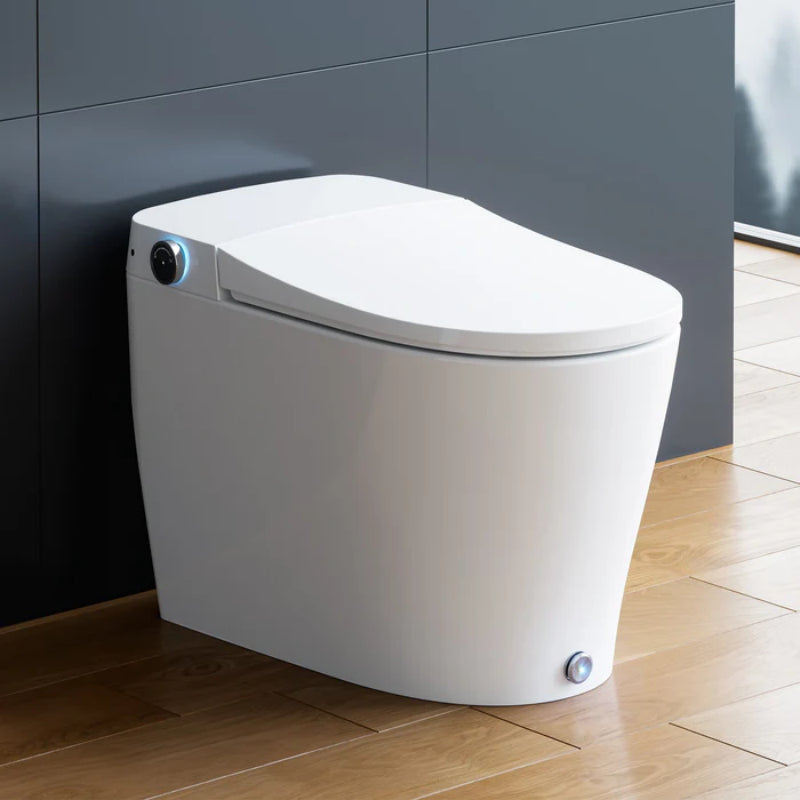
Many smart or bidet-integrated units have a larger “envelope” than a basic toilet. You may need extra space behind or beside the seat for connections and lid movement. These setups also often need a nearby GFCI-protected outlet.
A quick reality check: in very tight rooms, the toilet may fit, but the lid may not open fully, or the side access may be awkward. That’s still a fit problem, just a different one.

Toilet Seat Height & Bowl Shape: Comfort vs Standard

A toilet can meet every clearance rule and still feel wrong. Comfort comes down to height, bowl shape, and who uses it every day.

What are the three heights of toilets?

In practical terms, most toilets fall into three height categories:
  • Low height (often used in specialty or child-friendly installs)
  • Standard height toilets, usually around 16 inches from floor to the top of the seat
  • Comfort or ADA-style height, typically 16 to 19 inches
To compare, simply sit on your current toilet. If your feet don’t rest flat or standing up feels difficult, the height may not be right.

Standard height vs comfort/ADA height (who should choose what)

For many adults and seniors, a higher seat feels more supportive. That’s why people often ask what height toilet is best for aging users. A seat height in the 16 to 19 inches range is often a good starting point.
However, standard toilet height still works best for shorter adults and kids because it allows better foot contact with the floor. Comfort isn’t universal—it depends on body size and habits.

Is comfort height the same as ADA height?

In everyday use, people often treat them as the same idea, but the key point is the measurement: ADA-style guidance commonly lands in the 17–19 inches seat-height zone. “Comfort height” is a common store term that usually targets that same range, but you should always confirm the actual toilet seat height in the specifications.

Elongated vs round: comfort vs space trade-offs

Elongated bowls are often more comfortable for adults, but they usually take up more room. Round bowls save space—often about 2 inches—which can make a big difference in tight layouts.
In narrow bathrooms, those saved inches can prevent knee contact with doors and help the toilet feel like it truly fits the room. The key is to measure from the center of the flange, double-check the projection, and choose what fits your toilet layout rather than assuming bigger is better.

Choosing the Right Toilet Size & Rough-In: Step-by-Step Guide

If you’ve ever stared at a product page thinking, “Why is this so confusing when toilets are supposed to be standard?” you’re not alone. The trick is to decide in the same order plumbers do: drain location first, then clearances, then comfort.

Decision tree: rough-in → clearance → bowl shape → height

Use this simple flow before buying a toilet:
  • Confirm your toilet rough-in dimensions (10 / 12 / 14).
  • Measure the maximum projection your room allows (wall to obstacle minus your target front clearance).
  • Choose bowl shape that fits that projection (round, compact elongated, elongated).
  • Choose seat height (standard vs 17 to 19 inches comfort height).
That’s it. When you follow this order, you avoid the most common “I bought it and it doesn’t fit” problems.

Bathroom Space Planning: Toilet Size, Depth & Clearance Examples

Scenario 1: 3'×5' powder room with a door conflict
This is the classic tight setup: you open the door and it almost touches the toilet. In a room like this, the winner is often a round bowl or a compact toilet with the shortest toilet depth you can find. The goal is not luxury; it’s making sure the toilet doesn’t block the door arc and you still have workable front clearance.
I once helped a friend measure a powder room like this, and the old toilet “worked” only because it was short. They tried to upgrade to an elongated bowl without measuring, and the door started hitting the bowl on day one. Switching back to a shorter projection solved it immediately—no plumbing changes needed.
Scenario 2: 5'×8' hall bath (common layout)
Many 5'×8' bathrooms can handle an elongated bowl, but you still want to check the vanity edge and the door swing. If the toilet sits beside a vanity, confirm that you still have about 15 inches from the toilet centerline to the vanity edge. This is where measuring the true toilet width matters, because a wider tank can make the space feel tight even when the bowl clears.
Scenario 3: Aging-in-place planning
If you’re planning for long-term comfort, a comfort height toilet (seat around 17–19 inches) is often a good move, along with extra front clearance. Even if you can’t change the whole bathroom, giving yourself more room in front of the bowl (closer to 30 inches) can make daily use easier and safer.

Replacing a Toilet: Match Standard Toilet Dimensions & Footprint

If you’re not remodeling, you’re usually trying to replace an old toilet with minimal changes. Look at the floor around the base. Sometimes a faint outline in the tile or old caulk line shows the right size and position that worked before.
Be careful, though: if you changed flooring thickness, added thicker baseboards, swapped a vanity, or changed the door swing, the old footprint may no longer be the safe choice. In that case, make sure to measure clearance like it’s a new toilet installation.

Visual/interactive: printable measurement worksheet (copy/paste)

If you want one clean set of notes, record these:
  • Rough-in (finished wall to bolt center): ____ inches
  • Wall behind toilet to nearest front obstacle: ____ inches
  • Left side clearance (to vanity/wall): ____ inches
  • Right side clearance (to wall/tub): ____ inches
  • Current toilet projection (wall to front): ____ inches
  • Desired bowl shape (round/elongated/compact): ____
  • Desired toilet seat height: ____ inches
  • Notes on door swing / obstructions: ____

Remodel & retrofit edge cases (old homes and obstacles)

This is where people get stuck. The toilet “should fit,” but it doesn’t. Usually, an obstacle steals space, or the rough-in isn’t as standard as you thought.

Nonstandard Toilet Rough-In Solutions: 10, 12 & 14 Inches

If your rough-in isn’t standard 12 inches, you still have options, but the best choice depends on how much work you want to do. A toilet made for the correct rough-in is the cleanest path. If your rough-in is “almost 12,” it may still work with a 12-inch model, but confirm the tank clearance and projection on the spec sheet.
There are also plumbing solutions like offset flanges, but these involve real changes to toilet parts and can create new issues if used incorrectly. If unsure, ask a licensed plumber to confirm the toilet and the center of the drainpipe and what your floor can support.

Hidden Obstacles: Toilet Depth, Tank & Rough-In Issues

A toilet can fail to fit even when the rough-in is right. Common reasons include:
  • Thick baseboards that push the tank forward
  • Radiators or piping that reduce side clearance
  • Sloped walls or knee walls that cut into tank space
  • A window ledge that blocks the top of the tank
If any of these exist, make sure to measure from the true finished wall plane and include the obstacle in your plan. In tight rooms, half an inch matters. Planning carefully ensures the best toilet for your bathroom layout.

Can I replace a round toilet with an elongated toilet?

Yes, as long as you have space. The main rule is simple: plan for about 2 inches more projection. Then verify you still meet your front clearance goal and that the door swing won’t hit the bowl.
If you’re already tight on front clearance, switching from round to elongated is one of the most common ways people create a daily annoyance without meaning to.

Real-world troubleshooting templates

If your new toilet doesn’t fit like the old one, these patterns show up again and again.
“New toilet hits the door.”
This usually means the projection increased, often because of an elongated bowl. A round bowl, compact elongated, or shorter projection model usually fixes it without moving plumbing.
“Tank hits the wall.”
This often happens when someone measured from the baseboard instead of the finished wall, or when the new tank is shaped differently. Re-check the rough-in and confirm the tank clearance on the spec sheet.

International Standard Toilet Dimensions & Rough-In Comparison

If you’re buying fixtures across borders, don’t assume “standard” means the same thing everywhere. Even the words change. In some places you’ll see “set-out” instead of rough-in. Dimensions are often listed in millimeters, and the relationship between tank and wall can differ.

U.S./Canada vs UK/EU vs Australia/Asia (what differs)

In the U.S. and Canada, 12-inch rough-in is the default for many homes. In other regions, wall-hung toilets and concealed tanks can be more common, and projections may be shorter in smaller housing footprints.
The safest approach is not guessing by region—it’s reading the spec sheet and confirming:
  • Projection (depth)
  • Seat height
  • Rough-in / set-out requirement
  • Outlet type and compliance markings

Metric conversion and spec-sheet reading (avoid wrong imports)

A quick conversion helps you sanity-check numbers:
  • 12 inches is about 305 mm
  • 30 inches is about 762 mm
  • 19 inches is about 483 mm
If a spec sheet lists a projection around 700–760 mm, you’re in a typical range. If it’s closer to 560–640 mm, it may be a compact model.

Visual: region comparison table (high-level expectations)

Region Common rough-in / set-out language Common expectation What to double-check
U.S./Canada Rough-in (often 10/12/14 in) Many floor-mounted options Rough-in and projection
UK/EU Set-out / projection often emphasized Wall-hung and concealed tanks more common in some areas Carrier depth, outlet type
Australia/NZ Set-out often listed in mm Many compact-friendly layouts Set-out and compliance
Parts of Asia Compact bathrooms more common Integrated features more common in some markets Power needs, clearances

Standard Toilet Size Checklist: Rough-In, Dimensions & Seat Height

The 60-second toilet size checklist (before you buy)

  • Confirm toilet rough-in: measure from finished wall to bolt center
  • Confirm your max allowed toilet depth (projection) based on front obstacles
  • Confirm side clearance: aim for at least 15 inches from centerline each side
  • Confirm front clearance goal: workable at 24 inches, better at 30+
  • Choose bowl shape (round saves about 2 inches)
  • Choose height (standard vs 17–19 inches comfort height)
  • Confirm door swing and vanity corners won’t hit the bowl or your knees

Common “fails” and how to avoid them

  • Measuring to the baseboard instead of the finished wall plane
  • Ignoring door swing until after installation
  • Assuming every toilet is “standard”
  • Forgetting the difference between bowl rim height and toilet seat height
  • Buying an elongated bowl when the room only works with round

Final takeaways (what “standard toilet size” really means)

Yes, there are average toilet dimensions that show up again and again. But fit is not just about the toilet. The real winners are the toilets that match your rough-in, respect your clearances, and feel right for the people using them every day.

FAQs

1. What is the depth of a toilet?

Toilet depth, also called projection, is the measurement from the finished wall behind the toilet to the front edge of the bowl. Most standard floor-mounted toilets fall between 28 and 30 inches, which fits comfortably in average bathrooms. However, you’ll find some variations: compact toilets can be as short as 22–25 inches, while larger elongated models may reach up to 32 inches. The depth matters because it affects how far the toilet sticks out into the room, which can interfere with doors, cabinets, or other fixtures. When planning a bathroom or replacing a toilet, it’s important to measure the space from the wall to the nearest obstruction to ensure the toilet fits without crowding. Even a small difference of 2 inches can change how comfortable or practical a bathroom feels, especially in tight powder rooms. Always check the spec sheet for “projection” or depth to avoid surprises during installation.

2. What is the minimum width you need for a toilet?

Width refers to the space the toilet occupies side to side and the clearance needed around it. The most commonly recommended minimum width is about 30 inches, which comes from maintaining 15 inches of clearance from the toilet’s centerline to any wall or fixture on each side. This is the baseline required by many building codes and plumbing guidelines, ensuring there’s enough room for comfortable use. Some bathrooms may allow a slightly tighter fit, but anything less than 30 inches can feel cramped and make cleaning difficult. Wider bathrooms, on the other hand, can benefit from more generous spacing, which improves accessibility and comfort. Keep in mind that the width of the toilet itself varies by model—some slim or compact toilets are closer to 17–18 inches wide, while standard tanks may measure around 20 inches. Planning around both the toilet’s width and the recommended clearance ensures usability for all users.

3. Are all toilets 12 inches from the wall?

Not necessarily. The 12-inch measurement refers to the standard rough-in, which is the distance from the finished wall to the center of the toilet’s waste outlet. Many modern toilets are designed for a 12-inch rough-in because it fits most homes, but variations exist. Older or custom bathrooms may have 10-inch or 14-inch rough-ins, and even within the same rough-in category, the actual installed distance to the wall can differ slightly based on flooring, baseboards, or tank shape. This is why measuring the existing space before buying a new toilet is crucial. If you assume every home uses 12 inches, you might end up with a toilet that sits too far from the wall, has a gap behind it, or simply doesn’t fit. Checking your rough-in measurement ensures the toilet lines up with the drain and tank clearance.

4. What height toilet is best for seniors?

Seat height plays a major role in comfort and safety, especially for seniors or people with mobility issues. A standard seat height ranges from 16–17 inches, which works well for most adults, but many seniors prefer a taller “comfort” or ADA-style height of 17–19 inches. This makes sitting down and standing up easier, reducing strain on knees and hips. However, comfort depends on individual leg length, balance, and physical conditions. Taller users may benefit from a higher seat, while shorter adults or children might find it harder to place their feet flat on the floor. If possible, testing toilets in-store or measuring your current toilet can help determine the ideal height. Modern models also allow customization with elongated bowls or adjustable seat heights to balance comfort, safety, and space.

5. What are the different sizes of toilets?

Toilet sizes vary in several key dimensions: rough-in, bowl shape, projection (depth), and seat height. Rough-in sizes commonly range from 10, 12, to 14 inches, determining how far the toilet must sit from the wall to align with the drain. Bowl shapes are either round or elongated; elongated bowls are slightly longer and often more comfortable for adults, while round bowls save space in tight bathrooms. Projection or depth affects how far the toilet extends into the room, ranging from compact 22–25 inches to standard 28–30 inches, and sometimes larger. Seat height also varies, with standard heights around 16–17 inches and comfort/ADA-style heights up to 19 inches. Considering all these factors ensures the toilet fits the bathroom layout, meets user comfort needs, and works with existing plumbing. Always check the spec sheet to match your space before purchase.

References


Reading next

toilet installation cost
fiberglass tub

Leave a comment

This site is protected by hCaptcha and the hCaptcha Privacy Policy and Terms of Service apply.

Compare Products
Product
List Price
Customer Reviews