

Looking for the standard kitchen sink size or trying to pick a new kitchen sink? In 2025, the quick answer is simple: most homes use a sink that’s about 30 inches wide, 22 inches front-to-back, and 9–10 inches deep. That setup fits a standard 36-inch sink base cabinet and suits most cooking and cleaning tasks. This guide starts with the exact dimensions you need, then walks you through how to measure your cabinet, what “will it fit?” really means, and how sink styles (single, double, farmhouse, undermount, drop-in) change the math. You’ll also get practical depth and ergonomics tips, real-world scenarios, trend notes, and a pro checklist. Use the mini comparison tables and rules of thumb to match your cabinet width and workflow with the right kitchen sink dimensions—so you avoid recuts, returns, and cramped basins.
The Quick Answer: Standard Dimensions in 2025
Most buyers want the fastest path to a choice that works today and still helps resale later. Here is the short version you can trust, based on what installers and designers use as defaults across North America.
Standard spec for most kitchens (single-bowl)
The most common “safe default” for a standard kitchen sink size is a 30" W x 22" front-to-back x 9–10" D single-bowl sink. It’s popular because it fits a 36" sink base cabinet, gives enough room for sheet pans and stockpots, and leaves storage space for a disposal, cleaning supplies, and a pull-out trash or filter system. For many households, this one spec balances usability, cost, and future buyers’ expectations.
Popular range and variations by layout
While 30 inches wide is the most popular single-bowl size, there is a helpful size range:
-
Single bowl sinks typically run 24–36 inches wide
-
Double bowl sinks run 32–48 inches, with 36 inches most common
-
Compact/bar/prep sinks are 12–24 inches wide for secondary zones
-
Depth is trending deeper, with 9–10 inches now common, though 8 inches remains practical for accessibility or shorter users
What drives “standard” fit
Standard isn’t just about the sink. It’s about the system around it:
-
Your cabinet width sets the ceiling. A 36-inch base often fits a 30-inch sink with room for clips, rails, and plumbing. A 33-inch cabinet can be tight even for a 30-inch bowl depending on construction and plumbing location. Based on OSHA guidelines, adequate space for plumbing and installation is important to prevent workplace hazards during kitchen construction and remodeling.
-
Your countertop cutout and front/back set-backs matter. Countertop thickness, reveal style (for undermount), and backsplash clearance can change what fits.
-
Installation style affects usable space. Undermount sinks use the full 22-inch front-to-back depth. Drop-in rims slightly reduce the usable basin area. Farmhouse/apron-front styles need specialized support and face-frame changes.

Above-the-fold spec snapshot:
| Sink Type | Typical Widths | Typical Front-to-Back | Common Depths | Fits 36" Base? |
| Single-bowl | 24–36" (most common 30") | 22" | 8–10" | Yes |
| Double-bowl | 32–48" (most common 36") | 22" | 8–10" | Often (check specs) |
| Compact/Bar | 12–24" | 18–20" | 6–8" | Yes |
Fit First: Cabinet, Countertop, and Cutout Compatibility
Thinking, “Will this sink fit?” Start with the cabinet and counter. The right kitchen sink size must fit both the hole in the top and the space below, leaving enough room at the edge of the sink and on the side of the sink. A few quick checks now can save you a new countertop later.
How to measure your cabinet and counter (step-by-step)
-
Measure the inside cabinet width to determine the appropriate size before you measure for a new sink. Open the doors and measure clear space from left wall to right wall inside the sink base.
-
Check the face frame and door openings. If you have a framed cabinet, the face frame can reduce what passes through the top. Confirm the clear opening width.
-
Find the plumbing centerline. Measure from the left inside wall to the center of the drain pipe. This affects where the drain and disposal land relative to the bowls.
-
Confirm countertop depth. Standard counters are around 25 inches deep, with a typical 22-inch front-to-back sink dimension. Measure your counter and note any full-height backsplash that reduces faucet clearance.
-
Note faucet deck and hole spacing. Some sinks include a deck for faucet holes; undermount sinks often place the faucet in the countertop. Make sure you have space for faucet swing, sprayer, air gap, and soap dispensers.
-
Check drain location and cabinet obstructions. Interior braces, corner blocks, electrical boxes, or filters may restrict bowl placement or disposal height.
Matching sink width to sink base cabinet (rules of thumb)
For a smooth install, match the kitchen sink width to the cabinet size with a small buffer for clips, brackets, and support. When in doubt, size down rather than up.
| Standard Kitchen Sink Width | Typical Minimum Sink Base Cabinet |
| 24" | 27" base |
| 27" | 30" base |
| 30" | 33"–36" base (36" is ideal) |
| 33" | 36" base (check template) |
| 36" | 39"–42" base (often requires special planning) |
Why do pros often pair a 30-inch sink with a 36-inch base? It leaves room on both sides for mounting hardware, plumbing, and under-sink storage. A 33-inch or 36-inch sink can fit a 36-inch cabinet in some cases, but you’ll need to verify the manufacturer’s template and your interior clearances to avoid interference at the sides or with the face frame.
Cutout sizing and reveal choices (undermount vs drop-in)
An undermount sink attaches to the underside of the counter. The cutout edges are exposed, so your reveal—the amount of counter showing around the bowl—matters. You can choose:
-
Positive reveal: a bit of counter edge shows; easier to clean and inspect sealant
-
Zero reveal: flush look; sleek and popular
-
Negative reveal: counter overhangs the bowl edge; hides the rim
Countertop thickness (stone vs solid surface vs laminate) changes the mounting method and clip options. Drop-in (top-mount) sinks sit on top of the counter and have a rim; they are easier to retrofit and work well with laminate counters, but the rim slightly reduces usable basin area.

Standard Kitchen Sink Size by Type (Single, Double, Farmhouse)
Sink type shapes both your kitchen sink sizes dimensions and your daily workflow. Let’s map common sizes and what they’re best at.
Single-bowl sinks (most common for standard kitchens)
For many homes, a single bowl kitchen sink around 30" x 22" x 9–10" is the sweet spot. One large basin makes it easy to wash sheet pans, cast iron, and tall stockpots. It also keeps prep simple and often reduces countertop seams. If you like large cookware or batch cooking, a single-bowl layout is hard to beat for cleaning speed.
Double-bowl sinks (equal and offset)
A kitchen sink with double bowl is popular at 36 inches wide (common range 32–48 inches). The two bowls can be equal (50/50) or offset like 60/40 or 70/30. What’s the difference between 70/30 and 60/40? It’s the split ratio between the bowls. A 70/30 sink has one large bowl for washing and a small bowl for rinsing or a disposal. A 60/40 gives you two usable bowls with a more modest size difference.
Many families like double bowls for multitasking—soaking in one, rinsing in the other. The trade-off is each bowl is smaller, so large pans may sit at an angle. If you handwash often or prefer separate zones, a double can be worth the cost. If you rely on a dishwasher for daily cleanup, a single might feel more spacious.

Compact/bar/prep sinks
For islands, beverage stations, or a second prep zone, compact sinks shine. For small kitchen sinks, widths are 12–24 inches, front-to-back is 18–20 inches, and depths 6–8 inches. This type of sink works well when choosing a kitchen sink for limited counter space. A 15-inch prep sink on an island can speed up cooking because a second person can rinse produce while someone else uses the main sink.
Farmhouse and workstation sinks
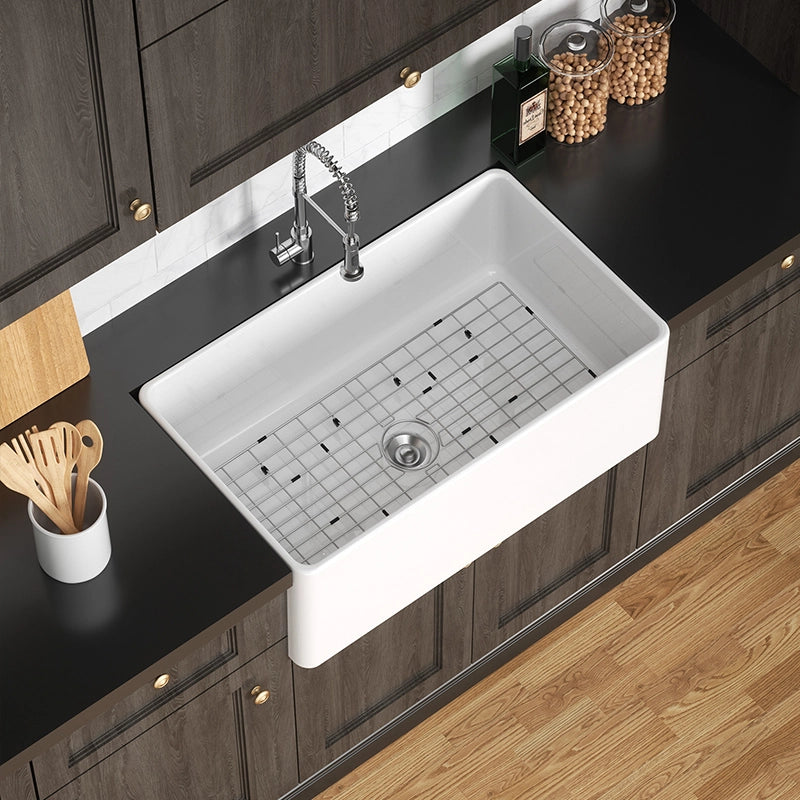
Farmhouse (apron-front) and workstation sinks have grown fast since 2020. The common sizes are 33–36 inches wide with about 22 inches front-to-back. Many are deeper in the basin and include ledges for drying racks, cutting boards, and colanders. That accessory rail turns the sink into a mini workstation, which can free counter space.
These sinks need cabinet modifications: apron-front support, reinforced rails, and careful face-frame trimming. The payoff is strong ergonomics, a larger opening, and a clean look with less splash on the counter edge.
Comparison quick-glance:
| Sink Type | Width Range | Typical Front-to-Back | Common Depths | Minimum Base Cabinet |
| Single-bowl | 24–36" | 22" | 8–10" | 27–36" |
| Double-bowl | 32–48" | 22" | 8–10" | 33–42"+ |
| Farmhouse/Workstation | 33–36" | ~22" | 9–10"+ | 36–42"+ |
| Compact/Prep | 12–24" | 18–20" | 6–8" | 18–27" |
Depth, Ergonomics, and Everyday Workflow
Depth affects comfort, splash, and how you use the space under the sink. A deeper sink holds more and hides dishes, but it can raise your elbow higher and increase reach distance to the bottom.
Choosing depth: 8", 9", or 10"?
-
8 inches works well for shorter users, accessibility needs, and those who want less bend and fewer shadows in the bowl. It’s also common in older homes and tight layouts.
-
9 inches is a great middle ground. It fits sheet pans and tall pots without feeling too deep for most users.
-
10 inches feels generous and keeps spray lower. It’s useful for big cookware and accessory rails. Just watch disposal height and under-sink storage, and consider faucet splash zones.
Think about who will use the sink, how tall they are, and what tasks matter most. If you often wash stockpots, a deeper sink pays off. If you have back strain or kids using the sink, a shallower bowl can help.
Drain location, accessories, and garbage disposal fit
Drain placement affects both workflow and storage. A rear drain opens up the space under the center of the cabinet for pull-out trash or a water filter. A center drain is fine and common but can sit right above your P-trap and disposal, limiting storage. If you plan a garbage disposal, check:
-
Disposal height and width relative to your base cabinet and shelf
-
Baffle and flange clearance for your sink and countertop thickness
-
Trap arm alignment so you avoid awkward S-traps or extra elbows
Track rails, cutting boards, and colanders can extend above the bowl, which helps prep but may bring faucet spray closer to you. Pair a deep bowl with a moderate faucet arc to reduce splash.
How deep should a kitchen sink be?
To choose depth, match user height, cabinet height, and faucet arc. Here’s simple guidance:
| User Height | Counter Height | Suggested Bowl Depth |
| Under 5'4" | 34" standard | 7.5–8.5" |
| 5'4"–5'10" | 36" standard | 8.5–9.5" |
| Over 5'10" | 36" standard or 37"+ custom | 9–10" |
These ranges assume a typical faucet arc and standard counter height. If your faucet is very tall, you may prefer a 9-inch bowl to keep splash in check. For accessibility, shallower depths and forward drains improve reach.
Installation Styles and Size Implications
Your install method changes the real fit and the feel. It can also affect which standard sink sizes work in your cabinet.
Undermount sinks
Undermounts attach under solid surface or stone counters. They give you a clean edge you can wipe into the bowl and a full 22-inch front-to-back use of space. Choose a positive, zero, or negative reveal for the rim. Plan for rails or brackets and confirm there is space for clips, especially with tight cabinets.
Drop-in (top-mount) sinks
Drop-ins are the easiest to retrofit. They set on the countertop and work well with laminate and a wide range of materials. They slightly reduce the usable bowl area because of the rim. Check corner radius and clip clearance, and confirm your faucet hole layout matches your plan.
Farmhouse/apron-front sinks
Farmhouse sinks often run 33–36 inches wide and need apron support, precise cutouts, and sometimes door modifications. They bring the bowl forward, which can help reach and reduce splash on the counter. Watch apron height relative to your cabinet doors and confirm you can center the drain properly with your plumbing.
Can a 33" sink fit a 33" cabinet?
Sometimes, but it’s tight. Many 33-inch sinks require a 36-inch base for safe clearance, rails, and clips. Always check the manufacturer’s spec sheet and cutout template. Face-frame cabinets, corner blocks, or out-of-center plumbing can cut into the needed space. If you only have a 33-inch base, consider a 30-inch sink to keep install stress low and storage options open.

Real-World Scenarios and Mini Case Studies
It helps to see how the numbers play out in real kitchens. Here are three common layouts and what works well in each.
Small kitchen + 30" base cabinet
In a smaller kitchen with a 30-inch sink base, a 24–27 inch single bowl kitchen sink at 22 inches front-to-back and 8–9 inches deep is usually the right size when choosing a kitchen sink size for your new sink installation. You gain more counter landing space, make faucet placement easier, and keep room below for a disposal and a pull-out trash. The result is a simpler install and better day-to-day reach.
Typical family kitchen + 36" base cabinet
With a 36-inch sink base, you can choose a 30-inch single (the standard) or a 36-inch double bowl if you prefer separated tasks. Depths of 9–10 inches handle big pots, baking sheets, and meal prep accessories. Plumbers also like this setup because disposals commonly fit cleanly, and you can still mount water filters or organize cleaners below the bowl. For resale, a 30-inch single remains a safe choice that appeals to most buyers.
Large kitchen + island workstation
In larger spaces, a 33–36 inch workstation or farmhouse sink plus a 15–18 inch prep sink on the island creates two usable zones. One person can cook and rinse produce at the island while another handles cleanup in the main sink. Accessory rails, drying racks, and cutting boards reclaim counter area and keep mess contained. This layout speeds weekday meals and shines during holidays.
Is a 27" sink big enough?
It can be. A 27-inch sink is often ideal in a 30-inch base cabinet, smaller condos, or galley kitchens where you need more counter on both sides. It will fit stockpots, but large sheet pans may sit at a slight angle. If you bake often or use big cookware, consider stepping up to a 30–33 inch sink if your cabinet allows.
2025 Trends, Materials, and Regional Notes
What’s new in kitchen sink sizes and layouts this year? The trends are clear and practical.
Rising adoption of 33–36" farmhouse/workstation sinks
More homeowners are upgrading to 33–36 inch farmhouse and workstation sinks for integrated accessories and a clean prep surface. If you choose one, confirm base cabinet width, add support rails, and plan reveal choices. A workstation in the main sink or on the island can reduce clutter and protect counters.
Materials by use-case: stainless, fireclay, granite composite
-
Stainless steel is light, common, and flexible. Thicker gauges reduce noise and dents. Great for undermount or drop-in.
-
Fireclay gives a classic farmhouse look, is heavy, and needs strong support. It’s very hard and stands up to heat, but weight and sizing tolerances mean careful planning.
-
Granite composite (engineered stone) handles scratches well and often reduces noise. It’s heavier than stainless and may need more support in larger sizes.
Your material choice influences how you mount the sink, the rail style you use, and how much you can overhang with a negative reveal.

Regional standards and cabinet norms (U.S., U.K./EU, APAC)
-
North America uses 3-inch cabinet increments, with common sink bases at 30, 33, and 36 inches. Counters are often 25 inches deep. The standard 22-inch front-to-back sink matches well here.
-
U.K./EU cabinets often follow 300mm modules (e.g., 600mm bases). Counter depths near 600mm (about 23.6 inches) may reduce the available front-to-back dimension slightly. Always check the sink’s metric spec and your counter depth.
-
APAC markets vary. In some urban settings, compact sinks are more common because of smaller kitchen footprints.
What is the most popular kitchen sink size today?
In North America, the most popular single-bowl size remains 30" wide x 22" front-to-back x 9–10" deep, fitting a 36-inch sink base cabinet. For doubles, 36 inches wide is widely used, especially for 60/40 bowls.
Budget, Maintenance, and Longevity Considerations
Size affects cost and upkeep more than some expect. A little planning can keep your budget and cleaning time in check.
Cost by size and style (what changes pricing)
-
Larger widths and deeper bowls often cost more and may need thicker gauges or heavier materials
-
Apron-fronts and workstation ledges add material and hardware
-
Custom cutouts and special rails add labor costs
-
Oversize sinks can drive plumbing changes (new traps or offset drains) that add hours
As a general guide, a 30-inch single-bowl in common materials is budget-friendly to mid-range. Farmhouse and workstation sinks trend higher, and very wide double-bowls may need premium counters or reinforcements.
Cleaning and maintenance by depth and material
Deeper bowls hide dishes and reduce splash, but they can be harder to reach. Stainless is easy to clean and forgiving but can show water spots; sinks with better sound-dampening feel quieter. Fireclay resists stains well, but the glaze can chip if you drop cast iron. Composite sinks are quiet and durable but benefit from regular rinsing to avoid mineral build-up. Bottom grids and rinse racks protect the surface and improve drying.

Storage trade-offs under the sink
The larger the bowl and the deeper the basin, the less room you have under the sink. If you plan a disposal, pull-out trash, a water filtration system, or a hot water dispenser, sketch the space. A rear drain and a 30-inch single often leave the best center area for storage. Double bowls usually center the drain under one side, which can limit where you place pull-outs.
Pro Tips, Checklist, and Next Steps
The last step is about planning. A few minutes here prevents headaches on install day.
10-minute measurement checklist
-
Inside cabinet width and clear opening at the face frame
-
Countertop depth and backsplash height
-
Plumbing centerline and shutoff valve locations
-
Planned faucet height and handle swing clearance
-
Desired sink width, front-to-back, and depth
-
Disposal size and under-sink accessories (trash, filters, mixers)
-
Dishwasher location and whether you need a side you prefer for the drain
Compatibility and install planning
-
Review the manufacturer’s template and spec sheet before cutting
-
Confirm reveal choice (positive/zero/negative) for undermounts
-
Add support rails for heavy sinks or apron-fronts
-
Check faucet holes and accessory spacing
-
Verify trap arm alignment, disposal flange, and air gap needs
-
Leave room for clips, especially in framed cabinets
-
Keep at least a few inches of counter landing zones on both sides of the sink
FAQs
1. What is the size of a standard kitchen sink?
A standard kitchen sink usually measures about 30 inches wide, 22 inches front-to-back, and 9 to 10 inches deep. This size typically fits well in a 36-inch base cabinet, which is what most kitchen layouts are designed around. It’s basically the sweet spot for handling everyday dishes, pots, and pans without feeling too cramped or taking up too much counter space. Of course, some sinks can be a bit larger or smaller depending on the style, but 30" x 22" x 9–10" is what you’ll see in most modern kitchens.
2. What is the most popular size sink?
In North America, the 30-inch single-bowl sink is hands down the most popular choice. It’s big enough to wash large pots and baking sheets but still fits nicely into standard cabinets. For people who prefer a double-bowl setup, a 36-inch sink is pretty common, giving you a little more flexibility for multitasking—like washing dishes on one side while prepping food on the other. Basically, the 30-inch single-bowl is the go-to for most homeowners, while the 36-inch doubles are for those who like a bit more functionality.
3. Is a 30 inch sink standard?
Yes, a 30-inch sink is considered the standard for single-bowl setups in new kitchens. It’s like the “default” choice that manufacturers and designers plan around. If you’re remodeling or building a kitchen, you’ll often see cabinets and countertops measured to accommodate a 30-inch sink because it hits that perfect balance between space, usability, and installation simplicity. It’s not too big, not too small—just right for everyday use.
4. What is the difference between 70/30 and 60/40 sink?
The numbers basically refer to how the bowls are split. In a 70/30 sink, one bowl is bigger—70% of the total space—and the other is smaller, around 30%. This is great if you need one large bowl for big pots or baking sheets and a smaller one for rinsing veggies or soaking utensils. A 60/40 split is more balanced, giving you two moderately sized bowls so both sides can handle decent loads. So, it really comes down to how you use your sink: big vs. versatile.
5. Is a single or double bowl better?
It depends on your kitchen habits. Single-bowl sinks are fantastic if you often wash large pots, pans, or baking sheets because there’s nothing dividing up the space. They’re also easier to clean since there’s just one bowl to worry about. Double-bowl sinks, on the other hand, are excellent for multitasking—you can wash dishes in one side while prepping food or rinsing veggies in the other. If you like a tidy, organized workflow, double bowls give you more flexibility. It’s really about what fits your lifestyle and kitchen routine.
References


Leave a comment
This site is protected by hCaptcha and the hCaptcha Privacy Policy and Terms of Service apply.