
A soft close shower door is worth considering when slamming, noise, or control of a heavy glass panel is a recurring concern. The mechanism slows the door near the end of its travel, reducing the sharp impact of an ordinary close.
However, soft close adds cost, moving parts, and stricter compatibility requirements. It may offer little value in a lightly used bathroom or for people who prefer a fast, simple closing action.
Who Benefits and Who Should Skip It
Best for Noise, Safety, and Easy Closing
Soft close is most useful when household members regularly push the shower door too hard. It can be particularly appealing in apartments, shared bathrooms, or bathrooms near bedrooms where a sudden bang is disruptive.
By controlling the final movement, the mechanism can also make a heavy glass panel feel easier to guide with wet or soapy hands. The slower finish may reduce abrupt contact at the stop or frame. It does not eliminate pinch or impact risks, so the door still needs to be used carefully.
Safety also depends on the quality and specification of the glass itself. The U.S. Consumer Product Safety Commission (CPSC) notes that shower doors and enclosures are included under safety glazing requirements designed to reduce injury risks from glass breakage. A soft close mechanism can improve door movement, but it should always be paired with properly specified safety glass and correct installation.
The upgrade has the clearest value when it addresses an existing problem. If the current door is repeatedly slammed or difficult to control, soft close has a practical purpose beyond appearance.
Poor Fit for Tight Budgets and Impatient Users
A soft close shower door may be unnecessary in a guest bathroom or a shower that receives limited use. It improves the closing action but does not change the enclosure’s core function.
The controlled final movement can feel slow to someone accustomed to pushing a door shut in one quick motion. Once the damper engages, forcing the panel to move faster may make the feature feel more obstructive than helpful.
Consider skipping the upgrade if:
- Nobody in the household has a problem with slamming or door control.
- The project budget has more important priorities.
- You prefer simple hardware with fewer moving parts.
- You cannot confirm compatibility with the planned glass and layout.
- Household members dislike waiting for a damper to complete the close.
What Soft Close Actually Does

Soft close controls speed near the closed position. It does not necessarily move the door from fully open to fully closed.
That distinction matters because a self closing shower door may use hinges or other hardware that actively return the panel toward its resting position. Some systems combine self-closing and soft-closing features, but the terms are not interchangeable. Check how the door behaves when it is fully open, partially open, and almost closed.
Swing Doors Engage Near the Final Angle
On a swing door, the hinge or closer generally takes control only near the end of the swing. The user moves the panel toward the frame; the mechanism then slows it and may pull it into its final position.
A door left wide open may remain open. Even after the closer engages, seals, alignment, and hardware adjustment can affect whether the panel reaches its intended resting point.
This is a common expectation gap. Soft close describes the final movement, not necessarily automatic closing from every position.
Sliding Dampers May Work One Way
A soft close sliding shower door generally uses a catch and damper in or near the track. As the active panel reaches the catch, the damper controls the remaining travel.
Do not assume that every panel or movement direction is damped. A design may provide soft close only on the main moving panel or only as that panel approaches the closed position. Some doors may provide controlled movement at both ends, but this must be confirmed for the specific configuration.
When exploring sliding shower door configurations, check which panel moves, where the damper engages, and whether it operates in one or both directions.
Soft Close Does Not Mean Silent
Soft close reduces the impact at the end of travel, but other sounds may remain. Rollers can be heard along the track, seals may rub, hinges may move, and a latch may still click.
Shoppers looking for quiet shower door rollers should therefore evaluate the entire door system rather than relying on the soft-close label. Clean tracks, suitable seals, sound hardware, and proper alignment all affect perceived noise.
Expect a softer finish, not a silent enclosure.
When the Upgrade Justifies Its Cost
Is It Worth the Extra Cost?
The upgrade is easiest to justify in a frequently used bathroom where it repeatedly solves a problem. Noise near a sleeping area, habitual slamming, or difficulty controlling a heavy panel can make the smoother action meaningful.
The value is usually lower in a secondary bathroom or when soft close is being selected only because it appears on an upgrade list. The total ownership cost may also include precision installation, later adjustments, and replacement hardware—not just the initial mechanism.
Before deciding, ask:
- Can the closing speed be demonstrated?
- Who handles future adjustments?
- Are replacement dampers, catches, hinges, or rollers available?
- Will servicing the mechanism require removing other parts of the enclosure?
Luxury Feel Alone May Not Justify It
Soft close can complement the refined feel of a frameless or carefully finished bathroom. A controlled glide often feels more polished than glass meeting a stop abruptly.
That preference is subjective. Test an installed door at your normal pace before paying extra. A slow finish that feels luxurious during a demonstration may feel inconvenient during a rushed morning.
Compatibility Can Decide Whether It Works

Soft-close hardware is not universal. It must match the door type, panel weight, glass thickness, mounting arrangement, and direction of travel. A basic enclosure with correctly matched hardware may be more reliable than a poorly specified soft close shower enclosure.
Can It Fit an Existing Door?
Soft-close hardware can sometimes be added to an existing door, but retrofitting is not always a simple matter of attaching a damper. The existing hinges, track, rollers, catches, and glass preparation must suit the new mechanism.
Do not drill, cut, or otherwise modify an existing glass panel to fit a generic kit. A qualified glass professional should confirm that the complete assembly matches the hardware requirements. If extensive component replacement is required, replacing the door may be more practical than modifying it.
You can review different shower door layouts before assuming an existing swing or sliding system can accept soft-close hardware.
Glass Weight and Thickness Must Match
Dampers, hinges, rollers, and catches are designed for defined operating limits. A panel that does not match those limits may fail to engage, stop short, move too quickly, or place excessive stress on the hardware.
Broad descriptions such as “for frameless glass” are not enough. Obtain written confirmation that the mechanism suits the exact panel and mounting configuration. Compatibility should be verified before the glass is ordered, not after installation begins.
Misalignment Can Prevent Reliable Closing
Soft-close performance depends on smooth and accurate door movement. Out-of-plumb walls, loose rollers, a shifting hinge, or an incorrectly positioned catch can prevent consistent engagement.
The door may then close softly on one attempt but need an extra push on the next. If the opening is not square or plumb, the installer should determine whether the chosen hardware can be adjusted for those conditions.
Daily Use and Long-Term Maintenance Considerations

Slower Closing Can Disrupt Quick Exits
A damper deliberately resists rapid movement near the end of travel. That can be frustrating when someone steps out quickly for a towel or expects the panel to close immediately behind them.
Door movement and closing speed can also affect ease of use for different people. Different users may prefer different closing speeds. One person may appreciate the controlled finish, while another may find the damper restrictive. If possible, test the mechanism at a realistic pace before choosing the door.
Does It Require More Maintenance?
Soft-close hardware does not necessarily require intensive maintenance, but it introduces additional parts that can collect residue, loosen, or need adjustment.
Keep sliding tracks and catch areas clear of soap buildup and debris. If the door begins rubbing, changes speed, or fails to close fully, inspect the accessible rollers, seals, catches, and mounting points according to the manufacturer’s care instructions.
Do not apply an unapproved lubricant. Some products can attract dirt or affect seals and finishes. Ask in advance whether routine adjustment is owner-accessible or should be performed by the installer.
Wear Can Cause Inconsistent Engagement
Rollers, hinges, and catches can shift or wear over time. A sliding trigger may stop meeting its catch correctly, while a swing door may slow down but stop before reaching the seal.
A sudden change in movement should be investigated rather than overcome with extra force. Cleaning or adjustment may restore normal operation; loose or damaged components may require professional service.
Before You Choose

- Confirm whether the system is soft closing, self closing, or both.
- Ask which panels and movement directions receive soft-close action.
- Verify the exact glass thickness, weight, and mounting compatibility.
- Test the speed and engagement point at your normal pace.
- Determine whether the door closes from wide open or only near the frame.
- Ask who provides adjustments and whether replacement parts are available.
- Choose the feature for a recurring practical benefit, not the label alone.
Compare HOROW Sliding Shower Door Options
Once you have confirmed the closing mechanism, panel movement, and hardware compatibility you need, these HOROW sliding shower door options can be compared by configuration and finish. Check the individual product page for the exact closing hardware before ordering.
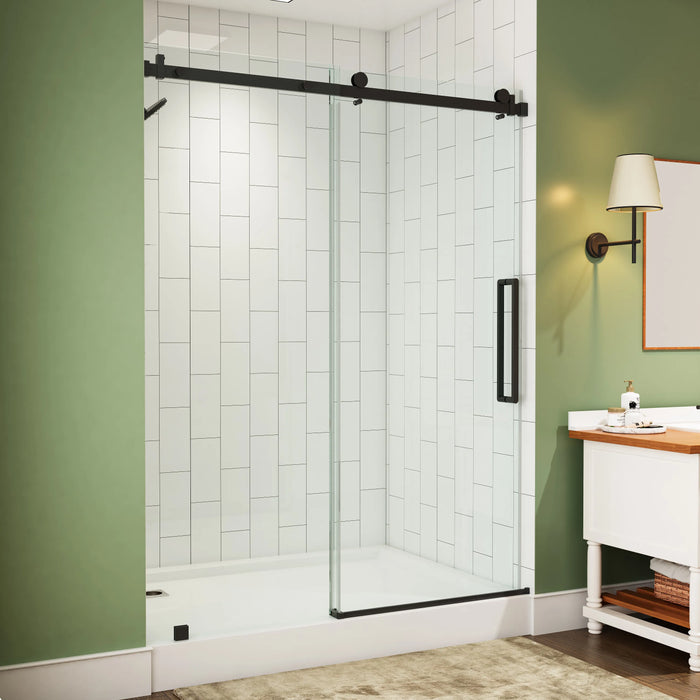
HOROW TE6076-MB
A black frameless sliding shower door option with a 60-inch size designation. It can be compared when a black finish and sliding configuration suit the planned bathroom layout.
View TE6076-MB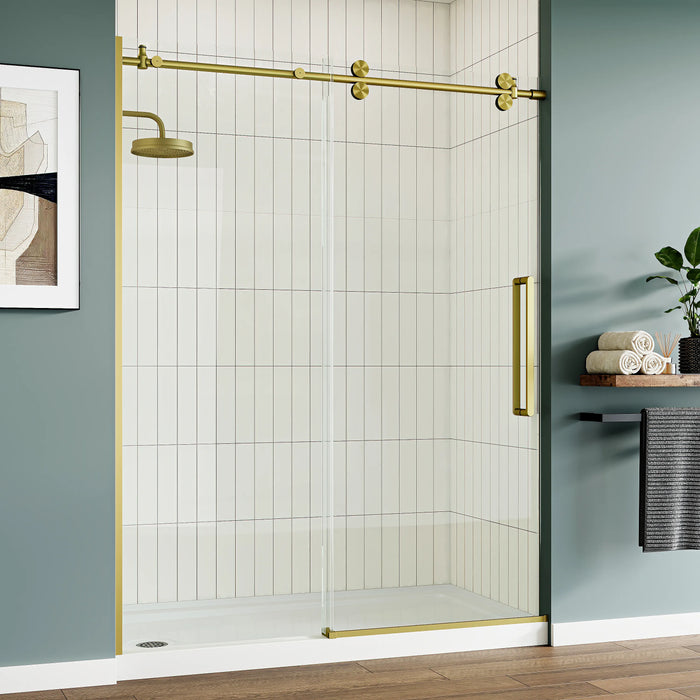
HOROW MI6076-SG
A brushed gold frameless sliding shower door with 8 mm glass. It provides another configuration to compare when the finish and sliding-door layout are important parts of the bathroom plan.
View MI6076-SG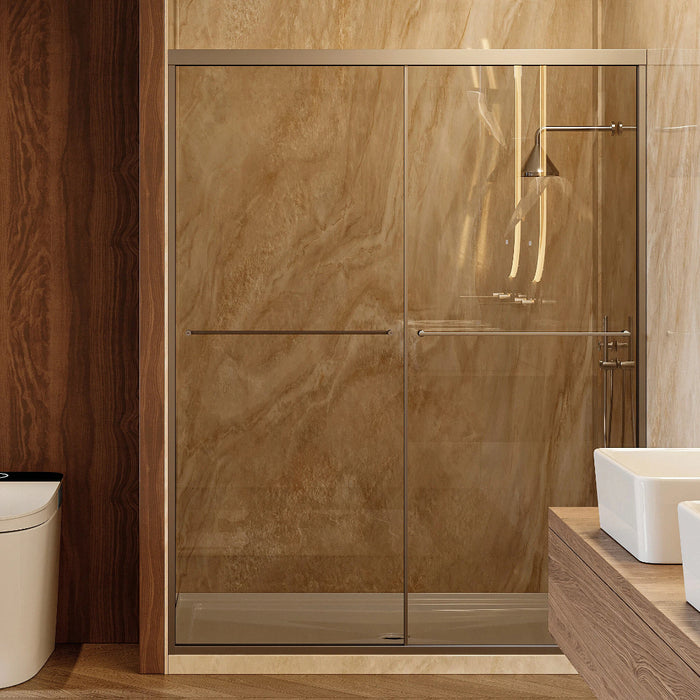
HOROW K2-BN
A brushed nickel shower door with an ultra-narrow design. It can be considered when a brushed nickel finish and a narrower visual profile fit the planned shower enclosure.
View K2-BNClosing behavior and hardware compatibility can vary by configuration. Confirm the exact closing mechanism, installation requirements, and compatibility on the product page before ordering.
Common Questions
Does a soft close shower door close itself?
Not always. A soft close shower door mainly helps slow and control the closing process rather than moving the entire panel automatically. If the door is opened widely, it may stay in place until someone pushes it closer to the closing area. This feature is designed for a smoother finish, not a fully automatic closing experience.
Can soft-close hardware be added to any shower door?
No. Adding soft-close hardware depends on whether the existing door structure can support the new components. The glass size, mounting style, and current hardware all need to match the requirements of the soft-close system. In some cases, changing the entire door setup may be easier than modifying an older enclosure.
Does soft-close hardware require more maintenance?
Yes, it may need occasional checks compared with basic shower door hardware. Extra parts such as dampers, catches, or adjustable components can need cleaning or minor adjustments over time. Regular care helps prevent issues like uneven movement or incomplete closing.
What is the main reason buyers regret the upgrade?
Many buyers regret the upgrade when they do not notice enough daily improvement after installation. The feature may not feel valuable in a bathroom where the door already works well and noise or impact is rarely an issue. Testing the door before purchase can help confirm whether the slower closing action matches your preferences.


Leave a comment
This site is protected by hCaptcha and the hCaptcha Privacy Policy and Terms of Service apply.