
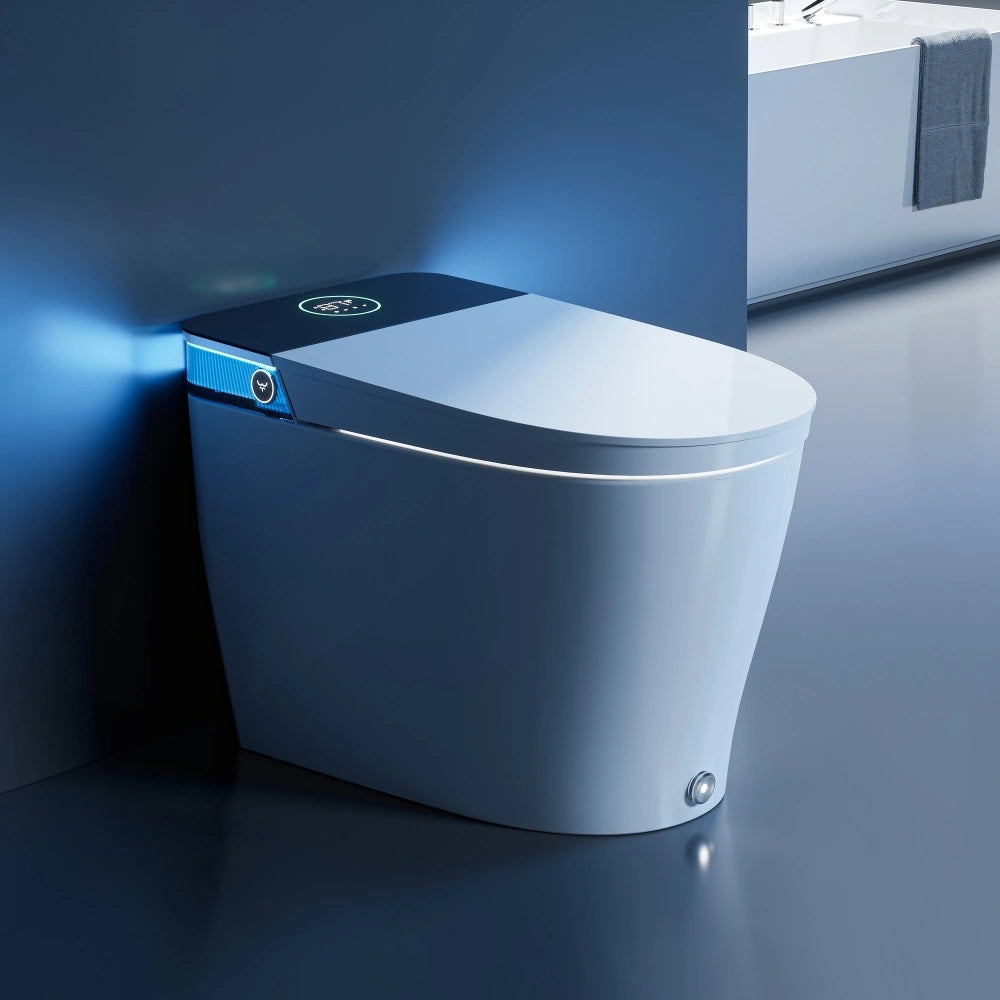
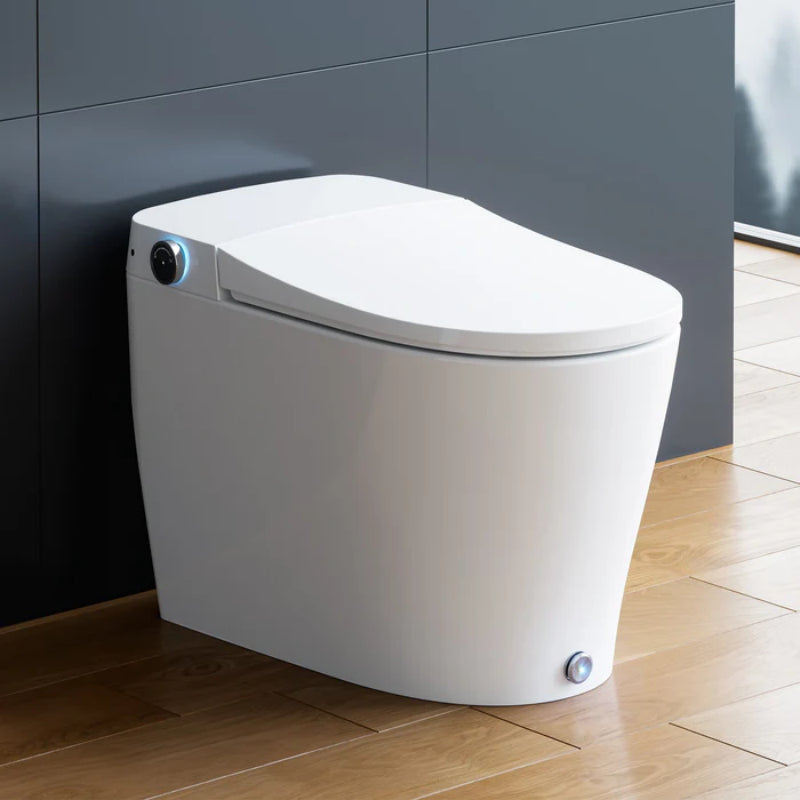
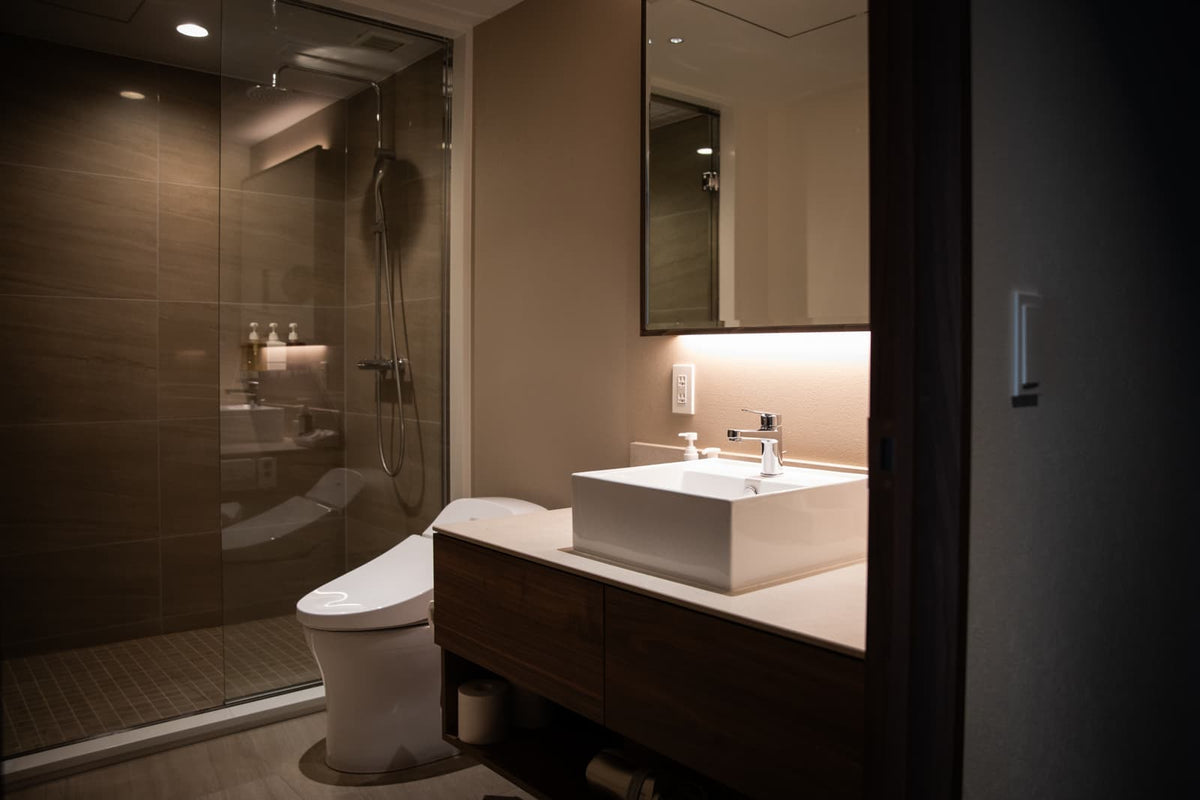
A smart toilet with night light uses integrated, low-level illumination to make the toilet easier to locate in a dark bathroom. It can be worthwhile if you frequently use the bathroom at night and want to avoid a bright overhead fixture.
However, “night light” is not a standardized function. Depending on the model, the light may remain on, respond to ambient darkness, or require manual control. It may illuminate only the bowl or base rather than the surrounding floor.
The feature is best treated as a small convenience—not the main reason to choose a smart bidet toilet. Installation fit, controls, cleaning requirements, and service support matter more over the product’s life.
Decision snapshot:
- Consider it if you regularly use the bathroom at night and the toilet is visible from your approach path.
- It may help children, older adults, and guests locate the fixture, but it does not replace hallway or full-room lighting.
- It may be redundant if you already have a dimmer, occupancy sensor, or reliable low-level light.
- Do not assume the light detects motion, illuminates the entire bathroom, or operates during a power outage.
Who Benefits From the Night Light?
Nighttime users avoiding bright overhead lights
The clearest benefit is reduced reliance on bright bathroom lighting during nighttime visits. A soft glow near the toilet can provide a useful visual reference without lighting the whole room.

This is most helpful when the toilet can be seen from the doorway. It may also be convenient when the main light switch is outside the bathroom or difficult to locate in the dark.
Families may appreciate the feature when children use the bathroom alone at night. Older adults and overnight guests may also find the visual reference useful in an unfamiliar or dark space.
However, an integrated toilet light is local illumination. It may show the bowl, base, or nearby floor without revealing objects, wet areas, steps, or other obstacles along the route. Separate path lighting may still be needed.
Homes with low-level lighting should skip it
The night light may add little if the bathroom already receives enough soft light from a hallway fixture, dimmer, plug-in light, or occupancy sensor.
Consider the entire path from the bedroom to the toilet. The built-in light only helps once it becomes visible. It cannot illuminate a dark hallway or an obstructed bathroom entrance.
The feature also has limited value for people who rarely use the bathroom at night. In that situation, it may function mainly as a visual detail rather than a practical reason to choose one automatic toilet over another.
Will the Light Match Your Expectations?
Is the Night Light Motion-Activated?
Do not assume that a “smart” toilet automatically detects someone approaching. Night-light controls vary significantly by model and may include:
- Manual on and off
- Continuous operation
- Activation when the room becomes dark
- Control through a remote or side panel
Ambient-light detection is different from motion detection. A darkness-sensitive light may remain on whenever the room is dark, regardless of whether anyone is present.
The setting may also require a long button press or a particular remote command. Some models may limit when settings can be changed. Read the operating instructions before purchase if automatic activation is important to you.
Brightness and coverage may be unclear
Product descriptions do not always explain brightness, color, beam direction, or floor coverage. A photograph may confirm that a light exists without showing how useful it will be in a genuinely dark bathroom.
A dim light might identify the bowl but provide little visibility around it. A brighter or more exposed light could be distracting in an en suite bathroom. Dark flooring, nearby cabinets, wall placement, and the toilet’s orientation can all affect the visible glow.
Look for a demonstration of the exact model in low light when possible. Avoid assuming that every smart toilet with night light will provide the same level of illumination.
Controls vary significantly between models
Before choosing a model, determine:
- Whether the light can be turned off completely
- Whether it responds to motion, darkness, or neither
- Whether the remote is required to change its setting
- Whether it operates independently from other smart toilet features
- Whether it returns to the selected mode after power is restored
These details are more informative than a night-light icon alone. Controls should also be simple enough for everyone who regularly uses the bathroom.
You can review the available HOROW smart toilets and compare the listed control information for individual models rather than assuming their lighting functions operate identically.
What Setup Requirements Still Apply?
Does It Require Electrical Power?
An integrated night light is part of an electrically powered toilet. The same power supply may operate other functions, such as bidet controls, seat heating, drying, or automatic operation, depending on the model.
Check the exact product instructions before installation. Power requirements and connection details are model-specific, so the presence of a nearby outlet does not by itself confirm that the location is suitable.
Because the light depends on electrical power, it should not be treated as emergency lighting.
Rough-in and water connections still matter
A night light does not simplify the toilet’s plumbing or physical fit. Drain alignment, floor condition, water inlet placement, hose routing, and leak checks remain important.
Compare the product’s installation information with the actual bathroom before purchasing. This is especially important when replacing an existing toilet, because a new smart toilet may not use the room’s current connections in the same way.
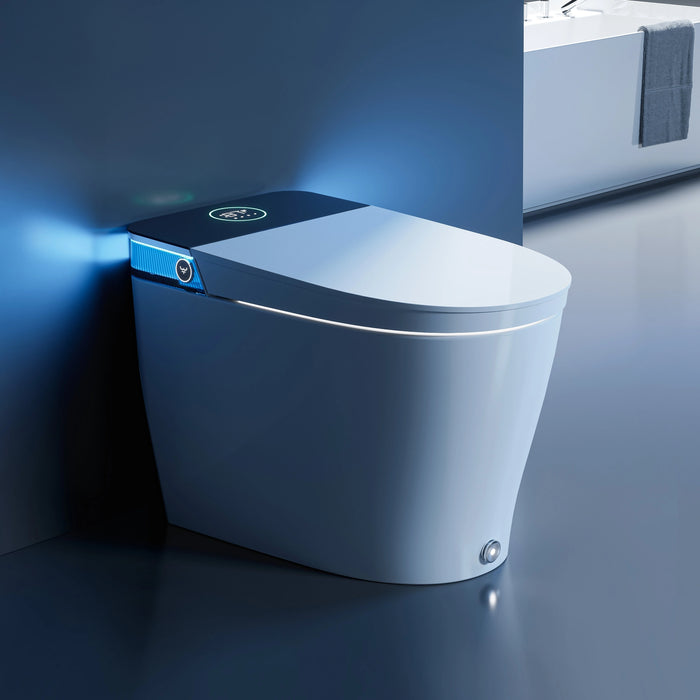
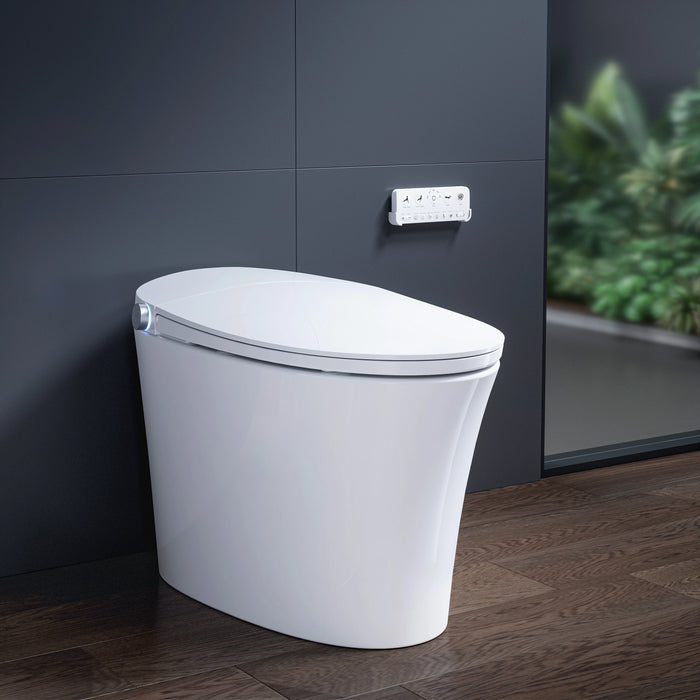
For example, consult the installation and control details on the HOROW T33 product page or HOROW T38 product page when considering those specific models. Use the documentation for the model you intend to install rather than relying on general smart-toilet descriptions.
HOROW Smart Toilets to Compare
Review the individual product pages for model-specific installation and control details before choosing a toilet for your bathroom.
Check visibility from your approach path
Stand at the bathroom entrance and consider where the toilet’s light will appear relative to doors, walls, and cabinets. A light aimed toward the side or rear may create a soft glow without making the seat easy to locate.
Check the view with the bathroom door fully and partly open. The feature is more useful when it becomes visible as you approach, not only after you are already beside the toilet.
How Does Maintenance Affect Convenience?
Does It Require More Maintenance?
The light itself may not create a routine maintenance task. The larger consideration is that it belongs to a smart bidet toilet containing electrical controls and water-connected components.
Normal ownership may involve cleaning the bowl and exterior, checking water connections, and following model-specific instructions for nozzles or filters. Those responsibilities are not caused by the night light, but they affect whether the complete product is convenient to own.
Cleaning requires care around electrical areas
Cleaning instructions for smart toilets may call for wiping electronic areas with a soft, damp cloth rather than spraying or washing them directly. Instructions may also restrict abrasive, acidic, or otherwise harsh cleaning products.

Read the care section of the exact manual before buying. Everyone responsible for cleaning the bathroom should understand how to clean around the controls and electrical housing without exposing them to unnecessary water or unsuitable products.
Filters and leaks add ownership tasks
Some smart toilets include water inlet filters that must remain clear. Water connections may also require inspection if moisture appears or bidet performance changes.
These tasks are separate from the night light, but they are part of owning the toilet that contains it. Weighing the glow without considering the rest of the product can lead to an incomplete decision.
What Could Complicate Long-Term Ownership?
What Happens During a Power Outage?
Unless the documentation specifically describes backup operation, expect an integrated night light to be unavailable when the toilet loses power.
Check which other toilet functions remain usable without electricity as well. Power-loss behavior varies by model and is more consequential than losing the light alone.
Confirm whether the light is user-replaceable
Built-in lighting may be part of an electronic assembly rather than a replaceable bulb. Product information does not always explain what happens if the light dims, flickers, or stops working.
Before purchase, ask whether the lighting component can be replaced separately, whether service requires removing other components, and how replacement parts or repairs are handled. This is particularly relevant if the light is an important reason for your purchase.
Judge the toilet beyond one convenience
A night light should be a secondary benefit. Prioritize physical fit, everyday controls, normal toilet operation, cleaning access, power-loss behavior, and available service information.
If those factors suit your bathroom, integrated lighting can be a useful finishing feature. If they do not, the light will not compensate for daily installation, operation, or maintenance friction.
Before You Choose
- Confirm whether the light is manual, continuous, darkness-sensitive, or motion-activated.
- Check how to change the setting and whether the light can remain off.
- Consider brightness, direction, and visibility from the bathroom entrance.
- Verify the toilet’s model-specific power, drain, water, and installation requirements.
- Read the cleaning, filter, and leak-check instructions.
- Ask how the lighting component is serviced if it fails.
- Choose the toilet for its overall fit and operation, not for the night light alone.
Common Questions
What is a smart toilet with night light?
It is an electrically powered toilet with integrated low-level lighting around part of the bowl, seat, or base. The activation method and illuminated area depend on the model.
Does every smart toilet light detect motion?
No. Some lights are manually controlled, remain on continuously, or respond to ambient darkness. Motion activation must be confirmed in the exact model’s documentation.
Will the night light illuminate the whole bathroom?
Do not count on it. Integrated lighting is generally intended to make the toilet or nearby area visible, not to provide complete room or pathway lighting.
Is a smart toilet with night light worth it?
It can be worthwhile if you frequently use the bathroom at night, dislike bright overhead lighting, and can see the toilet from your approach path. Otherwise, treat it as an optional convenience rather than a deciding feature.


Leave a comment
This site is protected by hCaptcha and the hCaptcha Privacy Policy and Terms of Service apply.