
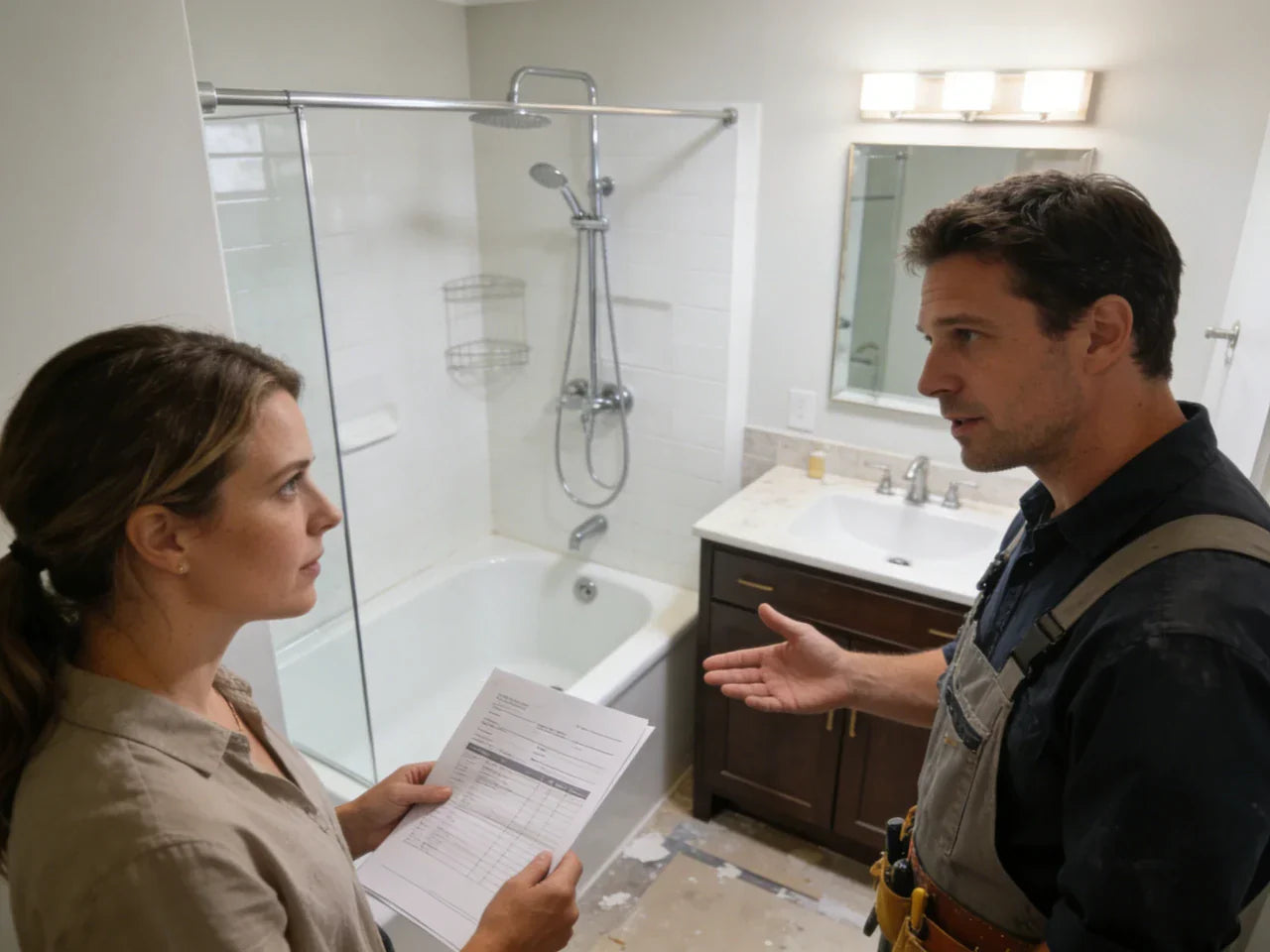
Small bathroom remodel cost is one of the most searched renovation questions because even a 25–50 sq ft room can jump from a simple refresh to a pricey rebuild fast. In 2025, many homeowners land in the middle: not the cheapest weekend DIY, and not a luxury spa. That “normal” middle price is reachable, but only if you understand what drives it—especially tile work, labor rates, and whether you move plumbing. This guide starts with the national range and quick benchmarks, then breaks costs down line-by-line (labor, plumbing, tile, fixtures), explains how size and location change pricing, and ends with real examples, savings strategies, and a quote checklist to help you avoid budget surprises.
Small bathroom remodel cost in 2025: quick answer
Before diving into the national averages, it’s helpful to understand how the small bathroom remodel cost can vary based on your bathroom layout, type of remodel, and the final cost factors—including labor and material expenses, additional costs, and permit fees—so you can get an accurate sense of the overall bathroom remodel budget and what your total cost of a small bathroom might be.
National averages & typical ranges (2025 data)
In 2025, the average cost of small bathroom remodel projects typically lands in a wide band because “remodel” can mean anything from paint and a new vanity to a full gut renovation with new pipes.
-
A typical small bathroom (about 25–50 sq ft) runs $3,000–$15,000.
-
The most common “standard full bath” spend is $6,000–$12,000.
At-a-glance range table (Basic vs Midrange vs Gut)
| Scope tier | Typical total cost (25–50 sq ft) | What it usually means |
| Basic refresh | $1,500–$6,000 | Paint, simple fixture swaps, minor upgrades |
| Midrange full remodel | $6,000–$12,000 | Replace vanity/toilet, update tub or shower, tile, lighting, fan |
| Gut renovation | $12,000–$15,000+ | Down to studs, new waterproofing, rough plumbing/electrical, repairs |
If you’re asking, “How much does it cost to remodel a small bathroom in 2025?” the most useful planning number for many homes is $6,000–$12,000, because that covers the common full-bath update without major layout changes.
Bathroom remodel cost per square foot (what’s realistic)
A realistic bathroom remodel cost per square foot for small bathrooms is usually $70–$250/sq ft. Small spaces can skew higher per square foot because the room still needs a lot of fixed-cost work (plumber, electrician, waterproofing, permits), even when the footprint is tiny. Many standard projects land near $150/sq ft.
Cost-per-sq-ft chart (low/avg/high bands)
| Cost band | Typical $/sq ft | Best fit for |
| Low | $70–$110 | Refresh work; minimal tile; no plumbing moves |
| Average | $120–$180 | Most midrange full remodels |
| High | $190–$250+ | Heavy tile, custom shower, plumbing/electrical changes |
If your bathroom is 40 sq ft and you plan a standard remodel at about $150/sq ft, a simple budget check puts you around $6,000 before you add a contingency for hidden issues.
PAA: “How much does a small bathroom remodel cost in 2025?”
A small bathroom remodel in 2025 typically costs $6,000–$12,000 for a standard full bath, with a broader national range of $3,000–$15,000 depending on materials, labor rates, and whether you move plumbing or open walls.
Quick estimator (non-calculator version): pick your size + scope
Use this to get a fast planning range. It’s not a bid, but it helps you set a budget before you call a contractor.
| Bathroom size | Refresh (cosmetic) | Standard full remodel | Gut + system work |
| 25 sq ft | $1,800–$3,800 | $3,500–$6,300 | $6,500–$10,000+ |
| 35 sq ft | $2,400–$4,800 | $4,800–$8,800 | $8,500–$12,500+ |
| 50 sq ft | $3,000–$6,000 | $6,000–$12,500 | $12,000–$15,000+ |
One quick question to ask yourself: are you trying to make it “clean and updated,” or are you trying to “fix the room for the next 20 years”? That answer usually decides the scope tier.
Costs by bathroom size & layout (5x7, 5x8, 5x10)
Understanding the small bathroom remodel cost isn’t just about square footage—labor and material costs, porcelain tile choices, bathroom fixtures, and skilled labor all play a key role. This cost guide shows how the average cost of a small bathroom can vary, why the overall cost increases with layout changes, and how your bathroom remodel can range depending on whether you keep the footprint or relocate plumbing, helping you plan an accurate cost for your small bathroom renovation.

Size benchmarks (square footage pricing)
Size matters, but layout matters more. Still, square footage is a helpful starting point because it ties directly to flooring, wall area, and tile quantities.
| Bathroom size | Approx. area | Typical $/sq ft range | Typical total cost range |
| Very small | 25 sq ft | $70–$250 | $1,800–$6,300 |
| Small | 50 sq ft | $70–$250 | $3,500–$12,500 |
A small bathroom may cost less in materials, but it doesn’t always cost less in labor. A plumber still has to set a toilet, connect a vanity, and test for leaks. An electrician still has to wire a fan and lighting safely. Those “fixed” tasks are why a compact bathroom can feel expensive for its size.
5x8 bathroom remodel cost (most common small full bath)
A 5x8 bathroom remodel cost is often the best “real world” reference because it’s a common full-bath layout (toilet + vanity + tub/shower). In 2025:
-
A standard 5x8 remodel often lands around $6,000–$12,000.
-
It can reach $15,000 (or more) when you do a gut job, add heavy tile, or relocate plumbing.
Sample 5x8 budget “pie” (typical split)
| Category | Typical share | What’s inside |
| Labor | ~40% | Demo, install, tile setting, finish work |
| Materials | ~40% | Tile, backer board, waterproofing, drywall, paint |
| Fixtures | ~20% | Vanity, toilet, faucets, lighting, fan, mirror |
That split is why two bathrooms can look similar in photos but cost very different amounts. If one has a tiled shower with a custom pan and waterproofing detail work, labor climbs fast.
Layout changes vs “keep the footprint” (biggest cost lever)
If you remember only one cost rule, make it this: keeping the layout usually saves the most money. Many homeowners see ~20–30% savings when they avoid moving plumbing and major electrical.
Here’s what “no-move” vs “relocate” really means in a small bathroom:
-
No-move remodel: Toilet stays where it is, vanity stays on the same wall, tub/shower stays in the same alcove. You still get a big visual upgrade because most of what you see is finish material.
-
Relocation remodel: You shift the toilet or tub/shower, reframe walls, and reroute pipes and venting. This adds rough-in labor, patching, and inspection steps.
Before/after layout sketch (simple)
| NO-MOVE (lower cost) | RELOCATE (higher cost) |
| [ Tub/Shower ] | [ Walk-in Shower ] |
| [ Alcove ] | [ new drain ] |
| [ Vanity ] [ Toilet ] | [ Toilet ] [ Vanity ] |
| (plumbing stays put) | (plumbing + vent changes) |
The “bathroom change cost” people don’t expect is not the new vanity—it's what happens behind the wall when you move supply lines, drains, and vents.
How much does a 5x8 bathroom remodel cost?
In 2025, a 5x8 bathroom remodel typically costs $6,000–$12,000 if you keep the footprint and choose midrange finishes. Costs move toward $12,000–$15,000+ when you do a gut renovation, install a tile shower system, or relocate plumbing (which often adds $1,000+ just for the move, before patching and finishes).
Itemized cost breakdown (what you pay for)
To get a clearer picture of the real costs, it helps to break down your small bathroom remodel cost into labor and material costs, fixtures, and permit costs. Understanding how labor costs, higher labor for wet-area work, and the cost of a bathroom remodel typically ranges can reveal why the final cost anywhere from a simple refresh to a full gut job can increase, and how the cost of your remodel meets your budget and design goals.
Labor vs materials vs fixtures (typical allocation)
Most homeowners want a single number, but your budget becomes clearer when you picture the three big buckets. A common split for bathroom remodeling is:
-
Labor ~40%
-
Materials ~40%
-
Fixtures ~20%
Stacked-bar style comparison (by scope)
| Scope | Labor | Materials | Fixtures |
| Refresh | 30–40% | 30–40% | 20–40% |
| Standard full remodel | ~40% | ~40% | ~20% |
| Gut renovation | 45–55% | 30–40% | 15–25% |
Why labor rises in a gut job is simple: more steps, more trades, and more time waiting on inspections and drying/curing.
Core components (with 2025 cost ranges)
This is where your total project cost comes from. In a small bath, a few line items can swing the final price by thousands.
Master cost breakdown table (with typical % of budget)
| Component | Typical 2025 cost range | Typical % of budget |
| Demolition & disposal | $600–$3,000 | 10–15% |
| Plumbing | $200–$3,000 | 10–20% |
| Electrical & lighting | $500–$2,500 | 8–15% |
| Fixtures (sink/vanity/tub/shower/toilet) | $300–$4,000 | 15–25% |
| Flooring & tile | $2,000–$6,000 | 20–35% |
| Walls/paint/countertops | $300–$3,800 | 5–20% |
| Permits & misc. | $100–$1,000 | 2–5% |
A quick reality check: if you want a tile-heavy look in a small bathroom, tile can become the budget. That’s not because tile itself is always expensive; it’s because tile work is slow, detailed labor.
Wet-area upgrades (where costs spike)
Most budget surprises happen in the wet zone: tub/shower walls, shower pans, waterproofing, and drains. If you’re deciding between a small bathroom with tub and a walk-in shower, the price difference often comes down to build complexity.
A prefab tub/shower unit (or a simple surround) is usually cheaper because it reduces labor and waterproofing steps. A custom tile shower is beautiful, but it asks for more prep: a flat, strong substrate, careful waterproofing, and time for thinset and grout work.
Here are common add-ons that can raise the price:
| Upgrade | Typical added cost | Why it adds cost |
| Shower niche | $150–$400 | Extra framing + waterproofing detail |
| Glass door | $600–$1,500 | Measuring + hardware + installation |
| Linear drain | $400–$1,200 | More precise slope + drain placement |
| Heated floor (small area) | $500–$1,500 | Electrical + thermostat + floor build-up |
If you’ve been collecting 8x5 bathroom remodel ideas online, watch for this pattern: many photos show full tile, glass, niches, and special drains. Those details are exactly where budgets climb.
PAA: “What is the most expensive part of a bathroom remodel?”
The most expensive part is often the wet area, especially tile + waterproofing + labor-intensive plumbing/electrical. Tile showers cost more because they require careful prep, waterproofing, and skilled installation. Moving plumbing can also be a top cost driver because it may involve opening walls, rerouting drains/vents, and inspections.
Scope tiers: refresh vs full remodel vs gut renovation
A lot of budget stress comes from one problem: people use the word “remodel” to mean three different projects. Pick the tier first, then price it.
Cosmetic refresh (budget bathroom renovation cost)
A refresh usually targets $1,500–$6,000. It’s the right fit when the room works fine, but looks tired. You might paint, replace a mirror and light, upgrade faucets, swap a toilet, and update a small amount of flooring. In some homes, reglazing a tub can change the whole feel without ripping anything out.
If your goal is a cleaner look for a guest bath, a refresh can be a smart move because you’re not paying for deep system changes.
Standard full remodel (midrange sweet spot)
A standard full remodel typically targets $6,000–$12,000. This is the “most common” small bath project: new vanity and top, a new toilet, updated lighting and ventilation, and replacing a tub or shower while keeping the same layout.
This tier is also where many homeowners get the best balance. The bathroom feels new, but you’re not paying for major rerouting or rebuilding. If you’re trying to answer, “How much should I budget for a small bathroom remodel?” and you want a normal full update, start here: plan around $8,000–$10,000, then add a contingency.
Gut remodel (down-to-studs + systems)
A gut remodel usually starts around $12,000–$15,000+. This is for rooms with old plumbing, damaged subfloors, mold risk, or outdated electrical. You remove finishes to the studs, rebuild properly, and often upgrade ventilation, wiring protection, and waterproofing.
Gut work sounds extreme, but sometimes it’s the safer choice. If there’s repeated water damage around a tub, for example, patching the surface can hide a deeper problem.
Comparison table (scope → inclusions → timeline → risk)
| Tier | Inclusions (typical) | Typical timeline | Risk of hidden damage |
| Refresh | Surface upgrades, some fixture swaps | 2–7 days | Low to medium |
| Standard full remodel | Replace major fixtures, new finishes, minor rough-in | 2–4 weeks | Medium |
| Gut renovation | New waterproofing, rough plumbing/electrical, repairs | 4–6+ weeks | High |
The “risk” column matters because hidden damage is one of the biggest reasons a bathroom remodel cost grows after work starts.
Key factors that change your final price
While the base labor and material costs set the starting point, the final price of your small bathroom remodel can increase costs in unexpected ways. From permit costs to regional labor rates, remodel ranges typically vary, and the average cost of a bathroom can differ depending on layout, fixtures, and whether it’s a small guest or full bathroom. Understanding these key cost factors helps you plan a remodel that meets your budget and avoids surprises.
Location & contractor rates (regional variation)
Labor is local. A small bathroom in a high-cost metro area can cost far more than the same work in a smaller market. If you’re comparing prices online and thinking, “Why is my quote so high?” location is often the answer.
Heat-map style cost ranges (simple national view)
| Area type | Typical price level | What to expect |
| Lower-cost regions | Low to mid | More projects fall near $3k–$9k |
| Mid-cost regions | Mid | Many standard remodels hit $6k–$12k |
| High-cost metros | High | Standard work can push $10k–$15k+ |
If you live in a high-cost area, the best way to stay on budget is not chasing the cheapest labor. It’s controlling scope: keep the footprint, choose simpler wet-area finishes, and lock allowances early.
Materials & finish level (2025 “midrange” trends)
Materials can swing your price, but not always in the way people expect. A vanity upgrade might add a few hundred dollars; a full tile shower system can add thousands because it changes labor time and waterproofing.
In 2025, many homeowners stay under $10,000 by choosing practical midrange finishes like resilient flooring and standard fixtures, then spending a bit more on one “feel-good” item—maybe better lighting or a cleaner shower door.
Material prices have also been choppy in recent years. A ~5–10% increase doesn’t mean every item costs 10% more, but it does show up in categories like tile setting materials, waterproofing products, and fixtures. If your plan is tight, that’s another reason to build a buffer.
Hidden costs (build a contingency)
Hidden issues are common in bathrooms because water finds weak spots. Even in a small room, one leak can damage subflooring, framing, or drywall. The fix is not to panic—it’s to plan.
A 10–20% contingency is a normal buffer for a small bathroom remodel. If your planned spend is $9,000, set aside $900–$1,800 for surprises. If you don’t use it, great. If you do, you avoid stopping the project halfway.
Common hidden issues include:
-
Soft subfloors near tubs or toilets
-
Mold behind wet walls
-
Old shutoff valves that crumble when touched
-
Outdated wiring that needs safety upgrades
If mold is suspected, follow public health guidance and treat it seriously. Mold cleanup is not just cosmetic; it can affect indoor air. Proper mold detection and remediation is critical, based on EPA guidelines.
Permits, code, ventilation, and safety upgrades
Permits are not always required for surface changes, but they are common when you move plumbing, add circuits, or change ventilation. As a planning number, permits often land around 2–5% of budget, but local rules vary.
Ventilation and electrical safety upgrades can also affect cost. Many remodels include:
-
A properly sized exhaust fan vented to the outside
-
GFCI protection near sinks
-
AFCI protection in some cases (depending on local requirements)
-
Updated lighting and safer wiring connections
These aren’t “fun” upgrades, but they reduce moisture problems and lower the risk of electrical hazards.
How to save money without cutting quality (DIY vs pro)
Understanding how much does a bathroom remodel usually cost and what the average cost of a bathroom can be helps you decide where DIY makes sense versus hiring a pro. By focusing on tasks that your small bathroom typically allows you to handle safely, you can make a small bathroom look great without letting labor costs skyrocket, while still keeping overall costs relatively manageable.
High-ROI savings moves (keep it small, keep it simple)
Want to keep costs down without ending up with a cheap-looking bathroom? Focus on the decisions that cut labor hours and rough-in work.
Keeping plumbing in place is the biggest saver. Choosing a tub or shower unit that fits the existing drain location is another. If you love the look of tile, you can still use it in smart ways—like a tiled accent wall—without committing to a full custom shower build.
Refinishing can also help. A tub reglaze or a vanity repaint can make the room feel new if the bones are solid. This is one reason some homeowners can hit a lower bathroom renovation cost without compromising function.
DIY bathroom remodel: what’s safe vs what’s risky
DIY can help, but bathrooms punish mistakes. Water and electricity don’t forgive “good enough.”

DIY vs Pro decision matrix
| Task | DIY-friendly? | Why |
| Paint, trim, accessories | Yes | Low risk, easy to redo |
| Demo (careful) | Sometimes | Hidden pipes/wires; dust control matters |
| Installing a toilet | Sometimes | Leaks can damage floors fast |
| Vinyl flooring (click/loose lay) | Sometimes | Needs flat floor; edges must seal well |
| Waterproofing and shower pans | No (recommended) | High leak risk; repairs are expensive |
| Plumbing moves / new drains | No | Requires skill + often permits/inspection |
| Electrical circuits / fan wiring | No | Safety and code requirements |
If you’re set on DIY projects, a safer approach is “DIY the finishes, hire for systems.” Many people save money by handling painting and accessories, while leaving waterproofing, plumbing, and electrical to licensed pros.
Bid strategy to lower price (and raise certainty)
Price shopping works best when quotes are truly comparable. The easiest way to prevent confusion is to ask each bidder for an itemized scope with clear allowances.
A simple three-step method:
-
Measure the room and write down what stays and what changes.
-
Ask for 3 itemized quotes with the same scope.
-
Request “good / better / best” options for tile and fixtures so you can dial the price up or down without rewriting the whole plan.
This also helps you spot where one quote looks low because it’s missing a key step like waterproofing details or disposal.
“Can I remodel a small bathroom for $5,000?”
Yes, sometimes. You can often remodel a small bathroom for $5,000 if it’s a refresh or a partial remodel: paint, lighting, a budget vanity, a toilet swap, and simple flooring—especially if you keep the layout and avoid tile-heavy wet-area work. It’s less realistic if you want a full tile shower, plumbing moves, or major electrical and permit work.
Real-world examples (2025) + timelines you can plan around
To see how the cost typically ranges in real-world scenarios and how a small guest or full bathroom remodel plays out over time, it helps to look at examples where the average cost of a bathroom, labor, and materials all come together. These case studies show how planning around key stages—without moving plumbing or adding custom features—can help a bathroom provide maximum value while keeping expenses and timeline predictable, often around $40 per square foot.
Case study: 5x10 ft full update (midrange control)
A 5x10 bathroom remodel cost can stay in a midrange lane when the layout stays put and you choose durable, standard finishes.
In a typical 2025 full update, you might replace the vanity and toilet, update lighting and ventilation, and install a straightforward tub/shower setup. Many projects like this land around $8,000–$15,000, with the lower end tied to simpler finishes and fewer surprises behind the walls.
What keeps this controlled is not “cheap materials.” It’s fewer custom details, less tile complexity, and no plumbing relocation.
Case study: 5x8 ft gut job (line-item reality)
A gut job in a 5x8 can still vary a lot. Here’s a sample “reality” budget summary showing how totals can land in a wide band based on finishes and repairs.
| Line item group | Lower-range example | Higher-range example |
| Demo + disposal | $600 | $2,500 |
| Plumbing (incl. changes) | $800 | $3,000 |
| Electrical + fan + lighting | $700 | $2,500 |
| Wet area (waterproof + tile) | $2,200 | $6,000 |
| Vanity + toilet + fixtures | $1,200 | $4,000 |
| Walls/paint/finish | $500 | $1,800 |
| Permits/misc. | $200 | $1,000 |
| Estimated total | $6,200 | $20,800 |
You can see the pattern: the wet area and labor-heavy trades do the most “lifting” in the budget. If you want the tile shower look, decide that early so you don’t design a $7,000 plan and shop a $12,000 scope by accident.
Typical timeline (small bath)
Even a small bathroom takes time because work happens in stages. Ordering materials is often the hidden schedule driver. If a key fixture arrives late, the room can’t be finished.
Gantt-style timeline (typical 2–6 week build window)
| Phase | Typical time | Notes |
| Planning + ordering | 1–3 weeks | Longer if items are backordered |
| Demo | 1–3 days | Protects rest of home from dust |
| Rough-in (plumbing/electrical) | 2–5 days | May require inspection |
| Waterproofing + dry time | 1–3 days | Drying/curing is real time |
| Tile + grout + cure | 3–10 days | Depends on complexity |
| Fixtures + finishes | 2–5 days | Vanity, toilet, trim, paint |
| Punch list + cleanup | 1–2 days | Final adjustments |
If you only have one full bathroom, plan for disruption. Some homeowners set up a temporary routine for showers or schedule the work when travel is already planned.
Bathroom remodel ROI (resale expectations)
A bathroom remodel is usually about daily comfort first. Still, resale matters. Many homeowners see a meaningful return, often estimated in the ~50–70% range depending on market conditions, scope, and finish level. The best returns tend to come from clean, durable updates that appeal to most buyers, not highly personal choices.
If your goal is resale, midrange choices can be smarter than luxury. A buyer may appreciate a fresh bathroom, but they may not pay extra for every premium upgrade.
Checklist (prevent overruns and decision fatigue)
Most budget problems happen when a quote is missing a step, or when allowances are too low to match your tastes. Use this checklist so you can compare bids “apples to apples.”
Scope checklist to require in writing
-
Demo plan + debris disposal method
-
Waterproofing method for wet areas (and exactly where it will be applied)
-
Tile scope (which walls, how high, and grout type)
-
Fixture list (toilet, vanity size, faucet count, shower/tub type)
-
Electrical plan (fan, lighting, outlet/GFCI details)
-
Plumbing plan (valves, shutoffs, drain changes, venting notes)
-
Permit responsibility (who pulls permits and schedules inspections)
-
Protection + cleanup plan (dust control, daily cleanup, final clean)
-
Warranty terms (labor and product handling)
-
Change-order process (how pricing is approved before extra work)
Allowance tracker (mini table)
| Allowance item | Included in quote | Your actual pick | Difference |
| Tile (per sq ft) | |||
| Vanity | |||
| Faucet set | |||
| Light fixture(s) | |||
| Shower door |
This tiny table can save you from a common surprise: the quote “fits your budget” only because the allowances are lower than what you plan to buy.
Designing a small bathroom with a tub (and the size that actually works)
People often ask two practical questions at once: What is the smallest size for a bathroom with a bathtub? and How to design a small bathroom with a tub?
In many homes, the smallest workable footprint for a tub is often around 5x7 (about 35 sq ft), because a standard tub is commonly about 60 inches long, and you still need space for a toilet, a narrow vanity, and basic clearance to move. That doesn’t mean smaller is impossible, but it does mean choices get tight fast.
If you want a small bathroom with tub that feels less cramped, design comes down to a few smart decisions. Keep the tub where it already is if you can. Use a simple tub/shower combo instead of trying to force a separate shower and tub into a tiny room. Choose a compact vanity (or a pedestal style) when floor space is limited, and focus on lighting—good lighting makes small spaces feel larger. If you’re browsing 8x5 bathroom remodel ideas, notice how many layouts use wall-mounted storage, recessed shelves, and a clear glass look to reduce visual clutter. The room feels bigger because you can see more of it at once.
A final, practical note: if you are changing the tub or moving walls, confirm your plan won’t create clearance problems around the toilet and door swing. In a small room, an inch or two can decide whether the space feels easy or frustrating.
Final takeaway summary
For most homeowners in 2025, a realistic small bathroom remodel cost target is $6,000–$12,000 for a standard full remodel, with an overall national range of $3,000–$15,000 based on scope and location. The biggest cost drivers are layout moves, wet-area tile and waterproofing, local labor rates, and hidden damage behind walls and floors. To plan with confidence, do three things in order: measure your bathroom, pick a clear scope tier (refresh, standard, or gut), then get three itemized quotes with clear allowances and a written waterproofing plan.

FAQs
1. How much should I budget for a small bathroom remodel?
For a standard small full-bath remodel in 2025, most homeowners can expect to budget around $8,000–$10,000. This typically covers updating the vanity, toilet, lighting, and a simple tub/shower, along with flooring and paint. It’s smart to add a 10–20% contingency for unexpected issues like hidden water damage or old plumbing repairs. That buffer keeps your project from stalling if surprises pop up. The final cost will vary based on finishes, labor rates in your area, and whether you relocate plumbing or go for high-end tile.
2. Can you redo a bathroom for $5,000?
Yes, but this usually means a partial refresh rather than a full remodel. If you keep the existing plumbing in place, replace fixtures, update lighting, and maybe repaint or add new flooring, you can often stay near $5,000. A full tile shower, custom cabinets, or moving drains and pipes usually pushes the cost much higher. The key is keeping the scope simple while focusing on visible upgrades. Small tweaks—like a reglazed tub, new faucets, or a painted vanity—can make a bathroom feel brand new without exceeding a modest budget.
3. How much should a 5x8 bathroom remodel cost?
A typical 5x8 bathroom remodel in 2025 usually lands in the $6,000–$12,000 range for a standard update. That includes replacing the vanity and toilet, updating lighting and ventilation, and installing a tub/shower combo. If you go for a gut renovation with custom tile, new plumbing lines, or high-end fixtures, costs can climb to $12,000–$15,000 or more. Labor and material expenses are a big factor, especially in the wet areas. Planning carefully, keeping the layout, and choosing midrange finishes can help you hit the lower end of that range while still achieving a fresh, functional bathroom.
4. What’s the most expensive part of a bathroom renovation?
The most costly part of a bathroom remodel is almost always the wet area. Tile work, waterproofing, and the labor involved with plumbing and electrical upgrades can add up quickly. Custom showers, linear drains, or heavy tile designs further increase costs. Even a small bathroom can feel pricey if the shower or tub requires detailed prep work. The good news is that other parts, like painting, lighting, or swapping a vanity, typically cost much less. Understanding where the big expenses are helps you make smarter design choices and avoid unexpected budget surprises.
5. What is the smallest size for a bathroom with a bathtub?
Most homes use about 5x7 feet as the practical minimum for a full bath with a tub, toilet, and sink. That gives just enough space for the fixtures while keeping clearances for doors and movement. Exact sizing depends on the tub style, vanity width, and how the door swings. Compact layouts can work, but you may need to use space-saving fixtures, like a narrower vanity or corner sink, to make everything fit comfortably. Efficient planning ensures the room feels functional rather than cramped, even in a very small footprint.
6. How to design a small bathroom with a tub?
When designing a small bathroom with a tub, the goal is to balance functionality with comfort. Keep the tub along one wall to maximize floor space, and consider a sliding or pocket door to reduce clearance issues. Choose a narrow vanity or pedestal sink, and use light colors and large tiles to visually open the space. Storage can go vertical with shelves or recessed niches. Proper lighting and mirrors make the room feel bigger, while keeping plumbing in place minimizes labor costs. Smart layout decisions help you make a small bathroom both practical and stylish.
References



Leave a comment
This site is protected by hCaptcha and the hCaptcha Privacy Policy and Terms of Service apply.