



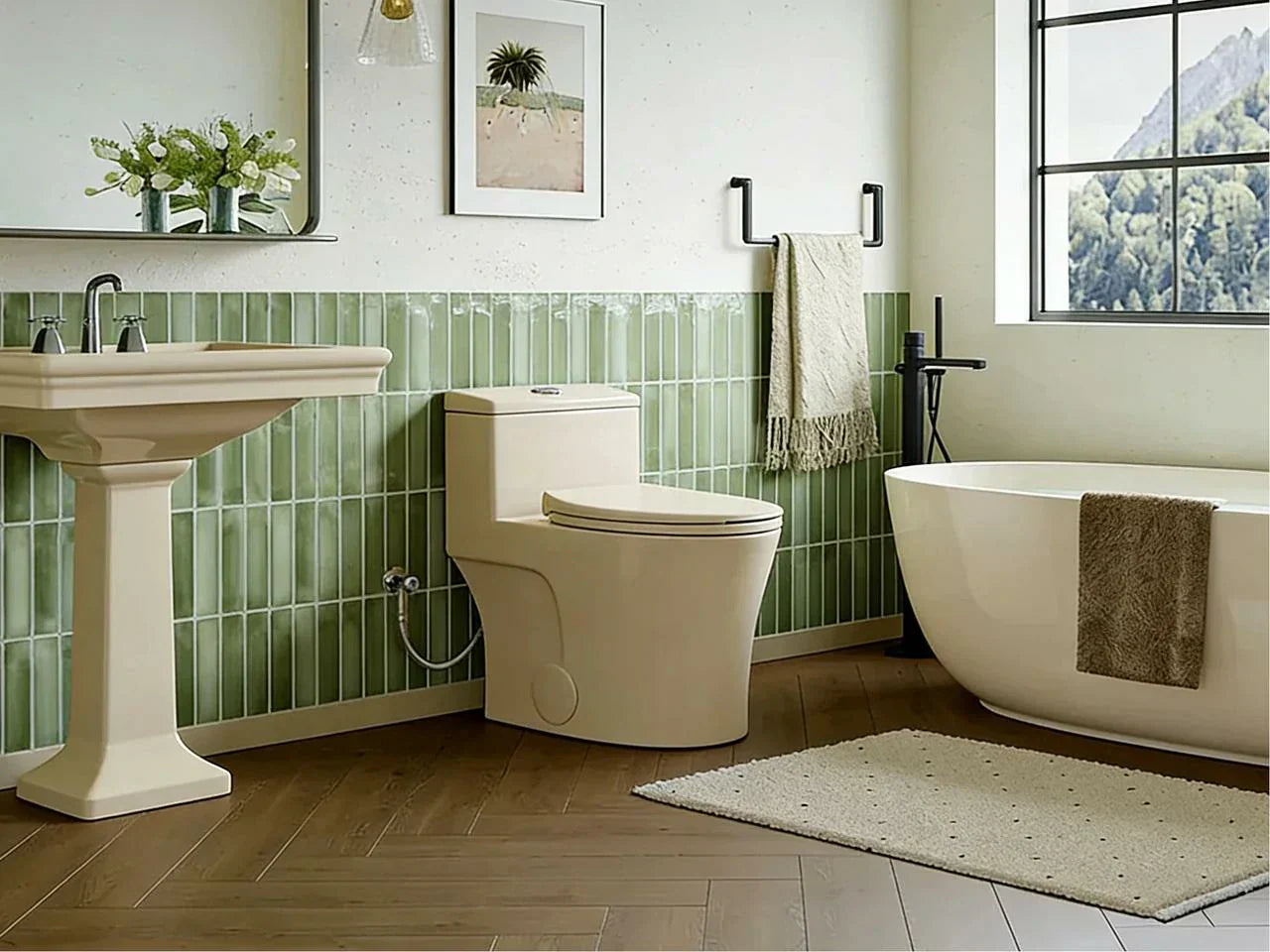
A 10x10 bathroom remodel cost can be wildly different from one home to the next in 2025. One homeowner may spend a few thousand on a fresh coat of paint and a new vanity, while another opens the walls, moves plumbing, and ends up with a high-end walk-in shower and custom tile. For a 100 sq ft 10x10 space, most full remodels land around $20,000–$40,000. According to the 2025 Remodeling Impact Report by the National Association of REALTORS® (NAR), Americans spent an estimated $603 billion on home improvement projects in 2024, with bathroom renovations among the areas REALTORS® report increasing homeowner and buyer interest. A basic refresh often falls in the $5,000–$15,000 range, and a luxury or full gut renovation can reach $60,000+. This guide starts with the fast budget ranges, then shows where the money really goes—labor, materials, permits, and “surprise” repairs—so you can set a realistic budget before you collect contractor quotes.
Cost Snapshot: What a 10x10 Bathroom Remodel Costs in 2025
When people ask, “How much should a 10x10 bathroom remodel cost?” they usually want a number they can plan around, not a vague range. Here’s the practical answer: for most homeowners who hire a contractor and replace the main finishes and fixtures, a 10x10 bathroom remodel typically costs $20,000–$40,000 in 2025. The reason that range is wide is simple—your scope (refresh vs. full remodel vs. gut), your finish level, and whether you move plumbing can change the price by several thousand dollars fast.
Average cost ranges (basic vs. mid-range vs. high-end)
-
Basic (cosmetic): $5,000–$15,000
-
Mid-range full remodel: $20,000–$30,000
-
High-end/full gut: $30,000–$60,000+
Per-square-foot pricing for a 100 sq ft bathroom
A 10x10 bathroom is 100 sq ft, so it’s easy to do quick math. A typical 2025 range is $70–$250 per sq ft, depending on scope and materials. That’s why two “same size” bathrooms can have totally different totals.
Quick “budget tier” checklist (what you can get at each level)
If you’re trying to match your wish list to your budget, think in tiers:
-
At the basic level, you’re usually keeping the layout and doing visible upgrades like paint, a vanity swap, standard tile, and a fixture refresh.
-
At the mid-range level, you’re replacing the main parts (often a new tub/shower combo, upgraded vanity and lighting, and some plumbing work).
-
At the high-end level, you’re paying for custom tile work, a walk-in shower, possible layout changes, and higher-end fixtures and finishes.
At-a-glance cost range table + bar chart (basic → luxury)
| Budget tier (10x10 / 100 sq ft) | Typical total cost (2025) | Best fit for |
| Basic refresh | $5,000–$15,000 | Tight budget, rental, selling soon |
| Mid-range full remodel | $20,000–$30,000 | Most homeowners updating a functional bathroom |
| High-end / gut | $30,000–$60,000+ | Long-term home, layout change, luxury finishes |
10x10 Bathroom Remodel Cost Breakdown (Line-Item Budget)
A bathroom is small compared to a kitchen, but it’s “dense.” You have water, drains, electrical, ventilation, tile, waterproofing, and tight clearances. That’s why bathroom remodel costs can feel high for the size.
Labor vs. materials (why labor is 40–65% of the total)
In a typical 10×10 bathroom remodel, labor often takes 40–65% of the budget. Tile installation, plumbing and electrical, waterproofing, and finish carpentry all take time, and bathrooms don’t offer much room to work. In many areas, it’s normal for labor to land around $8,000–$25,000 depending on scope, scheduling, and local rates.
If you’re comparing quotes and one is much lower, ask yourself: are they skipping steps you can’t see later, like waterproofing details or proper venting? In bathrooms, hidden shortcuts can turn into costly mistakes.
Core cost categories (typical line items)
A full remodel usually includes demolition, rough-in work, rebuild, then finish work. In plain terms, you’re paying for:
-
demolition and haul-away
-
plumbing and electrical (rough-in and finish)
-
waterproofing and ventilation
-
tile/flooring, drywall, and paint
-
vanity/countertop, fixtures, and glass
-
lighting and accessories
Even in a “simple” remodel, one line item can jump if the old bathroom has problems—soft subfloor near the toilet, old wiring, or a vent fan that never ducted outside.
Materials & fixture pricing benchmarks (2025)
These are common benchmarks you’ll see while shopping. Prices vary, but the ranges help you sanity-check allowances in a contractor bid:
-
Tile: $1–$30/sq ft (basic ceramic → premium stone)
-
Vanity: $100–$2,500 (prefab → custom cabinetry)
-
Shower/tub: $400–$5,000+ (unit → custom)
-
Toilet: $100–$1,000
-
Glass shower panel/door (often overlooked): can add hundreds to a few thousand depending on size and thickness
-
Waterproofing system (materials + labor): often a meaningful cost because it protects everything behind the tile
Table: low/mid/high ranges by component + pie chart (% share)
| Component (10x10 bathroom) | Low | Mid | High |
| Demo & haul-away | $500 | $1,500 | $3,000 |
| Plumbing (including some new fixtures) | $1,500 | $4,000 | $8,000+ |
| Electrical (lighting, fan, outlets) | $800 | $2,000 | $4,500+ |
| Waterproofing + ventilation | $700 | $2,000 | $5,000+ |
| Tile/flooring + install | $1,200 | $4,000 | $12,000+ |
| Drywall + paint + trim | $600 | $1,800 | $4,000+ |
| Vanity + top + sink | $400 | $2,000 | $6,000+ |
| Toilet | $150 | $400 | $1,000 |
| Shower/tub + surround | $600 | $3,000 | $10,000+ |
| Glass + accessories | $200 | $1,200 | $4,000+ |
| Permits/inspection (where required) | $0–$500 | $500–$1,500 | $1,500–$3,000 |
Pie chart (typical mid-range share):
This won’t match every job, but it’s a helpful mental model for a mid-range full remodel.
-
Labor (all trades): ~50%
-
Tile + waterproofing: ~20%
-
Fixtures (vanity, toilet, tub/shower, faucets): ~20%
-
Permits, demo, misc: ~10%

Cost by Scope: Refresh vs. Full Remodel vs. Gut Renovation
A lot of budget confusion comes from one word: “remodel.” Some people mean a cosmetic refresh. Others mean an overhaul down to the studs. If you get clear on scope, your budget gets clearer too.
Cosmetic refresh (lowest disruption, best for tight budgets)
A cosmetic refresh is the fastest way to improve look and feel without tearing the room apart. It’s also where you’ll hear the question: “Can you redo a bathroom for $5000?” The honest answer is yes, sometimes, but only if you keep the layout, avoid tile-heavy work, and make budget-focused choices. In a 10x10, $5,000 can cover paint, a new mirror, a basic light fixture, hardware, a budget vanity, and maybe a simple floor if the subfloor is solid.
The catch is that $5,000 rarely covers new plumbing placement, a new bathtub, a full tile shower, or pro labor for multiple trades. If the bathroom has water damage, $5,000 can disappear before you buy the finishes you actually want.
Full remodel (most common 10x10 project scope)
A full remodel is what most homeowners mean when they say “bathroom remodeling.” You replace major fixtures, update flooring, upgrade lighting, and redo the tub/shower area. You might keep the layout mostly the same, because moving drains and supply lines costs real money.
This is where a realistic budget for a 10x10 bathroom is often $20,000–$30,000 in 2025, especially when you want new tile, a new vanity, a new toilet, and the work done right the first time.
Full gut renovation (highest cost, most risk, most flexibility)
A gut renovation strips the space down to framing so you can fix hidden problems and change the layout. This is common in older homes with outdated wiring, poor venting, or repeated moisture issues. It’s also the path to a true upgrade, like a larger walk-in shower, heated floors, niche shelving, built-in storage, and a stronger waterproof system.
In a 10x10, this scope often starts around $30,000 and can climb to $50,000–$60,000+ once you add premium tile, natural stone, custom glass, and custom cabinetry.
Keeping layout vs. moving plumbing (and cost impact)
If you remember one cost rule, make it this: moving plumbing is one of the biggest factors. Keeping the toilet, tub, and shower drain where they are can protect your budget. Once you move them, you may need more demolition, more plumbing labor, more patching, and sometimes a permit and inspection.
Even a “small” change—like shifting a shower drain—can raise labor costs and risk, because drains must slope correctly and tie into existing lines. The layout change may be worth it, but it shouldn’t be an afterthought.
Scope comparison table (inclusions, timeline, risk, budget)
| Scope | What changes | Typical timeline | Budget range (10x10) | Risk level |
| Refresh | Mostly surfaces and fixtures | 2–7 days | $5k–$15k | Low |
| Full remodel | Fixtures + finishes, limited plumbing moves | ~2–3 weeks | $20k–$30k | Medium |
| Gut renovation | Layout possible, new rough-ins, full waterproofing plan | 3–6+ weeks | $30k–$60k+ | Higher |
Key Cost Drivers (and How to Control Them)
You can’t control everything, but you can control the decisions that swing the price the most. The key point is to decide early where you’ll spend and where you’ll stay standard.
Layout changes, plumbing moves, and “hidden” conditions
A bathroom is basically a box filled with pipes. If your 10x10 bathroom layout changes, the pipes usually need to change too. That’s why layout edits can add thousands.
Then there are hidden conditions. Many homeowners don’t think about them until demolition starts. Common surprises include subfloor damage near the toilet, older wiring that can’t support modern loads, water damage behind a tub surround, and venting that was never installed correctly.
Because these surprises are normal, it’s smart to plan a 10–20% contingency. That’s not “extra money you hope to spend.” It’s peace of mind so you don’t have to choose the cheapest fix when a real problem shows up.
Finish selections that swing the budget the most
Two bathrooms can use the same installer and the same layout, yet cost far apart because of finishes.
A walk-in shower is a great example. Compared to a standard tub/shower combo, a walk-in setup often adds $5,000–$10,000 once you include the shower base, waterproofing, tile, drainage details, and a glass panel or door. Premium tile or natural stone, especially marble, can increase costs again because it’s more expensive and can take longer to install and seal.
Heated floors are another “small space, big cost” upgrade. The material itself may not seem huge, but the electrical work, controls, and floor build-up can push the total.
Accessibility + aging-in-place upgrades (ADA-related planning)
Even if you don’t need it today, many homeowners plan for aging in place. Accessibility upgrades can make a functional bathroom safer and easier to use. Common choices include a curbless shower (often paired with linear drains), grab bars anchored properly, more open clearances, and a comfort-height toilet.
These upgrades can add cost, but they can also prevent a second remodel later. If you’re on the fence, ask yourself a simple question: would you rather pay for a few smart changes now, or redo the bathroom again in ten years?

Money-saving strategies that don’t look “cheap”
Saving money doesn’t have to mean settling for a bad look. Some of the best savings come from boring choices that nobody notices—until you see the final price.
Keeping the layout is one of the best budget protectors. Using a prefab vanity with a clean style can look great while keeping costs controlled. Choosing mid-grade porcelain tile instead of natural stone can still give you a high-end feel if you spend a bit more on the pattern or layout.
If you like the “small bathroom ideas on a budget” style of planning, use the same mindset here: pick one “hero” upgrade and keep the rest standard. For instance, you might choose a beautiful shower wall tile but keep the vanity simple and use a standard toilet and faucet.
Cost impact ladder (low → high budget impact)
Below is a simple “ladder” you can use when deciding what to change:
-
Low impact: paint, hardware, mirror, light fixtures
-
Medium impact: vanity and countertop, flooring, toilet upgrade
-
High impact: full tile shower, custom glass, heated floors
-
Very high impact: moving plumbing, changing layout, expanding the room
DIY vs. Hiring a Pro: Realistic Savings for a 10x10 Bathroom
DIY can save money, but bathrooms punish mistakes. Water is patient. A small leak behind tile can damage drywall, framing, and subfloor before you notice anything.
What DIY can safely cover (and what to leave to licensed trades)
Many homeowners can DIY the “low-risk” parts: careful demolition, painting, trim, installing hardware, swapping a mirror, and adding shelves. Some homeowners also install flooring in dry areas if they follow the product instructions and prep the subfloor well.
On the other hand, it’s usually smart to hire a pro for plumbing and electrical work, waterproofing, and venting. Those pieces affect safety, permits, inspection, and long-term durability.
Typical DIY vs. contractor pricing outcomes
A DIY-heavy project often lands around $10,000–$15,000 for a larger bathroom if you still pay for some skilled help. A fully contracted bathroom renovation cost commonly comes in around $20,000–$30,000+ for a mid-range 10x10, because you’re buying time, scheduling, and experience—not just labor hours.
If you’re thinking about DIY to hit a number, ask yourself: are you trying to save money, or are you trying to avoid a quote that feels too high? Those are different problems. Sometimes the best move is to reduce scope (keep the tub, keep the layout) rather than take on waterproofing work you’ve never done.
General contractor vs. managing subcontractors (cost vs. control)
Managing your own plumber, electrician, tile installer, and drywall person can sometimes reduce the contractor’s markup. But it also increases the chance of delays and finger-pointing if something goes wrong. A general contractor can cost more on paper, yet save money in rework and missed steps.
If you’ve ever tried to coordinate four schedules while also living in the home, you already know why many homeowners pay for management.
Timeline expectations (what’s normal)
For a standard scope, a bathroom remodel timeline is often 2–3 weeks once work begins. Permits, inspections, and custom orders can stretch that. A common delay in 2025 is lead time on tile, vanities, and glass—so ordering early is one of the easiest ways to protect your schedule.
Step-by-step: “How to install a new bathtub and surround” (high-level)
This is a high-level overview so you understand what you’re paying for. Many homeowners hire this out because a bad install can cause leaks.
-
Confirm framing is square and the subfloor is solid.
-
Set the tub level and connect the drain correctly.
-
Install moisture-resistant backer where required (not standard drywall in wet zones).
-
Apply a waterproof system according to the manufacturer’s instructions.
-
Install the surround panels or tile, sealing joints as required.
-
Finish trim, caulk, and allow proper cure time before use.
Regional Pricing + 2025 Inflation (What Changes by Location)
Costs don’t just vary by home. They vary by labor market.
Why remodel costs vary by city, state, and labor market
In many metro areas, bathroom remodel bids run ~20%+ higher than national averages. That’s not only about wages. It’s also about parking, access, permit processes, and demand.
If you live in a rural area, you may see lower labor rates, but you might pay more for travel or limited contractor availability. Either way, your true number comes from local quotes.
2025 material and labor inflation factors
Even if your design stays simple, your price can rise year to year. In recent years, many construction categories have seen meaningful inflation in both labor and materials. In 2025, budgeting with a cushion matters, especially if you’re planning months ahead and haven’t locked pricing.
Simple regional adjustment method (quick planning)
If you need a fast planning number before you get bids, start with a mid-range baseline (say $25,000 for a 10x10). Then adjust:
-
Higher-cost metro: add ~10–25%
-
Average-cost area: keep baseline
-
Lower-cost area: subtract ~5–15%
This is not a quote. It’s a way to avoid under-budgeting while you plan.

Real-World 10x10 Bathroom Remodel Examples (2025-Informed)
Numbers make more sense when you see how real choices shape them. Here are three common paths for a 10x10.
Case study 1: basic refresh around ~$8,000 (cosmetic scope)
A homeowner with a dated but working bathroom wanted it to feel clean and new without changing the bathtub or moving plumbing. The plan was simple: new prefab vanity, new sink and faucet, new light fixtures, a new mirror, fresh paint, and tile flooring.
The biggest lesson from this kind of job is that you can get a strong “new bathroom” feeling without touching the wet wall. If you keep the bathtub and the surround and focus on visible finishes, the budget stays calmer.
Case study 2: mid-range 100 sq ft remodel around ~$28,000
Another homeowner wanted an updated look and better lighting, plus a new toilet, new vanity, new floor, and a rebuilt tub/shower area with new wall tile. Plumbing stayed in place, but there was real work behind the scenes: better ventilation, new GFCI-protected outlets, and proper waterproofing behind the tile.
This is a classic “realistic budget” project. It’s not luxury, but it’s a full upgrade. The total climbed because labor was a big share and the tile work wasn’t small. Permitting and inspection timing also stretched the schedule, which can add cost when trades have to return for finish work.
Case study 3: full gut starting ~$30,000 and reaching $50,000–$60,000+
The third homeowner started with a gut plan because the old bathroom had repeated moisture problems. They changed the layout to fit a larger walk-in shower, added custom tile, upgraded fixtures, used higher-end materials, and added glass.
This is where scope creep happens. It often starts with one idea: “Since the walls are open, we might as well…” Add heated floors. Add a niche. Upgrade to premium tile. Add a double vanity. Each choice may be reasonable, but the total stacks quickly.
Before/after scope summary table (budget, selections, timeline)
| Example | Budget | Selections | Timeline |
| Refresh | ~$8,000 | prefab vanity, paint, basic tile floor, fixture refresh | ~1 week |
| Mid-range remodel | ~$28,000 | new tub/shower tile, better ventilation, upgraded lighting, new vanity/toilet | ~2–4 weeks |
| Gut + luxury | $50,000–$60,000+ | walk-in shower, custom tile, glass, layout change, premium finishes | ~4–8+ weeks |
Estimator + Planning Toolkit (Fast Way to Price Your Remodel)
If you want to stop guessing, price the remodel in layers: scope + finish tier + location + risk buffer. This approach helps you make informed decisions before contractors start throwing numbers around.
Quick 10x10 remodel cost calculator (simple “inputs → estimate”)
Use this plain method:
-
Pick a base by finish tier (100 sq ft):
-
Basic refresh base: $8,000–$12,000
-
Mid-range base: $22,000–$30,000
-
High-end base: $35,000–$55,000
-
Add major scope modifiers:
-
Moving plumbing or changing layout: +10–25%
-
Walk-in shower upgrade (vs. tub/shower combo): +$5,000–$10,000
-
Premium tile + custom glass: +$3,000–$15,000 (varies widely)
-
Adjust for region:
-
Higher-cost metro: +10–25%
-
Lower-cost area: -5–15%
-
Add contingency:
-
Older home or unknown conditions: +15–20%
-
Newer home with no signs of damage: +10% can still be smart
If you do this on paper before shopping, you’ll quickly see why “just a few upgrades” can jump from $20,000 to $35,000.
Sample budgets (3 templates to copy/paste)
| Template | Target total | Best choices to stay on track |
| Basic | $5k–$15k | keep layout, keep tub, prefab vanity, standard fixtures, simple tile |
| Mid-range | $20k–$30k | new tub/shower surround, better lighting/fan, quality mid-grade tile |
| High-end | $30k–$60k+ | walk-in shower, custom tile, possible double vanity, layout changes |
Bid comparison checklist (what to confirm in quotes)
When bids come in, prices can differ because contractors include different assumptions. Ask each bidder to confirm the same details, especially waterproofing, ventilation, and allowances.
| Quote item to verify | What you want to see clearly stated |
| Waterproofing method | product/system and where it will be used |
| Ventilation | fan size and where it vents (outside, not attic) |
| Allowances | exact $ amounts for tile, vanity, fixtures |
| Permits/inspection | who pulls permits and schedules inspections |
| Change orders | how pricing is approved and documented |
Bathroom Size, Layout Rules, and Why 10x10 Works Well
People also ask: “Is 10x10 a good size for a bathroom?” For most homes, yes. A 10x10 is large enough to feel comfortable and still efficient to heat, clean, and maintain. It can fit a size of bathroom with bathtub (a standard tub/shower combo) plus a toilet and a good vanity, or it can fit a walk-in shower with more open floor space.
To compare, the average dimensions of a bathroom in many homes are closer to 5x8 or 6x9. A 10x10 often feels like a primary or larger hall bath. It gives you more freedom with bathroom length and fixture spacing, which can make the room feel calm instead of cramped.
What is the golden rule for bathroom layouts?
A good “golden rule” is to keep the layout simple and protect clear space. In practice, that means planning for comfortable clearance in front of fixtures, ensuring the coating glass bathroom door doesn’t hit people or cabinets, and keeping plumbing concentrated when possible (often on one shared wall). For homeowners looking for a sleek, durable option, a high-quality coating glass bathroom shower door can enhance both style and functionality. A layout that looks great but forces tight squeezes every day usually ends up feeling like a mistake.
If you’re planning a 10x10 bathroom layout, try standing in the space and imagining the daily routine. Where do towels go? Where do you set a phone down? Can the vanity drawers open while the door is open? Those small questions often lead to better decisions than chasing a picture online.

ROI (Resale Value) in Plain Terms
A bathroom remodel can improve daily life, and it can also support resale. ROI depends on your market and how far you go with finishes. Many reports on remodeling value often place mid-range bathroom remodel ROI around ~60–80% in many markets, but your result depends on home price range and local demand.
If you’re remodeling to sell soon, mid-range choices often make sense. If you’re remodeling to stay, value also includes comfort, fewer repairs, and a bathroom that feels good at 6 a.m. on a workday.
Conclusion
Remodeling a 10x10 bathroom in 2025 requires understanding costs, materials, and labor, because the 10x10 bathroom remodel cost can vary from a $5,000 cosmetic refresh to $60,000+ for a full renovation. By planning carefully, keeping a clear layout, and prioritizing key upgrades, you can avoid surprises and create a stylish, functional bathroom. Whether it’s a smaller space or a master bathroom, smart choices ensure your remodel delivers comfort, style, and long-term value.
FAQs
1. How much should a 10x10 bathroom remodel cost?
When thinking about updating a 10x10 bathroom, it helps to have a clear idea of what to expect, because the 10×10 bathroom remodel cost can vary widely depending on your plans. For most homeowners, a full remodel that updates major fixtures, flooring, lighting, and possibly the tub or shower typically ranges from $20,000–$40,000. If you’re aiming for just a cosmetic refresh—fresh paint, a new vanity, updated faucets, and a simple floor—you might keep costs closer to $5,000–$15,000. On the higher end, a gut renovation with layout changes, custom tile, walk-in showers, and high-end finishes can easily exceed $60,000. Understanding these ranges can help you set a realistic budget before getting quotes, plan which upgrades matter most, and avoid unexpected costs from labor, plumbing moves, or hidden repairs. Proper planning ensures your remodel stays on track and meets your needs.
2. Can you redo a bathroom for $5000?
Yes, it’s possible to redo a bathroom for around $5,000, but you need to be realistic about what that budget can cover. At this level, you’re usually doing a cosmetic refresh rather than a full remodel. Think simple updates: fresh paint, a new prefab vanity, a mirror, basic light fixtures, and possibly a budget-friendly floor. You’re generally keeping the layout and existing plumbing intact, which saves a lot of money. What $5,000 rarely covers are major changes like moving drains, installing a full tile shower, or upgrading to high-end fixtures. Hidden issues, like water damage or soft subfloor, can also eat into the budget quickly. Planning carefully, choosing one or two standout features to upgrade, and doing some DIY work like painting or demolition can help stretch that $5,000 while still giving the bathroom a fresh, updated feel.
3. What is a realistic budget for a bathroom remodel?
When planning a remodel, whether it’s a standard 10x10 bathroom or a larger master bathroom, understanding these elements is key to setting a realistic budget. Material costs alone—like tile, countertops, and fixtures—can make a big difference, and labor adds another significant chunk. For smaller spaces, a cosmetic refresh might cost $5,000–$15,000, while a mid-range remodel of a master bathroom could easily reach $20,000–$30,000 depending on the scope. High-end renovations, especially those involving layout changes, custom tile, or a walk-in shower, might cost $50,000 or more. Knowing where your money goes—labor, materials, plumbing, and hidden repairs—helps avoid surprises. By understanding these elements, you can make smart choices, decide which upgrades are worth it, and keep your remodel realistic while still achieving a functional, beautiful bathroom that works for your space.
4. Is 10x10 a good size for a bathroom?
A 10x10 bathroom is generally considered a really comfortable size for most homes. It’s big enough to fit a standard tub or a walk-in shower, a toilet, and a vanity without feeling cramped. Compared to smaller bathrooms, like a typical 5x8 or 6x9, a 10x10 gives you extra room to move around, which makes daily routines like getting ready in the morning or bathing kids much easier. You also have more flexibility with storage, lighting, and layout options, so you can add shelves, cabinets, or even a small linen closet without squeezing the space. The key is to plan your layout thoughtfully—keep plumbing concentrated where possible, allow clear space in front of fixtures, and make sure doors, including a coating glass bathroom door if you’re using one, swing freely without hitting anything. A well-planned 10x10 bathroom can feel luxurious and functional at the same time, giving you comfort and efficiency in one neat package.
5. What is the golden rule for bathroom layouts?
The golden rule for bathroom layouts is to keep things simple and protect clear space. In practical terms, this means leaving enough clearance in front of fixtures, planning door swings so they don’t hit people or cabinets, and keeping plumbing concentrated—often on one shared wall. A well-thought-out layout also considers movement, storage, and functionality, making everyday use comfortable. For example, using a coating glass bathroom door can help open up the space visually while staying functional. Even if your bathroom looks stylish, a cramped layout will quickly feel frustrating. The key is to balance aesthetics and usability, allowing for smooth traffic flow and accessible storage. Following this rule ensures your bathroom feels spacious, safe, and enjoyable every day, regardless of the size or scope of your remodel.
References


Leave a comment
This site is protected by hCaptcha and the hCaptcha Privacy Policy and Terms of Service apply.