
Most of us sit on the toilet without thinking about it. But the way you sit on the toilet can make a bowel movement easier or harder, and it can even affect hemorrhoids, constipation, and pelvic floor health. By the end of this guide, you will know the correct way to sit on a toilet for easier, healthier pooping.
Maybe you strain and push hard. Maybe you sit for 20 minutes scrolling on your phone. Or perhaps you “hover” above the seat in public bathrooms. These habits can all cause problems over time. So how should you sit?
Let’s start with a clear, quick answer, then go deeper into the why and how.
Quick Answer – The Best Way to Sit on the Toilet
Ideal Toilet Sitting Position at a Glance
Here is the proper way to sit on the toilet, in simple steps you can test today:
Toilet Posture Tips
-
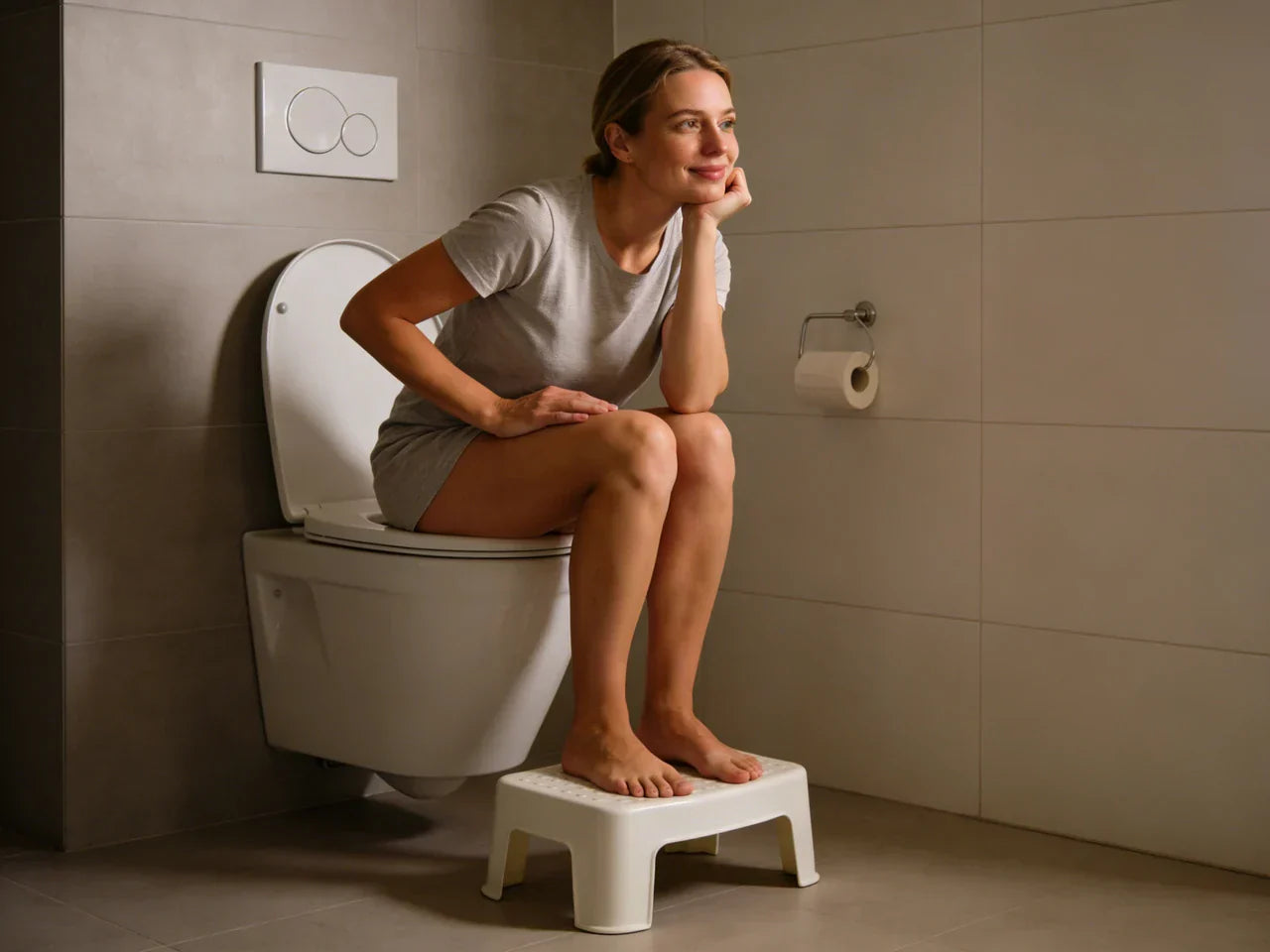
Use a small footstool (about 7–12 inches / 18–30 cm high) in front of the toilet.
-
Sit all the way back on the seat, not perched on the edge.
-
Place your feet flat on the stool, about hip‑width apart.
-
Make sure your knees are slightly higher than your hips.
-
Lean forward from your hips about 30–40°, keeping your back fairly straight.
-
Rest your elbows on your thighs in a relaxed “thinking pose.”
-
Relax your belly and pelvic floor muscles; let your anus soften.
-
When you feel the urge, exhale gently instead of holding your breath and pushing hard.
-
If nothing happens in 3–5 minutes, get up and try again later.
This is the correct toilet sitting posture for most people. It mimics a squat‑like pooping position while still sitting on a Western toilet. The key point is that your knees are above your hips and your body leans slightly forward so the angle of your rectum is more open.
In one short sentence: The correct way to sit on a toilet is with your knees above your hips, feet supported, leaning forward, relaxed, and without straining.
At‑a‑Glance Benefits
When you sit like this, many people notice:
-
Less need to strain and push.
-
Shorter time on the toilet.
-
A stronger feeling that the bowels are empty.
-
Fewer problems with hemorrhoids, fissures, and pelvic pressure.
-
Less tension in the pelvic floor and lower back.
So if you came here wondering “How can I make myself poop more easily?” the best first step is to fix how you sit on the toilet.
Why the Way You Sit on the Toilet Matters
You might ask, “Why does a small change in position matter so much?” To understand that, it helps to know a bit about what happens inside your body when you go to the bathroom.
Basic Anatomy – What Happens When You Poop
When stool moves down from the colon, it enters the rectum, the last part of the large intestine. At the end of the rectum is the anus, which has rings of muscle that open and close like a valve. Around this area there is a group of muscles called the pelvic floor. One of these muscles, the puborectalis muscle, wraps around the rectum like a sling.
Think of this muscle sling as a bend in a hose.
-
When the muscle is tight, it pulls the rectum forward and creates a sharp angle between the rectum and the anus.
-
When the muscle relaxes, that angle becomes more straight, and poop can pass more easily.
A good bowel movement technique does two things:
-
Helps that angle straighten.
-
Helps the pelvic floor relax so you do not need to push hard.
Your toilet posture strongly affects both of these points.
Sitting vs Squatting From an Anatomical View
On a standard tall toilet, many people sit with their thighs almost level with the floor, close to a 90° angle at the hips. In this position:
-
The puborectalis muscle stays a bit tighter.
-
The rectum stays more kinked.
-
You may feel like you have to push, hold your breath, and strain.
When you move into a squat‑like posture (around 35° at the hips, with knees higher than hips), things change:
-
The puborectalis muscle relaxes more.
-
The anorectal angle straightens.
-
Gravity and body weight help the stool move down.
-
Pooping feels more natural, and you can often “let it happen” instead of forcing it.
According to a study published in PMC, adopting a squat-like posture relaxes the puborectalis muscle and straightens the anorectal angle, which helps stool pass more easily and reduces straining
You do not have to fully squat on top of the toilet to get these benefits. By using a footstool and leaning forward, you can get close to this angle while still sitting safely on the seat.

Key Symptoms Linked to Poor Toilet Posture
When someone sits on the toilet with poor posture every day, problems can build over time. People often report:
-
Chronic constipation or needing to strain often.
-
A feeling of “not fully empty” after a bowel movement.
-
Hemorrhoids, anal fissures, and occasional bleeding when they wipe.
-
A heavy or dragging feeling in the pelvis, especially in people who have given birth.
-
Bloating and a sense of pressure in the belly from pushing too hard.
Many of these issues have more than one cause, but the way you sit on the toilet is one factor you can change today, at home, without medicine.
Sitting vs. Squatting – What the Research Shows
You may wonder if all this talk about posture is just opinion. There is, in fact, scientific research on this topic.
Summary of Major Studies
Several small studies have looked at sitting vs squatting posture during a bowel movement.
One study by Dr. Dov Sikirov compared people using a normal sitting toilet with people using a squatting posture. The main findings were:
-
Time spent in active straining was cut by about 70% in the squat position.
-
People felt it was easier to empty in the squat‑like posture.
-
Many reported less sense of “incomplete” evacuation.
Another study in the Journal of Clinical Gastroenterology found that:
-
When people used a squat‑like posture (either full squatting or feet raised on a stool), the time to poop was shorter.
-
The effort they felt they had to use was lower.
-
Imaging studies showed a wider anorectal angle, which matches what we expect from anatomy.
These studies were small, but their results line up with what many colorectal doctors, pelvic floor therapists, and patients notice in real life.
Evidence on Health Outcomes
Research and large health surveys suggest that easing chronic straining may help lower the risk of several problems:
-
Hemorrhoids: Long, hard pushing raises pressure in the veins around the anus.
-
Constipation: An easier angle means less “holding back” and more complete emptying.
-
Diverticular disease: Some experts think repeated heavy straining may play a role in small pouches forming in the colon wall.
Populations that often use squat toilets seem to have lower rates of some anal and rectal problems, although diet, activity levels, and many other factors also matter. So we cannot say posture is the only reason, but it seems to be one helpful piece.
Balanced View – Pros and Cons
A full squat position is not safe or comfortable for everyone. Some people have:
-
Knee or hip arthritis.
-
Balance problems.
-
Limited strength to get up from a deep squat.
If you were to stand on a toilet seat to squat, you could also slip and fall, especially if the seat or your feet are wet.
That is why, for most people, the optimal way to sit on the toilet to poop is a footstool‑assisted sitting posture:
-
You stay seated on the toilet seat.
-
You raise your knees with a small stool.
-
You lean forward and support your elbows.
This gives you many of the benefits of squatting with far fewer safety risks.
How to Sit on the Toilet Step by Step
Now let’s walk through how to sit on the toilet from start to finish, including special tips for when you feel constipated.
Step 1 – Set Up Your Toilet Space
First, prepare your bathroom so it supports a healthy toileting posture.
You do not need fancy tools. Most people just need:
-
A footstool about 7–12 inches (18–30 cm) high. You can use any stable box or step that supports your weight and does not rock. Make sure it does not slide on the floor.
-
Enough space in front of the toilet for your feet and stool.
-
Good lighting so you feel safe and relaxed.
Before you sit, loosen tight clothes around your waist and hips. Tight belts or shapewear can press on your belly and make it harder for the muscles to relax.
Step 2 – Position Your Body
Next comes the actual pooping position.
-
Sit all the way back on the toilet seat so your thighs are well supported. Do not just “perch” on the front edge.
-
Place your feet up on the stool. Your toes and heels should both rest on it; do not tiptoe.
-
Check your knee and hip level. Your knees should be slightly higher than your hips. Think of a gentle squat, not a deep one.
-
Now lean forward, hinging from your hips rather than rounding your upper back. Aim for a 30–40° lean.
-
Rest your elbows on your thighs. Let your shoulders drop and your neck relax.
Many people ask, “Do you sit forward or backward on a toilet?”
For a bowel movement, you sit facing forward, with a slight forward lean. Sitting backward (facing the tank) is not needed for normal pooping and is awkward for most adults.
This posture helps straighten the internal angle of your rectum without extra strain.
Step 3 – Breathe and Relax, Don’t Force
This step is the most important and the one most people skip.
Once you are in position:
-
Take a slow breath in through your nose, letting your belly gently rise.
-
As you exhale through your mouth, imagine your pelvic floor and anus “melting” or dropping down like a soft hammock.
-
Keep your jaw and face loose. A tight jaw often goes with a tight pelvic floor.
Try this cycle for several breaths. Many people ask, “How can I make myself poop when I feel stuck?” Here is a gentle method:
-
Feel the urge to go before you sit. Try not to sit “just in case.”
-
Get into the correct toilet sitting posture.
-
Breathe into your belly, then on each exhale, think of widening at the anus instead of pushing from above.
-
If you need to help a bit, do a small, short bear‑down on the exhale only, not a long, red‑faced push.
Avoid holding your breath and pushing hard (this is called the Valsalva maneuver). It raises pressure in your head, chest, and rectal veins, and can harm your pelvic floor over time.
If nothing starts within 2–3 minutes, stop. Wipe if needed, stand up, walk a little, sip some water, and try again later. Sitting and forcing for 20 minutes will not fix constipation; it usually makes things worse.
Step 4 – After You Finish
When your bowel movement feels done:
-
Wait one more small urge and gently relax again. This often lets the last bit of stool pass so you feel more empty.
-
Wipe gently. Avoid hard scrubbing, which can irritate the skin around your anus.
-
If the skin is sensitive, you can use soft, unscented moist paper and then pat dry.
-
Stand up slowly and stretch your hips and back for a few seconds, especially if you sit for work all day.
You might be surprised how different you feel after a week of using this proper way to sit on the toilet.
Ergonomics Beyond Posture – Toilet Height, Seat, and Tools
Posture is not only about your body; the toilet itself matters.
Choosing or Adjusting Toilet Seat Height
Toilets come in different heights. Some are “standard,” and some are higher for comfort, especially for taller or older people. A higher toilet makes it easier to sit and stand, but it also makes it harder to get your knees above your hips.
Here is a simple way to test your setup:
-
Sit on your toilet with your feet on the floor, no stool.
-
Look at your knees and hips in a mirror or ask someone to check.
-
If your knees are much lower than your hips, your toilet is quite high for you.
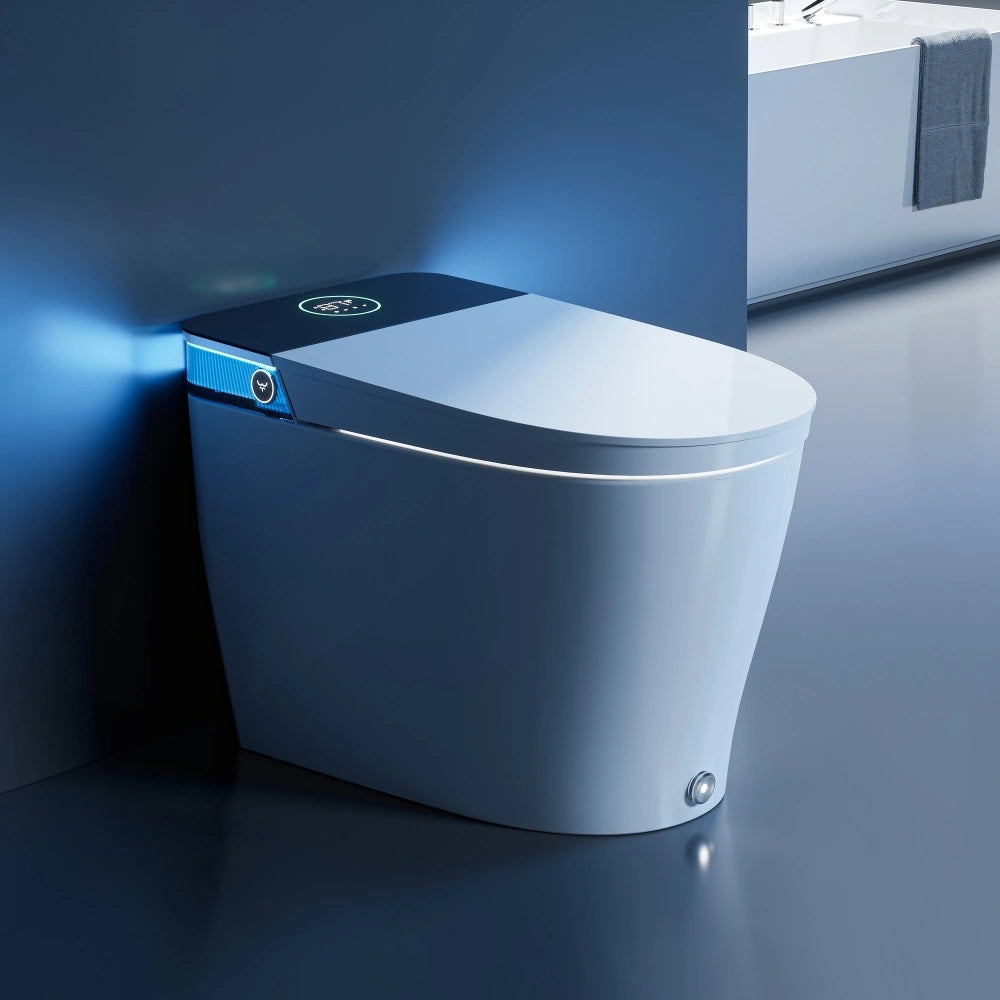
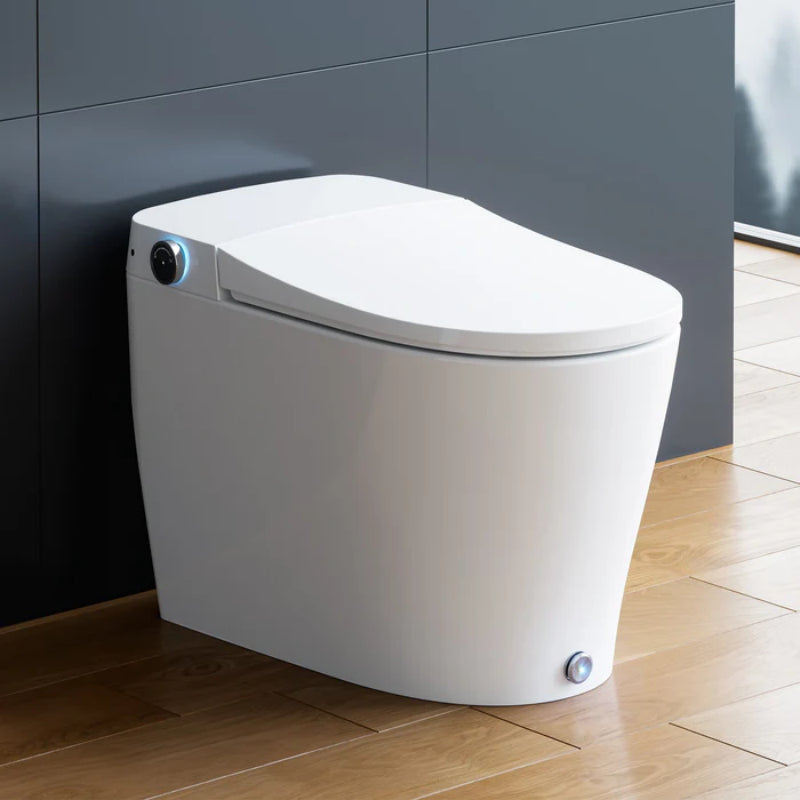
In that case, a slightly taller footstool can balance the height and bring you into a squat‑like angle again. Alternatively, a smart toilet with ergonomic design and adjustable height can help maintain the ideal knee-to-hip position, supporting a healthier, more comfortable sitting posture without extra tools.
Tools to Improve Your Toilet Sitting Position
You may find these tools helpful:
-
Footstools: The main tool to adjust your knee angle. Choose one that is wide enough for both feet and does not wobble.
-
Raised toilet seats: Useful for people with joint or mobility issues. If you use a raised seat, you still want a footstool so your knees can lift up.
-
Grab bars or rails: Helpful for older adults, pregnant people, or anyone with balance problems. They allow you to lean forward safely without fear of slipping.
Remember, the goal is a safe, stable setup where you feel calm. Feeling unsafe on the toilet makes your muscles tense and makes pooping harder.
Custom Guidelines by User Group
Different bodies need small changes to the correct toilet posture.
Elderly people
Older adults often worry about falls. For them:
-
Use a wide, non‑slip stool and non‑slip mats.
-
Install grab bars near the toilet.
-
A slightly higher seat plus a footstool is often better than a very low toilet.
Pregnant people
During pregnancy, constipation and pressure are common. The pelvic floor and belly are under extra load, so:
-
The squat‑like posture is very helpful because it reduces straining.
-
Make sure your lean forward still leaves space for your belly; do not crush it against your thighs.
-
Focus on breathing and relaxing instead of pushing.
People with joint issues or disabilities
If full squatting or deep bending is painful:
-
Keep the lean forward gentle.
-
Use an adjustable stool height so your knees are only slightly above your hips.
-
Ask a physical or occupational therapist about safe supports and handles.
Children
Many children’s feet do not reach the floor when they sit on the toilet, so their legs dangle and they feel unstable.
-
Give them a small stool so they can rest their feet and push a little.
-
Use a child seat insert so they do not feel like they will fall in or “sit in toilet water.”
-
Teach them to listen to the urge to poop and not hold it in, because ignoring it can lead to constipation.

Health Benefits & Risks Linked to Toilet Posture
How Proper Toilet Posture Helps
A healthy toileting posture can support many areas of health.
Constipation relief
If you wonder “How to sit on toilet when constipated?” the answer is: the same squat‑like posture, but with even more focus on relaxation and time.
-
The straighter rectal angle means less “blockage” at the exit.
-
You can let stool move with less effort.
-
Over time, this can reduce the habit of hard pushing that makes constipation worse.
Of course, posture alone will not fix every constipation problem. Diet, water, and activity matter too. But it gives your body a fair chance to poop naturally.
Hemorrhoid and fissure prevention
Hemorrhoids and small tears (fissures) around the anus often come from straining and passing very hard stool.
-
When you sit correctly and do not stay on the toilet for too long, pressure in the anal veins is lower.
-
Softer, easier poop is less likely to cut or stretch the skin.
Pelvic floor and prolapse protection
The pelvic floor holds up your bladder, uterus (in many women), and rectum. Repeated heavy straining can stretch and weaken these muscles and tissues.
Using the proper way to sit on toilet, with gentle breathing and no long breath‑holds, helps protect these structures. This is especially important for:
-
People after childbirth.
-
People with a history of pelvic surgery.
-
People who already have some prolapse or pelvic pressure.
Risks of Poor Toilet Habits
On the other hand, some common habits can cause problems over time.
Prolonged sitting on the toilet
Many people ask, “Is it okay to sit on the toilet for 30 minutes?”
The simple answer is no – 30 minutes is too long for most people.
When you sit that long:
-
Blood can pool in the veins around the anus.
-
The constant pressure from the seat on the area around your anus may worsen hemorrhoids.
-
Your legs can feel numb and your lower back can stiffen.
A more healthy time to sit on the toilet for a bowel movement is usually 1–5 minutes. If nothing happens in about 5 minutes, it is better to get up and try again later rather than pushing and sitting longer.
Habitual straining
If you push hard, hold your breath, and “bear down” almost every time you go:
-
You raise pressure in your belly and pelvic floor continuously.
-
You can worsen hemorrhoids, anal fissures, and prolapse.
-
You may start to feel that you need to strain, even when you don’t.
Overuse of laxatives
Some people use laxatives instead of looking at posture, diet, and movement. Laxatives have a place, but heavy use without medical advice can cause:
-
Dependence.
-
Changes in bowel function.
-
Ongoing cramping.
It is better to work on posture, fiber, water, and regular habits first, and then use medicine under guidance if needed.
When to See a Doctor or Specialist
Good sitting posture cannot fix serious disease. You should talk to a doctor or other health professional if you notice:
-
Rectal bleeding that is not clearly from hemorrhoids.
-
A big, sudden change in bowel habits that lasts longer than 4–6 weeks.
-
Strong pain when you poop.
-
Unplanned weight loss, tiredness, or signs of anemia.
-
A lump, bulge, or tissue coming out of the anus when you sit or strain.
You can start with a general doctor or a gastroenterologist. A pelvic floor physical therapist can also help if you feel stuck, blocked, or unsure how to relax the muscles.
Habits, Timing, and Behavior on the Toilet
Posture works best when it fits into healthy habits.
How Long Should You Sit on the Toilet?
For most people, a normal bowel movement should not take very long once you feel a clear urge.
-
Aim for 1–5 minutes on the toilet to poop.
-
If you cannot go in that time, get up and try again later.
-
Do not ignore the urge for hours; this can lead to constipation because stool dries out and becomes harder.
So when you feel a natural urge, go to the bathroom, use the right position, and give your body a few calm minutes. If it does not happen, step away instead of fighting your body.
Ditching the Phone and Hovering Habit
Many of us bring our phones to the toilet. It seems harmless, but there are problems:
-
You may sit on the toilet for 20–30 minutes without noticing.
-
You may ignore your body’s signals that you are done.
-
The longer you sit, the more pressure on your rectal veins.
Try leaving your phone outside the bathroom. Notice how much shorter toilet time becomes when you are not scrolling.
Then there is hovering. In public toilets, some people do not trust the seat, so they bend knees and try not to touch it. This makes the pelvic floor tighten up, which makes pooping much harder.
If you worry about germs, it is safer to:
-
Use a disposable seat cover or toilet paper on the seat.
-
Wipe the seat before you sit.
-
Wash your hands well after.
Sitting down fully, even in public bathrooms, is usually better for your health than hovering and straining.
Building Better Bowel Routines
Good posture works best with good routine. You can help your body by:
-
Going soon after meals, especially breakfast. Eating wakes up the gut; this is called the gastrocolic reflex.
-
Trying to sit at a regular time each day using good posture, so your body learns the pattern.
-
Drinking enough water during the day.
-
Eating plenty of fiber from fruits, vegetables, beans, and whole grains.
-
Moving your body. Even a daily walk helps the gut move stool forward.
These habits support pooping naturally, so you do not have to ask “how can I make myself poop?” as often.
Cultural and Toilet-Type Differences
Toilets and toilet habits are not the same everywhere.
Squat Toilets vs Western Sitting Toilets
In some countries, squat toilets are common. You place your feet on either side and squat close to the ground so your bottom is over the hole or water. This naturally creates the ideal pooping angle.
Western toilets are higher seats where you sit like on a chair. They are more comfortable for reading or resting, but less helpful for bowel emptying unless you adjust your position.
When people who grew up with squat toilets move to places with sitting toilets, they often feel more constipated at first. They may even try to stand on the seat to squat. This is not safe; the seat can break or your wet feet can slip.
A safer choice is to:
-
Stay seated on the toilet seat.
-
Use a footstool to lift your knees.
-
Lean forward in the same way you would in a squat.
How Culture Shapes Toilet Posture Norms
In many cultures, talking about poop is seen as rude or embarrassing. Because of that, most people never learn how to sit on the toilet to empty bowels in a healthy way. They just copy what they see or guess.
Some kids are told to “hurry up” and finish, so they push hard and tense up. Others hold in their poop because they do not want to use a school or work bathroom, which can lead to constipation.
Changing how we talk about toilets can help. When we treat it as a normal health topic, it becomes easier to share simple tips like “knees higher than hips” and “no long straining.”
Bringing the Best of Both Worlds Home
You do not need to replace your toilet to get the benefits of squatting. Upgrading to a modern toilet with ergonomic features can also make these adjustments easier and more comfortable.You can keep the comfort and safety of a seated toilet and add:
-
A footstool for angle.
-
A forward lean for posture.
-
Relaxed breathing for muscle release.
This safe squatting posture on a toilet is a good middle ground for many people.
Interactive & Practical Tools
Even without apps or gadgets, you can “check in” with yourself and your bathroom setup.
Toilet Posture Self‑Check Quiz
Ask yourself these questions:
-
When I sit on the toilet, are my knees higher, lower, or level with my hips?
-
Do I usually lean forward, stay upright, or slump back?
-
Do I strain and hold my breath on most bowel movements?
-
How long do I usually stay on the toilet? Under 5 minutes or longer?
-
Do I often ignore the urge to poop because I am busy or away from home?
If you answered “knees lower,” “slump back,” “yes” to straining, “longer than 5 minutes,” or “yes” to ignoring urges, then your posture and habits likely need some changes.
Toilet Seat & Stool Height Guide
You can roughly match your stool height to your leg length:
-
Measure the length from the back of your knee to the floor while you sit in a chair with your feet flat.
-
Measure the height of your toilet from floor to top of the seat.
-
Choose a stool height that, when your feet rest on it, makes your knees slightly above hip level.
Even a few centimeters of lift can make a big difference in your bowel movement comfort.
Printable or Note‑Down Reminders
Many people find it helpful to keep a small reminder near the bathroom, such as:
-
“Knees up, lean forward, relax.”
-
“No phone, no long straining.”
-
“If nothing in 5 minutes, get up.”
These simple cues turn good theory into daily habit.

Summary & Key Takeaways
The way you sit on the toilet has a real effect on how easy it is to poop and how healthy your pelvic floor stays. A squat‑like position—knees above hips, feet on a stool, gentle forward lean, relaxed belly and anus—helps straighten the rectal angle and reduces the need to strain.
Short, calm bathroom visits, plus simple tools like a footstool and grab bars when needed, can lower your risk of constipation, hemorrhoids, and pelvic pressure. Combine this correct toilet sitting posture with good daily habits like fiber, water, and movement, and you give your body the best chance to poop naturally and comfortably.
If you still have pain, bleeding, or big changes in your bowel habits even with good posture, it is important to see a health professional to check for other causes.
FAQs About How to Sit on the Toilet
1. Is there a correct way to sit on the toilet?
Yes. The correct way to sit on a toilet is with your knees slightly above your hips, feet supported on a stool, a gentle forward lean, elbows on thighs, and relaxed belly and pelvic floor. Avoid long straining and holding your breath.
2. Is it okay to sit on the toilet for 30 minutes?
No. Sitting on the toilet for 30 minutes is usually too long and can increase pressure on the veins around your anus. Try to keep toilet time for pooping to about 1–5 minutes. If nothing happens, stand up and try later.
3. How to sit on the toilet to empty bowels?
Sit fully back on the seat, put your feet on a stool if needed so knees are above hips, and lean slightly forward. Rest elbows on thighs and relax your pelvic floor. Breathe out slowly and push gently if needed, but don’t strain. This opens the rectal angle, lets gravity help, and makes pooping easier, faster, and more complete.
4. What are the golden rules of toilets?
Four simple “golden rules” are:
-
Go when you feel a natural urge; do not ignore it for hours.
-
Use a squat‑like posture with knees above hips and a forward lean.
-
Do not strain or sit for a long time; 1–5 minutes is enough for most people.
-
Keep clean, wash your hands, and make sure you feel safe and supported.
5. Do you sit forward or backward on a toilet?
Always sit facing forward. Sitting backward toward the tank is awkward and makes it harder to relax your pelvic floor. Lean slightly forward, keep knees above hips, and use a footstool if needed. This position opens the rectal angle, making bowel movements easier and less stressful.
6. What is the best way to sit on a toilet when constipated?
When constipated, sit on the toilet in the same squat‑like posture but give extra attention to relaxing. Use a footstool, lean forward, breathe into your belly, and gently bear down only on the exhale. Do not push hard continuously. If nothing moves in a few minutes, get up, walk, drink water, and try again later.
References


Leave a comment
This site is protected by hCaptcha and the hCaptcha Privacy Policy and Terms of Service apply.