
Lighted mirrors for bathroom spaces are no longer just a luxury hotel feature. They are now a practical upgrade in many homes because they solve real problems: dim vanities, harsh overhead lights, fogged glass, and high power bills from old bulbs. A modern bathroom mirror with lights, especially one that uses LEDs, gives bright, even light, clear reflections, and often adds smart functions like anti-fog and adjustable color.
This guide explains whether lighted mirrors for bathroom use are worth the money, how much energy they save, and which features matter. You’ll learn how to choose the right size, shape, and brightness, how to install one safely, and how new trends like smart and eco-friendly mirrors affect your choices. At the end, you’ll find a simple checklist and short FAQs to help you decide your next step.
At-a-Glance: Are Lighted Mirrors for Bathroom Worth It?
Fast Facts: Benefits, Costs, and Who They’re Best For
-
Core payoffs: Clearer grooming light, modern style, less fog, and energy savings of up to about 80% vs. incandescent bulbs.
-
Typical price ranges:
-
Basic LED bathroom mirrors: often in the low to mid price range per mirror.
-
Larger or premium smart mirrors with anti-fog, color-tuning, and Bluetooth: mid to high range.
-
Best for: Makeup users, frequent shavers, people with small bathrooms who want to remove bulky vanity bars, and anyone planning a spa-like or luxury remodel.
In simple terms, if you use your bathroom mirror a lot and care about both looks and light quality, an LED lighted vanity mirror bathroom setup is usually worth the upgrade.
Data Snapshot: Energy, Lifespan, and User Adoption
-
LED lifespan: Up to about 50,000 hours of use, far longer than old incandescent or halogen bulbs.
-
Energy use: Up to 80% less electricity compared with incandescent lamps of similar brightness, and less than many compact fluorescent (CFL) bulbs.
-
User adoption: Recent home improvement surveys show more than 60% of U.S. homeowners who upgrade bathrooms now look for mirrors that combine style, energy efficiency, and tech features like anti-fog and dimming.
This means one good bathroom light mirror can last many years with very low running costs, while also matching current design trends.
Quick Decision Checklist: Is an LED Bathroom Mirror Right for You?
Ask yourself:
-
Do you see strong shadows on your face from only overhead lights?
-
Do you often deal with a foggy mirror after hot showers?
-
Is your current vanity light bar bulky or dated, and taking visual space in a small room?
-
Do you want a cleaner, hotel-style look with fewer visible fixtures?
-
Is your bathroom wall near the mirror already wired for power, or can you reach an outlet safely?
-
Do you own your home, or do you need a non-permanent, plug-in solution for a rental?
-
Do you have a set budget, and are you willing to spend a bit more up front to save on energy and bulbs later?
If you answered “yes” to several of these, an LED bathroom mirror with lights is likely a good fit.
Are LED Bathroom Mirrors Better Than Regular Mirrors?
Compared with a plain mirror plus a simple light on the ceiling, LED bathroom mirrors usually offer:
-
Better illumination: More even, face-level light that reduces shadows. Many provide color temperatures around 4000–5000K, which is close to natural daylight and great for grooming.
-
More features: Common extras include anti-fog pads, dimmers, color temperature control, and touch or motion controls.
-
Lower running cost: LEDs use much less power and last much longer, so you pay less on your electric bill and for replacements.
-
Improved safety and durability: Many models use tempered or shatter-resistant glass and are built for damp rooms.
So for most people, a bathroom mirror with lights is not just a style upgrade. It is also a way to get better light quality with less hassle.
Core Benefits of LED Lighted Bathroom Mirrors
Energy Efficiency and Eco Impact
LEDs are efficient because they turn most of their power into light, not heat. According to the U.S. Department of Energy, LED lighting can use up to about 75–80% less energy than traditional incandescent bulbs for the same brightness and can last many times longer. That same logic applies when the LEDs are inside a lighted bathroom mirror.
This means:
-
Lower electricity use for the same or better light.
-
Less heat given off near your face, which is more comfortable.
-
Fewer replacement units over the years, so less material ends up in landfills.
LEDs in these mirrors are also mercury-free, unlike many CFL bulbs, so they are safer for the environment when it is time to dispose of the unit. Because the LEDs are sealed in the mirror and last so long, waste from packaging and shipping is reduced as well.
A simple example: if your old lights used 100 watts and your new bathroom mirrors with lights use 20–30 watts for similar brightness, you could cut that part of your bathroom’s energy use by around 70–80%. Over years of daily use, this adds up to real savings and a smaller carbon footprint.
Example annual energy and CO₂ comparison (single mirror used 2 hours/day):
| Lighting type | Approx. power | Annual energy use (kWh) | Approx. CO₂ emissions* |
|---|---|---|---|
| Incandescent bar light | 100 W | ~73 kWh | Higher |
| Halogen vanity fixture | 70 W | ~51 kWh | High |
| LED lighted bathroom mirror | 25 W | ~18 kWh | Low |
*CO₂ level depends on your local grid mix, but less energy almost always means less CO₂.
Lighting Quality for Makeup, Shaving, and Grooming
Good grooming light is about direction, brightness, and color, not just wattage. Many bathrooms have a single ceiling light, which throws light down and creates shadows under your eyes, nose, and chin. That makes tasks like blending makeup, lining eyes, or shaving tricky.
An illuminated vanity mirror gives face-level light that wraps around your features. Because the LEDs run along the edges or behind the glass, they spread light more evenly across your face. When set around 4000–5000K (neutral to cool white), the light is similar to daylight, so you can judge skin tone, makeup colors, or beard lines more accurately.

Durability, Safety, and Lifespan
Because LEDs are solid-state parts, they handle bathroom conditions well. Many lighted mirrors for bathroom use are rated for up to 50,000 hours of light output. If you use your mirror for 2 hours per day, that could mean more than 20 years before the LEDs reach the end of their rated life.
Safety is also built into many designs:
-
Tempered or shatter-resistant glass helps reduce injury risk if the mirror breaks.
-
Polished and sealed edges cut the chance of sharp corners.
-
Many mirrors include moisture protection and carry IP ratings, such as IP44, which means they are protected from splashing water.
Good mirrors also follow electrical safety standards and are meant to connect to bathroom circuits that meet local electrical code. This is important in wet rooms, where the risk of shock is higher without proper protection.
How Long Do LED Lighted Bathroom Mirrors Last?
-
Many LED mirrors are rated for 20,000–50,000 hours of use. With normal home use (about 2–3 hours per day), this often means 15+ years of service.
-
Warranties often run from 3–5 years on better models. Very cheap units may have shorter warranties, which can be a sign of lower-quality parts.
-
Factors that can shorten life include poor bathroom ventilation, low-quality LED drivers, frequent power surges, and incorrect installation (for example, wiring that causes overheating).
In simple terms, a good LED bathroom light mirror should last far longer than a standard light bulb and often longer than many other bathroom fixtures.
Key Features to Look For in a Lighted Bathroom Mirror
Illumination Specs: Lumens, Kelvin, and CRI Explained
When you shop for a bathroom mirror with lights, you’ll often see three main numbers: lumens, Kelvin, and CRI.
-
Lumens: This is the total brightness. More lumens mean more light. A small powder room mirror might need around 700–1200 lumens, while a large main bathroom mirror could use 1500–3000 lumens or more.
-
Kelvin (K): This is the color of the light.
-
Around 3000K: Warm white, cozy and soft, flattering but more yellow.
-
Around 4000K: Neutral white, a balance between warm and cool.
-
Around 5000K: Cool white or daylight-like, crisp and bright for detail tasks.
-
-
CRI (Color Rendering Index): This runs from 0 to 100 and shows how accurately colors appear compared to natural light. A CRI of 90+ is very good for grooming.
You might wonder, which light is best for a bathroom mirror? For most people, 4000–5000K with a CRI of 90 or higher is ideal. Neutral to cool white helps you see details clearly without making skin look too washed out or too yellow. Many smart mirror models let you tune the color to your liking.
Functional Upgrades: Anti-Fog, Dimmable, and Color-Tunable Mirrors
Anti-fog is one of the most-loved features. These mirrors use a thin heating pad behind the glass to keep the surface slightly warmer, so water vapor from hot showers doesn’t condense as easily. Power use is modest, and many mirrors let you switch the anti-fog pad on and off so you are not using it when it’s not needed.
Dimmable mirrors allow you to lower brightness at night or when you want softer light. This is helpful if you share the bathroom and one person gets up earlier, or if you do not like harsh light in the middle of the night.
Color-tunable mirrors let you change color temperature from warm to cool. You might choose cooler light for makeup in the morning, then switch to warm light for a relaxing bath in the evening. This is one of the key ways a smart mirror can support both function and comfort.
Smart and Convenience Features
Many new bathroom mirrors with lights also include smart and convenience features. Some of the most useful are:
-
Touch or capacitive controls on the glass, often with icons for power, brightness, color, and defog.
-
Memory settings, so the mirror remembers your last brightness and color when you turn it on again.
-
Motion sensors that switch the mirror on when you walk up and off after you leave, which saves power.
-
Timers for the anti-fog pad or light, so you do not forget it on.
-
Bluetooth speakers, so you can play music or podcasts during your routine.
-
Clocks, temperature readouts, or small smart displays that show the time, weather, or your calendar.
-
Integration with home systems, so voice assistants can change brightness or color.
These tools do not change the basic job of the mirror, but they add ease and make the bathroom feel more like a small, well-planned smart vanity zone.

What Size Lighted Mirror Is Best for My Bathroom?
Sizing is one of the biggest questions people have. Useful rules of thumb:
-
Width vs. vanity: Many designers aim for a mirror that is about 70–100% of the vanity width. For a single-sink vanity, the mirror often lines up with the sink and leaves a few inches of wall on each side.
-
Height: The top of the mirror usually sits a few inches below the ceiling and high enough for the tallest user to see their full head. The bottom often sits 5–10 inches above the faucet or backsplash to avoid splashes.
-
Single vs. double sinks: For double vanities, you can choose one large mirror spanning both sinks, or two narrower mirrors centered over each sink. A single large backlit bathroom mirror can make the room feel bigger, while two separate mirrors give each user a personal zone.
Before you buy, measure your wall, note ceiling height, and think about who will use the mirror. This helps you avoid a mirror that looks too small or too large for your space.
Styles, Sizes, and Placement for Any Bathroom
Shapes and Design Styles: From Minimalist to Farmhouse
The style of your lighted bathroom mirror should fit your bathroom’s look and the rest of your fixtures. Common shapes include:
-
Rectangular and square mirrors, which work well above most vanities and suit modern or classic designs.
-
Round and oval mirrors, which soften sharp bathroom lines and pair well with both modern and farmhouse styles.
-
Arched or organic shapes, which add a bold, designer touch in larger spaces.
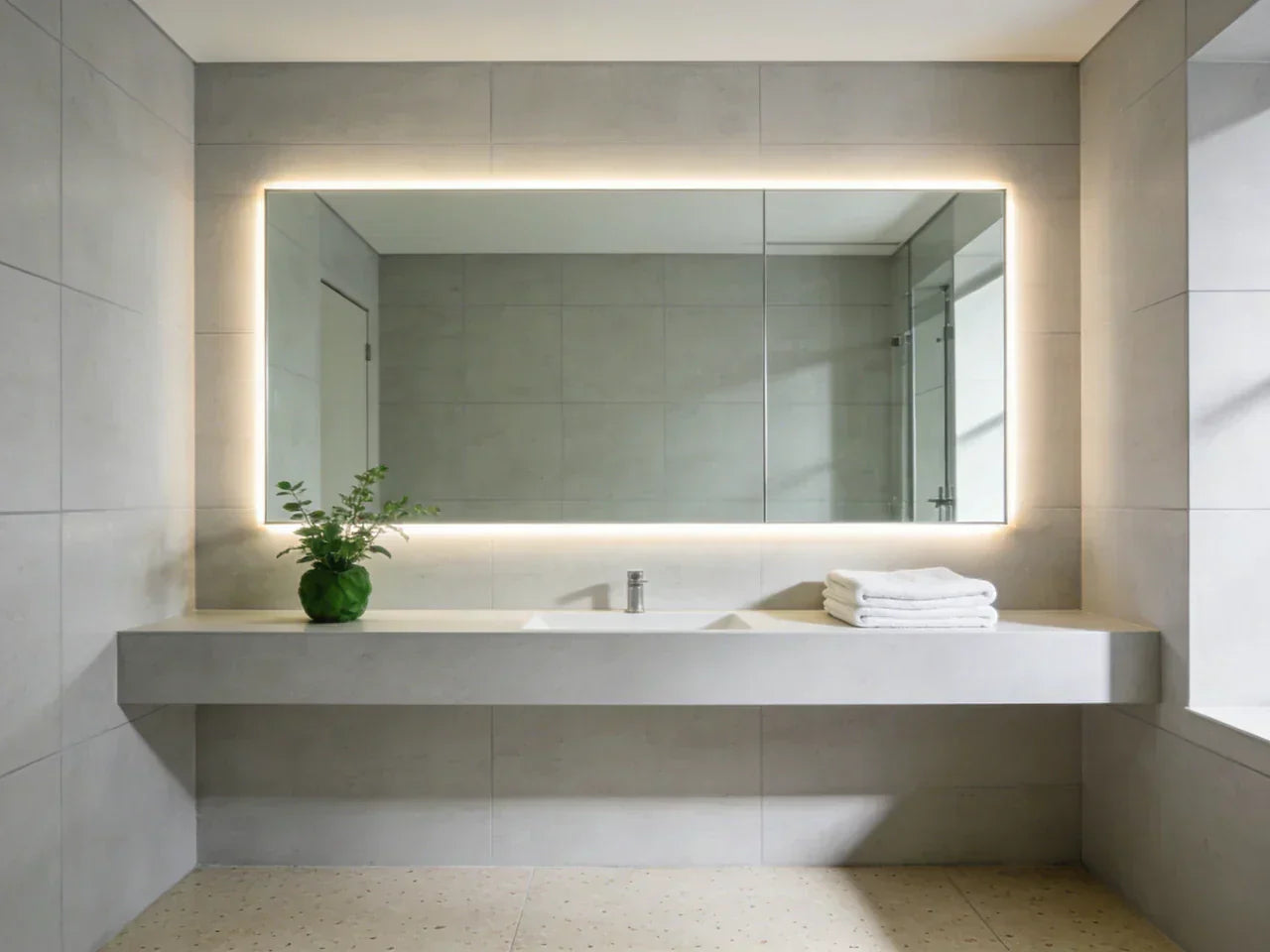
You can choose a frameless LED mirror for a very clean, modern look, or a framed mirror that echoes your faucet and hardware finish. A backlit bathroom mirror with light glowing from behind the glass creates a “floating” effect on the wall and looks great with tile. Edge-lit mirrors, where the light runs around the front edges, can highlight the mirror shape more strongly.
Choosing the Right Size for Small, Medium, and Large Bathrooms
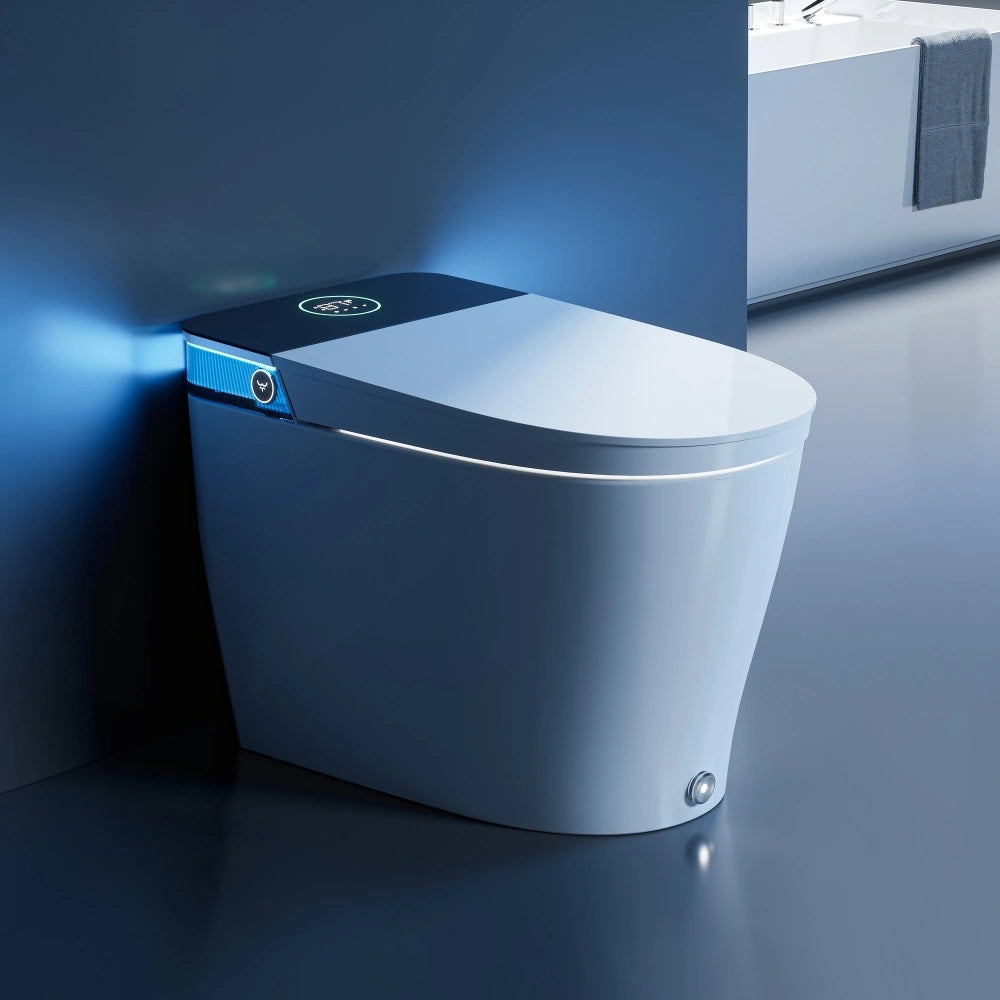
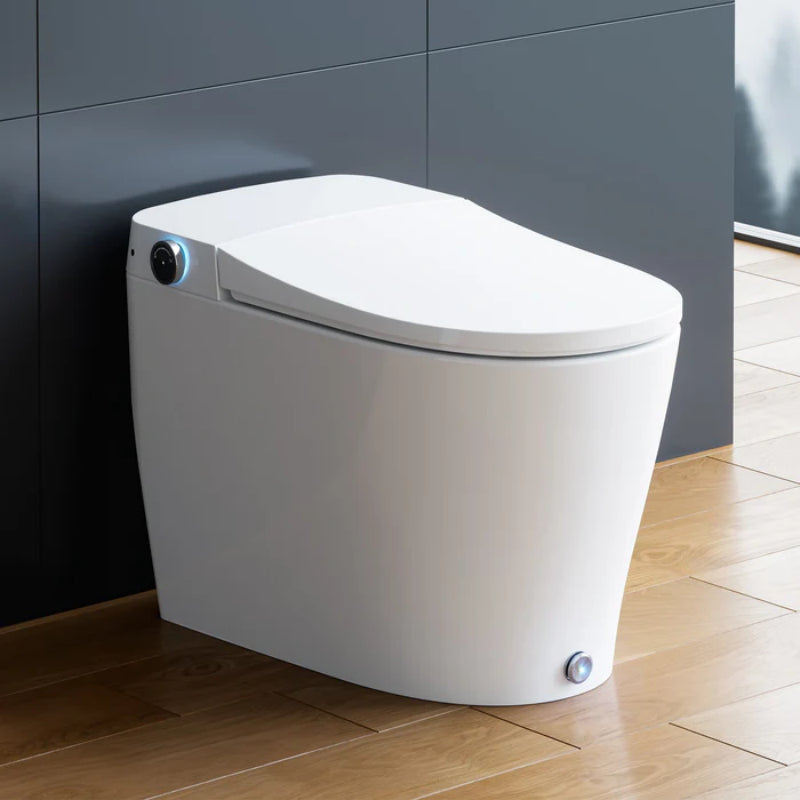
In a small bathroom or powder room, people often choose a slim, tall mirror to make the room feel higher and brighter. A frameless, backlit style can give a modern, open look and save space by removing the need for separate wall lights.Pairing it with a compact smart toilet helps maximize floor space while keeping the bathroom stylish and functional.
In a medium-sized family bathroom, a wide rectangular mirror above a single or double vanity is common. Here, a lighted vanity mirror bathroom design with adjustable brightness can act as the main task light while still working alongside ceiling lights.
In a large bathroom, you can look at extra-wide or even wall-to-wall mirrors. Some people use a combination of backlit mirrors and side sconces for a layered effect. Guest bathrooms often need less size but still benefit from a mirror that is big enough for different heights and easy to clean.
Placement, Mounting Heights, and Layered Lighting
For comfortable use, many installers center the mirror over the basin, both left-to-right and in height. A common guideline is to place the center of the mirror around 57–60 inches from the floor, but you should adjust this based on the height of the main users and the height of the vanity.
Even with a bright bathroom light mirror, it is smart to think about layered lighting. This means you use more than one source: the mirror for face light, overhead or recessed lights for general light, and perhaps a small accent or night light. This keeps the room safe, pleasant, and flexible.
To avoid glare, aim to mount the mirror at a height where you do not see bright LED dots directly. Good mirrors use diffusers to soften the light, but placement still matters. A simple drawn elevation plan (a flat drawing of the wall) can help you plan height, spacing, and nearby fixtures before drilling.
Where Should a Lighted Bathroom Mirror Be Placed?
-
Centered over the vanity and basin, with equal space on each side when possible.
-
High enough so all main users can see from at least the chest up.
-
With clear space from outlets and switches, so you can plug in devices safely and still reach controls.
-
With enough gap from the backsplash or faucet to avoid constant splashes.
-
In shared bathrooms, arranged so two people can use the mirror at the same time without crowding.
Installation, Power Options, and Safety Basics
Hardwired vs. Plug-In: Which Power Option to Choose?
Hardwired mirrors connect directly to your home’s electrical wiring inside the wall. They give a clean look with no visible cord and are best for long-term setups and remodels. They usually must be on a GFCI-protected circuit in bathrooms for safety.
Plug-in mirrors have a cord and plug into a standard outlet. They are good for renters or people who want an easier install with no changes inside the wall. You can use cord covers to keep things neat.
If you are unsure how LED mirrors get power, check the product specs. Some mirrors can be wired either way, but all should follow local electrical rules.
Step-by-Step Overview of Installing an LED Bathroom Mirror
This is a high-level overview, not a full wiring guide. Always follow the maker’s instructions and local code.
-
Plan the position
-
Measure and mark where the mirror will go.
-
Make sure the planned spot lines up with the vanity and has power access.
-
-
Find studs and mark holes
-
Use a stud finder to locate studs.
-
Mark mounting points according to the mirror’s bracket template.
-
-
Prepare the power connection
-
For hardwired mirrors, turn off power at the breaker.
-
Have a licensed electrician create or connect to a junction box if needed.
-
-
Mount brackets
-
Drill pilot holes.
-
Install anchors if there are no studs where needed.
-
Secure the mounting bracket level on the wall.
-
-
Connect wiring (hardwired only)
-
An electrician connects the mirror wires to the house wires (typically hot, neutral, and ground) following code and the wiring diagram.
-
-
Hang and secure the mirror
-
Lift the mirror and hook or screw it onto the bracket.
-
Test all functions: light, dimming, anti-fog, and any smart features.
-
For a plug-in mirror, steps are similar except you skip internal wiring: you simply plug into a GFCI outlet after mounting.
Safety in Wet Zones: Codes, IP Ratings, and Best Practices
Bathrooms have “wet zones” near tubs and showers, where water can spray on fixtures. Many countries and regions have rules that limit what can be installed there. For lighted mirrors for bathroom use, this often means:
-
Staying outside the direct splash area of showers unless the mirror is rated for that zone.
-
Selecting a durable shower door can help protect your mirror and maintain a clean, safe bathroom.
-
Choosing mirrors with IP44 or higher ratings near wet areas, which means protection from splashing water.
-
Making sure the circuit is GFCI-protected, so power cuts quickly if there is a fault.
Good practice also means not overloading circuits and not running cords where they can be pinched or damaged. If local rules require, use a licensed electrician for any new wiring or changes inside the wall.
Can I Install an LED Bathroom Mirror Myself?
-
DIY is often fine for plug-in mirrors and for basic mounting on the wall, if you are comfortable with simple tools and follow the instructions.
-
You should call an electrician for hardwiring, new circuits, moving junction boxes, or when your local building code requires a professional.
-
Poor installation can lead to mirrors falling, electrical shorts, or failure to meet code, which can affect insurance and safety.
When in doubt, especially in wet rooms, getting expert help is usually worth the cost.
Cost, Value, and Long-Term Savings
Price Ranges by Type and Feature Set
Prices for bathroom mirrors with lights depend on size, quality, and features:
-
Entry-level: Smaller mirrors with basic on/off LED lighting and no or minimal extra features. Good for guest baths, rentals, or tight budgets.
-
Mid-range: Medium to large mirrors with dimming, anti-fog, and adjustable color temperature. Often the sweet spot for family bathrooms.
-
Premium: Large or custom sizes, high CRI, advanced smart features, Bluetooth audio, and strong build quality. Often used in luxury remodels or master suites.
Features like custom sizing, etched patterns, or built-in smart displays can increase the price. Mass-market models cost less but may have lower build quality or a shorter warranty.
Energy and Maintenance Savings vs. Traditional Lighting
Because LEDs use much less energy and last far longer, their total cost of ownership can be much lower over time than mirrors that rely on incandescent or halogen bulbs. You also avoid regular bulb changes, which is a plus in a busy home or hotel.
Example 10-year cost comparison (one mirror, 2 hours/day, average power rate):
| Option | Approx. energy cost (10 yrs) | Approx. replacement cost | Notes |
| Incandescent bar + plain mirror | High | High (many bulbs) | More heat, more maintenance |
| Halogen bar + plain mirror | Medium-high | Medium | Better than incandescent, still waste |
| LED lighted bathroom mirror | Low | Low (no bulbs to swap) | Higher upfront cost, lower long-term |
Exact numbers depend on your power rate and usage, but the pattern is clear: lower power and fewer parts to replace save money over the years.
Calculating ROI: When Does a Lighted Mirror Pay for Itself?
Return on investment (ROI) comes from two main areas: energy savings and value added to your home.
For energy, you can:
-
Compare the wattage of your old vanity lights to the wattage of your new LED mirror.
-
Multiply the difference by your daily hours of use and your power cost.
-
See how long it takes for savings to equal the price difference.
In many homes, a good LED bathroom mirror with lights can pay back the price gap vs. a basic mirror and light bar in a few years, especially in a main bathroom used by several people.
In remodels, a modern smart mirror look can also increase buyer appeal. Home buyers often notice bright, clean bathrooms, and tech-forward features can help your listing stand out. For rental or hospitality properties, the longer lifespan and reduced maintenance can offer an even stronger payoff.
Do LED Bathroom Mirrors Use a Lot of Electricity?
-
A typical LED lighted vanity mirror bathroom setup might use 20–60 watts, depending on size and brightness.
-
If used 2 hours per day at an average power rate, many mirrors cost only a few dollars per year to run.
-
By comparison, hair dryers and space heaters use hundreds to thousands of watts, so your mirror is a very small part of your bathroom’s total energy use.
So no, they do not use a lot of electricity, especially when compared with older bulbs or other bathroom devices.
Lighted Bathroom Mirror Buying Guide for Different Users
Small Bathrooms, Rentals, and Budget-Friendly Options
If you have a small bathroom or you rent your home, your needs are a bit different:
-
Slim, frameless or backlit mirrors help rooms look bigger and avoid bulky fixtures.
-
Plug-in mirrors are easier to install without changing wiring, which keeps landlords happy.
-
On a tight budget, focus on brightness and basic anti-fog, rather than extras like built-in speakers.
A simple, well-placed bathroom light mirror can make a tiny powder room feel brighter and more stylish without major work.
Family Bathrooms and High-Traffic Spaces
Family bathrooms see heavy use, so durability and ease of use matter:
-
Look for shatter-resistant glass and sturdy mounts that stand up to kids and frequent cleaning.
-
Simple touch buttons or clear icons help all ages use the features properly.
-
Consider where water splashes are most likely and choose a mirror that can handle it, with a proper IP rating.
Shared bathrooms may also need mirrors that work well for people of different heights. A taller mirror or two separate mirrors over a double sink can help.
Luxury, Spa-Like, and Designer Bathrooms
If you are building or remodeling a spa-like main bathroom, you can treat the lighted mirror as a centerpiece:
-
Large-format or wall-to-wall mirrors can make the room feel like a boutique hotel.
-
Pair your mirror with a stylish freestanding bathtub to enhance the spa-like ambiance.
-
Combining backlighting with soft indirect wall lights can create a calm, relaxing glow.
-
Features like color-tunable LEDs, Bluetooth audio, and integrated smart displays support a high-end routine.
You can also tie the mirror into the materials in the room, such as stone, tile, or wood, to keep the design consistent.
Accessible and Senior-Friendly Bathroom Mirrors
For accessible or aging-in-place bathrooms, the key is ease and visibility:
-
Mount mirrors so seated users or people in wheelchairs can see themselves clearly. Lower heights or tilt-able designs can help.
-
Choose large, clear touch controls with backlighting or icons that are easy to read.
-
Use non-glare lighting with enough brightness to help older eyes see details without strain.
When combined with non-slip floors, grab bars, and good general lighting, an accessible bathroom mirror with lights can greatly increase comfort and safety.

Advanced Tech, Trends, and Sustainability in LED Mirrors
Smart Home Integration and Voice-Controlled Mirrors
One of the current trends in bathroom mirrors is smart integration. Many modern smart mirror models can:
-
Sync with home systems so you can say commands like “dim the vanity” or “set mirror light to warm white.”
-
Join morning routines that also adjust bedroom lights or play news.
-
Receive updates to improve performance or add functions over time.
If you plan to use voice control or app-based lighting scenes across your home, choosing a mirror that works with your chosen platform can make daily routines smoother. Just remember to keep software updated and use secure Wi‑Fi settings to protect your privacy.
Wellness and Circadian-Friendly Bathroom Lighting
Another trend is human-centric or circadian-friendly lighting. The idea is to match light color and brightness to your body’s natural day–night cycle:
-
Cooler, brighter light in the morning (around 4000–5000K) can help you feel more awake.
-
Warmer, dimmer light at night (around 2700–3000K) is gentler before sleep.
Some research suggests that exposure to bright blue-rich light late at night can affect sleep patterns. Using your lighted bathroom mirror at a warmer setting in the evening can support better sleep habits, while a cooler setting in the morning can help you start the day with focus.
Sustainable Materials, Recycling, and Low-Toxicity Design
Sustainability is not only about low energy use. Many makers now focus on:
-
Using recyclable aluminum frames and long-life LEDs to cut waste.
-
Choosing low-VOC (low chemical) adhesives, paints, and sealants, which help indoor air quality.
-
Designing mirrors so that they last a long time before needing replacement.
When your mirror does reach the end of its life, check e‑waste programs in your area. Because LED mirrors contain electronics, they should not go into normal trash. Many cities and waste services offer special drop-off points for these products.
Are LED Bathroom Mirrors Environmentally Friendly?
-
Yes, in many ways. They use far less energy, which means fewer emissions from power plants.
-
They last longer, so you replace them less often and send less waste to landfills.
-
LEDs are mercury-free, unlike many CFLs, which makes disposal safer.
-
To check eco claims, look for clear energy data, mention of compliance with efficiency rules, and any environmental labels recognized in your region.
If you care about “green” choices at home, a quality LED lighted bathroom mirror fits well with that goal.
Checklist and Next Steps
One-Page Pre-Purchase Checklist
Before you buy, run through this quick checklist:
-
Size and shape: Does the mirror fit your wall, vanity width, and ceiling height?
-
Brightness (lumens): Is it bright enough for grooming but dimmable for night use?
-
Color temperature (Kelvin): Can you set it around 4000–5000K for clear tasks, or adjust it warmer for relaxing?
-
CRI: Is it 90 or above for accurate skin and makeup colors?
-
Features: Do you need anti-fog, dimming, color-tuning, Bluetooth audio, or a clock?
-
Smart controls: Do you want touch buttons only, or app and voice control too?
-
Safety ratings: Is the mirror rated for bathroom use, with suitable IP rating and electrical certifications?
-
Power type: Will it be hardwired or plug-in, and do you have access to a GFCI-protected circuit or outlet?
-
Installation plan: Are you hiring an electrician, or can you install it yourself safely?
-
Budget and warranty: Does the cost fit your budget, and is the warranty at least a few years?
Quick FAQ Roundup About Lighted Bathroom Mirrors
1. Are lighted bathroom mirrors worth it?
Absolutely! They give you great face-level light, making makeup, shaving, and skincare way easier. LEDs save energy and last much longer than old bulbs. Plus, one mirror can instantly upgrade your bathroom, giving it a modern, polished look. Bonus: they cut down shadows on your face so you always look your best.
2. What is the current trend in bathroom mirrors?
Right now, the trend is all about clean, modern, and minimal designs—think large, frameless, backlit mirrors. Many come with smart features like touch controls, Bluetooth, or adjustable color temperatures. People prefer neutral or slightly warm white light and simple geometric shapes for a hotel-style, uncluttered feel. Simple, stylish, and functional—that’s what’s in.
3. What is the difference between a backlit mirror and a lighted mirror?
Backlit mirrors have LEDs behind the glass, giving a soft glow around the mirror without shining in your eyes. Front-lit or edge-lit mirrors have LEDs around the front edges or inside the glass, shining light directly on your face—perfect for makeup or shaving. Some mirrors combine both for soft ambient light plus strong facial illumination.
4. Do you need an electrician to install a LED bathroom mirror?
If it’s hardwired, it’s safest to hire an electrician. For plug-in models, you can usually mount it yourself—just make sure it’s secure and plugged into a GFCI outlet. If in doubt, calling a pro is always a smart move.
5. Which light is best for a bathroom mirror?
Go for neutral to cool white light, around 4000–5000K, with a high CRI (90+). It makes skin tones look natural and works best for makeup, shaving, or skincare. Dimmable or color-tunable mirrors are a nice bonus for flexible lighting—bright for tasks, soft for relaxing.
References


Leave a comment
This site is protected by hCaptcha and the hCaptcha Privacy Policy and Terms of Service apply.