
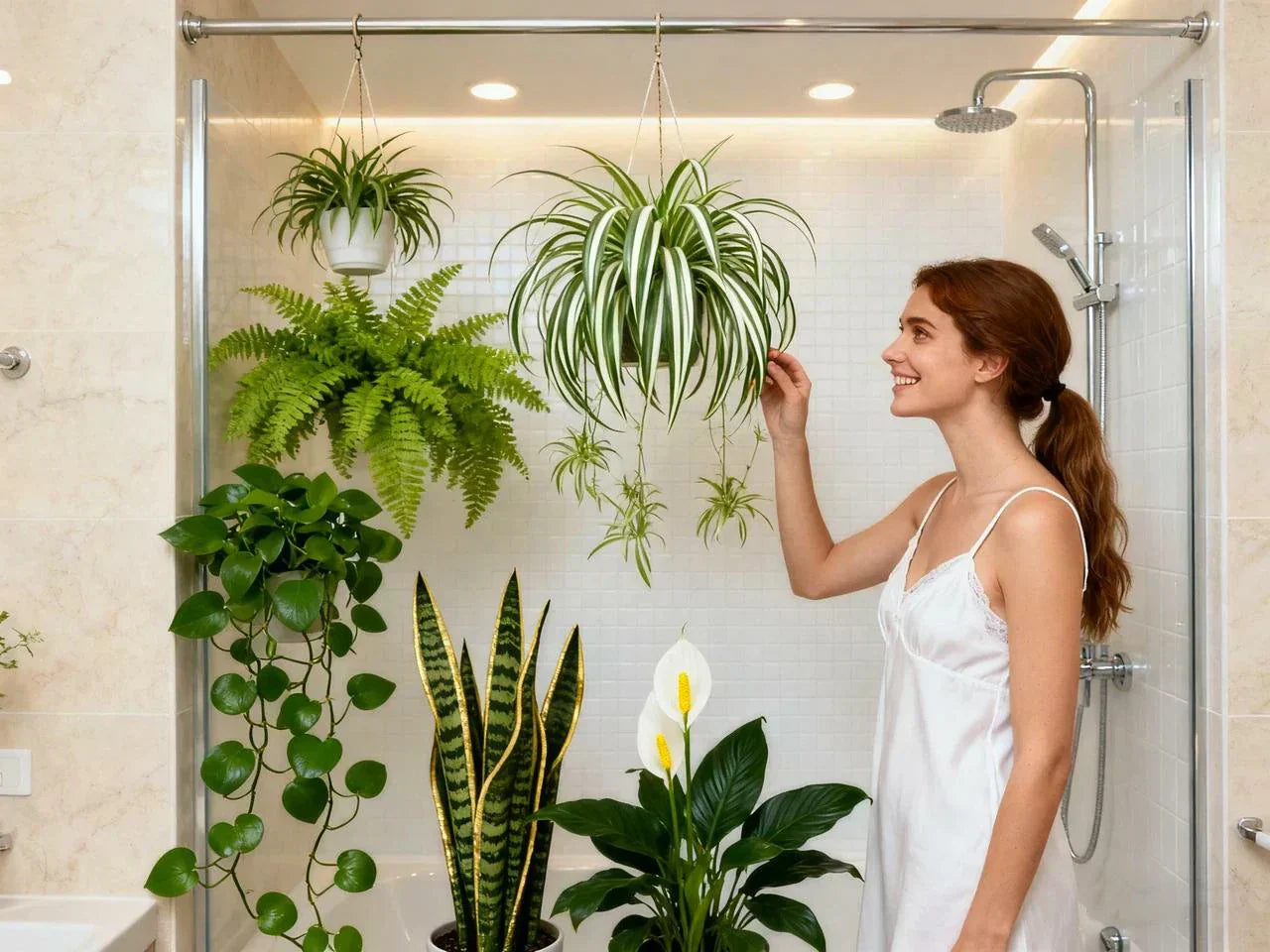
Shower plants are one of the easiest ways to turn a basic bathroom into a spa-like retreat while quietly improving your air quality and mood. When you pick the right plant for the shower, you get cleaner air, softer humidity, and a calming green view while you wash. Many humidity-loving indoor plants actually prefer steam, lower light, and splashes of moisture in the air. That makes bathroom shower plants a smart choice if you want low-effort greenery.
In this guide you’ll learn which plants are good to keep in the shower, how to match them to your light and space, the science-backed benefits of plants in the shower, placement ideas, a simple care calendar, and real fixes for common problems like mold, yellow leaves, and slow growth.
Quick Answers – Best Shower Plants & Key Benefits
If you only read one section, start here.
These are some of the best plants for showers that most people can grow with ease:
-
Spider Plant – Easiest air-purifying shower plant for beginners.
-
Snake Plant – Nearly indestructible, handles low light and filters toxins.
-
Boston Fern – Loves steam and higher humidity; soft, lush foliage.
-
Peace Lily – Helps absorb moisture and reduce mold spores in the air.
-
Pothos (Golden Pothos) – Trails well from shower caddies and rods.
-
English Ivy – Great for hanging baskets; tolerates steamy bathrooms.
-
Aloe Vera – Likes bright, indirect bathroom light; useful soothing gel.
-
Eucalyptus (fresh bundles) – Hung from the shower head for scent and easy spa vibe.
Benefit snapshot of shower plants
-
Help filter indoor air and balance humidity in wet rooms.
-
Support a calmer mood and make a small bath or walk‑in shower feel like a spa.
-
Can absorb part of the extra moisture in the air, which may limit damp corners where bathroom mold can grow.
-
Fit well in tight spaces when you hang plants in your shower or use shelves and caddies.
So if you are asking, “What plants are good to keep in the shower?” start with spider plant, snake plant, Boston fern, peace lily, pothos, and English ivy. They are proven shower plant “workhorses” that most people grow successfully.
How to Choose Shower Plants for Your Bathroom
Before you buy plants for the shower, pause and look at your space. Two bathrooms can look similar but feel very different for a plant.
Check Your Shower Conditions First
Start with your light. Step into your shower during the day and ask:
-
Can you read a book easily without turning on the light? That usually means bright natural light.
-
Is it dim, but you can still see shapes and colors? That’s low to medium light.
-
Is your bathroom windowless and always needs the light switch? That means no useful natural light.
Indoor light is often described by “lux,” but you do not need a meter. As a rough idea:
-
Very low light is under about 500 lux (many windowless bathrooms).
-
Medium is roughly 500–2,000 lux (small or frosted window).
-
Bright indirect light is often 2,000–10,000 lux (large window or skylight).
Next, think about humidity. Do you take long hot showers every day? Does steam fog the mirror and linger, or does a fan clear it in a few minutes? Showers that run daily with weak ventilation create very high humidity and more moisture in the air. Tropical plants that love humidity do well here.
Last, consider temperature swings. Some bathrooms get very hot when the shower is on and then cold when the window is open. Many tropical houseplants can handle this, but desert plants such as cacti and some succulents may struggle when they sit in constantly wet air.

Key Selection Criteria
When you choose bathroom plants or plants inside the shower, keep these points in mind:
-
Humidity tolerance: Pick plants that love humidity and can handle steam and damp air. Ferns, pothos, philodendron, air plants, orchids, and many tropical plants fit this.
-
Light needs: Match the plant’s light needs to your real light. Low‑light shower greenery like snake plant, ZZ plant, and peace lily work in dim bathrooms. Orchids and aloe need brighter indirect light near a window.
-
Space and layout: A tiny tub‑shower combo needs hanging plants or slim wall planters; a large walk‑in or wet room can handle floor pots and plant stands.
-
Toxicity: If you have pets or young kids, look for pet‑safe shower plants such as spider plant, some ferns (like Boston and bird’s nest fern), and many peperomia. Avoid more toxic plants in reach, like peace lily, philodendron, and pothos, if curious pets chew leaves.
-
Maintenance level: Want plants you almost never think about? Go for snake plant, pothos, ZZ plant, or lucky bamboo. If you enjoy plant care as a hobby, you may like more sensitive plants like calathea or certain orchids.
Quick-Reference Table: Is Your Shower Suitable?
Use this table as a simple guide when you match shower type to plant types.
| Shower Type | Natural Light | Best Plant Types | Avoid in This Setup |
| Windowless shower, good exhaust fan | No natural light | Snake plant, ZZ plant, pothos, peace lily + small grow light | Cacti, aloe, high-light succulents |
| Small frosted window above bathtub | Low to medium, indirect | Spider plant, golden pothos, philodendron, bird’s nest fern | True desert plants; full-sun herbs |
| Large window or skylight, walk-in | Bright indirect or some direct sun | Aloe vera, moth orchid, air plants, staghorn fern, peperomia | Shade-only plants if in harsh hot sun |
| Family bathroom with pets and kids | Low to medium, mixed | Spider plant, Boston fern, bird’s nest fern, lucky bamboo | Peace lily, pothos, philodendron, English ivy |
This quick check helps you choose plants that thrive in showers rather than forcing the wrong species to “put up” with your space.
Best Shower Plants at a Glance (Expert-Backed Table)
These top shower plants come up again and again in research on indoor air quality, expert gardening advice, and popular #showerplants social posts. The table below compares how they handle light, steam, and splash so you can spot the right plant fast.
| Plant | Care Level | Light Needs | Splash / Steam Tolerance | Size (Typical Indoors) | Toxicity (Pets/Kids) | Air Quality / Mold Benefit | Best Placement in Shower Area | Pro Tip |
| Spider Plant | Beginner | Low–bright indirect | High steam, light splash | Small–medium | Generally pet‑safe | Good air purifier; helps with VOCs | Hanging in corner, high shelf | Let baby “spiderettes” trail or pot them up as new shower plants. |
| Snake Plant | Beginner | Low–medium | Tolerates humidity; avoid soggy | Medium–tall | Toxic if chewed | Filters some common indoor toxins | Floor corner, away from direct spray | Use a heavy pot so tall leaves do not tip in a wet space. |
| Boston Fern | Intermediate | Medium indirect | Loves steam, dislikes drying out | Medium | Often pet‑safe | Great in high humidity; may help with airborne spores | Hanging basket, over‑shower caddy | Keep soil lightly moist; never let it go bone‑dry. |
| Peace Lily | Beginner | Low–medium | Enjoys humidity, light splash | Medium | Toxic if eaten | Known to reduce mold spores and filter pollutants | Just outside shower, on stool or shelf | Wipe leaves often so they keep filtering air well. |
| Pothos (Golden) | Beginner | Low–medium | High humidity, some splash | Trailing vine | Toxic if chewed | Good general air purifier | Trailing from caddy, curtain rod, wall hooks | Trim vines often to keep them from blocking the shower. |
| English Ivy | Intermediate | Medium indirect | Likes humidity, avoid soggy soil | Trailing/climbing | Toxic if eaten | Lab tests found it can remove up to ~78% airborne mold | Hanging basket, high shelf near window | Train vines along a simple grid or rod for a living “green curtain.” |
| Aloe Vera | Beginner | Bright indirect | Low steam; hates constant splash | Small–medium | Mildly toxic if chewed in large qty | Helps clean air; stores water in leaves | Near bright window, outside direct spray | Use a pot with lots of drainage; let soil dry between waterings. |
| Eucalyptus (bundles) | Very easy | N/A (cut stems) | Loves steam as cut greenery | Varies | Often unsafe for pets if ingested | Scent may ease stuffy feelings for some people | Tied to shower head | Replace bundles every 1–3 weeks as scent fades. |
| ZZ Plant | Beginner | Low–medium | Handles humidity, dislikes soggy | Medium | Toxic if eaten | Helps with general indoor air quality | Floor, vanity, or niche outside direct spray | Water only when soil is dry; very easy to overwater in humid rooms. |
| Moth Orchid | Intermediate | Bright indirect | High humidity, no direct splash | Medium, upright | Generally non‑toxic | Some air‑cleaning; main benefit is mood and beauty | Ledge near window, away from shower spray | Use orchid bark, not regular potting soil, to protect roots. |
| Air Plants (Tillandsia) | Beginner | Bright–medium | Love humidity; can handle spray | Tiny–small | Generally pet‑safe | Help a bit with air; great for tiny spaces | Mounted on wall, in wire baskets, on caddies | Let them dry fast after soaking; do not keep them sitting in water. |
| Lucky Bamboo | Beginner | Low–medium | Enjoys humidity; no direct blast | Small | Often pet‑safe if true bamboo | Simple, low‑mess greenery | Counter, niche, or shelf near shower | Rinse container often so standing water stays fresh. |
| Philodendron (Heartleaf) | Beginner | Low–medium | High humidity, light splash | Trailing/climbing | Toxic if eaten | Good foliage filter in steamy bathrooms | Hanging planter, curtain rod, wall trellis | Give it something to trail or climb so it stays tidy. |
| Calathea | Intermediate | Low–medium | Loves humidity, hates cold drafts | Small–medium | Often pet‑safe | Adds lush, patterned foliage; supports moist air feel | Outside direct spray, on stool or shelf | Use soft, filtered water to avoid brown edges on leaves. |
| Bird’s Nest Fern | Beginner–inter | Medium indirect | Thrives in high humidity | Medium rosette | Often pet‑safe | Great in steamy bathrooms; adds jungle feel | Wall mount, hanging basket, corner stool | Keep center “nest” free of standing water to avoid rot. |
| Staghorn Fern | Intermediate | Bright indirect | Loves steam; epiphytic plant | Medium–large mounted | Often pet‑safe | Grows on boards with moss; loves moist air | Mounted on wall away from direct spray | Soak the moss mount, then let it drip‑dry before rehanging. |
Notice how many of these humidity‑loving plants are tropical or epiphytic plants (they grow on trees in nature). They often love the higher humidity and moisture in the air that your daily shower creates.
In-Depth Guide to the Top 15 Shower Plants
Let’s walk through the best shower plants in more detail so you can match each one to your own bathroom.
Spider Plant
Spider plant is one of the easiest bathroom shower plants for beginners. It thrives in medium to bright indirect light but can handle low‑light showers for a while. It loves humidity, so steam from hot baths helps keep its arching leaves fresh. Keep the soil slightly moist but not soaked. Spider plants look great hanging in a corner of the shower area or on a high shelf, with baby “spiders” trailing down. They are generally non‑toxic, so they fit well in homes with kids and many pets.
Snake Plant (Sansevieria)
Snake plant is the classic “I forget to water” shower plant. It copes with low light, dry spells, and steamy air. It does not like to sit in water, though, so keep the pot on a stand away from the direct path of the shower. Use well‑draining soil and a container with drainage holes. Snake plant is one of the indoor plants often named in air‑quality tests for filtering some common indoor pollutants. In a small bath or walk‑in shower, it adds tall, strong lines that suit a simple, modern vibe.
Boston Fern
If you want a softer, jungle feel, Boston fern is a great shower plant. It loves higher humidity and daily steam, so it works well in a bathroom where people shower every day. It prefers medium indirect light and soil that stays lightly moist. If the soil dries out too much, fronds turn brown and crisp, especially at the tips. Hang a Boston fern in a basket, or rest it in a hanging shower caddy that does not stay soaked. It can also sit just outside the shower on a plant stand so it gets steam but less splash.
Peace Lily
Peace lily is a common answer when people ask, “What plant is good for bathroom air quality?” It tolerates low to medium light and enjoys humidity. Research inspired by NASA’s clean air tests has noted peace lily’s ability to help reduce airborne mold spores and other pollutants. It does best when the soil stays slightly moist but not muddy. Because it is toxic if chewed, keep it out of reach of pets and small children. Place it on a stool, wide ledge, or vanity just outside the shower zone so it enjoys steam but avoids strong spray.

English Ivy
English ivy is a classic trailing plant that works well in steamy bathrooms. It enjoys humidity in the air but needs its soil to drain well. It prefers medium indirect light and does best near a bathroom window or under a skylight. A well‑known lab test found that English ivy can remove up to about 78% of airborne mold in a controlled space over a short time, which is why many sources mention it when talking about bathroom mold and plants. Hang ivy in a basket from the ceiling or high shelf and let it trail along a curtain rod or simple wall grid.
Pothos (Devil’s Ivy / Golden Pothos)
Golden pothos in bathroom is a star when it comes to plants in the shower that are easy to grow. It handles low to medium light, higher humidity, and the odd missed watering. It trails in long vines, so it looks great hanging from over‑the‑shower caddies, curtain rods, or hooks on the wall. So, can pothos live in a bathroom without a window? It can survive for a while in a low‑light bath, but no plant can live forever with zero light. In a windowless space, either:
-
Add a small grow light near the shower, or
-
Move the pot to a brighter room for a few days each week.
This simple habit lets pothos keep its lush foliage even in very dim bathrooms.
Aloe Vera
Aloe vera is a desert plant, but it still can be a good bathroom plant if you have bright light. It prefers bright, indirect sunlight near a window or under a skylight. It does not like constant splash or staying wet, so place it outside the direct shower spray. Let the soil dry almost fully between waterings; the thick leaves store water. Aloe gel is well known for soothing minor skin irritation and small burns, so keeping a pot in the bath has both a fresh look and a practical use.
Eucalyptus (Fresh Bundles)
Fresh eucalyptus is not usually grown as a potted shower plant indoors, but cut stems tied in a bundle are a strong trend. People hang bundles from the shower head so steam releases the plant’s natural scent. Many people feel this helps clear their sinuses and makes their shower feel like a spa. Replace the stems every one to three weeks, or when the leaves fade and smell less. Keep in mind that eucalyptus can be unsafe for pets if ingested, so do not let pets chew leaves that fall into the bath.
ZZ Plant
ZZ plant is an excellent option if you want low‑light shower greenery that tolerates some neglect. It grows in low to medium light and handles high humidity well, but it dislikes soggy soil. In fact, the main way people fail with ZZ plant in the bath is by watering too often. In a humid shower area, it may need water only every few weeks. The waxy, deep green foliage brings a strong, modern look to small bathrooms. Keep it on the floor in a corner, or on a low stool just outside the shower.
Moth Orchid (Phalaenopsis)
Moth orchids grow on trees in nature; they are epiphytes, so they love humidity and air around their roots. That makes them a natural fit for steamy, bright bathrooms. They need bright, indirect light—think near a frosted window or under a skylight with no harsh direct midday sun. Use a clear plastic pot with orchid bark, not regular soil, so roots stay airy. Keep orchids away from direct spray; droplets that sit in the crown of the plant can cause rot. With the right lighting and humidity, moth orchids grow and bloom for months, adding strong spa energy to your bath.
Air Plants (Tillandsia)
Air plants are epiphytic plants too, which means they grow without soil on trees or rocks in nature. Tillandsia naturally enjoy high humidity and good airflow, so they are perfect for tiny bathrooms where you do not have space for pots. You can mount them on pieces of wood, hang them in small wire cages, or rest them in a dry corner of a shower caddy. They can tolerate occasional splash, but they should dry out within a few hours. Soak them in water for about 20–30 minutes once a week, then let them dry upside down before returning them to the shower.
Lucky Bamboo
Lucky bamboo is often grown in water, which can work well in a bathroom. It likes low to medium indirect light and steady moisture in the container. High humidity from showers helps keep its narrow leaves fresh. Keep the stems away from direct spray and change the water often so it stays clear and fresh, especially in a warm bath where bacteria grow faster. Some forms of lucky bamboo are safer than others for pets, so check your specific plant type if animals like to nibble.
Philodendron (Heartleaf)
Heartleaf philodendron is another adaptable trailing houseplant that thrives in steamy bathrooms. It prefers low to medium indirect light and loves humidity, making it one of the plants that thrives in showers with regular use. The vines trail and can be trained along hooks, rods, or simple wall trellises. In very low light it may grow more slowly or look leggy, so consider a small grow light if your bathroom has no window. Keep the soil slightly dry between waterings in a humid room to avoid rot.
Calathea
Calathea has striking patterned foliage and folds its leaves slightly at night. It prefers medium to low indirect light and consistently high humidity, so a steamy bathroom is a great match. It can be more sensitive than other shower plants. Hard tap water with lots of minerals can cause brown leaf tips, so using filtered or rainwater often helps. Place calathea on a stool or shelf away from strong drafts or direct spray. In the right indoor microclimate, it makes a bath feel lush and vibrant.
Bird’s Nest Fern or Staghorn Fern
Both bird’s nest fern and staghorn fern make great bathroom plants for steamy bathrooms. Bird’s nest fern grows from a center “nest” of fronds and enjoys medium indirect light and high humidity. Staghorn fern is an epiphyte often mounted on wood with moss; it looks like living wall art in a shower area. Both prefer to stay moist but not waterlogged. For bird’s nest, keep water out of the central cup to avoid rot. For staghorn, soak the moss mount in water every week or so, then let it drip‑dry before rehanging it on the bathroom wall.
Placement Strategies for Shower Plants
Choosing the right plant is half the job. The other half is where you put it. Think of your shower like a mini landscape: high, mid, and low levels, plus “dry” and “wet” zones.
Where to Put Plants Inside Shower
Plants inside the shower must handle splash and very high humidity, so choose species like pothos, air plants, Boston fern, spider plant, and some philodendron. Hang them from:
-
High corners using ceiling hooks and macramé hangers.
-
Over‑the‑shower caddies with trailing plants that can drape down.
-
Wall‑mounted pots or suction‑cup planters that drain well.
Keep pots with soil out of constant direct spray. Even humidity‑loving plants do not want soil that stays wet all day. Air plants and mounted staghorn ferns handle brief spray better, because they dry faster. Desert plants like aloe or plants with fuzzy leaves should stay in drier spots.

Just Outside the Shower Zone
If you worry about splash, place plants just outside the shower curtain or glass panel. Good spots include window sills, built‑in niches, corner stools, or narrow plant stands. This way, plants enjoy moist air but the soil does not stay soaked.
Avoid resting pots on floors that stay wet after every bath. Constant standing water under pots can lead to rot and mold. Use trays with pebble layers so excess water drains and evaporates without touching the base of the root ball.
Layout Examples (Picture Them)
Think about these simple “mental diagrams”:
-
Tiny apartment shower: One pothos hanging from a tension rod plus a small spider plant on a high shelf. This keeps floor space clear.
-
Family tub/shower combo: A Boston fern in the top section of a shower caddy and a trailing philodendron hanging from the curtain rod. Both plants enjoy steam but stay above most splashes.
-
Large walk‑in shower: A staghorn fern mounted on the wall near the entrance, a tall snake plant on a small stool in a drier corner, and air plants in a wire grid higher up. Different heights add depth and a real spa feel.
As you plan, ask yourself: Can this plant tolerate wet leaves? Will water drain from this pot? This quick check prevents most problems.
Care & Maintenance for Bathroom Shower Plants
Shower plants are usually easier to care for than many other houseplants because the bathroom does part of the work for you. Steam adds moisture to the air, so you often water less. Still, a bit of routine keeps them at their best.
Shower Plant Care Calendar
You can follow a simple rhythm:
Every week:
- Check soil moisture with your finger. Only water if the top 2–3 cm feel dry for most tropical plants.
- Remove dead or yellow leaves so rot does not spread.
- Wipe off any heavy condensation on leaves or pots.
Every month (during growing season):
- Rotate pots so each side gets some light.
- Gently clean dusty leaves with a damp cloth so they can “breathe” better.
- Give a light dose of balanced fertilizer to plants that are actively growing.
Every season:
- In winter, many bathrooms are cooler and showers may be shorter, so water less often.
- In summer, you may run fans more, which can dry plants, so check moisture a bit more often.
Think of it like a quick bathroom check‑in, not a long chore list.
Watering & Humidity Tips
High humidity from the bath means you usually do not need to mist shower plants every day. In fact, too much water on leaves can promote fungal spots. Watch for signs of overwatering in humid bathrooms: mushy stems, sour smell from the pot, or fungus gnats flying around the soil.
Use well‑draining soil and pots with drainage holes. A layer of pebbles in the saucer lets extra water drain away while still boosting humidity around the plant. This is especially helpful for ferns and calathea.
Common Problems & Fixes
If you keep plants in your shower, you may see a few patterns:
-
Yellowing leaves: Often a sign of too much water or poor drainage. Let the soil dry more between waterings and check that water can drain from the pot.
-
Brown tips on ferns: This can mean low humidity or hard tap water with many minerals. In a steamy bathroom, water quality is often the cause, so try filtered or rainwater.
-
Fungal spots or mildew on leaves: Usually due to wet leaves that never dry and poor airflow. Run the exhaust fan after showers, and avoid constant misting. Trim badly affected leaves.
-
Slow or leggy growth: Often from lack of light. If you have no window, consider a small grow light rated for indoor plants, or move plants to a brighter room for a few days each week.
Ask yourself these simple checks: Is the plant getting enough light? Is the soil too wet? Is there airflow? That covers most issues.

Health, Air Quality & Mold – What Science Says
Bringing plants into your bathroom isn’t just a decorative choice. Beyond their aesthetic appeal, certain houseplants can slightly improve air quality, help regulate humidity, and even contribute to a calmer, more relaxing atmosphere. While they won’t replace good ventilation or proper cleaning, shower-friendly plants can complement a healthy bathroom environment and support your well‑being.
Air Purification & Humidity Regulation
Early NASA studies on indoor plants showed that certain houseplants—such as snake plant, spider plant, peace lily, English ivy, and some ferns—can help remove some indoor air pollutants in sealed test rooms. While your bathroom is not a lab, these plants still add a small but helpful boost to indoor air quality.
Plants also release moisture. Some research teams have estimated that plants can add roughly 10% of indoor moisture in regular homes, based on data from the U.S. Environmental Protection Agency (EPA). In a bathroom, this means they can help smooth out dry spells after you run fans or heating, giving a more stable indoor microclimate.
Mental Health & Biophilic Design
Studies on indoor greenery and “biophilic design” (bringing nature into buildings) often find that people report lower stress and better mood when they see live plants daily. A green view from the shower or bath can make a rushed morning feel calmer. In recent home design trends for 2025, spa‑like bathrooms with plants are now very common because they are linked with higher comfort and a sense of care for personal well‑being.
Mold & Microclimate Considerations
Many people ask, “What are the benefits of shower plants for mold control?” Plants like peace lily and English ivy are often mentioned because they can help reduce airborne mold spores in lab tests. Having plants that absorb some moisture and improve airflow around wet corners may help reduce areas where mold starts.
But plants do not replace good ventilation. To keep bathroom mold under control:
-
Run your exhaust fan during and after showers.
-
Crack the door or window to let steam escape.
-
Avoid letting water sit in saucers or under pots.
Shower plants can be part of a healthy bathroom microclimate, but they work best along with basic bathroom care.
Design Ideas & Plant Combos for Spa-Like Showers
You can treat your shower plants like a small design project. Different combos create different moods.
Style-Driven Plant Combos
If you like a minimal look, choose one or two structural plants—maybe a tall snake plant on a low stool and a compact ZZ plant near the vanity. Simple lines, easy care.
For a jungle vibe, mix layers: a Boston fern hanging high, golden pothos winding along a curtain rod, and a bird’s nest fern on a bench. The different leaf shapes make the space feel lush.
For a calm spa, think soft and clean: a white moth orchid near the window, a peace lily on a shelf, and a small eucalyptus bundle tied to the shower head. Pale pots, stone or bamboo accessories, and neutral towels tie it together.

Color, Texture & Container Choices
Use containers to link your shower plants to your tile and fixtures. White or soft gray pots blend into most bathrooms. Natural materials like bamboo, cork, or stone add warmth. If your bath has bold tiles, choose simple pots and let the foliage stand out.
Vertical plant walls or small grid trellises can hold trailing plants like ivy, philodendron, or pothos without using floor space. Just make sure any wall mount allows water to drain and dry.
Real-Life Shower Setups
Many plant lovers share “plants in your shower” photos on social media:
-
A small rental bath with a single spider plant in the shower and pothos in the bathroom window.
-
A busy family bathroom with a fern in the caddy and air plants stuck into a simple wall grid.
-
A windowless bath where plants sit under a slim grow light, proving that even low‑light spaces can support greenery with a tiny boost.
Ask yourself: What mood do I want when I step into the bath? Then choose 1–3 plants that match that feeling.
Interactive Tools & Resources
You can keep things light and fun with simple “tools,” even if they are just ideas you use on paper.
Shower Plant Selector Quiz
Imagine a quick quiz you fill out:
-
How big is your shower area?
-
Do you have a window or skylight?
-
How often do you shower each week?
-
Do you have pets or kids?
-
How much time do you want to spend on plant care?
Based on your answers, you might get sets like: “low‑light, pet‑friendly, very easy to grow” (spider plant, Boston fern, air plants), or “bright, spa‑like, loves humidity” (moth orchid, staghorn fern, philodendron).
Checklists & Calendars
You can make a simple checklist in a notebook or notes app:
-
Choose 2–3 plants matched to your light.
-
Pick safe placements away from constant splash.
-
Set weekly and monthly reminders for checks and cleaning.
A monthly care calendar helps you remember small tasks like rotating pots or giving a light fertilizer dose.
Photo Gallery & Inspiration Board
Keeping a small inspiration folder on your phone helps too. Save examples of shower plants you like: maybe a staghorn fern on a painted wall, or air plants hanging in front of a frosted window. When you plan changes, you can compare what you see in your bath to what inspired you.
Conclusion – Key Takeaways on Shower Plants
Shower plants are a simple, research‑backed way to improve bathroom air quality, balance humidity, and boost your mood while also upgrading your bath design. When you choose humidity‑loving, low‑light‑friendly species and place them wisely, they often grow better in the shower than in drier rooms.
Start with a couple of hardy favorites such as spider plant, golden pothos, and snake plant. Match each plant to your real light and humidity, not what you wish you had. Follow a basic care rhythm—check soil weekly, clean leaves monthly, and adjust watering with the seasons. Watch early signs of stress like yellow leaves or brown tips so you can fix small problems fast.
You do not need to turn your bathroom into a jungle overnight. Try one small shower plant first, see how it does, then add more plants for the shower as your confidence grows. Save this guide, sketch your ideal shower area, and enjoy creating a greener, calmer bathroom that works with your daily routine.
FAQs
1. What plants are good to keep in the shower?
There are several great options if you want to add greenery to your shower without much hassle. For beginners, spider plants and snake plants are top picks—they are super forgiving, love humidity, and don’t mind low light. Boston ferns and peace lilies thrive in steamy environments, while pothos and English ivy trail beautifully from caddies or curtain rods. Aloe vera works well if you have bright, indirect light, and eucalyptus bundles can hang from the showerhead for a fresh spa-like scent. Basically, look for plants that tolerate humidity and occasional splashes, and you’ll have a thriving shower garden.
2. What plant removes 78% of airborne mold?
English ivy is the superstar here. Lab tests have shown that it can remove up to around 78% of airborne mold in controlled spaces over a short period. That’s why many people recommend it for bathrooms—especially if you’re trying to reduce mold spores in the air. Just remember, while it helps, it doesn’t replace proper ventilation or cleaning; it’s more like a helpful little assistant in your shower.
3. What are the benefits of shower plants?
Shower plants aren’t just pretty—they bring multiple perks. First, they can help filter indoor air and slightly reduce pollutants like VOCs. Second, they love humidity, which can make your bathroom microclimate more stable and prevent overly dry air after you run fans or heaters. Third, having greenery in the bathroom has mental health benefits; seeing live plants daily can boost your mood, reduce stress, and make your shower feel more like a spa retreat. Finally, some plants, like peace lily and ivy, can help limit areas where mold grows by absorbing extra moisture and improving airflow around wet corners. So it’s a mix of aesthetic, health, and practical benefits.
4. What plants are good for steamy bathrooms?
Steamy showers are a dream for tropical, humidity-loving plants. Think Boston ferns, bird’s nest ferns, spider plants, peace lilies, philodendrons, golden pothos, English ivy, air plants, moth orchids, and staghorn ferns. These plants thrive with high humidity and occasional splashes, so your daily hot shower actually helps them grow. Just make sure their soil isn’t constantly soggy—most of them love moist air but not wet roots.
5. Why do people hang plants in showers?
Hanging plants in the shower is both practical and aesthetic. Practically, it keeps pots off the floor where water can accumulate, which reduces the risk of root rot or mold in saucers. It also lets plants catch the warm, humid air near the ceiling, which many tropical species love. Aesthetically, trailing vines or hanging baskets give your shower a spa-like, layered look, adding greenery at eye level or above without cluttering floor space. Plus, it creates a mini indoor jungle effect that’s relaxing to step into each morning.
6. Can pothos live in a bathroom without a window?
Yes, pothos is one of the hardiest low-light plants, so it can survive in a windowless bathroom for a while. However, “survive” isn’t the same as “thriving.” Without any light, it may grow more slowly or start looking a bit leggy. The trick is to give it a little help: use a small grow light near the shower, or occasionally move the pot to a brighter room for a few days a week. With that small boost, your pothos can stay lush and green even in a dim bathroom.
Reference



Leave a comment
This site is protected by hCaptcha and the hCaptcha Privacy Policy and Terms of Service apply.