
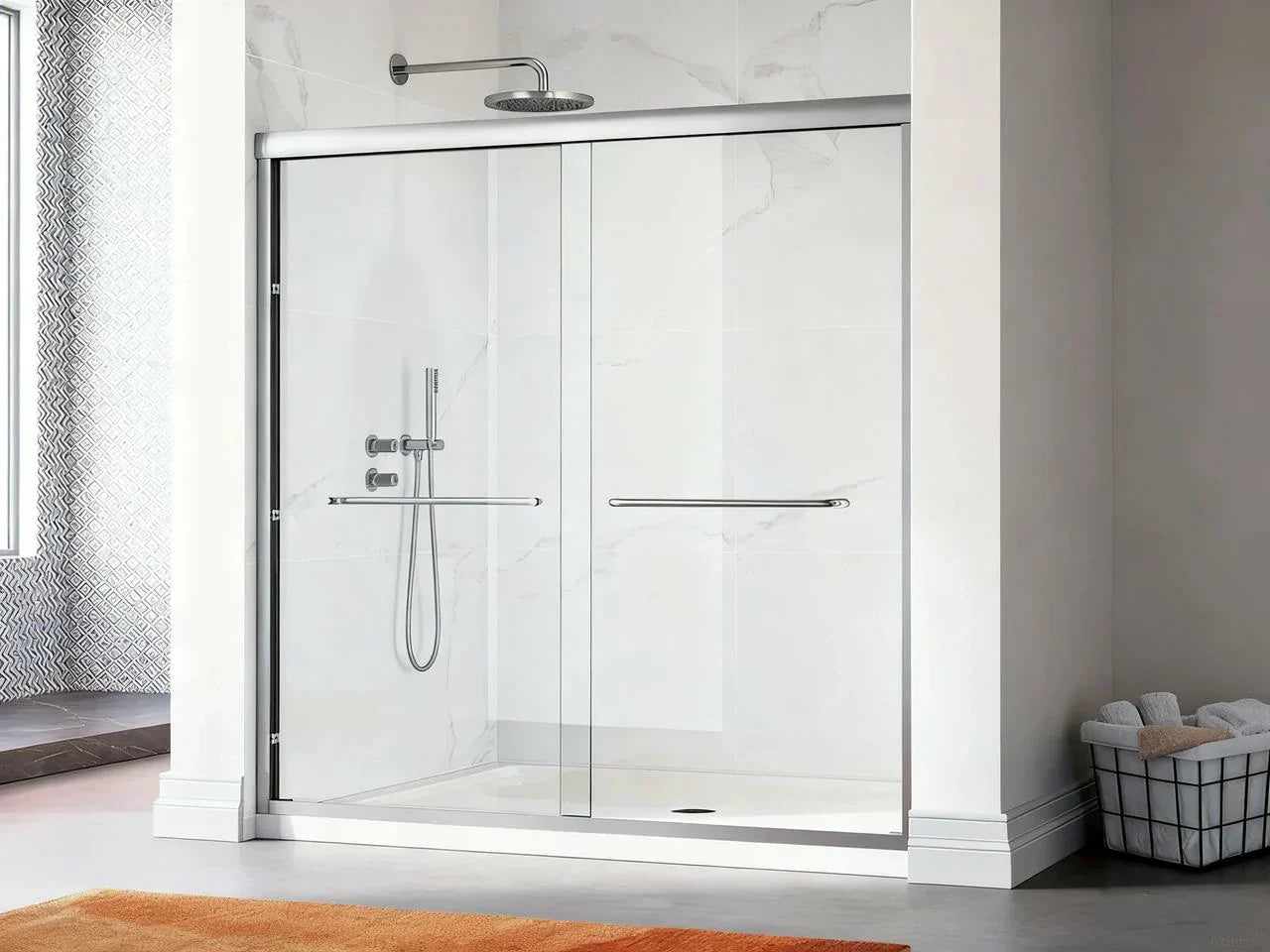
A tempered glass shower door can change the way your bathroom feels in a single upgrade. It looks modern, it is much safer than regular glass, and it lasts for years. Tempered shower glass is about four times stronger than standard glass, handles heat, and does not hold mold like a fabric curtain. For many homes, it has become the clear, code‑required choice.
In many regions, building codes now require safety glass for any shower, tub, or bath area. That usually means tempered glass. If you are planning a remodel, a new walk‑in, or replacing an old curtain, this guide will walk you through what you need to know: safety standards, glass thickness, style options, what type of glass is best for shower doors, installation, cleaning, and how to get the most long‑term value.
Have you ever wondered, “Is tempered glass good for shower doors?” or “What causes a tempered glass shower door to shatter?” Keep reading. You’ll get clear answers in plain language.
At a Glance – Is a Tempered Glass Shower Door Right for You?
If you want a quick sense before you read the full guide, start here.
Best for:
Homeowners who want a modern, easy‑to‑clean, code‑compliant glass shower enclosure. Great for walk‑in showers, tub‑to‑shower conversions, and full bathroom remodels.
Top benefits:
Safer than standard glass, very durable, mold‑resistant, and makes small spaces feel larger and brighter.
Potential downsides:
Higher upfront cost than a curtain, needs accurate installation, and can show hard‑water spots if you skip regular care.
Quick decision checklist:
Ask yourself:
-
Do I care most about safety and long life, not just lowest first cost?
-
Do I want the bathroom to feel more open and “spa‑like”?
-
Am I okay with wiping the glass with a squeegee most days?
-
Do I prefer framed, semi‑frameless, or a clean frameless shower door look?
If you answered “yes” to most of these, tempered glass shower doors are worth serious thought.
Tempered Glass vs Curtains vs Standard Glass
Here’s a short comparison to put things in perspective.
| Feature | Tempered Glass Shower Door | Fabric Shower Curtain / Liner | Standard (Annealed) Glass Panel |
| Safety | 4× stronger; breaks into small blunt pieces | No glass, but can grow mold | Breaks into sharp shards; injury risk |
| Durability | Decades with care | Tears, stains; often replaced yearly | Chips and cracks more easily |
| Mold / Mildew | Smooth, dries fast; low risk | High risk if not washed often | Joints and frames can grow mildew |
| Maintenance | Simple cleaning; squeegee + mild cleaner | Needs regular washing or replacement | Similar to tempered, but less safe |
| Heat Resistance | Up to 470°F (240°C) | Can warp or discolor | Lower resistance than tempered |
| Lifetime Cost | Higher upfront, lower over many years | Low upfront, adds up over time | Often not allowed by code in showers |
| Design Impact | Modern, open, shows tile and fixtures | Blocks light, hides tile | Clear, but safety issues |
Why Choose a Tempered Glass Shower Door? (Benefits & Proof)
You might be asking, “Is tempered glass good for shower doors, or is it just a trend?” Let’s walk through what makes tempered shower doors the current “gold standard.”
Safety & Strength
Tempered glass is created through a special tempering process. The glass is heated to a high temperature and then cooled very quickly. This locks tension inside the glass surface.
Because of this:
-
Tempered shower glass is about four times stronger than standard (annealed) glass of the same thickness.
-
When it does break, it crumbles into many small, blunt pieces, not long sharp shards.
This break pattern is a huge reason building codes require safety glass shower doors. According to the International Code Council (ICC), the IBC Chapter 24 on Glass and Glazing requires that all shower doors and enclosures must use safety glazing materials such as tempered or laminated glass to prevent dangerous breakage. Those tiny pellets are far less likely to cause deep cuts, especially for kids and seniors.
So, is tempered glass good for shower doors? Yes. For safety reasons, it is considered the best type of glass for shower doors in most homes. Standard glass panels are not allowed in shower enclosures in many areas because they can break into dangerous shards if hit.
Many homeowners share stories online of bumping a temper glass door with a shampoo bottle or a knee. The glass may flex or make a sound, but it does not break. That kind of everyday impact would be more risky with ordinary glass.
Durability & Heat Resistance
A shower is a hard‑working space. Doors open and close many times a day. Hot water and steam hit the surface. Hardware pulls on the panel.
Tempered glass stands up to this because:
-
It resists impact from daily use and minor bumps.
-
It is more scratch‑resistant than some plastics or low‑end acrylic panels.
-
It handles temperature swings from room‑temperature air to hot shower water. Many sources state tempered glass can handle heat up to about 470°F (≈ 240°C).
In simple terms, your bathroom will never get that hot. So you do not have to worry about glass failing from normal shower heat.
With normal care, a tempered glass shower door can last for decades. Compare that with fabric curtains and liners, which often need replacing every 6–18 months due to mold, stains, or tears.
Maintenance & Mold Resistance
One of the biggest hidden wins of a glass shower door is hygiene.
Fabric holds water. When a curtain stays damp, mold and mildew can grow fast, especially in bathrooms with poor ventilation. That can lead to smells and even health issues for people with allergies or asthma.
Tempered glass has a smooth, non‑porous surface. It:
-
Dries quickly after a shower.
-
Does not absorb water or soap.
-
Does not give mold much to cling to.
Frameless and semi‑frameless glass shower screens have fewer tight corners and tracks, so there are fewer places for grime to collect. Some modern tempered shower doors also have special water‑repellent coatings baked onto the glass. These coatings help water bead and roll off, which lowers hard‑water spots and soap scum.
If you keep a simple routine—use a squeegee after you shower and do a quick wipe once a week—maintenance stays light and your bathroom feels fresh.

Design, Light & Perceived Space
Have you ever walked into a bathroom and felt like it was larger than it really is? Clear glass is often the reason.
A glass shower enclosure lets light pass through, so:
-
The eye can see from wall to wall, making the room feel bigger.
-
Natural light from a window or bright overhead lighting reaches the shower area.
-
Your tile work, stone, or fixtures stay visible instead of hiding behind a curtain.
You can choose different looks:
-
Clear glass for a bright, open, spa‑style space.
-
Frosted glass for privacy while still letting light in.
-
Rain glass for shower doors if you like a textured pattern that blurs shapes but still looks stylish.
-
Low‑iron (ultra‑clear) glass if you want very little green tint and a high‑end feel.
For small bathrooms, a frameless shower door in clear tempered glass can make a dramatic difference in how spacious the room feels.
Long‑Term Cost Effectiveness
Upfront, a tempered glass shower door costs more than a curtain. Typical installed cost lands around $946, with many homeowners paying between $534 and $1,373, depending on size, thickness, style, hardware, and labor.
But think in terms of years:
-
A quality tempered glass door can last 10–20+ years.
-
Curtains, liners, and tension rods can add up in cost and time over that same period.
-
A modern glass shower partition can make your bathroom feel like a higher‑end space, which helps property value and buyer interest if you sell.
In short, you pay more at the start, but you get more years of clean use, less waste, and a nicer space every single day.
Safety Standards for Tempered Glass Shower Doors
You should not have to “guess” whether your bathroom glass door is safe. That is where standards and codes come in.
Required Safety Codes & Certifications
In the United States, safety glazing products such as tempered glass used in showers are covered by:
-
ANSI Z97.1 – A standard for safety glazing materials used in buildings. It covers impact and breakage tests.
-
CPSC 16 CFR 1201 – A federal safety regulation from the U.S. Consumer Product Safety Commission for architectural glazing in certain locations, including bathing areas.
These rules set impact tests that glass must pass to be called “safety glass.” That includes tempered glass used in shower doors.
How can you check your door?
-
Look for a small etched mark or stamp in a corner of the glass.
-
It usually shows the word “tempered” and a standard code (for example, “ANSI Z97.1”).
-
If that mark is missing on a shower panel, it may not meet current safety codes.
If you are unsure whether your shower door is tempered glass, this etched logo is the fastest way to tell.
How Tempered Glass Is Made & How It Breaks
To understand why tempered shower glass behaves the way it does, it helps to know the basics of how it is made.
Step by step:
-
A flat sheet of standard glass is cut and shaped to its final size. Holes for handles or hinges are drilled at this stage.
-
The sheet is heated in a furnace to a very high temperature.
-
It is then cooled quickly using blasts of air.
This fast cooling process makes the outer surfaces cool first and lock into place. The inner part of the glass cools a bit later and stays under tension. The mix of compression on the outside and tension inside is what makes tempered glass so impact‑resistant.
When tempered glass breaks, that balance of stress snaps. The entire sheet breaks at once into many small cubes or pellets. They can still cause minor cuts, but they are far less dangerous than the long, jagged shards from standard glass.
Tempered Glass vs Laminated Safety Glass
You may hear about laminated safety glass and wonder if it is better than tempered glass for a shower.
Laminated glass is created by bonding two sheets of glass with a clear plastic interlayer. When it breaks, the interlayer holds the shards in place. It is often used for car windshields and skylights.
In bathrooms:
-
Tempered glass is more common for shower doors because it is strong, safe, and usually more affordable.
-
Laminated glass is sometimes used in special high‑end designs or for extra sound control, but it is heavier and more costly.
For most homes, tempered glass shower doors are the right blend of safety, cost, and look.
Glass Thickness & Style Options
Not all tempered shower doors feel the same. Glass thickness and frame style change both appearance and performance.
1/4", 5/16", 3/8" & 1/2" Tempered Glass – Which Is Best?
Common thicknesses for tempered shower glass include:
-
1/4 inch (6 mm)
-
5/16 inch (8 mm)
-
3/8 inch (10 mm)
-
1/2 inch (12 mm)
Here’s how they compare in simple terms:
-
1/4": Lighter in weight, more budget‑friendly, often used in framed or semi‑framed shower doors where the metal frame adds stiffness.
-
5/16": A bit thicker and steadier; common in mid‑range doors.
-
3/8": Feels solid and “high‑end,” often used in frameless shower doors. Less flex, good for larger panels.
-
1/2": Very heavy and sturdy, used in premium frameless systems and big panels. Needs strong hinges and supports.
So, what thickness is the best type of glass for shower doors?
-
For a framed or semi‑frameless setup and a smaller budget, 1/4" or 5/16" tempered glass works well.
-
For a frameless glass shower enclosure, 3/8" is the most common sweet spot between solid feel and cost.
-
For large, luxury walk‑in showers, 1/2" glass offers a very sturdy, substantial feel, but at a higher price.
Framed, Semi‑Frameless & Frameless Shower Doors
You will see three main styles:
Framed shower doors
Metal frame around all edges of the glass.
-
Lower cost.
-
Good for standard tub‑shower combos.
-
Frame adds strength, so thinner glass is okay.
-
More corners and channels to clean.
Semi‑frameless shower doors
Some edges framed, others exposed.
-
Cleaner look than full frame.
-
A balance between cost and style.
-
Still offers some structure from metal parts.
Frameless shower doors
Thick tempered glass with only small clamps, hinges, and channels.
-
Very modern, open feel.
-
Easiest to clean due to fewer metal parts.
-
Needs thicker glass (often 3/8" or 1/2").
-
Heavier, so installation must be precise.
Think about your goals: If you want the cleanest, most open look, frameless is ideal. If budget is tight and you prefer a simpler upgrade, a framed or semi‑frameless design with tempered glass still gives you safety and a big step up from a curtain.
Glass Finishes & Privacy Levels
Not everyone wants a fully clear bathroom glass door. Privacy and style matter too.
Common finishes for tempered shower glass include:
-
Clear glass – Bright and open, great for small spaces and nice tile work.
-
Frosted glass – Acid‑etched or sandblasted look that gives privacy. Shapes behind the glass are blurred.
-
Rain glass for shower doors – A textured surface that looks like water running down the glass. It softens the view into the shower and hides water spots better than clear glass.
-
Tinted glass – Light gray, bronze, or other tints can set a mood and control glare.
So, what is the difference between frosted glass and rain glass?
-
Frosted glass has a smooth, cloudy surface. It gives strong privacy and a soft light.
-
Rain glass has a raised pattern that looks like falling rain. It also gives privacy but has more of a decorative, textured effect.
Both can be tempered for safety. Your choice comes down to how much privacy you want and what style fits your bathroom. If you want to see real-world examples of these styles, HOROW provides a curated selection.

Tempered vs Other Shower Glass Options
There are several materials for shower walls and doors: tempered glass, laminated glass, standard glass (not for showers in most places), and acrylic or fiberglass panels.
Tempered Glass vs Standard (Annealed) Glass
Standard (annealed) glass is what you might see in picture frames or simple windows. It is not heat‑treated.
Main differences:
-
Strength: Tempered glass is ~4× stronger at the same thickness.
-
Break pattern: Tempered crumbles into small chunks; annealed breaks into sharp shards.
-
Code: In many areas, annealed glass is not allowed in shower enclosures or near tubs due to injury risk.
Because of this, standard glass is not the best type of glass for shower doors. Tempered is.
Tempered Glass vs Laminated & Acrylic Panels
Some bathrooms use acrylic or fiberglass walls and doors. You might wonder, “Which is better, fiberglass or tempered glass?”
Here is a side‑by‑side view:
| Feature | Tempered Glass Shower Door | Laminated Glass Panel | Acrylic / Fiberglass Panel |
| Safety | 4× stronger, breaks into small pellets | Shards stick to plastic layer | No glass, but can crack or break |
| Impact Resistance | High for daily use | High; used in windshields | Moderate; can dent or scratch |
| Optical Clarity | Very clear; low‑iron even clearer | Clear but can look slightly different at edges | Often less “glass‑like” in appearance |
| Weight | Medium to heavy | Heavier than tempered at same thickness | Light |
| Typical Cost per sq. ft. | Moderate | Higher | Lower to moderate |
| Scratch Resistance | Good | Good | Lower; scratches easier |
| Cleaning | Easy; smooth surface | Similar to tempered | Also easy, but dulls with scratches |
| Look & Feel | High‑end, “spa‑like” | High‑end but less common in showers | More “built‑in unit” look |
Which is better, fiberglass or tempered glass?
-
If your goal is safety, a modern look, and long‑term value, tempered glass wins.
-
If your top goal is very low first cost or fast install in a rental, fiberglass or acrylic might be enough. But it will not give the same feel or resale appeal.
For most homeowners doing a remodel, tempered shower doors are the better upgrade.
Top Tempered Glass Shower Door Options in 2025
Since we are not naming specific brands here, let’s talk about types of manufacturers and product lines you will see when you shop. This helps you compare choices on the shelf or online.
Premium Luxury Lines
These are high‑end products you often see in designer baths.
-
Focus on frameless and thick tempered glass, often 3/8" or 1/2".
-
Use high‑quality hinges, rollers, and handles with finishes like matte black, brushed nickel, or brass.
-
Often include factory‑applied easy‑clean coatings.
-
Best for long‑term homes and full renovations.
Mid‑Range Value Lines
These offer a mix of cost and features.
-
May include framed, semi‑frameless, and some frameless options.
-
Glass thickness often ranges from 1/4" to 3/8".
-
Good balance between price, style, and hardware quality.
-
Work well for most family bathrooms.
Budget & DIY‑Friendly Lines
These are aimed at cost‑conscious and do‑it‑yourself buyers.
-
Often bypass sliding doors for tub‑showers and basic walk‑in openings.
-
Thinner tempered glass, usually framed or semi‑frameless.
-
Hardware is simple but functional.
-
Many big‑box kits fall in this group.
Custom Fabrication & Local Glass Shops
If your shower is an odd size or you want a special look:
-
A local glass shop can measure, cut, and install custom tempered shower glass panels.
-
You can pick glass thickness, finish (clear, frost, rain), and hardware layout.
-
Best for non‑standard layouts like angled corners, extra‑tall doors, or curbless walk‑ins.
When you compare options, look at:
-
Glass thickness and whether it is marked as tempered.
-
Hardware quality and finish.
-
Warranty terms on glass, hardware, and coatings.
-
Ease of installation and whether pro install is required.
Customization Options for Your Glass Shower Enclosure
A tempered glass shower door is not one‑size‑fits‑all. You can shape it around your bathroom and your routines.
Sizing & Layouts
Common layouts include:
-
Alcove sliding doors: Two or three panels span an opening between two walls, often for a tub or straight walk‑in.
-
Corner enclosures: “Neo‑angle” or square designs in a corner with a door on one side.
-
Walk‑in shower doors: A single swing door or fixed glass panel with an open entry.
Accurate measurement is key. Walls are not always perfectly straight or vertical. A glass pro will measure:
-
Width at top, middle, and bottom.
-
Height.
-
Whether walls lean in or out (plumb).
These small details decide whether you can use a standard size kit or need custom tempered glass panels.
Smart & Accessibility Features
Tempered glass shower doors can support better access and comfort, too.
Options include:
-
Low‑profile or curbless thresholds so it is easier to step in and out, especially for walkers or wheelchairs.
-
Soft‑close mechanisms on sliders to prevent slamming.
-
Anti‑jump rollers so sliding doors stay in their tracks.
-
Grab bars and larger handles that are easier to grip for kids or older adults.
-
Non‑slip strips or textured shower bases for safer footing.
If you have small children or seniors at home, it helps to plan these features from the start.
Hardware & Finishes
The hardware is more than decoration. It holds the glass in place and affects daily use.
Common parts:
-
Hinges for swing doors.
-
Rollers and tracks for sliding doors.
-
Handles, knobs, and towel bars.
-
U‑channels or clips for fixed glass.
Finishes you will often see:
-
Chrome or polished stainless for a bright, reflective look.
-
Brushed nickel, satin, or stainless for a soft, muted tone.
-
Matte black for a bold, modern feel.
-
Bronze or brass tones for warm, classic designs.
Matching these to your faucet, shower head, and cabinet pulls gives your bathroom a pulled‑together look.

DIY vs Professional Installation of Tempered Glass Shower Doors
You may ask, “Can I install a tempered glass shower door myself?” The answer depends on the style and your skill level.
Can You Install a Tempered Glass Shower Door Yourself?
DIY can work in these cases:
-
Standard‑size sliding or bypass doors on a straight tub or shower.
-
Clear, easy‑to‑read instructions and all hardware in the box.
-
You have basic tools and are comfortable drilling into tile or fiberglass.
You should strongly consider a professional installer when:
-
The door is frameless and uses thick 3/8" or 1/2" glass.
-
Panels are heavy or very large.
-
Walls are not square and need adjustment.
-
You are unsure about waterproofing behind the tile.
A mistake with tempered glass or waterproofing can be costly, so be honest about your skill level.
Step‑by‑Step Installation Overview
Here is a high‑level view of how a typical install goes. Always follow the instructions for your specific product.
-
Measure the opening
-
Confirm width, height, and level/plumb.
-
-
Prepare the walls
-
Make sure tile or wall panels are solid.
-
Locate studs or blocking for screws.
-
-
Install the track or hinges
-
Drill pilot holes using the correct bit for tile or fiberglass.
-
Use anchors where no studs are present, if allowed by the instructions.
-
-
Set and secure the glass panels
-
Lift tempered glass panels with care (two people).
-
Hang on hinges or set into the bottom track and top guide.
-
Adjust for even gaps and smooth movement.
-
-
Seal and test
-
Apply silicone along edges as directed.
-
Let it cure.
-
Test for leaks and smooth door motion.
-
Critical Safety Tips
Because tempered glass cannot be cut or drilled after tempering, it must arrive exactly the right size. Never try to cut or drill a tempered glass shower panel yourself. It will shatter.
Other safety points:
-
Wear gloves and eye protection.
-
Carry glass panels upright, not flat, and avoid hitting the edges.
-
Do not overtighten screws or clamps on the glass.
-
Anchor heavy doors into studs or solid backing whenever possible.
If any part of this feels risky, hiring a pro is money well spent.
Cleaning & Maintaining a Tempered Glass Shower Door
A little regular care keeps tempered glass looking new and clear for years.
Daily & Weekly Cleaning Routine
A simple routine works best:
-
After each shower: Use a squeegee to pull water off the glass, from top to bottom. This takes less than a minute and greatly reduces water spots.
-
Once a week: Wipe glass, metal, and seals with a mild, non‑abrasive bathroom cleaner or a mix of gentle dish soap and water.
-
Rinse and dry with a microfiber cloth.
Good ventilation also helps. Run an exhaust fan during and after showers, or open a window if possible. This lowers humidity, protects grout, and cuts down on mildew.
Preventing Hard Water Stains & Soap Scum
Hard water leaves mineral spots on glass. Soap reacts with minerals and forms cloudy soap scum.
To reduce this:
-
Choose tempered glass with a factory water‑repellent coating if possible.
-
Use liquid body wash instead of bar soap; it often leaves less film.
-
For mild buildup, spray a white vinegar and water mix (half and half) on the glass, let sit a few minutes, then rinse and dry.
Be careful with vinegar around natural stone like marble, as acids can etch stone. In those cases, use a stone‑safe cleaner instead.
Avoid:
-
Steel wool and rough scrub pads.
-
Abrasive powders.
-
Strong, harsh chemicals like paint strippers.
These can scratch glass, damage coatings, and discolor metal.
Long‑Term Care & When to Replace
Every few months, take a closer look at:
-
Hinges and rollers – Do they move smoothly? Any rust or wobble?
-
Seals and sweeps – Are the rubber strips at the bottom or sides cracked or stiff? Are there new leaks?
-
Caulk lines – Is the silicone seal intact, or are there gaps and mold?
You can often replace bottom sweeps and seals without changing the glass. Hardware like rollers and handles can also be swapped out if the glass is still solid.
You may want to replace the full bathroom glass door if:
-
The glass has serious etching or pitting that will not clean off.
-
The door no longer closes well even after adjustments.
-
The style is outdated and you are doing a larger remodel.
Many warranties cover defects in glass and hardware for several years, and some cover easy‑clean coatings for a shorter period. Keep your paperwork so you can make a claim if needed.

Cost, Value & Warranty Considerations
Knowing what you pay for helps you set a realistic budget.
Upfront Costs vs Lifetime Value
A tempered glass shower door price usually includes:
-
The glass panel or panels.
-
Hardware (hinges, rollers, handles, channels).
-
Any special finishes or coatings.
-
Labor for measuring and installation.
-
Custom fabrication if needed.
A rough guide:
-
Entry‑level framed system with 1/4" glass: lower cost.
-
Mid‑range semi‑frameless with 5/16"–3/8" glass: moderate cost.
-
High‑end frameless enclosure with 3/8"–1/2" glass: higher cost.
When you think about value, consider:
-
How long the door is likely to last.
-
How it impacts everyday comfort and cleaning.
-
How it might improve the feel and value of your home.
What to Look for in a Warranty
Read the warranty details before you buy:
-
Glass: Coverage for tempered glass breakage due to manufacturing defects.
-
Hardware: Coverage for finish (no peeling or heavy rust) and function (rollers and hinges working as expected).
-
Coatings: Some easy‑clean coatings have their own shorter coverage period.
Check for exclusions, such as:
-
Damage from impact, misuse, or incorrect installation.
-
Damage from using harsh cleaners or abrasives.
-
Frames or hardware installed in harsh coastal or pool environments.
Buying from a known supplier and having a qualified installer do the work increases the chance that your warranty will be honored if something goes wrong.
Interactive Tools & Visual Guides (Ideas to Help You Plan)
Many remodeling websites now include tools that can help you plan your tempered glass shower door.
“Which Shower Door Is Right for You?” Quiz
A simple quiz might ask:
-
What is your budget range?
-
How big is your bathroom?
-
Do you prefer more privacy or more light?
-
Are you okay with simple DIY, or do you want pro installation?
Based on your answers, it can suggest framed, semi‑frameless, or frameless doors, plus glass thickness and finish.
Shower Door Sizing Tool
You enter:
-
Opening width and height.
-
Whether the base is a tub or a shower.
-
Whether there is a curb or it is curbless.
The tool can tell you if a standard size will work or if you will likely need custom tempered glass panels.
Visual Aids
When choosing between rain glass vs frosted glass, or clear vs tinted, good photos make a big difference. Before‑and‑after images of bathrooms with curtains replaced by glass shower enclosures also help you picture the change in your own home.

Conclusion – Key Takeaways & Next Steps
A tempered glass shower door is more than a style upgrade. It is the current standard for:
-
Safety – Stronger than regular glass and safer when it breaks.
-
Durability – Handles daily use and heat, often for decades.
-
Cleanliness – Smooth, mold‑resistant surface that is easy to maintain.
-
Design – Makes bathrooms feel bigger, brighter, and more modern.
When you choose the best type of glass for shower doors for your space—whether clear, frost, or rain glass—you improve both daily comfort and long‑term value. Think about your layout, budget, and who uses the bathroom. Then decide on framed vs frameless, glass thickness, and any extra features like coatings or accessibility hardware.
From there, your next steps are simple: measure carefully, compare a few quality options, and decide whether DIY or professional installation fits your situation. With a little planning, you can enjoy a safe, stylish, and easy‑to‑clean shower for many years.
FAQs About Tempered Glass Shower Doors
1. Is tempered glass good for shower doors?
Yes, tempered glass is one of the best materials you can choose for shower doors. It’s strong, durable, and specifically engineered to handle everyday use in the bathroom. What makes tempered glass special is the way it’s heat-treated—it becomes several times stronger than regular glass and can withstand sudden temperature changes, accidental bumps, and daily opening and closing. Even if it does break, it shatters into small, blunt pieces instead of dangerous sharp shards, which greatly reduces the risk of injury. People like it because it looks clean and modern, lets light flow through the bathroom, and is easier to maintain compared to plastic or acrylic panels. Overall, if you want a combination of style, safety, and long-term reliability, tempered glass is absolutely a good choice for shower doors.
2. What type of glass door is best for a shower?
The “best” type of shower glass door really depends on your bathroom layout and the overall vibe you want, but a lot of homeowners still lean toward frameless tempered glass doors. They’re made with thicker, stronger glass, so they instantly make your bathroom feel more open, modern, and upscale. Plus, with fewer metal parts, there’s less chance of rust and fewer places for soap scum to hide—so cleaning gets a whole lot easier. If you’re working with a tighter budget, framed or semi-framed tempered glass doors are still great choices and offer solid stability. And if you’ve got a compact bathroom—or you’re specifically looking at shower doors for walk in shower setups—sliding glass doors are usually the smartest pick because they don’t swing out and take up extra space. Hinged doors, on the other hand, are perfect when you have enough clearance to open the door outward.
So in most cases, the best option is a tempered glass door paired with a style—sliding, hinged, framed, or frameless—that fits your space, your routine, and the way you like your bathroom to look and feel.
3. What causes a tempered glass shower door to shatter?
Tempered glass shattering is rare, but it can happen due to a few specific reasons. One common cause is tiny imperfections in the glass called “nickel sulfide inclusions,” which can expand over time and put pressure on the glass until it pops. Another cause is stress from the hardware—if the hinges or mounting brackets are too tight or misaligned, pressure builds up and can eventually lead to breakage. Temperature changes can also play a small role, especially if the bathroom gets extremely hot while the glass is very cold, though this is less common with modern glass. More often, accidental impacts—like hitting the edge of the glass with a metal object—can create micro-damage that grows over time. Even though tempered glass is strong, it's still glass, so treating it gently and ensuring proper installation helps prevent issues.
4. How to tell if a shower door is tempered glass?
There are a few easy ways to check if your shower door is made of tempered glass. First, look for a small etched label or stamp—often found in a corner—that says “tempered,” “safety glass,” or includes a certification code. This is the most reliable indicator because manufacturers are required to label safety glazing. If you don’t see a label, try looking at the glass edges: tempered glass usually has smoother, more polished edges compared to regular glass. Another simple test is to view the glass through polarized sunglasses or a phone camera with a polarized filter—tempered glass often shows a faint pattern of dark and light spots caused by the tempering process. Finally, think about the age of your bathroom. Modern building codes in most areas require tempered glass for shower enclosures, so if your home or shower was recently built or remodeled, it’s very likely tempered.
5. Which is better, fiberglass or tempered glass?
Both materials have their pros and cons, but tempered glass generally offers a better overall experience for shower doors. Fiberglass is lightweight, inexpensive, and less fragile, which makes it a good budget option. However, it can scratch more easily, discolor over time, and doesn’t provide the same premium look. Tempered glass, on the other hand, is much more durable and gives the bathroom a cleaner, modern aesthetic. It’s also easier to maintain because the smooth surface doesn’t hold onto soap scum or stains as much as fiberglass. While glass doors cost more upfront, they tend to last longer and make the bathroom feel brighter and more open. If you want durability, style, and long-term value, tempered glass is usually the better choice. If you’re trying to keep costs low and don’t mind the look, fiberglass can still be perfectly functional.
6. What is the difference between frosted glass and rain glass?
Frosted glass and rain glass both offer privacy, but they look and function quite differently. Frosted glass has a smooth, matte finish created by acid-etching or sandblasting one side of the glass. It provides a soft, blurred look that hides silhouettes very well, making it ideal for shared bathrooms. The style is minimal, modern, and works with almost any décor. Rain glass, on the other hand, has a textured pattern that looks like raindrops running down the surface. This texture also provides privacy, but with a more decorative feel. It's great for people who want something with character instead of plain frosted glass. Rain glass can also help hide water spots and fingerprints better than clear or frosted glass. So the main difference is appearance and texture—frosted is sleek and smooth, while rain glass is patterned and more visually expressive.
References



Leave a comment
This site is protected by hCaptcha and the hCaptcha Privacy Policy and Terms of Service apply.