




A shower door usually provides better splash control and a more permanent finish, while a shower curtain costs less, opens fully, and is easier to replace. Neither is better in every bathroom.
Choose based on how the shower is used, not appearance alone. Check the entrance width, nearby fixtures, spray direction, privacy needs, cleaning habits, and whether permanent installation makes sense. A fixed glass panel offers another option for some walk-in showers, but it requires enough depth to control water around the open end.
Key Differences Between Shower Doors and Curtains
Choose Doors for Containment and Permanence
A properly fitted shower door creates a more stable water barrier than a loose curtain. It is often the better choice for a frequently used shower where water escaping the enclosure is a recurring problem.
Glass creates a more polished look and keeps the surrounding tile visible. It suits homeowners who expect to retain the bathroom layout and are comfortable maintaining the glass and hardware.
Choose a shower door when:
- Reliable splash control is a high priority.
- You want a permanent, finished enclosure.
- The opening and surrounding walls are suitable for installation.
- The selected door can operate without obstructing nearby fixtures.
- You are willing to wipe glass and clean seals, tracks, or hinges.
The opening style matters. Hinged doors need clear swing space, while sliding doors avoid that swing but leave part of the opening covered. After measuring the space, you can compare HOROW shower door options by opening type and layout.
Choose Curtains for Flexibility and Savings
A shower curtain is usually the lower-cost and more adaptable choice. It does not require a fitted glass enclosure and can often be installed, removed, or replaced without permanent changes.
Curtains are particularly practical for tub-and-shower combinations. Pulling the curtain aside exposes most of the tub, making it easier to bathe a child, reach the faucet, clean the surround, or assist another user.
Choose a curtain when:
- Keeping the upfront cost low matters most.
- You rent or want a reversible setup.
- You need access across most of the opening.
- A rigid door would interfere with a toilet, vanity, drawer, or room door.
- You want more privacy than clear glass provides.
- You would rather wash or replace a liner than regularly wipe glass.
Curtains provide less consistent containment. The liner must remain inside the shower base or tub, and gaps at the ends can still release water. A liner that is appropriately positioned and able to dry fully will perform better than one that is too short or left bunched up.
Choose Fixed Panels for Open Access
A fixed glass panel covers part of the shower opening without a hinged or sliding door. It eliminates door swing, handles, rollers, and overlapping panels while preserving an open entrance.
This solution works best in a sufficiently deep walk-in shower where the showerhead directs most spray away from the opening. It is less suitable for a shallow shower, outward-facing spray, or frequent handheld-shower use near the entrance.
Consider a fixed panel when you want:
- An open, unobstructed entry.
- Some splash control without a moving door.
- Visible tile and a fixed glass feature.
- Fewer moving components than a full enclosure.
The open end can allow more water spray and warm air to escape. Panel size, spray reach, drainage, and user behavior therefore matter more than the panel’s showroom appearance.
Door, Curtain, or Panel Decision Chart
|
Option |
Best suited to |
Main trade-off |
Common regret |
|
Hinged glass door |
Permanent shower with clear swing space |
Higher cost and fixed entry |
Door conflicts with a fixture or room door |
|
Sliding glass door |
Tight floor plan where a door cannot swing |
Tracks and overlapping glass need cleaning |
Usable entry is narrower than expected |
|
Shower curtain |
Rental, tub combo, limited budget, or changing needs |
Less dependable splash control |
Liner clings, shifts, or leaks at the ends |
|
Fixed glass panel |
Deep walk-in shower with controlled spray |
Open end releases water and heat |
Panel does not cover the actual spray path |
|
Full glass enclosure |
Permanent shower needing better water control |
More measuring, installation, and glass care |
Access or cleaning proves awkward |
Which Trade-Offs Matter Most?
Splash Control vs Visual Openness

In a glass shower door vs curtain comparison, glass generally offers more predictable splash control because it cannot billow or leave loose folds. Its performance still depends on fit, seals, the shower curb or base, and where water flows. A door cannot compensate for surrounding surfaces that direct water into the room.
A curtain may move inward with air and spray or leave gaps at either end. Careful positioning can reduce this problem, but it will not create the same rigid barrier as a fitted enclosure.
Clear glass keeps the shower connected visually with the rest of the bathroom. This can make a small space feel larger. A closed curtain creates more separation, but it can be opened fully when needed. Remember that clear glass also exposes bottles, wet surfaces, and clutter.
Polished Finish vs Easy Changes
Glass creates a permanent architectural feature. It is a logical fit when the tile, fixtures, and shower dimensions are unlikely to change.
Curtains offer easier style and privacy changes. The outer curtain, liner, and rings can be washed or replaced individually without altering the shower. That flexibility is useful in rentals, children’s bathrooms, guest bathrooms, and spaces likely to be remodeled.
A built-in solution is not automatically more practical. If household needs may change, adaptability can be more valuable than a built-in look.
Fixed Structure vs Flexible Access
A curtain can expose almost the entire opening. This improves reach when cleaning a tub, helping a child, adjusting fixtures, or moving suitable bathing equipment.
Each glass configuration limits access differently. A hinged door can provide a relatively open entrance but needs a clear operating path. Sliding panels save floor space, although one panel generally remains in front of part of the opening. A fixed panel keeps the entrance open while permanently covering one section.
Before buying, mark where the glass and hardware would sit. Confirm that users can reach the controls, enter comfortably, and clean behind every panel.
Privacy vs Light and Visibility
Clear glass lets light travel through the shower area but provides little privacy. Frosted or textured glass offers more screening, although silhouettes may remain visible.
A curtain provides stronger visual separation and can conceal the shower between uses. That may matter more than an open appearance in a bathroom used by several people.
If the shower receives limited light, clear glass can prevent the enclosure from feeling dark. In a shared bathroom, however, a curtain may make simultaneous use more comfortable.
Is a Glass Door Worth the Cost?
Upfront Price vs Long-Term Durability
A curtain and rod normally cost less upfront because they use simpler components and do not require a fitted enclosure. Liners and curtains may need replacement over time, but each replacement is relatively straightforward.
A glass enclosure involves the panels, hardware, seals, measuring, delivery, and possible professional installation. Frameless systems may also demand more precise mounting and alignment than simpler framed designs.

The additional cost can make sense when strong containment and a permanent finish will provide daily value for years. It offers less value in a temporary bathroom, a rental, a little-used guest space, or a shower that already performs well with a curtain.
Installation Costs vs Simple Setup
A curtain rod is generally easier to install and replace. Even so, it must be secure and positioned so that the liner stays inside the tub or shower base. A tension rod should not be treated as a support rail.
Glass requires accurate measurements and suitable mounting surfaces. Walls may appear straight without being sufficiently even for the selected enclosure. Alignment affects door movement, gaps, and splash control, so uncertain openings should be assessed before glass is ordered.
Installation complexity varies by enclosure. Consult the product instructions and use qualified help when the wall condition, mounting method, or fit is uncertain. The HOROW bathroom shower door guide provides a broader overview of door types, costs, measuring, and installation considerations.
Replacement Savings vs Repair Risks
A durable glass enclosure may stay in service much longer than a curtain liner, but it is not maintenance-free. Seals, rollers, guides, handles, and other hardware can loosen or wear, and replacement components may need to match the enclosure.
Curtains have fewer repair concerns. A damaged liner, ring, or fabric panel can usually be replaced separately. The trade-off is more frequent attention to damp fabric, staining, and worn components.
Glass must not be used as a support surface or for hanging heavy objects unless the enclosure is specifically designed for that purpose. Likewise, a curtain rod, towel rail, or door handle should not be treated as a grab bar.
When Premium Glass Adds Little Value
Premium glass provides limited practical benefit if the shower has uncontrolled spray, damaged surrounding surfaces, or water that already escapes due to the base or layout. Those issues should be addressed before installing an enclosure.
It may also be unnecessary when:
- A curtain already keeps the floor acceptably dry.
- The bathroom is used infrequently.
- A remodel is planned.
- Permanent changes are restricted.
- Privacy matters more than displaying the shower.
Pay for glass when its containment, durability, and appearance serve the way the bathroom is actually used—not simply because glass appears more upscale.
Which Choice Fits Your Bathroom?
Door or Curtain in Small Bathrooms?

A curtain is often the easiest option in a small bathroom because it requires no swing clearance and disappears to one side when open. An opaque curtain can visually divide the room when closed, however.
Clear glass preserves sightlines and may make a compact room feel more open. The challenge is selecting an opening that fits the floor plan.
A hinged door can conflict with a toilet, vanity, bath mat, storage unit, or bathroom door. A sliding shower door avoids the swing arc, but the panels need enough width to overlap and move, and the entry may be narrower. A fixed panel needs no moving clearance but will only contain water in a compatible walk-in layout.
Test the proposed opening before ordering. Check whether the shower and room doors can operate at the same time and whether a user can enter without squeezing around another fixture.
Swing Clearance vs Movable Coverage
A hinged door needs room for both the glass and projecting hardware. It should not make the toilet, vanity, or bathroom entrance difficult to use. Also consider where water will drip when the wet door opens.
Sliding doors remove the swing path but permit access through only part of the enclosure at a time. That can make tub cleaning or assisted bathing more awkward.
A curtain can move to either side or be removed completely. Its flexibility is useful, but it also means the barrier can shift during a shower. The best choice depends on whether rigid containment or unrestricted access matters more.
Tub Combos Favor Different Solutions
For a tub-and-shower combination used regularly for baths, a curtain is often the most practical solution. Full-width access helps with bathing, cleaning, and reaching the faucet or drain.
Sliding glass doors can improve containment during standing showers, but the bottom track may be harder to wipe and uncomfortable to lean across. A fixed panel can obstruct access to one end of the tub without fully enclosing the shower.
A door becomes easier to justify when the tub is used mainly for standing showers and splash control is the priority. When children, caregivers, or bath users need broad access, a curtain is usually more adaptable.
Fixed Panels Suit Certain Walk-Ins
A fixed panel suits a walk-in shower with enough depth for water to fall before reaching the open entrance. Spray aimed toward the panel is easier to contain than spray aimed toward the exit.
Consider how people use the shower rather than relying on the showerhead’s resting position. A handheld spray, a taller user, or active children may extend the splash path.
An open entrance can also feel cooler because warm air is not fully contained. Anyone who prefers an enclosed shower experience may be happier with a door or curtain.
How Your Lifestyle Affects the Choice
Kids Shift Priority Toward Containment
Children often create more unpredictable splashing than adults. A well-fitted door can help keep water inside when the space is used mainly for standing showers.
Bath time changes the calculation. A curtain allows a parent or caregiver to reach across more of the tub and avoids a rigid panel along the tub edge. It performs well only when the liner is closed fully and remains inside the tub.
If users frequently leave the curtain open at one end, a door may prevent recurring puddles. If broad access matters more, retain the curtain and improve its positioning.
Renters Benefit From Reversible Choices
A curtain is normally the practical choice for a rental because it is inexpensive, removable, and less likely to require permanent mounting. Tenants should check lease terms before drilling or replacing existing hardware.
A tension rod can limit alterations, but it must remain secure during normal use. It is not intended to support body weight.
Installing glass in a rental is difficult to justify unless the property owner approves the specific alteration and responsibility for installation and future removal is clear.
Which Is Safer for Limited Mobility?
Neither a door nor a curtain is automatically safer. The better choice is the one that allows comfortable entry, straightforward operation, and adequate access for the individual user.
A curtain avoids a rigid barrier and can expose most of the opening. However, fabric can interfere with a stool or mobility aid, and rings may be difficult to move if they catch.
A door may improve water control, but it can also create access problems. A narrow opening, raised track, stiff handle, or difficult swing may make daily use harder. A fixed panel can provide open entry while still blocking access to controls or cleaning areas.
Evaluate the complete route, including the threshold, entrance, floor condition, controls, and any properly designed support features. For individual mobility needs, obtain qualified guidance before fixing the enclosure layout.
For bathrooms used by older adults or people with mobility limitations, consider the shower enclosure as part of the overall access route. Entry width, thresholds, clear floor space, controls, and support features can all affect how easily the shower can be used.
For projects that are subject to accessibility requirements, the U.S. Access Board publishes standards and guidance covering accessible bathing facilities, including shower compartments, clearances, controls, and related features. Homeowners planning for individual mobility needs can also use these resources as a reference point, while confirming which requirements apply to their specific project.
Shared Bathrooms Raise Privacy Trade-Offs
Clear glass may not provide enough privacy when several people share a bathroom. It also leaves the shower interior and stored products visible after every use.
A curtain offers immediate visual separation and can be changed as household needs evolve. Obscured glass is another option, although it does not always provide complete screening.
Glass is more suitable when the bathroom is generally used by one person at a time and the household values light, containment, and visible tile more than privacy.
Which Is Easier to Maintain?
Glass Wiping vs Liner Washing
Neither option eliminates cleaning; they create different routines.
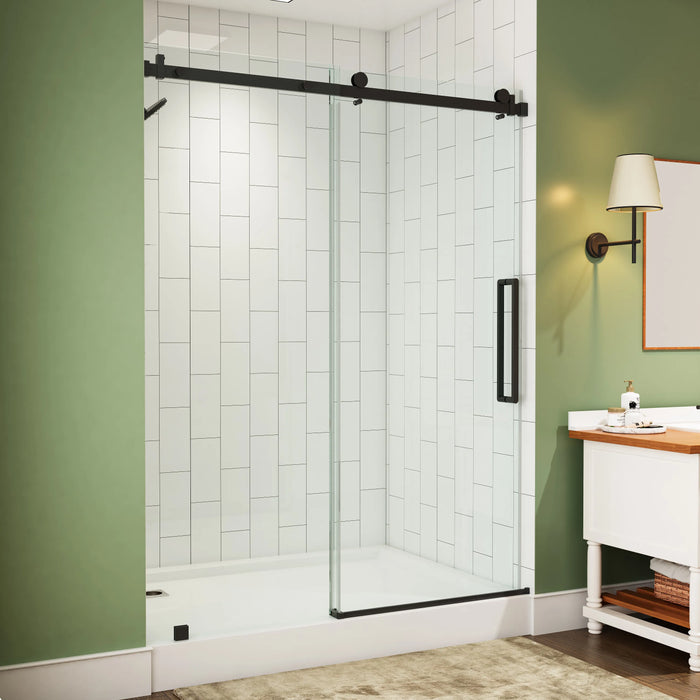
Glass benefits from light, frequent wiping before droplets and soap residue dry. Tracks, seals, hinges, and overlapping panels may require more detailed attention than the broad glass surface.
Curtains generally need to be extended after use so that damp folds can dry. Washable curtains and liners should be cleaned according to their care instructions, while worn liners are easy to replace.
If you dislike routine wiping, a curtain may be less frustrating. If you dislike removing, washing, and rehanging liners, glass may feel easier.

Water Spots vs Mildew Risk
Clear glass reveals dried mineral marks, fingerprints, and soap film. These marks may not affect performance, but they can undermine the polished appearance that motivated the purchase.
Curtains conceal water spots more effectively, yet damp folds can retain residue and develop mildew. Keeping the curtain spread out and improving bathroom airflow can help it dry.
Moisture control matters with either enclosure type. Curtains, seals, tracks, and other wet surfaces should be allowed to dry after use, and bathroom ventilation can help reduce persistent dampness. The U.S. Environmental Protection Agency identifies moisture control as an important part of preventing indoor mold growth.
Glass doors are not immune to buildup. Framed and sliding systems can collect residue around channels, seals, and panel overlaps. Ease of cleaning depends as much on access to these areas as on the material itself.
Daily Fuss vs Periodic Replacement
A door rewards consistent, small cleaning tasks. Neglecting those tasks can make spots and residue more noticeable, particularly on clear glass.
A curtain may demand less attention after each shower, but it needs periodic washing or replacement. Hardware and liners are easier to change than door components, although they may require attention more often.
The easier choice is therefore personal: select the routine your household is most likely to maintain.
Hard Water Makes Glass Less Forgiving
If mineral marks regularly appear on faucets and mirrors, they are also likely to be visible on shower glass. Clear glass makes dried droplets especially noticeable.
Some glass treatments may simplify care, but they do not eliminate cleaning or override the manufacturer’s maintenance instructions. Frosted or textured glass can make marks less obvious, although textured surfaces may take more effort to wipe.
In a hard-water area, choose clear glass only if you accept visible spotting or are prepared for regular care.
When Does Each Choice Cause Regret?
Doors Frustrate in Awkward Layouts
Many shower door problems begin when the opening style is chosen without considering daily movement. A hinged panel may hit a toilet, block a drawer, interfere with the room door, or drip onto an inconvenient area when opened.
Sliding doors solve the swing problem but can reduce the usable entrance and make overlapping surfaces harder to reach. Fixed panels eliminate moving parts while permanently occupying one side.
Use painter’s tape to mark panel positions. A piece of cardboard can approximate a hinged door’s swing and reveal conflicts before an enclosure is ordered.
Curtains Disappoint With Heavy Splashing
A curtain may be inadequate where strong spray reaches a shallow opening or household members rarely close the liner correctly. Water can escape at the ends or run outside the shower edge.
Loose liners may also billow inward and make the shower feel cramped. Better positioning or a weighted liner may help, but repeated puddles can indicate that a rigid barrier is more suitable.
Before replacing one curtain with another, identify whether the problem is liner placement, spray direction, or the shower layout itself.
Frameless Glass Raises Cost and Cleaning
A frameless shower door vs curtain decision involves more than modern styling. Frameless glass requires precise measuring, suitable mounting conditions, and careful alignment. Minimal visible hardware does not mean there are no gaps, seals, or cleaning demands.
Frameless glass suits a long-term bathroom where the opening is ready for a precise installation and appearance justifies the added expense. It is a weaker fit for uneven surfaces, a limited budget, or a household that expects glass to look spotless without regular wiping.
A framed or semi-frameless enclosure may provide the desired splash control without making minimal hardware the main investment.
Partial Enclosures Can Split the Difference
In a shower enclosure vs curtain decision, a fixed partial panel can combine a permanent glass finish with open entry. It succeeds only when the panel covers the real spray path.
Too little coverage can create puddles. Too much can restrict access to controls, tub fixtures, or areas that need cleaning. Unlike a curtain, fixed glass cannot be repositioned easily after installation.
Assess where water travels during normal use before selecting the panel. If the layout cannot reliably contain spray through an open end, a full door or curtain is the more adjustable choice.
Before You Buy

- Measure the opening according to the selected product’s instructions.
- Check whether the walls and shower edge are suitable for mounting.
- Test a hinged door’s full swing against nearby fixtures.
- Confirm how much entry space a sliding or fixed panel leaves.
- Observe the direction and reach of the shower spray.
- Decide how much privacy the bathroom requires.
- Choose the maintenance routine you will actually perform.
- Check rental restrictions before making permanent changes.
- Seek qualified help when installation conditions or individual access needs are uncertain.
FAQs
Is a shower door better than a curtain?
A shower door is usually the better choice if you want a cleaner look and better control over water escaping the shower area. A curtain may work better when you need a cheaper, more flexible option that can be changed easily later. The right choice depends on how often the shower is used, who uses it, and whether you value easier access over a more permanent setup.
Which costs less?
A shower curtain usually costs less because you only need a rod, liner, and fabric curtain to complete the setup. A glass door requires more parts, accurate fitting, and sometimes professional installation, which increases the initial expense. However, a higher upfront cost may make sense if you plan to keep the bathroom unchanged for many years.
Which is easier to clean?
A glass door is simple to maintain when you prefer quick cleaning after each shower, but marks and buildup are easier to notice. A curtain is less demanding day to day, although the fabric and liner need regular washing or replacement. Your choice often comes down to whether you prefer small cleaning tasks more often or occasional maintenance.
Which is better for a small bathroom?
A curtain is often easier in a compact bathroom because it does not need extra room to open or move around. A sliding glass door can also work well when you want a more open appearance without using floor space for a swinging panel. A hinged door should only be considered if nearby fixtures leave enough room for comfortable movement.
Can I replace a shower curtain with a glass door?
In many bathrooms, a curtain can be replaced with a glass door, but the existing shower area must support the new installation. The wall structure, shower base, and available opening size all affect whether the conversion is practical. Checking measurements before purchasing helps avoid problems with fitting, movement, or future use.



Leave a comment
This site is protected by hCaptcha and the hCaptcha Privacy Policy and Terms of Service apply.