
Brands or Custom?
No shower door brand is best for every bathroom. The best choice is the option that matches your finished opening, household needs, installation plan, and expectations for future support.
Choose an adjustable branded kit for a standard, reasonably square opening. Choose a dealer-supported system for frequent use and easier access to service. Choose a reputable local custom glass company for crooked walls, curbless floors, unusual angles, benches, or other difficult conditions.
An online door can still be a sensible purchase, but it is less suitable when damaged-glass claims, installation help, returns, or replacement parts are unclear. Compare the specific product line and seller—not just the logo or front-view photo.
Choose supported brands for standard installations
Retail shower door brands work well for standard alcoves, controlled budgets, faster purchasing, and homeowners with suitable DIY experience. Adjustable framing or wall channels can accommodate limited variation when the opening remains within the manufacturer’s stated range.
They are less suitable when the walls lean significantly, the floor is uneven, or the enclosure must connect with angled or irregular surfaces.
Choose local custom for difficult openings
Custom glass is good for finished openings that cannot be matched cleanly with a boxed kit. The local company measures the actual tile, curb, half wall, bench, and return panels before fabrication.
Custom is less compelling for a simple, square alcove where an adjustable door already fits and provides the required water control.
Avoid online-only doors when support matters
Avoid choosing by price and appearance alone. Before ordering an online-only door, confirm:
- Who handles shipping damage
- Whether installation documents are available
- How missing or defective parts are replaced
- Whether seals, sweeps, rollers, guides, and handles can be reordered
- What happens if the finished opening does not match the listed range
If these details are difficult to confirm before purchase, getting help after installation may be even more challenging.
Decision Snapshot: Which Route Fits?
The practical choice is usually between a retail kit, a dealer-supported system, and locally measured custom glass.
Supported brands suit time-sensitive projects
A retail kit suits a standard opening when cost and availability matter most. It may also provide a realistic DIY route for someone comfortable measuring carefully, drilling finished surfaces, handling large glass panels, and following the complete instructions.
The trade-off is limited customization. A kit is manufactured for a stated adjustment range, not for the exact contours of one bathroom.
Dealer systems suit high-traffic households
A dealer-supported system is a strong option for primary bathrooms, shared households, and rentals where the door will receive frequent use. Local support can matter when rollers need adjustment, seals wear out, or a replacement part must be identified.
This route is less suitable for a short-term cosmetic update where extra service support may not provide enough value.
Custom doors suit irregular, curbless layouts
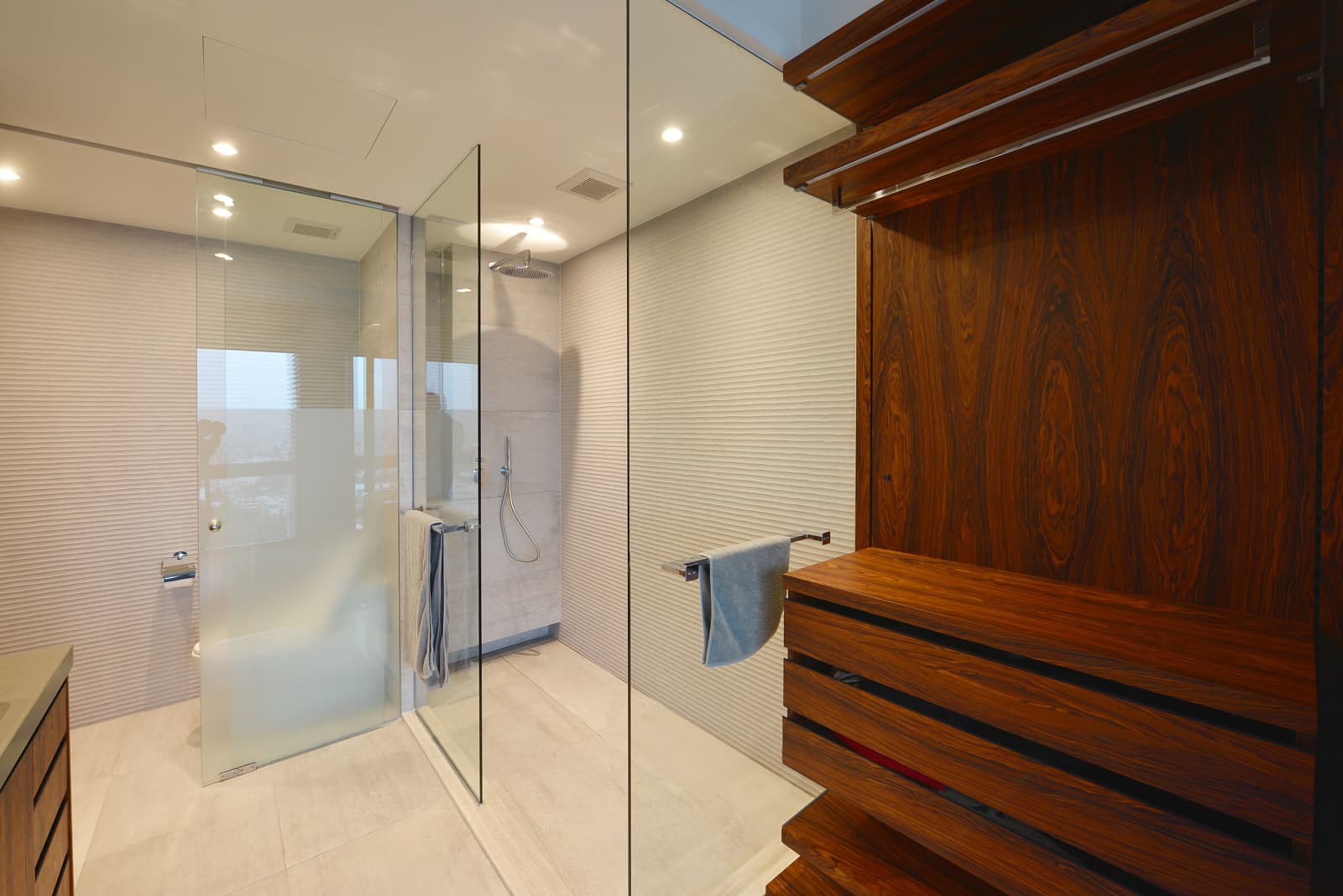
Custom glass is most useful when precise panel placement affects fit or water control. Common examples include curbless showers, angled walls, benches, half walls, sloped surfaces, and openings that vary noticeably from top to bottom.
A custom enclosure can be tailored to the finished room, but it cannot correct poor floor drainage or guarantee that water will never escape. The installer still needs to evaluate the showerhead direction, open edges, floor conditions, seals, and user habits.
Decision Checklist: Kit, Dealer, or Custom?
- Choose a retail kit for a standard opening and lower upfront cost.
- Choose a dealer-supported system when local service and future parts are priorities.
- Choose custom glass when irregular surfaces make a standard kit difficult to fit.
- Choose a semi-frameless slider for a tight room or splash-heavy shared bathroom.
- Choose a frameless hinged door when easier cleaning matters and swing clearance is available.
- Consider a fixed walk-in panel only when the shower is large enough to control spray around the open edge.
Best Shower Door Brands vs Custom Alternatives
The best shower door companies are not necessarily the ones with the most finishes or the thickest-looking hardware. Strong companies make purchasing, installation, and service expectations clear.
Look for four qualities:
- Clear finished-opening and adjustment requirements
- Installation documents available before purchase
- Clear information about replacement parts
- A workable route for delivery damage, warranty questions, and service
Apply the same standards to a local custom company. Ask who takes the final measurements, who installs the enclosure, what hardware system is used, and how later service requests are handled. “Custom” describes the fit; it does not automatically guarantee reliable support.
Comparison Table: Retail Kits vs Custom Doors
|
Decision factor |
Retail kit |
Dealer-supported system |
Local custom door |
|
Upfront cost |
Usually lowest |
Midrange to premium |
Usually highest |
|
Purchase speed |
Often readily available |
May require ordering |
Requires measuring and fabrication |
|
Best opening type |
Standard alcove |
Standard or configurable layout |
Irregular or detailed opening |
|
Installation route |
Skilled DIY or installer |
Often locally supported |
Professionally measured and installed |
|
Adjustment |
Limited to the listed range |
Product-dependent |
Made for the finished opening |
|
Small-room options |
Sliders are widely available |
Sliding and pivot options |
Planned around nearby fixtures |
|
Water control |
Depends on frame, seals, and layout |
Can combine support with better configuration |
Can be tailored to the finished layout |
|
Cleaning |
Varies with tracks and hardware |
Product-dependent |
Can minimize tracks and fillers |
|
Future service |
Depends on seller and model |
Usually a key advantage |
Depends on the local company |
|
Best suited to |
Budget or standard renovation |
Busy, long-term household |
Difficult or design-sensitive project |
There is no unconditional winner. Adjustable kits favor cost and speed; custom glass favors precise fit; dealer-supported systems balance standardized products with local assistance.

Cost and speed favor adjustable kits
A boxed door fits a stated opening range rather than one exact width. Framed and semi-frameless designs may use wall channels or perimeter pieces to accommodate limited variation.
That flexibility has boundaries. A kit cannot reliably compensate for every installation challenge. Problems such as excessive opening variation, leaning walls, uneven mounting surfaces, or unusual floor layouts may require another solution. Adding fillers may make installation possible, but it can also introduce visible seams and more areas to clean.
Measure after the wall and floor finishes are complete. Check the opening in multiple places, assess whether the walls are plumb, and compare the findings with the actual instructions—not only the nominal size in the product title.
For more help distinguishing sliders, pivot doors, fixed panels, and enclosure styles, read HOROW’s bathroom shower door types and installation guide.
Fit and service favor custom doors
A local glass company measures the finished opening before fabricating the panels. This is valuable when glass must align with a bench, half wall, angled return, tile projection, or another feature that leaves little room for adjustment.
Custom work also creates a single local point of responsibility when the same company measures, supplies, and installs the enclosure. Confirm that arrangement before accepting a quote. Ask who is responsible if the measurements are wrong, the glass arrives damaged, or the door needs adjustment after installation.
Custom should solve a defined problem. If an adjustable kit already fits the opening cleanly, the additional cost may not produce a meaningful improvement in daily use.
Fit Diagram: Sliding vs Hinged Clearance
A sliding shower door is generally better suited to a compact bathroom because the panels move along the enclosure rather than swinging outward into the room. This can be useful when the shower is close to a toilet, vanity, or other fixture. The tradeoff is that sliding systems typically include tracks and overlapping glass panels, which can create additional areas that require cleaning.
A hinged or pivot shower door needs enough unobstructed space for the panel to open safely. Before choosing this configuration, check the full swing area for possible conflicts with the toilet, vanity, towel bars, bathroom entry door, bath mats, and normal walking paths. Hinged or pivot doors can provide a wider, more open entry and may have fewer track-related cleaning points, but they are less suitable when the available floor space restricts the door swing.
Do not assume that a hinged or pivot door can swing in both directions. The permitted opening direction depends on the specific door and hardware, so confirm how the door operates in the product documentation before planning the installation.

Key Differences That Actually Matter
Door configuration often has more influence on daily performance than the brand name. Water control, wall adjustment, cleaning access, hardware, and service should therefore be compared consistently across every option.
Will frameless doors leak with kids?
Frameless does not mean leak-proof. Many frameless designs depend on precisely positioned glass, sweeps, and seals while retaining small gaps around moving components. They can manage normal spray in a suitable layout, but they are less forgiving when children direct a handheld sprayer toward an opening or splash water aggressively.
A semi-frameless slider is often a better fit for children, teens, or frequent guests. Overlapping panels, perimeter framing, and a defined lower barrier can provide more forgiving water control. The compromise is additional metal, seals, and tracks to clean.
A minimal fixed panel is best reserved for a shower with enough depth to keep routine spray away from the open edge. It is less suitable for a small family shower or anyone who dislikes drafts.
Before choosing, assess:
- Showerhead and handheld-sprayer direction
- Drain and floor conditions
- Open edges and hinge gaps
- The sweep under the moving panel
- Nearby flooring and cabinetry
- How household members actually use the shower
Can boxed doors handle crooked walls?

Some framed and semi-frameless kits can accommodate limited variation through adjustable wall channels. Frameless kits are generally less forgiving because alignment is more visible and the glass has less framing to conceal uneven gaps.
The deciding specification is the permitted adjustment and wall condition in the instructions. An advertised width alone does not explain whether the system will fit an opening that changes from top to bottom.
Favor custom glass when:
- The opening width changes beyond the kit’s documented range
- The floor or curb is visibly uneven
- The mounting surface is irregular
- The glass must connect with an angled panel
- A filler would interfere with a niche or fixture
- The enclosure has an unconventional curbless layout
Custom glass can follow a finished opening, but it does not repair the underlying floor or tile work. Discuss water movement and mounting conditions before fabrication.
Are cheaper sliders harder to clean?
They can be, but the design matters more than the price label. Deep bottom tracks can trap hair, soap residue, and mineral deposits. Overlapping panels may leave a narrow area that is difficult to reach, while exposed fasteners and frame corners add cleaning points.
Compare technical drawings and interior views rather than judging only the front appearance. Check whether:
- Both sides of each panel are reachable
- The bottom guide has deep channels
- Seals and sweeps can be removed
- Rollers are accessible for cleaning or adjustment
- Drainage paths are open
- Fasteners sit where water commonly collects
Frameless hinged doors usually have fewer tracks and are easier to wipe, but the glass and seals still require care. A factory-applied surface treatment may reduce residue adhesion, but it does not eliminate routine cleaning. Review the specific care instructions before treating a coating as a deciding advantage.
Will replacement parts exist years later?
Parts support separates a good initial purchase from a good long-term choice. Rollers, guides, sweeps, seals, handles, and magnetic strips may eventually require replacement or adjustment even when the glass remains usable.
Before buying, search the seller’s support area using the exact product line. Confirm how replacement components are identified and ordered. After installation, keep the receipt, model information, instructions, and unused installation pieces.
Online listings can disappear, and visually similar seals do not necessarily fit the same channel. A low price offers poor value if one unavailable component forces replacement of the enclosure.
HOROW’s shower door collection should be evaluated by the same product-level criteria: match the listed fit to the finished opening and confirm the documentation, seller support, and parts process for the door being considered.
HOROW Shower Door Options to Compare
If a standardized shower door fits your finished opening, these HOROW models provide three product-level options to compare. Look at door configuration, finish, fit requirements, installation information, and the needs of your bathroom before choosing a specific model.
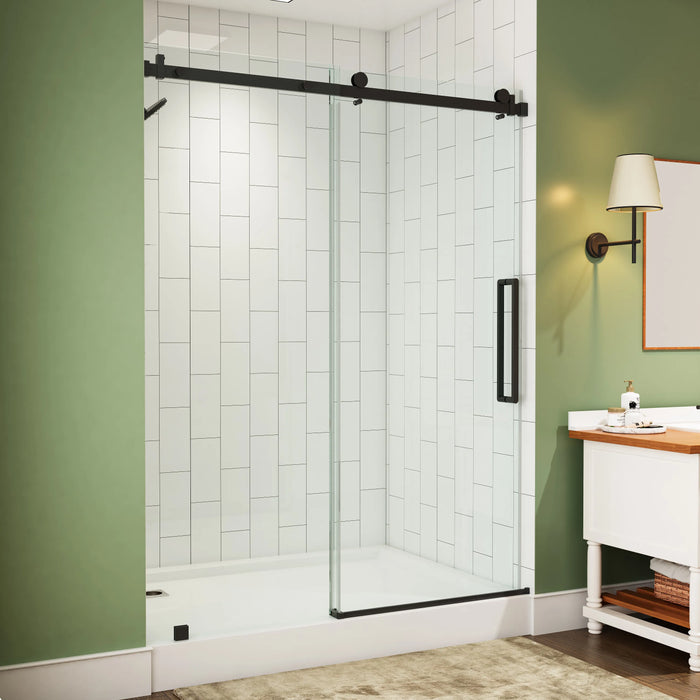
HOROW TE6076-MB
A black frameless sliding shower door option for buyers comparing a sliding configuration with a darker hardware finish. Confirm that the finished opening and installation requirements match the product before ordering.
View TE6076-MB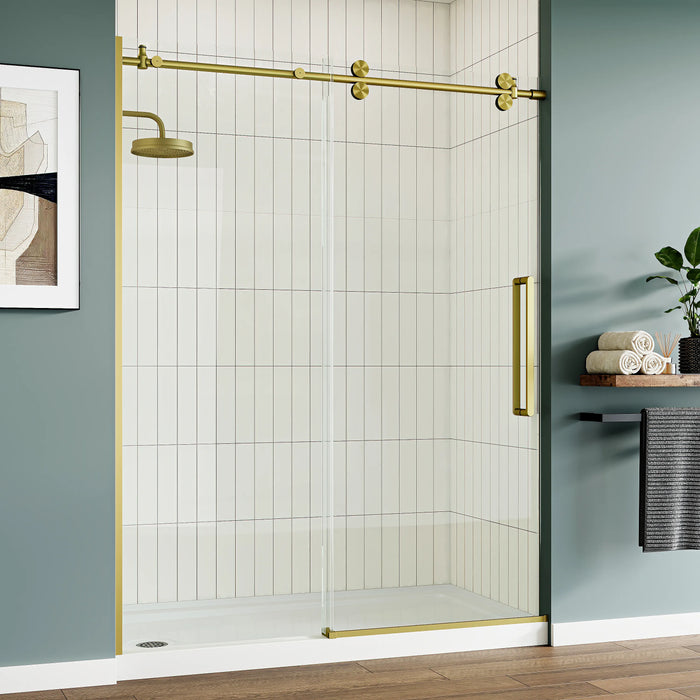
HOROW MI6076-SG
A brushed gold frameless sliding shower door with 8 mm glass for buyers comparing a sliding layout with a warmer hardware finish. Check the finished-opening requirements and installation information for the specific model before purchase.
View MI6076-SG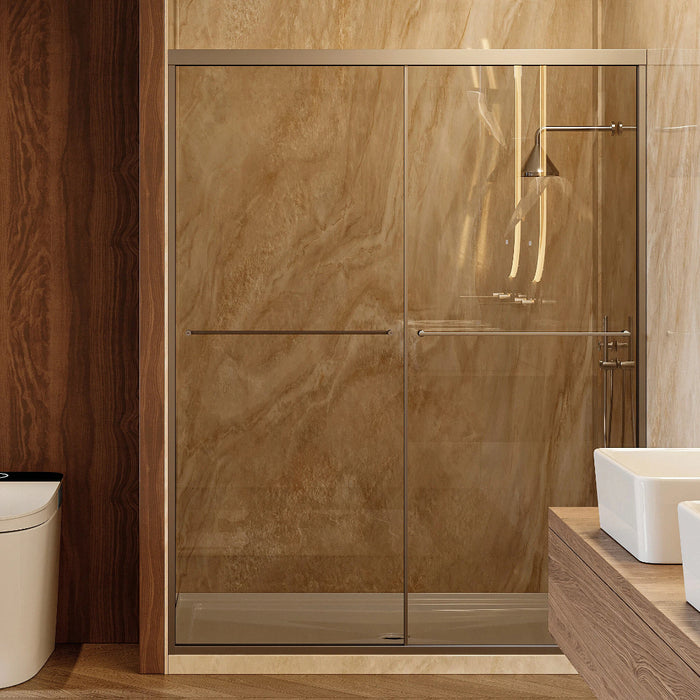
HOROW K2-BN
A brushed nickel shower door identified by HOROW as an ultra-narrow model. It provides another standardized option to compare when evaluating finish, configuration, and fit against the measurements of the completed shower opening.
View K2-BNMatch any shower door to the finished opening and review the model-specific installation requirements before ordering. An irregular or substantially out-of-plumb opening may still be better suited to custom glass.
When Best Shower Door Brands Are Better
Supported branded systems are generally better than custom glass when the opening is conventional, the adjustment range is suitable, and the seller provides a clear service path.
Choose affordable kits for standard alcoves
For secondary bathrooms or budget-focused renovations, an adjustable kit can provide practical performance without the added cost of custom fabrication. Custom fabrication may add little functional benefit when the kit fits without excessive fillers or compromised seals.
This route is especially suitable for a secondary bathroom, rental, or controlled-budget renovation. Verify the finished measurements first; the size in a listing is not a substitute for the full fit requirements.
Choose semi-frameless sliders for splash-heavy bathrooms
For children, teens, guests, or enthusiastic handheld-sprayer users, water containment may matter more than a nearly invisible enclosure. A semi-frameless slider combines space-saving operation with overlapping panels and more defined barriers.
It is less suitable for someone who strongly dislikes cleaning tracks. Inspect the interior geometry and favor a design with reachable corners, accessible guides, and replaceable seals.
Choose supported sellers for DIY reassurance
A retail kit can suit a careful DIY buyer, but only when the installer can meet the product’s documented mounting and handling requirements. Large glass panels and finished tile leave little room for improvised methods.
Before ordering, look for complete instructions, clear parts identification, technical support, and a practical damage-return process. If the installation requirements exceed your experience, use a qualified installer rather than treating a precise frameless kit as an entry-level project.
Choose premium systems for heavy daily use
Frequent use places more demand on rollers, handles, guides, seals, and stops. For a shared primary bathroom or rental, prioritize accessible service and replaceable parts over decorative details.
A dealer-supported system can be worthwhile because local help may be available for alignment or parts identification. Higher price alone does not prove durability, so compare the moving components and service process directly.
When the Alternative Is Better

Custom glass becomes the stronger choice when a standardized system would create foreseeable fit, operation, or water-control problems.
Custom fit beats kits on crooked openings
A kit installed in an irregular opening may require broad fillers, leave uneven gaps, or fail to close as intended. Custom panels are shaped around the finished conditions, allowing cleaner alignment at benches, half walls, angled returns, and tile projections.
Slight variation does not automatically require custom work. If the opening remains within a kit’s documented adjustment, the retail system may still be the better value.
Tailored seals protect curbless layouts
Curbless showers provide little physical separation between the wet area and bathroom floor. Door selection therefore needs to be considered with the floor, drain, spray direction, open edges, and user habits.
A custom installer can position panels and select water-control details for the completed room. That may reduce leakage, but no enclosure should be assumed to keep the surrounding floor dry under every spray condition.
When mobility is a concern, consider the entry, hardware, floor conditions, and user’s needs together. Do not assume that “walk-in,” “curbless,” or “low threshold” automatically makes a configuration appropriate for a particular user or compliant with local requirements. Accessibility guidelines also consider factors such as clear floor space, maneuvering space, and fixture approach, which means the entire bathroom layout matters—not only the shower entrance. For projects involving accessibility needs, review the ADA Standards for Accessible Design to understand how layout requirements can affect bathroom planning.
Professional installation helps with measurement and handling
Large frameless panels require careful measurement, handling, mounting, and alignment. Installation errors can affect closing, sealing, and nearby finished surfaces. Shower doors and enclosures that incorporate glazing materials are covered by the federal Safety Standard for Architectural Glazing Materials under 16 CFR Part 1201. Glass selection, handling, mounting, and installation should follow the applicable product instructions and safety requirements.
Professional installation gives the measuring and installation responsibility to the company performing the work. Before hiring, ask whether employees or subcontractors complete the installation and who handles measurement mistakes, transit damage, later rubbing, or sagging.
Is custom worth the higher cost?
Custom is worth considering when it prevents a predictable fit or water-control problem. It is harder to justify when a standard kit already fits a square alcove and meets the household’s priorities.
Pay more for custom when you need:
- Glass shaped around an unusual feature
- Precise alignment at an angled wall
- A tailored curbless enclosure
- Minimal fillers in a design-sensitive bathroom
- One local company responsible for measuring and installation
Do not choose custom solely because it sounds more prestigious. Ask what practical problem the upgrade will solve.
Final Verdict: Which Should You Choose?
Best overall: supported brands with local service
For most standard bathrooms, the strongest overall route is a branded system sold by a reachable retailer or dealer. It combines standardized documentation with a clearer path for returns, installation assistance, parts, and service.
This is good for conventional renovations and busy households, but less suitable for irregular openings that exceed the system’s adjustment.
Best difficult-layout choice: reputable custom installer
Choose custom glass for crooked walls, curbless floors, benches, angled panels, half walls, or any opening where precise fit affects operation or water control.
Judge the installer on measuring responsibility, hardware selection, communication, and after-installation service—not merely on the word “custom.”
Best budget choice: adjustable semi-frameless kit
For a standard alcove, an adjustable semi-frameless kit offers a practical balance of cost, splash control, and visual openness. It is particularly suitable for family or guest bathrooms.
The trade-off is more cleaning than a minimal hinged enclosure. Check the track, seals, rollers, and parts availability before ordering.
Avoid bargains that shift costs later
Avoid any door when fit information, installation documents, damage handling, or replacement parts are unclear. Saving money at purchase is not useful if the enclosure requires repeated adjustments or complete replacement after a minor component fails.
Before You Buy
- Measure the finished opening at the top, middle, and bottom.
- Check the walls for plumb and assess the curb or floor.
- Compare the measurements with the full installation instructions.
- Map a hinged door’s swing against nearby fixtures and doors.
- Decide whether splash control or easier cleaning matters more.
- Inspect tracks, panel overlaps, seals, guides, and rollers.
- Confirm how damaged glass and missing parts are handled.
- Ask how replacement seals and moving components are ordered.
- Get a custom quote if the opening is angled or substantially irregular.
- Confirm who is responsible for measuring and installation errors.
Common Questions
What are the best shower door brands?
The best shower door brands are those that provide reliable products, clear information, and practical support after purchase. A good option should provide reliable product details, clear instructions, and a practical way to get help if something goes wrong. The right brand also depends on your bathroom layout, installer experience, and how long you plan to use the door.
Which shower door brands offer the best value?
The best value usually comes from brands that balance reasonable pricing with dependable product support. A lower-cost door may work well if it fits your space and has parts that can be replaced later. Consider the full ownership experience, including installation difficulty, maintenance needs, and customer service availability.
What should buyers compare across shower door brands?
Buyers should compare how each door fits their bathroom, not just how it looks online. Check the product specifications, required space, hardware quality, and support options before making a decision. These details can have a bigger effect on daily use than finishes or design style.
Are frameless shower doors better?
Frameless shower doors are a good choice when you want a cleaner, more open bathroom appearance. They work best in bathrooms with suitable layouts and careful installation because small fitting issues are more noticeable. For busy family bathrooms, another style may be easier to manage depending on how the shower is used.
Is custom glass worth the cost?
Custom glass can be worth the extra investment when your bathroom has unusual dimensions or design challenges. It allows the enclosure to be planned around features that standard products may not handle well. For a simple bathroom with common measurements, a ready-made option may deliver similar everyday performance.
Should I buy a shower door online?
Buying a shower door online can be a practical option if you understand the product requirements before ordering. It is important to check return policies, delivery protection, and whether replacement components are available. Online purchases are less convenient when you need hands-on guidance during installation or after problems appear.
References
https://www.ada.gov/law-and-regs/design-standards/2010-stds/
https://www.ecfr.gov/current/title-16/chapter-II/subchapter-B/part-1201


Leave a comment
This site is protected by hCaptcha and the hCaptcha Privacy Policy and Terms of Service apply.