
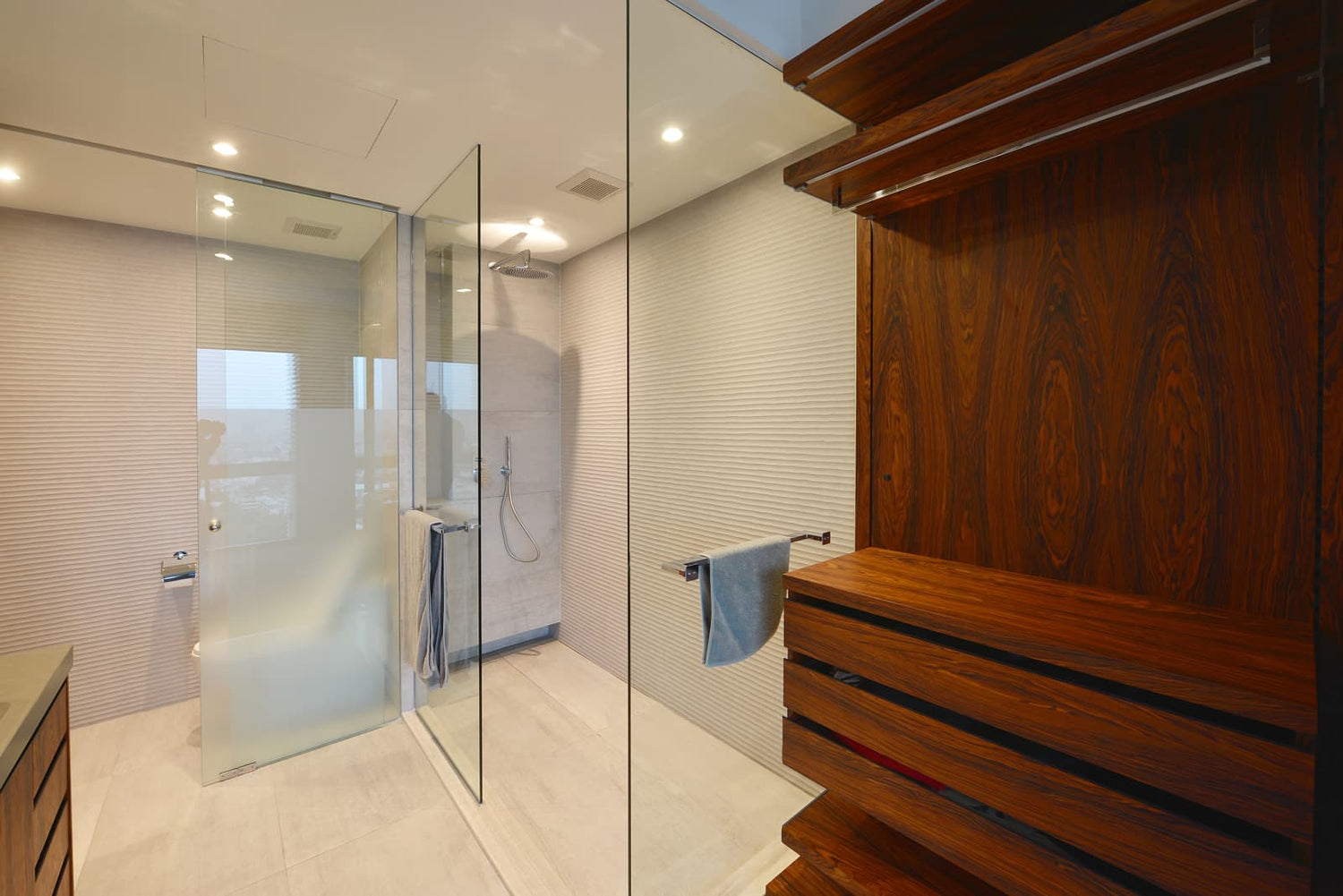
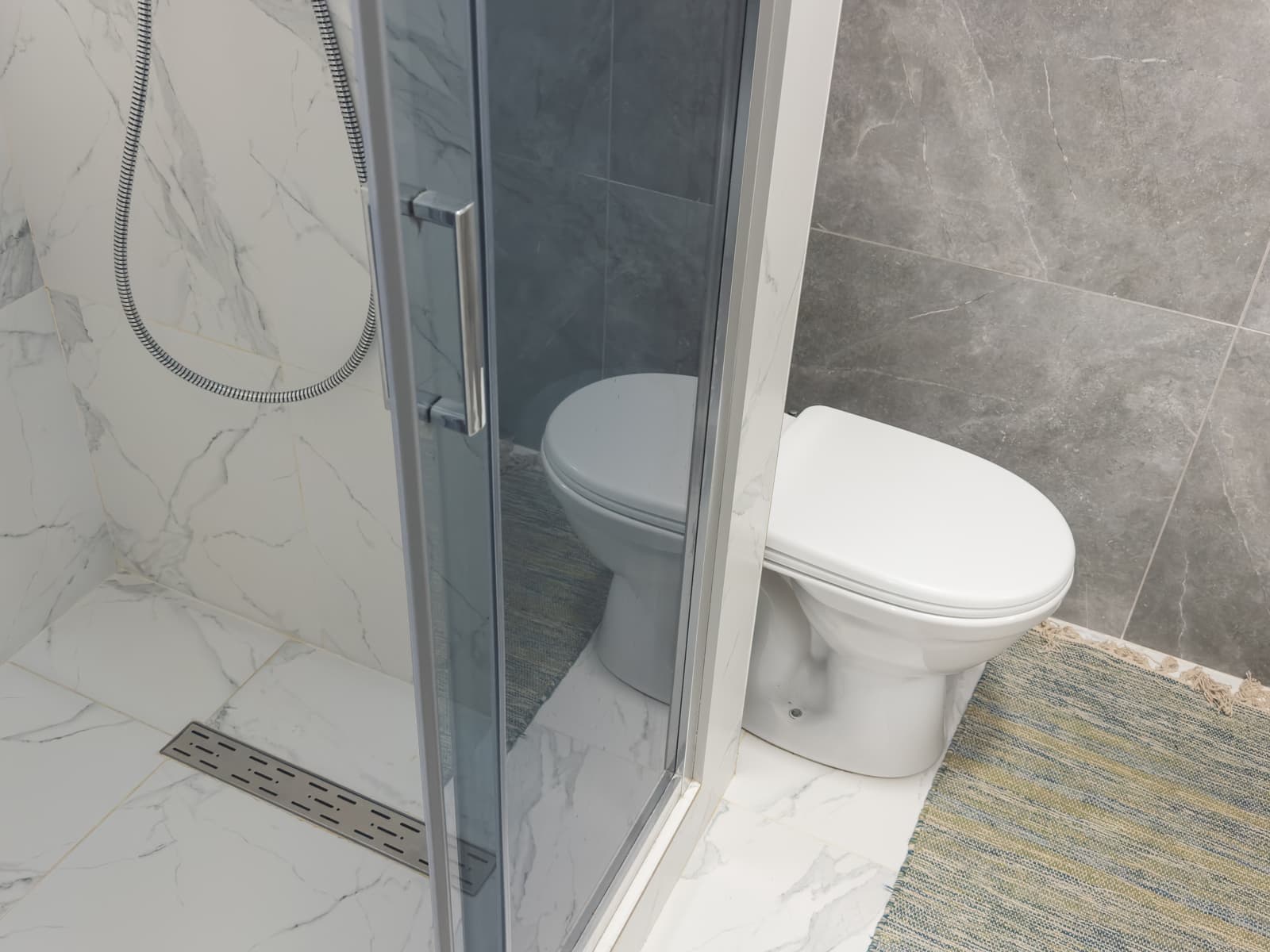
A privacy glass shower door is worth considering when people regularly share a bathroom and clear glass feels too exposed. It provides visual screening while allowing more light through than a solid wall or opaque curtain.
The limitation is that most privacy glass is not completely opaque. Depending on the finish and lighting, another person may still see movement or a body outline. Frosting, patterns, and tint can also reduce visual depth, darken the shower, or require more cleaning effort.
Decision snapshot:
- Choose privacy glass when visual screening would improve everyday comfort in a shared bathroom.
- Skip it when an open appearance and maximum light matter more than separation.
- Do not assume it provides complete privacy or stays cleaner than clear glass.
- Test the exact finish under bathroom-like lighting before ordering.
Who Benefits and Who Should Skip It?
Shared Households Gain Meaningful Visual Screening

Privacy shower glass is most useful when two people sometimes use the bathroom at once. One person can shower while another uses the sink, gets ready, or helps a child without the shower feeling fully exposed.
It can also make guest bathrooms and bathrooms used by teenagers more comfortable. Unexpected walk-ins may feel less awkward because the glass obscures body details.
The benefit is greatest when bathroom sharing happens regularly. Privacy glass does not address sound, smell, or exposure when someone enters or leaves the shower, so it should not be treated as a complete privacy solution.
Skip It When Openness Matters More
Clear glass preserves sightlines through the room, helping a compact bathroom feel deeper. Frosted, tinted, and heavily patterned finishes create a stronger visual boundary and may make the shower feel more enclosed.
That can be a poor trade-off in a narrow bathroom, a small corner enclosure, or a space with dark tile. Privacy glass may also be unnecessary in a private ensuite or single-user bathroom with a reliable lock.
If simultaneous bathroom use is rare, better lighting, ventilation, or a more practical door configuration may provide greater everyday value. Since enclosed shower areas can trap moisture, proper ventilation is also an important part of bathroom planning. The U.S. Environmental Protection Agency (EPA) recommends controlling indoor moisture to help reduce conditions that may contribute to mold growth.
How Much Privacy Will You Actually Get?
Does Privacy Glass Fully Hide Silhouettes?
Usually not. Most privacy finishes blur detail rather than block the view completely. Someone outside the shower may still see movement, skin tone, or a recognizable outline, particularly when the user stands close to the glass.
Lighting makes a substantial difference. A brightly lit shower viewed from a dim bathroom tends to reveal more than a dim shower viewed from a bright room. Distance matters as well: the closer a person is to the glass, the more distinct the silhouette may become.
For higher privacy expectations, test the actual glass sample instead of relying only on the product name.
Privacy Varies Across Frosted and Patterned Finishes
Frosted glass generally creates a consistent blur across the panel. A patterned glass shower door breaks up the view with repeated shapes, while rain and other textured shower glass distort details according to the depth and density of the pattern.
When comparing frosted vs patterned shower glass, neither type is automatically more private. Dense, even frosting may obscure silhouettes more consistently, but a deep pattern can also provide strong screening. Thin or widely spaced areas in a pattern may reveal more.
Tinted glass lowers brightness but does not guarantee privacy. Strong backlighting can still expose silhouettes, and a dark tint may make the shower feel visually heavier.
Test Samples Under Real Bathroom Lighting
View a sample with someone standing behind it rather than judging it flat on a showroom display. Test the glass with the shower light on, from both sides and at several viewing distances.
Nighttime conditions are particularly useful because the shower may be brighter than the surrounding room. If possible, wet the sample as well. Water can change how a pattern looks, and the test lets you inspect whether the surface is smooth or difficult to wipe.
Will It Work in a Small Bathroom?

Obscure Glass Can Reduce Visible Depth
An obscure glass shower door still transmits light, but it interrupts the view of the tile and walls behind it. This makes the shower read as a separate zone rather than an extension of the room.
That separation can feel calm and intentional in a larger bathroom. In a small room, it may make the enclosure resemble a box. Light-colored tile can soften this effect, while dark surfaces behind the glass may make the area look more muted.
Light Loss Matters in Windowless Showers
Privacy glass diffuses light, but dense frosting or patterns can reduce the apparent brightness inside the enclosure. This matters most in windowless alcoves that depend on light entering through the door.
Assess the shower with its intended lighting before choosing a heavy finish. If the enclosure already feels dim behind a curtain or temporary screen, privacy glass may not create the bright result you expect.
Rain and Tinted Glass May Feel Heavier
Rain glass introduces visible texture, while tinted glass adds color and shade. Either finish can become a dominant design element in a compact room.
This may be desirable if you want a sheltered, separate shower area. It is less suitable when the goal is an open, barely-there enclosure. A lighter pattern or partially obscured design may offer a compromise, but its privacy level still needs to be tested.
Does It Require More Maintenance?
Hidden Grime Still Builds Over Time
Privacy glass can make fingerprints, water marks, and light soap film less noticeable from across the room. That keeps the enclosure looking presentable between cleanings, but it does not prevent residue from accumulating.
Because buildup is harder to see, cleaning may be delayed until deposits become more stubborn. Check the surface by touch and under angled light instead of relying only on its appearance.
Textured Shower Glass Requires More Scrubbing

Smooth privacy glass with minimal texture is usually the easiest to maintain. Deep patterns and rough etched surfaces contain recesses where soap film and mineral residue can remain.
Ask which side carries the texture. A textured shower-side surface receives direct water and soap, while an outward-facing texture may collect dust and fingerprints. A finish that places the pattern within the glass or leaves the wet side smooth may be easier to maintain, but construction varies by product.
Also check whether fixed panels and corners are easy to reach. Cleaning access can matter more than whether spots are visible.
Hard Water Can Undermine Easy-Care Expectations
Hard water conditions vary by location. The U.S. Geological Survey (USGS) explains that water hardness is largely associated with dissolved calcium and magnesium, and that hard water can leave mineral residue and contribute to scale buildup.
If existing fixtures develop stubborn deposits, expect the shower door to require consistent care. Follow the glass supplier’s cleaning instructions and avoid unapproved abrasive tools that could damage the finish. The easiest privacy glass to clean is generally one with an accessible, smooth wet-side surface rather than deep exposed texture.
Setup Details That Can Outweigh Privacy
Door Clearance and Tracks Affect Daily Use

Door operation often has a greater effect on daily comfort than the glass finish. A swinging door needs clearance from toilets, vanities, towel bars, and users. It may also carry water onto the floor when opened.
Sliding doors avoid swing clearance, but their tracks and overlapping panels can be harder to reach and may collect residue. Check entry width, handle placement, and whether the shower controls can be reached without stepping into the spray.
When reviewing glass shower doors, compare the opening style and enclosure fit before narrowing the selection by privacy finish.
HOROW Shower Doors to Compare Before Choosing a Privacy Finish
Privacy is only one part of choosing a shower door. Door operation, frame design, hardware finish, cleaning access, and enclosure fit also affect everyday use. These HOROW models provide different configurations to compare before deciding on the exact glass finish and privacy level for your bathroom.
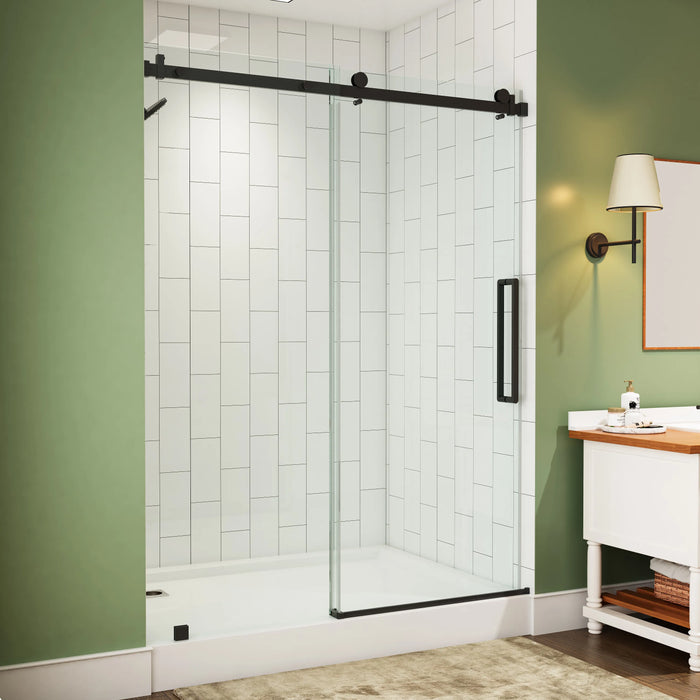
HOROW TE6076-MB
A black frameless sliding shower door with an adjustable 56–60 in. width, 5/16 in. clear tempered glass, reversible sliding installation, and an easy-clean coating. It is useful for comparing sliding-door fit and clearance before selecting the glass finish you want.
View TE6076-MB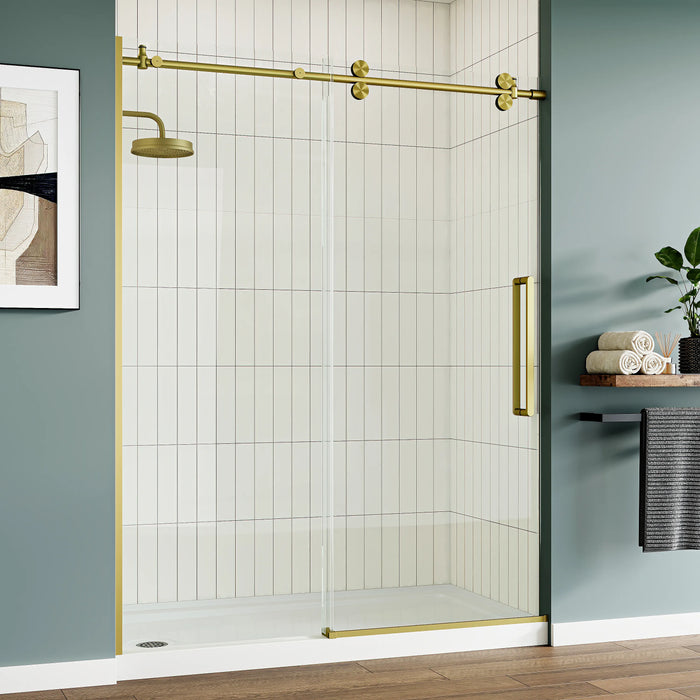
HOROW MI6076-SG
A brushed gold frameless sliding shower door with 8 mm tempered glass, an adjustable 56–60 in. width, reversible installation, and an easy-clean coating. It provides another hardware finish to compare while evaluating sliding-door fit and maintenance.
View MI6076-SG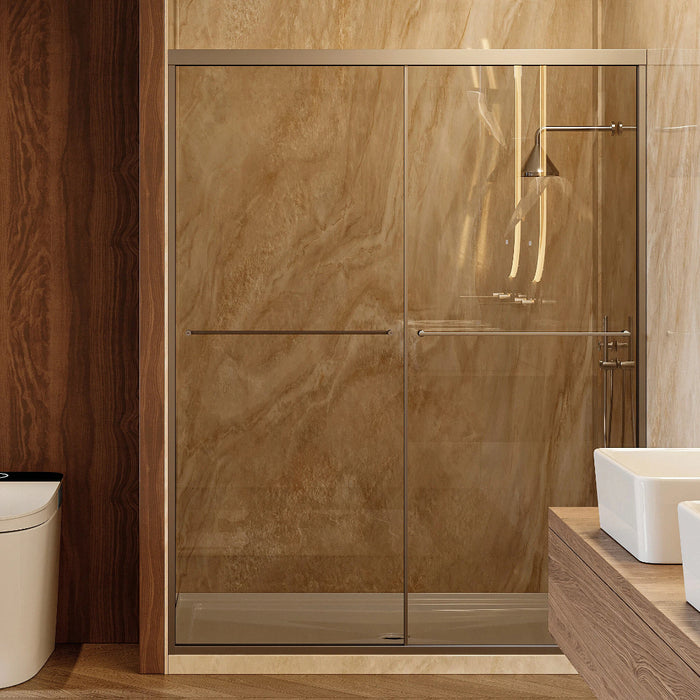
HOROW K2-BN
A brushed nickel shower door with an ultra-narrow frame, 5/16 in. tempered glass, magnetic catch, and a tilted bottom rail designed to direct water toward the shower. It offers a different frame and hardware approach to compare when planning enclosure fit and cleaning access.
View K2-BNCompare the exact product documentation, opening dimensions, installation requirements, and glass finish before ordering. The models shown here are included for shower-door configuration comparison; confirm the privacy level of the exact glass option separately.
Safety Glazing and Correct Hardware Matter
Do not assume that frosting or texture indicates whether a panel is suitable for a shower enclosure. Confirm through the product documentation that the glass, edges, mounting method, and hardware are intended for the planned installation.
Measurements should follow the door manufacturer’s instructions, and the mounting surfaces must be able to accommodate the specified hardware. Finished glass should not be cut, drilled, or modified unless its documentation expressly permits it. Consult a qualified installer or local authority when safety-glazing requirements, wall support, or installation conditions are uncertain.
Is It Worth the Extra Cost?
Privacy finishes may cost more than standard clear glass, with the difference affected by the finish, panel construction, hardware, door style, and customization.
The added cost is easier to justify when several people share the bathroom and visual screening improves daily use. It is harder to justify in a rarely used guest bath or private ensuite where the shower is normally used behind a locked door.
Compare complete shower door configurations, not just the glass appearance. Correct fit, practical entry, adequate lighting, and reachable cleaning surfaces should take priority over a decorative privacy finish.
Before You Choose
- View the exact glass with someone standing behind it.
- Test close-range silhouettes with the shower light on.
- Check whether the finish makes the room feel smaller or dimmer.
- Identify which side is textured and whether it is easy to reach.
- Confirm door clearance, entry width, handle position, and control access.
- Review the product documentation for glass, hardware, measurement, and installation requirements.
Common Questions
What shower glass provides the most privacy?
Dense frosted glass usually provides the most consistent privacy, while some textured finishes can also create strong visual separation. The level of coverage depends on the pattern depth, spacing, and how the glass looks under different lighting conditions. If privacy is a top priority, check a real sample instead of choosing based only on the glass style name.
Which privacy glass is easiest to clean?
Smooth privacy glass with minimal texture is usually the easiest to maintain. Finishes with raised patterns or uneven surfaces may require extra attention because residue can collect in small areas. The easiest option is one that balances the level of screening you want with a surface you can comfortably wipe.
Does patterned shower glass reduce bathroom light?
Yes, patterned shower glass can soften the amount of light that passes through the enclosure. The effect varies by pattern density, glass thickness, and the brightness of the surrounding space. A lighter texture can keep the bathroom feeling more open, while heavier designs may create a more separated look.
References
https://www.epa.gov/mold/brief-guide-mold-moisture-and-your-home
https://www.usgs.gov/special-topics/water-science-school/science/hardness-water


Leave a comment
This site is protected by hCaptcha and the hCaptcha Privacy Policy and Terms of Service apply.