
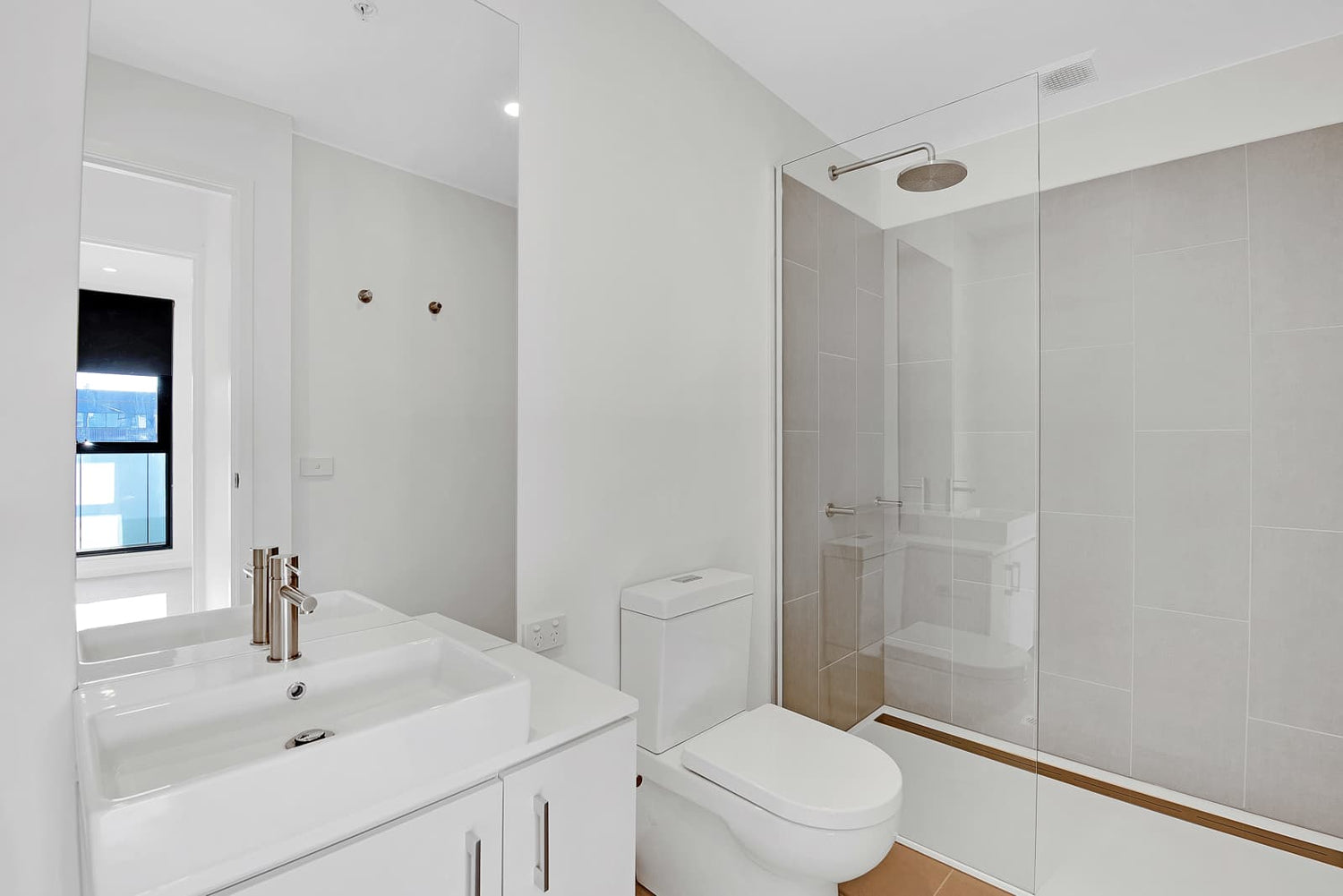
A low iron glass shower door is worth considering when visual clarity is a priority, especially with white tile, pale stone, detailed patterns, or exposed glass edges. It reduces the green tint associated with standard clear glass, creating a more neutral view into the shower.
However, this is primarily an appearance upgrade. It does not improve door operation, simplify installation, or reduce cleaning. It is best suited for design-focused bathrooms, but may be less practical for budget-focused buyers or households that prefer lower-maintenance surfaces.
Who Benefits Most From Low-Iron Glass?
Best for Buyers Prioritizing Visual Clarity
Low-iron shower glass works best when the shower is a visible design feature and the surrounding materials are meant to appear true to their original colors. White tile, light grout, pale stone, and decorative patterns are more likely to reveal the color cast of standard clear glass.
It is also a logical choice for frameless enclosures with visible polished edges. Looking straight through a clean panel may show only a small difference, while exposed edges often make the tint easier to notice.
Budget-Focused Buyers Should Probably Skip It
The main benefit is a clearer, less green-tinted appearance—not better shower performance. If the upgrade competes with correct sizing, suitable hardware, or professional measurement, prioritize those practical requirements first.
Standard clear glass may be sufficient when the shower uses medium or dark finishes, sits in a dim area, or is not a central design feature. It is also the more practical choice if a slight green cast would not bother you after installation.
Visible Spots Are the Main Maintenance Concern
Low-iron glass does not necessarily collect more residue than standard glass, but its clarity can make dried droplets, streaks, and mineral marks easier to notice. Maintaining that premium look also depends on how consistently the glass is cleaned.
This glass is good for households willing to wipe the enclosure regularly. It may be less satisfying in a busy bathroom where water is routinely left to dry on the panels.
Low-Iron Versus Standard Clear Glass
Standard clear glass can show a noticeable green tint, particularly as glass thickness increases. Low-iron glass reduces this visible color cast and is used when greater color clarity is desired. It is also commonly described as low-iron shower glass or ultra-clear shower glass.
Both options can appear transparent from directly in front of the enclosure. The real question is whether the remaining tint changes how colors and finishes appear through the enclosure.
How Different Is Low-Iron From Clear Glass?
The difference is primarily aesthetic. Low-iron glass can provide a more color-neutral view of tile, grout, and fixtures, while standard clear glass may give pale materials a subtle green cast.
How noticeable that difference feels depends on the room. Bright surfaces, strong lighting, exposed edges, and large frameless panels tend to make it easier to see. Against gray, tan, green, or darker tile, the difference may be less important.
Before deciding, compare physical samples against the actual tile or finish planned for the shower. Product photos may not reproduce the tint accurately under your bathroom’s lighting.
Where Is the Green Tint Most Visible?
The green tint in shower glass is generally easiest to see along exposed edges, where the view passes through more glass. It can also become more apparent around overlapping panels or reflections.
A frameless enclosure may emphasize edge color because less metal trim covers the glass. On a framed door with concealed edges, the difference between standard and low-iron glass can be less prominent.
Viewing angle matters as well. A panel that looks nearly colorless from straight ahead may show more tint when viewed from the side or upon entering the room.

Does Ultra-Clear Glass Improve Shower Function?
No functional improvement should be assumed. Ultra-clear shower glass does not make the door easier to open, improve its fit, or eliminate cleaning.
The value lies in reducing the visible color cast. Door movement, alignment, stability, and durability depend on the entire enclosure system. Hardware, installation quality, and maintenance all matter—not just the type of glass selected.
What You Actually Get From the Clarity Upgrade
The premium mainly improves how accurately surrounding colors and finishes appear through the glass. It can make the glass feel more visually open and neutral, particularly when the enclosure is open, frameless, and surrounded by light finishes.
It does not automatically include better hardware, easier maintenance, more accurate installation, or a better-fitting enclosure. Those factors should be assessed separately.
Is It Worth the Extra Cost?
Low-iron glass is most likely to justify its added cost when:
- The shower is a major visual feature.
- The tile or stone behind it is light or color-sensitive.
- Exposed glass edges will be prominent.
- You care enough about the clearer appearance to maintain it.
If those conditions do not apply, standard clear glass is likely to deliver similar day-to-day utility. Ask whether a slight green cast would continue to bother you after the bathroom is complete. If not, the clarity premium may offer limited value.
Lighting Changes How Noticeable Clarity Feels
Bright daylight or strong bathroom lighting can make the neutral appearance of low-iron glass easier to appreciate. Dim, warm, or uneven lighting may reduce the perceived difference.
Placement also matters. Glass viewed against a bright shower wall or from a well-lit doorway reveals color more clearly than an enclosure in a shadowed corner.
Compare samples under lighting similar to the finished bathroom rather than relying solely on showroom lighting. Hold each sample against the planned tile and examine it from both the front and side.

Edge Views Can Reveal Tint Differences
Edge visibility should be part of the decision. Frameless doors, fixed panels with exposed sides, and layouts that face the side of the glass are more likely to display tint differences.
If trim, a wall, or the room layout conceals most edges, low-iron glass may have less visual impact. A physical sample with a finished edge is more useful for judging this than a flat online image.
Clarity Does Not Simplify Installation
Glass clarity should be selected only after confirming that the enclosure suits the finished opening. Clearer glass cannot correct incorrect measurements, uneven walls, or poor door clearance. Proper glass installation also depends on accurate measurements, suitable hardware, and recognized safety practices. The National Glass Association’s Frameless Shower Enclosure Design and Installation Manual provides industry guidance on the design, measurement, and installation of frameless shower enclosures.
For broader planning, consult this frameless shower door installation and buying guide before choosing an enclosure format.
Measure Opening Width and Height Carefully
Measure where the door or panel will actually be installed. Measurements taken from plans or before tile is completed may not reflect the finished opening.
Check the opening at several locations rather than assuming the walls, curb, and threshold are uniform. For custom glass, establish who will take and approve the final measurements. For a fixed-size product, follow its stated fit requirements.
Check Walls for Out-of-Plumb Conditions
A wall may lean inward or outward even when it appears straight. This can affect panel alignment, gaps, hardware placement, and door closure.
Premium frameless designs may make uneven lines more noticeable because there is less trim to conceal them. Confirm wall conditions before ordering rather than assuming every variation can be corrected during installation.

Fixed-Size Doors Still Constrain Fit
A fixed-size low iron glass shower door has the same fundamental fit constraints as other fixed-size doors. Clearer glass does not make the enclosure more adjustable.
Confirm the required opening, door swing, handle clearance, and potential conflicts with toilets, vanities, towel bars, or other nearby features. You can review glass shower door configurations after establishing which formats suit the available space.
HOROW Shower Door Options to Compare
After deciding how much glass clarity matters in your bathroom, compare the door configuration, finish, and listed glass specifications separately. These HOROW shower doors provide different frameless and narrow-frame options to review after confirming the finished opening and installation conditions.
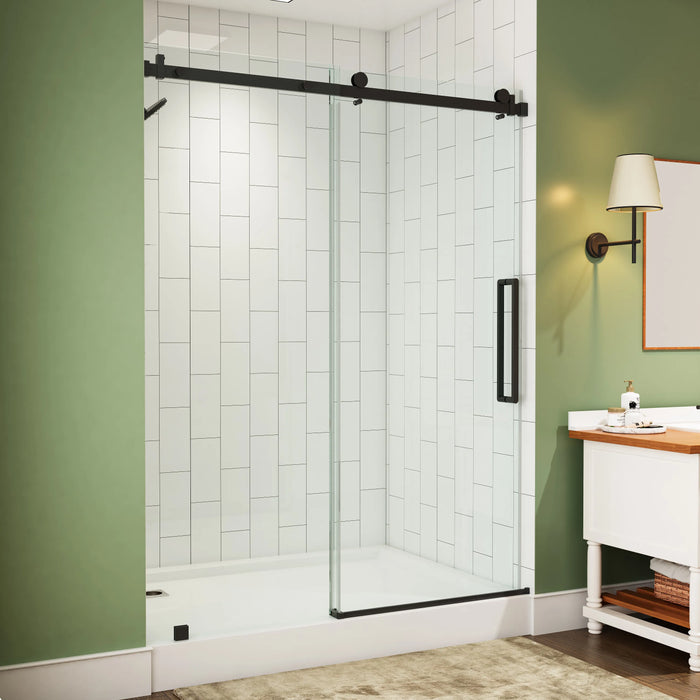
HOROW TE6076-MB
A black frameless sliding shower door with clear tempered glass and a reversible sliding configuration. Compare its listed glass specification, finish, and fit requirements with the priorities established for your bathroom.
View TE6076-MB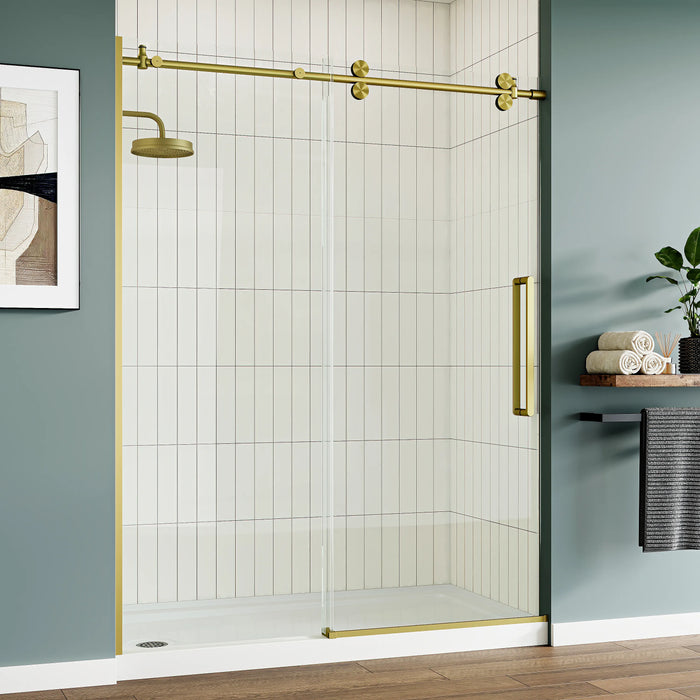
HOROW MI6076-SG
A brushed gold frameless sliding shower door with 8mm tempered glass and an easy-clean coating. Its combination of exposed glass and a warm metal finish can be compared with the tile, lighting, and color palette planned for the bathroom.
View MI6076-SG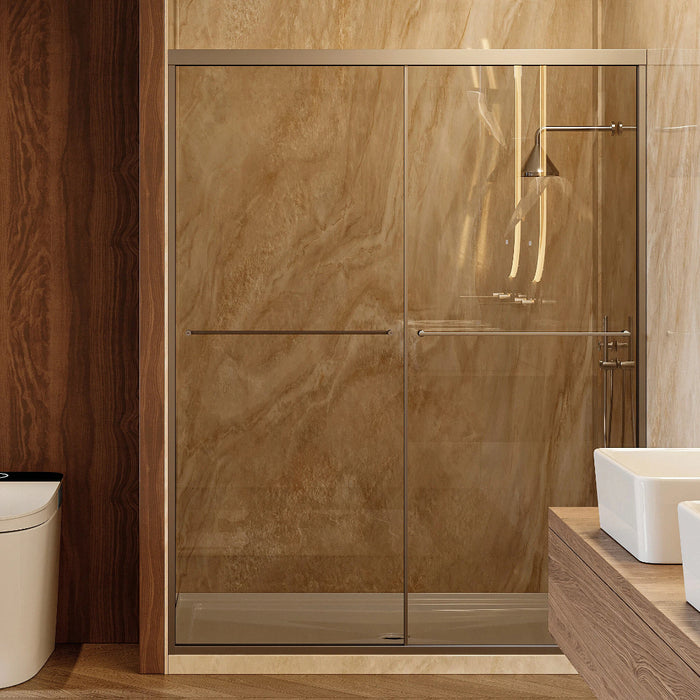
HOROW K2-BN
A brushed nickel shower door with an ultra-narrow frame and 5/16-inch tempered glass. It provides another enclosure format to compare when the amount of visible glass and the surrounding hardware finish are important design considerations.
View K2-BNGlass type and installation requirements vary by model. Confirm the product specifications and finished-opening requirements before choosing a shower door.
Daily Cleaning and Visible Water Spots
The main maintenance concern is visibility rather than a fundamentally different cleaning requirement. Low-iron glass can make residue more noticeable because there is less underlying color to distract from spots and streaks.
Does It Require More Maintenance?
Its lower iron content does not change the basic cleaning requirements. However, owners seeking a consistently clear, premium look may feel the need to wipe it more often.
A household that already removes droplets after showering may notice little practical difference. A household that allows water and soap residue to dry may find that the visual benefit fades quickly.
Mineral Marks Become Easier to Notice
Dried water can leave visible spots or cloudy areas. Their prominence varies with local water conditions, lighting, background contrast, and cleaning habits. Hard water contains higher levels of dissolved minerals, which can contribute to visible deposits on bathroom surfaces over time. The U.S. Geological Survey (USGS) Water Science School: Hardness of Water explains how dissolved minerals such as calcium and magnesium affect water hardness.
If faucets, mirrors, or existing shower surfaces already show obvious mineral residue, expect a clear glass enclosure to display similar marks. Follow the specific door manufacturer’s care instructions, particularly when the enclosure includes coatings, seals, or finished hardware.
Infrequent Wiping Weakens the Premium Look
Low-iron glass is most effective when it remains clean enough for its clarity to be visible. A water-spotted ultra-clear panel may lose some of the visual advantage that justifies its higher price.
That does not make low-iron glass a poor choice. It means the upgrade is better suited to buyers whose cleaning habits support the desired appearance. If routine wiping is unrealistic, standard clear glass may create less ownership frustration.

Before You Choose
- Compare low-iron and standard glass samples against the actual tile.
- View each sample under lighting similar to the finished bathroom.
- Examine the face and finished edge from several angles.
- Confirm the completed opening measurements and wall alignment.
- Check door movement and clearance around nearby fixtures.
- Decide whether your household will regularly remove visible spots.
Common Questions
What Is Low-Iron Shower Glass?
Low-iron shower glass is a type of glass made with reduced iron content to create a clearer view. It is mainly chosen when homeowners want tile colors, finishes, and bathroom details to look closer to their original appearance. The difference is usually more noticeable in bright bathrooms or designs with light-colored materials. It is a style upgrade rather than a change to how the shower door works.
Is Low-Iron Glass Completely Colorless?
No, low-iron glass is not completely free of color, but it has a much more neutral appearance than standard clear glass. The remaining tint can depend on the glass thickness, lighting conditions, and what is behind the panel. In some bathrooms, the difference may be subtle and not worth the added cost. A physical sample is the best way to judge how it will look in your space.
Why Does Standard Shower Glass Have a Green Tint?
Standard shower glass can appear green because of the iron content naturally present in the raw materials used to make glass. The effect is usually harder to notice when viewing a single thin area of glass from the front. It becomes easier to see with thicker glass, exposed edges, or light surfaces behind the enclosure. This is why frameless designs often make glass color differences more noticeable.
Is Low-Iron Glass Easier to Clean?
No, low-iron glass does not require a simpler cleaning routine than regular shower glass. It can still develop buildup from hard water, soap, and daily use. Because the glass looks clearer, small marks may stand out more when the surface is not maintained. Homes with frequent cleaning habits are more likely to enjoy the appearance benefit.
Should I Choose Glass Clarity Before Measuring?
No, you should confirm the shower opening and installation conditions before deciding on glass clarity. The right size, wall condition, and door layout have a bigger impact on whether the enclosure works properly. Low-iron glass should be considered after the practical requirements are confirmed. This helps prevent paying for a visual upgrade that does not solve fit issues.
References
https://www.glass.org/news/2024/nga-announces-newest-technical-manual-nga-glass-conference-tacoma
https://www.usgs.gov/special-topics/water-science-school/science/hardness-water


Leave a comment
This site is protected by hCaptcha and the hCaptcha Privacy Policy and Terms of Service apply.