



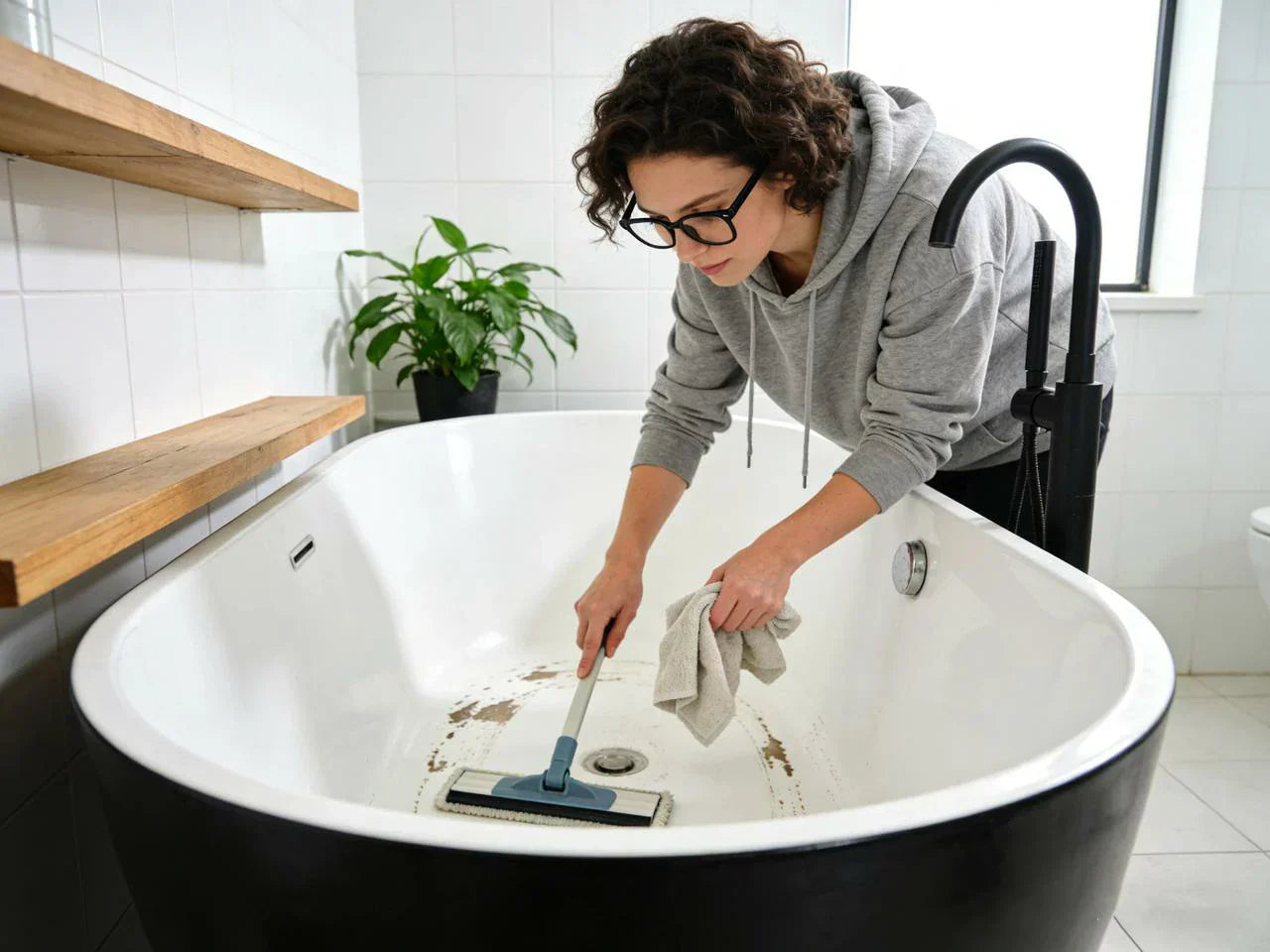
You fill the kettle, switch it on, and hear that rough crackling sound instead of a smooth boil. Your showerhead sprays in odd directions. There’s a white ring in the toilet that will not scrub away. All of these are everyday signs of lime scale.
Lime scale is more than an unsightly substance on taps and tiles. It clogs pipes, strains water-using appliances, and can push your energy bills up for years without you noticing. The good news is that once you understand what limescale is and how it forms, you can remove it and prevent limescale from coming back.
This guide starts with quick wins you can try today using vinegar or lemon juice, then moves into the science of hard water, the real cost of limescale buildup, and the pros and cons of water softeners and other treatment systems. You’ll also see how the limescale removal industry is growing, what that means for new cleaning products, and how to stay safe and eco‑aware while you clean.
What Is Lime Scale? Fast Facts & Fixes
Lime scale is a hard, chalky deposit that forms when mineral-rich water evaporates, leaving calcium and magnesium behind on bathroom surfaces and inside appliances. It not only looks unsightly but can also reduce the efficiency of taps, showerheads, and even filtration systems.
What is lime scale in simple terms?
To put it simply, lime scale (or limescale) is a hard, chalky crust that forms when water is hard. Hard water contains higher levels of calcium and magnesium. When this water is heated or left to evaporate, those minerals turn into solid calcium carbonate and stick to surfaces.
People sometimes confuse lime scale with “lime” used in building and industry. They are related but not the same:
-
Lime scale: natural calcium carbonate deposits that form from your water supply.
-
Lime (quicklime or hydrated lime): industrial products made by heating limestone; used in cement, steelmaking, and water treatment.
At home, you will most often see limescale deposits in:
-
Your kettle, inside on the base and around the element
-
Boilers and water heaters (often hidden inside)
-
Taps, faucets, and shower heads where water dries on metal
-
Shower screens, tiles, bathtub, basin, and toilet bowl
-
Inside washing machines and dishwashers on heating elements and pipes
Lime scale feels rough or chalky, often off‑white, grey, or yellowish. On glass shower doors and tiles, it can look like dried soap or milk splashes that never rinse away.
Quick ways to get rid of lime scale at home
Many people type searches like “how to remove limescale”, “how do i remove limescale from toilet” or “how do you get rid of toilet bowl stains” after trying normal scrubbing with no luck. The reason scrubbing alone does not work is that you are dealing with a mineral crystal, not simple dirt. You need something that can dissolve those crystals.
The three fastest tools you already have or can easily buy are:
-
White vinegar (acetic acid)
-
Citric acid powder
-
Commercial limescale remover/descaler
All three are acids, and acids react with calcium carbonate to break it down and turn it back into dissolved minerals and gas.
Vinegar and limescale work well together in many cases, making vinegar for limescale removal one of the simplest and most reliable household methods. Using vinegar is often enough for:
-
Kettles – fill with a mix of half water and half white vinegar, heat to hot (not boiling), then let it sit for 30–60 minutes.
-
Shower heads – remove the shower head if you can, submerge it in a bowl of vinegar or white vinegar or lemon juice for a couple of hours or overnight, then rinse thoroughly and scrub with an old toothbrush.
-
Taps/faucets – soak a cloth in vinegar, wrap it around the fixture, leave for an hour, then wipe and rinse.
Citric acid (a food‑safe powder) is stronger than vinegar at the same strength and has less smell. It is handy for kettles, coffee machines, and washing machines.
Commercial limescale removers often use stronger acids (like sulfamic, phosphoric, or hydrochloric acid) and are best for heavy limescale build up in toilets, very old showers, or thick ring stains.
So, how do you get rid of lime scale fast? Use an acid soak, then a gentle scrub and a good rinse. For very stubborn limescale, repeat the soak or move up to a stronger cleaner, especially for a very tough ring in toilet bowls.
Essential prevention steps to start today
Once you have cleaned, the next goal is to keep limescale from building again. You do not have to install a full water softener on day one. Small habits already slow limescale buildup:
After washing, wipe down wet bathroom surfaces like the shower, tiles, and bathtub with a cloth, and use a squeegee to prevent water from drying and leaving mineral deposits. Try to clean your shower doors and walls at least once a week with a mild cleaner or a vinegar spray. A well-designed bathtub also makes cleaning easier and helps keep limescale at bay, leaving your bathroom surfaces looking fresh and spotless.
On taps, shower heads, and plated taps, quickly drying them after use protects the finish and reduces those chalky spots. In the kitchen, empty your kettle fully between boils and descale it every 1–3 months, depending on how high water hardness is in your area.
If water is hard where you live, you can reduce scale by:
-
Fitting simple filtration systems on certain taps
-
Using water softening tablets or powders where the manufacturer suggests them for washing machines and dishwashers
-
Considering a small water softener or conditioner if your water test shows very high water hardness
These steps do not remove hardness minerals from all your water, but they slow limescale problems and give you more time between cleans.

When does lime scale become a serious problem?
Light scale on taps and tiles is mostly a cosmetic problem. But lime scale becomes serious when it starts to affect water flow, heating, and safety.
Warning signs include:
-
Higher energy bills even though your use has not changed much
-
Reduced water pressure at taps or shower, or strange spray patterns from the showerhead
-
A noisy boiler or water heater that gurgles, rumbles, or whistles. This is often called “kettling”, because it sounds like a kettle boiling.
-
Very slow filling of toilets, basins, or baths
-
Repeated blockage in pipes or unclogging needs in your bathroom
In these cases, lime scale has often built up inside pipes or heat exchangers, where you cannot see it. This can damage the system, waste a lot of energy, and in the worst case, cause leaks. That is when it is wise to call a qualified plumber or heating engineer for a check and maybe a professional descaling or power‑flush.
Understanding Lime Scale & Hard Water Chemistry
Limescale doesn’t appear out of nowhere—it's the result of hard water chemistry at work. When water carries high levels of calcium and magnesium, these minerals can crystallize on bathroom surfaces, fixtures, and inside appliances.
How does hard water create lime scale?
Hard water is water that has picked up extra calcium and magnesium as it passed through rocks and soil. The more of these hardness minerals it holds, the harder the water.
When this water is heated, like in a kettle or water heater, or when it dries on surfaces, the dissolved minerals react and turn into solid calcium carbonate crystals. These stick to metal parts, glass, and plastic. This is how limescale deposits begin.
You may hear the terms temporary hardness and permanent hardness:
-
Temporary hardness is due mainly to calcium bicarbonate. It breaks down when water is boiled, giving off carbon dioxide gas and leaving calcium carbonate (lime scale) behind.
-
Permanent hardness is due to other calcium and magnesium salts that do not change as easily with heat. They can still lead to limescale buildup, just in slightly different ways.
So when you heat hard water, you trade one kind of dissolved mineral for a solid crust stuck to your appliance.
Where does lime scale build up the most?
Lime scale loves warm, wet places where water changes temperature or evaporates. At home, the highest‑risk spots are:
-
Hot water heaters and boilers, especially on heating elements and inside cylinders
-
Dishwashers and washing machines around heating elements, spray arms, and internal pipes
-
Electric showers, shower mixers, and thermostatic cartridges
-
Taps, shower heads, aerators, and faucets where slow drips leave rings
-
Tiles, grout, and glass shower screens that stay wet for long periods
-
Toilets, especially around the water line, where you see a ring in toilet bowls
In large buildings, hotels, and laundries, scale also builds up in long pipe runs, heat exchangers, and cooling systems, which can be costly to repair.
Is lime scale harmful to health?
Many people worry, “Is lime scale dangerous to drink?” or “Is this white residue in my glass a contaminant?”
According to the World Health Organization (WHO), hard water does not pose a significant health risk to the general population. WHO says that calcium and magnesium in drinking water are considered beneficial nutrients The small amounts you might drink from normal limescale deposits are usually safe for healthy adults.
However, very hard water can affect taste and can cause soap suds to work less well. Some people with certain kidney conditions may be advised by their doctors to watch mineral intake, but for the general public, hardness is more of a nuisance issue than a serious safety issue.
If you are worried about your local water quality, it is worth checking your supplier’s reports or doing a simple water test. Many local or national agencies publish hardness and quality data online.
Visualizing lime scale: what does it look and feel like?
Lime scale usually looks:
-
Chalky and rough to the touch
-
Off‑white, cream, grey, or yellow‑brown
-
Flaky, crusty, or as a firm smooth ring, especially in toilet bowls and around taps
On glass, it can be hard to tell if you are seeing lime scale or just soap residue. A quick guide is:
-
Soap scum feels greasy or waxy until you wash it with detergent.
-
Lime scale feels hard, like very fine sandpaper, and does not wipe off with soap alone.
In a kettle, it may look like floating flakes or a solid plate on the base. In a toilet, it may show as a white, grey, or brown ring at the normal water line or heavy crust under the rim where water enters.
How Lime Scale Impacts Appliances, Energy Use & Costs
Limescale buildup is more than a cosmetic issue—it quietly affects how efficiently your home runs. As mineral deposits accumulate inside appliances, they force heaters, dishwashers, and kettles to work harder, raising energy use and shortening equipment lifespan. Over time, this translates into higher utility costs, more frequent repairs, and premature replacements.
How much efficiency do you lose from lime scale?
Lime scale is a good insulator. That means it slows down heat transfer. Even a few millimetres of limescale build up on a heating element makes your boiler or kettle work harder to heat the same amount of water.
Studies and field data show that water heaters with heavy scale can use up to around 30% more energy than clean ones to deliver the same hot water. That wasted energy turns into higher gas or electricity bills month after month.
You may notice that your kettle takes longer to boil, or your shower does not get as hot as it used to, even though you have not changed the thermostat. Very often, lime scale is the hidden reason.
Real-world appliance damage and lifespan reduction
Think about all the water-using appliances in your home. Lime scale can harm each of them in different ways:
-
In boilers and water heaters, scale coats the heat exchanger, leads to hot spots, and can cause metal fatigue and leaks.
-
In electric kettles and coffee machines, heavy scale on the element shortens its life and can make flakes break off into your drink.
-
In washing machines and dishwashers, scale builds up on the heating element and inside pipes and spray arms. Over time it can cause error codes, poor cleaning, and even pump failures.
-
In electric showers, scale on the heating elements and small internal passages can cut flow and damage parts.
Imagine a typical hard‑water household that ignores scale for years. They might replace a kettle every 12–18 months, have a boiler repair a few years earlier than expected, and notice that toilet and bathroom fixtures look tired long before the room itself is old. When they start regular descale routines and install some basic treatment, they often see fewer breakdowns and longer appliance life.
What does lime scale cost you each year?
Many people ask, “How much does lime scale add to my bills?” The exact number depends on water hardness, your usage, and your heating system. But you can think in three simple cost areas:
-
Extra energy: less efficient heating in kettles, boilers, and showers.
-
More repairs: blocked shower heads, failed heating elements, stuck valves, and reduced water flow from taps.
-
Shorter lifespan: earlier replacement of kettles, washing machines, dishwashers, and even boilers.
Even a modest 5–10% rise in gas or electric use from scale, spread over years, adds up. When you compare those hidden costs to the price of simple limescale removal and prevention, you can see why many households now treat hard water control as part of energy saving.
Plumbing, water pressure, and hidden infrastructure issues
Inside your pipes, limescale buildup narrows the space where water can flow. Think of a healthy artery versus one clogged with plaque. The pump (in this case, your mains pressure or circulation pump) has to work harder to push the same amount of water through a smaller gap.
In homes, this can show as poor shower pressure, slow‑filling toilets, or taps that run weakly. In hotels, hospitals, and factories, the stakes are even higher. Scale can affect cooling systems, steam boilers, and large hot water loops, creating safety risks and high maintenance costs.
This is why many engineering standards and building codes mention scale control and regular inspections, especially for large hot water systems.

Best Methods to Remove Lime Scale Buildup
Removing limescale doesn’t have to be complicated—what matters is choosing methods that match the severity and location of the buildup. From everyday solutions like vinegar for limescale removal to stronger descalers and long-term prevention tools, each option tackles mineral deposits in a different way.
What dissolves lime scale the fastest?
The key to lime scale removal is using an acid that can dissolve calcium carbonate. Different acids have different strengths, speeds, and safety profiles.
Here is a simple comparison of common options:
| Descaling agent | Typical speed on light–medium scale | Cost level | Eco / safety notes (home use) |
| White vinegar (acetic) | 1–4 hours, sometimes overnight | Low | Food-grade, safe if used with ventilation |
| Citric acid (powder) | 30 min–2 hours | Low–mid | Food-grade, low odor, good all-round descaler |
| Commercial descaler (mix) | Minutes–1 hour | Mid–high | Stronger acids; follow label and safety guidance |
So does white vinegar dissolve limescale? Yes. Vinegar is a mild acid that reacts with lime scale. On thin deposits you may see bubbles and softening within minutes. On thick scale, you often need to let it sit for a couple of hours or overnight and sometimes repeat.
How long does it take vinegar to remove calcium buildup? For a light film on taps or tiles, 30–60 minutes in water in a spray bottle is often enough. For a heavily scaled showerhead, kettle, or toilet ring, plan for 2–4 hours or an overnight soak, with a gentle scrub in between.
Step-by-step DIY descaling with household products
Here are simple step sequences you can follow.
Kettles and coffee machines
-
Fill the kettle halfway with water, then add white vinegar or lemon juice to the top.
-
Heat until hot (or just to boil), then switch off.
-
Leave to soak for 30–60 minutes so the acid can dissolve the scale.
-
Pour away the liquid and rinse several times.
-
For any remaining residue, add fresh vinegar and scrub gently with an old toothbrush, then rinse thoroughly again.
For coffee machines, follow the maker’s advice but often you:
-
Mix vinegar or citric acid with water in the tank.
-
Run a descale cycle or a brew cycle without coffee.
-
Rinse by running 1–2 full tanks of clean water.
Showerheads and taps
-
If possible, remove the shower head and submerge it in a bowl of vinegar or citric solution.
-
For fixed heads or faucet spouts, fill a small bag with vinegar, wrap it around the head with a rubber band so it is under the liquid.
-
Leave for a couple of hours or overnight.
-
Remove the bag, scrub jets and surfaces with an old toothbrush, and rinse thoroughly.
For taps and plated taps, you can also cut a halve a lemon, squeeze some juice and wrap it around the spout with a cloth for 30–60 minutes, then wipe and rinse. Lemon is slightly gentler on some finishes than stronger vinegar so it can help protect shiny surfaces.
Toilets, tiles, glass, and that stubborn ring
Many people struggle with “ring in toilet how to get it out” or “how do you get rid of toilet bowl stains” because normal toilet cleaner does not touch the mineral layer.
Here is a safe basic path for how to remove limescale from toilet surfaces:
-
Flush to lower the water level so the ring is exposed. If needed, push extra water out of the bowl with a small container.
-
Pour vinegar around the bowl so it covers the stain line, or spray with a strong vinegar solution from a spray bottle.
-
Let it sit for at least 1–2 hours. For a really stubborn ring out of the toilet, leave it hours or overnight.
-
Use a toilet brush or use an old non‑scratch pad to scrub the area.
-
Repeat if needed. For very thick scale, step up to a commercial descaler labelled safe for toilets, or use a pumice stick carefully to avoid scratching.
So, what causes a ring in the toilet in the first place? It is usually a mix of hard water minerals, iron or other metals, and sometimes harmless bacteria that like still water. As the water line stays in the same place, it leaves a band where minerals dry and stick day after day.
For tiles, grout, and glass shower screens:
-
Spray vinegar or citric solution on the area.
-
Leave for 10–30 minutes so the acid can work.
-
Scrub gently with a sponge or brush, paying attention to grout lines.
-
Rinse well and dry with a cloth or squeegee to stop new spots from forming.
To make cleaning even easier and prevent limescale from forming, consider installing a high-quality smart toilet. They feature surfaces designed to resist mineral buildup, self-cleaning functions, and antibacterial coatings, helping your bathroom stay fresh with less effort.
Commercial limescale removers: when and how to use them
Natural acids like vinegar and lemon are good for light‑to‑medium scale. But sometimes, stubborn limescale that has been left for years needs a stronger push. This is where commercial limescale removal products come in.
They often use blends of acids such as phosphoric, sulfamic, or hydrochloric acid, plus surfactants to help wet the surface. They can work much faster than vinegar, especially in toilets, shower trays, and heavy crust under the rim.
Because they are stronger, you should:
-
Read the label fully before use.
-
Wear basic PPE like gloves and eye protection.
-
Ensure good ventilation in bathrooms and small rooms.
-
Never mix them with bleach or other chemicals, because this can release harmful gases.
People often ask, “What is the best toilet bowl cleaner for stains?” For thick mineral stains in the toilet bowl, an acid-based toilet cleaner that targets limescale is more effective than a simple disinfectant. The “best” choice is one that is strong enough for your scale level, safe for your bowl surface, and used exactly as directed.
For delicate surfaces like natural stone, some metals, or old plated taps, always check the label. If in doubt, test on a small hidden area first or choose milder acids like citric.
Mechanical and professional descaling options
Chemical methods do most of the work, but sometimes you also need mechanical removal. For example, a scrub with a brush after soaking, or gentle scraping on metal parts, helps lift loosened scale. On grout, an old toothbrush works well after an acid spray.
Inside heating systems and long pipe runs, access is limited. That is where professional descaling comes in, such as:
-
Power‑flushing central heating systems with a mix of flow, pressure, and chemicals
-
Opening plate heat exchangers for manual cleaning
-
Industrial descaling of boilers and cooling towers with controlled acid circulation
You should hire a qualified professional when:
-
Scale has led to repeated boiler breakdowns or poor hot water performance
-
There are visible signs of corrosion as well as scale
-
Pipes are suspected to be badly narrowed by deposits
-
You are in charge of a commercial system with safety and legal duties
Preventing Lime Scale: Water Softeners & Long-Term Fixes
Preventing limescale is often easier than removing it once it forms. While water softeners are a long-term solution, there are also practical habits and technologies that help protect your bathroom fixtures, taps, and appliances. Understanding these strategies can save energy, reduce maintenance, and keep surfaces like shower doors, bathtubs, and sinks looking clean and spotless for years.
Can I prevent lime scale without a water softener?
You do not always need a full water softener to reduce limescale build up. There are low‑cost tricks that help, especially if your hardness is moderate.
You can:
-
Lower water temperature where possible. Super‑hot water encourages more rapid scale formation. For example, setting a boiler to a safe but not excessive temperature.
-
Flush water heaters yearly to clear sediment and loose minerals from the bottom.
-
Wipe and squeegee bathroom surfaces after use so minerals cannot dry there.
-
Run regular descale cycles on appliances like kettles, coffee machines, and washing machines.
-
Invest in shower doors with extra waterproof coating and protective stripes, which can make daily cleaning much easier and further reduce limescale buildup on surfaces.
These habits do not remove minerals from the water itself, but they limit the time and places where limescale deposits can grow.

Types of water softeners and conditioners explained
When water hardness is high, many households install softening or conditioning devices at the point where the main water supply enters the home. Here are the main types:
| Technology type | How it works in simple terms | Effectiveness on scale | Maintenance needs |
| Ion-exchange water softener (salt) | Passes water through resin beads that swap calcium and magnesium for sodium | Very good at stopping new scale | Needs regular brine / salt refills |
| Salt-free conditioner (TAC, polyphos) | Changes mineral form so they are less likely to stick | Good at reducing limescale buildup | Media or cartridge changes as specified |
| Magnetic / electronic anti-scale device | Uses magnetic or electric fields around pipes | Mixed evidence; works in some setups | Very low physical maintenance |
An ion‑exchange water softener is the classic choice in very hard areas. It produces soft water that lathers easily and lays down far less new scale. It does this by pulling hardness minerals out of the water and replacing them with a small amount of sodium. The system cleans itself with a salty brine wash on a set schedule.
Salt‑free conditioners do not remove minerals. Instead, they change crystal shapes so they are less able to stick, which can mean less scale on pipes and surfaces. Magnetic and electronic devices claim similar benefits, though independent test results vary.
Choosing the right anti-limescale system for your home
To pick the right solution, think about:
-
Local water hardness level – Get a water test kit or check your supplier’s hardness map. If your water is only slightly hard, small steps plus maintenance may be enough.
-
Household size and water use – More people and bathrooms mean more hot water and a bigger case for whole‑house treatment.
-
Budget and space – Ion‑exchange softeners need space for the tank and salt storage. Conditioners and magnetic devices are smaller but may offer less impact in very hard areas.
-
Health or taste preferences – Some people prefer not to change mineral levels in drinking water and only treat hot water or specific lines.
Talking to a local water treatment specialist or qualified plumber who knows the hardness in your area can help you match system size and type to your needs.
How often should I descale my boiler and appliances?
There is no single answer, because it depends on water hardness, usage, and appliance type. But you can use these rough guides:
-
Soft water areas: descale kettles and small appliances every 6–12 months. Boilers may need a professional check every few years.
-
Moderately hard water: kettles and coffee machines every 2–3 months, shower heads every 3–6 months, washing machines and dishwashers every few months with a descale product.
-
Very hard water: kettles monthly, showers and taps every 1–3 months, and consider yearly professional checks for boilers and main systems.
If you notice changes like longer boil times, poorer shower performance, or more unsightly white marks on tiles, that is your cue to clean sooner.
Limescale Remover Market, Lime Industry & Technology Trends
The demand for limescale removers and related products is growing steadily as households and businesses become more aware of hard water issues and the hidden costs of limescale buildup. Understanding market trends, the broader lime industry, and emerging technologies helps consumers and professionals choose the most effective solutions for preventing and removing limescale.
How big is the limescale remover market?
The limescale remover and descaler market is growing steadily as more homes and businesses look to cut energy use and protect their systems. Recent market research shows the global descaler market at around USD 478.69 million in 2025, with projections above USD 719 million by 2032, which is a growth rate of about 5.9% per year.
This growth is driven by:
-
Ageing infrastructure and older pipework in many countries
-
Awareness of energy efficiency and the cost of limescale buildup
-
Hard water “hotspots” where people see quick payback from better cleaning and treatment
Lime and water treatment: the bigger industrial picture
Behind home limescale control is a much larger lime industry. The global lime market (covering quicklime and hydrated lime) is valued at about USD 46.68 billion in 2024, with forecasts around USD 56.64 billion by 2032, a growth rate near 2.6%.
Lime products are vital in:
-
Water treatment and softening, where they help remove hardness minerals and other contaminants
-
Steelmaking and metallurgy, helping clean and shape molten metal
-
Construction, including cement, mortar, and plaster
-
Soil conditioning in farming to balance acidity and support crop growth
In the United States alone, lime‑related markets are estimated in the USD 2.23–3.6 billion range around 2024–2025, with steady growth expected. Production is concentrated in states with good limestone deposits and strong industrial demand.
Regional insights: where lime and limescale solutions matter most
Lime and limescale issues are not evenly spread. Areas with high mineral content in their groundwater, such as parts of Europe, North America, and Asia, face more limescale problems in homes and industry.
In many parts of the UK, for example, hard water is the norm, and people often install water softeners or at least learn several ways to remove limescale as part of regular home care. In contrast, regions with mostly soft surface water worry less about scale and more about other water quality issues.
Because of this, demand for limescale removal products, filtration systems, and softening devices tends to match maps of water hardness quite closely.
Innovation & sustainability in scale prevention and lime production
There is growing focus on making both lime production and descalers more sustainable. Lime is made by heating limestone at high temperatures, a process that emits carbon dioxide. Many producers are working on:
-
Cleaner fuels and more efficient kilns
-
Carbon capture and reuse methods
-
Better use of by‑products in other industries
On the limescale remover side, new products aim to be more eco‑friendly, using biodegradable acids and low‑VOC (low‑fume) formulas. At the same time, smart home tools are appearing, such as connected water softeners that track salt levels and scale monitoring sensors that alert users before serious blockages or energy losses occur.
Environmental, Safety & Regulatory Considerations
When dealing with limescale removal, it’s important to consider environmental impact, user safety, and local regulations.
Are limescale removers safe for the environment?
Not all cleaning products are equal when it comes to the environment.
Mild acids like vinegar and citric acid break down naturally and are generally safe in normal home amounts when rinsed down normal drains. The main concern is not to use them in huge industrial quantities without proper control.
Stronger chemical descalers and treatments that use phosphates or strong mineral acids can be harder on rivers and lakes if large amounts reach the environment. That is why they come with precise directions and disposal guidance.
For home use, you can reduce impact by:
-
Using only as much product as you need
-
Following label directions on dilution
-
Avoiding unnecessary repeated treatments by doing basic prevention
-
Choosing biodegradable and low‑fume products where they meet your cleaning needs

Safe handling of acids and descaling chemicals
Even simple vinegar can sting eyes or skin. Stronger acids can burn skin and damage surfaces. To stay safe when removing lime scale:
-
Wear gloves and, for stronger products, eye protection.
-
Keep rooms ventilated by opening windows or using fans.
-
Never mix acids with bleach or other cleaners.
-
Store products away from children and pets.
Many people ask, “Can vinegar or acid damage my plumbing?” Mild acids like vinegar are safe for most modern plumbing when used correctly and flushed with plenty of water. Problems arise if you leave strong acids in contact with metals for too long, especially in very old systems, or if you use them against manufacturer advice. When in doubt, start with the weakest method and increase strength only if needed.
Be extra careful with natural stone, unsealed grout, and some metals. Acid can etch or dull stone surfaces and can cause corrosion if misused. Always test a small hidden area first.
Lime scale, water quality regulations, and building standards
Most national and regional water rules focus on safety against pathogens and toxic substances. Hardness is usually listed as an aesthetic or comfort factor rather than a health limit. For example, WHO guidance notes that hardness in drinking water is not considered a primary health concern, although it can affect taste and scaling in pipes.
Building and boiler rules, on the other hand, often mention scale control because of its impact on safety and efficiency. Landlords, facility managers, and owners of commercial buildings may be required to check hot water systems, protect against legionella bacteria, and keep equipment operating within efficiency targets, which includes managing lime scale.
When to consult experts and certified professionals
Home DIY methods cover a lot, but some situations call for expert help:
-
Your boiler keeps breaking down or making loud noises
-
Hot water output drops sharply across the house
-
You see rusty water as well as white scale, suggesting corrosion
-
You manage a building with many users, like a school, hotel, or care home
In such cases, a qualified plumber, HVAC engineer, or water treatment specialist can inspect the system, test water hardness, and suggest safe treatment and maintenance plans that meet local codes and safety rules.
FAQs
1. How do you get rid of lime scale?
Getting rid of lime scale is mostly about breaking down the calcium and magnesium deposits that stick to surfaces. You can start with simple household acids like white vinegar or lemon juice, which react with the mineral buildup and dissolve it over time. For thicker or older scale, citric acid powder or commercial descalers are more effective. The key is usually a combination of soaking and gentle scrubbing—just rubbing alone rarely works because the mineral crystals are quite tough. Regular maintenance, like wiping down surfaces and running descaling cycles on appliances, also prevents scale from becoming stubborn. For hard-to-reach places like inside pipes or boilers, professional descaling might be necessary. In short, a mix of acids, time, and consistent cleaning habits keeps your bathroom, kitchen, and appliances free from limescale without too much hassle.
2. Does white vinegar dissolve limescale?
Yes, white vinegar is surprisingly effective against limescale. Its acetic acid reacts with the calcium carbonate deposits, softening and eventually dissolving them. For light buildup, you can spray or soak the affected surface for 30–60 minutes, then scrub gently. In appliances like kettles, filling them with a half-water, half-vinegar solution and heating to near boiling can remove mineral deposits from the heating element. Vinegar works best on thin or medium deposits; very thick or old limescale may require repeated applications or a stronger descaler. One of the biggest advantages of vinegar is that it’s safe, inexpensive, and environmentally friendly. Just remember to rinse thoroughly afterward to avoid leaving an acidic residue, and ventilate the area if using it on larger surfaces to prevent lingering odors.
3. How to get a stubborn ring out of the toilet?
Stubborn toilet rings usually form from a mix of hard water minerals and metal deposits. To remove them, first lower the water level so the stain is exposed. Pour in white vinegar or a strong citric acid solution, making sure it covers the entire ring. Let it sit for a couple of hours, or overnight if the buildup is really tough. After soaking, scrub with a toilet brush or non-scratch pad to lift the loosened mineral layer. For rings that refuse to budge, stepping up to a commercial acid-based toilet cleaner can speed things up, but always follow safety instructions. Consistent cleaning and occasional descaling prevent these rings from becoming a recurring problem, and you’ll save time and energy compared to waiting until they become heavy crusts.
4. What causes a ring in the toilet?
A toilet ring forms when minerals in hard water, like calcium and magnesium, accumulate at the waterline. Over time, these minerals dry and stick to the porcelain, leaving that familiar white, gray, or brown band. Other factors, such as iron or tiny amounts of harmless bacteria, can contribute to discoloration. Toilets that are rarely flushed or have slow-filling water often develop these rings faster. Essentially, the water leaves behind a “trace” of minerals every time it sits still at the same level. Regular flushing, cleaning, and descaling cycles prevent the minerals from building up, keeping your toilet bowl looking fresh. Understanding why the ring forms helps you target cleaning efforts more effectively and reduces the chance of stubborn stains developing.
5. What is the best toilet bowl cleaner for stains?
The most effective toilet bowl cleaners for mineral stains are acid-based products that target limescale directly. These cleaners often contain phosphoric, sulfamic, or hydrochloric acids, which react chemically with calcium and magnesium deposits. They work faster than standard disinfectants or bleach, especially for thick rings under the rim or heavy buildup. When choosing a cleaner, consider surface safety—some acids can damage older or delicate finishes—so always read the label and, if unsure, test on a hidden spot first. Use gloves and ensure good ventilation while applying. Regular use of a limescale-targeted toilet cleaner, combined with routine brushing, helps prevent tough stains from forming in the first place, making maintenance much easier and more efficient over time.
6. How long does it take vinegar to remove calcium buildup?
The time vinegar takes to remove calcium deposits depends on how thick the buildup is. Thin, recent deposits on taps, tiles, or showerheads often soften within 30–60 minutes of soaking, while heavier or older scale can require several hours or even an overnight soak. In appliances like kettles or coffee machines, heating a water-vinegar solution accelerates the process, helping break down mineral layers faster. Sometimes, repeating the soak or following up with gentle scrubbing is necessary to remove every trace. While vinegar is slower than commercial descalers, it’s safe, inexpensive, and environmentally friendly, making it ideal for regular maintenance. The key is patience and consistency—over time, vinegar can effectively keep calcium buildup under control without harsh chemicals.
References


Leave a comment
This site is protected by hCaptcha and the hCaptcha Privacy Policy and Terms of Service apply.