
Many modern bathrooms now choose push button toilets over classic lever styles. Each option brings distinct perks and tradeoffs for everyday home use.
Picking the right flush setup depends on your lifestyle, budget and long-term maintenance plans. This guide breaks down how these two common toilet designs stack up.
Short Answer
Push button toilets deliver water savings and a sleek modern style, while traditional handle toilets stand out for simple repairs and easily sourced replacement parts. Neither option is universally superior, so your daily needs will guide the best pick. Button-operated models come with one notable downside related to upkeep and part replacements.
Actual water savings only stick around if everyone consistently uses the half-flush setting. Savings will quickly fade if people regularly rely on full flushes or end up double-flushing the toilet.
When It Works Well
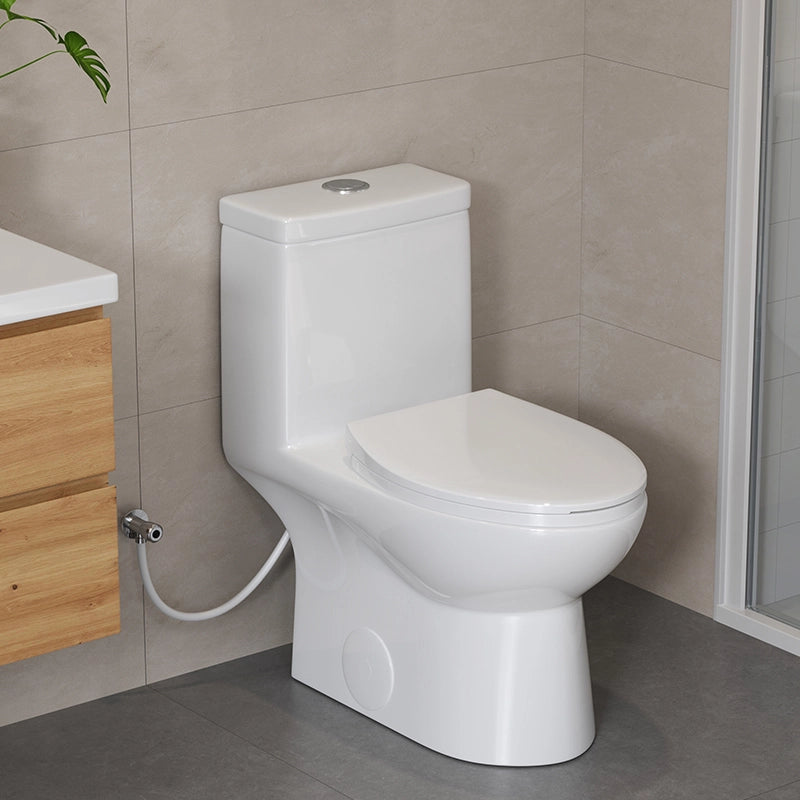
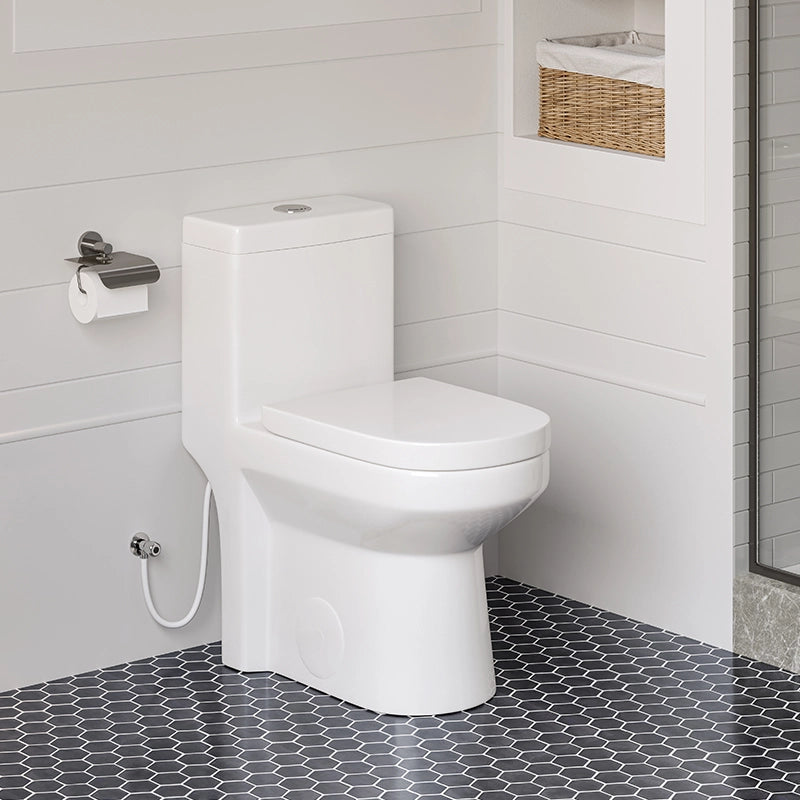
A push button toilet usually means a top-mounted flush button instead of a side lever. In most cases, it is paired with a dual-flush system: one small flush for liquids and one full flush for solids.
This works well if your household is consistent.
Many users like push button toilets because the small button uses about 3 liters, while a full flush may use around 6 to 7 liters. That can reduce water use in homes where people reliably press the small button for liquid waste. In areas with high water costs or water restrictions, that is the strongest reason to choose one.
This works well if the same people use the bathroom every day.
In a primary bath or family bath, habits form. People learn which button to press. That is where dual-flush designs tend to perform best in real life. The savings are less about the toilet itself and more about whether the users cooperate with the system.
This works well if you care about a modern bathroom design.
Many owners prefer the cleaner look. There is no side handle sticking out, and the tank lid stays flat. In small bathrooms, that can also help with side clearance if a vanity or wall is close to the toilet. Some homeowners also like having a bit of tank-top shelf space without a lever in the way.
This works well if you buy a decent model rather than the cheapest one.
A repeated pattern in user feedback is that mid-range or better push button toilets are often fine in daily use. Owners of better brands often say there is no major difference from a handle toilet once installed, other than water savings and style. The problems show up more often with cheaper builder-grade models.

When It May Not Be Ideal
The biggest drawback of push button toilets lies in repairs and part availability, so this is the first factor to weigh. These units rely on specialized, brand-specific internal parts that are not sold at most local hardware stores, unlike standard handle toilets with universal, easy-to-find components. Many homeowners run into frustration when their button mechanism breaks down and replacement parts are hard to locate.
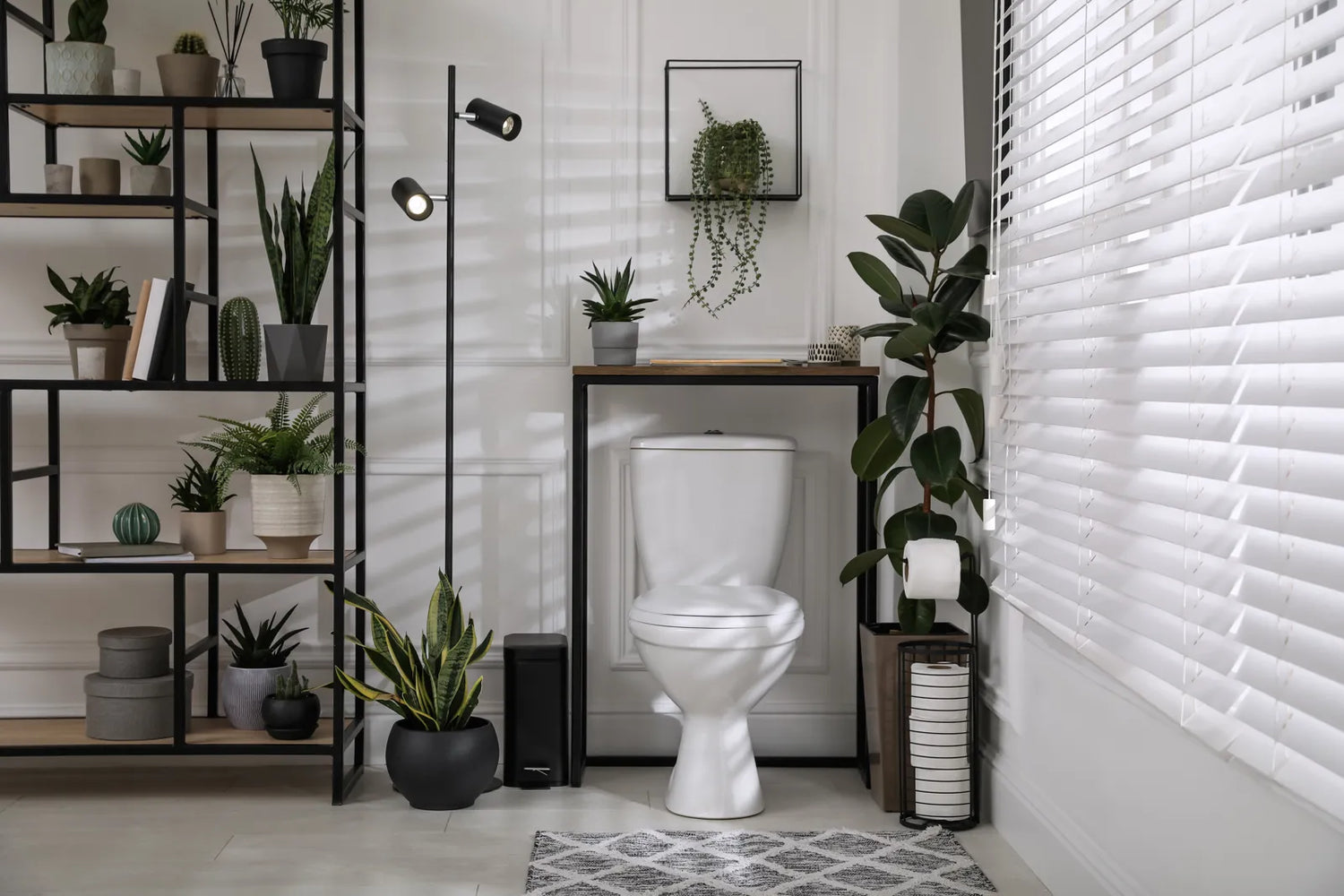
Which is better, handle or push button toilet? For most homeowners, the answer depends on what matters more: efficiency and style, or simplicity and easy repair.
Not ideal if older adults will use it often.
According to the 2010 ADA Standards for Accessible Design, flush controls must be operable with one hand and minimal force, which can make small push buttons less suitable for users with limited hand strength. Several users mention that small top buttons can be harder to press than a large side lever, especially for people with arthritis, weak grip, or limited dexterity. For an elderly parent’s bathroom, that matters more than looks.
Not ideal if your house has kids, guests, or renters who will not think about the two buttons.
A common issue is button confusion. People press the wrong one, or they always choose the full flush because it feels safer. In some homes, the half flush is also too weak, so people double-flush. Once that happens, the water-saving advantage can shrink fast.
Not ideal if your plumbing already struggles.
Are push button toilets better than regular toilets? Not always. Some owners report weaker flushing performance, especially on the half flush. If your house already has frequent clogs, long drain runs, or older plumbing that benefits from a stronger single flush, a proven handle-flush gravity toilet may be the safer choice.
Not ideal if you are trying to retrofit an old tank.
DIY retrofits get poor feedback. People report fit issues, unreliable operation, and extra fiddling. Push button systems work best when the toilet was designed for them from the start.

Pros and Cons
Every design comes with clear advantages and common drawbacks, outlined below for quick reference.
Pros
-
Better water efficiency when the household uses the half flush correctly
-
Modern, minimal appearance that many owners prefer
-
Flat tank top with no side lever in the way
-
Helpful in tight spaces where side clearance is limited
-
Can reduce random handle playing by kids or pets
-
Good models can work just as well as a standard toilet in everyday use
Cons
-
More maintenance complexity than a basic handle-and-flapper toilet
-
Parts availability can be frustrating, especially for brand-specific buttons and cartridges
-
More moving parts means more possible failure points
-
Half flush may be too weak for some households, leading to double flushing
-
Small buttons can be harder to use for elderly or arthritic users
-
Cleaning around the button bezel adds another small annoyance
-
Cheap models get the most complaints about ghost flushing, sticking buttons, and weak performance

Real-World Considerations
Industry insights, common issues and real-life use cases help paint a clearer picture for anyone shopping for a new toilet.
Do plumbers recommend dual flush toilets?
Some do, but usually with conditions. The practical view is not that dual flush is always better. It is that dual flush makes sense when water savings matter and the toilet is a good-quality model. If the homeowner wants ultra-simple serviceability, many plumbers still lean toward a standard handle toilet with common parts.
What toilet brand do plumbers prefer? In general, plumbers often prefer brands with strong flush performance, easy parts access, and parts they can actually get quickly. That does not mean every push button toilet is bad. It means brand choice matters more here because the repair parts are less universal. A quality push button toilet from a reputable brand is a much safer bet than an off-brand model with unknown replacement part support.
Why is the push button not working on my toilet?
A common issue is the button sticking, not popping back up, or failing to trigger a proper flush. Research patterns point to a few usual causes: worn seals, dirty or scaled-up mechanisms, misaligned rods, or aging dual-flush cartridges. In hard water areas, buildup can make these problems happen sooner.
This matters for buying decisions because the failure is often more annoying than a basic handle failure. With a standard toilet, a loose handle or worn flapper is usually simple and cheap. With a push button setup, the repair may involve opening the top, removing the lid, adjusting internal parts, and finding the exact replacement assembly.

Daily usability matters more than specs
Push button dual-flush toilets work best in primary and family bathrooms where consistent habits take hold. They tend to underperform in guest bathrooms, rental homes and short-term living spaces, since fluctuating users rarely stick to proper flushing habits.
If your family understands the small button is for liquids and the full button is for solids, push button toilets can make sense. If people guess, forget, or always press the larger flush, then the advertised efficiency becomes less meaningful.
This is why push button toilets make more sense in owner-occupied homes than in guest baths, rentals, or short-term stays. The same toilet can feel efficient in one home and pointless in another.
Installation and service access
In new builds or full bathroom renovations, a push button toilet is easier to justify. You can choose a purpose-built model and plan around it. Push button setups are engineered for specific toilet units, so retrofitting conversion kits onto older toilet tanks is generally not recommended.
In contrast, trying to convert an older toilet to push button often creates unnecessary headaches. The top-mounted design also means service happens from above. Some owners do not mind this. Others find it more awkward than dealing with a side lever and flapper.
Long-term expectations
Do not buy one expecting magic.
The best-case outcome is a durable one-piece toilet that looks cleaner, saves some water, and works normally for years. The worst-case outcome is weaker flush performance, occasional button issues, and a repair that requires a specific part you cannot find locally.
Most people regret this when they buy a cheap push button toilet expecting the same durability as a simple lever toilet. They also regret it when they assume the half flush will save a lot of water, but their household ends up using the full flush most of the time anyway.
Who Should Buy / Who Should Skip
Use the following clear guidelines to decide whether a push button toilet fits your home and daily needs.
Buy a push button toilet if:
-
You live where water is expensive or restricted
-
Your household will reliably use the half flush for liquids
-
You are doing a new bathroom or full remodel
-
You want a modern look and a flat tank top
-
You have tight side clearance near the toilet
-
You are comfortable ordering brand-specific repair parts if needed
-
You are buying from a reputable brand with good parts support
Skip it if:
-
You want the simplest, cheapest toilet to maintain
-
You prefer universal parts available at any hardware store
-
Elderly or arthritic users will use the bathroom often
-
Your home has kids, guests, or tenants who will not use dual flush correctly
-
Your plumbing tends to clog or needs strong waste-clearing performance
-
You live in a hard water area and do not want extra mechanism upkeep
-
You are thinking about retrofitting a push button kit into an older tank
A push button toilet is not better just because it is newer. It is better only when your priorities match its strengths.
If you need water efficiency, modern styling, and your household will use it properly, it can be a good choice. If you care most about simple repairs, easy parts, and reliable no-thought operation, consider a quality handle-flush toilet instead.
References


Leave a comment
This site is protected by hCaptcha and the hCaptcha Privacy Policy and Terms of Service apply.