



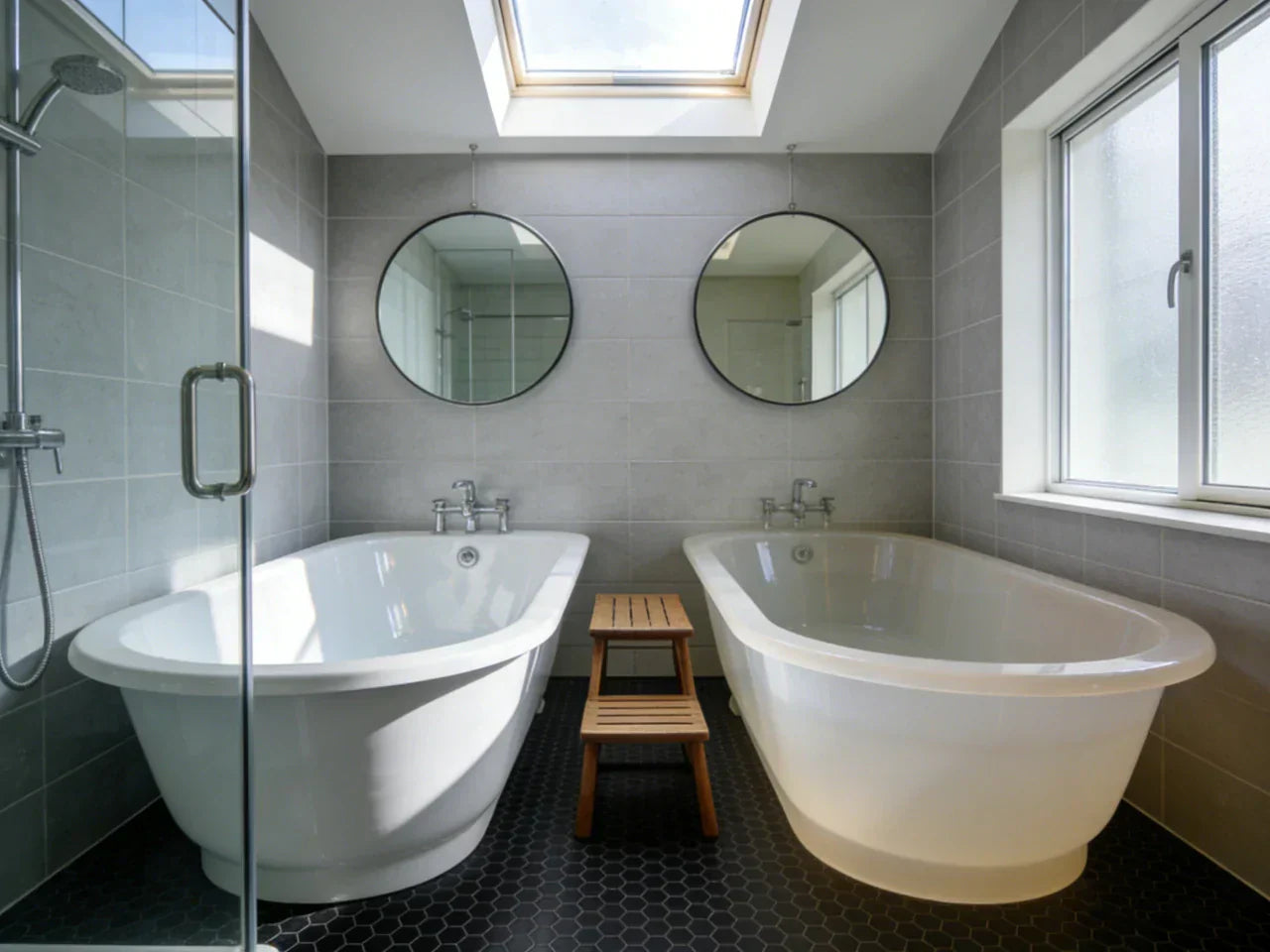
Best porcelain tubs for homes have a look that feels “right” in almost any bathroom: bright, glossy, and classic. Porcelain tubs can also last for decades. But they are heavy, can feel cold at first touch, and chips can happen if you drop something hard. This guide walks through the real trade-offs so you can buy with calm confidence.
If you’re staring at your current bathtub and thinking, “Do I want a tub that lasts a long time, or a tub that’s easy to live with day to day?” you’re asking the right question—especially if you’re choosing a new tub for a remodel or replacement. The best choice is not just about style—it’s about weight, comfort, cost, and how you use your bath.
Quick Answer—Should You Buy a Porcelain Tub?
If you want a classic finish and you plan to stay in your home for a long time, a porcelain-enamel tub is often a smart buy. You’re paying for a hard, glossy surface and a long lifespan—porcelain tubs can last 30–50+ years with normal care. This is why porcelain tubs are popular in older homes, long-term remodels, and high-wear bathrooms where scratches are a constant issue.
On the other hand, avoid porcelain if you want the warmest soaks, an easy DIY install, or you know your household is hard on fixtures. A dropped shampoo bottle won’t matter, but a dropped tool or heavy object can chip the enamel. If you’re already thinking, “Someone in my house will drop a razor,” you’re not being negative—you’re being realistic.
Here are the fast facts many homeowners wish they knew sooner:
-
Weight: often 300–500+ lbs before water or a person (many installs need 2–4 installers and sometimes floor reinforcement)
-
Heat retention: bathwater may cool up to ~3× faster than acrylic because of the metal core
-
Total cost: commonly $1,300–$4,500 for the tub plus installation, depending on the type of tub and whether your floor needs upgrades
Porcelain Tub Pros and Cons in 5 Bullets
-
Pro: very long-lasting (often 30–50+ years)
-
Pro: hard, glossy surface with strong scratch resistance
-
Con: extremely heavy, making installs harder and pricier
-
Con: enamel can chip from heavy impacts, and repairs can be noticeable
-
Con: can feel colder and less “cozy” than acrylic during long soaks
Best Porcelain Tubs for Homes: Pros, Cons, and Who They’re For
Porcelain tubs sit in a “buy once, cry once” category for a lot of people. They can be the last tub you ever buy, but only if your home and your habits match what porcelain does well.
Biggest Advantages of Porcelain Tubs
A porcelain bathtub (usually a cast iron or steel base coated with porcelain enamel) has a surface that stays shiny for years when it’s cleaned gently. That shine is not just for looks. The enamel is hard, so it holds up well to everyday wear—belt buckles, buttons, kids’ bath toys, even many pet nails.
The biggest payoff is longevity. The lifespan of your tub becomes a real advantage when you choose porcelain and plan to stay in your home long term. Many homeowners replace acrylic after years of dulling, small cracks, or stubborn stains. A porcelain-enamel tub, cared for well, can keep going for decades. If you’re doing a bathroom remodel and you don’t want to redo it again soon, that long life can feel like a relief.
There’s also the style factor. Porcelain tubs can make a bathroom look grounded and “finished,” even with simple tile and basic fixtures. If resale value matters, that classic look often helps because it’s familiar to buyers and doesn’t feel trendy in a way that dates quickly.
Biggest Disadvantages Most Buyers Overlook
The weight is the first reality check. The weight of a porcelain tub can be 300–500+ lbs, and that’s before water. Add a full tub (which can be 40–80+ gallons depending on depth) plus a person, and you’re dealing with a major load. On an upstairs floor, that can push you into reinforcement work.
Chipping is the next surprise. Porcelain enamel is hard, but it’s not “bounce-proof.” If the surface is hit with a heavy object, the porcelain enamel can chip or crack, especially during installation or when tools are dropped. That’s why many chip stories start with a dropped tool during installation or a heavy bottle falling off a shelf. Repairs exist, but they may not look perfect, especially on a bright glossy finish.
Comfort is also a bigger deal than most product descriptions admit. Porcelain tubs can feel cold at first touch because of the metal base. And once you fill the tub, the water can cool faster than in an acrylic bathtub. If your ideal bath is a long, slow soak, that matters.
Finally, porcelain tubs can be slick. Many people only notice this after the first near-slip. It’s not a deal-breaker, but it does mean you should plan for traction.
Who Porcelain Tubs Are Best For
Porcelain tubs tend to make the most sense when you want a long-lasting bathtub and you’re ready to install it the right way. They’re a solid option for homeowners looking for durability and a classic, permanent-feeling upgrade.
They fit well for historic home updates, long-term ownership, and premium remodels where you want a classic tub that won’t look tired in five years. They can also work in rental units because scratch resistance is strong, but it helps to add chip prevention habits (like avoiding metal bath caddies that bang into the sides).
If you’re remodeling a small bathroom and need a very specific shape, or you need the easiest install possible, acrylic tubs tend to win simply because they’re lightweight and come in a wider range of shapes and sizes.
In tighter layouts, some homeowners go one step further and replace the tub entirely with a low-profile shower pan, which can free up floor space and simplify daily use.

What Is a Porcelain Tub and What It’s Not
People say “porcelain” in a few different ways, and it causes confusion at the store and online.
What a Porcelain Tub Actually Means
In most home improvement talk, a porcelain tub means a bathtub made with a metal core (steel or cast iron) that is coated with a layer of porcelain enamel. Porcelain enamel is a glass-like material that is fused to metal at high temperatures. The result is a bathtub with a hard, glossy surface that resists everyday wear better than many lighter materials. That enamel is fired onto the metal to create a smooth, glossy finish.
You’ll also hear:
-
Enameled cast iron tub (very heavy, very stable)
-
Porcelain-coated steel tub (usually lighter than cast iron, still much heavier than acrylic)
What it is not: “porcelain-look” acrylic or fiberglass. So what is acrylic bathtub? An acrylic bathtub is typically made from molded acrylic sheets reinforced with fiberglass, creating a lightweight structure that feels warmer to the touch and is easier to install than porcelain-enamel tubs.Some tubs are made from acrylic sheets reinforced with fiberglass and finished to look shiny like porcelain. They can look great, but they don’t behave the same way over time.
Why Porcelain Tub Construction Matters
The enamel is the reason porcelain tubs provide that hard, glossy finish and strong scratch resistance. The metal base is the reason they are heavier than acrylic and why heat retention tends to be weaker.
This is also why you may hear two people describe “porcelain” differently. One person might be talking about an enameled cast iron tub. Another might mean a steel tub with porcelain enamel. Both are porcelain-enamel tubs, but the feel and weight can differ.
Porcelain Tub Types, Shapes, and Best Uses with Space Planning First
Before you fall in love with a tub online, it helps to start with the space. Where will it sit? How will you get it into the room? And are you replacing an existing tub or moving plumbing?
Common Porcelain Tub Configurations
Alcove porcelain tubs are the most common in everyday homes. They sit between three walls with an open front side. If you’re doing a tub-and-shower combo, alcove is usually the simplest path because the walls already support a surround or tile.
Drop-in or undermount styles sit inside a built deck or frame. People choose them when they want a wide ledge for bottles, candles, or an easy place to sit. The trade-off is you’re building more structure, which can raise remodel costs and complicate access if plumbing needs work later.
Freestanding styles make a strong design statement, but they demand planning. Floor strength, drain location, and delivery path matter a lot more. A freestanding porcelain tub can be stunning, but getting it up stairs and through tight turns can be the hardest part of the project.
Soaking-depth models are deeper and can feel more spa-like, but they can also raise hot-water demand. If your water heater is already borderline, a deeper soak may turn into a “half-hot” bath unless you plan ahead.
Shape and Design Limits Compared to Lighter Materials
Porcelain-enamel tubs tend to have fewer shapes than acrylic because the material is heavy and shipping is harder. Acrylic is easier to mold, so acrylic tubs vs porcelain tubs usually wins on variety—available in a wide range of curves, sizes, depths, and modern layouts.
If you have a tricky bathroom—odd angles, tight alcove width, or a need for a very deep but short tub—acrylic may be the only practical option.
Weight, Floor Support & Installation Reality Check
This is the section many people wish they read before clicking “buy.” Another factor to consider is not just whether you like the tub, but whether your home can realistically support it.
What to Plan for Before You Buy
A porcelain tub may weigh 300–500+ lbs empty. Add water and a person and the load can become massive. Downstairs on a concrete slab, this is often less stressful. Upstairs, it can be a real structural question, not just a “can my friends help me carry it?” question.
Even if your home can support the load, you still need to think about the path. Can it fit through doorways? Can it turn on landings? Are there stairs with low ceilings or tight corners? Delivery crews have seen every problem you can imagine and many you haven’t.
There’s also the risk of enamel damage during handling. A small bang against a door frame can chip the surface. That’s why it’s smart to plan extra protection: thick moving blankets, corner guards, and a clear route.
Professional Installation vs DIY
For most homeowners, porcelain tub installation is not a typical DIY job. Acrylic, by contrast, allows many people to install a bathtub without structural reinforcement or specialized moving equipment. Weight alone changes everything. It often takes 2–4 people to move safely, and mistakes are expensive. Even when the plumbing connections are straightforward, setting the tub without damaging the enamel is the hard part.
Installation costs are often higher than with lighter tubs. Many homeowners pay $500–$1,500 more in labor compared with acrylic, especially if stairs, tight halls, or floor reinforcement are involved.
If you’re set on porcelain, have a licensed plumber or general contractor confirm floor loading and drain alignment before you buy. It’s not about being cautious—it’s about avoiding a situation where the tub arrives and you find out it can’t be installed without a bigger remodel.

Comfort and Heat Retention: Why Porcelain Tubs Can Feel Colder
Have you ever stepped into a cold tub and instantly wanted to step back out? For many homeowners, this moment becomes the deciding factor when choosing the best material for soaking tub, especially if long, quiet baths are part of their daily routine. That first contact is one of the biggest “I didn’t expect this” moments with porcelain.
What the Data Shows About Heat Loss
Porcelain-enamel tubs have a metal base, and metal pulls heat away faster than acrylic. In real use, bathwater in porcelain can lose heat up to about 3× faster than acrylic, especially in a cool bathroom. Over a 20-minute soak, many people find they need about 10–15% more hot water to stay comfortable compared with acrylic. The U.S. Department of Energy notes that hot water usage and heater capacity play a major role in bath comfort, especially when tub depth increases.
This doesn’t mean porcelain is “bad for baths.” It means porcelain rewards a different routine. If you love quick baths or you don’t mind adding a bit of hot water, you may not care. If your bath is your main stress relief at night, it matters.
Practical Ways to Improve Comfort
You can improve comfort without changing the tub. Warming the bathroom helps more than people think—run the heat a little longer, close the door, and reduce drafts.
Some installations allow insulation around parts of the tub, depending on the setup. Even simple changes like a quality bath mat (for your feet and first contact points) can make the tub feel less shocking when you step in.
Also, think about your water heater. If you’re switching from a standard depth tub to a deeper soaking tub, your hot water supply may become the limiting factor, not the tub surface itself.
Acrylic vs Porcelain Tub: A Data-Backed Comparison for Real Homes
A lot of buyers search “porcelain bathtub vs acrylic” because they want to know which is the best bathtub for their home and lifestyle. Rather than chasing a single winner, understanding the key differences between acrylic and porcelain helps buyers choose what actually fits their daily use. The truth is that each bathtub material wins in a different lifestyle. When it comes to weight, comfort, and installation, acrylic tubs are much easier for most homes to handle than porcelain.
Side-by-Side Comparison for High-Intent Buyers
| Feature | Porcelain-Enamel (Cast Iron/Steel) | Acrylic | Notes |
| Weight | 300–500+ lbs | <100 lbs | Weight drives install difficulty and floor checks |
| Lifespan | 30–50+ yrs | 10–15 yrs | Acrylic may dull or discolor earlier |
| Scratch resistance | High | Lower | Acrylic can scratch but may be buffed |
| Chip/crack risk | Chips from impacts | More flexible | Enamel chips show; acrylic flexes more |
| Heat retention | Lower | Higher | Acrylic tends to keep bathwater warmer longer |
People also ask about cast iron as if it’s separate from porcelain. In many cases, it’s the base under the porcelain enamel. When someone says “cast iron tub,” they often mean “enameled cast iron.”

Quick Decision Rules That Actually Help
If you’re looking for a tub that prioritizes comfort, warmth, and an easier install, an acrylic tub is often the best material for a soaking tub. Acrylic bathtubs are made from formed acrylic sheets and are commonly reinforced with fiberglass. This construction makes acrylic lightweight, warm to the touch, and easier to install in a wide range of homes. That mix is why they are lightweight and why they come in many shapes and sizes.
If your top goal is a long-lasting bathtub with a classic glossy finish, porcelain tubs are hard to beat—if your home can handle the weight and you’re willing to treat the enamel with care.
Costs in 2026—Tub Price, Installation, and Long-Term Ownership
Let’s answer the money question directly, because it drives most decisions.
Typical Porcelain Tub Cost Ranges in 2026
How much does a porcelain tub cost? For the tub alone, many homeowners see $800–$3,000+, depending on size, style, and whether it’s cast iron or porcelain-coated steel. Installation pushes the real number higher.
A common installed total for porcelain tubs is $1,300–$4,500, and it can climb if you need floor reinforcement, plumbing changes, or difficult delivery (like a narrow staircase). If you’re comparing quotes, ask what the installer assumes about floor support and whether hauling away the old tub is included.
To make the numbers easier to scan, here’s a simple cost snapshot:
| Item | Typical 2025 range |
| Porcelain tub (unit only) | $800–$3,000+ |
| Added installation cost vs lighter tubs | $500–$1,500 more |
| Typical tub + install total | $1,300–$4,500 |
| Professional chip repair/refinishing (per repair) | $300–$700 |
Repair and Refinishing Economics
Chips happen, and it helps to know your options before you need them. Small chips can sometimes be handled with refinishing kits, mainly for cosmetic touch-ups. These can help, but they may not match the original shine perfectly, and they may not hold up in a high-wear area.
For larger chips, worn surfaces, or widespread dulling, professional refinishing often costs $300–$700 for a repair and can extend tub life about 10–20 years when prep is done well. Refinishing is not magic, though. Results depend on how much damage exists, how well the surface is cleaned and prepped, and how carefully you treat it after.
Shipping and Handling Risk Most Buyers Miss
A heavy tub has a higher risk of shipping damage. If possible, inspect the tub right away—corners, rim edges, and the drain area are common impact points. If you see cracks, chips, or rough spots, document them before installation. This is one of those boring steps that can save you weeks of hassle.
Maintenance and Cleaning: Prevent Dulling, Stains, and Chips
Porcelain enamel stays beautiful when you keep cleaning simple. Many problems start when people treat porcelain like a kitchen sink and attack stains with harsh abrasives.
What to Use for Regular Cleaning
A mild, non-abrasive cleaner and a soft cloth or sponge is usually enough. Rinse well, and if you want to keep the gloss longer, wipe the tub dry after use. That last step sounds small, but it cuts down on soap film buildup that makes tubs look dull.Some homeowners look for cleaners labeled under EPA Safer Choice guidelines, which are designed to reduce surface damage and indoor chemical exposure.
If you’re dealing with a stain, start gentle and repeat rather than scrubbing hard once. Porcelain is durable, but the finish can still get worn down over time by rough cleaning habits.
What to Avoid: Common Homeowner Mistakes
Avoid abrasive cleaners, scouring powders, steel wool, and rough scrub pads. These can leave tiny scratches that collect grime and make the tub harder to clean later.
Many people also use acidic cleaners as a “natural” fix. Be careful with repeated acid use. Over time, harsh acids can wear finishes, and you may end up with a tub that looks tired even if it is still structurally fine.
How to Handle Small Chips: DIY or Professional Repair
If you notice a small chip, handle it sooner rather than later. Water can work its way into damaged areas, and the chipped spot can grow.
If the chip is tiny and in a low-visibility spot, a DIY touch-up can be a reasonable short-term fix. If the chip is larger, in the main standing area, or has sharp edges, a professional repair is usually worth it. It’s safer for your feet, and it often looks better.
Safety Considerations: Slip Risk and Accessibility Upgrades
Porcelain can be slick when wet. If you’re thinking, “I’ll be careful,” that’s a normal reaction—but bathrooms are where falls often happen, especially for older adults or anyone with balance issues.
According to data from the CDC, bathroom falls are one of the most common causes of injury at home, which is why slip prevention matters even in well-designed bathrooms.
A simple bath mat or adhesive treads can help right away. Safety research from NIOSH shows that improving surface traction is one of the most effective ways to reduce slip risk in wet environments. If you want a cleaner look, some people choose anti-slip coatings, but you’ll want to confirm that the coating is compatible with porcelain enamel and won’t create cleaning problems later.
Grab bars are not just for elderly users. They’re helpful for anyone stepping over a tub wall, especially in a tub-and-shower setup. If you’re planning a remodel, it’s easier to add backing in the wall now than to wish you had later.

Buying Checklist: What to Verify Before You Click “Buy”
It’s easy to shop for a tub like it’s furniture. Then installation day hits. This short checklist prevents most surprises.
Step-by-Step Pre-Buy Checks
-
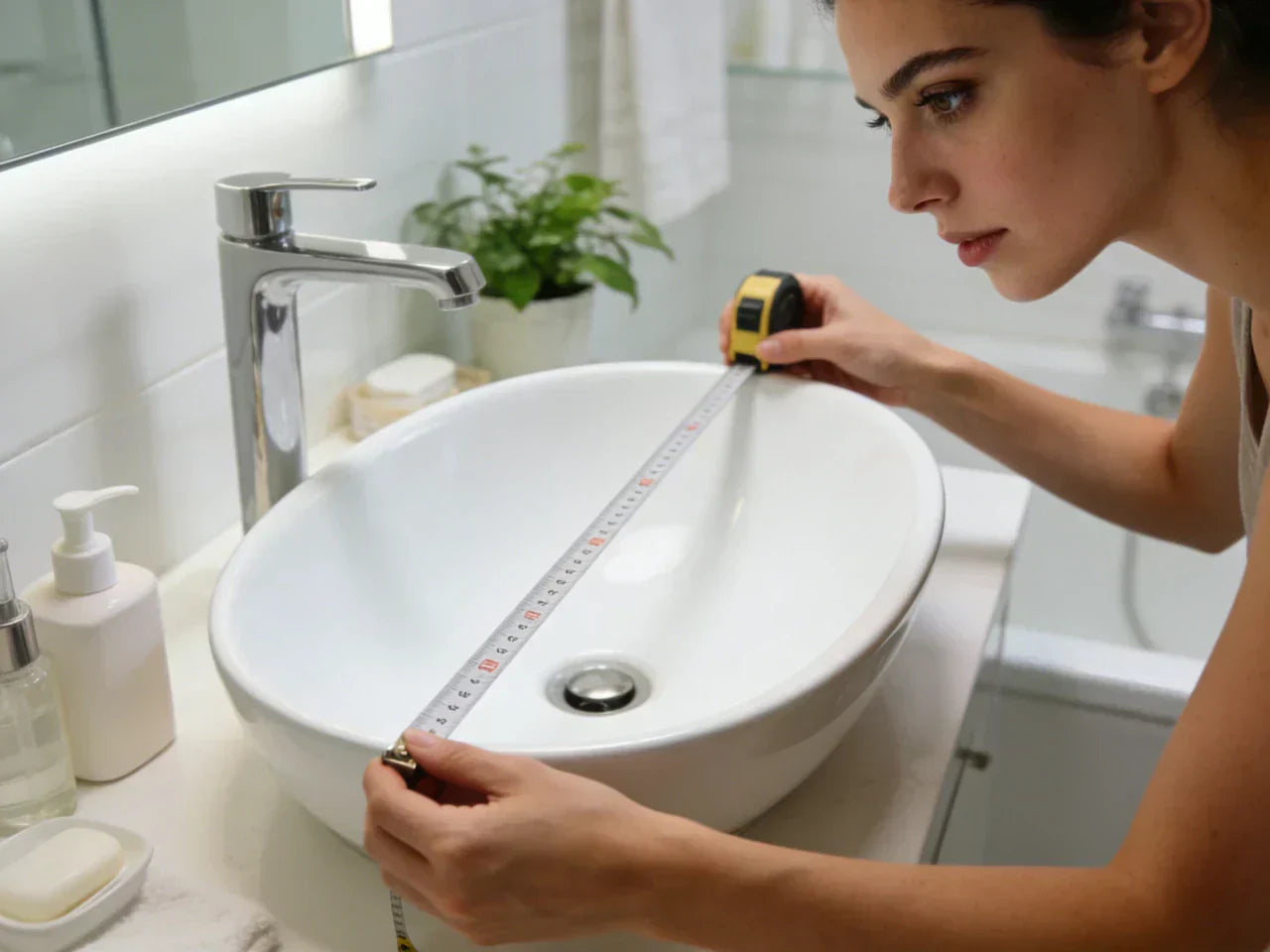
Measure the exact space (length, width, and height) and compare to the tub’s listed dimensions.
-
Confirm drain location (left/right/end/center) and overflow placement so your plumbing lines up.
-
Check your access path from delivery point to bathroom: door widths, hallway turns, stair landings, and ceiling height.
-
Confirm floor structure, especially upstairs. If you’re unsure, get a licensed pro to check joists and subfloor condition.
-
Review warranty terms and what cleaners are approved, since some finishes can be voided by harsh products.
-
Inspect the tub at delivery for chips, cracks, or corner impacts before it disappears into your house.
-
If you’re also changing walls or plumbing, confirm valve heights, surround compatibility, and waterproofing plans before installation day.
This might feel like a lot. But compare it to the stress of a tub sitting in your hallway because it can’t fit through the bathroom door.
Brands and Market Trends: What’s Driving Choices in 2026
In 2026, acrylic dominates many new builds because it’s budget-friendly, lightweight, and easy to install fast. That doesn’t mean porcelain is going away. Porcelain-enamel tubs still show up often in premium remodels because homeowners want long life and a look that doesn’t feel temporary.
A helpful way to shop without hype is to focus on a few practical quality signals. Look for clear enamel care instructions, straightforward warranty language, and good documentation that helps your installer. If a seller can’t tell you basic details about cleaning limits, install requirements, or what happens if the enamel chips, that’s a red flag.
Conclusion—Key Takeaways
Porcelain tubs deliver a classic glossy finish and a lifespan that can reach 30–50+ years, which is why they keep showing up in long-term bathroom remodel plans. Ultimately, the right choice for your bathroom depends on how you balance comfort, weight, installation complexity, and long-term durability—not just appearance. The trade-offs are real, though: porcelain tubs require serious planning for weight, they can feel colder for long soaks, their smooth surface can be slippery, and enamel chips can cost money to repair.
If your home can support the load and you want a long-term fixture that keeps its shine, porcelain is a strong choice. If warmth, comfort, easy carrying, and shape variety matter most, an acrylic bathtub may fit your life better.
FAQs
1. What is the life expectancy of a porcelain bathtub?
With gentle cleaning and no major enamel damage, many porcelain bathtubs last 30–50+ years, and some go even longer. That long lifespan is the main reason people still choose porcelain today. The enamel surface is very hard, so it resists everyday wear better than many lighter materials. As long as you avoid harsh abrasive cleaners and protect the tub from heavy impacts (like dropped tools or metal objects), a porcelain tub can realistically be the last bathtub you ever need to buy.
2. Is acrylic good for a bathtub?
Yes. Acrylic is a very popular bathtub material because it’s lightweight, warm to the touch, and comfortable for soaking. Acrylic tubs also come in many shapes and sizes, which makes them easier to fit into small or oddly shaped bathrooms. The main trade-off is durability: acrylic can scratch more easily than porcelain, so how you clean and use the tub matters. With gentle care and good installation support, acrylic is a very practical and user-friendly option for most homes.
3. How long do acrylic bathtubs last?
Most acrylic bathtubs last around 10–15 years, though some can last longer with proper care. A lot depends on installation quality. If the base is fully supported and doesn’t flex, acrylic tends to hold up much better over time. Cleaning habits also play a role—using non-abrasive cleaners and avoiding rough scrubbing can significantly slow down dulling, scratches, and surface wear.
4. Are porcelain or acrylic tubs better?
It depends on your top need. If you want the longest life and a classic finish, porcelain often wins. If you want warmth, comfort, and easier installation, acrylic often wins. Many homeowners choose acrylic because it’s easier on budgets and stairs. Many long-term owners choose porcelain because they don’t want to replace a tub again.
5. What are the disadvantages of acrylic bathtubs?
The biggest downside of acrylic is that it’s softer than porcelain, so it can scratch more easily. Over time, the surface may dull, especially if abrasive cleaners or scrub pads are used. Acrylic tubs can also flex slightly if they aren’t installed on a well-supported base, which can lead to discomfort or stress cracks down the road. In some homes, acrylic may also discolor if exposed to harsh chemicals or constant heavy wear.
6. Which is better, fiberglass or porcelain tub?
Fiberglass is usually the most budget-friendly and very lightweight, but it tends to wear faster. It can scratch, fade, and feel less solid underfoot. Porcelain costs more and is much heavier, but it usually lasts far longer and resists scratches better. If you want the longest life and a sturdier feel, porcelain often beats fiberglass. If you need the cheapest and easiest installation, fiberglass may fit at that moment.
References


Leave a comment
This site is protected by hCaptcha and the hCaptcha Privacy Policy and Terms of Service apply.