
Choosing between a one-piece and two-piece toilet affects installation, exterior cleaning, repair options, bathroom fit, and upfront cost. A one-piece toilet combines the tank and bowl in one molded ceramic body. A two-piece toilet uses a separate tank and bowl that are connected during installation. This guide compares the two designs and explains what to check before choosing a toilet for your bathroom.
One-Piece vs. Two-Piece Toilet
Neither design is automatically better for every bathroom. Choose a one-piece toilet when a seamless exterior, fewer tank-area joints, and a continuous profile are priorities. Consider a two-piece toilet when separate handling, broader price flexibility, or a traditional tank-and-bowl configuration better suits the project. In either case, confirm the exact model's rough-in, overall dimensions, bowl shape, finished seat height, flush specifications, and installation requirements before ordering.
Quick comparison
One-piece toilets reduce exterior tank-area joints and are handled as one complete fixture. Two-piece toilets separate the tank and bowl, which generally makes carrying and positioning easier and often provides more entry-level price choices. Bathroom fit and flushing performance still depend on the exact model, not the number of ceramic pieces.
High-level comparison
| Feature | One-Piece Toilet | Two-Piece Toilet | Practical Takeaway |
| Exterior Cleaning | No tank-to-bowl seam | Has a tank-to-bowl seam | A one-piece design leaves fewer tank-area joints to wipe around. |
| Handling | Moved as one complete fixture | Tank and bowl can be moved separately | A two-piece toilet is generally easier to carry and stage during installation. |
| Installation Difficulty | The complete fixture must be positioned at once | The bowl can be positioned before the tank is attached | One-piece installation may require more lifting and positioning help. |
| Repair Structure | No separate tank-to-bowl gasket | Uses a gasket and mounting hardware between the tank and bowl | Service points and replacement options differ. |
| Appearance | Continuous ceramic profile | Visible tank-to-bowl joint | Choose based on bathroom style rather than assuming a performance difference. |
| Price Structure | Often positioned at higher price points | Often available across more entry-level price points | Compare current model price, included components, and installation requirements. |
| Bathroom Fit | Varies by model | Varies by model | Compare exact dimensions and clearance requirements. |
| Flush Performance | Depends on the exact flush system | Depends on the exact flush system | Piece count alone does not determine flushing performance. |
Use this comparison as a starting point, then measure the bathroom and review the exact product drawing before ordering. The number of pieces alone does not determine flushing performance, comfort, or whether a toilet will fit.
After choosing between one-piece and two-piece construction, browse HOROW toilets for current models that match the project measurements.
For the issue described under “One-Piece vs. Two-Piece Toilet,” continue with round vs elongated toilet to compare the options with the page's full decision criteria.
What Is a One-Piece Toilet?
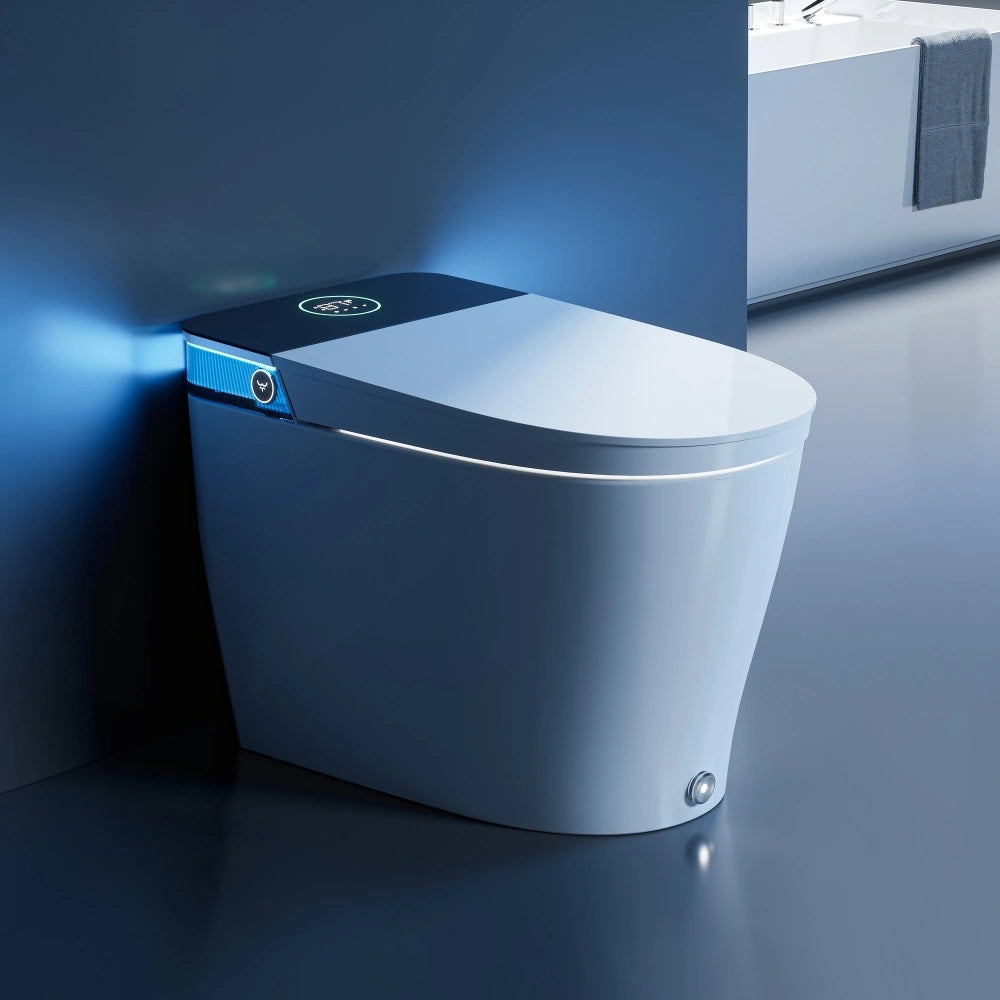
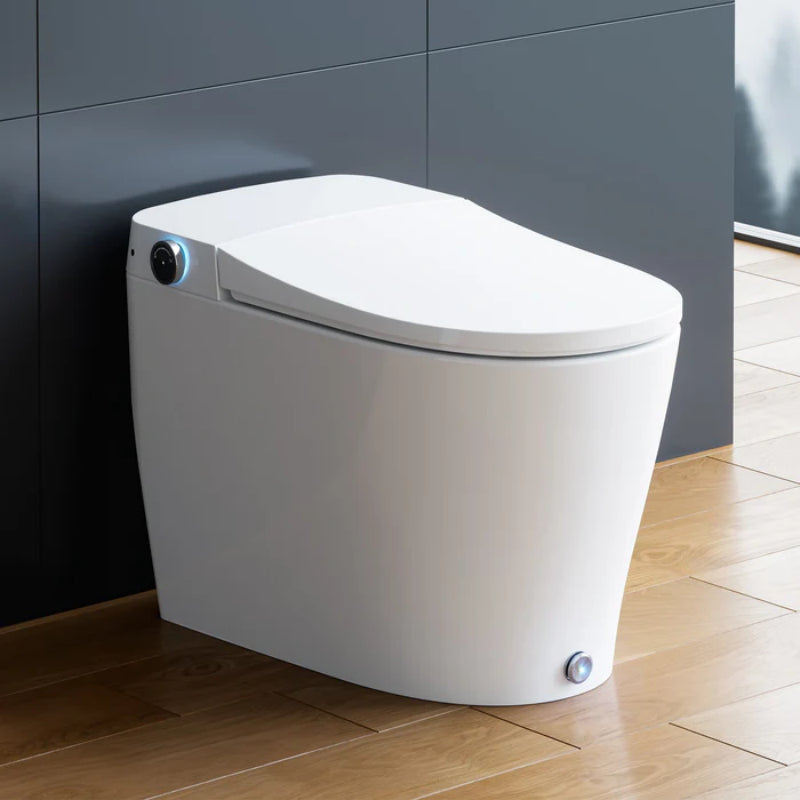
A one-piece toilet is made with the tank and bowl joined in one molded ceramic body. There is no separate tank-to-bowl connection assembled during installation.
One-piece toilets often have a smooth profile, and some models use a skirted exterior that conceals the trapway. Available features vary by model and may include soft-close seats, different flushing controls, bidet-seat compatibility, or integrated electronic functions.
Because there is no tank-to-bowl seam, the exterior has fewer edges and joints to wipe around. The design also removes the separate gasket and bolts used to connect the tank and bowl on a two-piece toilet.
From a design perspective, a one-piece toilet often suits contemporary bathrooms where a continuous ceramic profile is preferred. Actual space requirements still depend on the dimensions of the individual model.
What Is a Two-Piece Toilet?
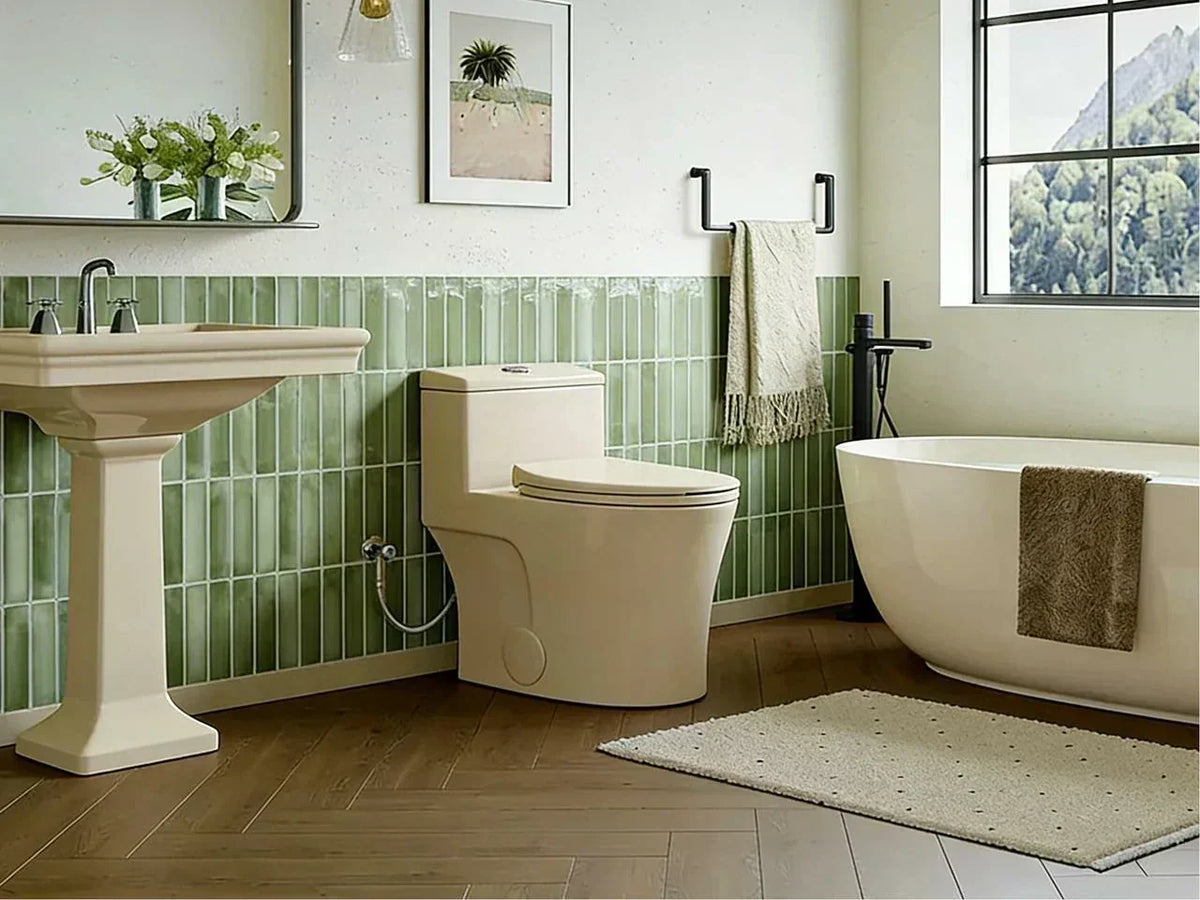
A two-piece toilet has a separate tank and bowl. The two ceramic sections are connected during installation with mounting hardware and a gasket that seals the tank-to-bowl connection.
Two-piece toilets are available in different rough-in sizes, bowl shapes, finished seat heights, dimensions, and flush configurations. Do not assume that every model uses the same measurements. Review the product drawing and specification table for the exact model before ordering.
Because the tank and bowl are handled separately, each section is generally easier to carry through narrow hallways, upstairs, or into a compact bathroom. This can make a two-piece toilet more manageable for installation, although the installer must correctly align and secure the tank connection.
Common reasons to consider a two-piece toilet include price flexibility, broad design selection, easier handling, and the possibility of replacing a compatible tank or bowl separately. The additional connection also means the gasket and mounting hardware should be checked if moisture appears around the tank joint.

One-Piece vs. Two-Piece Toilet: Key Differences
Both toilet types perform the same basic function, but their construction affects handling, exterior cleaning, maintenance, repair options, and appearance. Compare these differences alongside the exact specifications of the models that fit your bathroom.
Design, Size, and Aesthetics
The most visible difference is how the tank and bowl are arranged.
A one-piece toilet has a continuous exterior because the tank and bowl form one ceramic body. Some models have a low-profile or skirted design, but the exact depth and width vary. Measure the complete product rather than assuming every one-piece toilet is compact.
A two-piece toilet has a visible joint where the separate tank meets the bowl. This construction is common in traditional toilet designs, but two-piece models are also available with contemporary tank shapes, skirted exteriors, round bowls, and elongated bowls.
Choose according to the bathroom style and verified dimensions. A one-piece toilet may provide a more continuous profile, while a two-piece toilet may offer a broader range of configurations.
Exterior Cleaning
Exterior shape is an important consideration for buyers who want fewer joints and edges to wipe around.
The seamless exterior of a one-piece toilet generally leaves fewer gaps around the tank area than a conventional two-piece design. If the toilet also has a skirted exterior, the sides may have fewer exposed curves and bolt areas. Cleaning effort still depends on the exact design, bathroom clearance, and regular maintenance.
A two-piece toilet has a tank-to-bowl seam that requires additional attention during exterior cleaning. Exposed trapway curves and mounting areas may also take more time to wipe, depending on the design.
Bowl glaze, rim design, flush coverage, and exterior construction vary by model. Compare those features separately instead of assuming that every toilet in one category will clean or rinse in the same way.
For a frequently used bathroom, consider both the tank seam and the trapway shape. A skirted two-piece toilet may be easier to wipe than a conventional exposed-trapway model, even though it still has a separate tank and bowl.
Durability, Leaks, and Repair Options
Both designs use durable ceramic bodies, but their connections and repair options differ. Service life depends on manufacturing quality, installation, water conditions, maintenance, and how the fixture is used.
A one-piece toilet does not use a separate tank-to-bowl gasket or tank mounting bolts. This removes one potential connection point, although internal valves, seals, and flushing components may still require maintenance.
A two-piece toilet relies on a gasket and mounting hardware between the tank and bowl. If moisture appears near this connection, the gasket, bolts, alignment, and installation should be inspected. Compatible replacement parts may be available for some models.
Ceramic can crack in either design because of impact, overtightened hardware, or installation damage. With a one-piece toilet, damage to the ceramic body generally affects the complete fixture. With a two-piece toilet, it may be possible to replace only the tank or bowl when an exact compatible component is available.
The practical trade-off is fewer external connection components with a one-piece design versus greater component-handling and potential replacement flexibility with a two-piece design.
Installation, Weight, and DIY Friendliness
The construction difference becomes especially noticeable when the toilet is carried and positioned.
A one-piece toilet is moved as one complete ceramic unit. It can be heavy and awkward to align over the flange and seal, particularly in a narrow bathroom or on an upper floor. Review the listed product weight and arrange suitable lifting help before installation.
A two-piece toilet allows the bowl to be installed before the tank is mounted. The separate sections are generally easier to carry, but the tank must be correctly aligned and tightened according to the installation instructions. Overtightening ceramic mounting hardware can cause damage.
A two-piece design may be more manageable for an experienced DIY installer, but either type requires a compatible rough-in, a level mounting surface, a secure drain seal, and a properly connected water supply. Hire a qualified installer when the plumbing or lifting requirements are beyond your experience.
The main difference is handling and positioning: a one-piece toilet must be moved and set as one complete fixture, while a two-piece model allows the bowl and tank to be handled separately. For step-by-step preparation, positioning, and installation guidance, see the HOROW guide to installing a one-piece toilet.
Cost, Value, and Long-Term Ownership
Two-piece toilets are commonly available across a wider range of entry-level price points, while one-piece toilets are often positioned at a higher price level. Actual prices depend on the model, retailer, design, flush system, included seat, and other features.
Do not compare the categories by price alone. A lower-priced toilet that does not fit the rough-in or bathroom clearance can create additional installation costs, while a higher-priced model may include features that are not necessary for the intended bathroom.
Compare the current price of each exact model together with its dimensions, included components, installation requirements, warranty terms, and replacement-part information.
Long-term ownership considerations include:
-
With a one-piece toilet, there is no separate tank-to-bowl gasket, but internal flushing and fill components may still need service.
-
With a two-piece toilet, the gasket and mounting hardware add serviceable connection points, and compatible tanks or bowls may sometimes be replaced separately.
The better value is the model that fits correctly, provides the features the household will use, and has clear support and replacement information. Confirm the current product details instead of estimating lifetime cost from the number of ceramic pieces alone.

One-Piece vs Two-Piece Decision Matrix
Compare assembly, handling, service, cleaning, and fit with the exact product documentation before choosing a toilet.
| Check | What to verify | Evidence required |
|---|---|---|
| Assembly | Integrated body versus separate tank and bowl | Exact product documentation |
| Handling | Weight, access, and installer requirements | Manual and project conditions |
| Service | Access to seals and replaceable parts | Parts diagram and manual |
| Fit | Rough-in, projection, height, and supply location | Product drawing and field measurements |
If a required detail is missing, contradictory, or tied to another model, use the current documentation for the exact product before ordering or installation.
Compare One-Piece Toilet Options
This guide focuses on the differences between one-piece and two-piece construction rather than ranking individual toilet models. If a one-piece toilet matches your priorities, browse the HOROW One-Piece Toilets collection to compare current products and their specifications. If you are still deciding among different toilet formats, continue with the HOROW Toilet Buying Guide.
Flushing Performance and Water Efficiency
Whether a toilet has one piece or two does not determine how well it flushes. Compare the verified flush mechanism, water use per flush, bowl and trapway design, and any available third-party performance evidence for the exact model. A two-piece toilet can be a practical choice when its fit and flushing specifications match the bathroom and the buyer’s priorities.
Availability, Styles, and Customization
The available selection differs by toilet type and manufacturer.
One-piece toilets often emphasize a continuous ceramic profile and contemporary styling. Available bowl shapes, heights, colors, and dimensions vary by model.
Two-piece toilet options may include:
-
Round or elongated bowl configurations.
-
Different finished seat heights.
-
Traditional, skirted, compact, and contemporary exterior designs.
A two-piece toilet may provide more choices when a buyer needs a particular bowl shape, rough-in, seat height, or exterior style. Confirm those fields on the individual product page because availability varies by model.
Some two-piece toilets can also accept an add-on bidet seat. Check the bowl dimensions, mounting-hole spacing, tank clearance, water connection, and electrical requirements of the bidet seat before pairing the products.
Which Toilet Type Fits Your Bathroom?
The right choice depends on how the toilet fits the room, who will use it, how it will be installed, and which maintenance trade-offs are acceptable. Use the following scenarios as practical starting points rather than universal rankings.
One-Piece Buying Checklist
Before choosing a one-piece toilet, confirm:
-
The rough-in matches the exact product requirements.
-
The overall dimensions work with the door, vanity, and required clearances.
-
The bowl shape and finished seat height suit the intended users.
-
The listed product weight and access path are manageable for installation.
-
The mounting method, water-supply access, and installation instructions are clear for the exact model.
If limited floor space is the main concern, use the compact one-piece toilet guide for a more detailed small-bathroom fit check. If you have not yet decided which toilet type to buy, use the complete toilet buying guide.
Family Homes and High-Traffic Bathrooms
In a frequently used bathroom, consider exterior cleaning access, replacement-part availability, flush controls, bowl shape, and the space around the toilet.
A one-piece toilet has no tank-to-bowl seam, which can simplify exterior wiping. A skirted two-piece model may also reduce exposed trapway curves while retaining separate tank and bowl construction.
Compare the specific designs rather than selecting only by toilet type. The most practical option is the model that fits the room and can be maintained without difficult-to-reach gaps.
Rentals and Budget Remodels
Two-piece toilets are often considered for rentals and budget-focused projects because they are available across a broad range of price points and can be moved in separate sections.
A compatible tank or bowl may sometimes be replaced separately, but replacement components are not automatically interchangeable. Confirm the model number and part compatibility before ordering a replacement.
For a multi-unit project, also compare installation instructions, included components, warranty terms, replacement-part access, and whether the same model will remain available for future units.
Modern Bathrooms and Accessibility Planning
For a contemporary bathroom, a one-piece toilet may provide the continuous profile the design requires. A skirted two-piece toilet can also offer a streamlined exterior while retaining separate tank and bowl construction.
Electronic bidet, heated-seat, night-light, and sensor features are more commonly associated with integrated toilet systems, but compatible add-on seats may be available for some conventional toilets.
For accessibility planning, review the finished seat height, bowl shape, operating controls, surrounding clearances, transfer space, and grab-bar layout. Do not determine compliance from labels such as “comfort height” alone. Confirm the exact product specifications and applicable project requirements.
Small Bathrooms and Powder Rooms
In a compact bathroom, the exact dimensions matter more than whether the toilet has one piece or two.
Some one-piece toilets have a compact profile, while some two-piece toilets use a round bowl or compact tank. Neither design is automatically smaller in every direction.
Before buying, measure the rough-in from the finished wall to the drain center, then check the door swing, front clearance, side clearance, and distance to nearby fixtures. Compare those measurements with the exact product drawing.
For a deeper comparison of projection, room clearance, door swing, and compact one-piece configurations, see the HOROW guide to choosing a compact one-piece toilet for a small bathroom.

Cost, Warranty, and Ownership Checks
Look beyond the advertised purchase price when comparing one-piece and two-piece toilets.
Before ordering, compare:
-
The current product price and included components.
-
The rough-in, overall dimensions, bowl shape, and finished seat height.
-
The installation instructions and whether professional installation is appropriate.
-
The warranty terms for the ceramic body, seat, flushing parts, and included accessories.
-
The availability of compatible replacement seals, valves, hardware, tanks, or bowls.
A two-piece toilet may reduce handling difficulty and provide more price choices. A one-piece toilet may reduce exterior joints and provide a continuous design. The better ownership value depends on verified product details and the needs of the bathroom.
Installation and Maintenance Essentials
Proper planning helps prevent fit, clearance, and installation problems. Check the room measurements and the product instructions before removing the existing toilet.
Measuring and Choosing the Right Fit
Any toilet you choose must match the bathroom layout and plumbing connection.
Measure and confirm:
-
Rough-in distance: Measure from the finished wall, not the baseboard, to the center of the floor bolts or drain connection.
-
Side clearance: Check the distance to walls, vanities, and other fixtures.
-
Front clearance: Confirm that the bowl will not interfere with a wall, door, tub, or cabinet.
-
Water-supply position: Make sure the shutoff valve and supply line will remain accessible.
Then compare:
-
Bowl shape: Round bowls may reduce projection in some layouts, while elongated bowls provide a different seating shape. Compare exact dimensions.
-
Finished seat height: Check the listed height with the seat installed and consider the intended users.
These checks apply to both one-piece and two-piece toilets. A correctly sized two-piece toilet can fit better than a larger one-piece model, and the reverse can also be true.
DIY vs. Professional Installation
A two-piece toilet is generally easier to carry because the tank and bowl can be moved separately.
The bowl is positioned and secured first, followed by the tank. The installer must correctly place the drain seal, level the bowl, connect the tank components, and tighten the hardware without damaging the ceramic.
A one-piece toilet must be lifted and positioned as one unit. Review the listed product weight and available working space before deciding whether the installation can be handled safely.
Professional installation may be appropriate when the fixture is difficult to lift, the flange is damaged, the floor is uneven, the plumbing must be changed, or local requirements call for licensed work.
Routine Maintenance and Common Repairs
Routine maintenance is similar for both toilet types, but the tank connection creates an additional inspection point on a two-piece model.
For either toilet type:
-
Check around the base, supply connection, tank, and mounting hardware for moisture.
-
Investigate running water, weak refilling, or repeated cycling.
-
Use cleaning products that are compatible with the ceramic glaze, seat, seals, and flushing components.
Design-specific checks include:
-
On a two-piece toilet, inspect the tank-to-bowl gasket and mounting hardware if moisture appears near the joint.
-
On a one-piece toilet, internal fill and flush components can still require adjustment or replacement even though there is no separate tank joint.
Use parts specified for the exact toilet model and follow the applicable maintenance or installation instructions.
Smart Features, Accessibility, and Water Use
Additional features should be evaluated separately from the one-piece or two-piece construction. Check product compatibility, installation requirements, and exact specifications before ordering.
Smart and Bidet Features
Depending on the product, available features may include:
-
An integrated bidet or compatible add-on bidet seat.
-
A heated seat.
-
A night light.
-
Automatic or touch-free controls.
Integrated electronic features are commonly found in complete smart toilet systems. Conventional one-piece and two-piece toilets may also accept an add-on bidet seat when the bowl shape, mounting dimensions, and tank clearance are compatible.
Electronic bidet seats may require a suitable electrical outlet, water connection, and installation clearance. Verify the requirements of both the toilet and the seat.
Accessibility and Comfort
For users with mobility or transfer needs, the most relevant factors include the finished seat height, bowl shape, surrounding space, control placement, and support features around the toilet.
Planning may also involve:
-
Clearance for transfers and caregiver assistance.
-
Suitable wall structure and placement for support bars.
-
Controls that the intended user can reach and operate.
One-piece or two-piece construction does not by itself establish accessibility compliance. Verify the complete product specifications, installation layout, and applicable requirements for the project.
Water Use
Water use depends on the flush specification of the exact toilet rather than whether it has one piece or two.
Compare the labeled gallons per flush, flush-control options, and any applicable efficiency information for each model. A dual-flush design may provide separate controls, but the listed water use should be verified on the product page.
Also consider product durability, replacement-part availability, and correct installation. Selecting a toilet that fits the bathroom and can be properly maintained may help avoid premature replacement.

Conclusion: How to Choose Between a One-Piece and Two-Piece Toilet
The difference between one-piece and two-piece toilets comes down to construction and the practical trade-offs that follow. A one-piece toilet removes the separate tank joint and provides a continuous exterior. A two-piece toilet separates the tank and bowl, which usually makes the sections easier to carry and may provide greater replacement flexibility.
Key takeaways
-
Choose a one-piece toilet when a continuous exterior and fewer tank-area seams are priorities.
-
Consider a two-piece toilet when price flexibility, separate handling, or a traditional configuration matters.
-
For a small bathroom, compare the exact overall dimensions and clearances of individual models.
-
For DIY installation, account for product weight, lifting requirements, tank assembly, and plumbing condition.
-
For comfort and accessibility planning, review the finished seat height, bowl shape, controls, and surrounding layout.
Measure the bathroom first, define the required bowl shape and seat height, and then compare the rough-in, overall dimensions, flush type, water use, installation instructions, and current product support for each model on your shortlist.

FAQs
1. What should I look for when choosing a two-piece toilet?
Start with the rough-in and overall dimensions, then compare the bowl shape, finished seat height, flush type, water use, installation instructions, and replacement-part information. Check the door swing and surrounding clearance as well. A suitable two-piece toilet is one that fits the plumbing and room layout while providing the features the household will use.
2. Are there disadvantages to one-piece toilets?
One-piece toilets can cost more than comparable conventional models and must be carried as one ceramic unit. Their weight and shape may make installation difficult without suitable help. If the ceramic body is seriously damaged, the complete fixture generally requires replacement. Buyers should compare these trade-offs with the seamless exterior and lack of a separate tank-to-bowl connection.
When “2. Are there disadvantages to one-piece toilets?” points toward a product change, HOROW toilets shows the current range without replacing this page's informational role.
3. Can you replace a two-piece toilet with a one-piece toilet?
In many bathrooms, a two-piece toilet can be replaced with a one-piece model when the new toilet matches the rough-in and fits the available space. Confirm the overall dimensions, water-supply position, front clearance, side clearance, and installation instructions. Because the one-piece fixture is moved as a complete unit, suitable lifting help may also be required.
4. Are one-piece toilets easier to clean?
A one-piece toilet generally has fewer exterior gaps around the tank because the tank and bowl form one ceramic body. This can simplify wiping compared with a conventional two-piece design. However, cleaning effort also depends on whether the toilet has a skirted trapway, how close it sits to nearby walls, and the shape of the individual model.
5. What are the disadvantages of a two-piece toilet?
A two-piece toilet has a seam, gasket, and mounting hardware between the tank and bowl. These areas require additional cleaning and may need inspection if moisture appears around the connection. The tank must also be correctly aligned during installation. In return, the two sections are easier to carry separately, and compatible components may sometimes be replaced individually.
6. Is a two-piece toilet better than a one-piece toilet?
Neither design is automatically better for every bathroom. A two-piece toilet may suit buyers who prioritize price flexibility, easier handling, and traditional configurations. A one-piece toilet may suit buyers who prefer a continuous exterior and fewer tank-area joints. The final choice should be based on fit, specifications, installation needs, and intended users.
7. Why are one-piece toilets harder to install?
A one-piece toilet must be lifted and positioned as one complete ceramic unit. This can make it more difficult to carry through narrow spaces and align over the floor connection. A two-piece model allows the bowl and tank to be moved separately. Review the product weight and installation instructions before deciding whether lifting help or professional installation is needed.


Leave a comment
This site is protected by hCaptcha and the hCaptcha Privacy Policy and Terms of Service apply.