
Bathtub replacement cost is one of the first questions people ask when a bathroom starts looking worn or a tub begins to crack, flex, or leak. In 2025, prices still swing a lot because a “simple swap” can be a clean, one-day job, while other projects turn into wall repairs, plumbing fixes, and tile work. You might hear $2,000–$3,000 from one contractor and $8,000–$10,000+ from another—and both can be fair, depending on what’s included. This guide gives clear national benchmarks, then breaks down where the money goes so you can compare bids with confidence before you sign.
2025 National Bathtub Replacement Cost Snapshot
Before we look at national numbers, remember that average bathtub replacement costs in 2025 can vary widely depending on cost factors like bathtub installation cost, replacement cost by material, the bathtub surround, and local labor rates. That’s why the numbers below reflect typical ranges, not a single final price.
The numbers homeowners see most in 2025
For most standard projects, the cost to replace a bathtub lands in a familiar band:
-
Typical standard projects: $2,000–$6,000
-
Like‑for‑like swap (all-in): about $2,000–$3,000
-
Complex/luxury installs: $8,000–$10,000+
If you’re asking, “How much does it cost to remove and replace a bathtub?” the most common real-world answer is: about $2,000–$3,000 when the tub stays in the same place, the walls aren’t rebuilt, and there’s no water damage.
The moment the scope includes new tile, moving plumbing, or upgrading to a heavy or specialty tub, costs rise fast. That’s why one neighbor’s tub replacement is a quick swap and another neighbor’s turns into a mini remodel.
National averages vs “typical” ranges (why both can be true)
You’ll often see national “averages” that feel too high compared with what your friend paid. That happens because averages get pulled upward by high-end jobs. A basic alcove tub swap and a full tear‑out with a walk‑in tub are both “bathtub replacements,” but they’re not in the same league.
A useful way to think about 2025 pricing is as three clusters:
-
$2,000–$3,000: like‑for‑like swap (keep plumbing location, minimal wall work)
-
$4,000–$7,000: tub plus a rebuilt 3‑wall surround (tile or a new wall system)
-
$8,000+: luxury/complex installs (layout changes, heavy tubs, jetted units, serious repairs)
If you were making a chart, you’d see a lot of projects bunching up around the first two clusters, with a smaller but expensive group in the $8,000+ range.
What’s included in “all-in” pricing (scope clarity)
When a contractor gives an “all‑in” price, ask what “all‑in” really means. In many quotes, it includes:
-
Removing the old tub
-
Hauling debris away (sometimes separate)
-
Setting the new bathtub
-
Reconnecting the drain and overflow
-
Basic plumbing reconnection
-
Basic wall patching around the tub (sometimes)
The biggest separator is usually the surround. If the bathtub surround is being replaced, waterproofed, and finished (tile or panels), that’s a different scope than simply dropping in a new tub and reusing existing walls.
Cost at a glance (table)
| Scope | Typical Range (2025) | Common Inclusions | Biggest Cost Driver |
| Like‑for‑like tub swap | $2,000–$3,000 | Demo, removal, new tub set, reconnect drain | Condition of existing walls/plumbing |
| Tub + surround rebuild | $4,000–$7,000+ | Demo to studs, waterproofing, backer, finish walls | Tile choice + waterproofing labor |
| Layout change or luxury tub | $8,000–$10,000+ | Plumbing relocation, repairs, higher-end tub | Plumbing moves + specialty install |
Bathtub Replacement Cost Breakdown
Because the average bathtub replacement cost can vary widely depending on the tub, scope, and location, the best way to understand your final cost is to look at individual line items. From the price of the new tub to labor driven by cost of living and job complexity, this breakdown shows what affects the cost of replacing a bathtub in 2025.
Labor vs materials: where the money goes
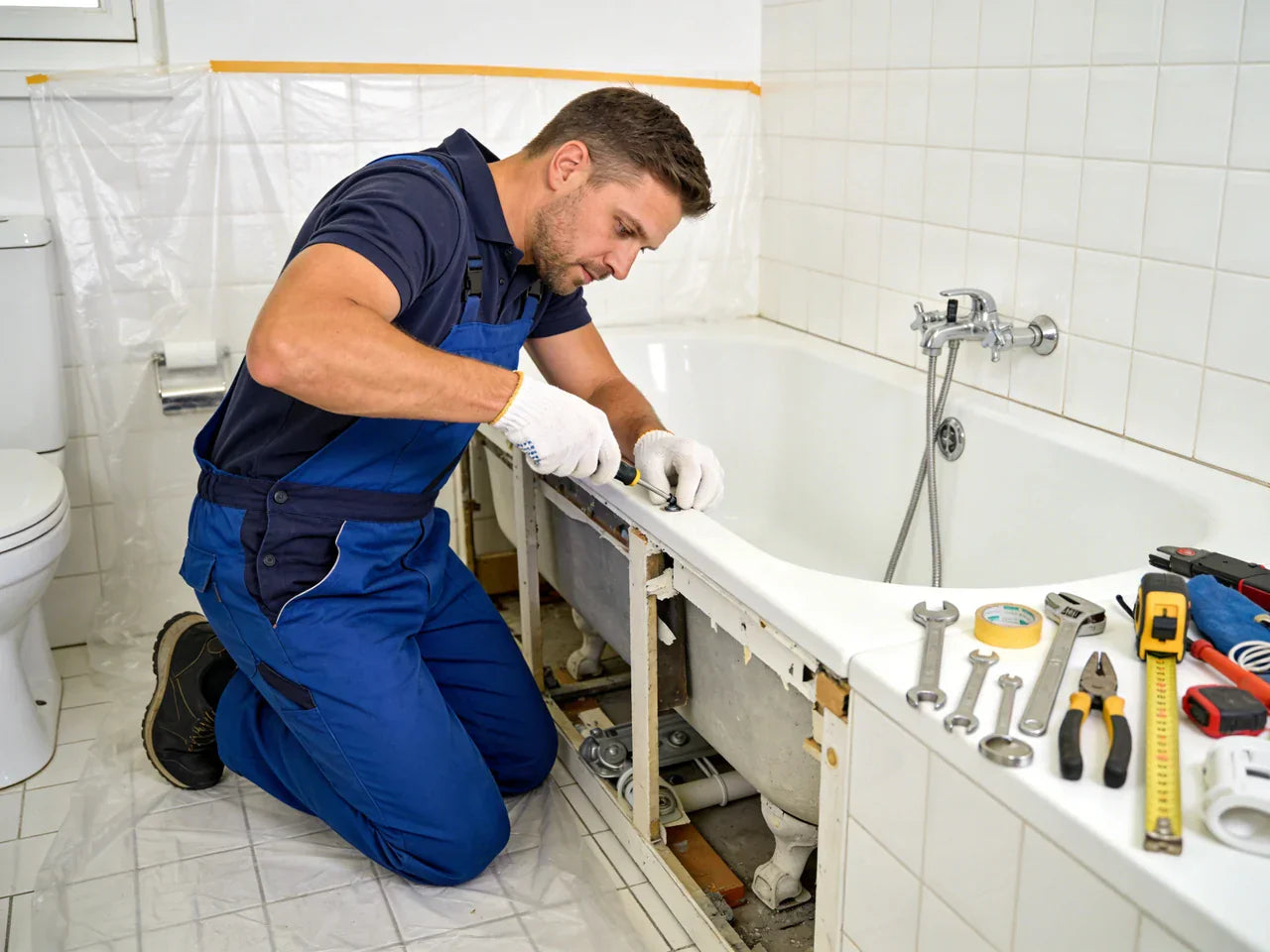
In many homes, labor costs are the biggest slice—often 40–60% or more of the final price. According to the U.S. Bureau of Labor Statistics(BLS), the median hourly wage for plumbers, pipefitters, and steamfitters is about $27.87, while construction laborers average $20.83. That surprises people because the tub itself might cost $500–1,200, so it’s easy to think the whole job should be “a little more than that.” But the real work is in careful removal, plumbing tie-ins, leveling, support, waterproofing, and rebuilding what gets disturbed.
If you imagine a stacked bar chart for a typical job, it often looks like this: tub + trim (a chunk), labor (the biggest chunk), surround/tile (sometimes the second biggest), then plumbing changes, disposal, and small supplies.
Itemized cost ranges to expect (2025)
Prices vary by region and tub type, but these line items are common in 2025. Think of this as a planning tool for cost of replacing a bathtub, not a quote.
| Line item | Low | Mid | High | Notes |
| Removal/demo | $60 | $300 | $600 | Easy access vs tight spaces |
| Disposal/hauling | $100 | $300 | $2,000 | Heavy tubs, stairs, dump fees |
| New tub (unit) | $400 | $900 | $3,000+ | Depends on bathtub material and type |
| Install labor | $1,000 | $2,200 | $3,500 | Setting, leveling, connecting, finish work |
| Plumbing changes | $300 | $700 | $1,200 | Moving lines costs more than replacing parts |
| Surround/tile/waterproofing | $1,000 | $2,000 | $3,000+ | Rebuild vs patching |
| Repair allowance (hidden) | $0 | $500 | $2,000+ | Rot, mold, outdated plumbing |
A practical way to read this is: your install new bathtub cost might look “high” even when the tub is affordable, because you’re paying for skilled time, not just a product.
Plumbing and valve upgrades (small parts, big labor)
A common question is, “Do I need a plumber to replace a bathtub?” If you’re keeping the tub in the same spot and the plumbing is in good shape, some general bathroom remodel contractors handle the work with a licensed plumber as needed. But if any of these apply, having a plumber involved is often the safer plan:
-
The shower valve is old, leaks, or is hard to turn
-
The drain and overflow are corroded
-
You’re changing tub depth or drain style
-
You want to move the tub, or the drain location won’t line up
Here’s the key point: the parts are usually not expensive. What costs money is the time to access them. When a wall is open, upgrading a shower valve can be smart because it prevents paying for another tear‑out later.
If the project includes plumbing relocation, a new drain rough‑in, or supply line moves, the price jumps quickly. Keeping plumbing in place is one of the biggest ways to save on bathtub replacement without cutting corners.

Visual feature — scope boundary diagram
If you’re comparing quotes, it helps to picture three “boxes” of scope:
-
Like‑for‑like swap: tub out, tub in, reconnect, small patches
-
Tear‑out to studs: tub out, walls open, new waterproofing, new surround/tile
-
Layout change: everything above plus moving drain/supply lines, sometimes reframing
When bids are far apart, it’s often because each contractor is pricing a different “box,” even if you used the same words on the phone.
Cost by Project Type (Swap vs Remodel vs Conversion)
When people ask, “How much does a bathtub replacement cost?”, the honest answer is that replacing a bathtub can vary widely depending on the project type. Whether you’re weighing bathtub refinishing vs a full bathtub replacement, upgrading your bathtub, or simply needing to replace a standard bathtub, the cost will depend on the scope, the bathtub by material, and the size of the area. In 2025, money on a bathtub replacement is affected not just by what the tub can cost, but by how far the work goes — and due to elevated labor rates, each project type can affect the final price very differently.
Like‑for‑like bathtub swap (best for budget)
A like‑for‑like swap is the cleanest way to control bathtub replacement cost. In 2025, many homeowners land around $2,000–$3,000, with a broader typical range of $1,500–$4,000 depending on local labor and disposal.
This is where you have the best odds of staying on budget: the existing bathtub comes out, the new tub goes into the same alcove, and the surrounding walls are either reused or only lightly repaired. The best cases are homes with an intact surround, no soft floors, and no leaks. If you’re trying to make sure there’s at least one bathtub in the home for resale or for kids, this kind of replacement often makes the most sense.
This scope is also where people most often ask, “How much does it cost to install a new bathtub?” For a standard alcove tub in the same footprint, installation commonly falls in that $2,000–$3,000 all‑in zone when nothing else changes.
Tub + 3-wall surround rebuild (tile or prefab surround)
If you want to refresh the whole bathing area—not just the tub—plan for a higher tier. A tub plus a rebuilt 3‑wall surround commonly runs $4,000–$7,000+ in 2025, depending on finish choices and how much prep is needed.
The big drivers here are the wall system and waterproofing. A tile surround looks great, but it’s labor-heavy. It also requires a real waterproofing plan behind the tile. That’s why tile can add more to the bill than the tub itself.
If you hear terms like backer board and waterproofing, that’s a sign you’re in “rebuild” territory, not “swap” territory. It’s also why two quotes can be far apart: one contractor might be planning a full wall rebuild, while another might be assuming a simple patch.
Tub-to-shower conversion cost (most common alternative)
Not everyone wants another tub. If stepping over a tub wall is getting harder, or if the tub never gets used, you might be comparing tub replacement to a conversion.
In 2025, a tub-to-shower conversion commonly runs $2,500–$8,000, depending on whether you choose a kit-style wall system or a custom tile shower. Drain alignment, valve condition, and whether you add glass are major price movers.
| Conversion option | Typical cost | Pros | Cons |
| Prefab shower kit/wall system | $2,500–$5,000 | Faster install, fewer grout lines | Fewer design options |
| Custom tile shower | $4,500–$8,000+ | High-end look, flexible sizing | More labor, waterproofing must be done right |
How much does it cost to replace a bathtub with a shower?
Most homeowners in 2025 see $2,500–$8,000 to replace a tub with a shower. The price changes most when the drain position doesn’t match the new shower pan, when walls need full waterproofing, and when glass doors are added.
Cost by Tub Type & Material (What You Choose Changes Everything)
If you’re trying to figure out how much does bathtub replacement really cost, the answer depends heavily on what you choose. The average cost to replace your bathtub can shift fast depending on the type and tub material — from a standard tub to a walk-in tub — because both labor and material add to the cost. In 2025, replacing a bathtub depends not just on the price range of the tub itself, but on materials and labor, the size of the area, and the time to replace the tub and install a new one. That’s why project costs, and even the value to your home, can vary widely when you consider replacing your bathtub by type and material.
Tub types compared: alcove, drop‑in, freestanding, walk‑in, jetted
The type of bathtub you choose affects labor, plumbing, and sometimes flooring. An alcove tub is usually the most straightforward. A freestanding tub may look simple, but it can require exposed plumbing changes and careful floor protection. A walk‑in tub is often the most complex.
| Tub type | Typical project total (2025) | Complexity | Common add-ons |
| Alcove (standard) | $2,000–$6,000 | Low to medium | Surround updates |
| Drop‑in | $3,500–$7,500 | Medium | Deck rebuild, access panel |
| Freestanding | $4,000–$10,000+ | Medium to high | Freestanding tub installation plumbing changes |
| Walk‑in tub | $8,000–$15,000+ | High | Electrical, access, sometimes structural work |
| Whirlpool/jetted | $6,000–$12,000+ | High | Dedicated circuit, service access |
If you’re thinking about a soaking tub, check depth and weight before buying. Some deep tubs change where the overflow sits, which can affect the drain connection and the final labor time.

Materials pricing: fiberglass vs acrylic vs cast iron vs stone resin
People often ask which material is “best,” but the right answer depends on budget, feel, and how long you plan to stay in the home. Here are common 2025 price bands for the tub unit itself.
| Material | Typical tub cost | Durability | Weight/structural notes | Upkeep |
| Fiberglass | $200–$800 | Fair | Light, easy to move | Can scratch/fade |
| Acrylic | $500–$1,200 | Good | Light to medium | Easy to clean, repairable |
| Cast iron | $600–$2,000 | Excellent | Very heavy; disposal costs can rise | Very durable finish |
| Stone resin/composite | $1,200–$3,000+ | Very good | Heavy; may need floor check | Smooth, premium look |
| Luxury metals/stone | $2,000–$35,000 | Varies | Often very heavy | Specialty care |
A common surprise: a cast iron tub might not cost wildly more to buy than acrylic tub, but it can raise the overall cost because moving it takes more labor and disposal can be harder. That’s one reason replacement cost by material is not just “tub price.”
Structural and electrical adders for heavy/jetted tubs
Heavy tubs and jetted tubs can bring extra requirements. If a tub is much heavier than the existing tub, a contractor may recommend checking floor structure. That can mean added carpentry, especially in older homes.
A jetted tub may require electrical work like a dedicated circuit and GFCI protection, depending on the model and local rules. It also needs service access. If you don’t plan for an access panel, repairs can become expensive later because someone may need to cut open finished walls.
The plain-language takeaway is simple: specialty tubs often cost more to install than to buy.
Is acrylic or fiberglass better for a replacement tub?
For many homeowners, acrylic is “better” for bathtub replacements because it tends to feel sturdier, stay glossy longer, and handle cleaning products better. Fiberglass can cost less, but it may scratch and dull sooner. If your goal is a solid midrange bathtub installation without big structural concerns, acrylic is often the safer bet.
Regional & City Price Differences (Why Your ZIP Code Matters)
Once you factor in regional labor markets and local rules, the same bathtub replacement project can land in very different price ranges depending on where you live — which is why looking at real city examples helps put ZIP-code pricing into context.
2025 city examples (labor market effect)
Your ZIP code can change the price as much as your tub choice. Labor rates, permits, parking, and disposal fees all vary.
| City | Typical total range (2025) | Notes |
| San Francisco, CA | $6,000–$8,000 | High labor + access constraints |
| Los Angeles, CA | $6,500–$8,500 | Disposal and scheduling add cost |
| New York City, NY | ~$7,000 | Building rules and logistics matter |
| Seattle, WA | $5,000–$7,000 | Higher labor rates |
| Chicago, IL | $4,500–$6,500 | Wide spread by neighborhood |
| Dallas, TX | $2,500–$4,500 | Lower labor vs coastal metros |
| Phoenix, AZ | $2,200–$3,800 | Often lower demo/disposal |
| Denver, CO | $1,800–$3,000 | Competitive labor market |
These are typical “project total” numbers, not just the tub. A quick plumbing-only swap in any city can be lower, but once you include surround work, regional labor becomes a multiplier.
High-cost metros vs interior/Sun Belt markets (what changes)
Why are quotes higher in certain cities? It’s not just “contractors charging more.” High-cost markets often have:
-
Higher labor rates and demand
-
More time lost to parking, permits, and building access rules
-
Higher dump fees and stricter disposal rules
-
Older buildings where plumbing and framing surprises are common
So if you’re thinking, “My tub is small—why is the cost to change bathtub so high?” the answer is often that the work around the tub is the real job, and city conditions slow that job down.
Hourly labor rate context (what’s reasonable in 2025)
Rates vary, but in 2025 it’s common to see skilled trades priced in a way that reflects licensing, insurance, travel time, and warranty responsibility. Plumbers, tile installers, and general remodel crews may bill by the job or by time, but either way it’s labor that drives the bill.
A simple way to judge a bid is to ask: “How many worker-days are in this quote?” A one-day swap with two workers is a very different job than a four-day tear‑out with waterproofing and tile.
Why is bathtub replacement so expensive in my city?
It’s usually expensive because of higher labor costs, tougher access (stairs, elevators, parking), permit requirements, and higher disposal fees. In many cities, the same scope costs more simply because the crew spends more time getting the job done.
Hidden Costs, Repairs & Permit Requirements
Even with a clear quote, some of the biggest cost swings come from things you can’t see at first — which is why hidden repairs and permit-related issues deserve a closer look.
The big “surprise” costs behind the wall/floor
The most stressful part of replacing a bathtub is the unknown behind the walls. Water can travel. A tiny leak at the drain can quietly damage a subfloor for years. When the old tub comes out, hidden repairs may require extra time and materials.
| Issue | Warning signs | Typical add-on cost | Prevention |
| Subfloor rot | Soft floor, musty smell, loose tile | $300–$1,200 | Fix leaks early; inspect from below if possible |
| Mold | Staining, strong odor, chronic dampness | Varies widely | Control moisture; vent fan use |
| Outdated plumbing | Low pressure, corrosion, repeated clogs | $500–$2,000+ | Upgrade while walls are open |
| Framing damage | Cracked tile, movement, sag | $300–$1,500+ | Proper support under tub |
If your contractor includes a “repair allowance,” that’s not a trick. It’s often an honest way to price a job when the wall condition is unknown.
Permits, inspections, and code upgrades
Do I need a permit to replace a bathtub? Sometimes yes.
A simple like‑for‑like swap may not require a permit in some areas, but permits are more likely when the project includes plumbing relocation, valve replacement behind walls, electrical for a jetted tub, or a layout change.
Many homeowners set aside $200–$500 as a permit placeholder, but local rules vary a lot. The safest move is to check your city or county building department website and ask the contractor what they will pull in their name.
Disposal logistics (especially cast iron)
Disposal sounds minor until it isn’t. A steel or fiberglass tub is usually manageable. A cast iron unit can be a different story, especially in a second-floor bathroom with narrow stairs.
When you compare bids, make sure “disposal included” means:
-
Removal from the bathroom
-
Protection of floors and hallways during carry-out
-
Haul-away and dump fees
-
Cleanup
If a quote is low, ask where the old tub goes. You don’t want a surprise bill—or an old bathtub left on your driveway.
Do I need a permit to replace a bathtub?
Often, you don’t need a permit for a direct swap in the same location, but you may need one if plumbing lines move, walls are opened for valve work, or new electrical is added. Always verify with your local building department because rules vary by city.
DIY vs Hiring a Pro (Realistic Savings + Risk)
This is where many homeowners pause and ask whether DIY is a smart way to cut costs—or a gamble that can backfire.

What DIY can save—and where it usually goes wrong
It’s normal to wonder if you can cut the bathtub installation cost by doing it yourself. You can save money on some tasks, especially demolition and repainting. Some homeowners also tile successfully. But tubs are less forgiving than they look because water finds weak points.
DIY often goes wrong in three places:
-
The tub isn’t level or properly supported, so it flexes and cracks.
-
The drain connection leaks slowly, causing hidden water damage.
-
Waterproofing behind tile is incomplete, so water gets into the wall.
If you’re asking, “Can I replace a bathtub myself?” the honest answer is: it’s possible for experienced DIYers, but it becomes risky when plumbing, waterproofing, or heavy tubs are involved.
Hybrid approach: homeowner prep + licensed plumbing
A balanced approach is a split scope. You do the parts that are hard to mess up, and hire licensed help for the parts that can flood your house.
A simple step-by-step hybrid plan many homeowners use:
-
Remove trim and clear the room.
-
Handle basic demo if you’re comfortable (and protect floors).
-
Hire a pro to set the tub, connect the drain, and handle valve work.
-
Do paint and finish trim after inspection/testing.
If you want to negotiate, talk about who supplies materials and who handles disposal. Some contractors are fine with you purchasing the new bathtub and fixtures, while they supply the hidden parts like mortar, drain fittings, and waterproofing products they trust.
Case study scenarios (invoice-style examples)
To make pricing feel real, here are three “what you’re paying for” scenarios. I’ve used versions of these when helping a family member compare bids, because it forces everyone to talk about scope instead of just price.
Scenario A: Like-for-like alcove swap in a mid-cost market (~$2,000–$3,000)
This is the classic cost to replace bathtub project. The existing alcove tub comes out, a similar tub goes in, the drain and overflow get replaced, and walls need only small patching. Disposal is included. No tile rebuild. This is where your final price is most predictable.
Scenario B: Tub + full tile surround rebuild (~$4,500–$9,000)
Here, you’re paying for careful wall rebuilding: demo to studs, new backer board, a real waterproofing system, then tile, grout, and caulk. Often the valve gets replaced “while we’re in there.” This is where many people underestimate installation cost because tile adds days, not hours.
Scenario C: Walk‑in/jetted install ($8,000–$15,000+)
This is high scope. The tub costs more, the plumbing can change, and jetted systems may need electrical updates. The project may require an access panel and sometimes floor reinforcement. In this tier, the costs range widely because each home’s structure and code needs are different.
Can I replace a bathtub myself?
You can if you have strong DIY skills and the project is simple (same size tub, no plumbing moves, no tile rebuild). It becomes a bigger risk when waterproofing, heavy tubs, or plumbing changes are involved, because a small mistake can cause leaks and expensive repairs.
How to Get Accurate Quotes & Lower Your Bathtub Replacement Cost
To actually lower your bathtub replacement cost, you first need a clear picture of what affects pricing—then you can make sure each quote you get is comparable and realistic.
Quote checklist: make bids apples-to-apples
Most price confusion happens because homeowners ask for “a tub replacement,” but contractors price different scopes. When you request bids, give the same details to each contractor so your pricing is comparable.
Use this step-by-step checklist:
-
Provide tub size (length/width) and right/left drain location.
-
State the tub type and material of your bathtub choice (or ask for two options).
-
Clarify surround scope: reuse, patch, or replace.
-
Ask if the shower valve will be replaced or reused.
-
Confirm if flooring outside the tub needs patching.
-
Confirm if disposal and haul-away are included.
-
Ask what waterproofing method is used if walls are rebuilt.
-
Ask who pulls permits, if needed.
If you do just one thing, do this: ask each bidder to list what is excluded. Exclusions are where budget surprises live.
Cost-saving strategies that don’t risk leaks
If you want to save on bathtub replacement without gambling on water problems, focus on choices that reduce labor time and complexity.
Keeping plumbing in place is the biggest saver. When the drain and supply lines stay put, the job is faster, cleaner, and less likely to trigger extra repairs. Choosing a prefabricated surround instead of custom tile can also cut days of labor. Many homeowners also pick a midrange acrylic tub because it offers a good balance: lighter than cast iron, sturdier than entry-level fiberglass, and less likely to require structural changes.
Scheduling can matter too. If you’re also planning to replace the valve, do it during the tub job while the wall is open. Paying once is cheaper than paying twice.
Contractor vetting & warranty essentials
People often ask, “Is it worth it to replace a bathtub?” It usually is when the existing tub is cracked, leaking, stained beyond cleaning, or when you’re planning to sell and want a clean, updated bathroom. But value comes from a dry, durable install—not from the cheapest number.
So vet the contractor like you’re hiring them to protect your home from water (because you are). Ask for proof of licensing and insurance where required. Ask what warranty covers workmanship, not just the tub itself. And if the project includes tile or a rebuilt surround, ask how waterproofing is handled and whether it is warrantied.
A good bid is detailed enough that you can see what you’re paying for: demo, plumbing steps, wall rebuild steps, and finishing.
Interactive feature — 2025 bathtub replacement cost calculator (simple framework)
You can estimate a realistic range with a simple input method. Think of it as a “sanity check” before you collect bids.
Inputs:
-
ZIP code factor (low / mid / high labor market)
-
Tub type (alcove / drop‑in / freestanding / walk‑in / jetted)
-
Surround choice (reuse / prefab / custom tile)
-
Plumbing move (yes/no)
-
Damage repair (yes/no)
Output method (example logic):
-
Start with a base like‑for‑like swap:
-
Low labor market: $2,000
-
Mid labor market: $2,500
-
High labor market: $3,500+
-
-
Add tub-type adjustment:
-
Freestanding: +$800 to +$3,000
-
Walk‑in/jetted: +$3,000 to +$8,000+
-
-
Add surround:
-
Prefab: +$800 to +$2,000
-
Custom tile: +$2,000 to +$5,000+
-
-
Add plumbing move:
-
Yes: +$500 to +$1,200+
-
-
Add damage repair:
-
Yes: +$300 to +$2,000+
-
Then list the “top 3 cost drivers” based on what you answered (often surround, plumbing moves, and repairs). This keeps your expectations tied to scope, not wishful thinking.
FAQs about bathtub replacement
1. How much does it cost to remove and replace a bathtub?
In 2025, a straightforward like‑for‑like swap—where the old tub comes out and a similar one goes in the same spot—usually runs around $2,000–$3,000 all-in. That covers basic removal, setting the new tub, reconnecting plumbing, and minor wall patching. But if you’re rebuilding the surrounding walls, replacing tile, fixing hidden water damage, or moving plumbing lines, costs can climb quickly to $4,000–$7,000 or more. Basically, the more work behind the scenes, the more your project will add to the final price.
2. Do I need a plumber to replace a bathtub?
If your bathtub replacement involves any changes to plumbing—like moving pipes, replacing a drain, or updating a shower valve—you’ll need a licensed plumber or a contractor who includes plumbing work. Even small leaks or old fittings can cause problems if not handled correctly. For simple swaps where plumbing stays in place, some general contractors can handle the installation, but having professional plumbing ensures the job is waterproof, up to code, and avoids hidden damage. In short, when water is involved, cutting corners can get expensive fast.
3. Is it worth it to replace a bathtub?
Replacing a bathtub is usually worth it if the tub leaks, flexes when you step in, or is badly stained and worn. Beyond aesthetics, a solid replacement protects against water damage and keeps your bathroom safe and functional. It’s also a smart move if you’re planning to sell—the right install can boost your home’s value. The key isn’t just swapping tubs; proper waterproofing, secure installation, and repairing any hidden damage are what make the project truly worthwhile in both comfort and long-term savings.
4. How much does it cost to install a new bathtub?
For a standard alcove tub installed in the same spot, most homeowners in 2025 pay around $2,000–$6,000. The wide range depends on factors like whether the surrounding walls need patching or tile, local labor rates, and any repairs uncovered during demolition. A heavier or specialty tub, like a walk-in or jetted model, can push costs higher due to extra labor or structural adjustments. The takeaway: the tub itself might be just part of the cost. Labor, prep, and unforeseen repairs often make up the bigger portion of what you end up paying.
References


Leave a comment
This site is protected by hCaptcha and the hCaptcha Privacy Policy and Terms of Service apply.