
An oil rubbed bronze shower door is worth considering when you want a warm, dark finish that coordinates with wood, beige tile, and traditional or transitional decor. It creates a softer visual contrast than matte black, but it also introduces practical concerns: bronze tones vary by manufacturer, mineral deposits remain visible, and damaged coatings can be difficult to repair.
This finish works best for homeowners who prioritize its warm appearance and are comfortable with extra care and possible color variation. It is less suitable if effortless upkeep, exact fixture matching, or easy future replacement is the priority.
Who Should Choose This Finish?
Best for warm, coordinated bathroom schemes
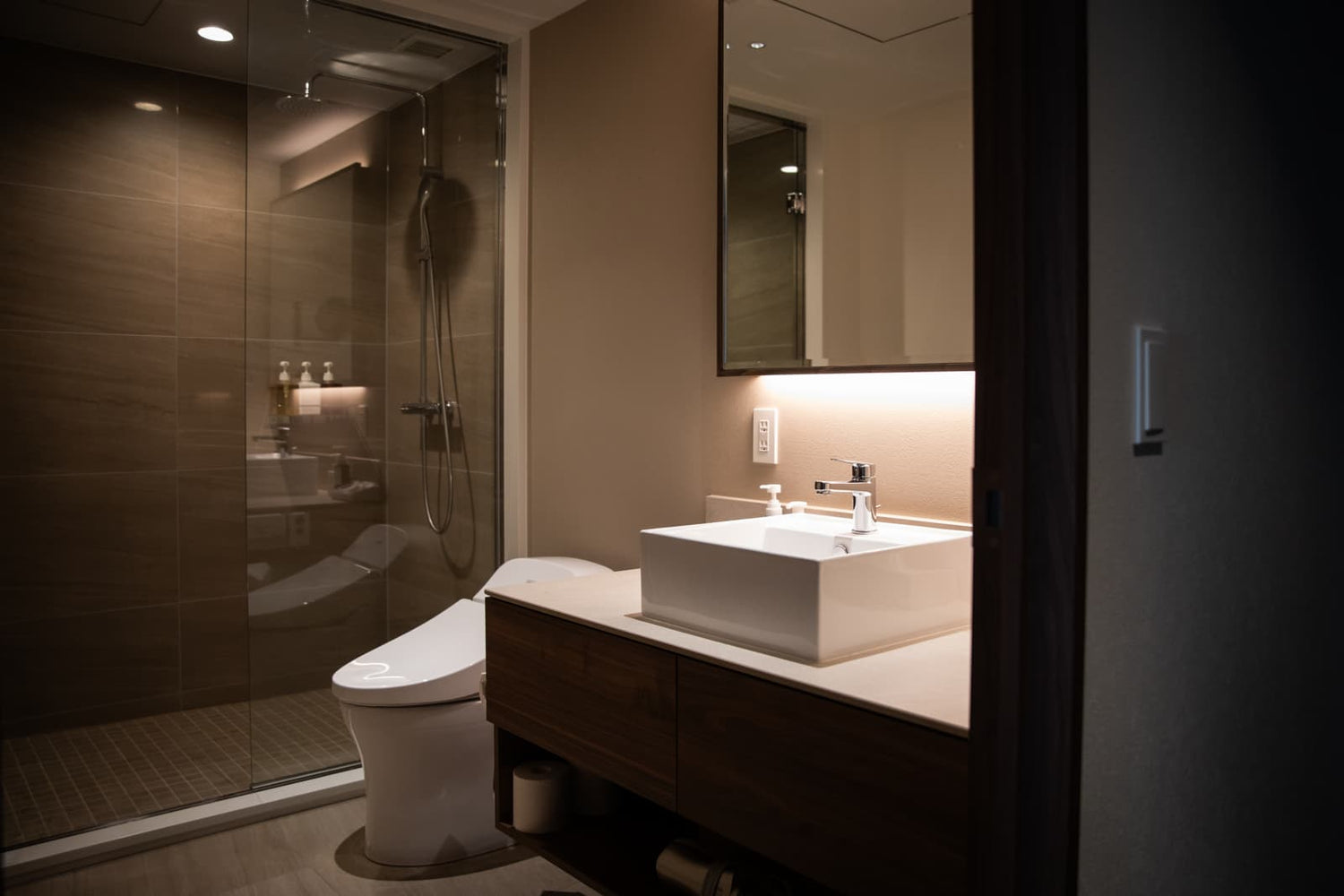
Oil rubbed bronze usually has a dark brown or near-black base with warmer copper-colored details. That combination works naturally with warm wood, cream walls, beige stone, and tile containing brown, rust, or muted gold tones.
A bronze shower door can also complement rustic, farmhouse, traditional, and transitional bathrooms. It looks most cohesive when the enclosure matches an existing finish plan rather than becoming the bathroom’s only bronze element.
Coordination does not require every metal surface to be identical. However, a brown bronze door beside fixtures that appear strongly copper-colored or almost pure black may look mismatched. Lighting can make those differences more noticeable, so matching by finish name alone is risky.
Softer contrast than a matte black door
The main choice between bronze and matte black shower doors comes down to whether you prefer warmth or stronger contrast.
Matte black creates a crisp, graphic outline around the glass. Oil rubbed bronze is generally softer because its brown and copper undertones relate more closely to wood and earth-toned surfaces. It can provide dark definition without looking as stark or contemporary.
The final appearance is not always predictable. Some products labeled oil rubbed bronze appear nearly black from across the room, especially under cool or limited lighting. If warmth is the main reason for choosing bronze, inspect the actual finish rather than relying on online images.

You can review HOROW’s black shower door styles to compare the overall effect of dark framing, but a screen cannot confirm how a bronze sample will look under your bathroom lighting.
Compare HOROW Shower Door Finishes
If you are comparing oil rubbed bronze with other metal finishes, these HOROW shower doors provide examples of black, brushed gold, and brushed nickel options. Consider how each finish works with your tile, fixtures, lighting, and overall bathroom color scheme before choosing.
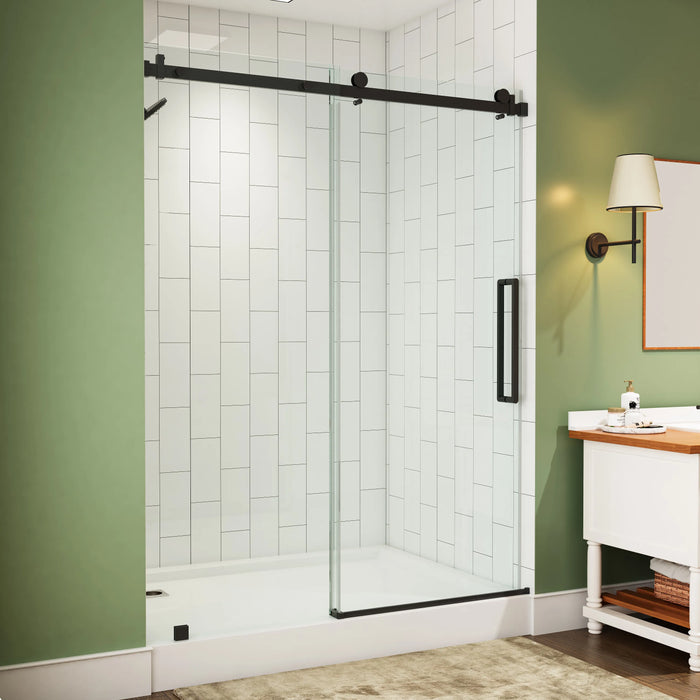
HOROW TE6076-MB
A black shower door option to consider when comparing the stronger visual contrast of dark framing with warmer bronze-style finishes.
View TE6076-MB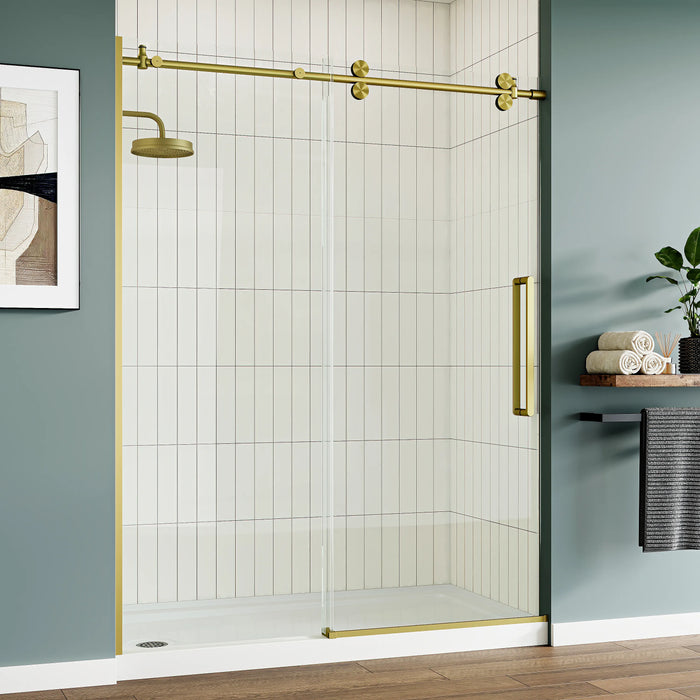
HOROW MI6076-SG
A warmer metallic option to consider when comparing finishes for bathrooms with warm tile, wood tones, or coordinating fixtures.
View MI6076-SG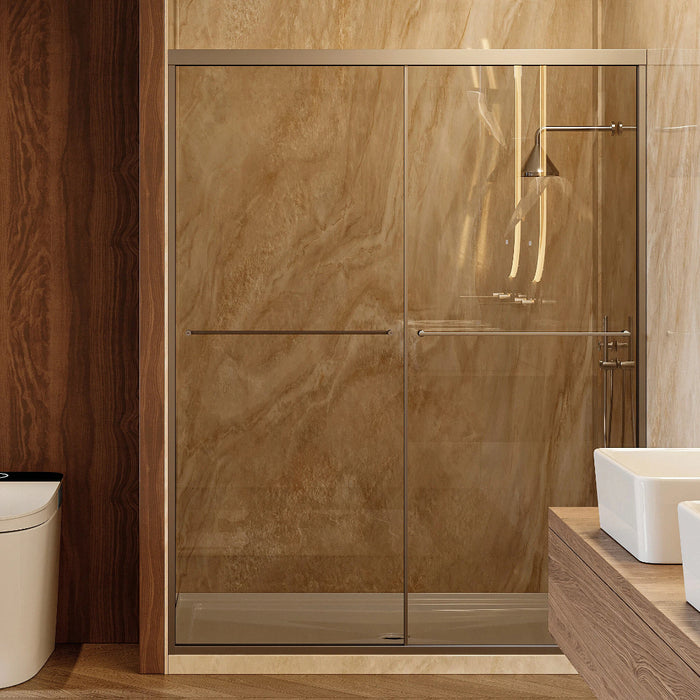
HOROW K2-BN
A lighter neutral-metal option to compare when you want less dark contrast around the shower enclosure than bronze or black framing.
View K2-BNSkip it if easy upkeep matters most
Oil rubbed bronze is not maintenance-free. A dark, low-sheen surface may make fingerprints less noticeable than polished metal, but pale mineral deposits and soap residue can still stand out.
The finish may be frustrating in a heavily used shower if household members regularly use abrasive pads or strong bathroom cleaners. Depending on the finish system, rough scrubbing and harsh chemicals can dull or damage the surface.
Choose it only if its appearance is important enough to justify following the door manufacturer’s care instructions. Do not select bronze simply because you expect it to hide water spots.
How Predictable Is the Bronze Color?
Will it match existing bronze fixtures?
“Oil rubbed bronze” describes a broad appearance, not a standardized color. One product may be nearly black, another may be medium brown, and another may have prominent copper or gold-colored highlights.
Texture and sheen also vary. A flat brown frame can look noticeably different from glossy, brushed, or heavily highlighted bronze hardware, even when both products use the same finish label.
Bathroom lighting adds another variable. Warm bulbs can emphasize brown and copper tones, while cool light may make the finish appear darker. Daylight may expose differences that were not apparent in a showroom or photograph.
Compare physical samples before committing
Place a shower-door finish sample beside a faucet, cabinet pull, towel bar, or other fixture that will remain in the room. View it upright under daylight and the bathroom’s normal artificial lighting.

A small sample may not show every detail of a full shower frame. Corners, edges, and textured areas can look different once the finish covers a larger surface. When possible, inspect the delivered bronze shower door hardware before installation. Check the base color, amount of highlighting, sheen, and consistency among visible components.
Also inspect the frame and hardware for chipped edges or scratches. Cutting, drilling, or adjustment can expose a different-colored material beneath some surface finishes, making careful handling important during installation.
Future replacements may introduce mismatched tones
A replacement handle, hinge, or frame component may carry the same oil rubbed bronze label without matching the original shade. Product finishes can also change over time, and an exact replacement may no longer be available.
This is particularly relevant during a staged remodel. Replacing only the faucet or cabinet hardware may leave the new metal noticeably different from the existing oil rubbed bronze shower enclosure.
Bronze is easier to live with when you are comfortable with coordinated—but not necessarily identical—metal tones. If exact matching is essential, select the door and nearby fixtures from physically compared samples and ask what replacement components are available before purchasing.
How Will Dark Framing Affect the Room?
Will it work in small bathrooms?
An oil rubbed bronze shower door can work in a small bathroom, but the amount of visible framing matters. Thin hardware on a mostly frameless enclosure has less visual weight than a wide perimeter frame or decorative grid.
Dark lines define the shower as a separate object within the room. That can create an attractive focal point, but it may also make a compact layout feel more divided—especially when the enclosure sits close to the vanity, toilet, or doorway.
To preview the effect, mark the main frame positions with removable dark tape around the shower opening. View the outline from the entrance and vanity rather than judging it only from inside the shower area.
Low light can make enclosures feel denser
Dark bronze framing attracts attention in a dim room and can visually divide otherwise clear glass. The effect becomes stronger when combined with dark tile, substantial framing, or limited natural light.

Pale surrounding surfaces and effective bathroom lighting can balance the dark outline, but they will not make it disappear. Bronze is best when you want the enclosure to have a visible architectural presence. If the goal is for the glass to recede into the background, a dark bronze shower door may work against that effect.
What Care Does the Finish Require?
Does it require more maintenance?
Maintenance depends on the coating, water quality, shower use, and cleaning habits. Residue commonly becomes noticeable around handles, frame joints, tracks, fasteners, and lower edges where water remains.
Pale deposits can contrast strongly with dark hardware. Allowing buildup to become heavy may also require more rubbing later, increasing the possibility of dulling or scratching a sensitive surface.
Drying wet hardware with a soft cloth can limit deposits, but that routine may not be practical in every household. Base the decision on how the shower will actually be maintained, not on an ideal cleaning routine.
Gentle cleaners help prevent finish damage
Many oil rubbed bronze shower-door components are made from another metal with a factory-applied surface treatment. The exact construction may involve a coating, plating, anodized finish, or protective top layer.
Because these systems differ, follow the specific door manufacturer’s care instructions. Avoid assuming that a cleaner safe for tile or glass is also suitable for bronze-colored hardware. Abrasive powders, rough pads, aggressive scrubbing, and harsh chemicals may alter the color or sheen.
Choosing gentler cleaning products can also reduce unnecessary exposure to harsh chemicals on bathroom surfaces. The EPA’s Safer Choice program identifies products designed with safer chemical ingredients while still meeting performance standards, which can be a useful reference when comparing household cleaners.
Use soft, nonabrasive materials and test an unfamiliar cleaner in a concealed area before applying it broadly. Do not leave cleaner sitting around joints or edges longer than directed.
Hard water still leaves visible deposits
Oil rubbed bronze does not prevent mineral buildup. Hard-water residue may appear pale, chalky, or streaked against the dark finish, particularly where droplets repeatedly dry on the frame.
Hard water is high in dissolved minerals, especially calcium and magnesium, and can contribute to mineral buildup in plumbing and fixtures. The amount of buildup depends on local water conditions, so homes in hard-water areas may require more frequent cleaning of shower hardware.

If deposits are already obvious on the bathroom’s faucets and other dark fixtures, expect the shower hardware to need similar attention. Bronze may make minor marks less noticeable from a distance, but it should not be treated as a solution for water spotting.
Will the Finish Age as Expected?
Is it real bronze?
Most standard products described as oil rubbed bronze use the term for the finish’s appearance rather than the underlying material. Shower-door frames may be made from aluminum or another metal with a bronze-colored surface treatment.
That distinction affects how the enclosure ages. Solid bronze can change through oxidation and wear, while a coated frame is generally intended to retain its factory appearance unless the surface fades, scratches, or wears through.
Before buying, ask what the frame and hardware are made from and how the visible finish is applied. The color name alone does not explain the material, durability, or intended aging process.
Coated frames may not develop natural patina
Oil rubbed bronze is sometimes associated with a “living finish,” but not every bronze-colored shower enclosure is designed to change naturally.
A factory coating may remain relatively stable. If it does wear, the result may be lighter patches around handles, edges, fasteners, or moving contact points rather than a soft, uniform patina. Different components can also age differently if they use different materials or finishing methods.
Bronze-colored hardware can dull, scratch, or lose part of its coating. Whether exposed material corrodes depends on the base material, protective finish, moisture exposure, and maintenance. The oil rubbed bronze label alone does not indicate corrosion resistance.
Refinishing rarely restores the factory appearance
A factory bronze appearance may combine a dark base, lighter highlights, texture, and a protective topcoat. Reproducing all of those elements during a repair is difficult.
A small touch-up may reduce the visibility of a scratch without becoming invisible. Refinishing the whole frame is more involved because a new surface must adhere to the existing material and withstand moisture, handling, and movement.
If visible wear would be unacceptable, confirm replacement-part options before choosing the enclosure. Replacing a damaged component may be more realistic than expecting refinishing to reproduce the original appearance exactly.
Before You Choose
- Compare a physical finish sample with the fixtures that will remain.
- Check the sample under daylight and normal bathroom lighting.
- Confirm the frame material, finish type, and care instructions.
- Preview the visual weight of the dark frame in the actual room.
- Consider whether your water conditions and cleaning habits suit the finish.
- Ask whether matching handles and other visible replacement parts are available.
- Review HOROW’s shower door collection while considering frame style as well as finish color.
Common Questions
Is oil rubbed bronze good for shower doors?
Yes, it is a good choice if you want a warm, traditional-looking finish and do not mind a little extra care. It works especially well in bathrooms with wood tones, beige surfaces, or other warm design elements. However, it may not be the best option if you want a finish that looks identical across different brands or requires very little maintenance.
Does oil rubbed bronze look black?
Yes, some oil rubbed bronze finishes can look almost black, especially in rooms with cooler lighting or from a distance. Other versions show more brown or copper undertones, so the final appearance depends on the finish style and surrounding colors. Seeing the finish under your own bathroom lighting gives the most reliable preview.
Can different bronze tones be mixed?
Yes, different bronze tones can work together when their overall color direction feels consistent. Small differences are often less noticeable in warm, layered bathroom designs, especially when other materials help connect the finishes. Large contrasts between brown, black, and copper-like tones may make the space feel less coordinated.
References
https://www.usgs.gov/special-topics/water-science-school/science/hardness-water


Leave a comment
This site is protected by hCaptcha and the hCaptcha Privacy Policy and Terms of Service apply.