



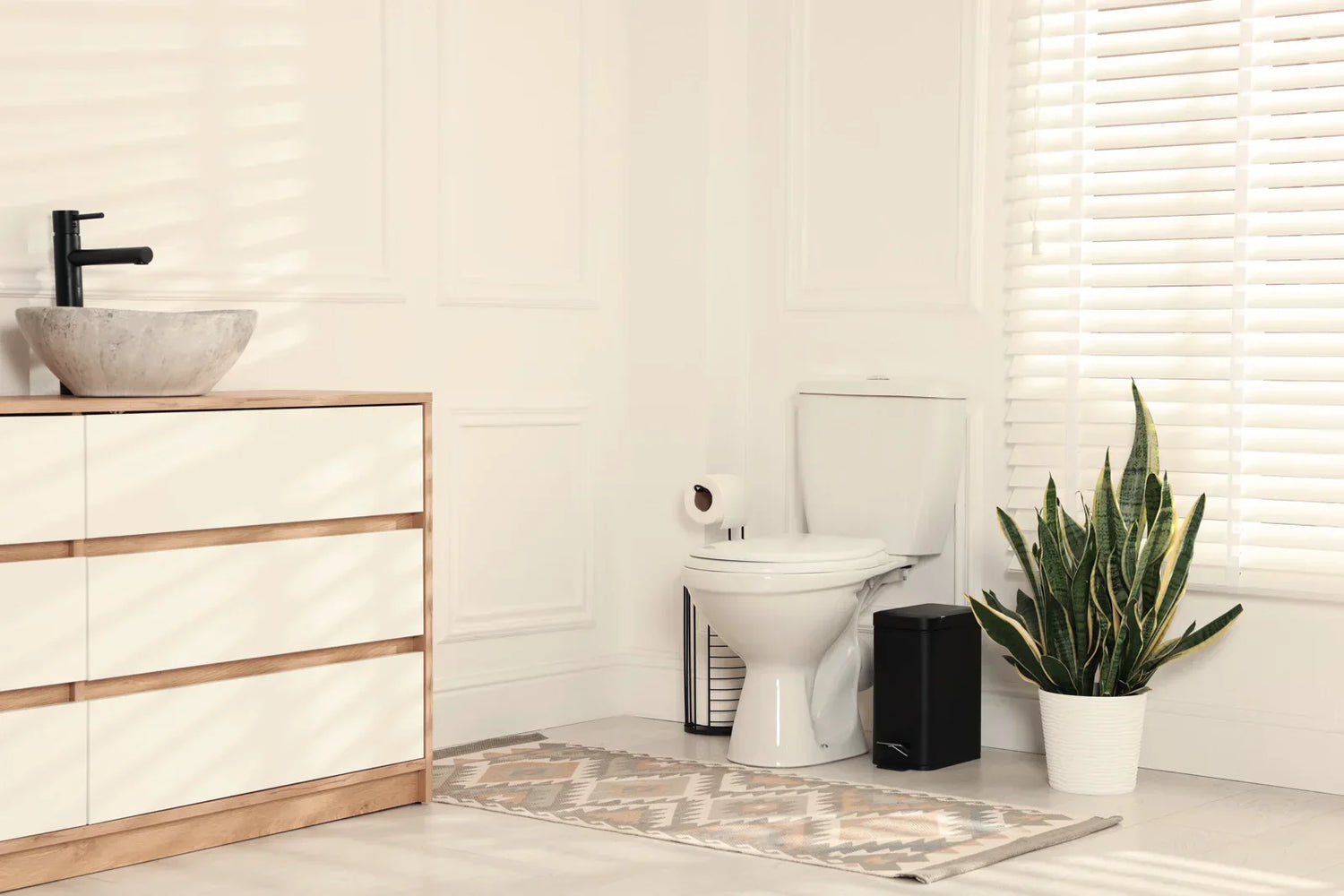
A high efficiency dual flush toilet can be a smart upgrade, but it isn’t the “safe default” for every home. In real bathrooms, water savings depend on two things that don’t show up on a spec sheet: how people actually use the buttons and how often you end up flushing twice.
This guide is written to help you make a confident first decision—dual flush vs the main alternatives—based on the way your household uses the bathroom.
Decision Snapshot: who should choose dual-flush vs the alternatives?
When choosing a high-efficiency dual flush toilet, understanding how your household uses the bathroom is key. While dual flush toilets can offer water-saving benefits, their effectiveness often depends on how consistently users select the appropriate flush option. In the following sections, we'll help guide you in making an informed decision—whether a dual flush toilet is the best choice or if another type would better suit your needs.
Choose a high-efficiency dual-flush toilet if your home has predictable “liquid vs solid” habits and motivated users
If you only remember one thing: Choose a 1.28 gpf single-flush HET for homes with inconsistent usage or high guest traffic. For consistent, motivated users, dual flush is the best choice. Pick dual flush when your household consistently uses the reduced flush for liquid waste and you want maximum savings. Pick 1.28 single flush when you prefer a simple, consistent flush without needing to think about the button.
If you like having control and you don’t mind explaining the buttons to guests once in a while, dual flush can be a good fit.
Choose a 1.28 gpf single-flush HET if multiple people/guests use the bathroom and you want “one lever, no thinking”
If your bathroom gets heavy traffic—kids, guests, roommates—a single-flush 1.28 gpf high-efficiency toilet (HET) is often the better first choice. It’s simpler. People don’t have to guess which button to press. That prevents the most common dual-flush problem: the wrong flush (and then a second flush).
Choose pressure-assisted (power flush) if clogs/backup risk matters more than noise and a gentler flush
When considering pressure-assisted toilets, check the manufacturer's guidelines for compatibility with your plumbing to ensure reliable performance. Trade-off: they’re louder, parts can cost more, and they feel less “gentle” than gravity flush.
Choose a WaterSense certified smart toilet or 1.28 gpf dual flush bidet only if you’ll accept power, electronics, and service trade-offs
Smart toilets, equipped with advanced technology like auto flush, heated seats, and more, offer enhanced comfort and hygiene. But they add electronics, sensors, and sometimes special parts. If you’re fine with plugging in a toilet, dealing with occasional error codes, and paying more to service it, a WaterSense certified smart toilet can make sense. If you want low drama, keep it simple.

Who should buy a high efficiency dual flush toilet vs a 1.28 GPF single-flush HET?
A “high efficiency toilet” usually means 1.28 gallons per flush (gpf) or less. That’s the big shift from older conventional toilets that used much more water per flush.
Dual-flush toilets are high-efficiency by design because they offer two flush volumes—most commonly 0.8/1.28 gpf (sometimes a bit higher on the full flush). The idea is simple: use less water for liquid waste, more for solids.
In practice, the decision comes down to people.
Solo or couple households vs busy family homes
In a one- or two-person home, dual flush can work the way it’s supposed to. You learn which button is which in one day, and your “average flush” drops.
In busy family homes, what I see most often is this pattern:
• Someone hits the wrong button (usually the small flush)
• The bowl doesn’t clear the way they expect
• They flush again (often with the full flush)
• Now you used more water than a single 1.28 gpf toilet would have used
That doesn’t mean dual flush is “bad.” It means it’s behavior-driven. If your household is not consistent, the savings can shrink fast.
Guest baths and powder rooms: the “wrong button” problem
If there’s one place I’m cautious about dual flush, it’s a powder room or guest bath.
Guests don’t want to think about your toilet. They want one obvious handle. With dual flush buttons, some people press the small one because it looks “polite,” then panic-flush again if anything lingers. That “double-flush reflex” is real.
Default recommendation for guest/powder rooms: Choose a 1.28 gpf single-flush HET to avoid user confusion and double flushing.
Water-bill driven vs “set-and-forget” buyers
Ask yourself which one sounds like you:
• “I want to use less water, and I’m fine choosing the right flush each time.”
• “I want the toilet to work the same way for everyone, every time.”
Dual flush fits the first mindset. A 1.28 gpf single-flush HET fits the second.
Do dual flush toilets really save water in real homes?
They can, but many homes accidentally average close to 1.28 gpf anyway because of:
• wrong button presses
• “courtesy flushing” habits
• extra flushing due to low bowl water spot (more on that later)
• a dual-flush model that’s weak on the reduced flush, so it needs repeats
Here’s a practical way to think about it:
• If most liquid waste events use the 0.8 gpf flush, you save water.
• If many liquid events still use the full flush “just to be safe,” you don’t.
Closing line: If you’re unsure about consistent use of the reduced flush, choose a 1.28 gpf single-flush HET to avoid the risk of accidentally wasting water with double flushes.
The trade-offs that actually separate these choices (flush performance, cleaning, and misfires)
Toilets are simple products with a not-so-simple job. Most buying regrets come from a short list: weak clears, clogs, skid marks, and “why does this thing keep running?”
Dual flush 0.8/1.28 gpf vs fixed 1.28 gpf
On paper, dual flush wins because the average gallons per flush can be lower than 1.28.
In daily use, a fixed 1.28 gpf toilet often wins on consistency because:
• there’s one flush volume to tune
• there’s one user action (handle press)
• there’s less chance of “I picked the wrong option”
If you want to choose the best water saving toilet 2026 style, don’t just compare the lowest number on the box. Compare the number of times you’ll flush twice.
Is the lighter flush mode strong enough?
This is where many dual flush toilets disappoint people.
The reduced flush (often around 0.8 gpf) is usually meant for liquid waste. The problem is that real bathroom trips aren’t always neatly “liquid” or “solid.” Toilet paper varies. Diet varies. Some households use thicker paper. Some people use paper more.
If your household often needs more paper, or you have kids who use it a lot at once, the light flush may leave paper behind. That leads to re-flushing, which cancels the savings.
Decision rule:
• If your usage involves frequent paper variability, avoid dual flush to prevent re-flushing.
• If you’re fine using the full flush whenever you’re unsure, you’ll average closer to 1.28 gpf anyway.
MAP scores, clogs, and “second flush” behavior
You’ll sometimes see toilets referenced by performance testing like “grams removed” (often called a MAP score). You don’t need to memorize numbers, but you should understand why this matters:
• Strong waste removal reduces clogs
• It also reduces the “second flush habit”
That second point is the hidden swing factor for water consumption. Final instruction: Prioritize models with strong clearing performance to avoid the second flush habit, even if they’re rated at 1.28 gpf.
If you’ve ever owned a toilet that made you do a “just in case” second flush, you already know how quickly that becomes automatic.
Bowl water spot and perceived cleanliness
Some high-efficiency toilets, including some dual flush toilets, have a smaller bowl water spot or lower water level. That can be normal for water conservation, but it changes the user experience:
• Stains can show sooner
• Owners may brush more often
• Some people flush extra to “rinse the bowl”
If you’re sensitive to bowl cleanliness or you have hard water that leaves mineral rings, pay attention here. A toilet that looks “less clean” tends to get extra flushes and extra cleaning—both matter in daily life.

Cost & value: what you pay upfront vs what you save per year (and over a lifetime)
People often buy a toilet once and keep it for a long time. So it’s worth doing a quick reality check on costs.
Purchase price tiers
Prices vary by style and features, but the market tends to cluster like this:
• Basic high-efficiency toilets (single or dual flush): lowest cost, simple parts, easiest long-term ownership
• “Design-forward” toilets (often eco-friendly one piece toilet styles): higher cost for looks and easier cleaning. Premium water-saving and advanced flush designs: higher cost aimed at better clearing and quieter operation
• Smart toilets / integrated bidet models: highest cost, most features, most dependence on power and specialized parts
If you’re comparing a dual-flush toilet to a standard 1.28 gpf toilet, the price difference is often small enough that the decision should be driven more by usability than by payback math.
Rebates and certifications: WaterSense and LEED
If you’re trying to keep a remodel compliant with LEED goals or you want rebates, certifications matter.
• WaterSense (EPA program) indicates that a toilet meets water-efficiency and performance criteria. Many 1.28 gpf toilets qualify, and many dual flush toilets qualify too—so don’t assume dual flush is required. You can learn more about the certification and find a list of qualifying products on the WaterSense official site and check specific products on the WaterSense products page.
• LEED certified bathroom fixtures is usually about your project’s total points and documented performance. If you’re working on a project aimed at meeting sustainable building standards, consider LEED certification. More details are available at the LEED official site.
Two practical notes:
• Check your local utility rebate rules. Some require WaterSense certification specifically.
• If you’re in a drought-prone area, rebates and rules can change. Don’t rely on last year’s info.
Installation cost differences
For most homeowners, installation is where cost surprises happen.
• In-place toilet replacement (same rough-in, same general footprint): usually straightforward.
• Changing rough-in or moving the flange can add real labor and sometimes flooring repair.
• One-piece toilets can be heavier and awkward to set; that can increase labor time.
• Wall-hung toilets require an in-wall carrier system and wall work. Great look, more complexity, higher install cost.
So if you’re shopping for a water-saving toilet, confirm your rough-in and space first (more on that below). The wrong fit can turn a “simple toilet swap” into a mini renovation.
Payback reality check
Water savings depend on what toilet you’re replacing and how often you flush.
A simple way to estimate:
• Older conventional toilets could use around 3.5 gallons per flush (and some older ones used more).
• A modern high-efficiency toilet uses 1.28 gallons of water per flush (gpf).
• A dual flush might average somewhere between 0.8 and 1.28 depending on behavior.
Now multiply by flush frequency.
Real homes vary a lot, but a common planning range is 3–5 flushes per person per day. A family of four might be 12–20 flushes daily.
What changes payback most:
• replacing a very old toilet (big savings)
• high household usage (more savings)
• strong flush performance (fewer double flushes)
If your current toilet is already 1.28 gpf and it works well, switching to dual flush for “savings only” may take a long time to pay back. If your current toilet is old and water-hungry, almost any WaterSense high-efficiency toilet will show savings.
Fit, space, and bathroom layout realities that push buyers one way or the other
This is the part people skip, then regret it later.
One-piece vs two-piece
An eco-friendly one piece toilet is popular because it’s easier to wipe down—no tank-to-bowl seam to collect grime. In many bathrooms, that’s a real quality-of-life upgrade.
Trade-offs:
• One-piece toilets are often heavier and harder to install solo.
• Repairs can be more “all-in-one,” and sometimes parts access is tighter.
• Two-piece toilets are easier to maneuver, and replacement parts tend to be more universal.
If you hate cleaning around seams,a one-piece is worth considering. If you want easy serviceability and lower cost, two-piece is the safer bet.
Small bathrooms: buttons, lid clearance, and reach
Dual flush often uses top-mounted buttons. In a tight bathroom, this can create annoyances you don’t notice in a showroom:
• If there’s a shelf or cabinet above the tank, can you reach the buttons comfortably?
• If the lid hits the wall, does it interfere with button use?
• If the toilet is tucked beside vanity, will the top buttons feel cramped?
A side-mounted handle is often easier in tight layouts. So if you’re working with a small bath, don’t assume dual flush is an automatic win.

ADA/comfort height vs standard height
Height changes comfort more than people expect.
• Standard height can feel more natural for shorter adults and kids.
• Comfort height / ADA height can feel easier on knees and hips, especially for taller adults or anyone with mobility limits.
The trade-off: some people feel “perched” on taller toilets, and kids may have trouble with stable footing. If this is a family bathroom, think about who uses it most.
Wall-hung vs floor-mount
Wall-hung toilets save floor space and make it easier to clean the floor. They can also look clean and modern.
But they cost more to install and service because:
• You need an in-wall carrier
• The wall must be opened or built out
• Repairs can be more involved
For most residential replacements, a floor-mount HET is the practical choice. Wall-hung makes sense when you’re already opening walls in a remodel and space is tight.
Smart, bidet, and “tech stack” choices: when dual flush is the wrong centerpiece
Some shoppers start with “I want a dual-flush toilet” but what they really want is better hygiene, comfort, and less toilet paper use. That can change the best choice.
WaterSense certified smart toilet vs standard HET
A WaterSense certified smart toilet can still be efficient, but the decision is less about water and more about lifestyle.
Smart features may include:
• auto flush (sensor-based)
• heated seat
• night light
• warm air dry
• deodorizing fan
• remote or side panel controls
Trade-offs I see most often:
• You need a nearby outlet (sometimes a new GFCI outlet).
• More parts can fail over time.
• If you lose power, some functions may not work (varies by model).
If you want the lowest hassle, a standard gravity HET wins. If comfort features are a daily quality-of-life upgrade for you, smart can be worth it.
Integrated bidet toilet vs add-on bidet seat
If you’re considering a 1.28 gpf dual flush bidet setup, pause and decide whether you want:
• an integrated bidet toilet (all-in-one), or
• a standard toilet with a bidet seat add-on
In many homes, a bidet seat add-on is the safer first step because:
• the toilet remains a “normal” toilet if the seat fails
• replacement cost is lower
• you can upgrade the seat later without replacing the whole toilet
Integrated units can look cleaner and feel more seamless, but when something fails, repairs can be more specialized.
Is a 1.28 gpf dual flush bidet worth it?
If hygiene is your main goal, the dual flush part is rarely the deciding factor. A bidet often reduces toilet paper use and can improve comfort. Water savings from dual flush are real only if your household uses it correctly.
So, a practical approach:
• Pick the toilet for flush performance, fit, and reliability first.
• Add bidet features if you’ll use them daily and you’re okay with power + service needs.
Noise, night use, and guest acceptance
Dual-flush top buttons, smart remotes, and bidet controls can confuse guests. That’s not a reason to avoid them, but you should plan for it.
If you want “guest-proof,” look for:
• clear flush labeling
• intuitive button feel
• manual flush option if electronics act up
• simple instructions inside a cabinet door for rarely-used bathrooms
For night use, quiet refills and a small night light can matter more than whether the toilet is dual flush.
Maintenance, annoyance risks, and long-term ownership differences
This section is where most homeowners regret lives: small problems that happen again and again.
Dual-flush buttons vs single-handle
A dual-flush toilet typically uses:
• Two top buttons connected to a valve/tower mechanism
• Seals and gaskets that must stay clean to prevent slow leaks
A single-handle toilet typically uses:
• a flapper or canister-style seal
• a handle and chain (simple, familiar)
Are dual flush toilets more prone to leaks? Not always, but they can be more sensitive to small alignment issues in the button mechanism and seals. When a dual-flush valve doesn’t seat perfectly, you may get a silent “running” toilet that wastes water.
If you like DIY fixes, check parts availability before buying. Some dual-flush mechanisms are easy to service; others are more model-specific.

Pressure-assisted vs gravity
Pressure-assisted toilets can reduce clogs because they deliver a strong, fast flush. Many people choose them after dealing with frequent backups.
Trade-offs:
• louder flush
• more “industrial” feel
• replacement parts can be pricier
• Not every plumber stocks parts on the truck
Gravity flush is quieter and simpler. For most homes with decent drain lines, a good gravity HET is enough.
Hard water and scale
Hard water causes mineral buildup that can affect any toilet, but some designs are more sensitive.
Common issues in hard water areas:
• fill valves that get noisy or slow
• seals that don’t seat cleanly
• rim jets that clog (on some bowl designs)
If you have hard water, plan on:
• periodic cleaning under the rim (where applicable)
• replacing fill valves over time (normal wear item)
• considering a whole-home water softener if scale is a constant battle
The regret list
Here are the day-to-day complaints I hear most, and what usually causes them:
• “It needs two flushes.” Often a weak reduced flush, a low-performing bowl design, or people using the small flush when they shouldn’t.
• “Skid marks are worse than my old toilet.” Often a smaller bowl water spot, less water volume, or a bowl shape that doesn’t rinse well.
• “Guests don’t know what to do.” Dual flush buttons, especially in a powder room.
• “It keeps running and my bill went up.” A seal not seating, button mechanism sticking, or fill valve issues.
• “It’s hard to clean.” Tight spaces around the base, a bowl shape that traps grime, or poor access around hinges and buttons.
If you want fewer callbacks and fewer annoyances, simplicity wins: a solid 1.28 gpf single-flush gravity toilet with WaterSense certification is hard to beat. If you’re willing to trade a bit of simplicity for possible savings, dual flush can be great—when matched to the right bathroom and users.
How to choose in 10 minutes (a practical path)
If you’re standing in a store or comparing listings online, here’s a quick way to decide without overthinking it.
• Is this a guest bath or powder room? If yes, lean single-flush 1.28 gpf.
• Is your household willing to use two flush options correctly? If yes, dual flush is on the table.
• Do you have a history of clogs or slow drains? If yes, consider pressure-assisted or a gravity model known for strong waste removal.
• Are you buying mainly for hygiene? If yes, decide bidet seat vs integrated bidet first. Don’t let dual flush be the main driver.
• Is your water expensive or are you in a conservation area? If yes, WaterSense is a must, and dual flush may help if your users are consistent.
Before You Buy checklist
• Identify your bathroom type (primary, family, guest/powder) to tie to your flush choice.
• Decide your tolerance for “button confusion” and “double flush” risk before considering dual flush.
• Decide if this bathroom is “guest-proof” enough for dual flush buttons.
• Choose your height: standard vs comfort/ADA height based on who uses it.
• If you want water savings, commit to using the reduced flush consistently.
• Check that replacement parts (valves, seals, buttons) are easy to find.
• If you’re considering smart/bidet features, confirm a safe GFCI outlet location.
• Look for WaterSense certification if you want rebates or verified efficiency. WaterSense ensures that a product meets the EPA’s water-efficiency criteria, and you can find certified products here. For projects that focus on sustainability, consider checking if your toilet fixtures align with LEED certification standards here.
FAQs
1. Is 1.28 gpf enough for a powerful flush?
Yes, for many homes, a well-designed 1.28 gallons per flush (gpf) high-efficiency toilet is more than sufficient to clear waste reliably. The most important factor is the toilet's waste removal performance, which depends on the bowl design and flushing mechanism. If the toilet has good waste removal and you avoid the common "second flush" habit, it can perform just as well as higher gpf models. Always check reviews or performance testing to ensure that it works efficiently for your needs.
2. How much water does a dual flush save?
It depends heavily on how the toilet is used. If most liquid waste is flushed with the 0.8 gpf option, significant water savings can be achieved over time. However, if people often default to the full flush for liquid waste or tend to flush twice, those savings can quickly diminish. Consistency in using the correct flush option is key to maximizing the water-saving potential of a dual flush toilet.
3. Does dual flush meet WaterSense standards?
Many dual flush toilets are indeed WaterSense certified, which means they meet the EPA's water efficiency and performance standards. However, not all dual flush models have this certification, so it's important to verify each model’s eligibility. To be sure, you can check the model’s listing in the WaterSense database, which provides a comprehensive list of certified products and their specifications.
4. How does a dual flush button work?
A dual flush toilet typically has two top-mounted buttons, each controlling a different valve mechanism. One button releases a smaller volume of water (usually 0.8 gpf) for liquid waste, while the other releases a larger amount (typically 1.28 gpf) for solid waste. This system helps save water without sacrificing performance. For it to work correctly, the seals must sit properly, preventing leaks that could lead to wasted water.
5. Are dual flush toilets more prone to leaks?
Dual flush toilets can be more prone to leaks, especially if the button mechanism or seals aren’t properly aligned or seated. A "running" toilet, where water continues to flow after a flush, can waste significant amounts of water. To avoid this, it’s crucial to choose a dual flush design with durable, easily replaceable parts and to address minor leaks promptly. Regular maintenance is essential to ensure long-term efficiency.
References


Leave a comment
This site is protected by hCaptcha and the hCaptcha Privacy Policy and Terms of Service apply.