
Quiet flush toilet technology can be a real quality-of-life upgrade. It can also be a “why did we pay for this?” feature if your home, habits, or expectations don’t match what it actually does.
The key is to understand which parts of a toilet’s sound it can reduce—and which sounds are still there, just in a different place in the cycle.
Flush-start noise refers to the initial burst of sound when the toilet is flushed, often the loudest part. Refill noise is the sound of water refilling the tank after a flush, typically high-pitched. Evacuation noise occurs when waste moves through the trapway and drain line, which can continue even after the flush. Quiet flush technology generally targets reducing flush-start and refill noise, but evacuation noise may still be noticeable depending on your plumbing system.
Is quiet flush toilet technology right for you? (Decision Snapshot)
Good fit for:
• Apartments, condos, and older homes with thin walls or a shared bathroom wall
• Homes where someone uses the toilet during the night and wants more privacy
• Families with a shared bathroom where slamming seats and loud refill noise cause complaints
• People who like “soft” operation: soft-close seat, soft-fill toilet tank tech, and calmer refill sounds
Probably skip it if:
• You expect near-total silence (most systems are quieter, not silent)
• You are very sensitive to sound and wake easily, especially if the toilet is next to a bedroom
• You need consistently strong performance and hate repeat flushing (some whisper-quiet toilet mechanics trade force for lower noise)
• You’re adding an electric “silent smart toilet system” and you don’t want another device to service
Common regret triggers:
• Evacuation noise remains unchanged
• Frequent need for repeat flushing
• Complicated electronics or service friction
Is it worth it for nighttime privacy? Often yes—if your main annoyance is the sharp “whoosh” at flush start or a loud tank refill. If what wakes people is the whole event (movement, ventilation fan, door latch, pipes, and post-flush water noise), a quiet flush may help only a little.
What “quiet flush” really reduces—and what still makes noise
A toilet has multiple sound sources. Quiet flush toilet technology usually targets the most annoying peaks, but it rarely removes all sound.
Not solved by this feature: • Pipe noise • Wall transmission (sound traveling through walls) • Exhaust fan noise • Door gaps allowing sound to leak through

Will a silent smart toilet system still make evacuation noise?
Sometimes the loudest noise is not the flush handle moment. It’s what happens right after: water and waste moving through the trapway and drain line.
And if your setup uses any kind of assisted evacuation (for example, a macerator or pump in certain installations), that motor sound can remain obvious even when the “flush” itself is quieter. This is where buyers often feel misled: marketing talks about “quiet flush,” but the ongoing evacuation noise is still there.
A practical way to think about it:
• Quiet flush tech can soften the start.
• It may reduce refill noise with soft-fill features.
• It may not change the drain/evacuation noise much, depending on your plumbing and system.
Note: Macerators and pumps create a different type of noise than quiet flush technology and should not be confused with the typical gravity flush noise.
Flush start vs refill sounds
Most “quiet” improvements land in two places:
1.Flush start (the sudden rush)
• Changes in water release, bowl rinse pattern, and valve timing can reduce that sharp burst.
• The sound can become a lower, smoother “whoosh” rather than a hard roar.
2.Tank refill (the hiss and splash)
• Soft-fill toilet tank tech aims to reduce the high-pitched refill hiss and the “waterfall” sound into the tank.
• This is a big deal in small bathrooms, because refill noise can last longer than the flush itself.
But there’s still sound from:
• Water moving through your home’s supply pipes
• Drain line noise through framing (especially in stacked bathrooms)
• Seat and lid contact, unless you also have soft-close hardware
• Bathroom acoustics (tile, mirrors, and small rooms amplify noise)
Sound timeline of one use
Below is a simple “sound timeline” to set expectations. Levels vary by home, but the pattern is common.
| Stage | What you hear | What quiet tech helps most |
| Sitting/standing | seat/lid contact, small echoes | Soft-close helps a lot |
| Flush trigger | short peak “whoosh” | Often reduced |
| Evacuation | water/waste moving, drain line noise | Sometimes unchanged |
| Refill | hiss, tank splash, valve noise | Often reduced |
| After | occasional pipe noise | Usually unchanged |
If your biggest complaint is the refill hiss at 2 a.m., noise reduction in smart toilets can feel meaningful. If your biggest complaint is drain noise through a shared wall, results are mixed.
Note: The sound outcome can vary more by bathroom acoustics and plumbing path than by the specific toilet model once evacuation begins.

The trade-off buyers don’t expect: quieter can mean weaker
Some quiet flush toilets are also low-flow. That’s not always bad, but it creates a risk: the quieter, gentler action can mean less “carry” for solid waste. If you're interested in water-saving toilets that meet industry standards, check out the EPA's Watersense program for residential toilets.
Decision rule: If repeat flushing is unacceptable or you require consistent flushing strength for solid waste, prioritize proven flush performance over quietness. Quieter toilets, especially low-flow models, may reduce power and increase the chance of needing a second flush.
When low-flow becomes double-flush
What to verify before buying:
• Check the flush capacity (0.8–1.0 GPF) and bowl design
• Confirm trapway and water movement are efficient
• Test flush performance with paper and solids
• Ensure the toilet has sufficient force for a single flush
A quiet flush is only “quiet” if it works the first time.
Two or three flushes change daily life
If you’re the person who will always do an extra flush “just to be safe,” you’ll erase a lot of the benefit you paid for. In shared bathrooms, repeat flushing also draws attention, which is the opposite of the privacy goal.
This is one reason some buyers regret whisper-quiet toilet mechanics: lower peak sound can come with lower margin for error on tougher loads.
Ceramic bowl wash reality
Another surprise is cleaning. Bowl wash strength is a separate performance dimension from flush noise. Evaluate whether the rinse adequately cleans the bowl, as some quieter models may rely on lower water pressure that doesn’t scrub as effectively. If the bowl wash is lighter:
• Waste can stick more often
• You may use the brush more
• You might end up doing “courtesy flushes” to keep the bowl clean, which adds noise and water use
This doesn’t happen with every model, but it’s common enough that it should be part of your decision.

Practical fit in real homes: space, setup, and daily routines
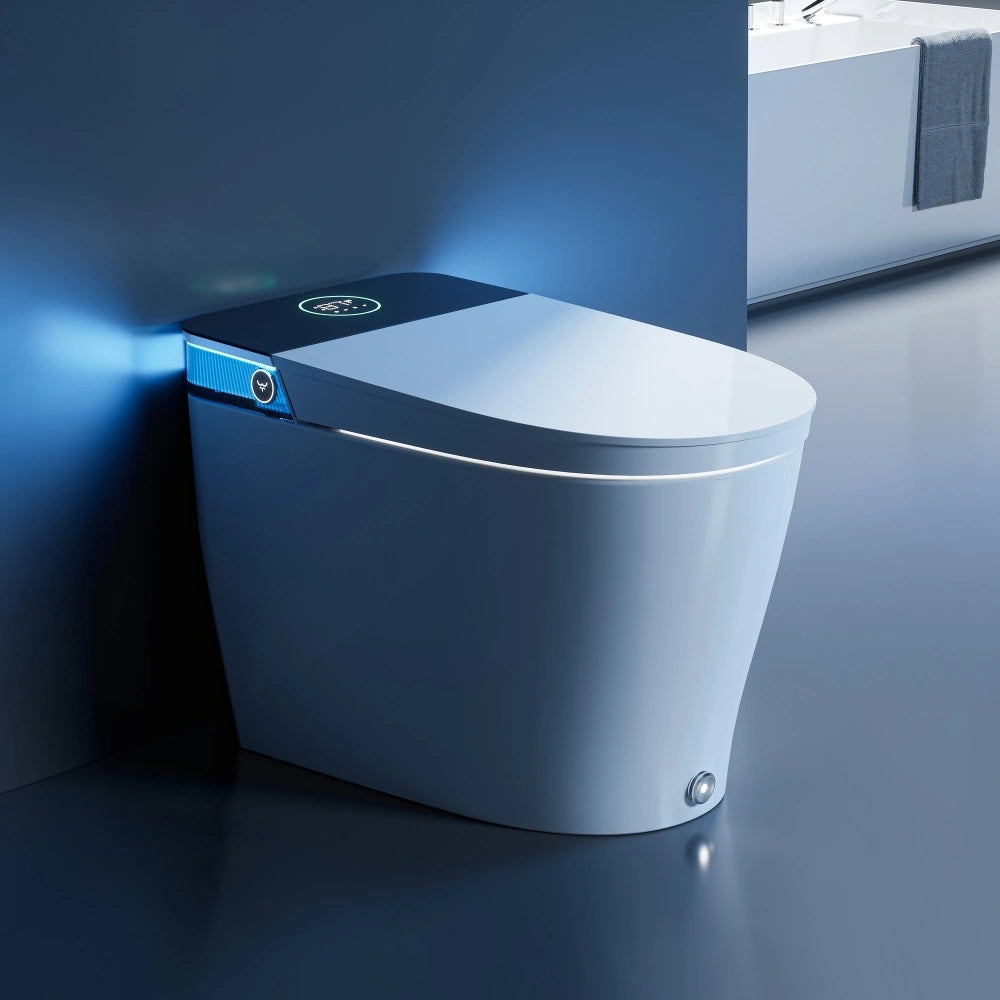
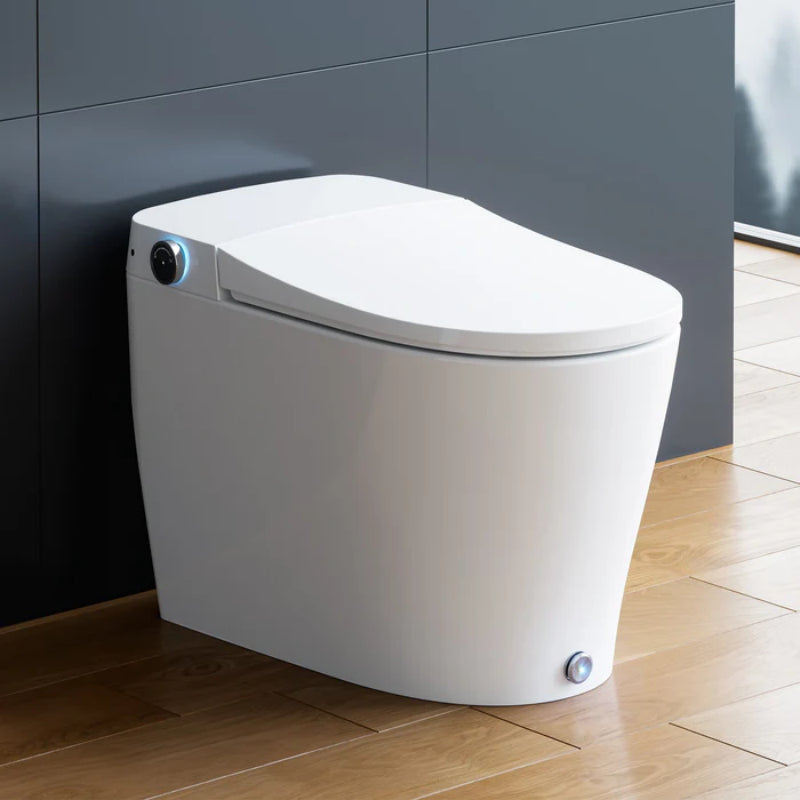
Quiet flush toilet technology often shows up in compact or modern designs, including low noise smart toilet combo units (toilet plus bidet features). Fit and setup matter as much as sound.
Fit checks that prevent installing surprises
Even before you think about sound, confirm the basics. A toilet that “almost fits” becomes a daily annoyance.
Here are the checks that most often trip people up:
| Fit item | Why it matters |
| Rough-in distance | A mismatch can force awkward placement or extra work |
| Tank depth and bowl length | Compact bathrooms may have tight door clearance |
| Seat height | Comfort issue, especially for kids or tall adults |
| Supply valve location | Can interfere with skirted designs or integrated units |
| Service access | Quiet/smart systems may need access later |
If it’s a smart unit, also think about outlet location and whether cords will be visible.
Is a night-friendly bidet flush still disruptive?
A “night-friendly bidet flush” sounds perfect in a shared home: low noise, low light, minimal disruption. But in a small bathroom with hard surfaces, even soft sounds bounce.
Common real-world issues:
• Bidet spray and dryer functions can add time in the bathroom, so the “quiet” benefit feels smaller than expected.
• Auto features can trigger sounds you didn’t plan for (seat movement, fan, pre-rinse), which can be more noticeable at night than a normal flush.
• If the bathroom shares a wall with a bedroom, sound can travel through the wall cavity and around door gaps.
So the question isn’t only “Is the flush quiet?” It’s “Is the whole routine quieter?”
Quick apartment noise-leak checklist
This is not an install guide—just a way to predict whether quiet flush tech will be noticeable in your space:
• Can you see light under the bathroom door? That gap also leaks sound.
• Is there an exhaust fan that’s louder than the flush? If yes, flush noise may not be your main issue.
• Does the toilet sit on a wall shared with a bedroom? If yes, drain noise may dominate.
• Do you hear water hammer or loud supply pipe noise now? Quiet tank tech won’t fix pipe noise.
• Is the bathroom mostly tile and glass? Echo makes “quiet” sound less quiet.
Long-term annoyance risks: maintenance, reliability, and expectation regret
Quiet flush technology can add parts, tighter tolerances, and in smart systems, electronics. The most significant risk is service downtime and parts specificity, which can cause frustration if the system breaks down and requires specialized service.
When “quiet” adds complexity
A simple toilet is easy to live with because many plumbers can service it quickly, and parts are widely available. As you add quiet features—especially in electric smart units—you add:
• More components that can fail (valves, sensors, actuators)
• More reasons you may need the exact right replacement part
• More “access questions” (can someone reach what needs servicing without removing the whole unit?)
If your home has one bathroom, downtime matters. If you’re choosing a more complex quiet flush system, plan for the idea that service could take longer.
Serviceability checks:
• Ensure easy access to valves and sensors
• Confirm availability of specific replacement parts
• verify service can be performed without removing the entire unit
• Check for electronic components that may require specialized tools
Cleaning realities people don’t expect
Even when the toilet looks clean, owners sometimes report it feels less clean if:
• The bowl wash leaves light residue lines
• The rim or internal channels collect mineral buildup
• The design has seams or contours that are harder to wipe
Quiet features don’t cause these issues by themselves, but quiet/low-flow designs can make them more noticeable because you’re relying on less water action to keep the ceramic clean.
If you have hard water, this matters more. Mineral scale can change how water flows, which can change both sound and performance over time.
When it becomes overkill
Some homeowners stop noticing quiet flush benefits after a few weeks—especially if:
• The bathroom is far from bedrooms
• The household isn’t sensitive to noise
• The exhaust fan, HVAC, or street noise is louder than the toilet anyway
If quiet is not solving a real daily pain point (night waking, embarrassment, roommate complaints), you may adapt quickly and feel like you paid for a feature you don’t “feel” anymore.
Before You Choose checklist
• Are you trying to reduce flush start noise, refill noise, or all bathroom noise?
• If the toilet needs extra flushes sometimes, will that bother you more than noise?
• Does your bathroom share a wall with a bedroom, where drain noise may still carry?
• Can you access key parts for service without removing the whole unit?
• Do you have hard water that may affect valves and bowl wash over time?

FAQs
1. Will a quiet flush toilet wake people up at night?
It can still wake light sleepers, especially if the drain lines are near a bedroom wall or the plumbing is older and less insulated. Quiet technology typically works by reducing the sharpest sounds, but it doesn’t eliminate all noise. The flushing action, even with quieter models, might still be noticeable to sensitive ears. The noise level can also depend on the type of toilet and plumbing system in use. So, while quieter, it’s not guaranteed to be silent enough to avoid waking someone.
2. Are “quiet flush” toilets actually silent?
No, “quiet flush” toilets are not completely silent. They are designed to be quieter than traditional toilets, but there will still be some noise. You can expect less of the harsh, clanking sounds that typically accompany a flush, but the evacuation and refill noises are still present, just less pronounced. Bathroom echoes may also contribute to sound. The goal is to make the flushing process more discreet, but complete silence is not realistic.
3. Does quieter flushing mean weaker flushing?
Sometimes it does. Many quieter toilets use less water or rely on a gentler flushing action, which can reduce the noise level. However, the trade-off is that these toilets may not be as effective at clearing solid waste or toilet paper in one go. This can lead to more frequent flushing, especially if the toilet isn’t as powerful as traditional models. It’s important to find a balance between noise reduction and flushing power when considering a quieter model.
4. Do smart quiet toilets cost more to maintain?
They can, yes. Smart quiet toilets typically have more advanced features, including sensors, electronic controls, and additional parts like heated seats or automatic lids. These components often require specialized replacements and may be more expensive to service. Accessing and repairing these systems can also be more complicated, particularly if something malfunctions after the warranty expires. It's important to factor in these potential long-term maintenance costs when choosing a smart toilet.
References


Leave a comment
This site is protected by hCaptcha and the hCaptcha Privacy Policy and Terms of Service apply.