
The better choice between a frosted glass shower door and clear glass depends on your bathroom size, privacy needs, lighting, and daily routine. Frosted glass offers more visual privacy, while clear glass keeps the room brighter and more open. Clear glass is generally better for a small or dark bathroom, a showcase shower, or a household that needs an unobstructed view for supervision.
Neither finish is best in every setting. Frosting can obscure the person inside, water spots, and shower products, but it also interrupts sightlines and may make a compact shower feel more enclosed. Clear glass preserves light and openness, but it offers little privacy and puts every bottle and mineral spot on display.
The most practical choice depends on who uses the bathroom, how much light reaches the shower, how much cleaning and maintenance you are willing to handle, and whether your needs may change.
Who Should Choose a Frosted Glass Shower Door?
Decision Snapshot: Shared Baths Favor Frosted
Use these recommendations as a starting point:
|
Bathroom or household situation |
Better starting choice |
Main reason |
|
Shared family or guest bathroom |
Frosted |
Provides visual privacy |
|
Small, dim, or windowless bathroom |
Clear |
Preserves light and visual depth |
|
Children or adults need supervision |
Clear |
Keeps the user visible |
|
Large, well-lit primary bathroom |
Either |
Privacy and design can decide |
|
Decorative shower tile is a focal point |
Clear |
Keeps finishes visible |
|
Many products remain in the shower |
Frosted |
Softens visual clutter |
|
Privacy and openness are equally important |
Partial frosting |
Screens the body area while admitting light |
|
Hard-water home |
Smooth, easy-care surface |
Texture matters more than opacity |
Frosted glass provides visual screening, not complete isolation. Depending on the finish and lighting, it may still reveal silhouettes, movement, and color—especially when someone stands close to the panel. It also does not provide sound privacy.
Small, Dark Baths Favor Clear
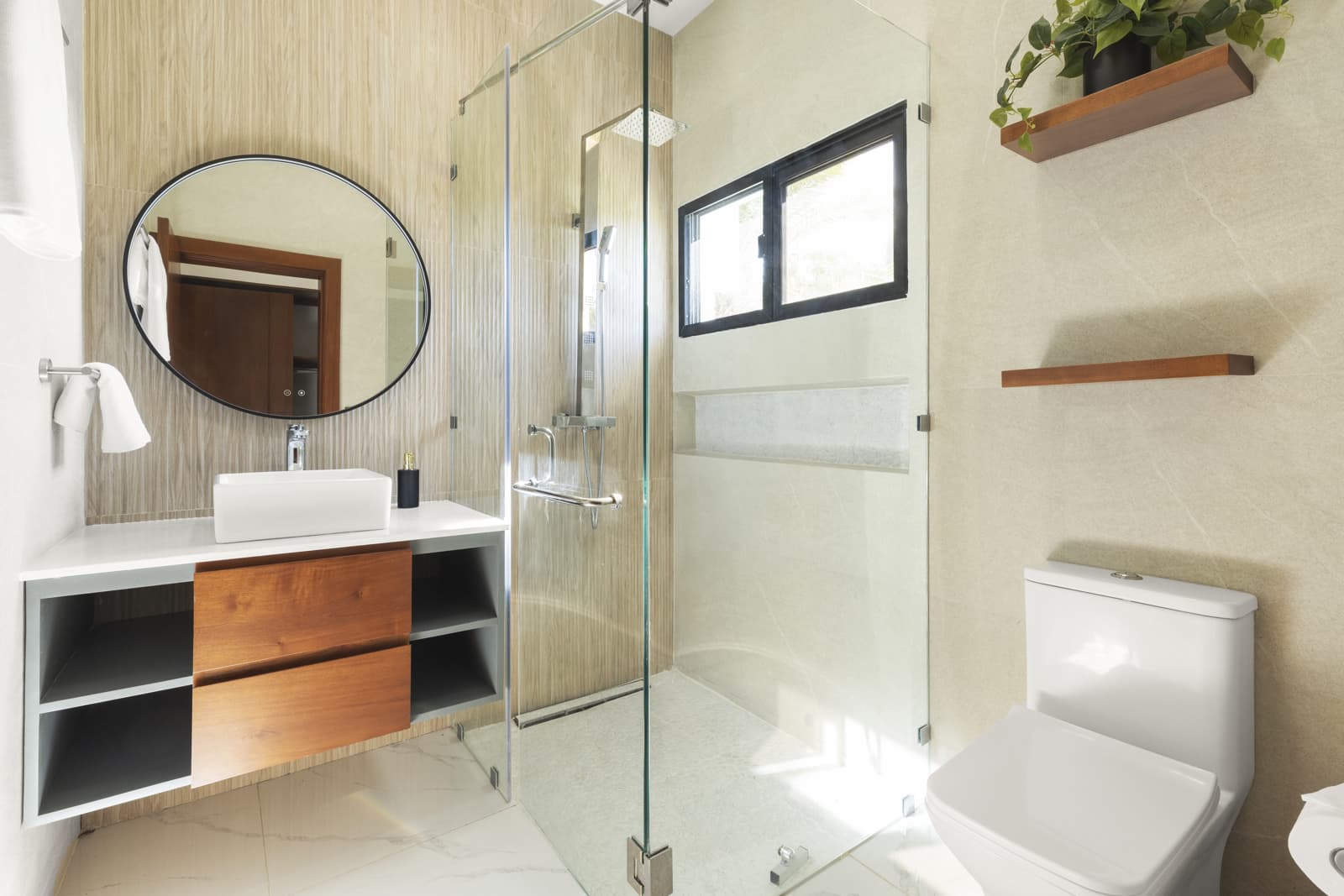
Clear glass lets the eye continue through the enclosure to the shower’s back wall. This uninterrupted sightline can help a narrow bathroom feel more open, while light from outside the enclosure can reach the stall more directly.
Full frosting divides that view. The result may feel soft and private in a bright bathroom but closed-in in a windowless one. Dark tile, steam, and limited shower lighting can intensify the effect.
If a small bathroom still needs privacy, consider lightly frosted glass, a central privacy band, or another partially obscured design instead of a dense finish across the entire panel.

Supervision Needs Favor Clear Glass
Clear glass is the stronger choice when a parent or caregiver needs to observe the shower user. A vague silhouette may not show a person’s position or movement clearly enough for effective supervision.
Consider both current and likely future use. Young children may need observation while learning to bathe independently, while an older adult or a person recovering from an injury may need occasional help.
Glass visibility is only one part of the bathroom layout. Other factors also matter, including entrance width, threshold height, handles, support features, and available space for movement. Accessibility guidance from the U.S. Access Board highlights the importance of clear floor space, maneuvering areas, and usable bathroom features when designing spaces for people with mobility needs. If assisted bathing is likely, consider the complete bathroom arrangement rather than choosing glass only for appearance.
Partial Frosting Balances Privacy and Light
Partial frosting works well when full clear glass feels exposed but full frost feels too heavy. Options include:
- A frosted band across the central body area
- Clear glass above a frosted lower section
- A gradient that becomes clearer near the top
- Lightly patterned or obscure shower glass
- Wet-area-compatible privacy film applied to part of a clear panel
Check the design from every normal viewing position. A band that provides coverage from the bathroom doorway may offer less privacy from the toilet, vanity, or adjoining bedroom.
Partial frosting is also useful when the shower has decorative tile. It can screen the user without hiding the entire enclosure.

Which Trade-Off Matters Most in Real Bathrooms?
Is Privacy Worth Losing Openness?
Privacy has the most practical value when household members use the bathroom at overlapping times. A privacy shower door may allow one person to shower while another uses the sink without either person feeling directly exposed.
In a private en-suite where the door is normally locked, that benefit may go unused. Clear glass can then contribute more by making the room feel connected and spacious.
Ask one direct question: Will another person realistically enter the bathroom while someone is showering? If yes, frosting may improve daily comfort. If no, openness may deserve more weight.
Personal reactions matter too. Some people feel exposed behind clear glass even when alone; others feel confined behind heavily obscured panels. Discuss both concerns before ordering.
Will Frosting Make the Room Darker?
Frosted shower glass diffuses light rather than preserving a clear path through the enclosure. It may admit a soft glow, but the shower can still feel dimmer than it would behind clear glass.
The difference is most noticeable when the main fixture is outside the enclosure or when the shower has dark wall finishes. Before choosing, stand inside the closed shower and check whether the controls, floor, shelves, and threshold are easy to see.
If the stall already feels dim, clear glass is the lower-risk choice. Where privacy is essential, lighter or partial frosting may work better than a dense full-panel finish. Any changes to bathroom lighting should be planned with a qualified professional.
Concealed Clutter vs Visible Cleanliness
Frosting softens the appearance of shampoo bottles, razors, toys, and hanging cloths. It can make a heavily used bathroom look calmer between cleanups and can make water spots or fingerprints less noticeable from across the room.
Clear glass displays the entire shower interior. That rewards tidy storage but also reveals residue early, which can prompt quicker cleaning.
Decide which type of visibility bothers you more. If product clutter makes the whole bathroom feel messy, frosted glass may help. If unseen grime is more concerning than visible streaks, clear glass provides better cleaning feedback.
Showcase Tile vs Visual Calm
Clear glass is the logical choice when tile, stone, fixtures, or a built-in niche is intended to be seen from the doorway. Frosting softens or conceals those details.
That is not necessarily a disadvantage. If the shower wall is visually busy or competes with patterned flooring and cabinetry, frosted glass can help the enclosure recede.
Choose based on the shower’s intended role. Use clear glass when it should be a focal point; consider frosting when privacy or a quieter room matters more than displaying every finish.
When Does Frosted Glass Justify Higher Cost?
Is the Privacy Premium Worth Paying?
Permanent frosting, etching, custom patterns, and partial-frosting layouts may cost more than comparable basic clear glass. The actual difference depends on the panel dimensions, door configuration, hardware, finish, customization, and installation conditions.
The additional expense is easier to justify when privacy solves a daily problem, such as overlapping family schedules. It may be less valuable in a private bathroom where no one enters during a shower.
Compare similar door styles and sizes before comparing prices. A basic framed door and a large frameless enclosure are not equal comparisons. You can review available glass s hower door configurations, then compare the same opening style, panel layout, and hardware level in clear and frosted finishes.
Etching vs Removable Privacy Film
An etched glass shower door has a permanently treated surface. It provides an integrated matte appearance but offers little flexibility if the household later wants clear glass.
Privacy film is applied to clear glass and may be removable or replaceable. It can be useful for testing the height and opacity of a privacy section before committing to permanent frosting.
Film is not automatically suitable for every enclosure. Moisture exposure, panel type, adhesives, cleaning products, and installation quality can affect the result. Confirm that the selected film is intended for the proposed wet-area location and compatible with the glass.
Choose permanent etching when you are confident about the appearance. Choose clear glass with suitable film when future flexibility matters more.
Upgrade Frosting or Improve Shower Lighting
In a dark shared bathroom, spending the available budget on dense frosting may solve privacy while making the shower less pleasant to use. A lighter privacy treatment combined with improved illumination may create a better balance.
Consider privacy and lighting together:
- Dense frosting works more comfortably in a bright enclosure.
- Dark tile increases the need for usable shower light.
- Partial frosting can preserve light near the top of the panel.
- Clear glass is preferable when lighting cannot be improved and visibility is already poor.
Do not assume showroom lighting will reproduce the appearance of a windowless bathroom. Evaluate the actual stall before selecting the glass.
How Do Space and Light Change the Choice?
Is Frosted Worth It in Small Baths?
Frosted glass can work in a small bathroom when the room is bright and privacy is important. It is less convincing when the bathroom is both compact and dim.
Light satin frosting usually feels less imposing than a dense, highly patterned finish. Partial frosting can preserve the ceiling line and back-wall view, reducing the sense that the shower is a separate box.
To test the effect, temporarily hang a pale translucent sheet where the glass will stand. It will not duplicate the finished material, but it can show whether interrupting the sightline makes the room feel uncomfortably divided.
Dark Stalls Favor Clear or Added Lighting
A shower surrounded by dark finishes reflects less light than one with pale surfaces. Adding full frost can further reduce useful visibility inside the enclosure.
Clear glass is the simplest choice when the stall lacks its own adequate illumination. If privacy cannot be compromised, consider light frosting or a body-level privacy band rather than fully obscured glass.
Check for shadows as well as overall brightness. A fixture outside or behind the user may make the bathroom appear bright while leaving the shower floor, controls, or storage area difficult to see.
Sliding vs Pivot in Tight Layouts
Glass opacity does not solve door-clearance problems. A pivot or hinged door needs space to move without striking the toilet, vanity, towel rail, or user. A sliding door stays within its track and can suit a tighter layout.
The trade-off is maintenance. Sliding systems may include overlapping panels and tracks that require additional cleaning. Hinged doors avoid some of those overlaps, but the usable opening and swing path depend on the specific enclosure.
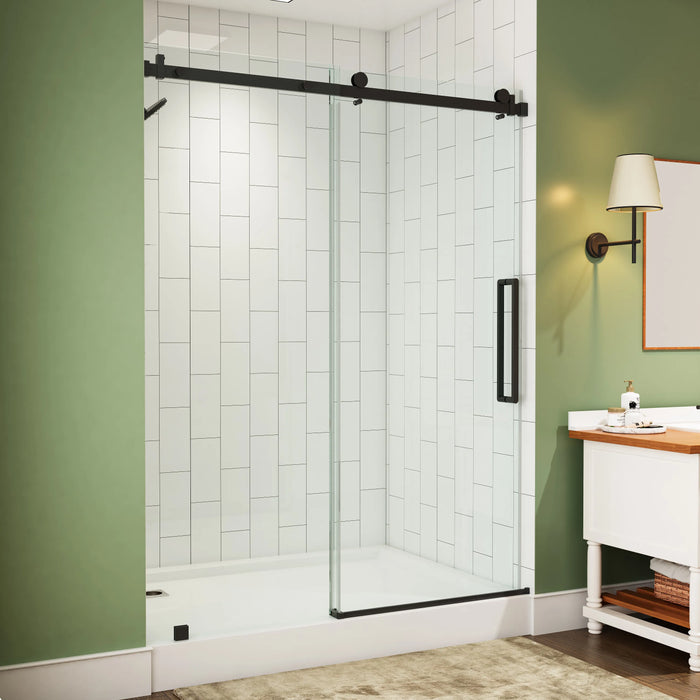
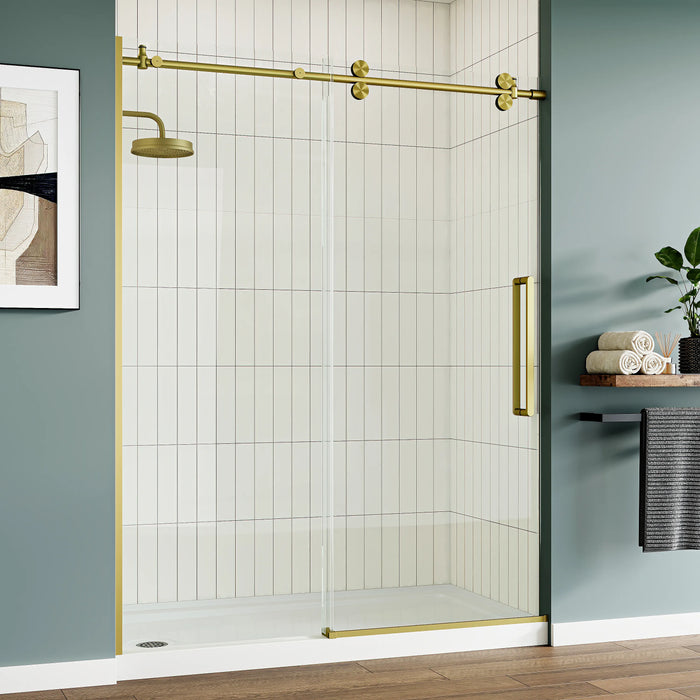
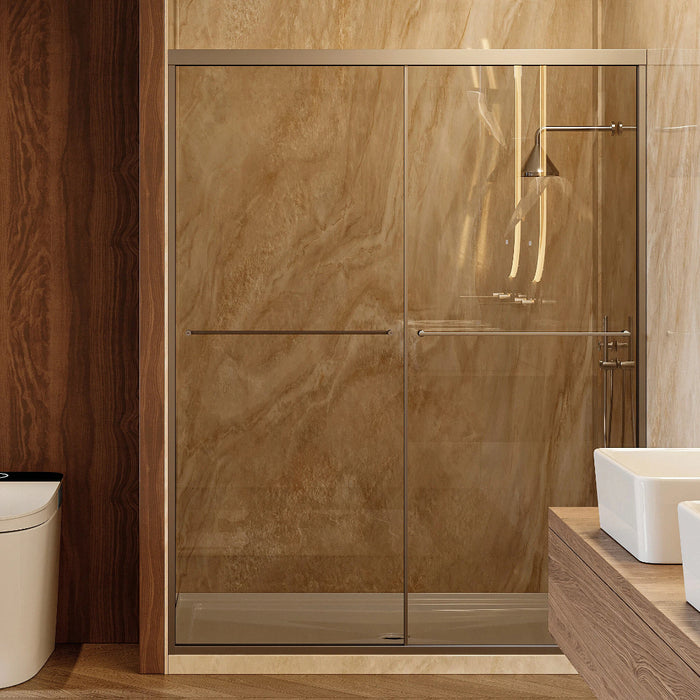
Mark the proposed movement with painter’s tape. Check where a wet door will drip, where the user will stand, and whether nearby fixtures interfere. Review shower door layouts only after measuring the finished opening and surrounding clearances.

Long Sightlines Favor Clear Glass
Some bathrooms feel larger because the entrance has an uninterrupted view to the shower’s back wall. This is common in narrow rooms where the shower spans the far end.
Full frosting stops that sightline and can make the room appear shorter. Clear glass allows the shower tile to remain part of the larger visual space.
Stand at the bathroom entrance and any adjoining doorway. If the shower provides much of the room’s perceived depth, preserve that view unless privacy clearly has greater daily value.
Which Choice Fits Daily Household Use?
Shared Schedules Favor Frosted Privacy
In a shared bathroom, privacy can determine whether two people are comfortable using the room simultaneously. Full frost suits households seeking substantial visual separation, while light frost or a patterned band may be enough for users who simply want to avoid direct exposure.
Remember that bright light inside the shower can make silhouettes more apparent. If privacy is important, view a full-size sample with light behind it rather than relying on a small unlit swatch.
A frosted door screens the shower only. It does not make the toilet or entire bathroom private, so consider the complete room arrangement.
Children and Caregiving Favor Clear Visibility
Clear glass makes it easier to observe a child learning to shower independently or an adult who needs occasional assistance. Frosting may obscure details that a caregiver needs to see.
If some privacy is still desired, a lightly obscured lower area with a clear upper section may provide a compromise. Test visibility from the caregiver’s likely standing or seated position.
Avoid placing an opaque pattern where it would unnecessarily conceal the threshold, support features, or the user’s movement. Future caregiving needs are difficult to predict, so reversible film may be preferable to heavy permanent etching.
Cluttered Showers Favor Frosted Concealment
Frosting can make a working family shower look calmer when it contains several bottles, toys, grooming tools, or cleaning supplies. This can be useful in a bathroom seen from a hallway or bedroom.
However, obscured glass should not replace functional storage. Items left on the floor can still complicate cleaning and movement even when they are hidden. A suitable niche or caddy may reduce clutter enough to allow lighter frosting—or clear glass—without making the shower look disorganized.
Couples’ Comfort Sets the Privacy Level
Couples may have different comfort levels. One person may value the open appearance of clear glass, while the other feels exposed. Because that discomfort is experienced every day, it should be treated as a functional concern rather than dismissed as a design preference.
Partial frosting is often a practical compromise. Mark the proposed clear and frosted sections on a temporary barrier and check the view from the entrance, sink, and toilet. The privacy level should be judged from real sightlines, not only straight in front of the door.
Which Glass Is Easier to Maintain?

Hidden Spots vs Visible Cleaning Cues
Are frosted shower doors hard to clean? Not necessarily, but the finish may hide residue until buildup becomes more noticeable or stubborn.
Frosting conceals light spotting and fingerprints, so the enclosure can look presentable longer between cleanings. Clear glass shows droplets and mineral marks sooner, but that visibility encourages earlier wiping.
The easier finish depends on your definition of low maintenance:
- Frosted glass is more forgiving in day-to-day appearance.
- Clear glass makes dirty areas easier to identify.
- Smooth surfaces are generally easier to wipe than deeply textured ones.
- Door tracks, seals, hinges, and panel overlaps can matter as much as opacity.
Smooth Clear vs Textured Frosting
Not all frosted glass has the same surface. Some finishes are relatively smooth, while etched, sandblasted, or patterned surfaces may have more texture. Residue can be harder to see and may be more difficult to remove from surface variations than from smooth clear glass.
Before buying, ask:
- Which face will be exposed to shower spray?
- Is the frosted surface smooth or textured?
- Does the panel have a protective surface treatment?
- Which cleaning products and tools are permitted?
- Are there special care instructions for film?
Follow the selected door or film maker’s care directions. Abrasive tools or incompatible cleaners may affect the finish, film, hardware, or seals. Cleaning products should also be selected carefully. The U.S. Environmental Protection Agencyadvises consumers to read product labels to choose the right product for the job and follow warnings and directions for safe, correct use.
Does Hard Water Change the Winner?
Hard water can leave mineral deposits on both clear and frosted glass. Frosting may disguise early marks, but it does not prevent deposits. On a textured surface, buildup may be harder to detect and address promptly.
Clear glass exposes spots sooner and is often straightforward to inspect. The disadvantage is that it may look untidy quickly if it is not wiped regularly.
In a home where existing fixtures develop visible mineral residue, prioritize a smooth surface and manageable door configuration. Light, smooth frosting may be easier to maintain than a deeply textured obscure shower glass pattern.
Daily Polishing vs Periodic Deep Scrubbing
Clear glass suits people who prefer frequent, quick wiping and want the enclosure to look polished. Frosted glass suits those who accept less-visible spotting between cleanings but are willing to inspect it closely during a more thorough cleanup.
A practical match looks like this:
- Frequent wiping and visible cleanliness: smooth clear glass
- Less concern about marks between cleanings: lightly frosted glass
- Hard water and irregular cleaning: avoid deep textures
- Removable film: follow the film-specific care instructions
Do not overlook access. A simple enclosure with reachable edges may be easier to maintain than a complicated system, regardless of glass finish.
Which Choice Creates Fewer Long-Term Regrets?
Feeling Enclosed vs Feeling Exposed
The main comfort concerns are usually opposite: heavy frosting may feel closed in, while clear glass may feel too exposed.
Test both reactions before making a permanent decision. Use a translucent temporary barrier for several showers, then compare it with a clear liner. Notice whether loss of openness or lack of privacy causes more discomfort.
This trial also reveals whether frosting makes the stall feel too dark—something that a small showroom sample may not show.
Neutral Glass vs Personalized Patterns
Clear glass works with a wide range of tile, paint, and hardware choices. Light, uniform frosting is also relatively adaptable. Bold geometric patterns, decorative motifs, and custom etching introduce more personality but may be difficult to coordinate after a remodel.
Choose a personalized pattern when it contributes lasting enjoyment and the bathroom is unlikely to change soon. If flexibility matters, use clear glass, light frosting, or removable film and allow the hardware or wall finishes to provide stronger design elements.
Today’s Privacy vs Tomorrow’s Caregiving
Household needs can change while a shower door remains in place. Children grow more independent, guests visit, or a family member may eventually need help bathing.
Frosted glass supports shared use and modesty today. Clear glass provides greater visibility if supervision becomes necessary. Partial frosting or removable film offers a middle path when future needs are uncertain.
The goal is not to predict every circumstance, but to avoid choosing a permanent heavy finish when adaptability is already a concern.
Resale Flexibility Favors Clear or Light Frosting
There is no need to choose solely for a future buyer, but neutral finishes are easier to coordinate with different design preferences. Clear glass preserves visual depth and displays the shower, while light frosting offers privacy without becoming a dominant pattern.
Highly personalized etching is less flexible. If a move or major remodel is likely, a simple finish or removable privacy treatment reduces the chance that the glass will conflict with later changes.
Before You Buy
- Confirm who shares the bathroom and whether schedules overlap.
- Check the shower’s light with the current door or curtain closed.
- View the proposed privacy area from the entrance, vanity, and toilet.
- Decide whether children or adults may need supervision.
- Inspect a large glass sample with light behind it.
- Ask whether the frosted face is smooth or textured.
- Confirm the manufacturer’s cleaning instructions.
- Map the door swing, standing area, and nearby fixtures.
- Prefer partial frosting or removable film if future needs are uncertain.
- Compare clear and frosted options in the same door configuration.
FAQs
How much privacy does frosted shower glass provide?
Frosted shower glass provides more visual privacy than clear glass, but it does not completely block visibility. The level of coverage depends on the glass pattern, lighting conditions, and how close someone is to the panel. A heavier frost finish hides more details, while lighter finishes may still show movement or shadows.
Can clear shower glass be frosted later?
Clear shower glass can often be given a frosted appearance with compatible privacy film. Film is potentially removable, making it useful when privacy needs may change. Professional permanent etching may also be possible, but it is not easily reversed. Confirm compatibility before modifying an installed panel.
Does frosted glass make a bathroom look smaller?
Frosted glass can make some bathrooms feel more enclosed, especially in small or poorly lit spaces. It reduces the visual connection between the shower and the rest of the room, which may limit the sense of space. Lighter frosting or partial privacy designs can keep more openness while still adding coverage.
Is etched glass the same as privacy film?
No, etched glass and privacy film create privacy in different ways. Etching changes the glass surface permanently, while film adds a separate layer that can be replaced or removed. Film may be better for temporary needs, while etched glass suits homeowners who want a long-term finish.
Should the frosted side face inside the shower?
The frosted side should be installed according to the glass manufacturer’s instructions and the specific door design. Some finishes are easier to maintain when the textured side is positioned away from direct water exposure. Check the recommended installation direction before fitting the panel to avoid cleaning or durability issues.
References
https://www.access-board.gov/files/ada/guides/bathrooms.pdf
https://www.epa.gov/sites/default/files/2016-02/documents/household.pdf


Leave a comment
This site is protected by hCaptcha and the hCaptcha Privacy Policy and Terms of Service apply.