



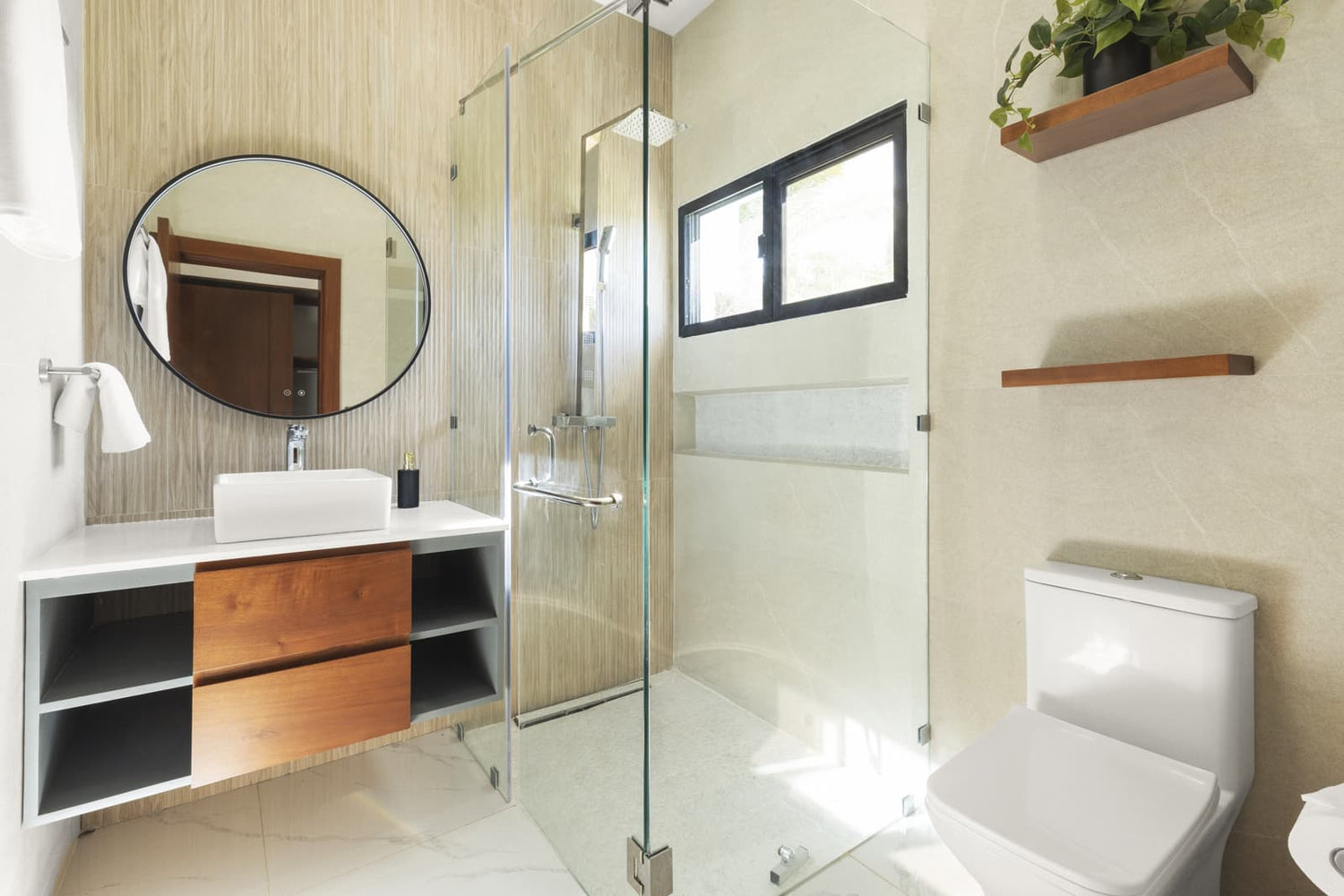
A fluted glass shower door combines vertical texture, natural light flow, and moderate privacy. Also called a reeded glass shower door, ribbed glass shower door, or vertical textured shower glass, it blurs details without fully concealing the person or shower behind it.
That makes fluted glass a strong choice for design-focused primary bathrooms where some modesty is enough. It is less suitable when complete privacy, minimal cleaning effort, or a neutral long-term look matters most.
The right choice depends on more than appearance. Compare privacy under real lighting, cleaning needs, shower placement, door movement, and how much of the tile and interior design you want to show.
Fluted Glass Shower Door or an Alternative?
Choose fluted glass for architectural texture, light, and medium privacy. Choose frosted glass for stronger concealment, rain glass for patterned screening and better spot camouflage, or clear glass for maximum openness.

Decision Snapshot: Match Glass to Priorities
|
Priority |
Better choice |
Main compromise |
|
Texture, light, and moderate privacy |
Fluted |
Silhouettes may remain visible |
|
Stronger privacy |
Frosted |
Hides tile and reduces visual depth |
|
Maximum openness |
Clear |
No privacy; spots and clutter are exposed |
|
Patterned concealment |
Rain |
Can look visually busy |
|
Simplest surface to wipe |
Smooth clear or smooth-sided frosted |
Marks may still be easy to see |
|
Distinctive primary-bath feature |
Fluted |
Specialty glass generally costs more |
|
Quiet, neutral backdrop |
Clear |
Provides no screening |
|
Low-maintenance appearance |
Rain or another obscured pattern |
Hidden residue still requires cleaning |
Before ordering, inspect a large sample with someone standing behind it. Switch on the shower light and view the sample from the bathroom entrance, vanity, and any nearby doorway. A small, unlit sample can make textured glass look more private than it will be after installation.
Choose Fluted for Style and Medium Privacy
Fluted glass works well when the enclosure should contribute to the bathroom’s design. The vertical lines complement large-format tile, restrained stone, terrazzo, wood tones, and simple metal hardware. It can also add interest when the shower’s interior finishes are intentionally quiet.
Its privacy level is best described as moderate. The ribs distort faces, bodies, fixtures, and bottles, but they do not erase broad shapes. A brightly lit person standing close to the glass may produce a recognizable silhouette.
This balance usually suits an adult ensuite or a bathroom where the shower is visible from the vanity but not from a public hallway. It may not satisfy siblings, guests, or unrelated household members who expect complete visual separation.
Choose Frosted or Rain for Stronger Privacy
Frosted glass is the more dependable choice when concealment matters more than displaying the shower interior. It scatters the view across the panel, hiding substantially more detail than fluting. The trade-off is that tile, niches, hardware, and visual depth also become less distinct.
Rain glass uses an irregular flowing pattern rather than straight ribs. Depending on the pattern’s density, it can create stronger visual separation than fluted glass while disguising minor spotting from a distance. Deep or irregular texture can still require targeted cleaning.
Privacy levels vary among products carrying the same label. Compare the actual frosted or rain sample rather than assuming every panel provides equal screening.
Choose Clear for Openness and Timelessness
Clear glass preserves uninterrupted sightlines, makes compact rooms feel less divided, and displays tile or stone without distortion. It also acts as a visually neutral backdrop that can work with later changes to paint, hardware, or accessories.
Its disadvantages are equally direct: clear glass offers essentially no privacy and exposes bottles, fixtures, grout, and mineral marks. It works best in a private bathroom where the shower interior is attractive and reasonably tidy.
If you are considering different layouts as well as finishes, compare HOROW’s glass shower door options by panel arrangement, opening direction, and hardware before choosing the glass appearance.
HOROW Shower Door Models to Compare
Glass appearance is only one part of choosing an enclosure. If you are also comparing door style and hardware finish, these HOROW shower door models provide practical product examples to review alongside your preferred glass appearance.
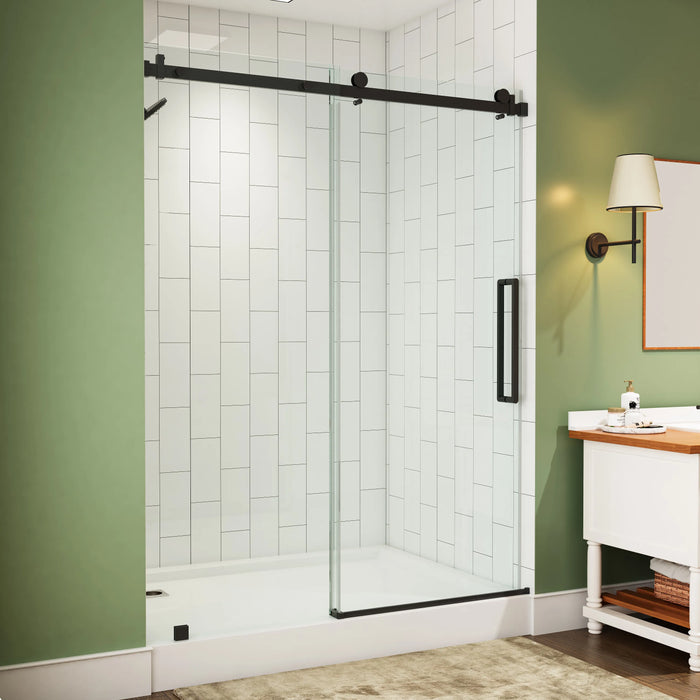
HOROW TE6076-MB
A black sliding shower door option for readers comparing a darker hardware finish with a sliding enclosure. Review the product page to confirm the glass type and installation requirements for your bathroom.
View TE6076-MB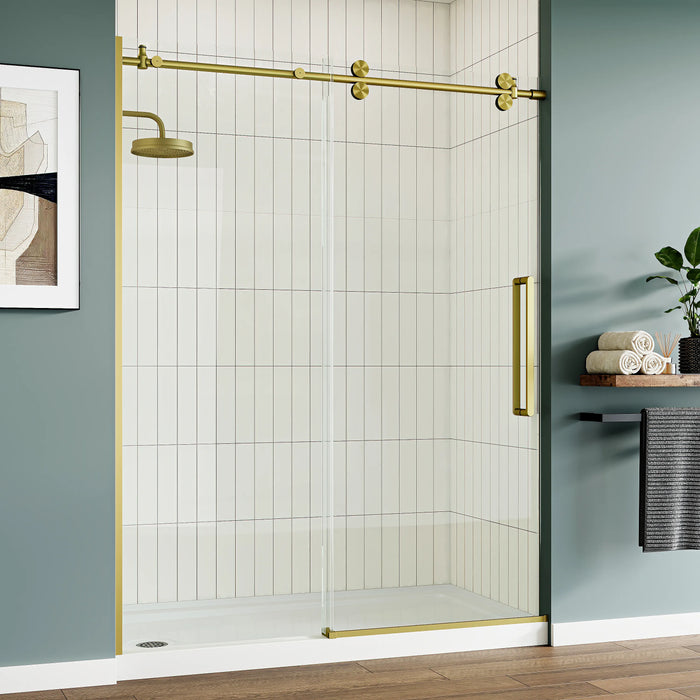
HOROW MI6076-SG
A brushed gold sliding shower door option for readers comparing a warmer hardware finish with the rest of the bathroom. Review the product page to confirm the glass type and installation requirements for your bathroom.
View MI6076-SG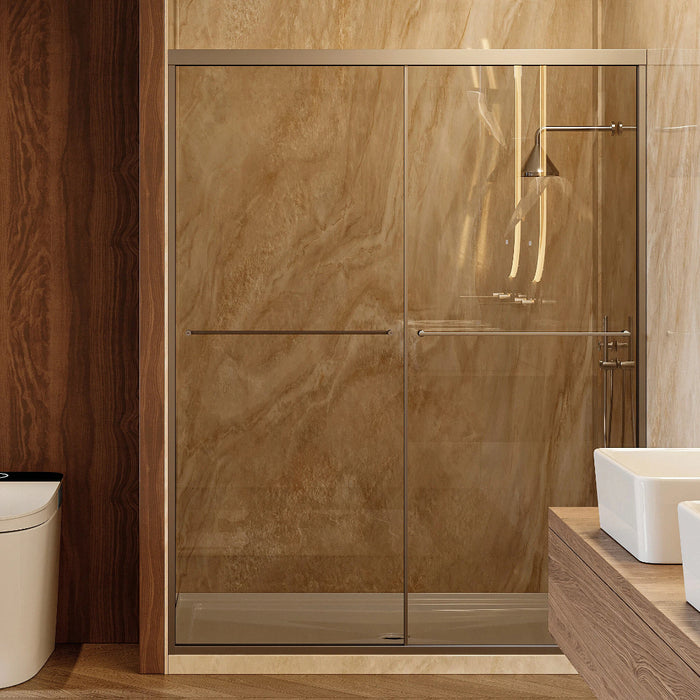
HOROW K2-BN
A brushed nickel shower door option for readers comparing a lighter metal finish with their tile, fixtures, and other bathroom hardware. Review the product page to confirm the glass type and installation requirements for your bathroom.
View K2-BNConfirm the glass type, finished-opening requirements, door movement, and installation details on the individual product page before ordering.
Fluted vs Clear, Frosted, and Rain Glass: Key Differences
The meaningful differences are privacy, visual openness, pattern strength, surface texture, and how much of the shower design remains visible.
Fluted vs Frosted Shower Glass: Privacy Trade-Off
The difference between fluted and frosted shower glass is primarily distortion versus concealment.
Fluted glass bends the view through vertical ribs. Colors, movement, and broad shapes remain visible, while details appear blurred or stretched. Frosted glass scatters the view more evenly, making the person and interior harder to distinguish.
Choose fluted if you want the bathroom and shower to remain visually connected. Choose frosted if losing that connection is preferable to exposing silhouettes. Neither option should be judged while the sample is empty; lighting and the distance between the person and glass can change the result.
Light or Modesty: Where Is Your Line?
Textured glass can transmit plenty of light while still interrupting the view. However, light transmission does not necessarily make an enclosure feel as open as clear glass.
Consider where the bathroom receives daylight. If the shower sits between the room and its only window, a heavily obscured panel may reduce the sense of borrowed light and depth. Fluted glass can preserve more visual connection while softening the direct sightline.
Household use may outweigh that benefit. If people regularly enter while someone is showering, additional privacy may matter more than a fully open appearance. Base the decision on the least private normal condition, including an open door and bright shower lighting.
Vertical Texture or Openness: Which Shows Tile Better?
Clear glass gives tile, stone, niches, and fixtures the leading role. Fluted glass turns the enclosure into a design element and makes the surfaces behind it secondary.
Fine mosaics, veining, matched grout lines, and detailed slab patterns will not appear crisp through vertical textured shower glass. Color and movement remain, but the ribs alter the details. Calm backgrounds generally compete less with the fluting.
Hold the glass sample in front of the intended tile under the room’s actual lighting. Examining the materials separately does not show whether their combined patterns will feel balanced or busy.
Trend Statement or Timeless Backdrop?
Fluted glass is more style-specific than clear glass. Its strong vertical rhythm feels intentional and can make a basic enclosure look more architectural. That visual presence is the reason to choose it—and the reason some homeowners may hesitate.
Clear glass is the quieter long-term option. Frosted glass can also recede visually when the finish is uniform and the surrounding design is simple. Rain glass makes its own decorative statement, although the irregular texture may suit fewer design styles.
Rather than trying to predict when a finish will look dated, consider your own history with reeded and ribbed materials. A pattern you have consistently liked is a more durable choice than one selected only because it appears in recent bathroom images.
When Does Fluted Glass Justify the Extra Cost?
Specialty textured glass generally costs more than standard clear glass. The total difference depends on the enclosure design, panel size, glass specification, hardware, finishing, installation, and whether the opening requires custom fabrication.
Is the Premium Worth Paying?
Fluted glass is easier to justify when it solves two problems at once: it softens an exposed sightline and provides the room’s main decorative feature. In that situation, the enclosure affects both daily comfort and the overall design.
The premium is harder to defend if the shower is already private, the bathroom contains several competing patterns, or the enclosure is rarely seen. Clear or frosted glass may accomplish the practical goal without consuming as much of the design budget.
Compare complete quotes for the same panel arrangement and hardware. A lower glass price may exclude measurement, finishing, surface treatment, delivery, or installation. This can make the initial comparison misleading.
Primary Bath Splurge or Guest Bath Overkill?
A daily-use primary bathroom offers more opportunities to appreciate upgraded glass. Fluting can be worthwhile if it improves the view from the bedroom or vanity and the users are comfortable with moderate privacy.
A guest bathroom creates different priorities. Guests may value stronger concealment, while the household receives less daily enjoyment from a specialty finish. Frosted, rain, or standard clear glass may offer a more practical balance.
Room labels are not decisive, however. A guest bath visible from a main hallway may justify a visually distinctive enclosure, while a hidden primary shower may not. Consider use and visibility together.
Custom Frameless or Standard Budget Glass?
The glass premium can grow when obtaining a preferred fluted pattern requires an otherwise unnecessary custom enclosure. Standard systems may control cost, but only when their dimensions, panel arrangement, entry width, and opening direction fit the finished shower.
Custom fabrication may be appropriate for an unusual opening, an out-of-square space, or a design involving several fixed panels. Ask for separate quotes using clear, fluted, frosted, and rain glass in the same configuration. That isolates the cost of the finish from the cost of changing the door system.
Frameless glass can reduce visual borders around a strong texture, but it still requires hinges, clips, seals, handles, and any necessary supports. Include those components when evaluating the final appearance.
Glass Upgrade or Higher-Priority Improvements?
Decorative glass should not displace spending on dependable water control, ventilation, usable storage, comfortable entry, or a properly planned enclosure. Premium texture cannot compensate for a door that conflicts with the vanity or an opening that is awkward to use.
Set the layout and functional requirements first. Once those needs are covered, fluted glass can be a high-impact use of the remaining design budget.
Which Glass Fits Your Space and Household?

The same panel can feel private in one room and exposed in another. Evaluate it from every common viewing position, including reflections in mirrors.
Is Fluted Glass Worth It in Small Bathrooms?
Fluted glass can suit a small bathroom when the shower is close to the toilet, vanity, or entrance. It softens short sightlines while allowing light and color to move through the room.
Texture does not automatically make a room look larger. Dense fluting combined with dark framing, patterned tile, and prominent hardware can create too many competing lines. In an already busy room, clear glass may provide more visual calm. Frosted glass may offer better privacy but make the shower feel more separate from the rest of the room.
A simple fixed fluted shower screen often appears lighter than a heavily framed enclosure, provided the layout offers adequate splash control. Door configuration and water containment should be resolved before appearance.
Adult Ensuite or Shared Family Bath?
An adult ensuite is usually the easiest setting for fluted glass. Partners may accept blurred outlines, and access to the room is generally controlled by a private door.
A shared family bathroom needs a stricter privacy test. Children’s expectations may change as they get older, and guests may assume an obscured panel hides more than it does. If several people may use the bathroom simultaneously, frosted glass is the more cautious long-term choice.
Rain glass can provide an intermediate alternative when the household wants patterned concealment without the uniform appearance of frosting. Test it under the same lighting conditions as fluted glass.
Private Doorway or Exposed Shower Sightline?
Stand outside the bathroom with the door open and inspect the shower directly and through mirrors. A reflection may reveal an angle that is easy to miss on a plan.
Then test backlighting. A bright window or shower light behind the user can strengthen the silhouette seen through fluted glass. The same panel may appear more private when the light falls from the viewer’s side.
If the shower is visible from a hallway, bedroom entrance, or another frequently occupied area, choose for the most exposed view. Frosted glass, a partial wall, or a different enclosure position may provide more dependable separation.
Clear Sightlines or More Visual Separation?
Some users prefer clear glass because it makes the shower boundaries, fixtures, and other occupants easier to see. Others feel more comfortable with a visually separate shower zone.
These preferences matter in a shared household. Inspect samples together, especially if someone finds transparent surfaces or textured visual distortion difficult to interpret. Door contrast, handle position, entry clearance, and the ability to clean the glass comfortably may matter as much as the finish itself.
Individual needs vary, so discuss any specific access or visibility concerns with the supplier and installer before finalizing the enclosure.
When Do Door Style and Installation Decide?

Glass finish is only one part of the purchase. Available floor space, entry width, wall conditions, panel support, and water containment may determine the enclosure type before texture is considered.
Hinged Door or Space-Saving Slider?
A hinged fluted door offers a simple, uninterrupted panel but needs enough room to swing without striking the vanity, toilet, towel bar, or bathroom door. Mark the swing path on the floor and test how people will approach the handle.
A sliding door avoids an outward swing and can work in compact alcoves or over tubs. It introduces overlapping panels, tracks, guides, seals, and additional edges. Two overlapping fluted panels may also create a denser visual pattern than a single door.
Compare shower door configurations based on the actual opening and available movement space before selecting a glass texture.
Bifold Access or Frameless Simplicity?
A bifold door can provide access where a full swing or conventional slider is impractical. Its extra joints and hardware create a more mechanical appearance, which may compete with strong fluting.
A frameless configuration minimizes perimeter borders and can make vertical ribs look cleaner. Frameless does not mean hardware-free, however. Consider how the hinges, handle, seals, clips, and supports align with the pattern.
Choose the door movement first, then evaluate whether fluted, clear, frosted, or rain glass works within that structure.
Standard Panel or Costly Custom Fit?
Measurements should reflect the completed opening, including finished walls, tile, and curb. Because site conditions and enclosure requirements vary, have the responsible supplier or installer confirm the final dimensions before fabrication or ordering.
Custom work may expand the choice of patterns, panel arrangements, and hardware, but it also makes late changes more difficult. Confirm the door direction, handle position, fixed-panel locations, and texture orientation before approving the order.
Texture Choice or Tempered-Glass Safety?
Do not select an enclosure by pattern alone. Ask the supplier to document that the glass and hardware are intended for the proposed shower application and that the installation method fits the opening.
Shower enclosures are also subject to safety glazing requirements because bathroom glass is located in a high-use area where accidental impact can occur. The U.S. Consumer Product Safety Commission (CPSC) states that tempered glass is designed to rupture into small, fragmented pieces rather than larger shards when shattered. CPSC also notes that a mandatory federal safety standard applies to glass used in shower and bathtub enclosures.
Always confirm that the selected enclosure uses safety glazing that meets applicable requirements for your location.
Also confirm which face carries the texture. Some products have one smooth face and one ribbed face, while others differ. Orientation can affect appearance, water exposure, and cleaning. Follow the specific supplier’s installation and care instructions rather than assuming all reeded glass is constructed alike.
Which Glass Matches Your Cleaning Habits?

Fluted glass is manageable for many households, but maintenance depends on groove depth, texture orientation, water quality, ventilation, and how often the enclosure is wiped.
Which Glass Is Easiest to Clean?
Smooth clear glass is generally the simplest to inspect and wipe because a cloth or squeegee can contact the entire surface. Its drawback is visibility: mineral spots, soap film, and streaks are immediately apparent.
Frosted glass may hide some spotting, although oils and uneven wiping can still show on certain finishes. Rain and fluted glass disguise light marks from a distance, but deep texture can collect residue in low areas.
Inspect the actual product and ask:
-
Is the shower-facing surface smooth or textured?
-
Can a squeegee contact most of the panel?
-
Are the grooves shallow enough to wipe with a cloth?
-
Will overlapping doors create hard-to-reach areas?
-
Which cleaning products and tools are permitted?
Hard Water: Fluted, Rain, or Clear?
Hard water can leave mineral residue on any shower glass. Patterned surfaces may hide early spotting, but they do not prevent buildup.
Rain glass often disguises random marks because the irregular pattern breaks up their appearance. Fluted glass may develop visible vertical streaks as water follows the ribs. Clear glass exposes spots quickly but also makes it obvious when the surface needs attention.
If water spotting is a known concern, wet the sample with tap water and allow it to dry. Then clean it with the tools you expect to use at home. This reveals more about the likely upkeep than a spotless showroom panel.
Daily Squeegee or Spot-Hiding Pattern?
Clear and smooth-sided fluted glass better suit households willing to remove water regularly. A squeegee may only touch the raised areas of deeply ribbed glass, leaving the grooves for a cloth or soft tool.
If regular wiping is unlikely, an obscured or rain pattern may look more forgiving between cleanings. It will still accumulate residue, so “hides spots” should not be mistaken for “stays clean.”
Choose according to established habits rather than plans to adopt a demanding routine after remodeling.
Protective Coating or More Frequent Scrubbing?
Some shower glass may be offered with a protective surface treatment. Availability, compatible cleaners, and care requirements depend on the product.
Glass maintenance is also affected by the bathroom environment. Proper ventilation helps reduce excess moisture, which can contribute to damp conditions and longer drying times after showers. The U.S. Environmental Protection Agency (EPA) recommends controlling indoor moisture through ventilation and moisture management practices.
Ask whether a treatment is included or optional and obtain the care instructions before choosing cleaning products. A coating may reduce the effort required to remove residue, but it does not eliminate routine water removal and cleaning.
How to Choose a Fluted Glass Shower Door That Fits Long Term
Regret usually comes from a mismatch between the finish and the household’s privacy, cleaning, budget, or design priorities.
Silhouettes: Acceptable Blur or Privacy Failure?
The most common mistake is assuming distortion equals privacy. Fluted glass can blur details while leaving a clear body outline, particularly when the user is close to the panel or strongly backlit.
Test realistic distances and lighting. If anyone feels uncomfortable with the result, choose a more obscured finish. Privacy should not depend on remembering to dim a light or close an additional door.
Ridges: Designer Detail or Cleaning Burden?
Shallow ribs on a smooth-backed panel may be straightforward to maintain. Deep channels beside frames, seals, or overlapping doors can require more detailed cleaning.
Touch and wet the sample before buying. Photographs cannot show groove depth, surface feel, wiping resistance, or where residue may collect.
Trend Confidence or Future-Dating Anxiety?
Choose fluted glass when its visual presence is an advantage you expect to enjoy. If you prefer permanent fixtures to remain neutral or already worry that the pattern is too trend-driven, clear glass is the safer backdrop.
Texture can instead be added through lighting, paint, towels, or accessories that are easier to change. Frosted glass remains the privacy-first alternative, while rain glass provides a more decorative obscured surface.
Low-Use Room or Overinvestment Regret?
In a daily-use primary bath, the enjoyment and sightline improvement provided by fluted glass may justify the added expense. In a rarely used room, standard glass may leave more budget for storage, lighting, ventilation, or better hardware.
Ask what specific problem the texture solves. If the answer is only that it looks interesting, compare that benefit with upgrades that affect everyday function.
Before You Buy
-
View the shower from every doorway, mirror, and nearby room.
-
Test a large glass sample with someone standing behind it.
-
Check privacy with the shower light on and under backlighting.
-
Decide whether visible silhouettes are acceptable.
-
Confirm the door movement, entry space, and panel arrangement.
-
Have final opening measurements confirmed by the responsible supplier or installer.
-
Ask which face is textured and how it should be cleaned.
-
Compare complete quotes using the same door and hardware layout.
-
Obtain product-specific installation and care instructions.
Frequently Asked Questions
Does fluted shower glass provide privacy?
Fluted shower glass offers some privacy by softening the view without completely blocking it. It can hide smaller details, but outlines may still be visible when someone stands close to the glass or when strong light comes from behind. If the bathroom is shared or frequent privacy is needed, a more obscured option like frosted glass may be a better fit.
Is fluted glass difficult to clean?
Fluted glass is not necessarily difficult to clean, but the texture can make some areas harder to reach. Shallow ribs and a smooth shower-facing surface are usually easier to maintain than deeper grooves or textured surfaces exposed to water. Homes with hard water may need more regular care to prevent buildup.
What is the difference between fluted and frosted shower glass?
Fluted and frosted shower glass create privacy in different ways. Fluted glass uses vertical texture to blur the view while keeping some connection with the shower area, while frosted glass creates a softer, more blocked view. Choose fluted for a decorative effect and frosted when privacy is the main concern.
Is fluted glass good for a small bathroom?
Fluted glass can work well in a small bathroom when you want light flow with some visual separation. However, the vertical pattern may feel too busy if the room already has strong tile patterns or bold finishes. Clear glass may make a compact space feel larger, while frosted glass can create a more private feel.
Are reeded, ribbed, and fluted glass the same?
Reeded, ribbed, and fluted glass usually describe similar types of vertically textured glass, but they are not always identical. Differences in groove size, depth, and surface design can change the level of privacy and cleaning effort. Checking the actual glass sample is the best way to understand how each option will look in your bathroom.
References
https://www.cpsc.gov/s3fs-public/1801-Tempered-Glass-Safety-Alert.pdf
https://www.epa.gov/mold/what-are-main-ways-control-moisture-your-home


Leave a comment
This site is protected by hCaptcha and the hCaptcha Privacy Policy and Terms of Service apply.