



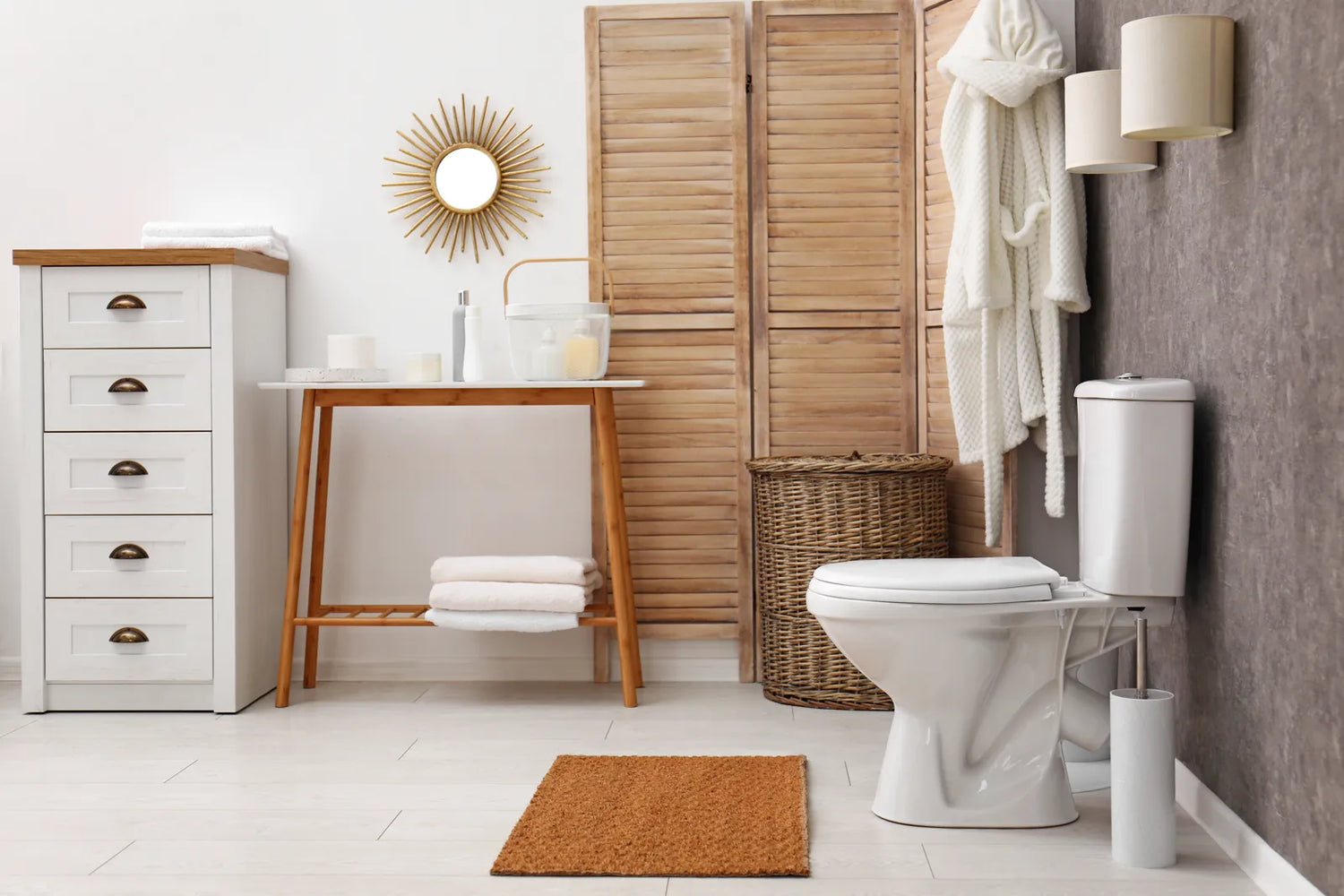
Water conservation has gained widespread attention, making high-efficiency dual flush toilets a common replacement for traditional models. Equipped with dependable siphon jet flushing performance, these fixtures deliver solid water-saving results.
This article explores the practical benefits, real-world performance and essential purchasing guidance of dual flush toilets.
Quick Answer
A dual flush toilet that uses two buttons and owns complete dual-flush mechanism is worth using when your household will actually choose proper flush mode, use half flush for liquid type of waste most of the time and you do not mind occasional adjustment or maintenance. It is often not worth it in light-use homes, guest-heavy bathrooms, or homes where simple, reliable operation matters more than water savings.
Decision Snapshot
Knowing its ideal user groups and unsuitable scenarios helps you quickly tell if this water-saving toilet fits your household needs.
Best for water-conscious households
This makes sense if your home has steady daily use, you care about water conservation, and people in the house will reliably choose the right flush. The main benefits of dual flush toilets for water conservation show up when the lower-volume flush gets used often for liquid waste.
It is usually a better fit in busy homes where small savings add up over time. If your water and sewer rates are high, the payoff is easier to notice.
Skip if reliability matters most
If your top priority is simple operation with fewer moving parts, this feature may not feel worth it. Many owners like the idea of lower water use, but later get annoyed by sticking buttons, flush adjustments, or inconsistent bowl clearing.
This is often unnecessary if you want something that works the same way every time without thought.
Skip if users ignore buttons
A dual flush toilet only saves water when people actually use the lower flush for liquid waste and the full flush for solid waste. If everyone just presses whatever button is closest, or guests get confused, the expected savings shrink fast.
Do savings happen in real use?
Many homeowners wonder if the stated water savings can truly be achieved in daily life. Let’s take a closer look at actual usage effects and key influencing factors.

Liquid waste brings most savings
On paper, how much gallons of water each year a dual flush toilet saves can sound impressive. A common water-efficient setup uses about standard 1.28 gallons per flush or 1.6 gallons high-volume flush, matching different amounts of water for different waste types, and less volume of water for partial flush. That can cut water use meaningfully over a year.
But the real savings come from one thing: repeated low-volume flushes for liquid waste.
That means the practical value depends less on the toilet itself and more on household habits. In a home where the toilet sees frequent daily use, especially by family members who understand the two-button system, the savings can be real. This is where how dual flush toilets reduce water bills becomes noticeable.
Habit mistakes reduce savings fast
The gap between advertised savings and real savings is often human behavior. People are used to one handle and one result. Dual flush toilets feature either two buttons or a single handle for users to select flushing modes.
That sounds minor, but it creates friction. In some designs, the default physical action or the larger button tends to trigger the full flush. Some dual-flush designs set the full flush as the instinctive default action, leading most users to activate higher-volume flushes out of daily habit instead of making a deliberate selection for water-saving half flushes. That means people may accidentally use more water than planned simply because old habits take over.
This usually becomes useful when:
-
the same few people use the bathroom daily
-
they understand which button does what
-
they care enough to use it correctly
In many homes, this ends up being ignored if:
-
children press randomly
-
guests do not know the system
-
users are in a hurry
-
nobody wants to think about flushing
Are savings worth it for everyone?
Not always. Whether a dual flush toilet is worth it depends on usage and local water costs.
If your bathroom gets heavy daily use, even modest per-flush savings can add up. If your home has low water rates or the bathroom is used lightly, the financial payoff may be slow. You may still value the environmental side, but the bill savings may not feel dramatic.
That is why dual flush toilet vs single flush toilet water savings should not be viewed only as a spec-sheet number. Real value depends on actual behavior, repeat flushes, and local utility rates.
What trade-offs surprise owners?
Apart from water-saving merits, dual flush toilets also come with unforeseen downsides many users encounter after installation.
Half flush may need repeats
One of the most common regrets is that the reduced flush does not always clear the bowl as expected. Owners may assume the low flush works like a smaller version of a normal flush. In practice, it can be less forgiving.
Light flushes often leave residue inside the bowl. You will need extra cleaning and face higher clog chances. Repeated flushing cuts down water savings noticeably.
This does not happen in every home, but it happens often enough that it should be part of the decision.
Solid waste performance varies
A common question is about dual flush toilet performance for solid waste removal. The answer depends heavily on the model design, water setting, and whether the toilet stays properly adjusted.
The full flush is meant for solid waste, but not every dual flush toilet handles that equally well over time. If tank settings drift, mineral buildup develops, or internal parts wear, flush strength can become less consistent.
This is one reason the advantages and disadvantages of dual flush toilets feel more balanced in real life than in marketing. The advantage is lower water use. The disadvantage is that performance may feel more sensitive to setup and maintenance.

Two buttons can confuse guests
This sounds like a small issue until you live with it. Two buttons are easy once you know them, but they are not always obvious to visitors, older family members, or children.
In a guest bath, this can become annoying daily if people ask how it works, use the wrong flush, or hold the button awkwardly. Some households never mind this. Others get tired of explaining it.
A dual flush system tends to work best where users are consistent and familiar.
What should you check first?
Keep these key practical factors in mind before purchasing to make a wise buying decision.
Water rates shape payoff
Before comparing water efficiency of dual flush toilets, consider whether water savings will noticeably lower your utility bills.
If your local water and sewer rates are high, savings matter more. If rates are low, the environmental benefit may still be real, but the household budget impact could be modest.
This is especially important in a low-use bathroom. A rarely used powder room may never save enough to offset the added complexity in a meaningful way.
Rebates improve long-term value
Homeowners can boost overall value via local rebate programs and ongoing water savings. Available incentives cut initial purchase costs and shorten the time it takes to recoup expenses.
These benefits stand out most for frequently used main bathrooms, while limited-use restrooms see far less financial gain.
Prioritize WaterSense-labeled models when water efficiency is your top priority. These products meet rigorous water usage and performance benchmarks set by the EPA[1]. Certification reflects compliant low-water design, though it cannot eliminate all real-world usage issues. It is also wise to evaluate local water quality and potential mineral scale buildup, as dual flush internal parts still require regular upkeep over years of use.
What if usage is inconsistent?
If your home has mixed habits, occasional guests, teenagers, or renters, a dual flush toilet may not deliver the expected benefit. Inconsistent use creates inconsistent savings.
That is the heart of what to consider before buying a dual flush toilet: not just technical specs, but who will use it and how.
If the answer is “many different people, all in a hurry,” expect less benefit than the packaging suggests.
What problems show up later?
Over long-term use, dual flush toilets tend to reveal various hidden maintenance issues worth knowing.
Buttons and valves can stick
The most repeated complaint is about the mechanism itself. Common problems with dual flush toilet mechanisms include sticky buttons, incomplete flush cycles, worn seals, and valves that do not drop or reset cleanly.
This can be annoying when:
-
one button feels harder to press
-
the flush does not complete unless pressed just right
-
the tank keeps running
-
the system needs another push to finish
These are not rare one-time issues. Over time, more moving parts can mean more chances for something to get fussy.

Adjustments are rarely one-time
Most homeowners do not anticipate adjustments after installation.Dual flush toilets may need tuning for water level and refill speed.Users should test flushing performance to ensure proper function.
If the half flush is weak, the bowl may not clear well. If refill levels are off, the next flush may be less effective. Some systems need tuning to work well, and that tuning may not stay perfect forever.
This is one of the biggest expectation gaps. People think they are buying a water-saving toilet, but in practice they may also be buying a toilet that asks for occasional tinkering.
Hard water raises maintenance
Hard water can make dual flush problems worse. Mineral buildup can affect valves, seals, button movement, and siphon flow. That can lead to weak flushes, sticking parts, extra cleaning, or earlier wear.
If your home already deals with scale buildup on plumbing fixtures, you should assume more maintenance risk here too.
This usually becomes less appealing in homes where water quality already causes faucet, shower, or appliance issues.
When is dual flush unnecessary?
There are certain scenarios where choosing a dual flush toilet brings little practical value at all.
Light use limits payback
If the toilet is used only a few times a day, the water savings may be too small to feel meaningful. That is especially true when comparing a modern efficient toilet that already uses less water.
A guest bath, basement bath, or vacation home often falls into this category. The feature may still work fine, but the payoff may be too small to notice.

Simplicity may matter more
Some homeowners simply want fewer decisions and fewer parts. That is a fair reason to skip dual flush.
If your goal is low hassle, the extra choice at every flush may feel like a daily inconvenience rather than a benefit. The same is true if anyone in the home has mobility, vision, or dexterity issues that make small buttons less convenient.
Will this become annoying daily?
This is the right final question. Not “is it efficient?” but “will this annoy me every day?”
If you already know your household does not read labels, does not use features correctly, or gets frustrated by finicky fixtures, then the real answer may be no.
The environmental benefits of dual flush toilets are real. But so is the chance that the feature becomes one more thing that sounded smart and ended up mildly irritating.
A practical way to think about 1.28 vs 1.6 gallons per flush dual flush toilet comparison is this: the exact numbers matter less than whether your household will use the lower flush consistently and whether the toilet performs well without repeat flushing. If it does not, the theoretical savings can disappear quickly.
Before You Choose
-
Check who will use this toilet most and whether they will actually choose the right flush.
-
Look at your water and sewer rates to see if savings will matter on your bill.
-
Be honest about maintenance tolerance if buttons, valves, or settings need attention later.
-
Consider water quality, especially if hard water already causes buildup in your home.
-
Think about bathroom location; high-use primary baths benefit more than occasional-use guest baths.
-
Confirm rebate eligibility and WaterSense certification if savings are the main goal.
Common questions
Do dual flush toilets really save money?
Yes, dual flush toilets can save money, but only when the low flush is used regularly. Frequent improper or casual flushing greatly reduces water cost savings. Limited bathroom usage also leads to minimal long-term monetary benefits.
Do dual flush toilets have more problems?
They may come with more potential issues than single flush designs. Extra buttons, seals and valves raise the chance of minor faults and leaks. This leads to more frequent maintenance needs, though problems vary by model.
Are dual flush toilets worth it for homeowners?
They are worth it for homes with frequent use, high water rates, and users who will choose the correct flush. It delivers steady water cost savings under proper daily operation. Those preferring simple, low-maintenance fixtures may find it less ideal.
Is a dual flush toilet good for a guest bathroom?
Dual flush toilets are not an ideal fit for guest bathrooms. Guests often fail to distinguish the two buttons and use them improperly. Incorrect usage greatly weakens its water-saving performance.
References


Leave a comment
This site is protected by hCaptcha and the hCaptcha Privacy Policy and Terms of Service apply.