
If you’re here because your bathtub faucet is dripping, the finish is peeling, or the diverter stopped sending water to the shower, you probably want one thing first: a real price range you can budget for.
In 2025, the cost to replace bathtub faucet projects usually lands between $300 and $750 for materials + labor. Most standard jobs—where a plumber swaps the visible trim and spout and everything matches behind the wall—cluster around $350–$600. On the high end, costs can reach $866–$1,271+ when you need wall opening, valve changes, pipe repairs, or finish restoration.
This guide gives you a fast answer, then breaks down where the money goes, what makes the replacement cost rise, and how to avoid surprise add-ons. I’ll also walk through DIY vs. hiring a pro, plus the common questions people ask right before they book a local plumber.
Bathtub Faucet Replacement Cost: 2025 Averages
If you want a quick number to budget with, this section shows the typical 2025 cost ranges most homeowners pay to replace a bathtub faucet, including labor and materials. Use it as a fast reference before diving into the details below.
Quick look at typical 2025 totals
Most homeowners replacing a standard tub/shower setup can expect these ranges, though costs an average homeowner may pay will differ, as prices vary based on access, plumbing condition, and fixture compatibility.
-
Most common total: $350–$600 (standard tub/shower trim replacement)
-
Average project range: $300–$750 (materials + labor)
-
High-end/outliers: $866–$1,271+ (valve replacement, wall work, corrosion, repiping, complex installs)
So, how much does it cost to have a bathtub faucet replaced? In 2025, the average cost for most homeowners falls around $450, which reflects what it costs on average for a standard replacement with compatible parts and reasonable access. For a typical home with decent access and compatible parts, plan on about $450 as a practical “middle” number. You may pay less if it’s just a simple tub spout swap. You may pay a lot more if the valve is old, stuck, or not compatible with the new trim.
Quick Cost Breakdown
This table shows where the money usually goes and what factors move the price up or down, from the faucet itself to labor, supplies, and possible wall or valve work.
| Component | Low | Typical | High | What triggers it |
| Faucet/trim | $15 | $100–$400 | $1,000+ | Basic spout vs. full trim kit vs. freestanding filler |
| Labor | $150 | $200–$400 | $600–$750+ | Time, access, seized fittings, valve work |
| Supplies | $30 | $50–$120 | $200 | Adapters, connectors, sealants, caulk, fasteners |
| Repairs / wall work | $0 | $0–$250 | $800+ | Tile/plaster repair, water damage, opening/closing walls |
| Permits | $0 | $0–$75 | $200+ | Some areas require permits for valve changes/repiping |
These numbers are meant to help you budget. Your final price depends on how your existing fixture is built, how easy it is to reach, and the complexity of the job once old parts are removed.
How Much Does It Cost to Replace a Bathtub Faucet?
The cleanest way to answer is to separate the three most common scopes:
If you’re doing a standard replacement (spout + handles/trim) and the hidden parts match, many homeowners pay $350–$600 total—especially when replacing a bathtub faucet without touching the valve behind the wall.
If you need a full valve replacement behind the wall, it often moves into $500–$1,200+, because labor increases and there may be wall repair.
If you’re installing a freestanding tub filler, material and labor are higher. These fixtures are typically paired with larger or more luxurious bathtubs, which often require careful planning for plumbing access and floor support., and totals often run $800–$2,000+ depending on floor access and whether plumbing needs to be moved.
When Your Cost Is Closer to $300 vs. $1,200+
A low quote is more likely when the plumbing is easy to reach and the setup follows a typical layout. In an average bathtub, the size and type of the tub and faucet configuration often allow for quicker replacement without structural changes. For example, a standard bathtub with a removable access panel on the other side of the wall is a best-case setup.
A high quote is more likely when the work turns into a small repair project. If the plumber has to open tile, deal with rusted threads, change pipe fittings, or replace the shower valve, the job expands fast.
From the “Bathtub Faucet Replacement Cost: 2025 Averages” section, move to bathtub faucet replacement for the full steps to identify the likely cause, the compatible part, and the safe next step.
Cost to Replace a Bathtub Faucet: Full 2025 Breakdown
The biggest mistake homeowners make is thinking they’re only paying for the shiny new parts. In reality, the bathroom faucets and trim you choose play a major role in durability, compatibility, and long-term maintenance costs. In reality, much of the cost reflects the time to replace old components carefully without damaging pipes or finishes. In real life, a lot of the cost to replace tub faucet comes from the time it takes to remove old parts without breaking anything, adapt new parts to old plumbing, seal it correctly, and test it so it doesn’t leak inside a wall.

Faucet Materials Pricing by Quality Tier
Materials vary widely, and it’s not only about looks. Internal parts matter because that’s what controls dripping, temperature swings, and how long it lasts.
Here are practical 2025 price bands for a new faucet or trim:
-
Basic pieces: $15–$50
-
Standard tub/shower set: $100–$150
-
Modern/designer trim: $100–$400
-
Freestanding tub filler: $250–$1,000+
A quick real-world example: I once helped a family member replace an old faucet that “looked simple.” The parts were under $150. The real challenge was removing a corroded tub spout without twisting the pipe in the wall. We saved money doing it ourselves, but it took patience and a second trip for the right adapter.
Labor Costs: Plumber Rates and Time on the Job
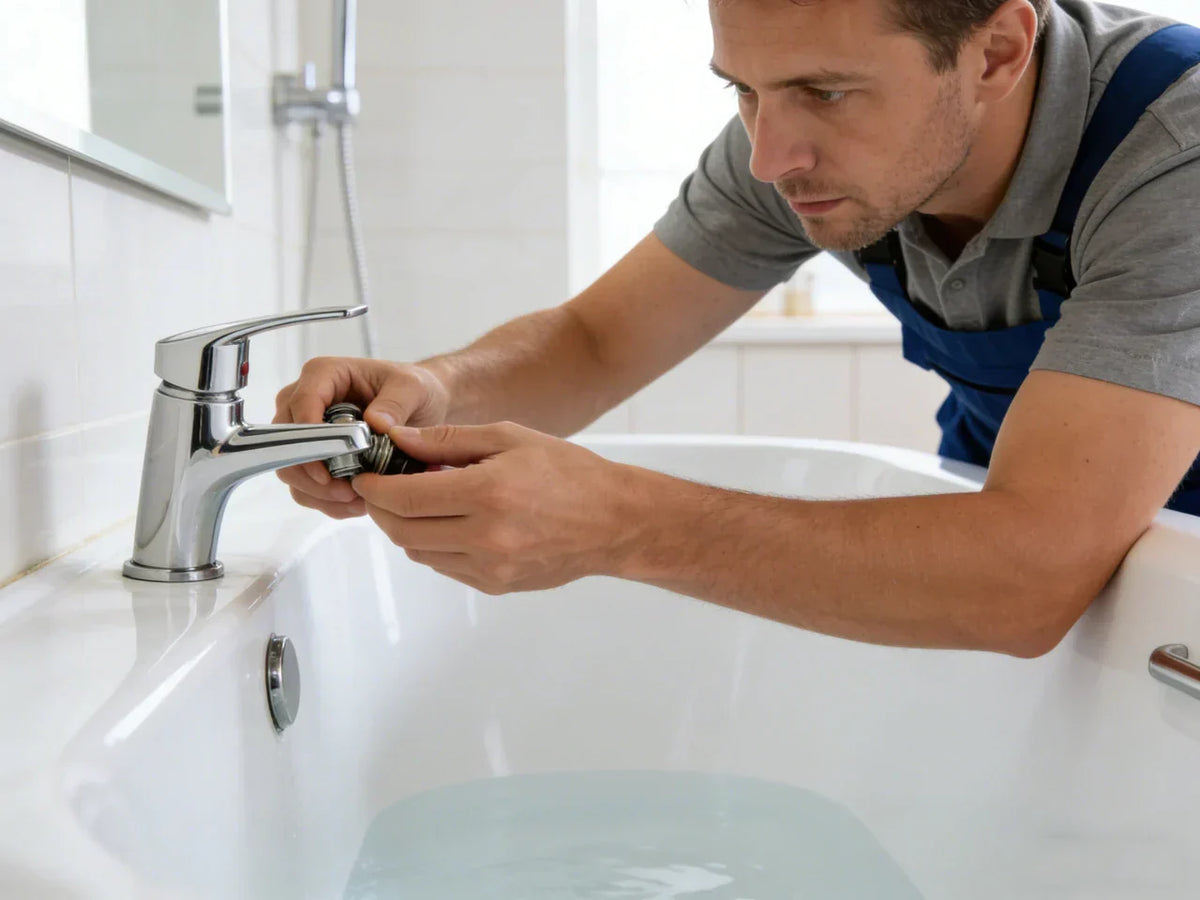
In most homes, labor cost is the main driver, and both the type of faucet and the complexity of the job determine how many hours the work actually takes. Plumbers often charge by the hour or use flat-rate pricing based on job type and risk.
A typical job takes 1–4 hours at $85–$200/hr, which usually works out to a flat-rate estimate per faucet, rather than pricing each small task separately. That puts labor-only around $150–$400, though it can reach $600–$750+ if the job is complex.
So when someone asks, “Do you need a plumber to replace a bathtub faucet?” the honest answer is: not always, but many people choose one because the damage from a small mistake can be expensive. A hidden leak can soak drywall, rot framing, and cause mold.
Removal, Fittings, and Small Parts Often Missed in Estimates
Even a “simple replacement” often needs small parts that don’t show up in a quick online price search. These items commonly add $30–$200:
-
Adapters and connectors to match old pipe sizes
-
New escutcheon plate or gasket
-
Caulk and sealant
-
Thread seal tape or pipe sealant
-
Set screws, anchors, or trim fasteners
If your old bathtub faucet is stuck due to corrosion, removal can add time and sometimes extra parts.
Why About 70% of the Cost Is Labor and Supplies
On many standard jobs, the visible faucet is not the expensive part. A rough way to think about it is that labor + supplies can be about 70% of the total on a typical installation. That’s why two homeowners can buy the same faucet but get very different quotes.
If you pictured a stacked bar chart, the “labor/supplies” section is usually the larger block in low, typical, and high scenarios—especially once wall access or valve work enters the picture.
What Drives Your Tub Faucet Replacement Cost Up or Down
What drives your tub faucet replacement cost up or down is rarely just the fixture itself—prices vary based on access, valve condition, corrosion, and how much wall or finish work is required.
People often assume price is about the faucet style. Style matters, but the biggest swings come from what’s behind the wall and how hard it is to reach.
Faucet Type and Valve Compatibility
Compatibility is a quiet cost factor that surprises homeowners. If your new trim matches your existing valve, a plumber can often replace the trim and cartridge with less hassle.
If it does not match, costs can rise because the plumber may need to replace the valve body, use special adapters, or change piping. This is where terms like pressure-balance valve and thermostatic control matter. They are safety and comfort features, but they can raise the parts and labor.
This also ties into shower valve replacement. Many tub/shower systems share a valve that controls both. If the valve is worn, rebuilding it might be possible, but replacing it can be smarter if parts are scarce or corrosion is heavy.
Access and Finish Work
Access is often the difference between a calm half-day project and a messy one.
If the plumber can reach the plumbing from behind—say, through a closet wall or a removable panel—labor stays lower. If the only way in is through tile, then you’re paying for careful cutting and later patching.
Finishing work varies a lot:
-
Drywall patches and paint are often the least expensive path.
-
Tile repair can cost more because matching tile and grout takes time, and sometimes the tile is discontinued.
Think of it as “front access vs. back access.” Front access usually means disturbing the shower/tub wall surface. Back access often means drywall repair in a different room, which can be simpler and cheaper.
Condition Issues: Corrosion and Old Plumbing
Corrosion is one of the most common reasons a bathtub faucet replacement runs over budget. Rusted threads can seize so tightly that removal risks twisting copper or cracking older piping.
It’s common to see add-ons of $100+ when a plumber has to spend extra time freeing stuck parts or replacing short sections of pipe and fittings.
If your home has older galvanized lines or very old valves, you may also see recommendations for updates. That’s not always upselling. Sometimes it’s the difference between a safe repair and a ticking leak.
A helpful preventive move before you buy parts: look for green/white crusty buildup, rust stains under the spout, or a handle that feels gritty when turning. Those are clues that the inside may be rough too.
Urgency and Scheduling
A scheduled job on a weekday is often the best price. But what if the faucet is leaking and you’re worried it could cause water damage?
Emergency or after-hours service can add a noticeable premium. Same-day visits, weekend callouts, and “stop the leak now” jobs may cost more because the plumber is rearranging the day or coming out at a time that usually costs extra.

Faucet Types, Features, and Price Points
Choosing the right setup is about more than appearance. It affects installation time, future repair costs, and how easy it is to find parts years later.
Common Bathtub Faucet Setups and Typical Costs
A lot of homeowners start with one simple question: “Am I replacing just the spout, or the whole system?”
A tub spout replacement by itself can be one of the cheapest jobs if nothing is seized. Your tub spout replacement cost may be closer to the low end when it’s just a spout and diverter, and the pipe is in good shape.
A full replacement might include:
-
Single-handle or two-handle control trim
-
Spout with or without diverter
-
Showerhead and arm (in tub/shower combos)
Deck-mounted and wall-mounted systems also change the picture. Deck-mounted faucets can be straightforward in some tubs, but they can also be hard to access if the tub is boxed in.
The highest material and install complexity is usually the freestanding tub filler. These often require planning around supply lines in the floor and solid anchoring to prevent wobble.
2025 Feature Upgrades That Change Cost
Some upgrades raise the upfront cost, but they can feel worth it day-to-day. For example, water-efficient fixtures that meet EPA WaterSense standards are designed to reduce water use without sacrificing performance, which can lower long-term water consumption while improving daily comfort.
Anti-scald features, better temperature stability, thermostatic controls, handheld kits, and waterfall-style spouts often add $150–$300+ compared with plain options.
If you’re already paying labor, many homeowners bundle upgrades during bathtub faucet installation so they only pay for the disruption once. Still, it’s smart to check if your existing valve can support the upgrade without extra plumbing work.
Durability and Long-Term Value
A cheap faucet can look fine at first. The problem is what happens after a year or two when the handle gets loose, the diverter fails, or the cartridge starts dripping again.
In simple terms, better internal materials often last longer. Many homeowners see a 10–20 year lifespan from better fixtures when installed correctly and used normally. That doesn’t mean you must buy top-shelf. It means you should consider how long you want to go before doing this job again.
Here’s a simple “lifecycle cost” way to think about it:
| Tier | Typical upfront (fixture only) | Common outcome over ~10 years | What it can mean for total spend |
| Cheap | $15–$75 | More leaks/part swaps | Can cost more if you pay for repeated repairs |
| Mid-range | $100–$250 | Fewer issues, parts easier to find | Often the best balance for many homes |
| Premium | $300–$1,000+ | Strong finish options, higher-end feel | Higher upfront, may pay off if you keep the home long-term |
This is not about chasing the most expensive option. It’s about avoiding the “buy twice” problem.
Do You Need to Replace the Valve When Replacing Trim?
Not always. If your valve is in good shape, not leaking, and compatible with the new trim, trim-only replacement can work.
You may want (or need) a valve replacement when the valve is leaking, the cartridge is no longer available, the valve is outdated for modern anti-scald expectations, or the new trim cannot fit the old valve. If a plumber recommends it, ask one direct question: “Is this required for compatibility and safety, or is it optional?” A good pro will explain the reason in plain language.
Brand and Model Cost Ranges
You asked for no brand names, so I’ll keep this practical and generic. In stores and online, you’ll see price jumps that are not always obvious. Some of that is finish quality. Some is warranty and parts support. Some is design and packaging. Some are just markup.
Faucet Price Ranges by Category
| Category | Typical price band | Warranty style | Finish options | Parts availability |
| Value/basic | $15–$80 | Short/limited | Few | Can be harder to match later |
| Mainstream | $90–$300 | Often longer | Many | Usually good for common cartridges |
| Premium | $250–$1,000+ | Often strong | Many + special finishes | Usually available, sometimes proprietary |
| Specialty (freestanding) | $250–$2,000+ | Varies | Many | Depends on the line and age |
Why Some Faucets Cost $1,000 or More
High prices usually come from a mix of special finishes, unique designs, high-end valve systems, and sometimes smart features. Freestanding designs also cost more because they are bigger fixtures and may require more complex plumbing to install and secure.
How to Avoid Compatibility Surprises
If you want to make an informed decision, compatibility checks save money.
Before you purchase, try to confirm:
-
The valve/trim series (or at least the model family)
-
Cartridge type
-
Whether the new trim fits your existing rough-in valve
-
Whether the spout connection is threaded or slip-on
If you can’t confirm, take photos of your current setup (handles, spout, and any markings) and show them to the plumber or store staff. This single step can prevent a “we need different parts” trip charge.
DIY vs. Hiring a Plumber
You might be thinking: “Is it easy to install a bathtub faucet?” Sometimes yes—especially a trim-only swap when the parts match and nothing is seized. Other times, it’s easy right up until it isn’t.

DIY Cost Factors to Consider
Even without a real calculator on the page, you can estimate your DIY cost by looking at four inputs:
-
What are you replacing: spout only, trim, or valve too?
-
Do you have access behind the wall?
-
Is there corrosion or an old leaky faucet that’s been dripping for years?
-
Do you already own tools like a wrench and strap wrench?
DIY can save the labor line item, but it can add tool costs and time. And if you create a leak inside the wall, the savings disappear fast.
DIY Tool and Supply Costs in 2025
If you don’t own basics already, tool costs commonly run $50–$150.
| Tool / supply | Typical 2025 price range | Why you might need it |
| Adjustable wrench | $10–$25 | Grip nuts and fittings |
| Strap wrench | $10–$25 | Remove a stuck spout without scratching |
| Screwdrivers / hex keys | $5–$20 | Handle screws, set screws |
| Plumber’s tape / sealant | $3–$12 | Seal threaded connections |
| Silicone caulk | $6–$12 | Seal trim plates to wall |
| Utility knife | $5–$15 | Cut old caulk cleanly |
| Torch (only if sweating copper) | $25–$60+ | Needed only for certain valve work |
If your plan includes a shower valve or pipe changes, DIY moves into a higher-skill zone quickly.
What You’re Paying for With a Pro Install
Hiring a pro isn’t only about speed. You’re paying for judgment—how to stop a small leak before it becomes hidden damage, how to match parts, how to secure trim so it doesn’t loosen, and how to test for leaks under real pressure.
If your home has older plumbing, if the tub wall is tiled, or if you suspect valve issues, a licensed plumber can be worth the cost. Many also warranty workmanship, which matters if something drips a week later.
How Long Does a Plumber Take to Replace a Tub Faucet?
Time depends on scope:
-
A trim-only swap can be fast when everything matches and comes apart cleanly.
-
A valve replacement takes longer because the water must be shut off, lines may be cut, and the wall may need opening and patching.
-
Demo plus repair is the longest because it adds drying time and finish work.
A realistic planning window for many homes is 1–4 hours, but complex jobs can take longer.
Hidden Costs, Add-Ons, and How to Avoid Surprise Charges
Nobody likes a quote that doubles once work begins. The best way to avoid that is to understand what “unknowns” plumbers worry about.
Common Add-Ons and What They Cost
These aren’t always needed, but they are common:
-
Valve replacement or rebuild: often adds $150–$500+ depending on access
-
New shutoff valves (if missing or failed): can add $100–$300+
-
Minor repiping near the valve: often $150–$500+
-
Water damage checks and small repairs: varies widely
If you’re in a higher cost of living area or you need emergency service, add more.
Red Flags That Predict a Higher Quote
If any of these sound familiar, your cost factors lean higher:
A history of low water pressure in that bathroom, a handle that won’t turn smoothly, a tub spout that wobbles, crumbling grout near the valve wall, or visible rust and mineral buildup.
Another big one is a long-term leaky faucet. A slow drip doesn’t always look serious, but it can corrode parts and turn removal into a fight.
Pre-Quote Checklist for Homeowners
You can help a plumber give a tighter estimate by gathering a few details first:
-
Take clear photos of the spout, handles/trim, and showerhead area
-
Measure the distance between handles if it’s a two-handle setup
-
Check for an access panel behind the tub wall (closet, cabinet, or other room)
-
Note whether you’re replacing a tub spout only or doing a full bathtub faucet installation
-
Write down any symptoms: dripping, temperature swings, diverter not working
This takes about five minutes and can prevent “we need to open the wall to know” pricing.
Why Bathtub Faucet Replacement Can Be More Expensive Than Expected
While this guide focuses on faucets, homeowners sometimes confuse this expense with the cost of replacing a bathtub, which is far higher due to demolition, disposal, and plumbing relocation.
The most common reasons are simple: hard access, wall repair, incompatible parts, emergency labor, or hidden damage. It’s rarely because the plumber wants the job to be expensive. It’s because the job has risk, and risk takes time to manage.
Regional Pricing and How to Estimate Your Local Cost
You might see a national average online—often from estimating tools like Homewyse—and wonder why your local quote is higher, but these calculators usually assume ideal conditions and easy access. It often comes down to labor rates and travel time.
National vs Local Price Differences by Area
Plumber pricing changes by region because wages, insurance, fuel, and operating costs change. If you live in a dense city or a high-cost metro, hourly rates tend to be higher. If you live in an area with more competition, you may see lower quotes for the same scope.
If you want a simple way to estimate your local total, start with the national range ($300–$750) and adjust based on two questions:
-
Do you live in a high-cost area where many services cost more?
-
Is the job likely to involve wall work or valve compatibility issues?
If the answer is yes to either, it’s reasonable to plan for the upper half of the range.
2025 Pricing Trends That Affect Faucet Replacement Costs
Many home repair categories rose in recent years due to labor and material pricing changes. According to data tracked by the U.S. Bureau of Labor Statistics Consumer Price Index (CPI), inflation has increased the cost of skilled labor and building-related services, which directly affects plumbing work. Even if the faucet itself didn’t change much, the cost of skilled labor and general supplies can push totals up.
If you’re comparing an old quote from a few years ago to today, it may not be apples-to-apples.
How to Get Accurate Local Quotes Without Overpaying
The best way is still the “get multiple quotes” approach. Ask for itemized scope so you can compare fairly. Two quotes can look different even when the plumbers agree on the work, because one may include disposal, supplies, or minor wall patching while another leaves it out.
A helpful question to ask each plumber is: “What’s included in your total price, and what would count as extra plumbing work?” That one sentence often prevents misunderstandings.
Step by Step: Get a Reliable Estimate in 15 Minutes
Use this quick process to set a realistic budget before you shop or book.
| Step | What to do | Time |
| 1 | Decide the scope: spout only, trim, or valve too | 2 min |
| 2 | Check access: is there a panel or back-side wall access? | 2 min |
| 3 | Identify attachment type: threaded vs. slip-on spout | 2 min |
| 4 | Take 3 photos: full tub wall, close-up of handles, underside of spout | 3 min |
| 5 | Write down symptoms: drip, diverter fail, low pressure, temp swings | 2 min |
| 6 | Price your preferred fixture + add $30–$200 for supplies | 2 min |
| 7 | Compare with labor in your area and request itemized quotes | 2–5 min |
This small effort helps you avoid buying the wrong parts and helps a plumber quote you faster and more accurately.
Key Takeaways
The headline numbers matter, but the “why” matters more.
In 2025, the cost to replace bathtub faucet work is typically $300–$750, with the most common projects falling around $350–$600. You’ll pay toward the low end when it’s a simple replacement and everything matches with good access. You’ll pay toward the high end when access is hard, the valve must change, corrosion slows removal, or repairs are needed behind the wall.
If you’re not sure what you have, start by identifying how your spout attaches and whether you have back-side access. Those two details alone predict a lot of your total cost.
FAQs
1. How long does a tub faucet replacement take?
Most tub faucet replacements take about 1–4 hours in an average bathtub setup, which aligns with the average cost range most homeowners see for standard replacements. A simple trim or spout swap is usually on the quicker end. It takes longer if parts are stuck, fittings are corroded, the wall has to be opened, or the valve needs to be replaced. In those cases, the job can stretch beyond a few hours.
2. Is it easy to install a bathtub faucet?
Sometimes. A trim-only swap with matching parts can be very manageable for a careful homeowner. But if you run into stuck fittings, valve compatibility issues, or anything behind tile, difficulty rises fast. A safe rule: if you can’t see where water would go if something leaks, you should slow down and consider hiring a pro.
3. Do you have to turn the water off to replace a bathtub faucet?
Yes. In most cases, you should shut off the water before you replace a bathtub faucet, even if you think you’re only changing the spout. Some homes have local shutoffs. Many do not, so you may need to shut water off at the main. Even when a job “shouldn’t” release much water, old valves can fail, and you don’t want to learn that mid-project.
4. Do you need a plumber to replace a bathtub faucet?
Not always. Many homeowners can handle a simple tub spout or trim replacement. But if the job involves the valve, pipe changes, or opening walls, a plumber is usually the safer choice. Small mistakes can lead to hidden water damage.
5. How is a bathtub spout attached?
Most tub spouts attach in one of two ways: Threaded spout: Screws onto a threaded pipe. These can seize over time, so removal may take patience. Slip-on spout: Slides over a smooth pipe and is secured with a small set screw underneath. If you’re unsure, look under the spout with a flashlight. A visible screw usually means slip-on; no screw usually means threaded.
References



Leave a comment
This site is protected by hCaptcha and the hCaptcha Privacy Policy and Terms of Service apply.