
A brushed gold shower door works best when its warm tone complements the overall bathroom design and the required door configuration is readily available. It may not be worth the premium if you prioritize easy replacement, a perfectly uniform metal look, or the lowest project cost.
The main risk is choosing the finish before confirming the practical details. Door size, opening style, clearance, seals, and water control should come first. After that, compare physical finish samples and make sure your cleaning habits suit decorative hardware.
Decision snapshot:
-
Choose it if: You want a warm, coordinated finish and have confirmed that the door, faucet, and other visible fixtures work together.
-
Think twice if: You dislike slight variations between gold tones or have hard water and prefer infrequent cleaning.
-
Skip it if: The finish restricts the door configuration you need or redirects money from proper sizing and installation.
Is Brushed Gold Right for Your Bathroom?
Best for Warm, Coordinated Bathroom Palettes
Brushed gold works naturally with warm white, cream, beige, clay, wood, and stone-look surfaces. It can also pick up warm veining in tile or countertops, helping separate elements feel connected.
A gold frameless shower door makes the hardware particularly noticeable because there is little framing to interrupt the glass. Handles, hinges, clips, and support bars become small but prominent accents. The result is most cohesive when the shower hardware relates to the faucet, vanity pulls, mirror, or lighting.
The fine texture of a brushed finish can help hide light fingerprints and water spots better than a highly reflective surface. That benefit is visual only: the hardware still needs cleaning, especially where water collects.

Skip It for Flexible, Budget-First Remodels
Brushed gold is primarily a design upgrade. It does not by itself improve how a shower door opens, seals, or controls water. In a budget-first remodel, spending more on the finish may be difficult to justify if it reduces funds available for the correct door setup or professional installation.
Gold shower door hardware can also be less flexible to source than a more common finish. A desired width, height, opening direction, or hardware arrangement may not be offered in gold within the preferred product line.
The upgrade may not feel worthwhile when the shower is rarely used or when the door will be the room’s only gold feature. In those cases, a finish with broader availability may make future replacement easier.
Can the Finish Match Your Existing Fixtures?
Will Other Gold Fixtures Actually Match?
Brushed gold is not the same standardized color across manufacturers. The same is true of satin brass, brushed brass, champagne-style finishes, and other gold-toned labels. One may be pale and muted, while another appears yellow, rosy, brown, or close to bronze.
As a result, a satin brass shower door may not match a faucet labeled satin brass, especially when the products come from separate manufacturers. Finish names are useful starting points, not guarantees.
Compare physical samples of the shower hardware, faucet, lighting, and nearby accessories whenever possible. Pay particular attention to pieces placed close together, such as a door handle beside a shower control. Small differences are less distracting when the metals are separated across the room.
Bathroom Lighting Can Shift the Gold Tone
Lighting affects how gold hardware appears. Warm light can make brushed brass look richer or more orange, while cooler light may make it seem paler or slightly green. Nearby tile and wall colors can also reflect onto the metal.
Evaluate samples in the bathroom rather than relying on edited product images. View them with the planned bulbs turned on and, if the room receives daylight, check them at different times of day. A finish that looks balanced in a showroom can appear noticeably different once surrounded by warm tile or cool white walls.

Limit Competing Metals for Better Coordination
Every metal in a bathroom does not have to match, but the mix should look deliberate. Choose one dominant finish and use any secondary metal consistently rather than introducing several unrelated tones.
Existing chrome or nickel does not automatically rule out a brushed gold shower enclosure. Repeating the secondary metal elsewhere can make the combination feel planned. Mixing several different gold tones next to one another is usually harder to coordinate than combining gold with a clearly contrasting neutral metal.
Also consider future changes. Replacing a faucet, vanity light, or cabinet hardware may restart the finish-matching process if the bathroom depends on one specific shade of gold.
Could the Finish Limit Your Door Setup?
Preferred Door Styles May Not Be Stocked
Confirm the door configuration before committing to the finish. Brushed gold may not be available in every size, height, opening direction, or hardware style.
If the preferred option is unavailable, you may face a custom order, longer lead time, or a different configuration. That could mean accepting a sliding door instead of a hinged design or choosing more visible framing than originally planned.
Review available HOROW shower door configurations early, then confirm the finish and dimensions listed for the specific option under consideration. A collection image does not mean every displayed configuration comes in brushed gold.
HOROW Shower Door Finishes to Compare
If brushed gold is part of your bathroom plan, compare the required shower-door configuration before coordinating the rest of the metal finishes. These HOROW options provide brushed gold, black, and brushed nickel finishes to consider while narrowing down the door style that suits your project.
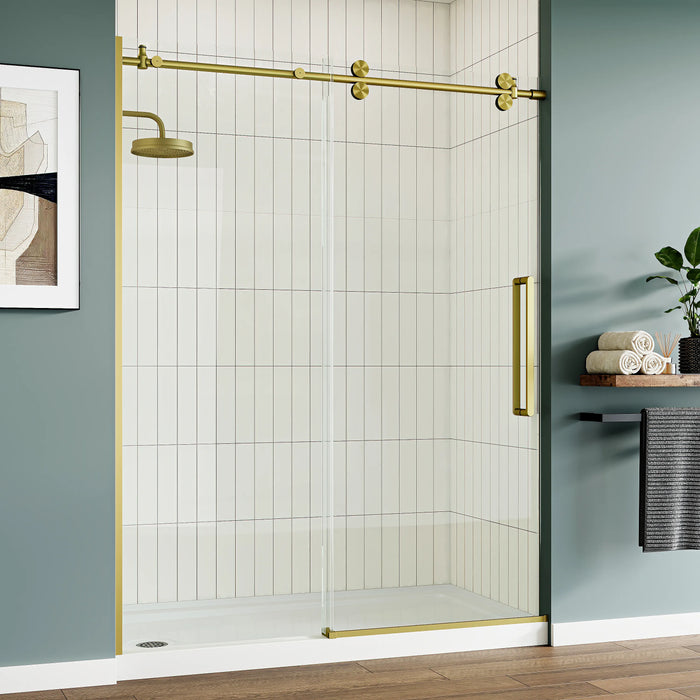
HOROW MI6076-SG
A brushed gold frameless sliding shower door with 8 mm glass for shoppers considering a gold finish as part of the bathroom design.
View MI6076-SG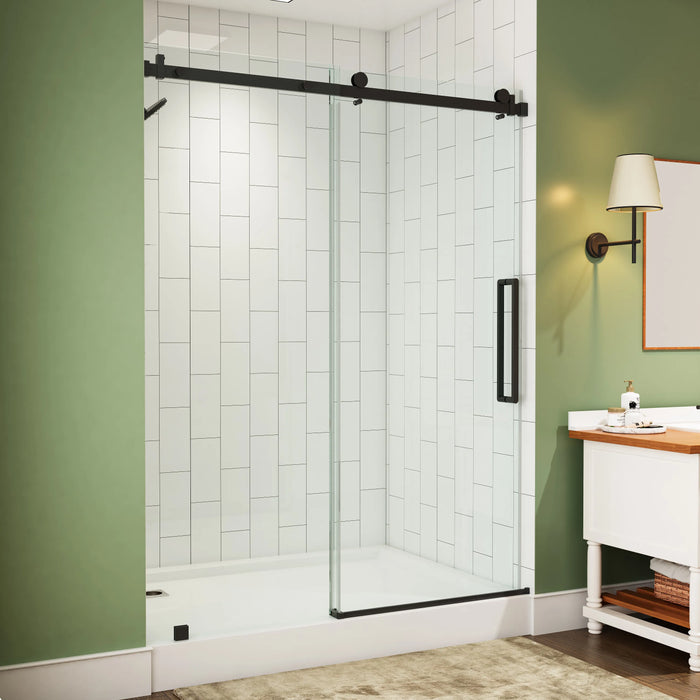
HOROW TE6076-MB
A black frameless sliding shower door option for shoppers comparing brushed gold with a darker neutral finish.
View TE6076-MB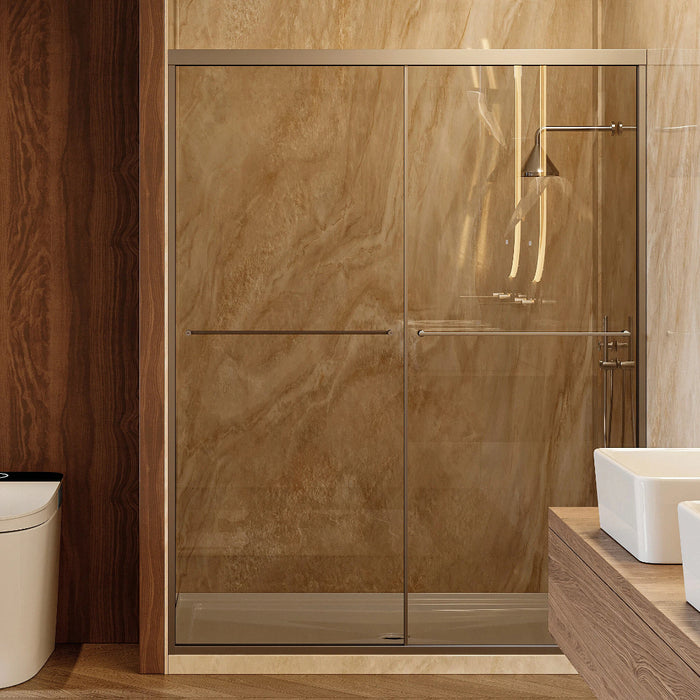
HOROW K2-BN
A brushed nickel shower door option for shoppers comparing brushed gold with a cooler neutral metal finish.
View K2-BNConfirm the product details and installation requirements for the specific shower door before ordering, since available configurations and finishes vary by model.
Custom Configurations Can Increase Cost
Unusual openings, angled glass, special heights, and less common hardware arrangements may require custom work. Selecting a finish with fewer stock options can further restrict sourcing.
Do not consider only the price of the gold finish. Check whether it affects the door style, ordering process, installation timeline, or future hardware availability. A finish-only upgrade can become a broader project expense if it moves the enclosure outside standard options.
Choose the shower-door configuration before ordering coordinating faucets and accessories. Otherwise, you may end up selecting a less practical door simply to preserve a metal palette.
Check Clearance, Seals, and Water Control

Function should take priority over finish. For a hinged door, check whether it can open without hitting a toilet, vanity, wall, or towel bar. For a sliding door, consider handle access, entry width, and whether the panels and tracks will be practical to clean.
Review the product information for seals, drip edges, thresholds, and water-containment details. Minimal frameless doors may include small gaps by design, so the showerhead position and enclosure layout can affect where water travels.
A brushed brass shower door will become frustrating if it feels awkward to enter or allows water onto the floor. A close fixture match cannot compensate for a poor layout.
What Maintenance Should You Expect?

Does Brushed Gold Require Regular Upkeep?
Yes. The brushed texture may disguise faint marks, but soap residue and minerals can still collect around handles, hinges, tracks, seals, and glass edges.
Frequent light cleaning is generally more practical than allowing buildup to harden and then scrubbing aggressively. Wiping wet hardware with a soft cloth can reduce visible residue, but always follow the door manufacturer’s care instructions.
Finish construction varies. Some gold-toned hardware may use a durable applied coating, but the coating type and care requirements should be confirmed for the specific door. Do not assume every brushed gold product has the same resistance to wear or discoloration.
Hard Water Still Leaves Mineral Buildup
Brushed gold does not prevent hard-water deposits. Pale or crusty residue may form where droplets collect, particularly around fasteners, lower tracks, and seals.
According to the U.S. Environmental Protection Agency (EPA), hard water contains high concentrations of minerals, mainly calcium and magnesium, and can cause scale buildup on plumbing fixtures and appliances. This means shower hardware, glass edges, and other wet areas may require regular maintenance if your home has naturally hard water.
Because the brushed surface can conceal early spotting, buildup may go unnoticed until it is harder to remove. If your existing faucets and glass develop deposits quickly, expect the shower hardware to need similar attention.
Harsh Cleaners Can Dull the Finish
Abrasive pads, gritty cleaners, and unapproved chemicals may scratch or dull decorative hardware. A cleaner marketed for general bathroom use is not necessarily suitable for every plated or coated finish.
Use only cleaning methods permitted by the product’s care instructions. If several people maintain the bathroom, keep those instructions accessible so that stubborn residue is not treated with an incompatible cleaner.
Is the Premium Worth the Long-Term Commitment?
Is It Worth the Extra Cost?
The premium is easier to justify when brushed gold completes a planned palette in a bathroom you use frequently. It is harder to justify when the finish forces a compromise in door function or absorbs money needed for sizing, seals, glass, or installation.
Treat the extra expense as an aesthetic preference rather than a performance upgrade. Confirm which visible components receive the finish, including handles, hinges, framing, rollers, clips, and support bars.
Trend Risk May Outlast Today’s Appeal
Brushed gold has a softer appearance than highly polished brass, but it can still reflect a particular design period. No decorative finish is immune to changing preferences.
Trend risk is greater when the tile, faucet, lighting, accessories, and enclosure all rely on the same strong gold theme. For a long-term remodel, decide whether you genuinely like the warm tone or mainly like its current popularity.
Future Fixture Changes Can Complicate Coordination
A replacement part with the same finish name may not perfectly match the original hardware, especially if the manufacturer changes or discontinues that tone over time.
Before purchasing, check whether service parts such as handles and seals are sold separately. Retain the product information, finish name, order record, and care instructions. These details can simplify future repairs, although they cannot guarantee an exact color match years later.
Before You Choose
The National Kitchen & Bath Association (NKBA) publishes bathroom planning guidelines covering clearances, fixture locations, accessibility, finishes, and other functional design considerations. A visually appealing finish works best when it supports the overall function of the room.
-
Confirm the opening size, door style, swing clearance, and water-control details first.
-
Verify that the required configuration is actually offered in brushed gold.
-
Compare physical samples with the faucet, lighting, and nearby accessories.
-
View samples under the bathroom’s daytime and evening lighting.
-
Check that all visible door components use the intended finish.
-
Read the approved care instructions and consider your water conditions.
-
Decide whether the appearance justifies possible sourcing and replacement limits.
Common Questions
Is brushed gold the same as satin brass?
Not exactly, although they can look very similar in some bathrooms. The two finishes may share a warm, muted appearance, but manufacturers often use different tones, textures, and coating methods. A brushed gold shower door from one brand may look different from a satin brass faucet from another. Checking physical samples together is the safest way to avoid mismatched finishes.
Does brushed gold shower hardware tarnish?
It can change in appearance over time if the finish is exposed to harsh conditions. The durability depends on the hardware material, surface coating, cleaning methods, and how often residue is removed. Abrasive cleaners, hard-water buildup, and rough scrubbing can damage the finish faster. Following the manufacturer’s care instructions helps maintain the original look longer.
What fixtures match a brushed gold shower door?
Warm-toned fixtures such as brushed brass, satin brass, and some champagne finishes can work well with brushed gold. However, finish names do not always indicate an identical color, especially between different brands. Compare nearby items like faucets, cabinet pulls, mirrors, and lighting under the same bathroom lighting. A coordinated mix usually looks better than trying to make every metal piece perfectly identical.
Is brushed gold hard to keep clean?
No, but it still needs regular care like other decorative finishes. The brushed texture may hide small fingerprints and water spots, but soap residue and mineral deposits can still build up. Gentle wiping with an approved cleaner is usually better than waiting for heavy buildup. Homes with hard water may need more frequent maintenance to keep the hardware looking clean.
References
https://www.epa.gov/system/files/documents/2026-05/ws-products-water-softener-guide.pdf https://nkba.org/planning-guidelines/



Leave a comment
This site is protected by hCaptcha and the hCaptcha Privacy Policy and Terms of Service apply.