



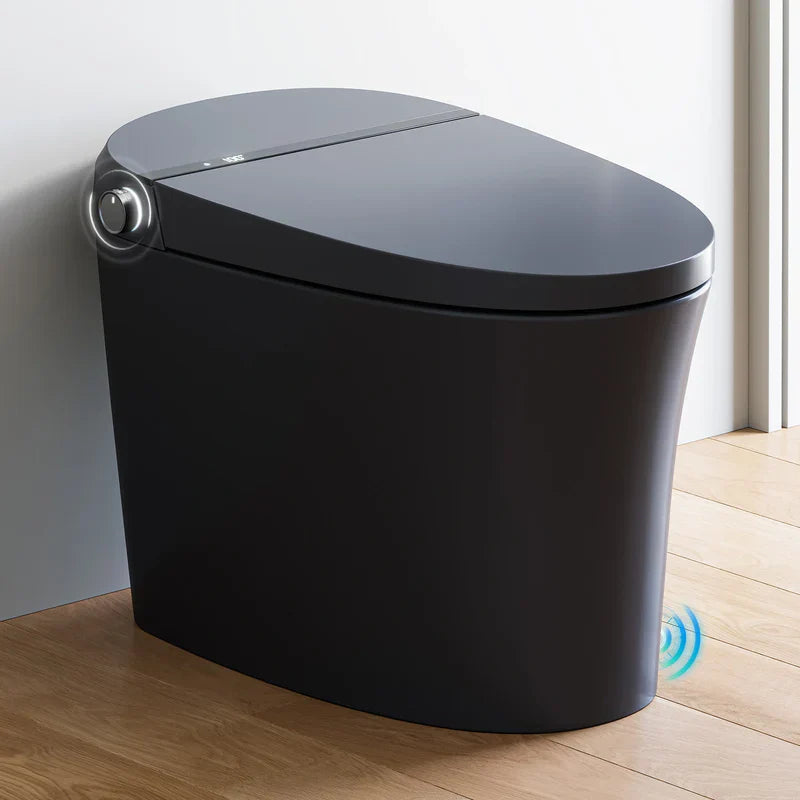
A black smart toilet for modern bathroom design is the right pick if your top priorities are bold style, bidet comfort, and a luxury renovation look, and you’re okay with a little more cleaning attention and a more involved install. If you want the easiest maintenance and the least risk of regret, choose a white smart toilet or a white toilet with a bidet seat.
If your bathroom is designed for smaller spaces, has hard water, or lacks a nearby power outlet, skip the integrated black smart model and choose a simpler option such as a standard toilet with dual-flush systems that help reduce water usage without sacrificing performance.
A black smart toilet makes the most sense in a design-led primary bath, not in every home.
Modern black toilets have a strong visual pull. In the right room, especially with white tile, marble, warm wood, or brushed metal, they can look striking. Add smart features like a heated seat, bidet wash, auto flush, and touchless lid, along with dual-flush efficiency options that improve water usage, helping the toilet truly transform from a basic fixture into a high-performance bathroom system, according to the U.S. Department of Energy (DOE), which notes that electrically powered household fixtures add convenience but also require careful energy and installation planning in residential bathrooms.
But this is also where buyers make mistakes. They focus on the photo-ready look and forget the day-to-day reality: water spots, power needs, rough-in size, clearance, cleaning products suitable for different materials, and whether everyone in the home will even use the smart functions. In particular, using non-abrasive cleaners is essential to protect the black finish and maintain long-term appearance.
Here’s what usually matters in real homes: the best toilet is not the one with the longest feature list. It’s the one that fits your bathroom, your cleaning tolerance, your water quality, and your household habits.
If your home has hard water, integrated black smart toilets will require significantly more maintenance and may show mineral buildup faster. In this case, a white smart toilet or a standard toilet with dual flush systems can help manage water usage more efficiently while reducing maintenance demands.
If there is no nearby GFCI-protected electrical outlet, you should avoid integrated smart toilet systems entirely and instead choose a non-smart toilet with a bidet seat attachment for safer installation.
If you have low tolerance for electronics, sensors, or potential service calls, an integrated smart toilet is not recommended—opt for a simple bidet seat setup or a standard white toilet for maximum reliability.If you have low tolerance for electronics, sensors, or potential service calls, an integrated smart toilet is not recommended—opt for a simple bidet seat setup or a standard white toilet for maximum reliability.
Decision Snapshot: Black Smart Toilet for Modern Bathroom
A black smart toilet is usually best for design-first buyers doing a modern bathroom renovation, especially in a primary bath where visual impact matters.
Choose a black smart toilet if:
-
you want a bold luxury look
-
you like bidet and heated seat comfort
-
you have a nearby GFCI outlet
-
you’re okay wiping the finish more often
-
your bathroom design is built around black fixtures or high-contrast materials
Choose a white smart toilet if:
-
you want the same smart comfort with easier visual upkeep
-
you live in a hard water area
-
you don’t want to notice spots or mineral residue as much
-
you want a safer choice for resale and broad appeal

Choose a standard toilet with bidet seat if:
-
you want the best value
-
you prefer easier replacement and repair
-
your layout is tight
-
you want smart functions without changing the whole toilet
Choose a simple black non-smart toilet if:
-
style matters more than tech
-
you want fewer electronics and fewer failure points
-
you like black fixtures but don’t need heated seats or remotes
If cleaning tolerance is low, choose white.
If the bathroom is renovation-led and style is the main goal, choose black.
If setup is difficult, avoid integrated smart models.
Black smart toilet for modern bathroom vs alternatives
Before comparing specific options, it helps to first understand what actually drives the decision in a modern bathroom setup: visual impact versus everyday practicality, and integrated design versus modular flexibility. Black models tend to emphasize bold contrast and a statement aesthetic, while white models prioritize adaptability and long-term ease of use. Similarly, integrated smart toilets focus on a seamless luxury build, whereas bidet seat setups offer a more flexible and budget-friendly upgrade path. With these differences in mind, the following comparisons become much easier to evaluate.
Black vs white smart toilets
This is the choice most buyers should make first.
A black smart toilet gives more contrast, more drama, and a more custom look. In a modern bathroom renovation, it can become a centerpiece. This is why many buyers consider a black smart toilet aesthetic idea for white marble bathrooms: the dark shape against bright stone creates a clean, high-end contrast.
A white smart toilet is usually easier to live with. It hides hard water haze better, blends into more bathroom styles, and tends to feel less risky if you change finishes later.
So when people ask about black smart toilet vs white smart toilet for modern bathroom design, the honest answer is simple:
-
black wins on statement style
-
white wins on ease and flexibility
Integrated smart toilet vs bidet seat
An integrated smart toilet gives you the sleekest look. The body is often one-piece, the controls are built in or paired with a remote, and the shape is more sculpted. It usually includes features like warm water wash, warm air dry, auto flush, deodorizer, night light, and self-cleaning wand functions.
A bidet seat on a standard toilet gives many of the same comfort benefits for much less money and with less installation risk. It’s also easier to replace if one part fails.
If you care about minimal seams and a luxury look, integrated wins. If you care about flexibility and lower cost, a bidet seat makes more sense.
Smart black toilet vs standard black toilet
A standard black toilet gives you the color and modern style without electronics. That means fewer things to troubleshoot, lower purchase cost, and less concern about sensors, remotes, heated seats, or service calls.
A smart black toilet adds comfort and hygiene features, but also adds complexity. If you know you will use the bidet daily, the upgrade can be worth it. If not, the smart version can become an expensive fixture with ignored features.
Comparison table
| Option | Best for | Typical cost | Installation | Space needs | Maintenance | Comfort |
| Black smart toilet | Luxury modern remodels | Highest | Often pro install, needs power | Usually larger | Finish needs more wiping | Highest |
| White smart toilet | Comfort with lower visual upkeep | High | Often pro install, needs power | Usually larger | Easier to live with | High |
| Standard toilet + bidet seat | Value-focused upgrades | Mid | Easier than full replacement | Flexible | Moderate | High |
| Standard black toilet | Style without tech | Mid | Simple plumbing | Similar to normal toilet | Finish still shows spots | Basic |
If you want the shortest buying rule: black smart toilets are best for luxury style buyers, white smart toilets are best for comfort-first practical buyers, and bidet seats are best for value-first buyers.
Key differences that matter
Before comparing finishes, installation limits, electronics, usage habits, and water quality in detail, it’s important to understand the key trade-offs that actually drive real-world satisfaction. Most differences between black and white smart toilets—or integrated systems versus simpler setups—only become meaningful once you look at how they behave in daily use, not just how they appear in product photos.
Finish shows spots differently
One of the biggest real-life questions is this: are black smart toilets harder to keep clean than white toilets?
In most homes, yes, at least visually.
Black surfaces, especially glossy black, tend to show:
-
dried water spots
-
soap residue
-
dust
-
light mineral film
-
fingerprints on lids and control areas
White toilets still get dirty, of course. They just hide some residue better in normal use.
A matte black finish changes this a bit. Matte can soften the look of minor marks and reduce glare, so light spotting may be less obvious than on glossy black. That’s why many buyers searching matte black smart toilet pros and cons for modern bathrooms end up preferring matte over gloss.
But matte is not maintenance-free. If you have hard water, the mineral marks can still show. So if you are asking, does a black smart toilet show water spots and soap scum more easily? In many bathrooms, yes. Matte helps, but it does not erase the issue.
Space and rough-in limit choices
Many smart toilets are bulkier than standard toilets, even when they look sleek in photos. Their tankless or skirted body can still take up more depth, and the seat profile can feel larger.
This matters a lot in small bathrooms. A compact black smart toilet for modern small bathroom layouts can work, but only if the dimensions fit your room, door swing, vanity clearance, and side spacing.
You also need to check the rough-in size. This is the distance from the finished wall to the center of the floor drain bolts. If you get this wrong, the toilet may not fit at all.
So for anyone researching black smart toilet rough-in size and installation considerations, here’s the key point: measure first, shop second. Don’t assume a modern one-piece smart model will fit where an older toilet does.
Space constraints are one of the most decisive factors in toilet selection.
If your bathroom is compact or has limited rough-in flexibility, the default recommendation should be a standard toilet paired with a bidet seat, as it minimizes installation complexity and avoids clearance issues.
Only consider an integrated smart toilet if all of the following are satisfied:
-
Adequate installation depth and clearance
-
Proper electrical access
-
Sufficient space for maintenance access
If any of these conditions are not met, integrated smart toilets are not recommended regardless of aesthetic preference.

Electronics add comfort and failure points
Heated seat, warm wash, automatic lid, night light, dryer, deodorizer, touchless flush—these features are nice. Some owners will never want to go back.
But electronics also create more points of failure. Sensors can get fussy. Heating can become inconsistent over time. Remotes can lag or get ignored. Service can be harder than with a simple toilet.
This doesn’t mean smart toilets are a bad idea. It means they are best for buyers who will actually use the features and accept the trade-off.
If your home tends to prefer simple, durable fixtures, a fancy unit may feel like too much.
Buy integrated smart if…
Integrated smart toilets make sense if you value daily convenience features such as heated seating, automatic flushing, and bidet functions, and you are comfortable with occasional maintenance or minor electronic servicing. They are best suited for users who prioritize comfort, hygiene control, and a more “hands-free” bathroom experience.
Avoid integrated smart if…
You should avoid integrated smart toilets if you prefer low-maintenance setups, want predictable long-term durability, or are uncomfortable depending on sensors, motors, or electronic components for basic bathroom use. In these cases, simpler systems reduce both repair risk and long-term cost.
Final one-line recommendation (required): For repair-averse buyers, a standard toilet paired with a bidet seat is the most reliable long-term choice.

Shared habits change the best pick
Household usage should determine the toilet choice more than aesthetics or feature lists.
-
For single or primary-user bathrooms, integrated smart black toilets are acceptable if users actively use the smart features and are comfortable with maintenance needs.
-
For family bathrooms with multiple users, durability and simplicity become more important, making a standard toilet with a bidet seat the safer default choice.
-
For guest or low-use bathrooms, avoid integrated smart systems entirely—features are underused, while maintenance complexity remains.
In most shared-home scenarios, black integrated smart toilets become a poor fit because they add complexity without matching daily usage needs.
Water quality affects satisfaction
If you live in a hard water area, your finish and your nozzles will both need more attention. Mineral deposits don’t care how expensive the toilet was.
This is why many buyers ask, is a matte black smart toilet easy to maintain in hard water areas? Easier than glossy black in some cases, yes. Easy in general? Not really.
If your water leaves crust on faucets and glass, expect more frequent wiping and occasional descaling. In those homes, a white model or a standard bowl with a replaceable bidet seat is often the lower-stress choice.
Water quality plays a direct role in long-term satisfaction with integrated smart toilets, especially in regions with hard water.
If you have hard water combined with low cleaning tolerance, integrated black smart toilets become a near-disqualifying option due to visible mineral buildup, nozzle scaling, and increased maintenance frequency.
In these conditions, the recommended alternative is:
-
A white smart toilet for easier visibility and cleaning maintenance, or
-
A standard toilet with a bidet seat, which significantly reduces water-system sensitivity and long-term upkeep requirements
This choice typically results in better durability and lower maintenance stress over time.
When black wins
Before looking at specific scenarios, it helps to understand that “when black wins” is not about one universal rule, but about where design intent, daily habits, and installation conditions align. In the right context, a black smart toilet can elevate both the visual composition and user experience, but only when the space and expectations support it.
Best in white marble bathrooms
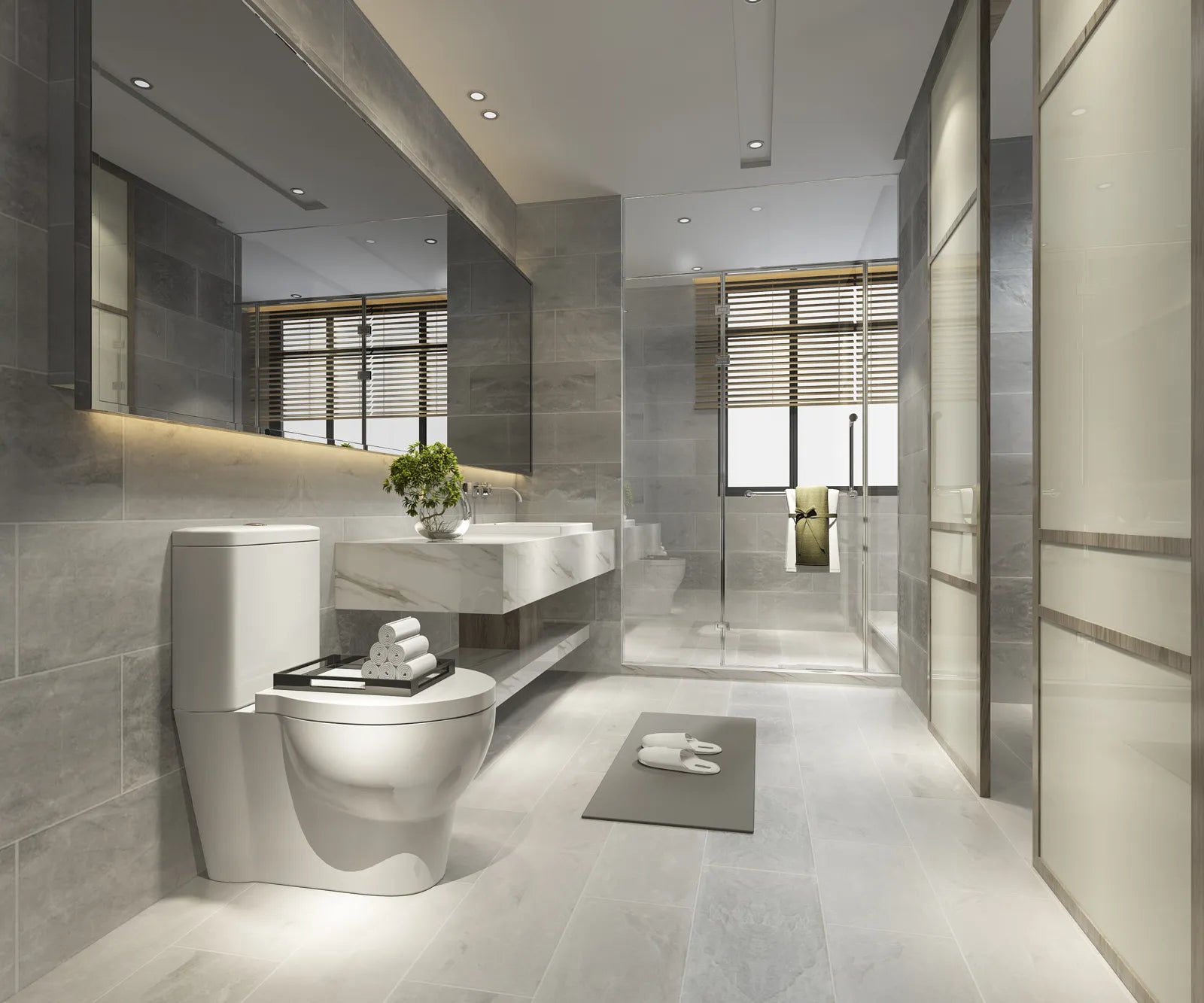
A black smart toilet often looks best in a space built around contrast. White marble, pale porcelain tile, warm oak vanities, and brushed brass or black hardware all work well.
This is why black smart toilet aesthetic ideas for white marble bathrooms are so popular. The dark silhouette gives the room a tailored, designer look that white often cannot match. In a large primary bath, that visual payoff can be worth the extra care.
If your bathroom is already modern and crisp, black can look intentional. If the room is more traditional or visually busy, black can feel forced.
Better for bidet-first routines
If you know you will use the wash functions every day, the smart part matters more. This is where a best black smart toilet with bidet and heated seat for a luxury bathroom search makes sense. Not because every luxury feature is needed, but because your daily use justifies the upgrade.
For bidet-first buyers, the biggest wins are:
-
heated seat comfort
-
adjustable warm wash
-
easy cleaning around a skirted one-piece base
-
touchless flush and lid convenience
-
self-cleaning wand features
If those sound like features you’ll use every day, black may be worth choosing over simpler options if the room design supports it.
Matte can hide daily mess better
A common question is whether matte black is the smarter finish. In many homes, yes.
A matte black smart toilet tends to hide fingerprints and minor splash marks better than glossy black. It also feels more current. Are matte black toilets in style in 2026? Yes. In modern bathroom design, matte black still looks current because it pairs well with clean lines, mixed metals, natural wood, and stone.
That said, style should not be the only reason to buy one. Matte is still a dark finish, and dark finishes still show dried mineral residue more than white.
Best with pro install and nearby power
A black integrated smart toilet works best when the room is being renovated and the electrical and plumbing layout can be planned around it.
If there is already a nearby GFCI outlet, enough side clearance, and the rough-in matches, the buying process is smoother. If not, costs rise fast.
This is also why how a black smart toilet fits into a modern bathroom renovation matters more than people think. During a full remodel, adding power and adjusting spacing is manageable. In a simple swap-out project, it can become annoying and expensive.
When the alternative wins
Not every bathroom benefits equally from a black smart toilet. In certain conditions—such as hard water, compact layouts, or high-traffic guest bathrooms—the alternatives can be more practical and lower maintenance. The following scenarios explain when black may not be the best fit.
Are black toilets harder to keep clean
In practical terms, yes, they often feel harder to keep clean because they show more.
The toilet itself may not attract more dirt. You just see the spots sooner. In a low-splash bathroom with soft water and regular wipe-downs, this may not bother you. In a busy home with kids, hard water, and rushed mornings, it often does.
So if your biggest concern is low maintenance, black is usually not the safest pick.
Better for hard water areas
Hard water changes the recommendation fast.
If your faucets, shower glass, and dark tile already show mineral buildup, a black smart toilet will likely do the same. You can reduce this with regular drying, a water softener, or routine descaling, but that adds effort.
This is where white has a real advantage. It is not stain-proof, but it is more forgiving. So if you’re asking how to prevent limescale on black toilets, the answer is:
-
wipe water off regularly
-
use gentle descaling products approved by the maker
-
avoid letting standing droplets dry on the surface
-
improve water quality if possible
If that sounds like too much, choose white.
Smarter for small bathrooms
Many buyers search what to consider before buying a black smart toilet for a small bathroom because the sleek photos hide size issues.
In a small room, you need to think about:
-
front clearance
-
seat height and projection
-
side access to shutoff valve
-
cord routing to outlet
-
door swing
-
cleaning access around the toilet body
A compact integrated model can work, but small bathrooms often do better with a shorter standard toilet and a bidet seat. You keep more floor space and avoid a bulkier body.
Better if guests ignore features
If the bathroom is used by guests or people who don’t care about smart settings, the value drops. A luxury black bidet toilet with self-cleaning and touchless features sounds great on paper. In real use, half the features may go untouched.
That doesn’t make the product bad. It just means the room may not be the right place for it.
For guest baths, a standard toilet or simple bidet seat often gives a better return.
Which black model makes sense
Since brand names are off the table, it’s better to think in categories.
Choose compact for small layouts
If your room is tight, look for:
-
shorter overall depth
-
skirted one-piece body
-
concealed trapway
-
easy-access service points
-
standard rough-in compatibility
A compact black smart toilet for modern small bathroom layouts should be chosen by dimensions first, features second. If the fit is wrong, no feature list can fix it.
Choose dual flush for lower bills
A black smart toilet with dual flush and water-saving features is worth prioritizing if your local water rates are high or you’re replacing an older high-use model.
Water-saving matters, but not every low-flow toilet performs well. Look for strong waste removal with efficient flush design, not just the lowest gallon number. The smart choice is the one that saves water without needing repeat flushes.
Choose luxury for touchless comfort
If you want the full experience, prioritize:
-
reliable bidet wash adjustment
-
heated seat
-
touchless or auto flush
-
deodorizer
-
self-cleaning wand
-
night light
-
simple controls
This is what most buyers mean when they search for a luxury black bidet toilet with self-cleaning and touchless features. The key point is to focus on features you’ll use weekly, not features that only sound impressive in a spec sheet.
Value models vs premium models
The market usually splits into value and premium tiers.
Value models can offer the main experience for much less: bidet wash, heated seat, remote control, auto flush, one-piece design. For many buyers, this is enough.
Premium models often add:
-
stronger design finish
-
quieter operation
-
smoother lid action
-
better wash customization
-
improved sensor response
-
more polished user interface
That sounds appealing, but this is also where regret starts if the room or the household doesn’t justify the cost.
If you’re doing a full high-end remodel and every fixture is elevated, premium can make sense. If the black toilet is the only luxury element in an otherwise practical bath, a mid-range or value option may be the smarter move.
Also, be realistic: black smart toilet performance compared with standard white smart toilets is often similar in wash and comfort if the internal systems are comparable. The real difference is usually finish, design impact, and visual upkeep, not dramatic performance gains from color alone.
Stop upgrading and consider a simpler setup if:
-
The price increase is driven mainly by aesthetics or minor automation features
-
You are not planning a full bathroom renovation
-
You prefer predictable maintenance costs → In these cases, a white smart toilet or bidet seat upgrade delivers better value
Premium integrated models are only justified when:
-
You are doing a full bathroom remodel
-
You use advanced features (heating, drying, auto functions) daily
-
You are comfortable with service dependency and occasional repairs
Without these conditions, premium black integrated toilets often provide diminishing returns compared to simpler systems.
Cleaning without damage
One of the most important practical questions is how to clean a matte black smart toilet without damaging the finish.
Use a soft microfiber cloth, mild soap, and water for regular wipe-downs. Dry the surface after cleaning so spots do not sit. Avoid abrasive pads, scouring powders, bleach-heavy sprays left on the finish, and harsh acidic cleaners unless the manufacturer explicitly approves them.
This also answers another common concern: do black toilets scratch easily? The finish can show scratches more clearly than white if you use rough tools or abrasive cleaners. Matte black can look excellent for years, but only if you treat the outer finish gently.
A simple routine works best:
-
Wipe the exterior with a damp microfiber cloth.
-
Use mild soap if needed.
-
Rinse residue with a clean damp cloth.
-
Dry with a second soft cloth.
-
Clean the bowl and nozzle areas with approved products only.
In homes with hard water, regular light cleaning is much better than waiting for heavy buildup.

Cost and value reality
Are black smart toilets more expensive? Yes, usually.
You’re paying for two upgrades at once:
-
a designer finish
-
integrated smart features
That means purchase cost is often well above a standard white toilet, and often above a white smart model too. Installation can also cost more if electrical work is needed.
For many homeowners, the right question is not “Can I afford it?” but “Will I still like owning it in two years?”
If the answer is yes because the bathroom is your retreat, you care about design, and you’ll use the smart functions daily, the cost can be justified.
If you mostly want better hygiene and warm-seat comfort, a white smart toilet or bidet seat usually gives better value.
Final Verdict
Choose a black smart toilet if you are remodeling a modern primary bathroom, want a bold luxury look, and will actually use the bidet and comfort features often. Choose a white smart toilet if you want most of the same comfort with less visible upkeep and fewer finish-related regrets. Choose a standard toilet with a bidet seat if you want the smartest balance of cost, simplicity, and everyday usefulness.
For most practical households, white or add-on bidet options are the safer buy. For style-led renovation buyers, black is the right call when the room, water quality, and install conditions all support it.
Before You Buy
-
Measure your rough-in before shopping.
-
Check for a nearby GFCI outlet.
-
Confirm front and side clearance in the bathroom.
-
Think honestly about your water quality.
-
Decide whether matte or glossy black fits your cleaning tolerance.
-
Make sure the shutoff valve and service access are reachable.
-
Buy smart features you’ll use, not just features that sound impressive.
FAQs
1. Do black toilets show water spots?
Yes, they can, especially under strong bathroom lighting. Water droplets dry into light mineral marks, which tend to stand out more on darker surfaces compared with traditional finishes, which is why people often compare black vs white smart toilets when choosing a design. It’s not a major issue though—most of the time a quick wipe keeps things looking clean and presentable.
2. Are matte black toilets in style 2026?
Yes, they are still very on-trend in 2026. The appeal comes from the understated, modern look that fits well with minimalist and industrial bathrooms. Designers often describe this as part of evolving matte black toilet aesthetics, where the focus is on clean contrast and a more architectural feel rather than traditional bathroom styling.
3. Do black toilets scratch easily?
Not easily, but they’re not completely scratch-proof either. High-quality ceramic coatings usually hold up well against daily use, but abrasive sponges or harsh cleaners can leave fine marks over time. In many Horow black series review discussions, users often mention that careful cleaning habits make a big difference in keeping the surface looking new.
4. Are black smart toilets more expensive?
Generally, yes, they cost more than standard models. This is usually because of the combination of advanced features and premium finishes. A black smart toilet for modern bathroom setup often includes design-focused engineering as well as added tech, and some models like those discussed in Horow black bidet toilet performance comparisons show that pricing reflects both functionality and aesthetics rather than just basic utility.
5. How to prevent limescale on black toilets?
Limescale is easier to prevent than remove, especially on darker surfaces where it becomes more visible. Regular rinsing and wiping after use helps reduce mineral buildup significantly. Many users focus on cleaning a black toilet bowl with gentle, consistent maintenance rather than heavy scrubbing, which keeps the finish smooth and avoids long-term damage.
6. Why choose a black toilet for a master bath?
A black toilet is mainly a design-driven choice that elevates the overall bathroom look. It pairs well with neutral tiles, wood textures, or metallic fixtures, creating a more curated and high-end environment. That’s why luxury black bidet toilets are often chosen in master bathrooms—they help create a strong visual identity while still blending into modern interior styles.
References


Leave a comment
This site is protected by hCaptcha and the hCaptcha Privacy Policy and Terms of Service apply.