
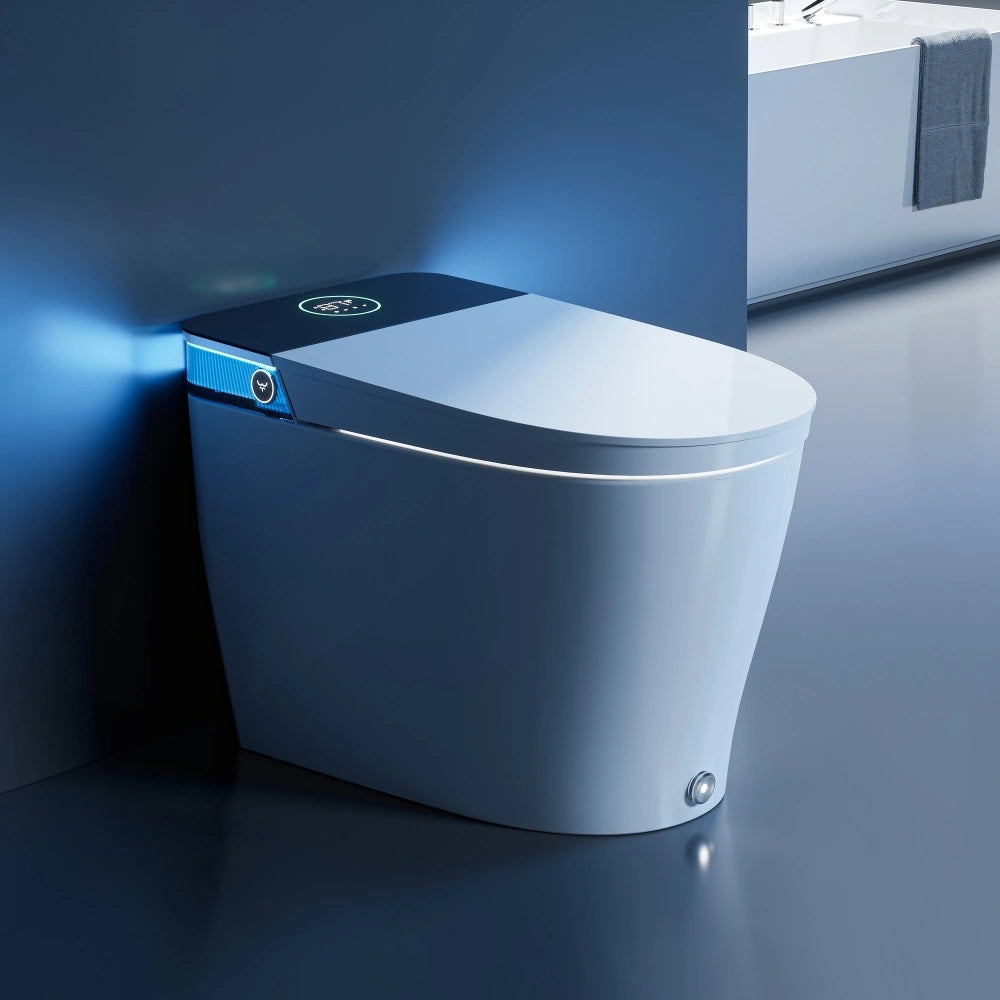
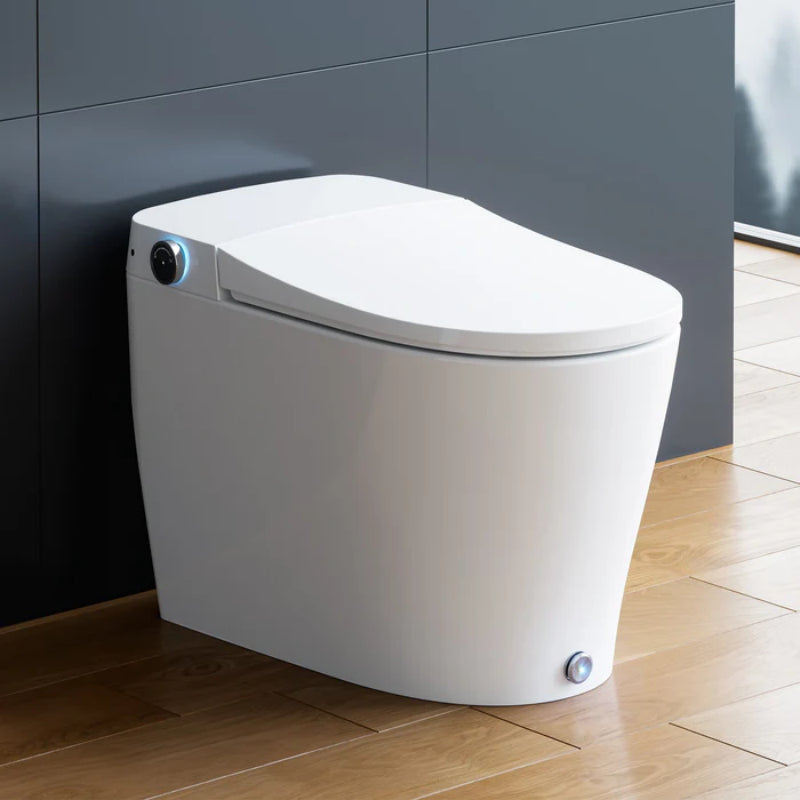
Choosing between a wall hung and floor mounted smart toilet involves more than just appearance—it also affects installation complexity, daily maintenance, long-term costs, and overall functionality in your bathroom space. Below is a detailed comparison to help you determine which style best suits your home, budget, and lifestyle needs.
Quick Answer
If you want the cleanest look, easier floor cleaning, and the best fit for a small modern bathroom, choose a wall hung smart toilet. If you want lower cost, simpler installation, and easier future repairs, choose a floor mounted smart toilet. For many homes, floor-mounted toilets remain a reliable first choice; wall hung toilets are also a strong pick when space and design matter enough to justify the extra work.
Smart toilets add one more layer to this choice because they need power, service access, and careful installation. So the right answer is less about “which is best” and more about which one fits your bathroom, budget, and tolerance for renovation work.
Decision Snapshot
Here’s the fast way to decide.
Best for design-first renovators
Choose wall hung if you are already remodeling the bathroom, opening the wall, or planning a concealed tank. It suits buyers who care about a floating look, adjustable height, and a room that feels more open.
Avoid it if you want a quick swap with little wall work.
Best for budget-first households
Choose floor mounted if you want the easiest path from old toilet to new smart toilet. It usually costs less to buy, less to install, and less to service later.
Avoid it if your bathroom is very tight and every inch matters.
Choose wall hung if cleaning matters most
If you hate cleaning around the toilet base, wall hung toilets are easier to clean without a base for a more hygienic bathroom. The floor under it stays open, so mopping is faster and there is no seam at the base collecting grime.
Choose floor mounted if repairs worry you
If your first concern is, “What happens when a valve, seat, or internal part fails?” choose floor mounted. The parts are usually easier to reach, and plumbers see this setup more often in standard homes.

Wall Hung vs Floor Mounted Smart Toilet
Should you even consider wall hung? Before weighing design or space benefits, you must first screen for feasibility. Wall hung smart toilets require significant wall modification, structural support, and concealed infrastructure—risks are especially high in older homes with thin walls, shallow wall cavities, or fixed plumbing that cannot be relocated. If you are not prepared for full wall renovation, a wall hung unit is likely not practical, regardless of how appealing the floating design may be.
In real homes, the final decision still comes down to five core factors:
-
how much space you have
-
how much installation work you can accept
-
what you want to spend now
-
how easy you want future service to be
-
how strongly you care about a clean, modern look
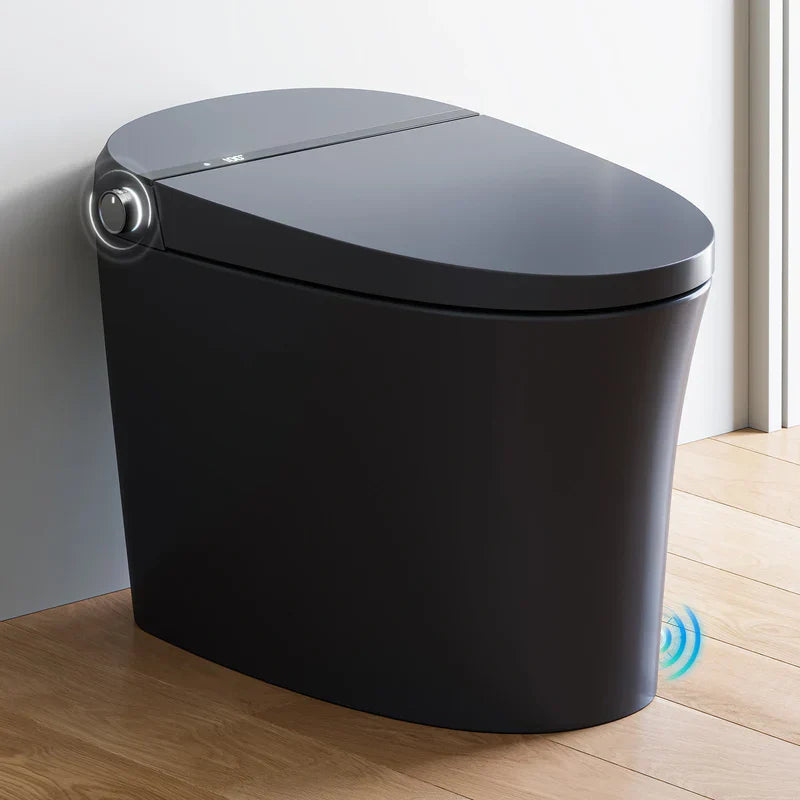
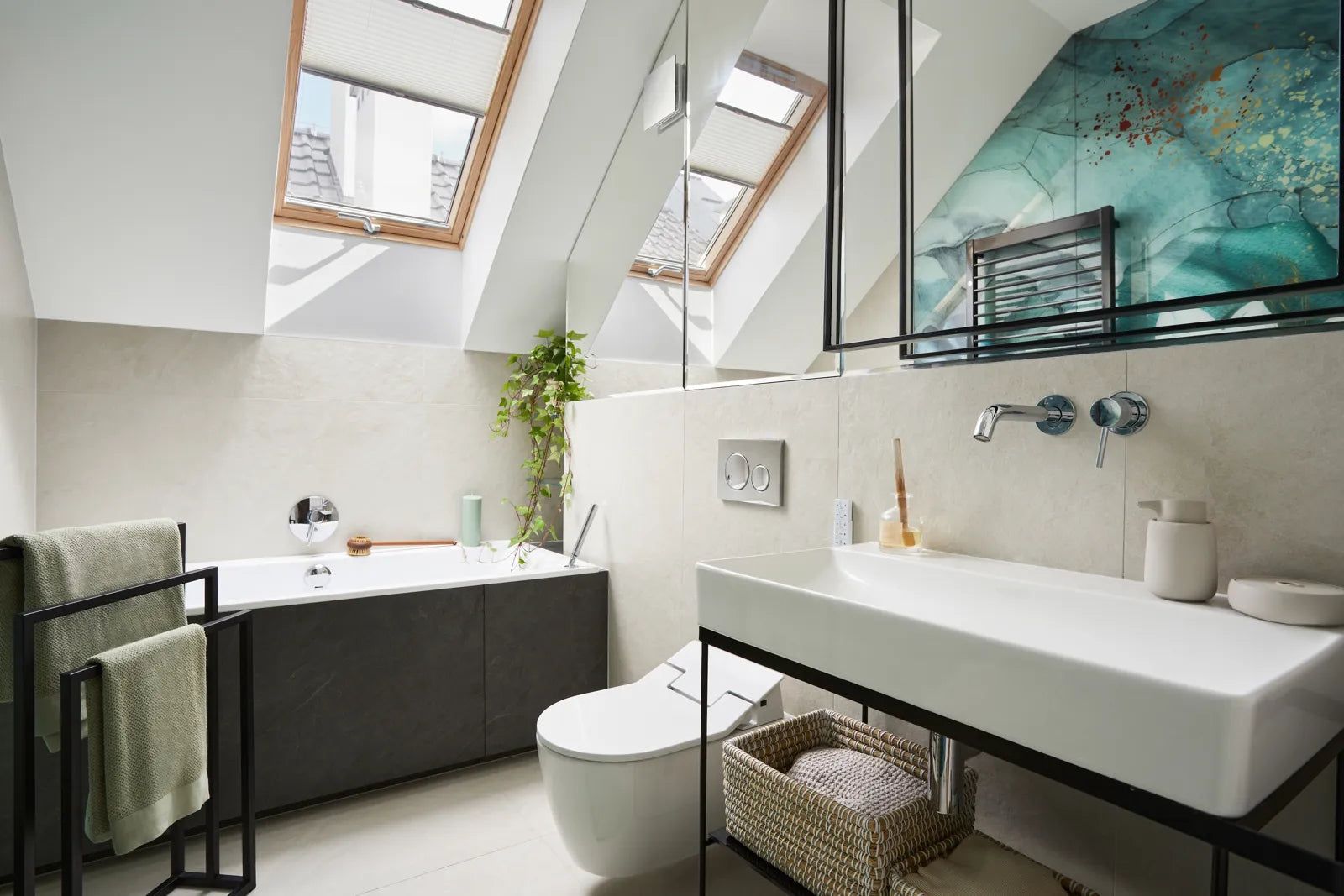
A wall hung smart toilet mounts to a steel carrier inside the wall, with the tank and bowl concealed in the wall to streamline the bathroom aesthetic. The bowl doesn’t touch the floor, a key design of modern sanitaryware that creates an open look. A floor mounted smart toilet sits on the floor like a standard toilet, with visible or integrated components depending on the model.
There is also a middle ground: a back-to-wall smart toilet. It sits on the floor, but the tank is hidden in the wall or furniture unit. That gives you a cleaner look than a standard floor mounted setup without asking the wall to support the bowl.
Finish the “Wall Hung vs Floor Mounted Smart Toilet” review, then browse HOROW wall-hung toilets for current product options.
Compare space, cost, and upkeep
The reason people ask which is better wall hung or floor mounted smart toilet is simple: wall-mounted and floor-mounted toilets each offer unique advantages for different homes.
Wall hung wins on:
-
visual space
-
easy floor cleaning
-
modern bathroom design
-
adjustable seat height
Floor mounted wins on:
-
lower total project cost
-
simpler replacement
-
easier repair access
-
fewer wall constraints
If you are hoping for one universal winner, there isn’t one. For most buyers, floor mounted is the practical choice. For space-led remodels, wall hung can be worth it.
Which feels better in daily use?
Daily use comfort varies sharply by household type—here is direct buyer guidance:
-
Shared family bathroom: Prioritize floor mounted. Familiar seat height and perceived physical stability are deciding factors for children, guests, and multiple users; the floating look of wall hung is a minor preference at best.
-
Guest bathroom: Wall hung works well for a polished look, but floor mounted remains safer for guests who may be uncomfortable with unfamiliar wall-suspended fixtures.
-
Single-user ensuite: Wall hung is a strong choice; custom height and modern design carry real value, and perceived stability is rarely a concern for a single user.
-
Aging-in-place household: Wall hung’s adjustable height offers real accessibility benefits, but only if all users feel secure with the wall-mounted design; if stability concerns exist, floor mounted comfort-height models are more reliable.
Wall hung models also feel visually lighter, helping free up space and making compact bathrooms feel less crowded, while floor mounted models deliver a traditional style that feels familiar and stable for most users.
Are wall hung models harder to install?
Yes. In most homes, wall hung smart toilets are harder to install than floor mounted models.
Here’s why:
-
The wall needs a carrier frame
-
The tank goes inside the wall
-
The drain and water lines may need moving
-
The wall depth must work for the system
-
Power must be planned for the smart features
-
Access to service must still be maintained
Use this feasibility threshold checklist to confirm if your space qualifies:
-
A heavy-duty steel carrier frame must be installed inside the wall for structural support
-
Minimum wall cavity depth must match the manufacturer’s requirement for the concealed tank
-
Drain and water supply lines often require full relocation to align with the in-wall system
-
A dedicated service access panel must be integrated for future tank and component maintenance
-
Dedicated electrical planning is mandatory for smart toilet power and connectivity
A floor mounted smart toilet can still be tricky because it may need an outlet nearby and enough room for the bidet seat or integrated body. But compared with wall hung, it is usually a simpler install.
Decisive fallback rule: If your wall lacks sufficient depth, cannot support a carrier, or requires major unplanned plumbing work, default immediately to a floor mounted smart toilet or a back-to-wall model as the practical alternative.
If “Are wall hung models harder to install?” applies to your project, wall-hung toilet plumbing and installation guide shows how to confirm the site requirements and when professional review is needed.
Comparison table
| Factor | Wall hung smart toilet | Floor mounted smart toilet | Back-to-wall smart toilet |
| Best for | Small modern remodels | Standard homes, lower-cost upgrades | Modern look with less structural work |
| Upfront toilet cost | Higher | Lower to mid | Mid |
| Installation cost | Highest | Lowest | Mid |
| Space saving | Best visual space, may save depth | Takes more floor space | Better look, limited space gain |
| Wall requirements | Strong carrier inside wall | Minimal wall changes | Hidden tank may still need wall work |
| Cleaning | Easiest under bowl | Base area needs cleaning | Easier than standard floor mounted |
| Repair access | More limited, through access panel | Simpler in most cases | Mixed |
| Height flexibility | Adjustable at install | Fixed by model | Fixed by model |
| Weight support | Very strong if installed right | Very strong, familiar setup | Very strong |
| Best choice for DIY | Rarely | More realistic | Sometimes, but depends on tank setup |

If the comparison favors a wall-hung system, use the wall-hung toilet plumbing and installation guide to check the carrier, framing, drain, and service-access requirements.
Installation and Service Trade-Off Matrix
Compare installation access, carrier requirements, cleaning, serviceability, and room constraints as one purchase decision.
| Check | What to verify | Evidence required |
|---|---|---|
| Structure | Floor connection versus in-wall carrier | Project plan and manufacturer instructions |
| Plumbing access | Visible tank access versus concealed service opening | Installation manual |
| Electrical needs | Only where the exact smart model requires power | Exact model manual |
| Future service | How valves, seals, and components will be reached | Service documentation |
If a required detail is missing, contradictory, or tied to another model, use the current documentation for the exact product before ordering or installation.
Key differences that matter
A lot of product pages focus on features like heated seats, dryers, and auto flush. Those matter when comparing one smart toilet to another. But when choosing wall hung vs floor mounted smart toilet, the big issues are more basic.
Space saved vs space required
Do wall hung toilets save a lot of space? In a small bathroom, they can make a real difference.
The visible gain comes from two things:
-
the bowl does not touch the floor, so more floor is visible
-
many wall hung bowls project less into the room than some floor models
In practical terms, that can make a powder room or narrow ensuite feel less cramped. Some sources cite about 10 inches of depth saved in certain layouts, though the exact gain depends on the bowl and carrier system.
But there’s a catch. A wall hung smart toilet also needs enough wall cavity or a framed-out section for the concealed tank and carrier. So it saves room in front of you, while asking for planning behind the wall.
That’s why the answer to which is better wall hung or floor mounted smart toilet for small bathroom is usually:
-
choose wall hung if you can remodel the wall
-
choose compact floor mounted if you cannot
Upfront cost vs repair access
This is where many wrong decisions happen.
A wall hung smart toilet often costs more before labor even starts. Then you add:
-
carrier frame
-
concealed tank system
-
wall opening and repair
-
possible plumbing relocation
-
possible electrical work
That is why wall hung vs floor mounted smart toilet cost comparison usually leans clearly in favor of floor mounted.
But the cost is not just day-one cost. Think about the cost of year-five too.
Wall hung units are meaningfully harder to service. Routine access is limited to a small panel behind the flush plate, exposing only basic components; major in-wall tank or valve failures require extended diagnosis, potential partial wall removal to reach hidden parts, and often longer lead times for specialty in-wall replacement parts. Floor mounted smart toilets offer full open access to the tank, valves, and electronics with no wall disassembly needed, so repairs are faster and less disruptive.
Clear decision rule: If you prioritize fast, low-stress, low-cost repairs with minimal downtime, choose a floor mounted smart toilet. Only choose wall hung if you accept longer service times, potential wall work, and delayed part availability for the sake of design and cleaning benefits.
A floor mounted smart toilet is not repair-free. The electronics, seat functions, and water connections can still need service. But the toilet body and tank access are usually simpler.
Cleaning ease vs service simplicity
Wall hung usually wins the cleaning argument.
Are wall hung smart toilets easier to clean than floor mounted toilets? Yes, in most homes. There is no base touching the floor, so you can mop underneath in one pass. Dust and grime have fewer places to build up around the footprint.
Floor mounted toilets ask for more cleaning at the base, especially around caulk lines and tight side gaps. In a busy family bathroom, that matters.
On the other hand, cleaning the outside is not the same as servicing the inside. Wall hung is easier to clean day to day. Floor mounted is often simpler to repair.
Adjustable height vs familiar stability
One underrated benefit of wall hung is installation height. Those who truly benefit from set-at-install height include: users with mobility limitations, knee or hip pain, tall individuals over 6’2”, and households following strict ADA accessibility guidelines. For average-height adults with no mobility needs, a standard comfort-height floor-mounted smart toilet is almost always sufficient and provides comparable comfort.
Shared-bath caution: A wall hung toilet uses one fixed height set during installation, which cannot be adjusted later. In a bathroom used by multiple people of different heights or needs, a single fixed height may not work well for everyone, unlike floor-mounted models with consistent standard heights that accommodate most users.
Can a wall hung toilet hold a 300lb person? Yes, if it is properly installed on a rated carrier system and mounted according to the manufacturer’s instructions. In fact, many wall hung systems are engineered to support much more than 300 pounds. The limiting factor is not the idea itself. The limiting factor is installation quality.
That said, why are floor mounted toilets more common? Because they are familiar, simple, and work in more homes with fewer changes. Builders, plumbers, landlords, and budget renovators tend to choose the path with the least structural work and the fewest surprises.

When wall hung is better
Wall hung smart toilets are not just for luxury projects. In the right bathroom, they solve real problems.
Small bathroom, tight clearances
If your bathroom is short on depth, a wall hung model can be the better fit. This is especially true in powder rooms, narrow ensuites, and layouts where swing space and front clearance are tight.
The open floor under the bowl enhances the floating effect that gives the bathroom feel bigger and more open. That is not just a showroom effect. In a cramped room, seeing more floors really does reduce that boxed-in feeling.
So if your main question is wall hung vs floor mounted smart toilet space saving comparison, wall hung usually wins the lived-in experience.
Modern remodel with concealed tank plans
If you are already moving tile, opening walls, or rebuilding the vanity area, this is the moment to consider wall hung.
Is a wall hung smart toilet worth it for bathroom renovation? Yes, if the wall is already being opened and you care about the finished look. The extra cost is easier to justify when it is folded into a larger remodel rather than treated as a standalone upgrade.
Wall hung smart toilet with concealed tank vs floor mounted smart toilet comes down to this:
-
concealed tank gives you the cleanest, least cluttered visual line
-
floor mounted gives you less disruption and easier access
If your goal is a modern bathroom design with minimal visual bulk, wall hung is the better match.
You want easier floor cleaning
If your bathroom gets heavy use, easier cleaning can be more than a nice extra. It can be the main reason to choose wall hung.
Think of a guest bath, kids’ bath, or primary ensuite with lots of daily traffic. Being able to clean under the toilet without kneeling around the base is a real quality-of-life gain. This is one of the strongest wall hung vs floor mounted smart toilet cleaning and maintenance advantages.
Is the wall hung worth the cost?
It is worth it when these three things are true:
-
Your bathroom is small or design-sensitive
-
You are already renovating enough to open the wall
-
You are willing to spend more now for a better space feel and easier floor cleaning
It is not worth it if you only like the look but do not want the install complexity.
When floor mounted is better
In many homes, floor mounted is the better buying decision even if it is not the flashier one.
Standard bathroom, lower budget
If this is a normal-size bathroom and your goal is a smart toilet upgrade without turning it into a construction project, floor-mounted is the better choice.
The cost is lower, the install path is shorter, and the risks are easier to manage. That is why when buyers ask how to choose between wall hung and floor mounted smart toilets, the first practical question is: Are you remodeling the wall anyway? If the answer is no, floor mounted usually wins.
Older home with tricky walls
Older homes often create problems for wall hung systems:
-
thin walls
-
awkward framing
-
old plumbing locations
-
limited cavity depth
-
unknown conditions behind tile or plaster
In those homes, wall hung vs floor mounted smart toilet installation differences become decisive. It is not just “harder.” It may mean reframing, moving stacks, or building out a false wall.
If you do not want those surprises, floor mounted is the safer path.
Family bath with heavy daily use
A floor mounted smart toilet is often the right pick in a shared family bathroom. It is familiar, stable, easy for guests to understand, and less likely to create service headaches later.
This is also where floor mounted smart toilet advantages over wall hung toilets show up clearly:
-
lower replacement cost if something major fails
-
easier parts access
-
more common plumber familiarity
-
fewer hidden systems behind the wall
When floor mounted avoids future hassles
When a floor mounted smart toilet is better than a wall hung model usually comes down to one word: access.
If the thought of opening a wall, removing a flush panel, or ordering in-wall parts years later makes you uneasy, go floor mounted. The daily look may be less dramatic, but future maintenance is usually less stressful.
When the alternative makes sense
Sometimes the best answer is neither pure wall hung nor standard floor mounted.
Choose back-to-wall for hidden tank style
A back-to-wall smart toilet gives you some of the clean style people want from wall hung, but with floor support. The bowl sits on the floor, while the tank is concealed.
This is a good compromise if:
-
You want a cleaner modern look
-
You do not fully trust a wall hung setup
-
Your wall can hide a tank but is not ideal for a suspended bowl
-
You want easier cleaning than a standard exposed-base toilet
It will not give the same floating effect, but it often solves the design problem without creating the same structural challenge.
Choose floor mounted for rental durability
If this bathroom is in a rental or guest space, simplicity usually beats visual impact. Floor mounted makes more sense because repairs are easier, installers are more familiar with it, and turnover between tenants or guests is less likely to create surprises.
Choose wall hung for ADA flexibility
If seat height is a key need, wall hung deserves serious attention. Because the mounting height is set during installation, it can be tailored to user comfort and accessibility goals in a way many floor mounted units cannot.

Final Verdict
Most buyers should choose a floor mounted smart toilet because it costs less, installs more easily, and creates fewer long-term service headaches. Choose a wall hung smart toilet if you are remodeling the bathroom, need the room to feel larger, and care enough about the floating look and easier floor cleaning to pay for the extra work. If you want a cleaner modern style but do not want a fully suspended bowl, choose a back-to-wall smart toilet. In short: floor mounted is the practical default, wall hung is the right premium choice for space-led remodels.
Before You Buy
-
Measure rough-in, wall depth, and front clearance before choosing anything.
-
Confirm there is a nearby electrical outlet or plan for one.
-
Ask whether your wall can support a concealed carrier system.
-
Get an install quote before buying a wall hung model.
-
Check how service access works for the tank and smart components.
-
Confirm seat height and user comfort, especially for older adults.
-
Think about who will use the bathroom: family, guests, renters, or one owner.
-
If you want a modern look without major wall work, compare back-to-wall models too.
FAQs
1. Is a wall hung toilet worth it?
When comparing wall hung vs floor mounted smart toilet, a wall hung model delivers standout benefits of wall mounted toilets including a sleek modern look, customizable height, and effortless hygiene. It excels as space saving wall toilets for compact ensuites and powder rooms, while cleaning under wall hung toilets eliminates grime buildup at the base. The investment is justified for full bathroom remodels prioritizing aesthetics and ease of upkeep, though it carries higher upfront and installation costs. For budget-focused upgrades without wall renovations, a floor mounted smart toilet remains the more practical pick.
2. Can I replace a floor toilet with a wall hung one?
Switching from a floor mounted to wall hung unit is a full renovation, not a quick swap, central to the wall hung bidet toilet installation process for smart bidet systems. It requires wall reinforcement, a heavy-duty carrier frame, concealed tank setup, and often plumbing or electrical relocation to fit the in-wall design. This makes it a major project compared to straightforward floor mounted smart toilet replacements, especially in older homes with limited wall cavity space. Professional installation is mandatory to ensure structural safety, proper drainage, and reliable smart function access.
3. How to install a wall mounted smart toilet?
Wall hung bidet toilet installation relies on a heavy-duty in-wall steel carrier to support the bowl, paired with a concealed tank, aligned drain lines, water supply, and dedicated power for smart features. Precise measurements, waterproofing, and a service access panel are critical for long-term functionality and maintenance of this smart toilet type. This complex process demands professional expertise to meet structural codes and ensure seamless integration with bathroom layouts. Unlike floor mounted options, it cannot be completed as a DIY project due to structural and plumbing requirements.
4. Do wall hung toilets save a lot of space?
Space saving wall toilets are highly effective in small bathrooms, powder rooms, and narrow ensuites, a key advantage in the wall hung vs floor mounted smart toilet comparison. They reduce bowl projection into the room and expose more floor area, making tight spaces feel significantly more open and less cramped. While they require wall cavity room for the carrier and concealed tank, the visual and usable space gain enhances daily functionality in compact layouts. The space-saving impact is most pronounced in bathrooms where every inch of clearance matters for flow and comfort.
5. Why are floor mounted smart toilets still more common?
Floor mounted smart toilet pros include lower upfront and installation costs, minimal wall modifications, and wide plumber familiarity, making them the default choice in most homes. They offer straightforward replacement, easy part access, and fewer renovation surprises, ideal for standard bathrooms and rental properties. Unlike wall hung models, they work with existing plumbing and structures without needing carrier frames or concealed tank setups. Their simplicity, reliability, and budget-friendly nature keep them dominant despite the modern appeal of wall hung alternatives.
6. Are wall mounted toilets hard to fix?
Wall mounted smart toilets are more complex to service because core components are hidden behind the wall, a key contrast in the wall hung vs floor mounted smart toilet debate. Minor upkeep is possible via a small access panel, but major tank or valve issues may need partial wall removal and specialty parts with longer lead times. This makes maintenance more time-consuming and costly compared to the open, easy-access design of floor mounted units. For homeowners prioritizing quick, low-hassle repairs, floor mounted smart toilets are far more convenient.
7. Can a wall hung toilet hold a 300lb person?
A properly installed wall hung toilet easily supports a 300lb user, with weight limit for wall mounted toiletsengineered to exceed residential safety standards when mounted on a rated steel carrier. The critical factor is professional installation following manufacturer guidelines, not the inherent design of the wall hung fixture itself. This weight capacity applies to top brands like Horow, aligning with Horow wall-mounted toilet durability claims for long-term reliable use. Poor installation, not toilet design, is the sole risk of safe weight support.
8. Which is better: wall hung or floor mounted toilet?
There is no universal winner in the wall hung vs floor mounted smart toilet choice, as each caters to distinct priorities, space needs, and budgets. Wall hung models shine for benefits of wall mounted toilets like space efficiency, easy cleaning, and modern design, perfect for remodels. Floor mounted units win on affordability, simple installation, and hassle-free maintenance, ideal for standard homes and older properties. The final decision hinges on your renovation plans, space constraints, and long-term upkeep preferences for your smart toilet setup.
9. Weight capacity of Horow wall-hung toilets?
Horow wall-mounted toilet durability includes robust weight ratings that safely accommodate standard residential users, well meeting typical weight limit for wall mounted toilets requirements. Each model is engineered to perform reliably when installed with a compatible heavy-duty carrier system per industry and manufacturer specs. Exact weight capacity varies by specific Horow wall hung smart toilet model, so checking the official product sheet ensures accurate details. Professional installation is essential to unlock the full durable weight support of Horow’s wall hung designs.
For products that meet the “9. Weight capacity of Horow wall-hung toilets?” requirements, compare the current choices in HOROW toilets.
References


Leave a comment
This site is protected by hCaptcha and the hCaptcha Privacy Policy and Terms of Service apply.