
A bi fold shower door is designed for bathrooms where a full pivot door would take up too much space or strike a nearby fixture. Two connected glass panels fold toward each other as the door opens, reducing the clearance needed in front of the shower.
This makes a folding shower door particularly useful in a narrow alcove or a bathroom where a toilet, vanity, radiator, or room door obstructs a conventional swing. It can also provide a larger usable entrance than a sliding door, which always leaves part of the enclosure covered.
The compromise is complexity. A bi fold door has more hinges, seals, pivots, and panel edges than a single pivot door. Those parts require more detailed cleaning and may need adjustment or replacement as they wear.
The practical rule is simple: choose a bi fold because its movement solves a layout problem—not solely because you prefer its appearance.
Is a Bi Fold Shower Door Right for You?
Decision Snapshot: Best Fits and Deal-Breakers
|
A bi fold may suit you if… |
Consider another door if… |
|
A pivot door would hit a fixture or bathroom door |
A pivot door has ample swing clearance |
|
The enclosure is too narrow for a useful slider |
The opening is wide enough for a comfortable slider |
|
You want the panels to fold mostly inside the shower |
You want the fewest possible joints to clean |
|
Clear entry width is a priority |
You prioritize simple, single-action handling |
|
You can keep hinges and seals clean |
Users may push or lean on the folding joint |
|
Replacement seals and hardware are available |
The opening is substantially out of square |
A bi fold shower door for a small bathroom is often a sensible problem-solver, but it is not automatically the best space-saving door. The folded panel stack still occupies part of the opening, and an inward-folding design uses some room inside the enclosure.
Before buying, compare the usable entry width, folding path, maintenance needs, and installation conditions—not just the advertised door width.
Small Bathrooms and Obstructed Layouts
Bi fold doors are most valuable when there is little open floor space in front of the shower. For example, a pivot door may collide with a toilet, while a sliding door may leave an uncomfortably narrow entrance. A folding design can avoid the outward swing while exposing more of the opening than a slider.
Evaluate the full movement sequence:
- Where will you stand while opening the door?
- Where will the folded panels sit?
- Can you step through without squeezing past the handle or frame?
- Can you close the door comfortably from inside?
- Will the glass contact controls, shelves, grab bars, or a shower seat?
Include movable objects in this test. A door that clears the hard floor may catch on a bath mat, waste bin, or laundry basket.
A cardboard template is more useful than judging the layout from a floor plan. Represent both panels, move them through the complete folding path, and test the entrance as it will actually be used.

Accessibility Benefits and Handling Limits
A bi fold glass shower door may create a more generous entrance than a slider because its panels compress toward one side instead of permanently overlapping. That can help a larger user, someone using a walking aid, or a caregiver who needs to reach into the enclosure.
However, a wide entrance does not make the shower accessible by itself. The user must still be able to:
- Reach the handle without overextending
- Control the folding motion from both sides
- Cross the tray or threshold safely
- Remain balanced while opening and closing the door
- Approach the shower without another fixture blocking the route
Some people find the multi-panel action less intuitive than a slider or single pivot door. If grip, balance, reach, or mobility is a concern, test a comparable door before buying. The shower layout should also be considered as a whole, including the threshold, floor surface, controls, seating, and support features. Seek qualified accessibility or bathroom-design advice when individual needs require it.
When Another Door Makes More Sense
Choose a pivot door when it can swing freely and you want a direct opening action, fewer folding joints, and easier cleaning.
Choose a sliding door when the enclosure is wide enough to provide a comfortable entrance after one panel overlaps the other. It avoids an outward swing and may be easier for users who prefer a simple side-to-side movement.
A fixed screen can work in a larger shower where the enclosure depth and spray direction control splashing without a moving door.
A bi fold sits between these options. It makes the most sense when neither a pivot nor a slider works comfortably in the available layout.
Which Trade-Offs Matter Most?
Space Savings Versus Cleaning Effort
The hinges, folding joint, magnetic closure, lower seal, and frame corners can collect soap residue and mineral deposits. Framed doors may also have channels where water and debris settle.
The broad glass surfaces are straightforward to wipe, but the hardware requires more detailed attention. In hard-water conditions, deposits around moving parts can contribute to rough or stiff operation if they are allowed to accumulate.
A framed model may provide useful adjustment and support, but it introduces more edges and channels. A semi-frameless design can reduce visual bulk and some cleaning crevices, although accurate alignment becomes especially important.
If your main priority is the simplest possible cleaning routine, a single pivot panel may be a better choice where the room allows it.
Wider Access Versus Folding Complexity
A sliding door always leaves part of the enclosure covered. A bi fold can compress its panels toward one side, potentially providing a wider clear entrance within a restricted opening.
That access depends on the specific door geometry. Wall profiles, handles, seals, pivots, and the folded panel stack all reduce the usable width. Never infer the walk-through space from the nominal product width.
The folding action also places more importance on correct operation. Users should pull or push using the handle rather than pressing against a panel edge or central joint. Repeated forcing can contribute to loose hardware, sagging panels, poor seal contact, or noisy movement.
Modern Styling Versus Sturdy Feel
Clear glass and limited framing can give a folding shower enclosure door a visually open appearance, but photographs do not reveal how the mechanism feels.
A lightweight assembly may flex or rattle. Heavier glass can feel more solid, but it requires stronger support, accurate fixing, and careful installation. Minimal framing can look cleaner while offering less tolerance for an uneven opening.
If possible, operate a display door before deciding. Look for smooth, controlled movement without scraping, sudden resistance, excessive play, or uneven contact at the magnetic seal.
Is Space Saving Worth the Upkeep?
It usually is when a conventional door cannot open safely or comfortably. The added maintenance is harder to justify when a pivot already fits or a slider provides adequate access.
Base the decision on your tightest constraint:
- Choose a bi fold door if fixture clearance is the main issue.
- Choose a slider if swing clearance is limited but enclosure width is generous.
- Choose a pivot if simplicity and easy cleaning matter more than saving swing space.
How Does It Compare With Other Doors?

|
A bi fold may suit you if… |
Consider another door if… |
|
A pivot door would hit a fixture or bathroom door |
A pivot door has ample swing clearance |
|
The enclosure is too narrow for a useful slider |
The opening is wide enough for a comfortable slider |
|
You want the panels to fold mostly inside the shower |
You want the fewest possible joints to clean |
|
Clear entry width is a priority |
You prioritize simple, single-action handling |
|
You can keep hinges and seals clean |
Users may push or lean on the folding joint |
|
Replacement seals and hardware are available |
The opening is substantially out of square |
HOROW Sliding Shower Doors to Compare
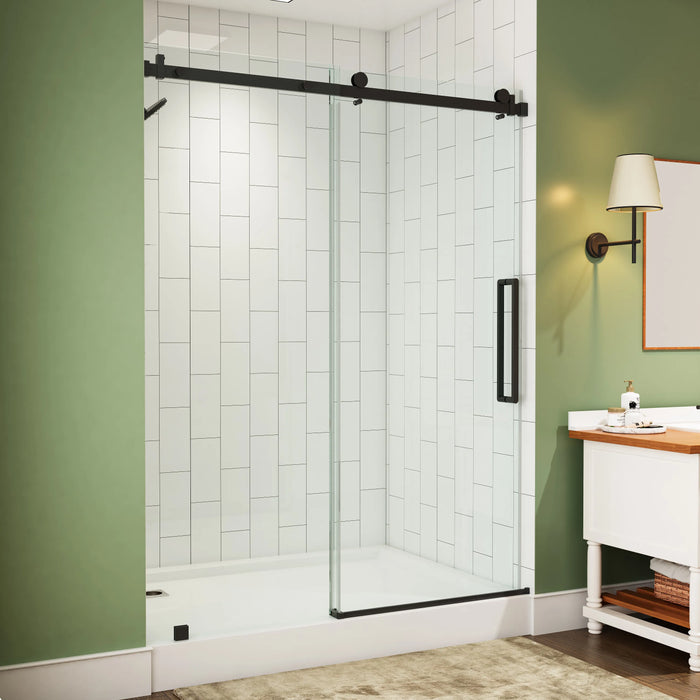
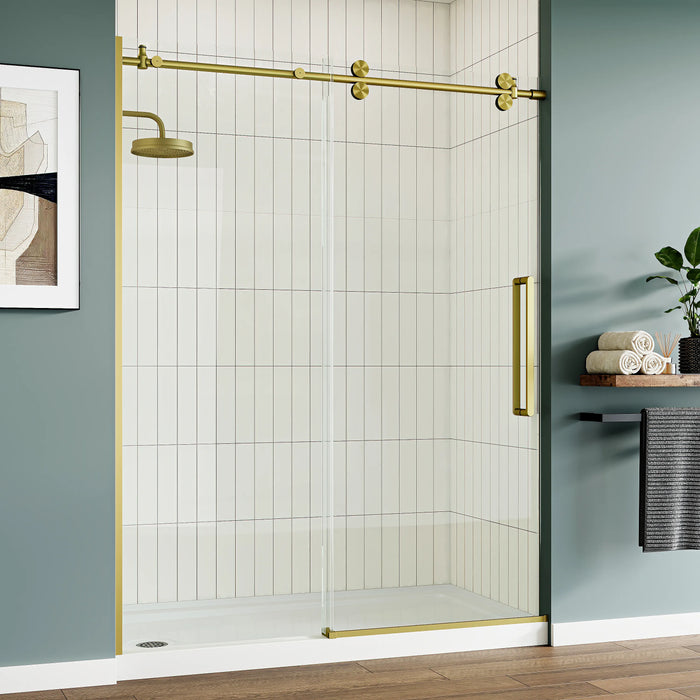
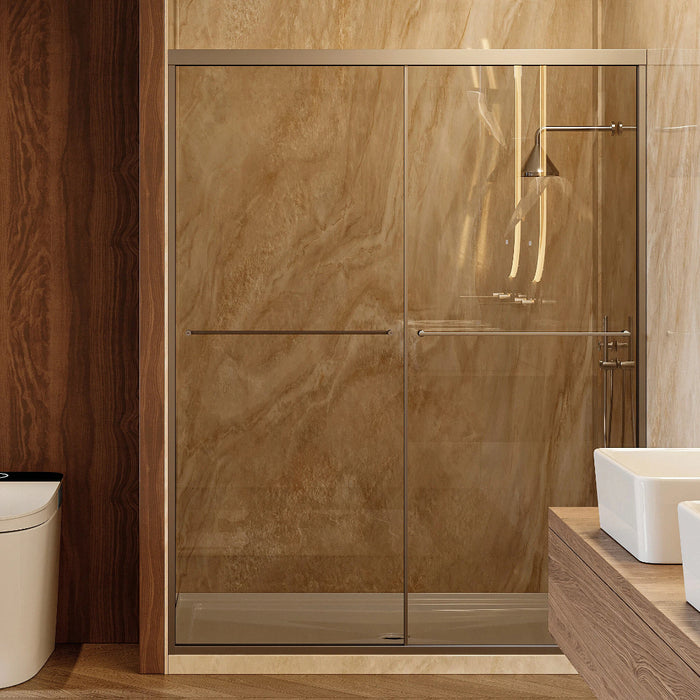
If a sliding door better matches your available opening and preferred door movement, these HOROW sliding shower doors are options you can compare before choosing between a sliding and bi-fold configuration.
Bi-Fold Versus Sliding Doors
Both designs avoid the large outward arc of a conventional pivot door, but they use the opening differently.
A slider needs enough horizontal width for one panel to overlap another. In a narrow alcove, that overlap may leave too little room to enter comfortably. A bi fold can expose more of the opening by stacking its connected panels to one side.
Sliders still have cleaning points, including lower guides and overlapping glass. However, they lack the central folding joint that moves each time the door is used. A slider may therefore be preferable when the opening is wide enough and maximum entry width is not essential.
Bi-Fold Versus Pivot Doors
A pivot door generally provides a direct, familiar movement and has fewer panel joints to clean. If it clears every nearby fixture, it is often the simpler door to own.
An outward-opening pivot can interfere with the room and carry water from the glass onto the floor. An inward-opening pivot needs clear space inside the enclosure and must not strike controls, seating, or accessories.
Choose the bi fold when the pivot’s swing causes a genuine conflict. Otherwise, weigh whether the bi fold’s compact movement is worth its additional hardware.
In-Fold Versus Out-Fold Designs
An in-fold door keeps most panel movement inside the enclosure. It minimizes interference with the bathroom and allows much of the water on the glass to remain over the tray. The folded panels do, however, occupy shower space and may conflict with controls or accessories.
An out-fold door preserves more space inside the enclosure but needs clearance in the room. It can also carry drips onto the bathroom floor when opened.
Some products may support different installation arrangements, but do not assume a door is reversible or can fold in either direction. Confirm:
- Whether it folds inward, outward, or both
- Where the folded panels rest
- Whether it is left- or right-handed
- Whether its handing can be reversed
- What internal and external clearances it requires
What Will It Really Cost?
Purchase and Installation Costs
The total cost depends on door size, glass, frame construction, hardware, finish, and installation conditions. Compare complete quotes rather than the door price alone.
Potential cost factors include:
- Professional installation
- Suitable wall fixings or additional support
- Difficult drilling through finished tile
- Correction of an unsuitable or uneven opening
- Replacement seals, pivots, magnets, or handles
- Resealing or alignment work
- Repair of finishes if a leak is left unresolved
A straightforward framed door fitted to a suitable, square opening will usually present fewer installation complications than a heavy, minimally framed assembly fitted to uncertain walls. Obtain product-specific guidance before ordering rather than assuming every door can accommodate the same conditions.
For a broader category comparison, see HOROW’s guide to shower door types, costs, and installation considerations.
Hardware Quality Worth Paying For
Prioritize the components responsible for movement, alignment, and water control:
- Secure wall profiles and appropriate fixing points
- Smooth pivots or hinges
- Replaceable lower and vertical seals
- An evenly meeting magnetic closure
- Accessible adjustment points
- Clearly identifiable replacement parts
- Complete installation and care instructions
Decorative finishes have little value if the mechanism becomes loose or a model-specific seal cannot be sourced. Before purchasing, ask how replacement seals, magnets, handles, hinges, and pivots are identified and ordered.
Replacement Parts and Water-Damage Risk
Seals and moving hardware are service items rather than purely decorative components. A worn lower seal or misaligned magnetic edge can allow water to escape even when the original installation was sound.
Small leaks should not be ignored. Check the surrounding floor and wall finishes if water repeatedly appears outside the enclosure. The cause may be a displaced seal, panel misalignment, unsuitable spray direction, or failed sealant—not necessarily a lack of silicone.
Keep the product name, purchase record, installation manual, and part information. These details can be essential when a model-specific component eventually needs attention.
Is a Cheaper Door False Economy?
A lower price does not automatically indicate poor quality, but savings may come from lighter hardware, limited adjustment, less robust seals, or weak parts support.
A sensible purchase gives priority to controlled movement, replaceable parts, clear instructions, and an adjustment range suitable for the opening. Plain styling with serviceable hardware may be a better long-term choice than a decorative finish on a door that cannot be maintained.
Which Size and Configuration Will Fit?

Measure Width, Height, and Squareness
Measure the opening only after the relevant wall and tray finishes are in place, unless the product instructions specify another method.
Take width measurements at the top, middle, and bottom. Measure the available height in more than one location. Then check whether the walls are plumb and the tray or threshold is level.
Use the smallest measured width when comparing the opening with the stated fitting range. A door’s nominal size may describe the opening it is designed to fit—not the exact glass width.
An adjustable wall profile can compensate only within the range specified for that product. It cannot necessarily correct a substantially uneven opening. If your measurements fall between sizes or vary significantly, consult the seller, manufacturer, or installer before ordering.
Compare Door Size With Clear Opening
The advertised door size and the clear walk-through width are not the same. Frames, hinges, handles, seals, closing posts, and the folded panel stack all occupy space.
Ask for the clear opening when the door is fully folded. Re-create that width with tape or cardboard and walk through it naturally. Include any need to turn, steady yourself, carry toiletries, or assist another person.
Also account for:
- Handle projection
- The lower threshold or frame
- The folded panel position
- Nearby toilets, vanities, and radiators
- Space needed to operate the door from inside
- The approach route from the bathroom entrance
This is the key measurement for deciding whether the door will feel practical in daily use.
Choose Glass, Frame, and Handing
Review the product documentation for its glass construction, intended application, installation requirements, and applicable safety information. In the U.S., 16 CFR Part 1201 covers glazing materials used in shower doors and enclosures and establishes safety requirements for these products. Follow the manufacturer’s installation instructions for the exact door rather than relying only on photographs or a brief listing.
Clear glass makes a small room feel less divided but readily shows water marks. Frosted or patterned glass adds privacy, although hinges, seals, and frame channels still require cleaning.
Framed doors provide more metal support and may offer useful wall adjustment. Semi-frameless designs reduce some visual bulk and channels but can demand more precise alignment. Choose based on the opening condition and serviceability as well as appearance.
Handing determines which side carries the folding assembly. Select it according to fixture clearance, the user’s approach, and access to the controls—not simply visual symmetry.
Once you know the fitting range, handing, folding direction, and required walk-through width, you can compare suitable options in HOROW’s shower door collection.
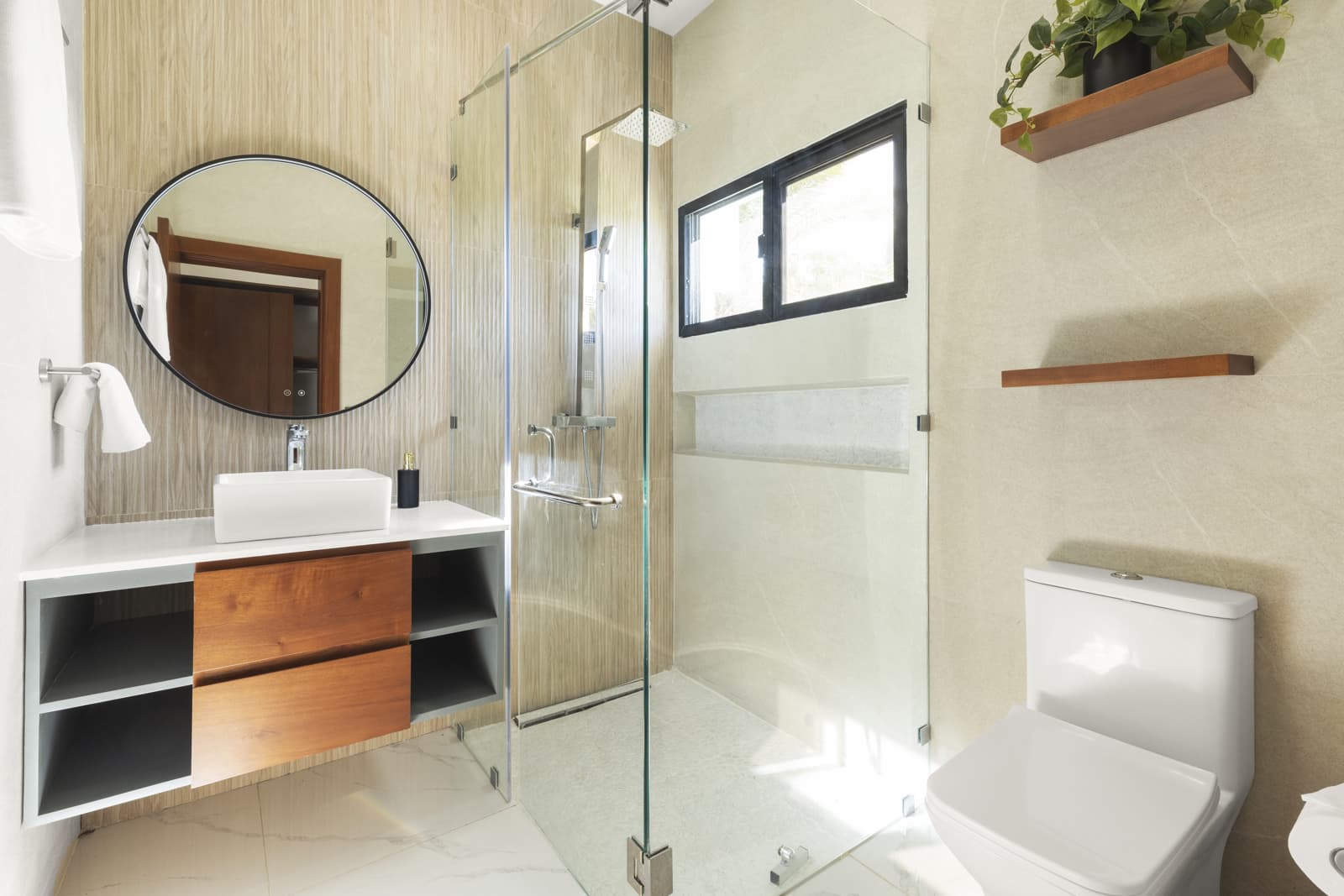
Will It Work in a Small Bathroom?
It can work well if all three conditions are met:
- The folded panels clear nearby fixtures.
- The resulting walk-through width is comfortable.
- The user can operate the door from both sides without awkward movement.
Do not buy the widest door that technically fits without checking its folding geometry. In a small bathroom, an appropriately configured door with a practical entrance is more useful than a larger assembly that conflicts with the toilet or room door.
Can Your Bathroom Support Proper Installation?
Check Walls, Tray, and Threshold
The fixing wall must be capable of supporting the door assembly using a method appropriate to its construction. Finished tile does not reveal whether the substrate behind it offers suitable support.
The tray edge or threshold must also suit the profile and lower seal specified for the exact door. Raised lips, curved edges, sloping wet-room floors, and uneven tiles can interfere with alignment or seal contact.
Follow the product-specific manual for fixing positions, drainage paths, adjustment, and silicone placement. Generic instructions may not apply to a particular frame design.
Test Fixtures Against the Folding Path
Create a full-size cardboard template of the panels and move it through the intended path. Test it against:
- The toilet, basin, and vanity
- Radiators and towel rails
- The bathroom door
- Shower controls and shelves
- Grab bars and seats
- Mats and raised floor edges
- The user’s standing position
Test both opening and closing from inside the shower. Many layout conflicts appear only when someone occupies the space.
DIY or Professional Installation?
DIY installation may be reasonable if you can identify the wall construction, drill finished tile accurately, handle the glass safely with assistance, and align multiple moving components according to the manual.
Professional installation is the more prudent choice when:
- Wall support is uncertain
- The opening is uneven
- The tray or threshold is unusual
- Glass handling is beyond your experience
- Waterproofing details are unclear
- You cannot verify the correct fixing method
Poor alignment may cause binding, scraping, uneven magnetic closure, or gaps at the seals. Avoid improvising around an opening that falls outside the product’s stated requirements.
What Happens If Walls Aren’t Plumb?
An adjustable profile may accommodate limited variation, but the permitted amount is product-specific. Excessive variation can cause the panels to bind, sag, self-move, or meet the seals unevenly.
Measure before ordering. If the top, middle, and bottom widths differ, provide all measurements to the manufacturer or installer and ask whether the exact door can accommodate the opening. Do not assume that trimming a frame changes the glass dimensions or folding geometry.
Will It Feel Safe and Comfortable Daily?
Test Entry Width and Movement
A door is not suitable simply because it opens. The intended user should be able to open it, pass through, turn, and close it without leaning on the glass.
Consider handle height, grip, opening resistance, threshold height, and the number of movements required. These details become especially important for older adults or anyone with reduced balance. CDC fall-prevention guidance specifically addresses slippery tub or shower floors and recommends grab bars in and around bathing areas where additional support is needed. Test whether the controls can be reached without standing beneath the spray or stretching through an awkward gap.
Where possible, operate a comparable installed door. Smooth and predictable movement matters more in daily use than appearance alone.
Consider Children and Pinch Points
The joint between folding panels creates a natural pinch area. Children should use the handle and keep their fingers away from the hinges and closing edges.
No user should hang towels on the door, swing from it, or treat it as a support rail. If the panels begin dropping, scraping, rattling, or closing unevenly, stop forcing the mechanism and arrange inspection or adjustment.
Plan for Mobility and Assisted Access
For assisted showering, evaluate the space outside and inside the enclosure. A caregiver must be able to approach the opening without being trapped between the door, toilet, vanity, or bathroom entrance.
A generous clear opening may be useful, but the folding action and threshold may still be unsuitable for a particular user. Where mobility support is a central requirement, have the entire shower layout assessed rather than selecting the door in isolation.
What Happens If the Door Jams?
Emergency release or removal procedures vary by product. Do not assume a bi fold door can be lifted, detached, or forced safely from outside.
Before purchase, ask how the exact mechanism can be accessed if it jams and keep the instructions available. Avoid placing fixtures where they would prevent another person from approaching the door. If a person is injured or trapped, do not force the glass assembly; seek appropriate emergency assistance.
What Is Long-Term Ownership Really Like?

Clean Hinges, Seals, and Tracks
Remove water from the broad glass surfaces after showering and allow the enclosure to dry. Pay particular attention to the central joint, lower seal, magnetic edge, pivots, and frame corners.
Use the care method specified for the door. Abrasive tools or unsuitable cleaners may damage seals, coatings, or metal finishes. Address mineral buildup before it begins to interfere with movement.
Watch for Leaks and Misalignment
A correctly sized and installed bi fold can contain normal shower spray effectively, but no door should be treated as leak-proof under every spray pattern.
Inspect for:
- Water at the folding joint or lower corners
- A magnetic strip that no longer meets evenly
- Panels that sag, scrape, or resist movement
- Loose handles, hinges, or pivots
- Split, hardened, or displaced seals
- Deteriorated sealant around the fixed profiles
Aim the shower spray away from panel joints where practical. If water begins escaping, identify the cause before applying more silicone; the real problem may be alignment or a worn seal.
Plan for Seal and Hardware Replacement
Before buying, confirm that common service parts can be identified and obtained. Seals must match the glass and profile, while hinges, pivots, magnets, and handles may be model-specific.
Retain the manual and product details. If replacement parts have no clear supply route, consider whether a simpler door would be easier to maintain over the life of the bathroom.
Will It Last in a Family Bathroom?
A well-chosen folding door can serve a busy bathroom, but it depends on correct use and timely maintenance. Slamming, pushing panel edges, or forcing a stiff mechanism increases stress on the joints and hardware.
A family bathroom benefits from smooth, controlled movement, robust edge protection, replaceable seals, and hardware that can be adjusted. If simplicity and tolerance of rough handling are the priorities, a pivot or suitable slider may be the more forgiving choice.
Before You Buy
- Measure width at the top, middle, and bottom.
- Measure available height in more than one place.
- Check wall plumb and tray level.
- Match the opening to the exact fitting range.
- Confirm the fully open walk-through width.
- Mock up the complete folding path.
- Check inward or outward movement and handing.
- Test access to controls from outside the shower.
- Confirm wall and threshold compatibility.
- Check that seals and hardware are replaceable.
- Read the exact installation manual before ordering.
Common Questions
Are bi-fold shower doors good for small bathrooms?
Yes, they can be a good choice when a standard swinging door does not fit comfortably. They work especially well when nearby fixtures make a traditional swinging door difficult to use. However, the final choice depends on the available entry width, folding direction, and whether the panels move comfortably without hitting anything.
Do bi-fold shower doors leak?
They can leak, but proper installation and regular care can reduce the risk. Problems usually appear when the door is not aligned correctly, seals no longer fit tightly, or water reaches areas the design is not intended to protect. Checking the door fit, seal condition, and shower spray position can help maintain better water control.
What size opening works for a bi-fold shower door?
The right opening size depends on the specific door model rather than a standard measurement. Measure the space carefully and confirm that the finished opening matches the manufacturer’s requirements. The usable entrance after the door folds is also important because the listed door width does not always equal the walking space.
Are folding shower doors hard to clean?
They need more attention than simpler shower door designs because the folding mechanism adds extra areas where water residue can collect. Regular wiping of the glass, seals, and connection points helps prevent buildup. The amount of maintenance also depends on the frame style, water hardness, and cleaning routine.
Should I install a bi fold door myself?
DIY installation may work if you have the right tools, experience with bathroom fitting, and can follow the product instructions carefully. These doors require accurate alignment because small errors can affect movement and sealing. If the wall condition, opening size, or installation process is uncertain, professional fitting is usually the safer option.
References
https://www.cdc.gov/steadi/pdf/STEADI-Brochure-CheckForSafety-508.pdf
https://www.ecfr.gov/current/title-16/chapter-II/subchapter-B/part-1201


Leave a comment
This site is protected by hCaptcha and the hCaptcha Privacy Policy and Terms of Service apply.