
Hard water leads to buildup and tough stains. Below is our quick breakdown of the most reliable toilets for your home.
Quick Answer
For most homes, the best toilet for hard water is a premium gravity-flush, single-flush toilet with a smooth coated bowl and glazed trapway. That setup usually gives the best mix of low maintenance, quiet use, easier cleaning, and long-term reliability.
Coated Bowl Value Classification
-
Must-have: No water softener, severe hard water symptoms, main bathroom, long-term home ownership
-
Nice-to-have: Working water softener, moderate hard water symptoms, main bathroom or guest bathroom, long-term ownership
-
Overkill: Functional water softener, mild hard water, guest bathroom, short-term ownership or upcoming renovation
If you don’t have a water softener and stains keep coming back, choose a coated rimless gravity toilet. If you have a busy household, rental, or one bathroom that gets hammered all day, choose a pressure-assist toilet only if you can live with more noise and pricier parts.
These conditions change what matters in a toilet. Flush strength still matters, yes. But in real homes, the bowl surface, rim design, and serviceability matter more than most people expect.
A lot of buyers make the same mistake: they shop by price and flush claims, then end up with a toilet that always looks dirty, gets a hard water ring fast, or starts rinsing poorly after the rim holes scale up. As explained by the U.S. Geological Survey, dissolved minerals in hard water are the main cause of persistent limescale and ring buildup on toilet surfaces [1].
If that sounds familiar, you’re not choosing between “good” and “bad” toilets. You’re choosing between toilets that age well amid mineral buildup and toilets that don’t. Here’s what usually matters in real homes.


Decision Snapshot
From household setups to budget limits, find your ideal match in the categories below.
Best for homes without a softener
Choose a premium gravity single-flush toilet with a bowl coating if you want the safest all-around choice.
This is the best fit if:
-
You have hard water stains now
-
You want easy parts
-
You care about quiet flushing
-
You want fewer harsh cleaners
-
You plan to keep the toilet for years
Avoid going too cheap here. Mineral buildup exposes weak glaze fast.
Better for rentals and high traffic
Choose pressure-assist if your top priority is moving waste hard and fast in a busy bathroom. Pressure-assist earns it when…
-
The bathroom sees commercial-like heavy daily traffic
-
Frequent clogs and repeat flushing are persistent issues
This is the better pick if:
-
Many people use the same toilet
-
Clog risk matters more than noise
-
It’s a rental or shared household
-
You can handle specialized repair parts later
Pressure-assist is overkill when…
-
Used for ordinary family daily use with light traffic
-
Household members are sensitive to loud flushing near bedrooms
-
You prefer simple DIY repairs and readily available standard parts
If you want peace and quiet at night, skip it.
Choose this if you hate scrubbing
Choose a coated rimless bowl if constant stains are what drive you crazy.
That matters because scale often attacks the hidden rim jets first. A rimless design removes many of those small holes, so there is less scale buildup where you can’t see it.
If you clean lightly but often, this style makes life easier.
Choose a mid-range gravity toilet if budget is tight
If budget is your main limit, choose a mid-range gravity single-flush toilet with a fully glazed trapway, even if it does not have every premium feature.
Do not spend your last dollars on fancy dual-flush hardware while ignoring the bowl surface. In areas with hard water, surface quality beats gimmicks.
Best toilet for hard water vs alternatives
The best toilet for hard water is not one “magic” model type. It’s a combination of choices that lower scale buildup, keep the bowl easier to clean, and avoid hard-to-service parts.
Gravity vs pressure-assist
A good gravity toilet is usually the best low-maintenance toilet for hard water.
Why? Because gravity systems are simpler. Fewer special parts. Easier tank repairs. Less noise. In areas affected by mineral buildup, that matters because scale doesn’t just stain the bowl. It can also gum up valves and seals over time.
Pressure-assist can help in a heavy-use bathroom because the flush is forceful and consistent. That can reduce waste hang-ups and some repeat flushing. But it does not solve rough porcelain, rim scale, or mineral buildup in hidden passages. It also brings trade-offs: louder flushes, more expensive parts, and less DIY-friendly repairs.
So when people ask about a strong flushing toilet for hard water buildup, the honest answer is this: strong flush helps, but it is not the first thing to prioritize.

Single-flush vs dual-flush
In severe hard water, single-flush usually beats dual-flush.
That may sound old-fashioned, but there’s a practical reason. Dual-flush systems often have more brand-specific parts, smaller passages, and extra buttons or cartridges that can collect scale. In a mild water area, that may not matter much. In a hard water home, it often does.
There’s also the bowl rinse issue. The lighter flush setting on some dual-flush toilets may not wash the bowl as well, which means rings and streaks show up faster. If your goal is how to prevent toilet stains from mineral buildup, weak rinse is not your friend.
If water savings matter a lot and your water is only moderately hard, dual-flush can still work. But if you want the safer choice, go single-flush.
Rimless vs traditional rim
If hard water rings and hidden rim deposits are your biggest headache, rimless is usually better.
Traditional rims hide small jet holes under the bowl lip. Over time, those holes can clog with minerals. The toilet may still flush, but the bowl rinse gets patchy. Then you wonder why one side always looks dirty.
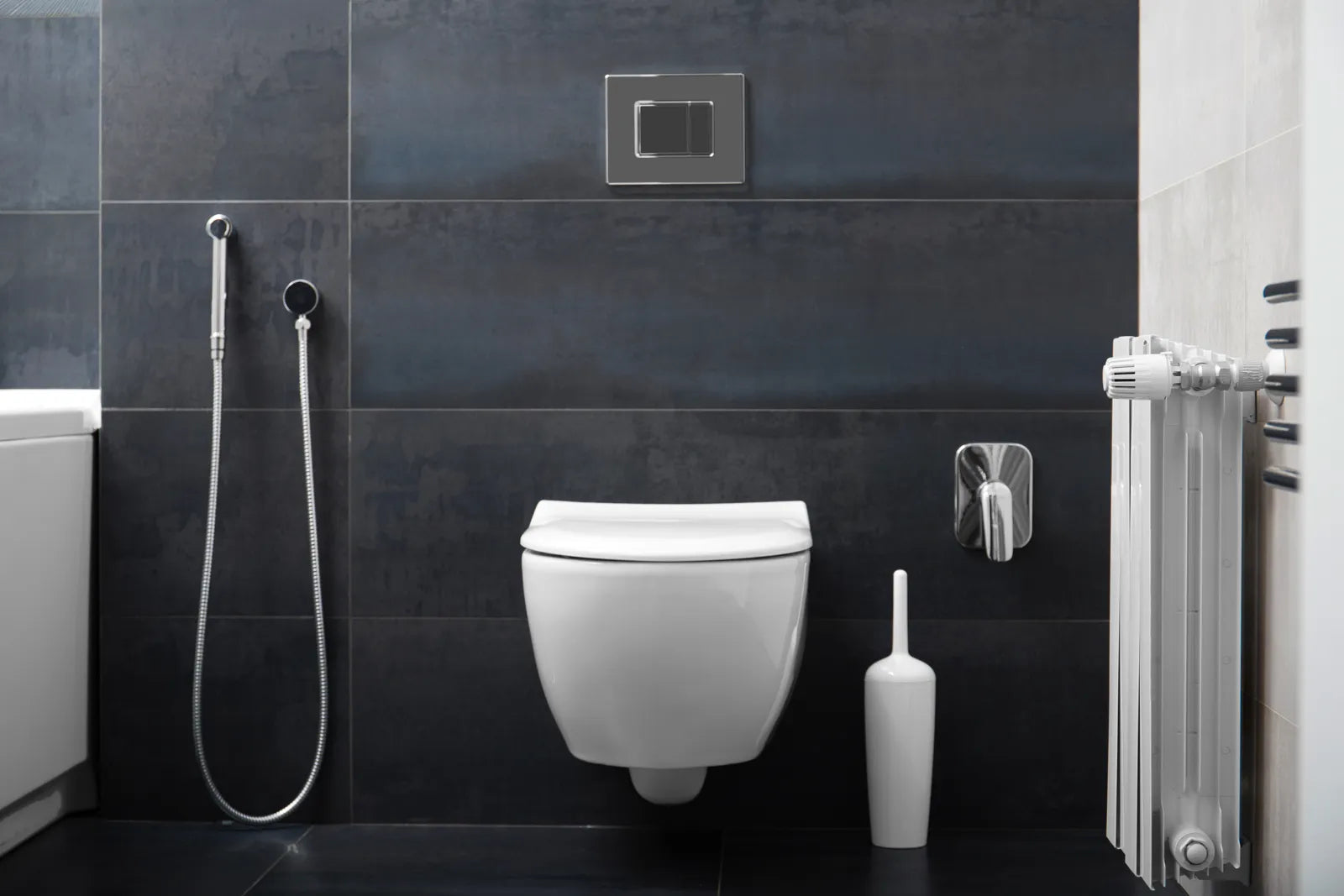
Rimless bowls use a more open channel. That makes them an easy to clean toilet for homes with hard water, especially if you hate scrubbing under the rim.
Decision Caution: When to Avoid Rimless / Stick with Traditional Rim
-
Skip rimless models if you are highly sensitive to splashing, as open channels raise splash risks on low-quality designs.
-
Rimless toilets vary widely in rinse performance; poorly engineered units leave uneven residue.
-
A well-made traditional rim is the safer choice if splash control and consistent full-bowl rinsing are your top priorities.
That said, not every rimless design is equal. Some rinse better than others. In a small bathroom, it’s smart to look for one with good splash control and enough room to reach around the base.
Coated bowl vs standard porcelain
If you are asking for the best toilet bowl surface to resist scale, the answer is simple: choose a high-quality porcelain bowl with a factory easy-clean coating.
This is one place where paying more often makes sense.
A smooth coated bowl slows mineral adhesion. It does not stop hard water stains forever. But it usually means:
-
Rings take longer to form
-
Stains release more easily
-
Less scrubbing is needed
-
You can avoid harsh cleaners more often
Cleaning Behavior Decision Check
-
Coated bowls deliver the best return for households with gentle, frequent routine cleaning.
-
If you regularly use harsh chemicals or abrasive scrubbers, the coating will wear quickly, and the upgrade will not be worth the extra cost.
Standard porcelain can still work well if it is smooth and well glazed. But lower-grade bowls often feel fine when new and become harder to clean after a few years, especially if harsh cleaners have roughened the finish.
Key differences that actually matter
These critical factors separate reliable toilets from poor-performing models.
Surface beats raw flush power
Many buyers think a stronger flush will solve hard water toilet problems. It won’t, at least not by itself.
How hard water affects toilet performance over time is more about mineral film and scale than raw force. When the bowl surface gets rough or the rim holes start to clog, the toilet can look dirty faster even if the flush is still powerful.
This is why the difference between strong flushing and easy clean toilets for hard water matters so much. Strong flush helps remove waste. Easy-clean surfaces help stop the bowl from becoming a mineral magnet. If you can only pay for one upgrade, choose the better surface first.
Rim design changes cleaning time
In hard water homes, cleaning access is not a minor detail. It changes how the toilet feels to own.
A traditional rim with scale-clogged holes can turn a two-minute wipe-down into a deep-clean job. A rimless bowl or open-rim design lets you actually reach the places where buildup starts.
That is one of the biggest toilet features that help resist hard water stains: not just resisting buildup, but making buildup easier to remove before it gets thick.
Strong flush can’t fix rough glaze
This is one of the most common buying mistakes.
People choose a toilet with big flush claims, then find out the bowl surface is average at best. A year or two later, the toilet still flushes well, but the ring returns fast and the inside always looks dull or gray.
So, can a strong flushing toilet reduce hard water stains? A little, because a better rinse leaves less residue behind. But it cannot make up for a bowl that grabs minerals easily.
Cheap parts cost more later
Hard water is tough on seals, valves, and flush hardware. This is why no-name, part-specific systems are risky.
A toilet may seem affordable at first. Then you need a replacement seal, flush cartridge, or push-button assembly that is hard to find locally. If your water is hard, there is a good chance that moment comes sooner.
That is one reason the best low maintenance toilet for hard water is usually not the cheapest one.

When this choice is better
If you’re facing these common issues, these choices will deliver the best results.
Your bowl stains return fast
If you clean the toilet and the ring comes back quickly, the problem is not just your cleaner. It is usually a mix of hard water minerals, bowl finish, and rinse pattern.
In that case, a coated bowl and better rim design are worth prioritizing over fancy features.
You want fewer harsh cleaners
If you are tired of acid cleaners, pumice, or aggressive scrubbing, buy a toilet that needs less rescue work.
That means:
-
Smoother bowl surface
-
Good rinse coverage
-
Fewer hidden rim deposits
-
Easy-to-find repair parts
A better bowl often saves more frustration than a more powerful tank.
You need easy parts and quiet use
This points to premium gravity.
Pressure-assist has its place, but many homeowners regret the noise in a hallway bath or near bedrooms. If you want predictable repairs and common replacement parts, gravity is the calmer choice.
You want year-five reliability
A toilet should still be easy to live with after the new-house shine is gone.
In hard water areas, year-five reliability usually comes from simple mechanics, smooth surfaces, and easy maintenance. It rarely comes from the cheapest bowl or the most complex flush system.
When the alternative is better
There are also cases where other toilet types serve you better.
You already have a softener
If you already have a well-working water softener, you can relax a bit.
In that case, a premium coating becomes more of a comfort upgrade than a must-have. A good standard gravity toilet may be enough. You still want solid glaze and a good rinse pattern, but the urgency is lower.
You need maximum flush force
If the bathroom sees constant use, clogs are a bigger issue than staining, and noise is not a deal-breaker, pressure-assist makes sense.
This is why it works well in some shared homes, basement baths, and rentals. It is not the best answer for everyone. It is the best answer for heavy demand.
You accept more upkeep for savings
If you are okay doing more descaling and occasional internal maintenance, a cheaper standard toilet can work. Just go in with open eyes.
This is a valid path for a secondary bathroom, short-term ownership, or a fix-up project. It is just not the best long-term answer for the main bathroom in a hard water home.
You only need a short-term fix
If you plan to remodel soon or move soon, it may not make sense to pay extra for every anti-scale feature. In that case, focus on the basics:
-
Single-flush
-
Decent glaze
-
Good trapway
-
Parts you can replace easily
Comparison table and choice aids
Below are handy references to aid your buying decision and upkeep.
Layout Decision Filter (Small-Bath Cleaning Reach)
Use this filter first before picking rimless, skirted or compact toilet models. Bathroom layout directly impacts long-term cleaning for hard water homes.
If your bathroom is compact with tight gaps next to walls, vanities or bathtubs, prioritize cleaning access over style. Full skirted bases trap hard water grime in hard-to-reach floor gaps and increase cleaning work. Exposed bases offer full access to wipe away mineral buildup along the base and floor line.
Always confirm there is enough hand space behind the tank and on both sides of the toilet base. These narrow gaps are prime spots for hard water splashes and scale to accumulate over time.

Comparison table: four buyer paths
| Buyer path | Upfront cost | Installation | Space fit | Maintenance in hard water | Comfort / daily use | Best for |
| Premium gravity, single-flush, coated bowl | Higher | Simple, standard | Works in most baths | Low to moderate | Quiet, easy to live with | Most homeowners without a softener |
| Pressure-assist | Higher | Slightly more specialized | Standard footprint | Moderate to high | Loud but very forceful | Rentals, busy family baths, high traffic |
| Budget gravity, standard bowl | Lower | Simple | Works in most baths | Moderate to high | Quiet, basic | Short-term use or tight budgets |
| Dual-flush with coating | Mid to higher | Standard but more parts | Works in most baths | Moderate in hard water | Water-saving, but can rinse less | Mild to moderate hard water, careful owners |
Choose this or that
Choose premium gravity if:
-
You want the easiest long-term ownership
-
You hate noisy flushes
-
You want fewer repair surprises
-
You care about bowl appearance
Choose pressure-assist if:
-
You need stronger waste removal
-
Many people use the toilet daily
-
You can tolerate noise
-
You are less worried about part cost later
Choose single-flush if:
-
Your water is very hard
-
You want fewer internal issues
-
You want simple repairs
Choose dual-flush if:
-
Water savings matter a lot
-
Your water is not severe
-
You accept more maintenance attention
Choose rimless coated bowls if:
-
Stains are constant
-
You hate cleaning hidden rim holes
-
You want the best toilet design to prevent hard water ring buildup
Choose exposed base over skirted base if:
-
Easy full access for cleaning hard water grime around the toilet base is a top priority
-
Your bathroom has tight spaces with limited cleaning room
Choose low-maintenance designs for busy households if:
-
Kids, frequent guests or multiple residents use the toilet daily
-
Only one person handles all bathroom cleaning
-
Routine wipe-downs are often inconsistent or infrequent
Hard-water maintenance checklist
A toilet can be good for hard water and still perform badly if the care is wrong.
The basic habits that help most:
-
Clean lightly and often instead of waiting for a thick ring
-
Use a mild acidic cleaner when needed
-
Avoid abrasive pads that scratch the glaze
-
Avoid constant-use in-tank tablets
-
Descale rim channels or jets before the rinse weakens
-
Replace worn seals before leaks leave mineral marks
What to look for before buying
Focus on these key features to pick a durable toilet for hard water conditions.
Bowl surface and material
People often ask, which toilet material is easiest to clean with hard water?
For most buyers, the answer is high-quality vitreous porcelain with a smooth factory finish or easy-clean coating. You may see “ceramic” used loosely in listings, but for toilets, the practical difference is usually about the glaze quality, not the marketing term.
So if you are asking which is better, porcelain or ceramic toilet, here’s the simple answer: in real buying terms, choose the one with the better finish, smoother surface, and stronger quality control. A rough bowl with a poor glaze will lose this fight even if the product page sounds impressive.
Trapway design
The trapway is the hidden path waste follows out of the bowl. In hard water areas, fully glazed trapways matter because mineral scale can slowly narrow rough passages.
You do not need the largest trapway on paper. You need one that is smooth, well made, and proven to stay clear with basic maintenance.
This is one of the biggest hard water toilet problems to consider before buying: slow internal scaling does not show up on day one. It shows up after a few years, when the toilet starts acting weaker than it used to.
Flush volume: 1.28 or 1.6 GPF
Which is better, 1.28 GPF or 1.6 GPF?
For most homes, a well-designed 1.28 GPF toilet is enough and saves water without much downside. But in a severe hard water area, especially with one heavily used bathroom, a mediocre 1.28 GPF toilet can lead to more repeat flushing and more bowl residue.
So here’s the practical answer:
-
Choose 1.28 GPF if the toilet has a strong rinse and a good bowl surface
-
Choose 1.6 GPF if your bathroom gets heavy use, your plumbing is older, or weak rinse has been a problem before
More water is not always better. Better design matters more. But in some homes, the extra rinse volume does help.
Height and bowl shape
Comfort height is easier for many adults, especially taller users or people with knee pain. But think about who cleans the toilet too.
A very bulky toilet in a tight bathroom can make side and back cleaning harder. If every inch counts, a more compact bowl may reduce both crowding and cleanup stress.
Cleaning and prevention in real life
Below we cover common concerns, cleaning solutions and useful prevention tips.
Can hard water ruin a toilet?
Not in the dramatic sense of destroying it overnight. But yes, hard water can shorten how well a toilet performs and how good it looks.
It causes:
-
Rings and brown or gray stains
-
Rim jet clogging
-
Scale in the trapway
-
Wear on valves and seals
-
More frequent deep cleaning
So, when a toilet is not suitable for hard water areas is usually when it has rough glaze, weak bowl rinse, hard-to-find parts, or complex flush hardware that scale can choke.
What removes hard water buildup?
If you already have a buildup problem, mild acids work best. White vinegar helps with lighter scale. A toilet-safe descaler made for limescale works faster for heavier buildup. For very stubborn deposits, some people use pumice carefully, but that can scratch surfaces if used wrong.
The key point is this: what removes hard water buildup in toilets is not the same as what preserves the bowl finish long term. Stronger cleaners may solve today’s ring while making tomorrow’s ring worse if they etch the glaze.
So if you buy a coated easy-clean toilet, protect that finish. Clean sooner, not harsher.
How to prevent stains
If you want to know how to prevent toilet stains from hard water, do these first:
-
Choose a smooth coated bowl
-
Avoid long gaps between cleanings
-
Keep rim rinse paths clear
-
Fix slow leaks and drips
-
Use a water softener if the whole house has severe scale issues
In very hard water homes, a softener often gives a better whole-home return than trying to solve everything with toilet cleaners alone.
About aluminum foil in the tank
You may have seen people ask, why put aluminum foil in a toilet tank?
This is a home-remedy trend, usually tied to claims about reducing odors, rust, or tank residue. It is not a real solution for hard water. It will not stop limescale, protect seals, or improve bowl performance. In some cases, odd tank add-ons just create more debris around the flush hardware.
If hard water is the problem, use proper descaling and choose the right toilet design. Skip tricks like this.
Final Verdict
For most homeowners, the best toilet for hard water is a premium gravity, single-flush toilet with a smooth coated bowl and glazed trapway. It gives the best balance of easy cleaning, quiet use, simple repairs, and long-term reliability.
Choose pressure-assist only if your bathroom gets very heavy use and clog resistance matters more than noise or part cost. If stains are your biggest problem, pay for the coated rimless bowl. If budget is tight, skip cheap dual-flush systems and buy the best simple gravity toilet you can afford.
Before You Buy
-
Check if your home has a softener, or needs one.
-
Choose a single-flush gravity toilet unless you have a clear reason not to.
-
Prioritize bowl coating and glaze quality over flashy flush claims.
-
Look for a fully glazed trapway.
-
Consider rimless if hard water rings and rim scale are constant.
-
Measure cleaning space around the toilet, not just rough-in.
-
Avoid in-tank tablets if you want longer part life.
-
Make sure replacement parts are easy to get locally.

Short questions homeowners ask
Can a strong flush stop hard water rings?
Not by itself. A stronger flush helps bowl rinse, but the bowl surface and rim design matter more for stain resistance.
Is a rimless toilet better for hard water?
Usually yes. It removes many of the small hidden rim holes where mineral scale builds up.
Do I need a coated bowl if I have a water softener?
Usually not as much. It is still nice to have, but less essential if the softener is working well.
Is dual-flush a bad idea in hard water?
Not always, but it is riskier in severe hard water because the extra parts and lighter rinse can lead to more upkeep.
What is the safest low-maintenance choice?
A quality gravity, single-flush toilet with a smooth coated bowl and glazed trapway.
References
[1] U.S. Geological Survey. Hardness of Water. Retrieved from


Leave a comment
This site is protected by hCaptcha and the hCaptcha Privacy Policy and Terms of Service apply.