-
Choose the HOROW T16 when front-to-back space is tighter, the bathroom has the required power and water conditions, and you want powered bidet functions in an integrated toilet.
-
Compare the HOROW N30 when you want a complete non-electric bidet toilet and the room can accommodate its 28-inch overall length.
-
Compare the HOROW T38 when you prefer a powered smart toilet with a built-in tank and pump and the bathroom has enough clearance for its 27-7/16-inch overall length.
-
Keep the existing toilet and evaluate a compatible bidet seat when the current fixture already fits the room well and replacing it would create a new clearance problem.
For shared bathrooms with simpler controls
An integrated smart toilet can work well in a shared bathroom when regular users and guests can operate its primary wash and flush controls easily. Compare the controls you expect people to use most often rather than choosing only by the number of automated features.
For buyers who want more powered features
Powered smart toilets may include heated seating, warm-water washing, drying, remote controls, automatic flushing, or automatic lid functions. In a small bathroom, compare those features only after confirming the model's dimensions, rough-in, power requirement, water requirement, and control layout.
When there is no nearby outlet
If there is no suitable outlet near the toilet, confirm the electrical requirement before choosing a powered model. Adding electrical service may be practical during a remodel, but if adding power is impractical, a non-electric bidet toilet such as the HOROW N30 or a compatible non-electric bidet seat may be a more suitable path.
Best Smart Toilet for Small Bathrooms vs Alternatives
For a small room, the practical choice usually comes down to three paths:
-
Powered integrated smart toilet when the room supports the required space, water, and electrical conditions.
-
Non-electric bidet toilet when built-in washing is wanted without powered bidet functions.
-
Bidet seat retrofit when the existing toilet already fits the bathroom well.
Once the room is measured, those options can have very different installation requirements and space trade-offs.
Smart toilet vs bidet seat retrofit
When does replacing the full toilet make sense?
-
Choose a bidet seat when your existing toilet already fits the room and you mainly want cleansing or comfort features without replacing the complete fixture.
-
Choose an integrated bidet toilet when you are replacing the toilet anyway and the exact model fits the rough-in, projection, power, water, and service-access requirements.
-
Do not choose the integrated option only because it has more features. In a tight bathroom, installed fit should remain the first filter.
A fully integrated unit places the bidet functions within the toilet instead of adding a separate replacement seat. If you are already replacing the toilet and the room passes the fit checks, that format may be worth comparing.
A bidet seat retrofit can be the lower-risk option when the existing toilet already fits the rough-in, door swing, and surrounding fixtures. You still need to confirm bowl shape, mounting area, rear clearance, water connection, and any electrical requirement for the exact seat.
A useful rule is to keep a well-fitting toilet when replacing the entire fixture would create a new clearance problem. If you are already replacing the toilet, compare integrated models by their exact installed dimensions rather than appearance alone.
Tankless vs built-in tank footprint
Tankless does not automatically mean a smaller installed footprint.
A tankless smart toilet may have a streamlined profile, but the complete rear housing, base shape, plumbing connections, and required service space still determine how far the fixture extends into the room.
A model with a built-in tank has a different internal layout, but the tank label alone does not tell you whether it will fit better or worse. Compare the full length, width, rear profile, rough-in, and connection locations for the exact models you are considering.
Neither tankless nor built-in-tank construction guarantees the smallest front-to-back footprint. The product drawing and your bathroom measurements should decide.
Round vs elongated seat comfort
Round and elongated toilets can have different overall dimensions, but bowl shape alone does not tell you how much room a smart toilet will use. Compare the exact overall dimensions and seat dimensions rather than relying only on the bowl label.
Comfort also matters when the bathroom is used every day. Saving a small amount of projection is not useful if the resulting seat or layout is uncomfortable for the people who use it most often.
If an elongated model fits without interfering with the door, vanity, or usable front space, it may be worth comparing. If the room is too constrained for a complete replacement, retaining the existing toilet and adding a compatible bidet seat may be more practical.
Comparison Table: Fit and Installation Trade-Offs
| Option |
Works best when |
What to confirm |
Power |
Main trade-off |
| Powered integrated smart toilet |
You are replacing the full toilet and the room passes the fit, water, and power checks |
Rough-in, overall projection, door swing, water supply, outlet, service access |
Verify the exact model |
More installation conditions need to be confirmed before purchase |
| Non-electric bidet toilet |
You want built-in washing without powered bidet functions |
Rough-in, overall projection, water pressure, door swing, service access |
No electricity for the non-electric bidet function |
No powered heated-seat, warm-water, or dryer functions |
| Bidet seat retrofit |
The existing toilet already fits the room |
Bowl shape, mounting area, rear clearance, water connection |
Model-dependent |
Keeps the existing toilet but requires seat compatibility |
| Wall-mounted bidet toilet |
The bathroom is already undergoing a major remodel |
In-wall carrier, wall cavity, plumbing layout, future service access |
Model-dependent |
Can reduce visible floor obstruction but requires substantially more installation work |
Product type helps narrow the options, but the exact model dimensions and installation requirements decide whether it belongs in your bathroom.
HOROW Smart Toilets to Compare for a Small Bathroom
```
Start with your bathroom measurements rather than the feature list. These three HOROW options represent three different small-bathroom paths: the T16 for buyers trying to limit front-to-back projection while keeping powered bidet functions, the N30 for bathrooms where a non-electric bidet toilet is a better fit, and the T38 for buyers who prefer a built-in tank and pump when the room has enough clearance. Confirm the rough-in, full dimensions, water requirements, electrical requirements, door swing, and service access for the exact model before ordering. For a deeper installation check, see what actually fits in tight spaces.

For Tighter Powered Layouts
HOROW T16
The T16 is the shortest front-to-back option among these three models, measuring 25-9/16 inches long. Its tankless design combines powered bidet functions with a 12-inch rough-in, making it worth comparing when usable projection is one of the main constraints.
- 25-9/16" L × 15-15/16" W × 19-13/16" H
- 12-inch rough-in
- 16-1/2-inch seat height
- 10 amps at AC 120 V, 60 Hz
- 20.3–108 psi specified water-pressure range
Confirm before buying: Check the door path, usable front clearance, outlet position, water supply, and service access against the specification drawing.

For Bathrooms Without a Power Outlet
HOROW N30
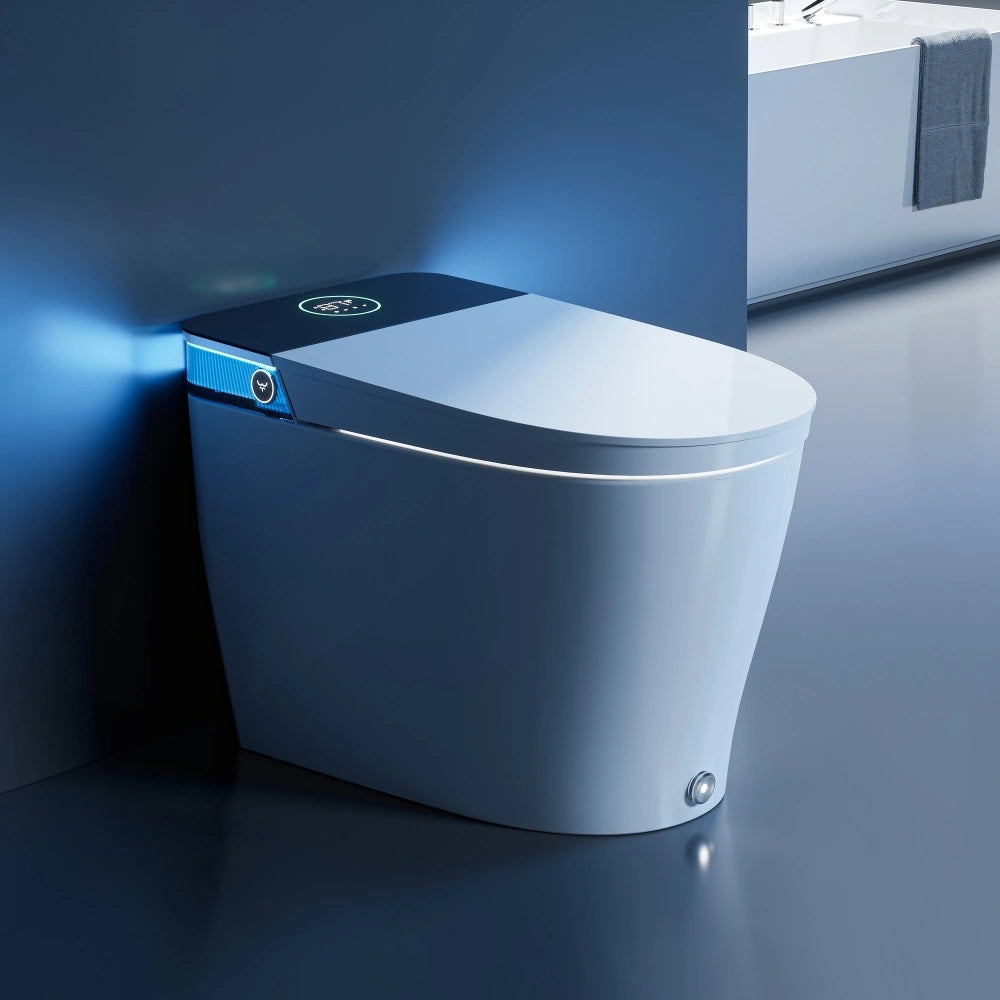
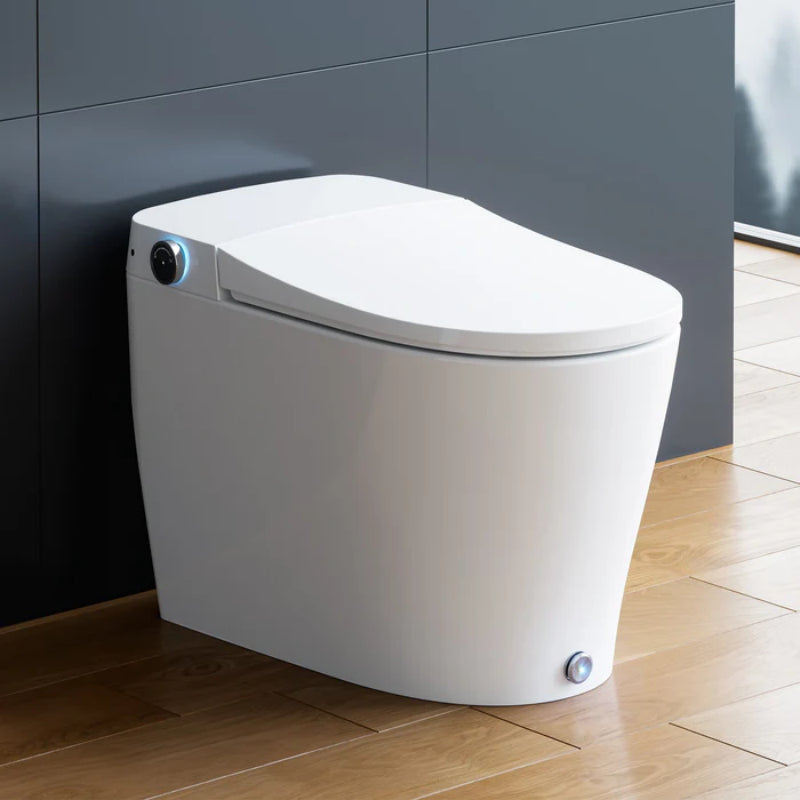
The N30 is a non-electric tankless bidet toilet for buyers who want built-in cold-water washing without adding an electrical outlet for the bidet functions. It uses a 12-inch rough-in and measures 28 inches from front to back, so confirm that the projection still clears the door and surrounding fixtures.
- 28" L × 15-15/16" W × 18-1/2" H
- 12-inch rough-in
- 17-1/4-inch seat height
- No electricity required for the bidet toilet
- 35–108 psi specified water-pressure range
Confirm before buying: Check the 28-inch projection, door swing, water-supply position, and available water conditions before choosing it for a tight bathroom.
For a Built-In Tank and Pump
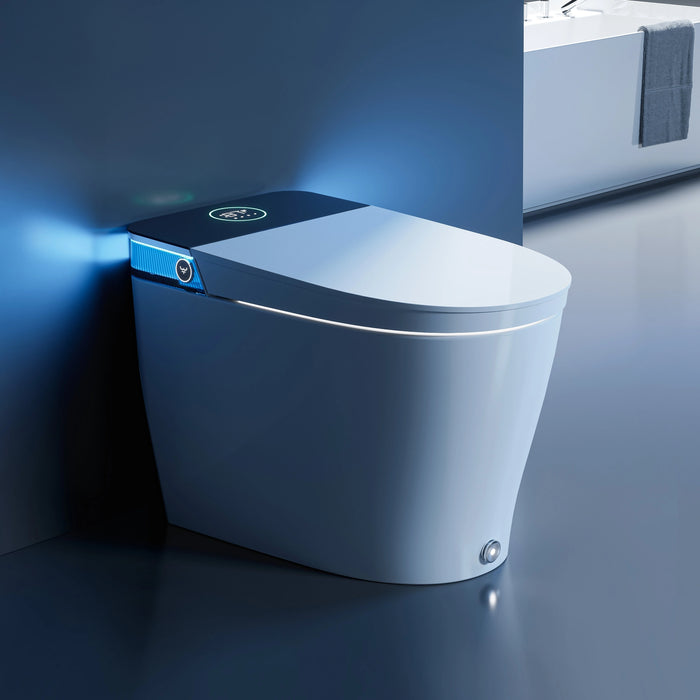
HOROW T38
The T38 uses a built-in water tank and pump and is a different fit choice from the shorter tankless T16. Compare it when the bathroom has enough front-to-back clearance and you want a powered integrated smart toilet with a tank-assisted flushing configuration.
- 27-7/16" L × 15-7/16" W × 18-11/16" H
- 12-inch rough-in
- 16-9/16-inch seat height
- 16 amps at AC 120 V, 60 Hz
- 11.6–108 psi specified water-pressure range
Confirm before buying: Check the full 27-7/16-inch projection, outlet location, water supply, door clearance, and rear and side service access.
```
Key Differences That Actually Matter
Specifications matter, but in a small bathroom the way those specifications interact with the room matters just as much.
Rear housing can change the fit
Integrated bidet toilets contain more components than a basic toilet. Depending on the model, the rear housing, base shape, water connection, and electrical connection can affect how the toilet sits relative to the finished wall and nearby fixtures.
Do not compare only the listed overall length. Also check:
If you compare only the catalog length, you can still choose a toilet that is difficult to install or service in the actual room.
Automatic features need a household-fit check
Automatic flushing, lid controls, foot sensors, remotes, and other hands-free functions can add convenience, but they should not drive the purchase before fit and installation are confirmed.
For a shared bathroom, check whether regular users and guests can understand the controls and whether the exact model provides practical manual or physical controls for the functions they use most often.
The right feature set depends on who uses the bathroom, but the fixture still has to pass the same space, plumbing, and electrical checks first.
Flush performance matters more than extra features
When comparing toilets, review the exact model's published flush volume, flushing system, water-supply requirements, and any applicable efficiency labeling.
EPA WaterSense can be useful when checking water-efficiency information, but an efficiency label does not replace product-specific flush or installation specifications.
In a small bathroom, dependable everyday operation and correct installation usually matter more than features that do not address your actual needs.
Repair access matters in tight rooms
Before ordering, check that:
-
The water shutoff valve remains reachable and operable after installation.
-
For a powered model, the factory power cord and outlet can remain accessible as required by the installation instructions.
-
Required service or connection areas are not blocked by walls, vanities, or other fixtures.
If a model blocks required service access, compare a different model or installation approach.
A toilet can fit physically and still be difficult to maintain, so service access should be part of the buying decision rather than an afterthought.
When a Smart Toilet Is the Better Choice
A fully integrated smart toilet can make sense in a small bathroom when the room supports the fixture and you want the bidet and comfort functions built into the toilet itself.
You prefer an integrated fixture
An integrated smart toilet combines the bowl and bidet functions into one fixture rather than placing a separate replacement bidet seat on an existing toilet.
That format may appeal to buyers who are already replacing the toilet, but the complete fixture still needs enough clearance for normal use, cleaning, and service.
Your remodel already includes electrical work
If walls, flooring, or electrical systems are already being updated, it may be easier to plan the required outlet location at the same time rather than adding it after the bathroom is finished.
Before choosing an electric smart toilet, confirm the exact model's power requirement, cord location, rough-in, water connection, and surrounding clearance, then coordinate any electrical work with the bathroom plan.
You plan to use powered bidet features regularly
A powered smart toilet may make more sense when heated seating, warm-water washing, drying, or other powered bidet functions are features you expect to use regularly. Compare the exact feature set rather than assuming every smart toilet includes the same functions.
If powered functions are not important to you, a non-electric bidet toilet or compatible bidet seat may meet the need with fewer electrical requirements.
Seat height and usable space still matter
In a small bathroom, seat height should be evaluated together with usable approach space and the needs of the people who use the room. A taller seat does not solve a cramped layout.
Compare the published seat height for the exact model with the available sitting and standing space. Seat height alone should not be treated as proof that a toilet will suit every user.
When an Alternative Is Better
An integrated smart toilet is not automatically the right choice just because the product is described as compact.
Can a smart toilet fit here?
Yes, a smart toilet can fit in a very small bathroom, but "compact" is not a universal size. Measure the finished room and compare it with the exact model drawing rather than relying on a market-wide depth range.
If the full fixture would reduce usable clearance, interfere with the door, or block required connections, compare another model or keep the existing toilet and evaluate a compatible bidet seat.
No suitable outlet? Check that before choosing an electric model
Do not order an electric smart toilet before confirming its electrical requirements and the outlet location.
Follow the installation instructions for the exact model and applicable electrical codes. If a new bathroom outlet is required, plan the electrical work before the toilet installation rather than relying on an extension cord as a substitute for the required connection.
If suitable electrical service is impractical for the room, compare non-electric bidet options instead of selecting an electric model first and trying to solve the power requirement later.
The HOROW N30 shown above is one example of a complete bidet toilet whose washing functions do not require electricity.
Very tight doors favor lower-risk retrofits
Door swing is easy to overlook in a compact bathroom. A replacement toilet may project differently from the current fixture even when the two products appear similar in photos.
The relevant dimensions are not limited to toilet length. You also need usable space for the door, knees, sitting and standing, lid movement, cleaning, and service access.
Use the clearance requirements that apply to your installation together with the exact toilet's installation manual. Do not rely on one universal clearance number for every bathroom.
Shared bathrooms favor clear controls
If several people or guests use the bathroom, compare how easy the primary wash and flush controls are to understand. Check the controls available on the exact model rather than assuming more automation will be better for every household.
How to Measure Before Buying
A correct rough-in alone does not guarantee that the complete fixture will fit. Before comparing features, check these four measurements and connection points:
-
Rough-in: Measure from the finished wall to the center of the drain or closet-bolt location using the method required for the toilet installation. Match the result to the exact model specification.
-
Front-to-back space: Measure from the finished wall toward the door path, vanity, tub, or other nearby obstruction, then compare that space with the complete toilet drawing.
-
Side and service access: Check nearby walls, cabinets, trim, the shutoff valve, and any area that must remain accessible for installation or future service.
-
Power and water: For a powered model, confirm the outlet location and factory power-cord reach. For every model, check the published water requirements and water-connection location.
Smart Toilet vs Bidet Seat for Small Bathrooms
If you are deciding between replacing the full toilet and keeping your current fixture, use the room itself to narrow the choice.
Choose a smart toilet if:
-
You are already replacing or remodeling the toilet area.
-
The room meets the exact model's power, water, rough-in, and clearance requirements.
-
-
You plan to use the model's powered bidet and comfort features regularly.
Choose a bidet seat if:
-
Your current toilet already fits the room well.
-
Replacing the entire toilet could create a door-swing or clearance problem.
-
You do not need to replace the existing bowl and flushing system.
-
You want to reduce the scope of the toilet replacement project.
In a very tight bathroom, a compatible bidet seat can be the lower-risk route when the existing toilet already fits and a full replacement would reduce usable clearance.
A Note on Water Pressure
Smart toilet water-pressure requirements depend on the product's flushing and bidet systems, not on the size of the bathroom. Different models can specify different operating ranges, so check the exact product specification rather than assuming one pressure requirement applies to every smart toilet.
Before ordering, compare the model's published water-pressure and supply requirements with the conditions available at the toilet connection. If the home's supply conditions are uncertain, have them checked before installation.
What About Ultra-Compact, 10-Inch Rough-In, and Wall-Mount Options?
Short-projection conventional toilets can be useful in shallow bathrooms, but a
compact toilet and an integrated smart toilet are not interchangeable categories. Bidet hardware, electrical components, controls, plumbing connections, and rear housing can change the dimensions of a smart model.
If your measured rough-in is 10 inches, compare models specifically designed for that installation rather than assuming a 12-inch model will work. HOROW's
10-inch rough-in smart toilets should be considered only after the bathroom rough-in has been measured and confirmed.
Wall-mounted toilets can leave more visible floor area around the fixture. However, they require an in-wall carrier and compatible plumbing and framing, so they are generally more relevant when the bathroom is already undergoing substantial renovation. Confirm the installation requirements before treating a wall-hung design as a simple space-saving replacement.
Final Verdict
For a small bathroom, the best smart toilet choice starts with the measured room. Confirm rough-in, full installed projection, door swing, side clearance, water conditions, power requirements, and service access before comparing extra features.
Among the three HOROW models compared here, the T16 is the shortest front-to-back option and is designed for buyers who want powered bidet functions in a tighter layout. The N30 provides a non-electric path when powered bidet functions are impractical. The T38 offers a built-in tank and pump when the bathroom can accommodate its longer footprint.
If your existing toilet already fits the room well and replacing it would create a clearance problem, a compatible bidet seat may be the more practical path. The right choice is the option that fits the measured room and meets the installation requirements of the exact product.
Before You Buy
-
Measure the rough-in using the method required for the toilet installation.
-
Compare the exact model's overall projection with the door path and available front space.
-
Check side clearance near vanities, walls, trim, and other fixtures.
-
For electric models, confirm the published electrical requirements and outlet location.
-
Make sure the shutoff valve and required service areas will remain accessible.
-
Check the model's published water-pressure and water-supply requirements.
-
Compare seat shape and published seat height with the needs of regular users.
-
Choose automatic and comfort features only after the model passes the fit and installation checks.
FAQs
What is the best smart toilet for a small bathroom?
The best choice depends on the bathroom's measured rough-in, projection, door swing, water supply, power, and service access. Among the HOROW models compared here, the T16 is the shortest front-to-back powered option, the N30 is a non-electric alternative, and the T38 is a built-in-tank option for rooms with more available projection.
Can a smart toilet fit in a very small bathroom?
Yes, but do not rely on the word "compact" alone. Check the exact model's overall dimensions, rough-in, rear profile, door swing, side obstacles, shutoff-valve access, water requirements, and any electrical requirements before ordering.
Are tankless toilets better for small bathrooms?
Not automatically. Tankless describes part of the toilet's design, not its complete installed footprint. Compare the full dimensions, rear housing, rough-in, water connection, power connection, and required service space for the exact model. A built-in-tank model can also work in a small bathroom when its measured footprint fits the room.
What is the shortest HOROW smart toilet compared in this guide?
Among the three HOROW models compared in this guide, the T16 has the shortest published overall length at 25-9/16 inches. The T38 measures 27-7/16 inches long, while the N30 measures 28 inches long. Overall length is only one part of fit, so confirm the rough-in, rear profile, door path, connections, and service space before choosing.
What if there is no outlet near the toilet?
Check the electrical requirements before choosing a powered smart toilet. If suitable electrical service is impractical, a non-electric bidet toilet may be worth comparing. The HOROW N30 is the non-electric model included in this guide.
How do I measure for a small bathroom smart toilet?
Start with the rough-in, then measure the available front-to-back space, complete door path, nearby side obstacles, shutoff-valve position, and outlet location for powered models. Compare those measurements with the exact toilet's specification drawing and installation instructions before ordering.
References






Leave a comment
This site is protected by hCaptcha and the hCaptcha Privacy Policy and Terms of Service apply.