

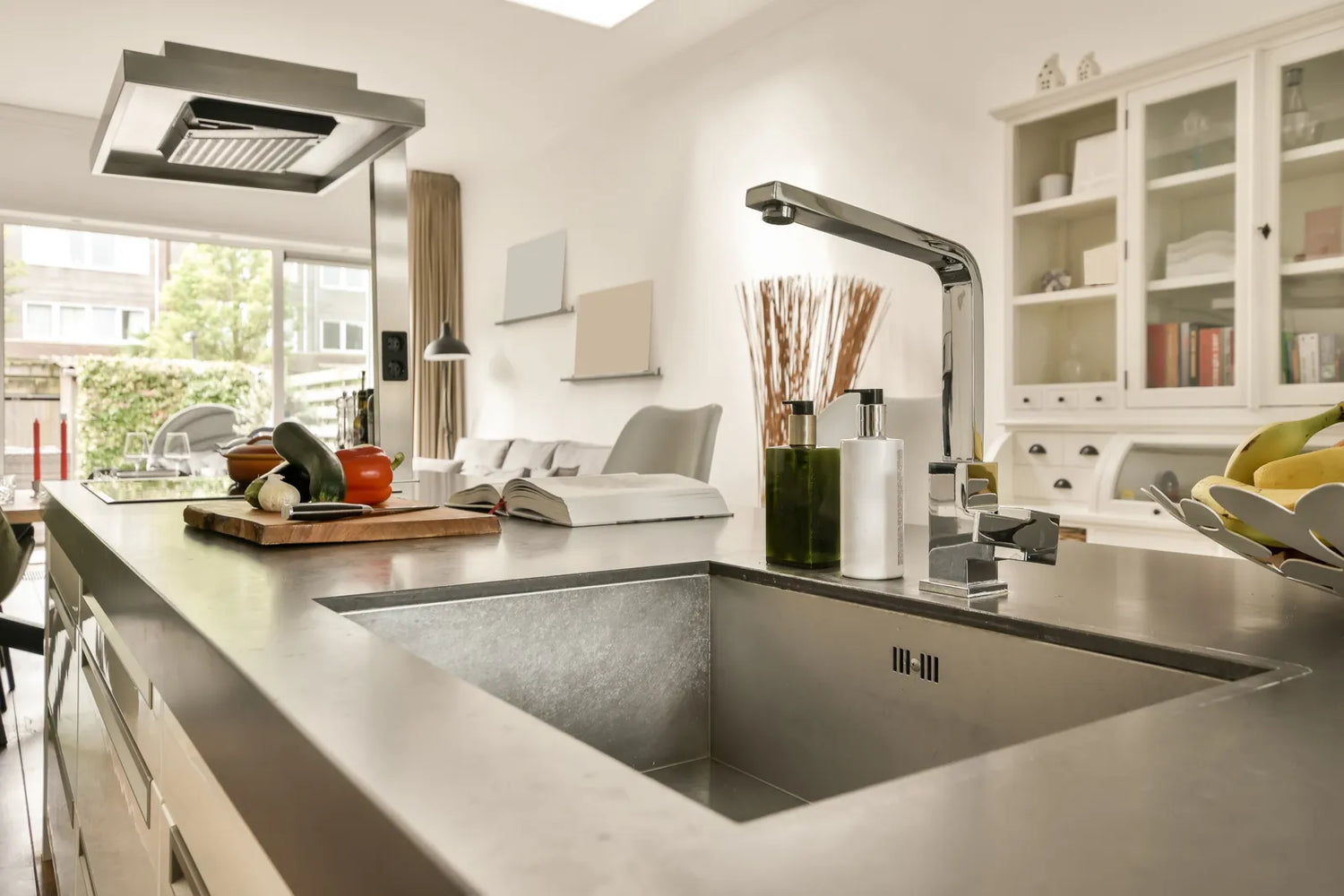
For most open kitchens, the best kitchen sink is an undermount stainless steel single bowl with sound-deadening insulation because it looks clean, wipes easily, and keeps visual clutter lower. If you want the quietest and lowest-maintenance look, choose a composite undermount. If you have laminate counters or a tighter remodel budget, choose a drop-in sink instead. If hiding dishes matters most, choose a deep single bowl; if rinsing and soaking at the same time matters more, choose a double bowl.
Open-concept kitchens make sink decisions more visible than people expect. In a closed kitchen, the sink can be messy, noisy, or a little bulky and it usually stays out of sight. In an open floor plan, the sink becomes part of the room. You see it from the sofa, the dining table, and often the entryway. You also hear it more.
That changes what “best” means.
The best kitchen sink styles for open concept homes are not always the most dramatic or the most feature-packed. In real homes, the right sink usually does four things well:
-
It looks tidy even when life is busy.
-
It keeps noise down in an open living space.
-
It fits how you actually wash dishes and prep food.
-
It does not create extra cleaning frustration.
Here’s what usually matters in real homes: a sink that looks sleek in photos can still annoy you every day if it splashes too much, shows every water spot, or forces awkward bending. On the other hand, a plain sink can be exactly right if it is quiet, easy to wipe clean, and sized for how your household works.
Decision Snapshot: best kitchen sinks for open concept
If you want the safest choice for most open layouts, choose an undermount stainless steel single bowl.
If you want a quieter, lower-visual-upkeep sink, choose an undermount composite sink.
If you have laminate counters or need tighter budget control, choose a drop-in sink.
If you cook often and want more prep space built into the sink, choose a workstation sink.
If you rarely use sink accessories and hate extra pieces to clean, skip workstation models.
If your biggest frustration is seeing dirty dishes from the living room, choose a deep single bowl.
If you often wash and rinse at the same time, or two people use the sink together, choose a double bowl.
If you want a statement look and do not mind more splash risk and front-facing exposure, choose a farmhouse sink.
If splashing, visible mess, and edge cleaning annoy you, skip farmhouse and choose a low-profile undermount.
3–5 explicit decision rules (choose / avoid logic)
-
Choose stainless steel if you prioritize easy maintenance and are not sensitive to visible water spots; avoid it if you want a consistently spotless look in an open-concept kitchen where light reflects heavily off the sink surface.
-
Choose composite granite sinks if you want a quieter washing experience and a more matte, design-forward appearance; avoid them if you frequently wash very hot cookware or prefer ultra-light cleaning with minimal scrubbing.
-
Avoid double-bowl sinks when each basin becomes too small to comfortably fit everyday large items like baking trays, wok pans, or stockpots—this often reduces real usability more than it improves workflow.
-
Choose a single-bowl sink instead of workstation or double-bowl setups if your kitchen is small or medium and you regularly wash oversized cookware in one step.
-
Strongly consider a secondary prep or bar sink if you have a large kitchen island or open-plan layout where multiple users cook at the same time, or when food prep and dishwashing frequently overlap during peak use.
Best kitchen sinks for open concept vs alternatives
Choosing a kitchen sink for an open concept remodel is mostly about trade-offs. The main sink types each solve one problem while creating another.
Undermount vs drop-in
Undermount sinks are the default recommendation for open kitchens because they create a cleaner visual line. There is no raised rim sitting on top of the counter, so crumbs and water wipe straight in. In an open concept kitchen, that matters because your counters are always on display.
Drop-in sinks still make sense in many homes. They cost less to install, work with more countertop materials, and are easier to replace later. The downside is the visible lip. That lip collects grime and breaks up the clean, seamless look many people want in a modern open kitchen.

Single bowl vs double bowl
Single bowls are often the best choice for open floor plans because they handle large pans better and hide clutter more easily, especially in deeper designs. If your sink sits on an island or is visible from the living room, one large basin usually looks calmer.
Double bowls work well for families who like separation: one side for dirty dishes, one side for rinsing or prep. But in many open kitchens, a double bowl can feel cramped if each side is too small.
Workstation vs standard sink
The best workstation sinks for open concept kitchen layouts can be very useful if you prep food often and want your sink area to work like an extra mini counter. Built-in ledges for cutting boards, drying racks, and colanders can make an island-centered kitchen more efficient.
But workstation sinks are not for everyone. If you do not use the accessories daily, they become one more thing to store, wash, and look at. In a visible kitchen, accessory clutter can cancel out the sleek design you wanted.
Farmhouse vs low-profile styles
Are farmhouse sinks good for open concept kitchens? Sometimes yes, but not for every household.
They make a strong visual statement, which can be great in a style-first remodel. They also offer a large front-facing basin that many people find appealing. On the other hand, that exposed front draws attention all day, every day. If it shows splashes, smudges, or dish clutter, you will notice it from across the room.
Low-profile undermount styles tend to age better visually in open plans because they blend into the counters instead of becoming the center of attention.
Key differences that actually matter
The details that matter in open kitchens are not always the ones people focus on in showrooms.
Noise carries farther than expected
Quiet kitchen sinks for open floor plan kitchens are worth serious attention. In an open layout, sink noise does not stay in the kitchen. Running water, silverware clatter, pans dropping into a steel bowl, and the disposal all carry into the living area.
If noise bugs you, prioritize:
-
thick-gauge stainless with sound pads
-
composite materials
-
insulated basins
-
sink grids or bottom protection
-
a deeper bowl that softens impact sounds
This is one reason many people end up preferring composite for open spaces. It often sounds less harsh than steel.

Deep basins hide clutter but strain backs
Deep kitchen sinks that hide dirty dishes in open concept spaces can make a kitchen look cleaner fast. A deeper basin lets you stack plates and pans below sightlines, especially from nearby seating areas.
But there is a catch. Very deep sinks can be less comfortable for long dish sessions, especially for shorter adults. If you already lean forward while washing, an extra-deep sink can make that worse. The key point is not just “deeper is better.” It is “deep enough to hide clutter, but not so deep that daily use becomes awkward.”
For many homes, a moderate-to-deep single bowl is the sweet spot.
Ergonomic and accessibility checklist
-
User height vs sink depth: Taller users (>175 cm) can comfortably handle deeper basins (9–10 inches), while shorter users may experience shoulder strain with overly deep sinks.
-
Counter height alignment: Standard 34–36 inch counters combined with deep sinks can increase forward bending during dishwashing.
-
Reach distance across sink width: Wider single bowls reduce splashing but may require more arm extension, increasing fatigue during long cleaning sessions.
-
Multi-user comfort: In households where two people cook or clean simultaneously, deeper and wider sinks can create physical crowding at the same workspace.
Simple “comfort test” rule set
-
If your arms feel stretched or shoulders rise when scrubbing, the sink is too deep or too wide.
-
If you naturally lean heavily forward to rinse items, reduce depth by 1–2 inches or raise counter ergonomics.
-
If washing large pots feels awkward or unstable, prioritize bowl width over depth.
Visible edges change the whole look
Best undermount kitchen sinks for a seamless open concept look win on one simple thing: less visual interruption. Because open kitchens are seen as part of the living space, small design breaks stand out more. A sink rim, exposed caulk line, or bulky edge can make a kitchen look busier.
This is why undermount vs drop-in sinks for open concept kitchens is not just an install question. It is a “how tidy does the whole room feel?” question.
Accessories help or become clutter
Workstation sinks sound smart, and often they are. But they only work if your habits match them. If you prep produce every day and like having a drying rack over the sink, great. If your accessories stay piled on the counter or jammed in a drawer, the system turns into clutter.
In open kitchens, visual calm matters. Buy accessories only if you will truly use them.
A quick comparison table: choose the best
| Option | Best for | Typical cost | Installation | Space feel | Maintenance | Comfort/usability |
| Undermount single bowl | Most open kitchens | Mid to high | Needs solid-surface counter, pro install common | Cleanest, most seamless | Easy counter wipe-down, basin still needs care | Great for large pans, good dish hiding |
| Undermount double bowl | Families wanting separation | Mid to high | Similar to other undermounts | Clean look, but busier inside sink | Easy counters, smaller bowls can feel crowded | Good for wash/rinse routines |
| Drop-in single bowl | Budget remodels, laminate counters | Low to mid | Easiest, flexible | More visible rim | Rim needs extra cleaning | Good function, less sleek look |
| Drop-in double bowl | Practical budget households | Low to mid | Easy | Functional, less modern visually | More edge cleaning | Good multitasking |
| Workstation sink | Frequent prep cooks | Mid to high | Varies by type | Can look smart or cluttered | More parts to clean | Efficient if used daily |
| Farmhouse sink | Statement remodels | Mid to high | More complex cabinet/front fit | Strong visual feature | Front stays visible, can show marks | Large bowl, can splash more |

When open-concept sinks are the better choice
Some sink styles clearly fit open kitchens better because of what the room asks from them.
Your sink is always in view
If you can see the sink from the sofa, then visual simplicity matters. This is where stylish kitchen sinks that match modern open concept designs tend to be undermount, low-profile, and not too fussy.
A simple undermount in stainless or composite usually looks more expensive than a more ornate sink style with too many visible details. In open rooms, clean lines age well.
You want one surface to wipe clean
One of the best parts of an undermount sink is how easy cleanup feels. Crumbs, coffee grounds, and water can be pushed straight into the basin. That helps keep an open kitchen looking clean with less effort.
How to keep an open kitchen sink looking clean? Start by choosing a sink and counter combo that lets you wipe everything in one motion. This is where undermount designs really earn their place.
According to EPA WaterSense, efficient water use in kitchens is not only about fixtures but also about reducing wasted running water during daily tasks like rinsing and food prep.
You host while cooking
If people gather nearby while you cook, your sink does more than hold dishes. It becomes part of how your kitchen feels socially. Kitchen sinks that reduce noise in open living spaces and keep clutter lower make hosting more relaxed.
A deep single bowl works well here because you can quickly hide prep mess or a pan while guests are around. A noisy shallow steel sink, on the other hand, keeps reminding everyone the cleanup is still waiting.
You need island-friendly styling
Best kitchen sinks for island-centered open concept kitchens usually balance style and restraint. An island sink gets seen from every angle. It should not look bulky or overly industrial unless that is the whole design direction.
A low-profile undermount single bowl often works best on an island because it disappears when clean and does not chop up the countertop visually.
When the alternative is the better choice
Not every open-concept remodel needs the sleekest or most expensive sink choice.
You have laminate counters
This is one of the clearest decision points. If you have laminate and do not plan to replace it with solid-surface material, a drop-in sink is often the right move. It is practical, easier to install, and avoids forcing a sink style that your counters may not support well.
You want lower install risk
Undermount installations can be excellent, but they do depend on proper support, sealing, and countertop compatibility. If you want the simplest path with fewer install variables, drop-in sinks are the safer option.
That matters in remodels where budget surprises are already piling up.
You prefer simpler cleaning routines
Many people assume undermount always means easier cleaning. It often does for the counter, but not every homeowner cares about that enough to justify the extra install cost. Some would rather have a simple drop-in that is easy to replace and less stressful if anything goes wrong.
In short, low-maintenance kitchen sinks for busy open concept kitchens are not always the fanciest ones. They are the ones you do not resent using.
You need stricter budget control
Budget-friendly kitchen sinks for open concept remodels are usually drop-in stainless models or basic drop-in composite models. There is nothing wrong with choosing function first.
If spending more on cabinetry, lighting, or countertops will improve the room more than an undermount sink upgrade, it is reasonable to save here.
Tighten into explicit “If X, choose Y” rules
This section becomes more decisive and less descriptive:
-
If your priority is low maintenance and predictable cleaning, choose a simpler sink configuration over workstation sinks—even if they look more modern or premium.
-
If installation risk or renovation complexity is high, prefer drop-in sinks instead of undermount; they reduce sealing issues and are easier to replace in future upgrades.
-
Drop-in sinks usually require less countertop modification during replacement.
-
They can also simplify waterproof edge maintenance over time.
-
-
If your kitchen usage is light (basic cooking, minimal prep), avoid complex workstation systems; they add cost and cleaning overhead without real functional gain.
-
If resale value and universal appeal matter, simpler sink setups are often safer than highly customized integrated systems.
Best material and style by household
Material matters in open kitchens because both sound and appearance travel farther.
Stainless for heavy daily use
Stainless steel is still the most flexible choice for many homes. It is durable, common, and works with almost any kitchen style. If you cook often, wash heavy pans, and want a sink that can take hard daily use, stainless makes sense.
The drawback is visual upkeep. In visible kitchens, stainless can show water spots, fingerprints, and light scratching. Some homeowners do not mind this. Others get tired of polishing a sink that everyone sees.
If you choose stainless, look for better sound insulation and a finish that does not look mirror-bright. A softer finish tends to look calmer in open layouts.
Composite for lower visual upkeep
For many households, the best kitchen sink materials for open concept homes are composite materials because they balance quiet performance with a tidy look. They often hide water marks better than stainless and can feel less noisy during cleanup.
This makes them especially good for:
-
families with children
-
homes where the TV or conversation area is close by
-
homeowners who want lower visual upkeep
-
kitchens where the sink is centered on an island
The trade-off is that some people still prefer the classic versatility of stainless, and composite can be heavier and more style-specific.
Farmhouse for statement-first remodels
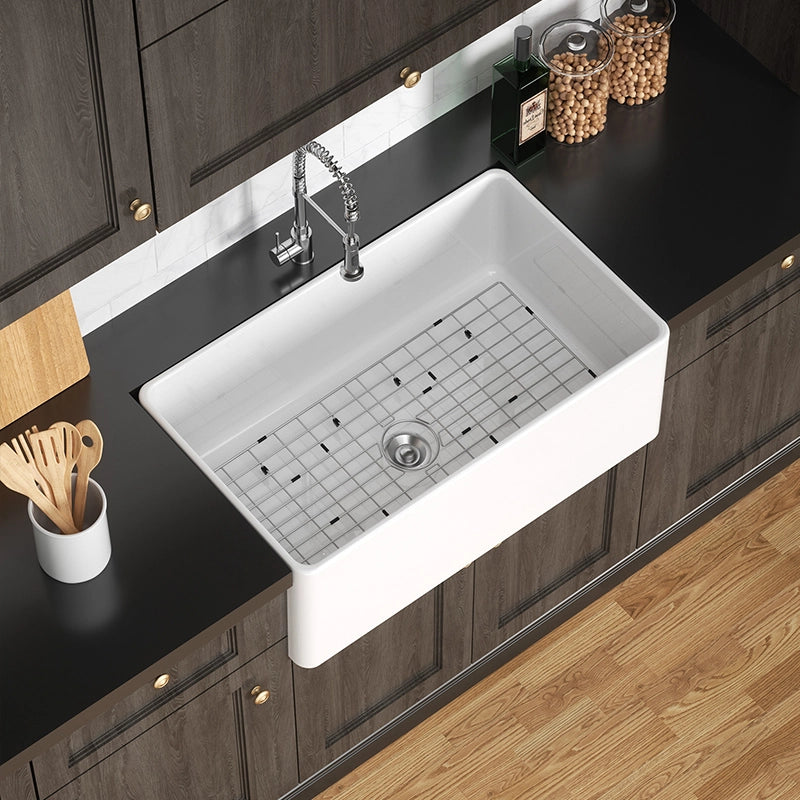
Farmhouse sinks are chosen with the eyes first. That is not always a bad thing. In a remodel where the sink is meant to anchor the kitchen’s style, a farmhouse sink can be exactly right.
But be honest about your habits. If you hate visible splashes, leave dishes sitting out, or dislike wiping the sink front often, farmhouse may wear on you. The exposed apron makes mess more visible in an open room.
So are farmhouse sinks good for open concept kitchens? Yes, if you want the sink to be a design feature and you are comfortable maintaining a very visible focal point.
Bar or prep sinks for large layouts
In large open kitchens, a second small sink can solve problems the main sink cannot. Bar or prep sinks work well when the kitchen is spread out, especially if one person cooks while others gather nearby.
A prep sink can help keep the main cleanup zone out of sight, or at least reduce traffic around it. In a big island-centered layout, this can improve flow more than upgrading the main sink alone.
Porcelain / Ceramic / Fireclay vs Stainless & Composite
This section introduces traditional materials as a real alternative and compares them directly in open-concept environments:
Porcelain, ceramic, and fireclay sinks offer a glossy, classic appearance that fits well in traditional or farmhouse-style kitchens, but they behave differently compared to modern materials.
-
Visibility of wear: Fireclay and porcelain resist staining well but can show chips or surface cracks over time, while stainless shows scratches and composite shows minor surface fading depending on usage.
-
Noise performance: These materials are naturally dense, making them quieter than stainless steel but not as consistently sound-dampening as high-quality composite granite sinks.
-
Durability trade-off: Fireclay is highly durable under normal use but can chip under heavy impact (dropping pots), while stainless is more forgiving for daily rough handling.
-
Maintenance level: Ceramic and porcelain are easy to wipe clean but require caution against abrasive cleaners; composite is lower maintenance overall, and stainless offers the fastest cleaning cycle.
In open-concept kitchens, porcelain and fireclay are often chosen more for aesthetic impact than workflow efficiency.
Strengthen stainless vs composite decision rules
Choose stainless steel if:
-
You prefer fast, low-effort cleaning after cooking
-
You frequently use heavy cookware or sharp utensils
-
You want a budget-friendly, durable, long-lasting option
-
You do not mind visible water spots or light scratching over time
Choose composite granite if:
-
You value a quieter kitchen environment, especially in open layouts
-
You prefer a matte, design-consistent aesthetic
-
You want better resistance to heat and staining in daily cooking scenarios
-
You are willing to do slightly more maintenance to preserve appearance
These two material categories should be treated as the primary decision fork, especially in open-concept kitchens where sound, lighting reflection, and visual cleanliness are amplified.
Which style fits your habits best
This is where many buying guides stop too early. The right sink is less about category and more about your daily patterns.
Best for style-first open layouts
Choose an undermount composite or undermount stainless single bowl.
Why? Because this combo keeps lines simple, lowers visual clutter, and suits modern open concept designs. It also supports the “one clean surface” feel that makes open kitchens look calm.
Avoid a bulky rim, loud finish, or too many visible accessories if style is your first priority.
Best for busy family cleanup zones
Choose a quiet stainless or composite sink with good insulation, and decide bowl layout based on how your family works.
If your family stacks dishes fast and you want to hide the mess, choose single bowl.
If you need one side for soaking and one for rinsing bottles, produce, or pans, choose double bowl.
This is where single bowl vs double bowl sinks for open concept kitchens becomes a habit question, not a trend question.
Choose workstation if you prep often
The best workstation sinks for open concept kitchen layouts are ideal for cooks who use cutting boards, drying racks, and colanders daily. In island-centered kitchens, they can add usable function without expanding the island itself.
But skip them if:
-
you want a very clean, minimal look
-
you do not prep much
-
you already have enough counter workspace
-
you dislike cleaning extra grooves, ledges, or accessories
Skip farmhouse if splashing annoys you
This sounds small until you live with it. Some people are not bothered by water on the apron front or the floor. Others notice every splash. In an open kitchen, repeated small annoyances matter more because you see the sink constantly.
If you know splashing drives you crazy, choose a lower-profile undermount style instead.
Common mistakes to avoid
The biggest mistakes usually happen when people buy for appearance only or specs only.
Mistake 1: Choosing too deep a sink without testing comfort What to consider before choosing a deep sink for an open kitchen: your height, counter height, and how long you stand there. A very deep basin can hide dishes well, but if it hurts your back, you will regret it.
Mistake 2: Ignoring noise Quiet kitchen sinks for open floor plan kitchens are not a luxury. If your sink sits near the living room, noise control matters every day.
Mistake 3: Buying a double bowl that is too cramped Double bowls work only if each side is useful. Tiny split bowls can make sheet pans, stock pots, and large mixing bowls annoying to wash.
Mistake 4: Overbuying workstation features If you love the idea more than the reality, skip it. Accessories that live on the counter or collect grime are not helping.
Mistake 5: Forcing undermount on the wrong counter plan Undermount is great, but not if it creates install headaches or pushes your budget off track. Sometimes a neat drop-in is the smarter call.
Mistake 6: Picking a sink finish that shows everything In an open kitchen, the sink is decor whether you want it to be or not. A finish that constantly looks spotted can make the whole kitchen feel less tidy.
So what is the best sink for an open kitchen?
For most homeowners, the answer is simple: an undermount single bowl in stainless steel or composite.
Pick stainless if you want proven durability, broad style flexibility, and do not mind a bit more visible spotting. Pick composite if you want quieter performance and a sink that looks visually calmer between cleanings.
Choose double bowl only if separation is a real daily need. Choose workstation only if prep work is a major part of how you use the sink. Choose farmhouse only if you want the sink to be seen.
That last point matters. In open kitchens, the best sink is often the one that does its job without demanding attention.
Final Verdict
For most homes, choose an undermount stainless steel single bowl because it gives you the cleanest look, easy counter wipe-down, and enough space to handle large cookware while hiding dish clutter better. If noise and visible water spots bother you, choose an undermount composite sink instead. If you have laminate counters or need tighter budget control, choose a drop-in sink and do not feel bad about it; it is often the most practical option. Choose a double bowl only if separation truly helps your daily routine, not because it feels familiar.
Before You Buy
-
Measure your cabinet base, not just the old sink opening.
-
Check if your countertop supports undermount installation.
-
Decide whether noise or visual upkeep bothers you more.
-
Think about your real dish habits: hide clutter or separate tasks?
-
Test sink depth against your height and counter height.
-
Be honest about whether you will use workstation accessories.
-
If the sink is on an island, prioritize low visual clutter.
-
Leave room in the budget for proper installation and plumbing adjustments.

FAQs
1. What is the best sink for an open kitchen?
The best kitchen sinks for open concept layouts are usually stainless steel or workstation styles because they balance durability, easy maintenance, and a clean visual profile that fits into the living space without feeling bulky. In many homes, a stylish sinks for open kitchens approach also matters just as much as function, so people often choose minimalist undermount designs that blend into the countertop and keep the whole area looking unified rather than “kitchen-heavy.”
2. How to keep an open kitchen sink looking clean?
Keeping an open kitchen sink visually clean is mostly about daily habits that prevent buildup from becoming visible clutter in shared living spaces. A practical trick is hiding dirty dishes in a deep sink, where they stay out of sight and don’t immediately affect the look of the room, especially when you can’t wash everything right away. Pairing that with quick rinsing and wiping around the sink area helps the whole open space feel more controlled and less chaotic.
3. Why are workstation sinks good for open plans?
Workstation sinks are popular in open layouts because they keep prep, washing, and drying all contained in one organized zone. The undermount workstation sink benefits include smoother countertop transitions, easier cleanup, and a more integrated look that prevents the kitchen from visually spilling into the living area. This setup also reduces counter clutter since cutting boards and accessories sit directly over the sink instead of spreading across the kitchen.
4. How to minimize sink noise in a living area?
Reducing sink noise in an open living area is important because sound travels easily without walls to block it. The Quietest kitchen sinks for open floor plans are usually thicker stainless steel models with sound-dampening pads underneath, which help absorb vibration from running water and dishes hitting the basin. Adding soft mats or running water before placing items in the sink also helps keep the space quieter and more comfortable overall.
References


Leave a comment
This site is protected by hCaptcha and the hCaptcha Privacy Policy and Terms of Service apply.