



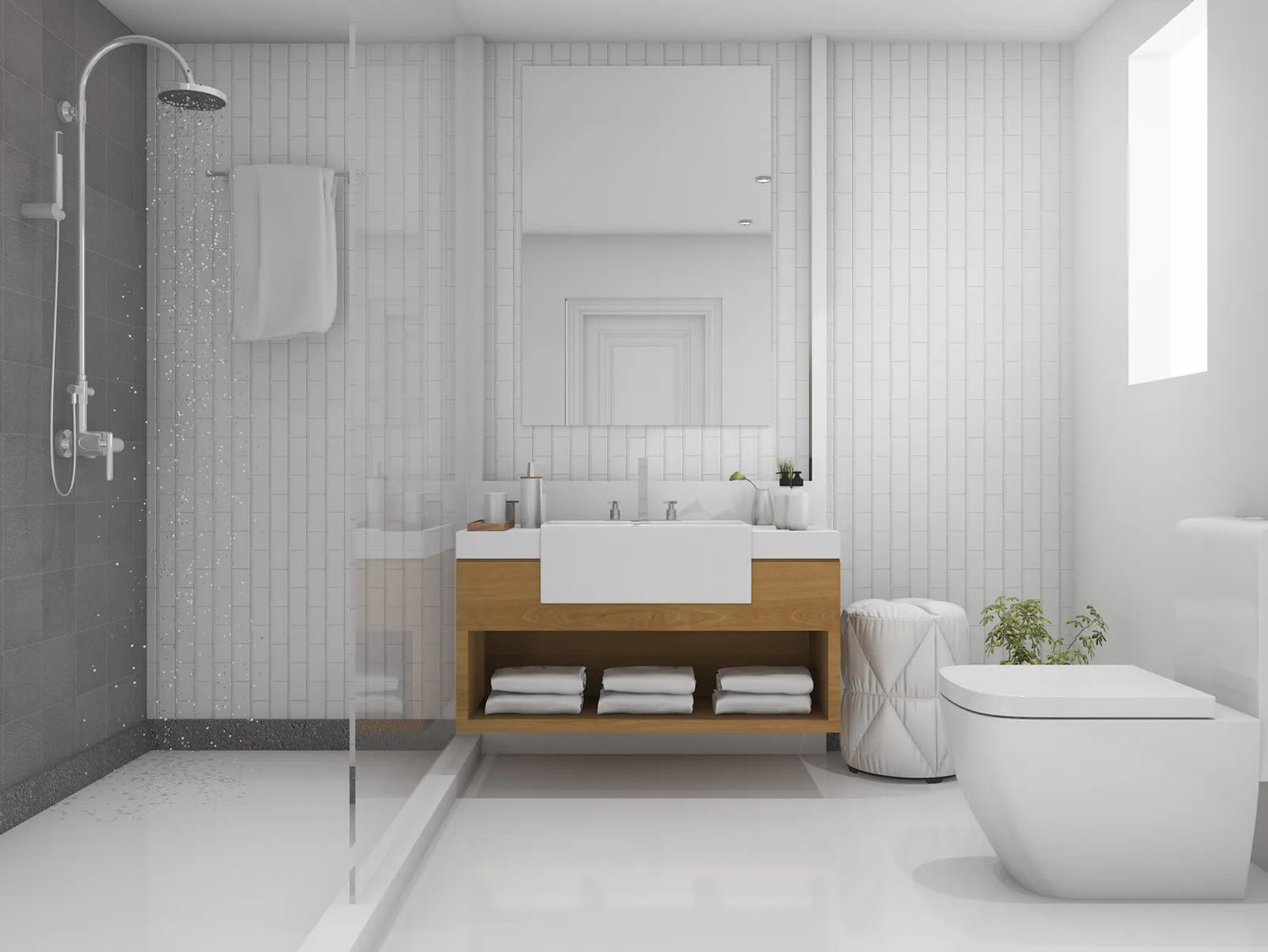
Water savings and bill savings are not always the same, because fixed service charges and local sewer/water billing structures can make monthly dollar reductions look smaller than the actual gallons of water saved.
Decision Snapshot: high efficiency toilet water bill savings
Before comparing toilet flush rates like 1.6 gpf vs 1.28 gpf, always check for leaks first, because a running or leaking toilet can waste far more water than efficiency differences between models.
High efficiency toilet water bill savings are usually a good fit when your home still has older toilets that use a lot of water per flush, where high-efficiency toilets offer meaningful water conservation benefits. This is especially true in family homes, homes with several full-time occupants, or bathrooms that get heavy daily use, where gallons of water per flush quickly accumulate. In those situations, the gallons add up fast, and the savings can be real.
This makes sense if you want to cut water use without changing your habits much, and if your local water and sewer rates are high enough for those saved gallons to matter on the bill. It also becomes more appealing when a utility rebate lowers the upfront cost.
This is often unnecessary if your current toilet is already 1.6 gallons per flush, your household is small, or the bathroom is used only occasionally. In those homes, the yearly savings can be so modest that the payback feels slow.
You should probably skip it, or at least slow down, if your main problem is a leaking toilet, not an inefficient one. A leak can waste far more water than the difference between an old toilet and a 1.28 gpf model. In many homes, fixing leaks first saves more money than replacing the fixture.
How much will you really save investing in a high-efficiency toilet?
The biggest mistake people make is assuming all homes save the same amount. They do not.
A high efficiency toilet usually uses 1.28 gallons per flush, often separating liquid waste and solid waste flushing needs to optimize water use. According to the U.S. Environmental Protection Agency WaterSense program, high-efficiency toilets use no more than 1.28 gallons per flush, which is at least 20% less water than the federal standard of 1.6 gpf. Older toilets can use much more. Some older units typically using 3.5 gallons of water, and very old ones can use 5 gallons or more.
That is where the strongest high efficiency toilet vs old toilet water cost savings show up.
If you replace a very old toilet, the drop in water use can be dramatic. If you replace a 1.6 gpf toilet from a newer era, the change is much smaller.
That is why the answers to “how much can a high efficiency toilet save on your water bill” vary so much online, and why the true environmental impact is often considered alongside cost savings.
In real-world cases, annual savings can range from only a few dollars to over a hundred dollars per household, depending on daily flush frequency, the age of the old toilet, and local water and sewer pricing structures.

Old toilets save the most
If you still have a pre-1994 toilet, the water waste per flush can be large enough that replacement makes clear sense. In that case, how much money can you save by replacing a 1994 toilet or older one depends on:
-
number of people in the home
-
flushes per person per day
-
Higher daily usage increases total annual water consumption.
-
Large households usually see greater savings from efficient toilets.
-
-
local water and sewer rates
-
whether that toilet leaks
A busy household using an old 3.5 to 5 gpf toilet may see meaningful annual savings that can clearly help you save over time. A single person replacing one toilet in a guest bath may barely notice the bill change.
This usually becomes useful when the same toilet gets flushed many times a day, every day.
Newer homes may save less
If your current toilet already uses 1.6 gpf, the 1.28 gpf vs 1.6 gpf toilet annual water savings are often modest. The raw water savings are real, but small enough that many homeowners are underwhelmed once they do the math. In many newer homes, switching from 1.6 gpf to 1.28 gpf often leads to only modest bill changes because the baseline water usage is already relatively efficient, so the percentage reduction is small even though gallons per flush technically decrease.
That is why “is a 1.28 gpf toilet worth it for water bill savings” has no universal answer. In many homes, the answer is yes on paper but not exciting in practice.
If your rates are low, the payback may take years. If you are replacing a working 1.6 gpf toilet only to save money, the return may be too slow to feel satisfying.
Can leaks erase the savings?
Yes. A toilet leak can cancel out high efficiency toilet savings very quickly.
This is one of the most overlooked parts of the decision. A worn flapper or silent valve leak can waste a surprising amount of water. If that leak goes unfixed, the difference between an efficient and inefficient toilet may become almost irrelevant on the bill.
The hidden costs of old toilets are not just the gallons per flush. They also include the higher chance that old parts are leaking, running, or failing to seal well.
Before you calculate savings, test for leaks. If the toilet runs, refills often, or seems to move water when nobody used it, fix that first. A simple leak repair may be the fastest way to reduce household water costs with a high efficiency toilet plan—or decide you do not need replacement yet.

Costs people underestimate
The upfront cost is where many homeowners hesitate, and reasonably so.
A standard toilet replacement can cost more than expected once you include installation, supply line updates, disposal, and possible flange or shutoff valve work. Even if the toilet itself is not expensive, the full project—including labor to plumb the unit correctly—can delay the payback period.
In some regions, sewer charges can amplify the financial benefit of reduced water use, while in others, fixed monthly service fees limit how much of the savings actually appears on the bill, even when water consumption drops significantly.

Upfront cost delays payback
The high efficiency toilet ROI for homeowners depends less on the label and more on the full installed cost and installation flexibility in your bathroom setup.
If you are replacing a toilet that already works, your water bill savings have to recover:
-
purchase cost
-
installation labor
-
any bathroom repairs uncovered during installation
That is why a high efficiency toilet cost-benefit analysis for homeowners can look good in one house and weak in another.
This can be annoying when the expected savings sound large in ads or calculators, but the real bill reduction ends up feeling small month to month.
Rebates can change the math
Do high efficiency toilets qualify for water utility rebates? Sometimes, yes. But not always, and not everywhere.
This matters because a rebate can turn a slow-payback project into a reasonable one. If your utility offers a credit for a qualifying WaterSense toilet, the effective cost drops right away.
A watersense toilet cost savings calculator can help, but only if you enter your actual water and sewer rates and realistic daily usage. Many calculators assume average flush counts that may not match your home.
If rebates are available, this usually becomes much easier to justify.
Is 1.28 gpf worth it?
For pure water bill savings, 1.28 gpf is usually worth it only when replacing something much older and thirstier. Against a 1.6 gpf toilet, the financial gain is often limited.
That does not mean 1.28 gpf is a bad choice. It means the savings alone may not be enough to motivate replacement unless usage is high or rates are expensive.
Daily use trade-offs
The water bill is only part of the story. Daily use matters more than many homeowners expect.
A toilet can save water and still become annoying if the flush behavior does not fit the household.
Dual flush can confuse guests
Dual-flush toilet vs high efficiency toilet for lower water bills is not just a math question. It is also a behavior question.
Dual-flush models can save water, but they depend on people using the correct flush each time. In busy homes, rentals, kids’ bathrooms, or guest bathrooms, that does not always happen. Some people ignore the light flush. Some press the wrong button. Some guests hesitate because the control is unfamiliar.
In many homes, this ends up being ignored if simplicity matters more than squeezing out every possible gallon.

Flush performance varies by design
Many homeowners worry about weak flushes because older low-flow toilets developed a bad reputation. Modern designs are generally better, but performance still varies.
That is why pressure-assisted vs gravity high efficiency toilet water savings is not the whole decision. Saving water does not help much if the toilet needs repeat flushing. One extra flush can shrink the expected savings and become frustrating over time.
This can be annoying when paper-heavy use, large households, or certain habits push the toilet harder than test conditions do.
If the bathroom gets constant use, you want efficiency that does not ask for workarounds.
Busy bathrooms see bigger returns
A high efficiency toilet earns its keep faster in a hallway bathroom, family bathroom, or other high-traffic location. In a guest bath, powder room, or basement bath used only sometimes, the savings can be too small to matter much.
This usually becomes useful when many people use the same toilet every day. It is much less compelling when that toilet is mostly idle.
When it becomes unnecessary
Sometimes the water-saving idea is good, but the timing is not.
Small households save less
A one- or two-person household often sees lower annual savings simply because there are fewer flushes. If the toilet is already decent and the water bill is not high, replacement for savings alone may feel unnecessary.
This is where many people overestimate the return.
1.6 gpf may already be efficient
If your current toilet is 1.6 gpf and works well, replacing it strictly to lower the bill may not be the smartest move. The difference between 1.6 and 1.28 is not large enough to guarantee a satisfying payoff.
Best toilet gallons per flush for saving money on water bills depends on what you are replacing, not just the lowest number available.
Saving water may not save much
Some homes have low water rates, or a bill structure where the toilet’s share of total household cost is smaller than expected. If irrigation, laundry, showers, or fixed service fees drive most of the bill, toilet savings may be real but limited.
In those homes, a high efficiency toilet water bill savings upgrade can still reduce water use, but the money side may not feel meaningful.
Before You Choose
-
Check your current toilet’s gallons per flush. Replacing a very old model is different from replacing a 1.6 gpf unit.
-
Test for leaks before doing any savings math. A silent leak can waste more than an efficient toilet saves.
-
Look at actual water and sewer rates on your bill, not national averages.
-
Think about who uses that bathroom most, balancing savings and environmental priorities when evaluating long-term environmental impact. High-use bathrooms see faster payback than guest baths.
-
Ask about local utility rebates before buying. They can change the ROI a lot.
-
Be honest about household habits. If users may need repeat flushes or ignore dual-flush settings, expected savings can shrink.
FAQs
1. How much money does a low-flow toilet save?
A low-flow toilet reduces daily water use by cutting each flush significantly compared to older models, and over time this directly supports Reducing household water costs in a measurable way. In most homes, the difference shows up gradually on monthly utility bills, especially in households with frequent bathroom use. The savings scale with family size and usage habits, so larger households tend to notice the benefit sooner.
2. Will a smart toilet lower my water bill?
A smart toilet can help reduce water consumption if it uses optimized flushing technology, and this often contributes to noticeable high efficiency toilet water bill savings when replacing older high-volume systems. Features like adaptive flush control and dual-mode flushing prevent unnecessary water use. However, the real impact depends on how inefficient your previous toilet was and how often it’s used.
3. What is the payback period for an eco-toilet?
The payback period for an eco-toilet is usually calculated by comparing installation cost with long-term utility reductions, often reflected in the ROI of 1.28 GPF toilets in typical residential use cases. Homes with higher daily usage recover the cost faster because water savings accumulate more quickly. In most situations, the investment becomes worthwhile within a few years if usage is consistent.
4. Are high-efficiency toilets worth the cost?
High-efficiency toilets are generally considered a solid long-term upgrade after evaluating performance, durability, and water savings through a WaterSense toilet cost-benefit analysis. While the upfront price may be higher, reduced water consumption and fewer inefficiencies often balance out the initial expense. They are especially practical for households looking to lower long-term utility spending.
5. Can switching to a bidet save money on paper?
Switching to a bidet can meaningfully reduce household expenses by lowering reliance on toilet paper, since water-based cleaning replaces most paper use. Over time, this creates consistent savings, especially in busy households where paper consumption is high. While the upfront change requires adjustment, many users find the reduced recurring cost and convenience worthwhile.
6. How much money can a bidet save?
A bidet can reduce household spending mainly by lowering toilet paper use and slightly reducing how often flushing is needed for cleaning purposes. In a typical household, this can translate into roughly $30 to $100 per year in savings, depending on how much toilet paper is normally used, how many people live in the home, and local water costs. Larger families or high-use bathrooms tend to see higher savings because both paper consumption and water-related usage add up more quickly. The water bill impact alone is usually modest, but when combined with reduced paper purchases, the overall yearly savings become more noticeable over time.
References


Leave a comment
This site is protected by hCaptcha and the hCaptcha Privacy Policy and Terms of Service apply.