
Bathtub mats are one of the simplest ways to reduce slips while making bathroom time feel safer and more comfortable. In 2026 buying guides, the best options come down to three things: non-slip grip, fast drying, and mold resistance. The right pick also depends on a detail many people miss: do you need a shower mat (in-tub) or a bath mat (outside the tub)?
If you’ve ever stepped into a slick tub, or hopped out onto a cold tile floor, you already know why this matters. A good mat isn’t “extra.” It changes how safe the space feels for kids, guests, and anyone who moves a bit slower—especially when the bathroom is humid and everything takes longer to dry.
Bathtub Mats: Quick Recommendations by Need
If you want the “just tell me what to buy” answer, use this chart. Then you can come back and fine-tune your choice based on size, tub shape, and how fast your bathroom tends to dry.
| Your main need | Best type to look for | Why it works | Typical price |
| Slip prevention inside the tub | Rubber/PVC non-slip bathtub mat with suction cups + drainage holes | Strong grip on smooth tub floors; water flows through instead of pooling | $10–$20 |
| Humid bathroom / mold-prone space | Bamboo bath mat (outside tub) with non-slip feet | Doesn’t absorb water; dries fast; helps avoid damp smells | $49.95+ |
| Absorbency outside the tub | Quick-dry bath mat in microfiber | Drinks up water fast and dries faster than many cotton options | $20–$50 |
| Soft “spa feel” on cold floors | Memory foam bath mat | Cushions feet and supports joints; great for chilly mornings | $20–$50 (varies) |
| Cozy look and texture | Chenille bath rug with reliable non-slip backing | Soft, fluffy feel; works well if dried and washed often | $20–$50 (varies) |
A quick reality check: if you’re shopping for non slip bath mats for seniors, put grip first. A plush mat that slides is worse than no mat at all.
How to Choose the Best Bathtub Mats
Most people shop for a mat when something already went wrong: a near slip, a musty smell, or a soggy bath rug that never seems to dry. So let’s make this easy. When you choose a mat, think in this order: traction, drying, comfort, then style.
Safety & traction first (most important)
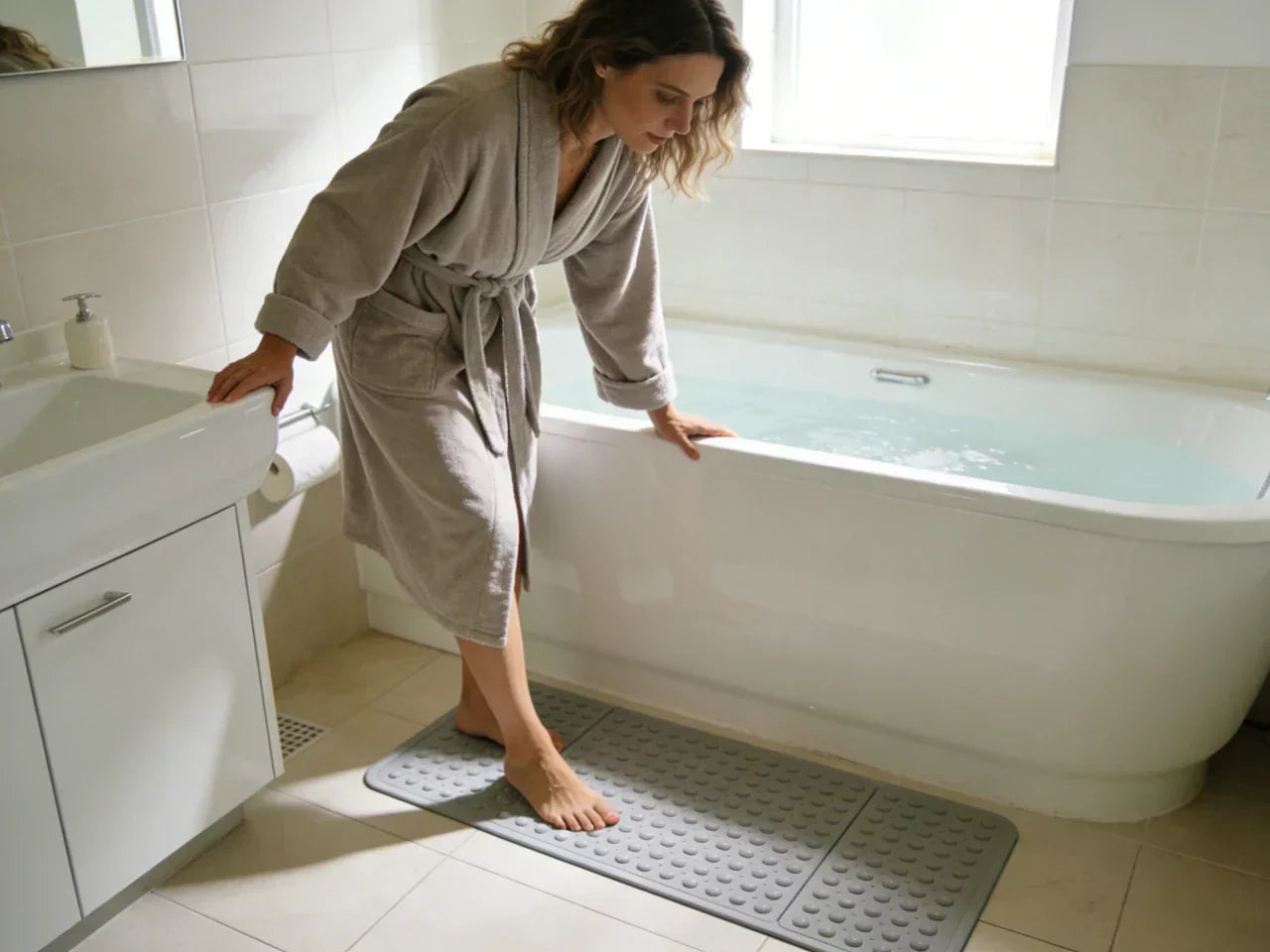
The point of a tub mat is simple: help you keep your footing on a wet surface. Inside a tub, water and soap lower friction. That’s why smooth tubs can feel like ice under your feet. According to the CDC, falls are one of the leading causes of injury at home, and bathrooms are among the highest-risk areas due to wet, slippery surfaces. This is why traction—not softness—should always come first when choosing an in-tub mat. It also highlights how important the bathtub surface itself is. Smooth, well-designed tubs make it easier for suction mats to hold securely and drain properly.
For in-tub use, suction cups usually beat a flat textured backing. A suction cup bath mat creates many small “anchors” that hold onto the tub floor mat area. This matters most when you shift your weight, step over the edge, or turn to rinse. If you’ve ever felt a mat bunch up under you, you know how fast your body tenses.
When you’re checking a mat, focus on contact and stability. You want a mat that lies flat, grips across its full footprint, and doesn’t curl at the corners. Edges that lift can catch toes and create a trip point. If the mat is meant for the tub, it should also allow water to move out of the way.
Drainage is part of safety too. A mat with drainage holes or channels helps reduce puddling. Less pooling means less slimy buildup, and it also helps the mat keep better contact with the bathtub floor.
Drying speed & mold resistance
A mat can be “non-slip” and still become a problem if it stays wet all day. Damp materials are where mildew smells and stains start. That’s why bathroom mat quick dry features have become a big deal in 2025 roundups—especially for bathrooms with weak fans or no window.
Here’s the key point: fast drying usually comes from either (1) not absorbing water, or (2) releasing water quickly. Bamboo doesn’t absorb much, so water sits on the surface and evaporates. Microfiber absorbs a lot, but the fibers are built to let moisture spread out and dry faster.
Machine-washable mats can also be easier to keep fresh. Many rubber/PVC mats and most microfiber mats are washable (always check the care label). A mat that you can clean easily is a mat you will actually clean.
Comfort (feet feel) and real-life use
Comfort is not “fluffy vs not fluffy.” It’s about how you use your bathroom.
If your bathroom floor is cold, a soft outside mat can turn a daily annoyance into something you barely notice. Memory foam can feel great when you step out of the bath, especially if you have sore feet or knee pain. On the other hand, memory foam can hold moisture longer, so it needs better drying habits.
If you hate stepping onto wet fabric, bamboo can feel cleaner because it doesn’t get soaked the same way a bath rug does. Some people love that “dry platform” feel. Others find bamboo too firm. Neither is wrong—it’s about your routine.
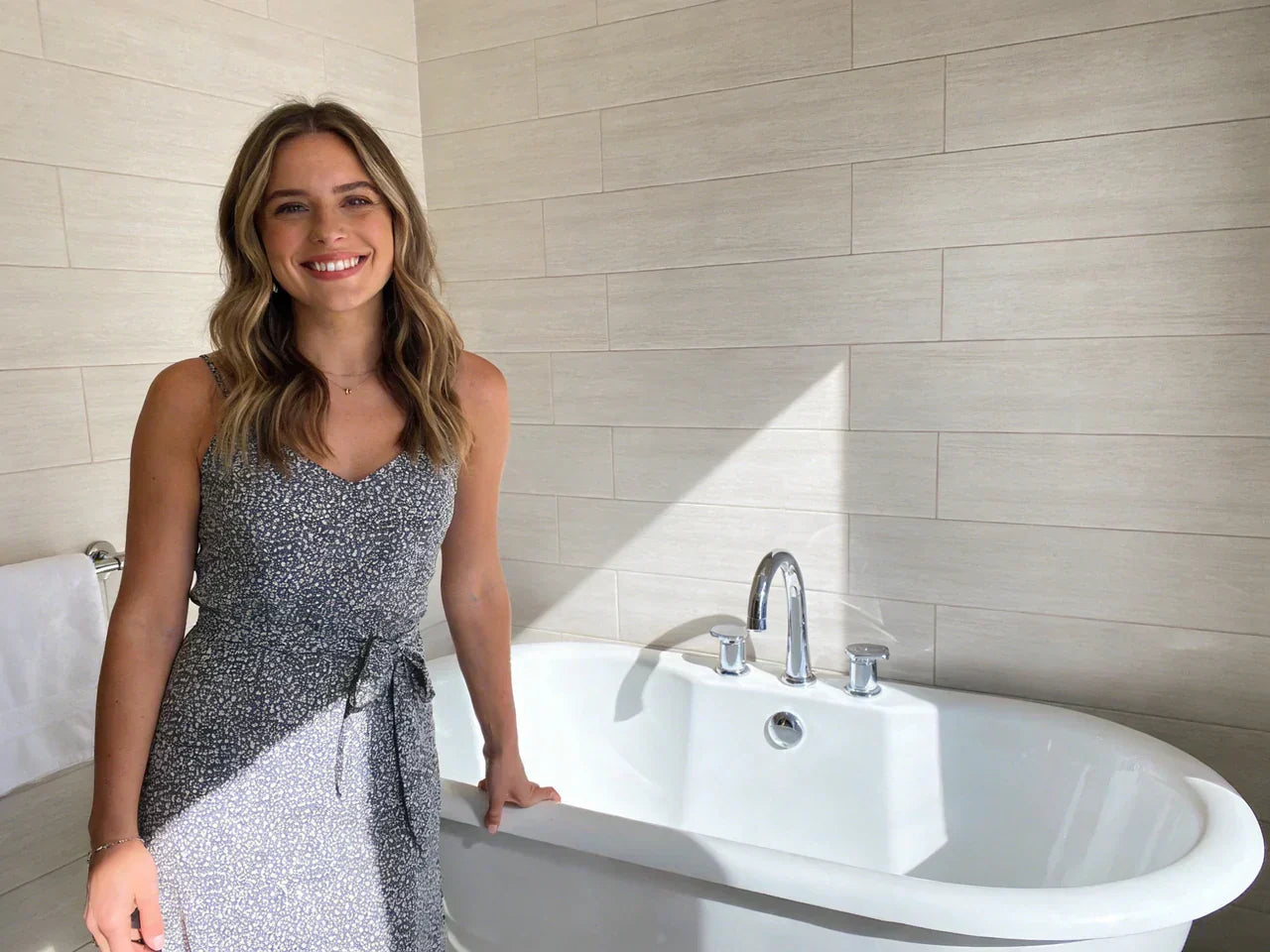
Comfort isn’t just about what’s under your feet—it’s also about space and how you move in the bath. Freestanding tubs often offer a more open standing area and smoother transitions in and out, which can pair well with in-tub safety mats and outside bath mats.
Budget & value
Most decent bathtub mats sit in the $10–$50 range. Under $20 is usually where you’ll find basic rubber/PVC tub mats. Around $20–$50 is common for thicker microfiber or memory foam outside mats. Bamboo tends to cost more because the material and build are different, and it’s often sold as a “spa style” option.
Value is not just price. It’s also how often you replace it, how much work it takes to keep it clean, and whether it actually solves your problem (slips, cold floors, damp smells, or all three).
Materials & Performance Comparison (Rubber, Bamboo, Microfiber, More)
When people ask, “What is the best material for a bathroom mat?” the honest answer is: it depends where the mat sits and what you want it to do.
A mat inside the tub needs grip and drainage. A mat outside the tub needs absorbency and fast drying. That’s why it helps to look at bathroom mat material choices like a tool kit instead of a single “best” item.
At-a-glance materials table
| Material | Absorbency | Drying speed | Maintenance | Safety features | Typical price | Best for | Tradeoffs |
| Rubber / PVC | None | Instant | Rinse; often machine-washable (check label) | Suction cups, textured grip | $10–$20 | In-tub safety and stability | Can feel firm; needs regular rinsing to prevent film |
| Microfiber | High | Fast | Machine wash; dry well | Non-slip backing (outside) | $20–$50 | Outside tub absorbency + faster dry | Backing can wear; can hold odor if left damp |
| Memory foam | Low–moderate | Slow | Gentle wash; must fully dry | Cushioned support | Varies | Cold floors, comfort, joint support | Can stay damp longer; needs airflow |
| Bamboo | None | Instant evaporation | Wipe down; keep feet clean | Rubber feet or grippy base | $49.95+ | Humid bathrooms; “dry platform” feel | Can be slippery if water pools; firm underfoot |
| Chenille | High | Moderate | Machine wash; dry thoroughly | Anti-slip backing (outside) | Varies | Cozy look and soft feel | Takes space to dry; can get musty if neglected |
So, what material are bathroom mats made of? The most common are PVC/rubber (often used as a bathtub floor mat inside the tub), and fabric options like microfiber, chenille, and memory foam (mostly used outside the tub). Bamboo is a popular “hard surface” outside mat that stays drier and can feel cleaner in humid rooms.
“Best material for…” quick guide
If your main fear is slipping, rubber/PVC is usually the safest bet for inside the tub—especially in an acrylic bathtub, where the smooth surface can feel slick when wet. Suction cups help hold the mat firmly in place as you shift your weight. If your main problem is a damp bathroom that smells musty, bamboo is popular because it doesn’t stay soaked. If you want that soft step when you get out of the bath, microfiber or memory foam will feel better on bare feet.
A question that comes up a lot is: What bath mat doesn’t get soaked wet? Bamboo is the clear answer because it doesn’t work like fabric—it doesn’t absorb water into fibers. Rubber/PVC also doesn’t soak, but it’s typically used inside the tub—often in acrylic bathtubs—for traction rather than as a water-absorbing landing spot outside.
In-Tub Shower Mat vs Outside Bath Mat (Don’t Mix Them Up)
Many bathrooms end up with the wrong mat in the wrong place. Someone buys a soft rug for the tub because it looks nice, then wonders why it smells sour. Or someone uses an in-tub mat outside the tub and keeps slipping on it like a banana peel.
To put it simply: in-tub = grip and drainage. Outside tub = absorbency and quick dry.
In-tub vs outside-the-tub comparison
| Feature | In-tub shower mat | Outside bath mat / bath rug |
| Main goal | Prevent slips on wet tub floor | Catch drips and keep floors dry |
| Best materials | Rubber/PVC with suction cups | Microfiber, chenille, memory foam, bamboo |
| What “good” looks like | Strong hold, flat edges, drainage holes | Absorbent or quick-evaporating, non-slip backing |
| Common mistake | Using fabric in the tub (holds water and soap) | Using a slick-backed mat on tile |
This also answers a common question: What is a tub mat? It’s a mat made to sit inside the bathtub or shower base. It’s built for traction, not for soaking up water like a bath rug.
And here’s why “super absorbent” is not always good inside the tub: absorbent fabric holds water and soap. That can raise mildew risk and make the mat feel slimy faster. Inside the tub, you want water to drain away.
Fit, Size & Placement Guide (Avoid Exposed Slip Zones)
A mat can be made of the right material and still fail if it doesn’t fit. A too-small mat leaves slick areas near the drain or where you step in. A too-large mat may fold or lift, which can cause a trip.
Measure your tub (simple steps)
-
Measure the inside floor length of the tub, not the rim.
-
Measure the inside floor width at the widest point.
-
Check where the drain is and note if the floor slopes sharply.
-
If your tub floor is curved or oval, measure the flat standing area where your feet go most.
Coverage matters because it reduces “exposed slip zones.” Think about where you step in and where you turn to rinse. Those are the spots that need grip.
Common tub shapes and what to buy
A standard rectangle tub usually works with many standard suction mats, but still watch the corners. For oval or curved floors, flexible rubber/PVC mats often sit better because they can settle into the shape. If your tub has a textured floor already, suction cups may not stick as well. In that case, look for a mat designed for textured surfaces or test carefully after installation.
If you’re unsure, ask yourself: does the mat sit flat with no rocking? If not, it’s not the right fit for that bathtub.
Placement and stability checklist
-
Center the mat in the main standing zone.
-
Keep it clear of the drain so water can flow.
-
Press from the center outward to set suction cups and push out air.
-
Confirm there is no overhang up the tub wall and no folded edges.
-
Before a full shower, test it with dry hands and light foot pressure to make sure it doesn’t slide.
Safety Setup Checklist (Grip, Drainage, and Daily Use)
A lot of people install a mat once and never think about it again. But soap film is sneaky. It can build up under the mat and weaken grip over time.
If you want your mat to stay safe, set it up like this:
-
Clean the tub floor first. Remove soap residue so suction cups can stick.
-
Rinse the mat before first use to remove any packaging dust.
-
Apply the mat to a wet tub surface (slightly damp helps suction cups seat).
-
Press firmly across the whole mat, especially corners and edges.
-
After showering, rinse and lift the mat (or hang it) so the underside can dry.
Watch for warning signs. Corners that lift, trapped air pockets, or a mat that “creeps” when you step on it are all red flags.
What about bamboo—are bamboo mats safe when wet? They can be safe outside the tub if they have non-slip feet and you keep them on a flat surface. But bamboo can feel slick if water pools on top, so treat it like you would a wet deck: wipe puddles and keep it in a spot where it won’t get flooded.
If you live with an older adult, or you’re choosing non slip bath mats for seniors, traction is not optional. A stable in-tub mat, plus a non-slip outside mat, can make the whole routine calmer. No one wants to feel like they need to “brace” just to shower.
Cleaning & Maintenance (Make Bathtub Mats Last Longer)
Most mat problems come from one issue: the mat never fully dries. That’s how odors and discoloration start. Cleaning helps, but drying is the daily habit that does the heavy lifting.
Weekly quick-clean routine (simple and realistic)
-
Rubber/PVC (in-tub): Rinse both sides, shake off water, and hang to dry. If the label allows, machine wash on gentle and air-dry.
-
Microfiber or chenille (outside): Wash on a regular cycle as directed, then dry fully. If it still feels damp when you step on it, it’s not done.
-
Memory foam: Use gentle washing if allowed, and give it extra drying time. Foam can hold water inside, so don’t rush it back onto the floor.
-
Bamboo: Wipe it down, especially in grooves, and let air circulate around it. Clean the rubber feet too, because dust can make them slip.
If you’re asking, “How do I stop mildew smells?” start with two changes: hang or stand mats up so air hits both sides, and don’t let wet fabric sit bunched on the floor.
Mold and mildew prevention (what actually helps)
Good ventilation is your best friend. Run the fan longer, crack a door, or open a window if you have one. It also helps to avoid stacking damp mats or towels together. Even a fast drying bath mat can smell bad if it never gets airflow.
Another overlooked trick is spacing. If your outside bath mat is jammed against the tub or vanity, air can’t move. Pull it out a few inches after showers and let the floor under it dry too.
Simple “Do / Don’t” care chart
| Do | Don’t |
| Hang mats so both sides dry | Leave mats flat and wet all day |
| Wash on schedule and dry fully | Put a damp mat back on tile “just for now” |
| Rinse soap film from in-tub mats | Let residue build under suction cups |
| Replace mats with worn backing or curled edges | Keep using a mat that slides or lifts |
2026 Trends in Bathtub Mats (Eco + Quick-Dry Tech)
In 2026, two trends stand out: people want mats that stay cleaner with less effort, and many shoppers are paying more attention to materials that feel more natural in the home.
Bamboo fits that mood. It’s popular in humid bathrooms because it doesn’t stay soggy, and it often looks cleaner day to day. It’s also a common pick for people who dislike the feel of damp fabric underfoot.
At the same time, quick-dry fabrics have improved. Many microfiber options are built to spread water across more surface area, so it dries faster. That matters if your bathroom stays damp, or if several people shower back-to-back.
You may also see “stone-style” bath mats talked about more online. They’re marketed for very fast evaporation, but some buyers report cracking or chipping if the mat is dropped or stressed. If you like that idea, treat it as a hard item that needs careful handling, not a soft rug you can toss around.
Top Picks (Match-by-Scenario, Not a Random List)
Instead of naming specific products, it’s usually smarter to match the mat to your room and routine. Ask yourself: where will it go, how wet will it get, and how much time do you have for care?
Best in-tub non-slip: Rubber/PVC suction mat
If your goal is slip prevention in the tub, choose rubber or PVC with lots of suction cups and a textured top. Drainage holes matter because they help water move away from where you stand. This type is usually firm underfoot, but it’s the classic choice for safety.
Price band: often $10–$20
Tradeoff: needs regular rinsing to avoid film buildup
Best outside quick-dry: Microfiber bath mat
For outside the tub, microfiber is a strong all-around choice. It absorbs drips when you step out, and many versions dry faster than thicker rugs. Look for a solid non-slip backing, since smooth tile can turn a bath mat into a skateboard.
Price band: often $20–$50
Tradeoff: if left damp, it can hold odor like any fabric
Best eco-leaning and hygienic: Bamboo mat with non-slip feet
If your bathroom stays humid and you hate the feel of a wet rug, bamboo can be a relief. It doesn’t get soaked, and it dries quickly by evaporation. Just make sure it has rubber feet, and place it where it won’t get flooded by spray.
Price band: often $49.95+
Tradeoff: firm feel; can be slick if water pools on top
Best cushioned comfort: Memory foam bath mat
If you want comfort on cold floors, memory foam can feel great, especially first thing in the morning. It’s also a nice choice for sore feet. The downside is drying time. If your bathroom is already damp, foam may need extra attention to prevent musty smells.
Price band: often $20–$50 (varies)
Tradeoff: slower drying; needs airflow and full drying between uses
What to use instead of a bathtub mat?
Sometimes a mat is not the best answer for the spot you’re thinking of—especially inside the tub if suction mats don’t stick well to your surface. If you can’t get a stable in-tub mat, you can use non-slip adhesive strips or decals made for tubs, or improve safety with grab bars and a handheld shower head so you can move with more control. For outside the tub, a bamboo platform mat can replace a fabric rug if you’re tired of soggy floors.
The key is this: whatever you use should either increase traction (inside) or manage water (outside). If it doesn’t do one of those jobs, it’s just décor.
Conclusion: Choose Safety First, Then Comfort
The best bathtub mats in 2026 still follow the same rule: start with non-slip safety, then match the mat to your bathroom’s humidity and your comfort needs.
-
Rubber/PVC with suction cups is usually the best choice for in-tub grip.
-
Bamboo is great for a fast-drying, mold-averse outside mat—if it has non-slip feet.
-
Microfiber is a smart outside pick when you want a fast drying bath mat that also absorbs well.
-
Memory foam wins on comfort, but needs more drying care.
Your next step is simple: measure your tub, decide where the mat will go (in the tub or outside), and choose the material that fits your daily routine. If you do that, you’ll end up with a bathroom that feels safer and stays fresher with less effort.
FAQs
What to use instead of a bathtub mat?
If a traditional bathtub mat doesn’t work well for your tub surface, there are several safe alternatives. Non-slip adhesive strips or decals are a common choice; they stick directly to the tub floor, provide traction, and don’t trap water underneath. Grab bars and a handheld shower head can also improve stability by giving you something to hold while stepping or turning. For outside the tub, a bamboo platform mat can replace a fabric bath rug if you want something that dries fast and doesn’t stay soggy. The key is choosing an option that either increases traction inside the tub or manages water safely outside it.
What kind of bath mat dries the fastest?
Bamboo bath mats dry the fastest overall because they don’t absorb water into fibers. Water stays on the surface and evaporates quickly, especially in bathrooms with decent airflow. Among fabric options, microfiber mats are the fastest-drying. Their fine fibers spread moisture over a larger surface area, helping water evaporate faster than cotton or thick chenille rugs. Thinner “quick-dry” microfiber styles tend to outperform plush mats. While rubber or PVC mats also don’t absorb water, they’re designed mainly for inside the tub for traction rather than for drying your feet outside the tub.
What bath mat doesn’t get soaked wet?
A bamboo bath mat is the best option if you want something that doesn’t feel soaked. Because bamboo doesn’t absorb water like fabric, it stays relatively dry to the touch and avoids that heavy, soggy feeling. Rubber or PVC mats also don’t soak up water, but they’re usually meant for inside the tub to prevent slipping, not for catching drips when you step out. Fabric mats—like microfiber, memory foam, or chenille—will always absorb some water, even if they dry quickly. If avoiding a wet feel is your top priority, bamboo is usually the clear winner.
What is the best material for a bathroom mat?
The best material depends on where the mat is used and what problem you’re solving. Inside the tub, rubber or PVC with suction cups is usually best because it provides strong traction on wet surfaces and helps reduce slips. Outside the tub, microfiber is a popular all-around choice because it absorbs water well and dries faster than many other fabrics. Bamboo is ideal if you want a drier, more hygienic feel in humid bathrooms, while memory foam works best for comfort on cold floors but needs more drying time. There isn’t one “best” material—just the best fit for your routine.
What material are bathroom mats made of?
Bathroom mats are commonly made from rubber or PVC, microfiber, memory foam, chenille, cotton blends, and bamboo. Rubber and PVC are typically used for in-tub mats because they provide grip through suction cups and textured surfaces. Microfiber, chenille, and memory foam are usually used outside the tub to absorb water and add comfort underfoot. Bamboo mats are a harder, non-absorbent option placed outside the tub to help keep floors dry in humid bathrooms. Each material serves a different purpose, which is why many bathrooms benefit from having both an in-tub mat and an outside bath mat.
What is the point of a tub mat?
The main purpose of a tub mat is safety. A tub mat adds traction to a wet, slippery bathtub or shower floor, helping reduce the risk of slips and falls when you step in, turn, or rinse. Water and soap lower friction on smooth tub surfaces, which is why tubs can feel slick underfoot. A good tub mat stays flat, grips securely, and allows water to drain away so it doesn’t pool underneath. For households with kids, older adults, or anyone with balance concerns, a tub mat can make daily bathing feel calmer, safer, and more controlled.
References


Leave a comment
This site is protected by hCaptcha and the hCaptcha Privacy Policy and Terms of Service apply.