



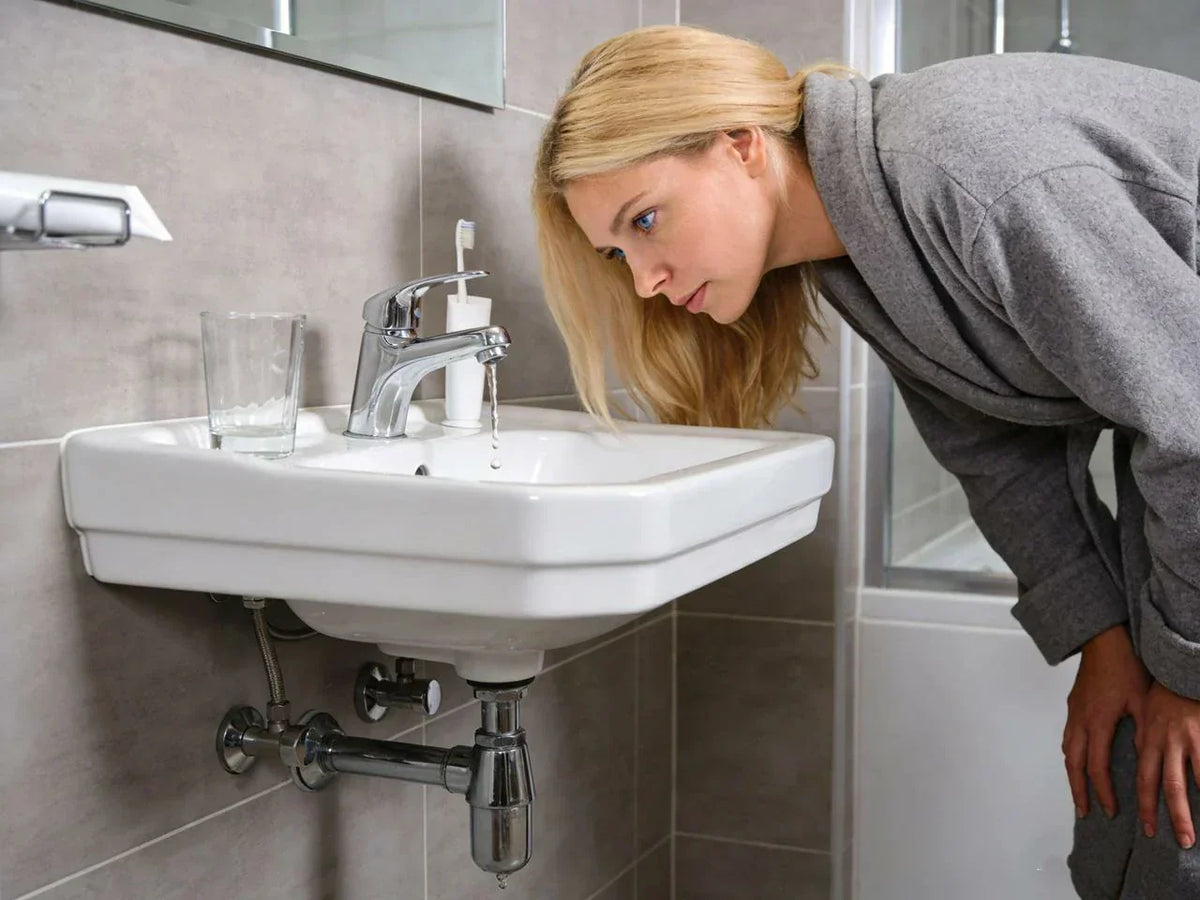
Faucet Cartridge Basics: Fast Answers
What is a faucet cartridge and why it matters
-
Better leak resistance. A good cartridge seals well, so the faucet stays off when you turn it off.
-
Smooth, precise control. You can set the water flow and temperature with small handle movements.
-
Single-handle mixing. A single-handle faucet can control both hot and cold water through one cartridge.
-
Smart faucet compatibility. Many smart faucets still rely on a cartridge inside to control the flow of water, even if sensors control the on/off function.
Quick signs your faucet cartridge is failing
-
Dripping or spitting from the spout, even when the handle is in the “off” position
-
Stiff, rough, or grinding handle movement when you turn the faucet handle
-
Sudden temperature swings or poor mixing of hot and cold water
-
Reduced water flow even though other fixtures in the house have normal pressure
What does a faucet cartridge do in a faucet?
-
A ceramic disc cartridge uses two flat ceramic plates with holes. When you move the handle, one disc slides over the other. This lines up or blocks the holes, which controls the flow of water and how hot or cold it is.
-
A stem-type cartridge or ball-type cartridge uses a movable stem or ball with openings that line up with internal passages.
-
Takes water coming from the hot and cold supply lines
-
Lets you mix hot and cold water in the right ratio
-
Lets you adjust how much water comes out of the spout
-
The handle connected to a stem or control lever
-
That stem linked to the faucet cartridge
-
Hot and cold supply lines feeding into the cartridge
-
Mixed water leaving the cartridge and going up to the spout
Snapshot: When to repair vs replace the whole faucet
| Option | Typical Cost (Parts) | Time Required | Best When… | Main Pros | Main Cons |
| Replace faucet cartridge | Typically about $20–$60 | 15–30 minutes | Faucet is under ~10–15 years old and looks good | Fast, low cost, keeps existing faucet and finish | Must match the correct cartridge |
| Replace entire faucet | About $150+ | 1–2 hours | Faucet is very old, corroded, or parts are unavailable | Fresh style, new finish, full warranty | Higher cost, more work, may need plumber |

Faucet Cartridge Types and How They Work
Ceramic disc faucet cartridges
-
When the holes in the two discs line up, water flows through.
-
When the discs slide so the holes are blocked, the flow of water stops.
-
The angle and position of the discs set the mix of hot and cold water.
-
Long lifespan. In normal water conditions, many ceramic disc cartridges last 10–20 years or more.
-
Smooth action. Handle movement tends to feel light and even, without grinding.
-
Low leak rate. The hard ceramic surfaces do not wear out as quickly as rubber parts.
Stem, ball, and compression valves compared
-
A stem-type cartridge is common in both single-handle and some two-handle faucets. You move a stem up and down or rotate it. Inside, ports open or close to control the flow of water and the temperature mix. These are often cheaper than full ceramic disc units but can still be quite reliable.
-
A ball valve uses a hollow metal or plastic ball with openings. Moving the handle rotates and lifts the ball, lining up openings inside it with the inlet ports from the hot and cold lines. Ball designs are simple and strong but often less precise in temperature control.
-
A compression valve is an older style. It uses a stem and a rubber washer that presses against a seat to shut off the water. You must turn the handle several times to fully open or close it. Washers and seats wear out and often cause drips.
| Type | Main Mechanism | Typical Lifespan (Normal Water) | Cost Level | Common Use Cases |
| Ceramic disc cartridge | Two sliding ceramic discs with ports | About 10–20+ years | Medium–High | Premium kitchen and bath faucets; smart faucets |
| Stem cartridge | Moving stem opens/closes internal passages | About 7–15 years | Low–Medium | Many residential and light commercial faucets |
| Ball valve / ball cartridge | Hollow ball with openings and springs | About 7–12 years | Low–Medium | Some single-handle faucets and showers |
| Compression valve | Rubber washer seals against seat | About 3–10 years | Low | Older two-handle faucets |
Thermostatic and smart faucet cartridges
-
It helps prevent burns (scalding) by limiting how hot the water can get.
-
It keeps a steady temperature even if someone flushes a toilet or starts another tap.
-
It can save energy, because you are not constantly adjusting the handle.
Which type of faucet cartridge is best?
-
If you want the longest life and the best leak resistance, a ceramic disc faucet cartridge is usually the top choice.
-
If you need a budget repair for an older faucet, replacing a simple stem or ball cartridge can be enough to stop leaks.
-
If your main concern is shower safety and comfort, a thermostatic cartridge in the shower mixer provides steady temperature control.

Identify the Cartridge Type
Shut off the water using the approved procedure, document the faucet brand and model if available, and photograph the handle, retaining method, and cartridge orientation before removal. Match the replacement by exact part number or manufacturer documentation.
Do not choose a cartridge by color or overall shape alone. Similar-looking cartridges can have different ports, stems, seals, and dimensions.
How to Choose the Right Cartridge for Your Faucet
How do I identify my faucet cartridge?
-
Check the faucet brand and logo. Look near the base of the spout, on the handle, or under decorative caps. Many faucets have at least a small symbol.
-
Look for model information. Check any manuals you still have. Sometimes there is a sticker or stamp on the underside of the faucet or under the sink near the supply lines.
-
Turn off water and remove the handle so you can see the cartridge itself. Count splines (the small ridges) on the top of the stem, note the shape, and look for any part numbers stamped into the plastic or metal.
-
Measure the key dimensions. Use a ruler or, even better, a caliper to measure the diameter and length.
Measuring size, splines, and configuration
-
Diameter of the cartridge body. Many ceramic inserts for kitchen and bath faucet cartridges come in standard sizes such as 25 mm, 35 mm, 40 mm, and 46 mm.
-
Stem length and shape. The stem is the part that connects to the faucet handle. Note its total length and whether it is flat, round, square, or has a special profile.
-
Spline count. Count how many small teeth or ridges are on the stem. These make sure the handle attaches firmly without slipping.
-
Orientation tabs or notches. Many cartridges have small tabs near the base that fit into matching cuts in the faucet body. These keep the cartridge from turning inside the valve.
Key specs to compare: pressure, temperature, certifications
-
Working pressure. Many residential faucets are designed for normal water pressure around 60–125 psi. If your home has unusually high pressure, you may need a pressure-reducing valve to protect the cartridge and other plumbing.
-
Temperature rating. Most cartridges in homes handle water from about 40°F to 140°F (4°C to 60°C). Hotter water can shorten the life of seals and O-rings.
-
Certifications. In many regions, drinking water parts must meet NSF/ANSI 61 or similar standards for low lead and safe materials. The faucet as a whole may also be labeled under programs like WaterSense for water savings.
Are faucet cartridges universal or interchangeable?
-
Slow drips or leaks around the stem
-
Loose or misaligned handles
-
Damage to the valve seat or housing

Market Trends & Stats: Why Faucet Cartridges Dominate Modern Faucets
Global faucet and faucet cartridge market
-
Global faucet sales are estimated at about 25 billion US dollars around 2025.
-
Forecasts suggest the market may reach about 51–52 billion US dollars by the early 2030s, with growth near 8% per year.
-
Cartridges are used in roughly three-quarters of new faucets, in both homes and commercial buildings.
Regional growth and renovation trends
-
In the United States, the faucet market size is over 6 billion US dollars in the mid-2020s and is expected to rise by about 6% per year toward the next decade.
-
In China, some estimates show growth above 11% per year, driven by urban redevelopment and demand for durable, long-life ceramic cartridges.
-
In the United Kingdom and parts of Europe, growth often centers around refurbishment projects, with a focus on reliability and water efficiency.
Why disc cartridge faucets lead smart and premium segments
-
Long cycle life. Ceramic discs can handle hundreds of thousands of open/close cycles.
-
Consistent performance. Electronic controls need valves that perform the same way over many years.
-
Water-saving goals. A tight seal and precise flow control help meet water efficiency targets in green building standards.
Is it worth paying more for a premium faucet cartridge?
-
Low-cost generic cartridges have a much higher failure rate within 3–5 years, especially in homes with hard water.
-
Premium ceramic cartridges, made to higher standards, often last 10–15 years or more before any issue appears.
-
One low-quality cartridge might cost less today but need several replacements over 10 years.
-
Each failure risks more leaks, water waste, and possible damage under the sink.
-
A better cartridge costs more once, but may save you several plumber visits and a lot of water over time, reducing the risk of leaks and repairs in the future.
Installation & Replacement: DIY Faucet Cartridge Repair
Tools, prep, and safety checklist
-
Adjustable wrench or basin wrench
-
Hex (Allen) keys and a basic screwdriver set
-
Small pliers
-
Plumber’s grease (silicone-based, safe for O-rings)
-
Replacement O-rings and seals, if they do not come with the cartridge
-
Cleaning supplies to remove mineral deposits (white vinegar, soft brush, cloth)
-
Turn the water off. Use the shutoff valves under the sink or near the shower. Turn both hot and cold valves fully clockwise.
-
Relieve pressure. Open the faucet and let remaining water flow out until it stops.
-
Protect the sink and faucet finish. Place a towel in the sink and use tape or cloth to protect the faucet surface where tools might touch.
-
Plug the drain. Use the sink stopper or a small plug so small screws do not fall down the drain.
Can I replace a faucet cartridge without turning off water?
-
Cause injury
-
Flood the cabinet and floor
-
Damage nearby electrical items
Do I need a special tool to remove the cartridge?
How to change a cartridge in a faucet (single-handle)
-
Turn off the water and plug the sink.
-
Remove decorative caps on the handle, if present, as you need to remove them to access the set screw.
-
Loosen and remove the handle. Use the correct hex key or screwdriver so you do not strip the screw. Carefully lift the handle off the stem.
-
Remove any trim and the retaining nut. There may be a decorative cover or collar. Under that you will find a retaining nut or clip that holds the cartridge in place. Unscrew or unclip it.
-
Pull out the old cartridge. Note its orientation before you pull. Some people take a photo with their phone to remember how it was positioned. Rock it gently and pull straight up.
-
Clean the valve body. Use a soft cloth and a bit of vinegar to remove mineral buildup inside the faucet. Do not scratch the surfaces.
-
Lubricate and install the new cartridge. Lightly coat O-rings with plumber’s grease. Place the new cartridge into the body in the same orientation as the old one. Make sure tabs or notches line up correctly.
-
Reinstall the retaining nut and trim. Tighten just enough to hold the cartridge firmly. Do not over-tighten, or you may crack the cartridge or strip threads.
-
Reattach the handle. Secure the handle and any decorative caps.
-
Turn the water back on and test. Turn the supply valves back on slowly. Open the faucet and check for leaks, proper water flow, and correct hot and cold orientation.
How much does it cost to replace a faucet cartridge?
-
Parts: Many basic stem or ball cartridges range from about $10 to $30. Premium ceramic disc or thermostatic cartridges typically range from $30 to $60 or more.
-
Labor: If you hire a plumber, expect roughly $20 to $100 for labor, depending on the time needed and local rates.
Common installation mistakes to avoid
-
Using the wrong cartridge. Even small size differences cause issues. Always match the correct type and size.
-
Reusing worn O-rings and seals. If the old seals are flattened, cracked, or hard, they will not seal well. Replace them when you install the new cartridge.
-
Over-tightening the retaining nut. Many people think tighter is better. But too much force can crack plastic parts or distort seals, leading to fresh leaks.
-
Incorrect orientation. Installing the cartridge half a turn off can reverse hot and cold or prevent the handle from moving fully.

Repair, Replace or Call a Plumber
Clean or replace a serviceable cartridge only when the faucet documentation supports the procedure and the shutoff works. Replace the faucet or use a plumber when the body is cracked, the valve seat is damaged, parts are unavailable, the shutoff fails, or the leak source is concealed.
After reassembly, restore water slowly and check the handle operation, temperature direction, and every accessible joint for leaks.
Lifespan, Maintenance, and Common Problems
How long should a faucet cartridge last?
-
Type of cartridge.
-
Basic stem or ball cartridges can last about 7–15 years in normal conditions.
-
Premium ceramic disc cartridges often last 10–20 years or more.
-
-
Water quality.
-
Hard water with high mineral content can shorten life by 40–50% if there is no filtration or regular cleaning.
-
-
Usage.
-
A faucet in a busy kitchen or public washroom may wear faster than a rarely used guest bathroom faucet.
-
Hard water, mineral buildup, and leak statistics
-
Stiff or hard-to-turn handles
-
Grinding or scraping sound as ceramic discs move
-
Incomplete shutoff, leading to tiny leaks that grow worse with time
-
Seal wear, as grit and scale scratch O-rings
-
Many households in hard water areas see cartridge life reduced by 20–30% compared with softer water.
-
Around 45% of users in these regions point to mineral buildup as the main reason their faucets start to leak.
Preventive maintenance routine for long-lasting cartridges
-
Once a year, unscrew and clean the aerator on the spout. Soak it in white vinegar to dissolve mineral scale. This keeps pressure up and reduces debris that can reach the cartridge.
-
Every 1–2 years in hard water areas, consider turning off the water, removing the cartridge carefully, and soaking parts in mild vinegar if the maker allows it. Rinse well and lubricate O-rings before reassembly.
-
Install a filter or softener if your local water report shows high hardness levels. This benefits not only faucets but also your water heater and appliances.
-
Check for early signs of trouble: small drips, slight handle stiffness, or temperature swings. Fixing problems early keeps scale from building up further inside the valve.
Troubleshooting: drips, noise, and stiff handles
| Symptom | Likely Cause | Simple Fix |
| Drip from spout when faucet is “off” | Worn seals, dirty or worn cartridge surfaces | Replace cartridge and O-rings; clean valve body |
| Handle hard to turn or feels rough | Mineral buildup around stem or discs | Clean and lubricate cartridge; replace if worn |
| Sudden change in temperature | Faulty mixing in cartridge; debris in hot side | Flush lines, inspect cartridge, replace if needed |
| Noise or vibration when running | Loose parts, high pressure, or debris in valve | Tighten fittings, add pressure regulator, clean valve |
How do I know if my faucet cartridge is bad?
-
Drips or runs when “off,”
-
Has a handle that is hard to move or sticks,
-
Changes temperature on its own, or
-
Has much lower flow than other fixtures,

Best Faucet Cartridge Brands and Manufacturers in 2025 (Without Names)
Top global ceramic faucet cartridge manufacturers – what to look for
-
They publish test results showing hundreds of thousands to over a million cycles without failure.
-
They offer a wide range of diameters (for example, 25 mm, 35 mm, 40 mm, 46 mm) for both kitchen and bath faucets, including thermostatic options.
-
They supply both large faucet companies and smaller regional brands as OEM (original equipment) suppliers.
-
They follow strict quality and safety standards for drinking water contact.
-
Clear cycle life claims (for example, “500,000 cycles tested”)
-
Pressure and temperature ratings suitable for your home
-
Proof of compliance with relevant standards such as NSF, EN, or local norms
Leading options for homeowners and DIYers
-
Match the faucet maker. Using an OEM-level cartridge made for your faucet model is often the safest path.
-
Check the packaging. It should list compatible faucet types, sizes, and clear instructions.
-
Look for support. Good makers offer clear diagrams, online manuals, and customer service that can help you confirm part numbers.
Premium vs budget cartridges: durability and ROI
-
Budget cartridges often fail or start leaking within 3–5 years, especially where water is hard or usage is heavy.
-
Premium cartridges made with high-grade ceramic and brass stems often last 10–15 years or more.
-
The number of replacements you need
-
The number of times you need to call a plumber
-
The amount of water you lose through drips and small leaks
Which faucet cartridge brand is most reliable?
-
The most reliable cartridge is usually the one built for your faucet by a reputable manufacturer and sold as the correct part number.
-
Many top faucet makers use European or high-end Asian ceramic cartridges inside their products and also sell those separately as replacement parts.
Key Takeaways and Action Plan
Quick checklist for choosing and maintaining a faucet cartridge
-
Identify your faucet brand and, if possible, the model number.
-
Remove the handle and identify the cartridge type and size (diameter, stem length, spline count).
-
Choose a ceramic disc cartridge for most replacements if your faucet supports it, especially for long life and leak resistance.
-
In hard water regions, plan for annual cleaning and consider a water softener or filter.
-
Watch for early signs of trouble: drips, stiffness, or temperature swings, and address them before they worsen.
Water and cost savings recap
When to DIY and when to call a plumber
-
Shutoff valves under the sink are easy to reach and work properly.
-
The faucet is a standard single-handle or simple two-handle model.
-
Screws and trim pieces are in good shape and not heavily corroded.
-
Shutoff valves do not work or are stuck.
-
The faucet is very old, rusted, or strongly corroded.
-
You have a thermostatic or advanced smart faucet with extra connections and parts.
FAQs
1. What is a cartridge in a faucet?
2. How do I identify my faucet cartridge?
3. How do I know if my faucet cartridge is bad?
4. How to change a cartridge in a faucet?
5. Do I need to replace my whole faucet when the cartridge fails?
References


Leave a comment
This site is protected by hCaptcha and the hCaptcha Privacy Policy and Terms of Service apply.